


Summary: Yes, dogs can eat strawberries — and when served correctly, these vibrant red fruits offer a surprisingly nutritious, low-calorie treat. Packed with vitamin C, dietary fiber, antioxidants, and natural enzymes, strawberries can complement your dog’s diet in moderation. However, portion control, proper preparation, and knowing which dogs should avoid them altogether are critical to keeping your pet safe. This guide covers everything from the nutritional science behind strawberries and dogs, to serving sizes, allergy awareness, toxic lookalikes, and vet-backed feeding best practices.
Outline
- Can Dogs Eat Strawberries? The Complete Guide to Safe Feeding, Benefits & Risks
- Are Strawberries Safe for Dogs? The Short Answer
- Nutritional Profile of Strawberries — What’s Actually Inside?
- Health Benefits of Strawberries for Dogs
- Potential Risks of Feeding Strawberries to Dogs
- Can Dogs Eat Strawberry Leaves, Stems, and Seeds?
- Can Dogs Eat Frozen, Dried, or Canned Strawberries?
- How Many Strawberries Can a Dog Eat? Serving Size Guide
- How to Prepare Strawberries for Dogs Safely
- Dogs That Should Avoid Strawberries
- Signs of Strawberry Allergy or Overconsumption in Dogs
- Frequently Asked Questions About Dogs and Strawberries
- Vet-Approved Alternatives to Strawberries for Dogs
Are Strawberries Safe for Dogs? The Short Answer
Strawberries are non-toxic to dogs. The American Kennel Club (AKC) and most veterinary nutritionists confirm that strawberries are perfectly safe for canine consumption when given in appropriate amounts. They are not listed on the ASPCA Animal Poison Control Center’s toxic plant database for dogs, which makes them one of the more dog-friendly fruits you can share.

That said, “safe” does not mean “unlimited.” Strawberries contain natural sugars (fructose), and excess consumption can lead to gastrointestinal distress, unwanted weight gain, or blood sugar spikes — especially in dogs with pre-existing health conditions. The key phrase here is moderation, a concept central to any responsible supplemental feeding strategy for pets.
Unlike grapes or raisins — which are severely toxic to dogs — strawberries carry no kidney-damaging compounds. Unlike citrus fruits, they don’t trigger central nervous system reactions. What they do carry is a dense concentration of beneficial phytonutrients, making them one of the better occasional treats in the canine diet when served correctly.
Nutritional Profile of Strawberries — What’s Actually Inside?
Understanding what strawberries contain helps pet owners make informed choices about inclusion in their dog’s diet.
Vitamins and Minerals in Strawberries
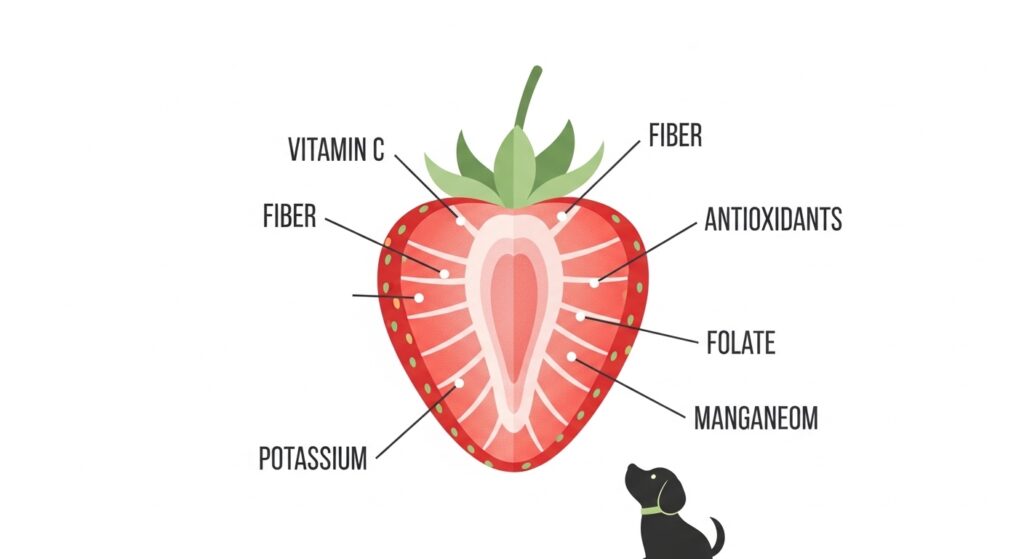
A single medium strawberry (approximately 12 grams) contains trace amounts of several essential micronutrients. Scaled up to a 100g serving, strawberries provide:
- Vitamin C – 58.8 mg (powerful antioxidant and immune modulator)
- Folate (Vitamin B9) – 24 mcg (supports cellular repair)
- Potassium – 153 mg (electrolyte balance, muscle function)
- Manganese – 0.39 mg (bone development, enzyme activation)
- Magnesium – 13 mg (nerve and muscle function)
- Vitamin K – 2.2 mcg (blood coagulation support)
While dogs synthesize their own Vitamin C endogenously (unlike humans), additional dietary Vitamin C has been shown in veterinary literature to provide oxidative stress relief — particularly in aging dogs or those recovering from illness.
Antioxidants and Phytonutrients
Strawberries are a rich source of polyphenolic compounds, including anthocyanins, ellagic acid, quercetin, and kaempferol. These NLP-recognized bioactive compounds play a role in:
- Neutralizing free radicals (oxidative damage prevention)
- Reducing systemic inflammation
- Supporting cardiovascular health
- Modulating cancer-related cellular pathways (preliminary research)
The deep red pigmentation of ripe strawberries is a direct indicator of anthocyanin concentration — the riper and redder the berry, the higher the antioxidant load. This is relevant when selecting strawberries for your dog.
Sugar Content and Why It Matters
One cup of whole strawberries (approximately 152g) contains about 7.4 grams of natural sugar, primarily fructose and glucose. While this is modest compared to bananas (14g per 100g) or mangoes (14g per 100g), it is still relevant for dogs with metabolic sensitivities.
Dogs metabolize fructose differently from humans. Their hepatic (liver) processing of fructose is more direct and can contribute to fat accumulation if consumed in excess. For this reason, the glycemic index of treats — even “healthy” ones like strawberries — should be considered as part of the dog’s total daily caloric intake.
Health Benefits of Strawberries for Dogs
Immune System Support
The high Vitamin C content in strawberries functions as an immunomodulator. In dogs under physical or psychological stress — such as those in training, recovering from surgery, or dealing with environmental allergens — supplemental Vitamin C can support neutrophil function and enhance the body’s response to pathogens. While not a replacement for veterinary immune support, strawberries offer a delicious, bioavailable way to deliver this nutrient.
Anti-Inflammatory Properties
Ellagic acid, a naturally occurring polyphenol in strawberries, has demonstrated anti-inflammatory activity in multiple animal model studies. For dogs dealing with chronic joint conditions like osteoarthritis — a condition affecting roughly 20% of dogs over one year of age — foods with anti-inflammatory properties can form part of a holistic management approach alongside prescribed medications.
Quercetin, another bioactive compound in strawberries, has been studied for its natural antihistamine-like properties, which may provide mild relief for dogs with seasonal environmental allergies. Understanding your dog’s paw-licking behavior — which is often allergy-related — can help you assess whether anti-inflammatory dietary adjustments are needed. You can learn more about why dogs lick their paws to better understand the connection between diet, allergies, and this common behavior.
Digestive Health and Fiber
Strawberries contain approximately 2 grams of dietary fiber per 100g, composed of both soluble (pectin) and insoluble fiber. Pectin acts as a prebiotic — feeding beneficial gut bacteria and supporting the intestinal microbiome. A healthy gut microbiome in dogs is associated with improved nutrient absorption, stronger immune function, and reduced incidence of gastrointestinal disorders.
Insoluble fiber supports regular bowel movements and can help dogs prone to mild constipation. However, too much fiber at once can have the opposite effect, causing loose stools — which is why gradual introduction is always recommended.
Teeth Whitening Enzyme — Fact or Fiction?
You may have seen claims that strawberries contain malic acid, a natural enzyme that whitens teeth. This is partially true — malic acid does have mild surface-stain-removing properties on tooth enamel. However, the quantity present in one or two strawberries is unlikely to produce visible whitening in dogs. More importantly, the natural sugars in strawberries can feed oral bacteria if teeth aren’t brushed regularly.
The takeaway: strawberries won’t replace dental chews or routine teeth brushing, but they’re not harmful to canine dental health when given in moderation.
Potential Risks of Feeding Strawberries to Dogs
Natural Sugar and Weight Gain
The primary concern with strawberries — and most fruits — for dogs is the fructose content. Canine obesity is a growing epidemic, with the Association for Pet Obesity Prevention estimating over 55% of dogs in the United States are overweight or obese. Any supplemental treat, including healthy ones like strawberries, must be factored into the dog’s daily caloric budget.
Allergic Reactions in Dogs
Although rare, some dogs can develop food hypersensitivity or true allergic responses to strawberries. Symptoms of an allergic reaction include facial swelling, hives (urticaria), itching, sneezing, or, in severe cases, anaphylaxis. If your dog has never eaten strawberries before, introduce a single small piece and observe for 24–48 hours before offering more.
Gastrointestinal Upset
Dogs with sensitive digestive systems may experience vomiting, diarrhea, or flatulence after eating strawberries, particularly if introduced suddenly or in large quantities. The combination of natural sugars and fiber can be too rich for some individuals. Always introduce new foods gradually and alongside a regular diet.
Pesticide Residue Concerns
Strawberries consistently rank among the top fruits for pesticide residue, frequently appearing on the Environmental Working Group’s (EWG) annual “Dirty Dozen” list. Dogs are smaller than humans and more vulnerable to pesticide exposure on a body-weight basis. Always wash strawberries thoroughly before feeding, and consider purchasing organic strawberries when possible to reduce chemical exposure for your pet.
Can Dogs Eat Strawberry Leaves, Stems, and Seeds?
Strawberry leaves: Non-toxic, but their rough, slightly serrated texture can cause minor mouth irritation and is difficult to digest. It’s best practice to remove leaves before feeding.
Strawberry stems (hulls): Also non-toxic, but can be a choking hazard, especially for small dogs, and offer no nutritional benefit. Always hull the strawberry.
Strawberry seeds: The tiny seeds embedded in the flesh are completely safe — they pass through the digestive system without issue and require no special attention.
Can Dogs Eat Frozen, Dried, or Canned Strawberries?
Frozen Strawberries
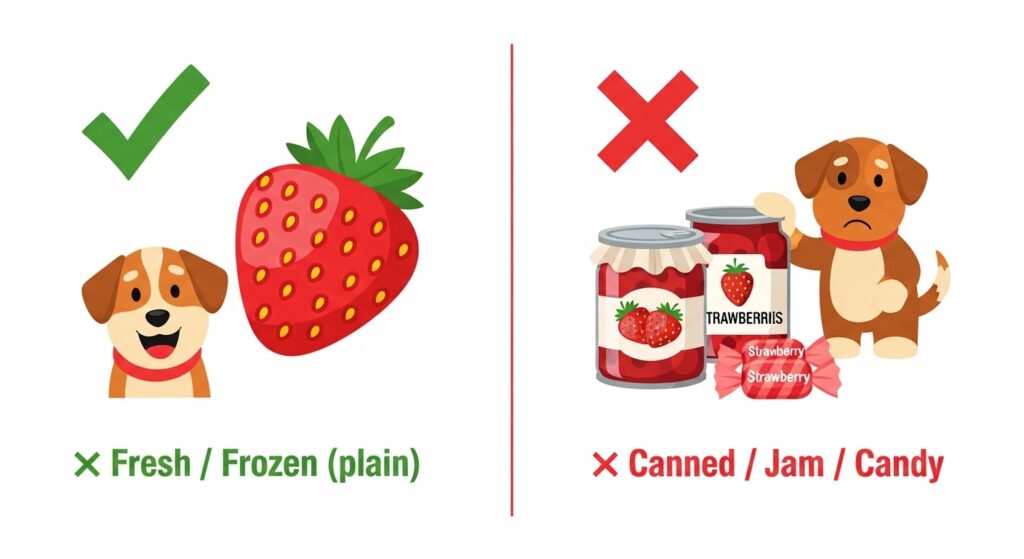
Plain frozen strawberries (with no added sugar or xylitol) are an excellent treat, especially in warm weather. The cold temperature can be soothing for teething puppies and provides enrichment. Always check the ingredient label on packaged frozen strawberries — many commercial brands add sugar syrups or preservatives.
Dried Strawberries
Use caution. The dehydration process concentrates sugar significantly — a small serving of dried strawberries contains far more fructose per serving than fresh ones. While not toxic, dried strawberries are calorie-dense and can trigger blood sugar spikes. Avoid regularly offering dried fruit to dogs.
Canned Strawberries and Strawberry Jam
Avoid entirely. Canned strawberries are typically packed in heavy syrup with added sugars. Strawberry jam and preserves often contain xylitol — an artificial sweetener that is severely toxic to dogs, causing hypoglycemia and acute liver failure even in small doses. Always read labels carefully and never assume a fruit product is xylitol-free.
Strawberry Flavored Products
Strawberry-flavored yogurts, ice cream, baked goods, and candies may contain artificial flavors, xylitol, chocolate, macadamia nuts, or other dog-toxic ingredients. Avoid all processed strawberry-flavored human food for your dog. If you want to offer a strawberry-flavored treat, make your own using whole strawberries blended with plain, unsweetened Greek yogurt.
How Many Strawberries Can a Dog Eat? Serving Size Guide
Portion Guidelines by Dog Size
| Dog Size | Weight | Recommended Serving |
|---|---|---|
| Extra Small | Under 10 lbs | ½ small strawberry |
| Small | 10–25 lbs | 1 small strawberry |
| Medium | 25–60 lbs | 2–3 medium strawberries |
| Large | 60–100 lbs | 3–5 medium strawberries |
| Extra Large | 100+ lbs | Up to 5–6 strawberries |
These are occasional treat quantities — not daily allowances. Aim to offer strawberries 2–3 times per week at most.
The 10% Rule Explained
Veterinary nutritionists widely advocate the 10% treat rule: treats should account for no more than 10% of a dog’s total daily caloric intake. For a medium-sized dog on a 1,000-calorie diet, that’s 100 calories from treats. One medium strawberry contains roughly 4–6 calories, so even a generous serving of 4–5 strawberries represents only 20–30 treat calories — well within the 10% threshold. This makes strawberries one of the more calorie-friendly treat options available.
How to Prepare Strawberries for Dogs Safely

Follow these steps every time you serve strawberries to your dog:
- Wash thoroughly under cold running water to remove pesticide residue, dirt, and surface bacteria.
- Remove the hull and stem to prevent choking and digestive irritation.
- Slice into appropriate sizes — for small dogs, quarter the strawberry; for large dogs, halving is sufficient.
- Serve plain and fresh — no sugar, no whipped cream, no chocolate.
- Introduce gradually — offer one small piece first, monitor for 24 hours, then adjust.
- Refrigerate unused portions — cut strawberries should be used within 1–2 days.
For extra enrichment, consider mashing strawberries and freezing them in an ice cube tray, or blending with plain yogurt and freezing in a Kong toy for a mentally stimulating treat.
Dogs That Should Avoid Strawberries
Diabetic Dogs
Dogs with diabetes mellitus require tightly controlled blood glucose levels. The natural fructose in strawberries, while lower glycemic than refined sugar, can still influence insulin requirements. If your dog is diabetic, consult your veterinarian before introducing any fruit, including strawberries.
Overweight or Obese Dogs
Even though strawberries are low in calories compared to commercial treats, additional sugar sources can impede weight loss progress. For dogs on a calorie-restricted diet, it’s best to stick to vet-approved, zero-calorie treats like plain cooked green beans or cucumber slices.
Dogs with Kidney Issues
Dogs with chronic kidney disease (CKD) require phosphorus and potassium restriction. Strawberries contain moderate levels of potassium, which can accumulate dangerously in dogs with reduced renal clearance. Always consult a veterinary nephrologist before modifying the diet of a dog with CKD.
Signs of Strawberry Allergy or Overconsumption in Dogs
Watch for these symptoms after feeding strawberries:
- Vomiting or regurgitation within 1–2 hours
- Loose stools or diarrhea
- Excessive gas or abdominal bloating
- Facial swelling, particularly around the muzzle or eyes
- Hives or skin redness
- Itching, pawing at the face, or rubbing against furniture
- Lethargy or discomfort
- In severe cases: difficulty breathing (seek emergency veterinary care immediately)
If mild GI symptoms occur, withhold strawberries and monitor. If allergic symptoms appear, contact your veterinarian. If anaphylaxis is suspected, treat it as a veterinary emergency.
Frequently Asked Questions About Dogs and Strawberries
Can puppies eat strawberries? Yes, but with extra care. Puppies have smaller, more sensitive digestive systems. Offer only a quarter of a small strawberry, watch for any reaction, and prioritize age-appropriate puppy food as the dietary foundation.
Can dogs be allergic to strawberries? Yes, though it is uncommon. Any food can potentially trigger a hypersensitivity reaction. Always introduce new foods one at a time.
Are wild strawberries safe for dogs? Wild strawberries (Fragaria vesca) are non-toxic, but foraging is not recommended because wild berries may be contaminated with pesticides, herbicides, or parasites from animal droppings.
Can dogs eat strawberry tops (the green part)? The green calyx (leafy top) is non-toxic but can cause mild oral irritation and is unnecessary. Simply remove it before feeding.
What berries are toxic to dogs? Holly berries, mistletoe berries, juniper berries, and baneberries are toxic to dogs. Always identify wild berries before allowing your dog to consume them.
Vet-Approved Alternatives to Strawberries for Dogs
If your dog doesn’t enjoy strawberries or has dietary restrictions, consider these equally safe and nutritious alternatives:
- Blueberries – Extremely high in antioxidants, low sugar, perfect bite-sized treats. According to the American Kennel Club’s fruit safety guide, blueberries are among the best fruits for dogs.
- Watermelon (seedless, no rind) – Hydrating, low-calorie, rich in lycopene
- Cantaloupe – High in beta-carotene and Vitamin A, good for coat health
- Apple slices (no seeds or core) – Fiber-rich, teeth-cleaning crunch
- Banana – High in potassium but also calories; best in small quantities
- Cucumber – Nearly zero calories, hydrating, excellent for overweight dogs
For a broader understanding of safe and unsafe foods for dogs, the ASPCA’s toxic and non-toxic plant and food database is an authoritative, frequently updated resource every dog owner should bookmark.
Always consult your veterinarian before making significant dietary changes or if your dog has any underlying health conditions. This article is for informational purposes and does not constitute veterinary medical advice.