


It’s 2 AM. You’re staring at the ceiling, pillow over your head, while your dog barks at something only they can see or hear. Sound familiar? You’re not alone. Nighttime dog barking is one of the most common complaints among pet owners — and one of the most disruptive to your sleep, your health, and your relationship with your dog.
The good news? This is almost always a solvable problem. Whether you have a new puppy crying through the night, a rescue dog adjusting to a new home, or an older dog who has suddenly developed a barking habit, this guide walks you through everything you need to know — from understanding the root cause to implementing proven training techniques that actually work.
Let’s get your nights back.
Why Dogs Bark at Night: Understanding the Root Cause
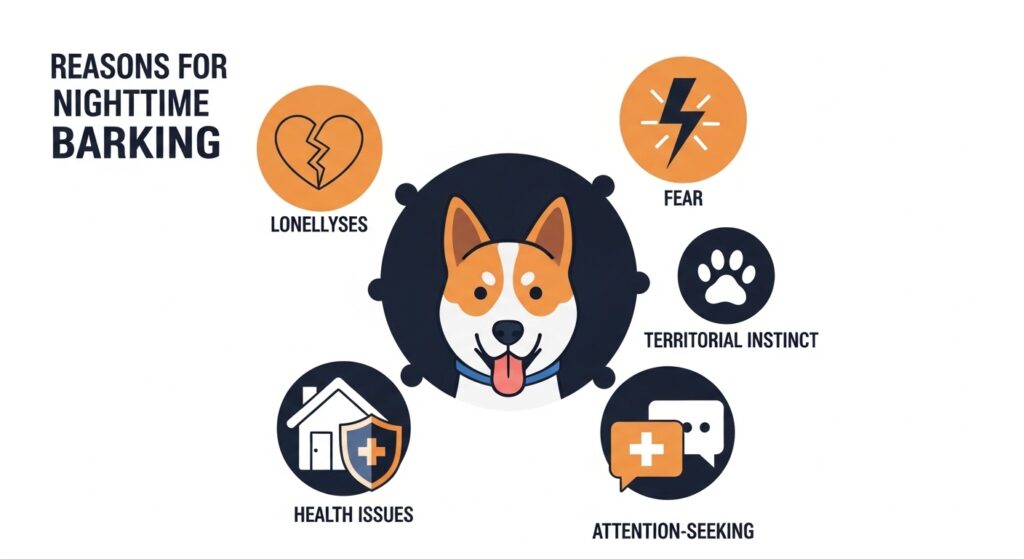
Before you can stop the barking, you need to understand why it’s happening. Dogs don’t bark to annoy you — barking is their primary form of vocal communication, and nighttime barking almost always signals an unmet need or emotional response.
Loneliness and Separation Anxiety are among the most common culprits. Dogs are social, pack-oriented animals. When left alone in a dark, quiet room, many dogs experience genuine distress. This is especially common in breeds that bond intensely with their owners, such as Labrador Retrievers, Border Collies, and Vizslas.
Boredom and Pent-Up Energy can also drive excessive barking after dark. A dog that hasn’t had adequate physical exercise or mental stimulation during the day will often vocalize at night simply because they have nowhere else to direct that energy.
Environmental Triggers are another significant factor. Nocturnal animals like raccoons or foxes, passing cars, neighbors coming home late, distant sirens — dogs have far more sensitive hearing than humans and can detect sounds we don’t even register. What seems like random barking to you may be a very specific reaction to the environment.
Fear and Anxiety manifest differently in different dogs. Thunderstorms, fireworks, unfamiliar smells carried on the wind, or even the settling sounds of a house can provoke anxiety-driven barking.
Territorial Behavior is instinctive. Many dogs feel responsible for guarding their home, and anything that feels like an intrusion — even a shadow moving across the window — can trigger an alert bark.
Attention-Seeking Behavior is a learned pattern. If your dog has discovered that barking at night gets a response from you — even a frustrated “shush!” — they’ve been inadvertently trained that barking = attention.
Finally, medical issues should never be ruled out. Pain, gastrointestinal discomfort, the need to urinate, and cognitive decline in senior dogs can all manifest as nighttime vocalization.
Step 1: Rule Out Medical Causes First
If your dog’s nighttime barking has started suddenly, or if your dog is a senior (7+ years for most breeds), the very first step is a veterinary check-up — before any training intervention.
Signs that the barking may be medically driven include sudden onset with no clear behavioral trigger, whimpering or whining alongside the barking, restlessness and inability to settle, changes in appetite or bathroom habits, and apparent confusion or disorientation.
One condition worth knowing about is Canine Cognitive Dysfunction Syndrome (CDS) — often described as doggy dementia. Older dogs with CDS may bark at night because they feel confused, lose track of where they are, or experience disrupted sleep cycles. This is a medical condition that requires veterinary management, not behavioral training alone.
Once medical causes are ruled out, you can move confidently into behavioral and environmental solutions.
Step 2: Create an Optimal Sleep Environment
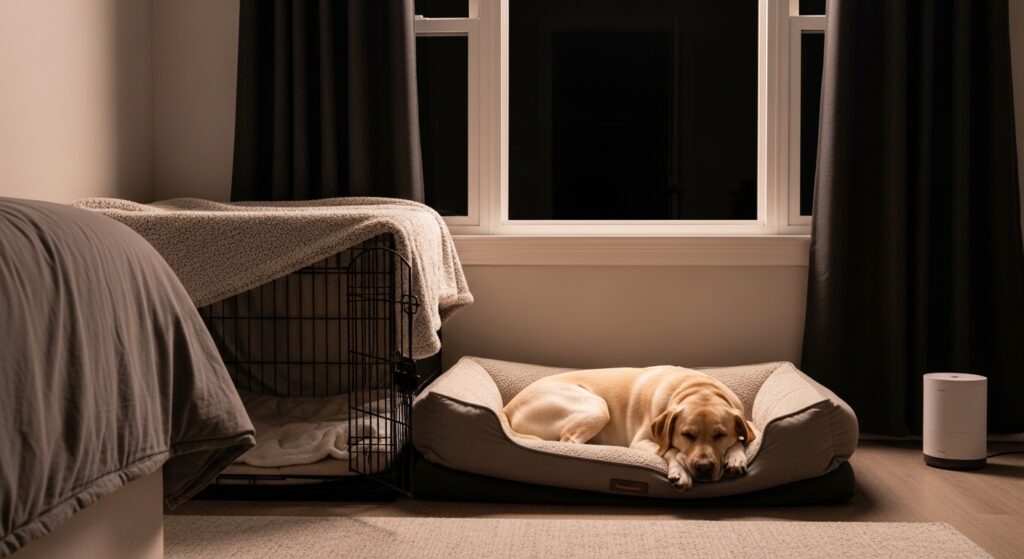
Your dog’s sleeping setup has a profound impact on their nighttime behavior. A few thoughtful adjustments can dramatically reduce barking triggers before any formal training begins.
Choose the Right Sleeping Spot. There is no universal right answer here — it depends on your dog’s temperament and your household rules. Some dogs sleep best in a crate, where the enclosed space mimics a den and provides a sense of security. Others do well on a dog bed in a quiet corner. Some dogs genuinely settle better when sleeping in their owner’s bedroom, simply because proximity reduces anxiety.
Crate Training Done Right. If you use a crate, ensure it’s properly introduced. A crate should never feel like punishment. Cover it with a blanket to create a den-like atmosphere, place a worn t-shirt inside for your scent, and make sure the dog has had positive associations with the crate during the day before expecting them to sleep in it at night.
Location, Location, Location. Position your dog’s sleeping area away from windows that face the street or yard. A dog sleeping next to a front window will react to every passing car, pedestrian, and neighborhood cat. Moving the bed to a quieter interior location can reduce environmental trigger exposure significantly.
Use White Noise or Calming Music. White noise machines, fans, or purpose-designed dog relaxation music (species-specific music has been shown in studies to reduce canine stress) can mask the outdoor sounds that set off your dog. Apps like “Through a Dog’s Ear” offer clinically developed calming audio specifically for dogs.
Optimize Comfort. An orthopedic dog bed suited to your dog’s size, a comfortable ambient temperature, and dim or dark lighting all contribute to a sleep-conducive environment. Blackout curtains in the sleeping area can eliminate visual triggers from outside — headlights, animals, movement — that your dog might otherwise react to.
Step 3: Adjust Daytime Habits to Improve Nighttime Behavior

What happens during the day directly determines how your dog behaves at night. This is one of the most overlooked aspects of managing excessive barking.
Exercise is Non-Negotiable. A tired dog is a quiet dog. Depending on your dog’s breed, age, and health, they may need anywhere from 30 minutes to 2+ hours of vigorous physical activity per day. High-energy breeds like Huskies, Belgian Malinois, and Australian Shepherds need considerably more exercise than a Basset Hound or Shih Tzu. Under-exercised dogs almost always develop behavioral problems — nighttime barking chief among them.
Mental Stimulation is Equally Important. Physical tiredness alone isn’t always enough. Cognitive engagement through puzzle feeders, sniff walks (letting your dog lead and smell freely), obedience training sessions, and interactive play depletes mental energy that would otherwise fuel restlessness after dark.
Establish a Feeding Schedule. Hunger can absolutely cause nighttime barking. Feed your dog their last meal at a consistent time each evening — not so early that they’re hungry by midnight, and not so late that digestion is active during sleep. Most veterinarians recommend the last meal at least 2-3 hours before bedtime.
Time the Last Bathroom Break Strategically. Take your dog out for a bathroom break right before bed — not an hour before, but immediately before you turn in. A dog that needs to eliminate will bark to communicate it. Eliminating that trigger removes one variable from the equation.
Wind Down Before Bed. Just like humans, dogs benefit from a pre-sleep wind-down routine. Avoid high-energy play in the hour before bed. Instead, settle into calm activities — gentle grooming, quiet companionship, a chew toy. This signals to your dog that the active part of the day is over.
Step 4: Training Techniques That Stop Nighttime Barking
This is the core of long-term resolution. Environmental changes help, but behavioral training is what creates lasting change
The “Quiet” Command

This is the foundational technique for managing barking of any kind. When your dog begins barking, calmly say “quiet” in a firm but neutral tone — not shouted, not pleading. Wait for even a brief pause in the barking, then immediately reward the silence with a treat and calm praise. Repeat consistently. Over time, the dog associates the word “quiet” with the expectation of silence and the reward that follows.
The key pitfalls to avoid: don’t repeat the command over and over while the dog continues barking (it loses meaning), and don’t reward until there is genuine silence, even if only for two seconds.
Desensitization and Counter-Conditioning
If your dog barks at specific triggers — the sound of cars, the neighbor’s cat, outdoor wildlife — desensitization is highly effective. The process involves exposing your dog to the trigger at a very low intensity (a distant recording of a car, for example) while pairing the exposure with something positive like a high-value treat. Gradually increase the intensity of the trigger over many sessions. Over time, your dog learns that the trigger predicts good things, rather than something worth barking at.
This process takes patience and consistency but produces reliable, lasting results.
The Extinction Method (Ignoring the Barking)
If your dog’s nighttime barking is attention-seeking behavior, the most effective response is no response at all. Any engagement — even coming in to scold — reinforces the behavior. The “extinction” method means completely ignoring the barking: no eye contact, no speaking, no entering the room.
Fair warning: behavior often gets worse before it gets better. This is called an “extinction burst” — the dog escalates before giving up. If you give in during the burst, you’ve taught your dog they just need to bark louder and longer. Stay consistent, and the behavior will decrease.
The “Place” or “Go to Bed” Command
Train your dog during the day to go to a designated spot — their bed or mat — on command. Use a clear verbal cue (“place” or “bed”), guide them there, reward them heavily for staying, and gradually increase the duration. Once solid during the day, this command becomes a powerful nighttime tool. When barking begins, calmly give the command and reward compliance with calm settling behavior.
Clicker Training for Calm Behavior
A clicker can be used to mark the exact moment of quiet, calm behavior — making it very clear to your dog what is being rewarded. Click and treat during training sessions when your dog is relaxed and quiet. This builds a positive association with the state of calmness itself, which translates into better settling behavior at night.
Tools and Products That Can Help

Several products can support your training efforts. Anxiety wraps like the ThunderShirt apply gentle, constant pressure that many dogs find calming. Pheromone diffusers such as Adaptil release synthetic dog-appeasing pheromones that mimic what a mother dog produces for her puppies — clinically shown to reduce stress-related behaviors. Calming supplements containing melatonin, L-theanine, or chamomile can take the edge off anxiety-driven barking, particularly during high-stress periods like the adjustment to a new home. Always consult your vet before introducing any supplement.
Avoid punishment-based tools like shock collars. These increase anxiety and fear, which makes barking problems worse over time and damages your relationship with your dog.
What NOT to Do

- Don’t yell or punish. Raised voices increase anxiety and can make barking worse.
- Don’t respond to attention-seeking barking. Consistency is everything.
- Don’t skip the vet if barking is sudden, new, or accompanied by other symptoms.
- Don’t expect instant results. Behavioral change takes days to weeks of consistent effort.
When to Call a Professional

If you’ve worked through these steps consistently for several weeks without improvement, it may be time to involve a professional. A certified professional dog trainer (CPDT-KA) or veterinary behaviorist can assess your specific dog’s behavior, identify factors you may have missed, and design a customized behavior modification plan. Veterinary behaviorists can also prescribe medication for severe anxiety cases where behavioral intervention alone isn’t sufficient.
Summary
Stopping nighttime dog barking comes down to a clear process: identify the underlying cause, optimize the sleep environment, build supportive daytime habits, and apply consistent training techniques. There’s no single magic fix — but there is a reliable path forward.
Most dogs, with patient and consistent guidance, can learn to sleep quietly through the night. The key is understanding that your dog isn’t misbehaving out of spite — they’re communicating. Your job is to figure out what they’re saying, address it appropriately, and teach them a better way to cope.
With the right approach, peaceful nights are absolutely within reach — for both of you.
FAQ
How long does it take to stop a dog from barking at night? Most owners see noticeable improvement within 2–4 weeks of consistent training, though some cases take longer.
Should I let my dog sleep in my bed to stop the barking? It depends on your preference. For separation anxiety, having the dog in your bedroom (even on a floor bed) can help. Co-sleeping is a personal choice with no single right answer.
Is it cruel to crate a dog at night? Not when done correctly. A properly introduced crate feels safe and den-like to most dogs. Forcing a dog into a crate without proper introduction can cause distress.
Why does my dog only bark at night and not during the day? Nighttime is quieter, making sounds more noticeable; dogs are also more alert to territorial threats after dark, and the absence of daytime stimulation increases anxiety.
Can a dog grow out of nighttime barking? Puppies often do as they mature and feel more secure — but adult dogs rarely grow out of it without intervention.
If your dog barks persistently when left alone at night, the root cause may run deeper than simple habit — separation anxiety is a recognized condition that requires a dedicated approach. Read our in-depth guide on dog separation anxiety for a full treatment plan.