

Summary
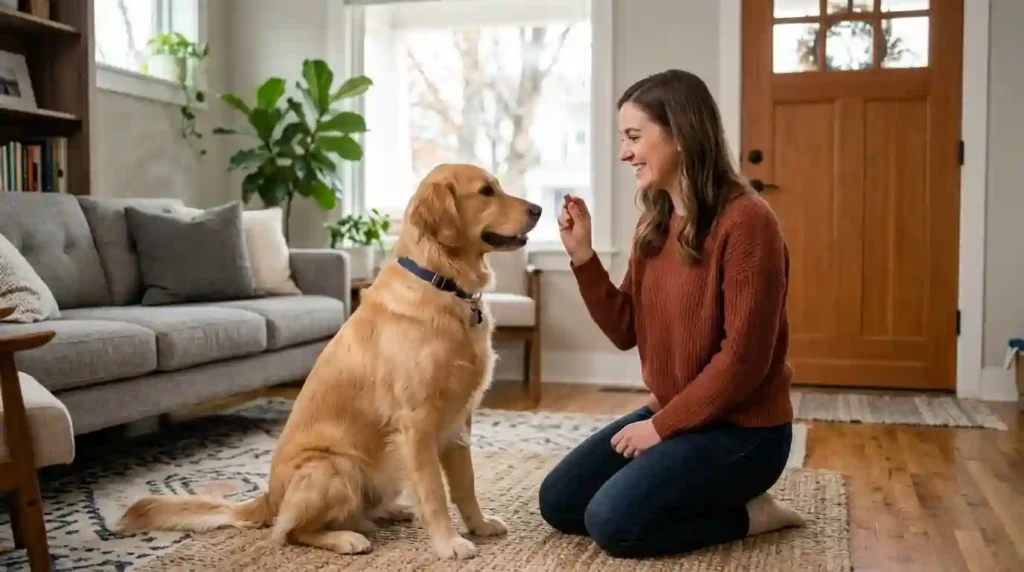
Learning how to use treats correctly to stop barking without rewarding the barking itself is one of the most important skills for dog owners who want a quieter, calmer home. Treats can either solve the barking problem or accidentally make it worse, depending on timing, reward placement, and what behavior you reinforce. This guide explains how to use food rewards strategically, teach silence, prevent attention barking, and build calm habits without confusing your dog.
Table of Contents
- How to Use Treats Correctly to Stop Barking Without Rewarding the Wrong Behavior
- Why Dogs Bark and How Treats Affect the Behavior
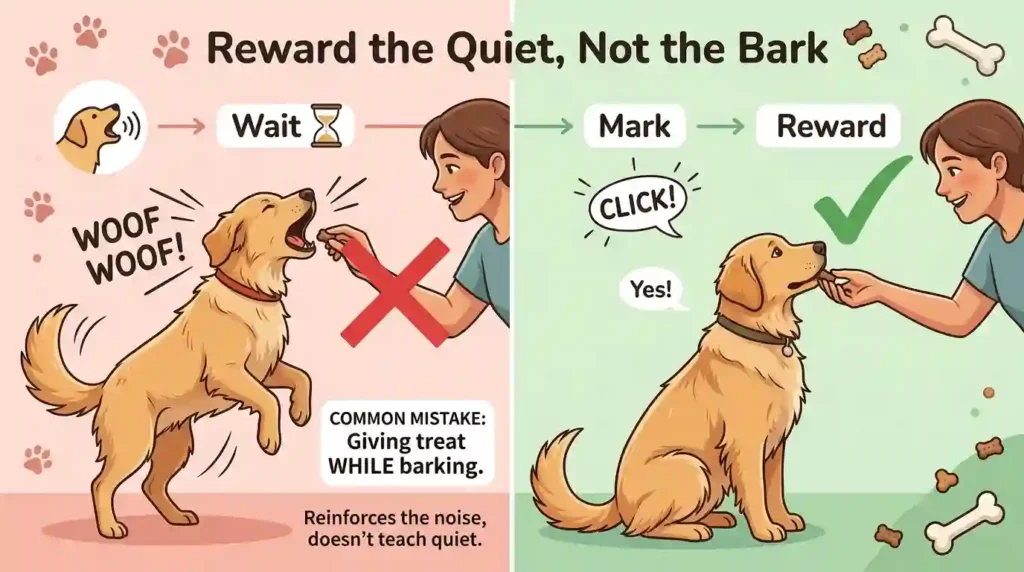
- The Biggest Mistake: Treating Too Soon After Barking
- How to Use Treats Correctly to Stop Barking Without Rewarding Demand Barking
- Step-by-Step Quiet Training Method
- How to Reward Calm Before Barking Starts
- Treat Timing, Marker Words, and Reward Placement
- Common Barking Triggers and Treat-Based Solutions
- When Treats Are Not Enough
- Conclusion
- FAQs
How to Use Treats Correctly to Stop Barking Without Rewarding It
Dog treats are powerful training tools, but they can also create confusion when used at the wrong moment. Many dog owners reach for treats when their dog barks because they want to distract, calm, or redirect the behavior. The problem is that dogs learn through consequences. When barking is followed by food, attention, movement, or access to something exciting, the dog may decide that barking is the first step in earning a reward.
That does not mean treats are bad for barking problems. In fact, food rewards are one of the most effective tools for teaching quiet, calm, focus, and emotional control. The key is understanding what you are actually rewarding. Are you rewarding the bark? The pause after the bark? The quiet behavior that lasts several seconds? The choice to look away from a trigger? The relaxed body language before the barking even starts?
This article explains how to use treats correctly so your dog learns that silence, calmness, and self-control are rewarding, while barking no longer produces the result they want.
For more barking-related training guides, visit the Dog Barking category.
Why Dogs Bark and How Treats Affect the Behavior
Barking is normal canine communication. Dogs bark to alert, request attention, express frustration, respond to fear, release excitement, guard territory, communicate with other dogs, or ask for something they want. The ASPCA explains that barking can serve different functions, so identifying the cause is important before choosing a training plan: ASPCA guide on barking.
Barking Is Not Always “Bad Behavior”
A dog barking once or twice at a doorbell is different from a dog barking nonstop at every sound. A puppy barking for play is different from a fearful rescue dog barking at strangers. A senior dog barking at night may be confused, uncomfortable, or responding to sensory decline.
Before using treats, ask: Why is the dog barking?
Common barking motivations include:
- Alert barking at windows, doors, fences, or outside noises
- Demand barking for food, play, walks, or attention
- Fear of barking at unfamiliar people, dogs, objects, or sounds
- Frustration barking when restrained or blocked from something
- Excitement barking during greetings or play
- Separation-related barking when left alone
- Compulsive or repetitive barking caused by stress or boredom
Treats work best when they are part of a clear behavior plan. They should not be used as a quick bribe after the dog has already escalated.
How Dogs Connect Barking and Rewards
Dogs are excellent at noticing patterns. If your dog barks, you say “quiet,” then hand over a treat immediately, your dog may learn this chain:
Bark → human reacts → dog pauses → treat appears.
From the dog’s point of view, barking started the reward sequence. Over time, this can create “bark and look at the owner” behavior. The dog barks once, turns toward you, and waits for payment.
The solution is not to stop using treats. The solution is to change the timing and criteria, so your dog understands that the reward is for quiet, calm, or an alternative behavior—not the bark.
The Biggest Mistake: Treating Too Soon After Barking
The most common mistake is rewarding the first split-second of silence after barking. While technically the dog has stopped barking, the silence may be too brief for the dog to understand what earned the treat.
Why One Second of Silence Is Usually Not Enough
If your dog barks three times and receives a treat after a half-second pause, the strongest memory may still be the barking. This is especially true with high-energy dogs, attention-seeking dogs, and smart dogs that quickly test behavior patterns.
Instead, you need a quiet duration. At first, this may be only two or three seconds. Over time, it should become five seconds, ten seconds, thirty seconds, and eventually several minutes of calm.
The “Quiet Gap” Rule
A simple rule is this: do not reward the moment the barking stops. Reward after a clean gap of silence.
For beginners, use this progression:
- Wait for 2 seconds of quiet
- Mark the quiet with “yes” or a click
- Reward calmly
- Build to 5 seconds
- Build to 10 seconds
- Build to 30 seconds
- Begin rewarding randomly instead of every time
This teaches the dog that sustained quiet earns reinforcement.
Avoid Rewarding Emotional Intensity
A dog can be silent but still highly aroused. If your dog is stiff, staring, lunging, whining, pacing, or ready to explode, wait for more relaxation before giving the treat when possible. You want to reinforce calm behavior, not just a closed mouth.
Look for signs such as:
- Softer eyes
- Turning away from the trigger
- Relaxed ears
- Looser body posture
- Choosing to sit or lie down
- Sniffing the ground
- Looking back at you voluntarily
These details matter because the goal is not just silence. The goal is emotional regulation.
How to Use Treats Correctly to Stop Barking Without Rewarding Demand Barking
Demand barking happens when a dog barks to make something happen. The dog may bark for food, play, petting, a walk, a toy, a door opening, or your attention.
This type of barking is especially easy to reward by accident.
Do Not Pay the Bark
If your dog barks at you while you hold a treat, toy, leash, or food bowl, pause. Do not give the item while the dog is barking. Do not say “no” repeatedly, because even that can become attention.
Instead:
- Freeze your body.
- Keep the treat hidden or still.
- Wait silently.
- Mark a calm behavior.
- Reward only after quiet.
The reward should come after the dog offers better behavior, such as sitting, looking at you calmly, stepping back, or staying quiet.
Teach an Alternative Behavior
Dogs need to know what to do instead of barking. For demand barking, teach behaviors like:
- Sit to ask for food
- Go to mat before getting a chew
- Eye contact before the leash goes on
- Four paws on the floor before greeting
- Quietly waiting before the doors open
- Chin rest or hand target for focus
When your dog learns that polite behavior works faster than barking, the barking loses value.
Use Life Rewards, Not Just Food
A “reward” is anything your dog wants. Treats are useful, but so are doors opening, walks starting, toys being tossed, attention, and access to the yard.
For example:
- Dog barks at the door → door stays closed
- Dog sits quietly → door opens
- Dog barks for toy → toy stays still
- Dog waits quietly → toy is tossed
- Dog barks for food bowl → bowl pauses
- Dog is quiet → bowl lowers
This makes everyday life part of training.
Step-by-Step Quiet Training Method
Teaching a quiet cue can help when barking has already started, but it must be trained carefully. The cue should mean “stop barking and stay quiet,” not “bark first, then get a treat.”
Step 1: Choose a Calm Cue
Pick one word, such as:
- Quiet
- Enough
- Thank you
- Settle
- All done
Use a calm voice. Shouting “quiet” often sounds like barking to a dog and may increase excitement.
Step 2: Let the Dog Bark Briefly
For alert barking, allow one to three barks if appropriate. This acknowledges that your dog noticed something. Then calmly say your cue.
Example:
The dog barks at the window.
You say, “Thank you, quiet.”
You move the dog away from the window.
You wait for several seconds of silence.
You mark and reward.
Step 3: Move Away From the Trigger
Rewarding right at the window, fence, or door can keep the dog focused on the trigger. Instead, call the dog away before rewarding.
Better sequence:
Bark → quiet cue → dog turns away → walks toward you → sits or stands calmly → quiet gap → treat.
This teaches disengagement. Your dog learns, “When I hear quiet, I leave the trigger and check in.”
Step 4: Reward the Silence, Not the Interruption
Wait for a visible quiet period before marking. Start small, but do not reward the instant the mouth closes.
Try this:
- First session: reward 2 seconds of quiet
- Next sessions: reward 3–5 seconds of quiet
- Later: reward 10–20 seconds of quiet
- Advanced: reward after the dog relaxes away from the trigger
Step 5: Fade the Treats Gradually
Do not give a treat every single time forever. Once your dog understands the behavior, switch to varied reinforcement.
Use:
- Praise
- Calm petting
- Occasional treats
- Distance from trigger
- Sniffing break
- Toy reward
- Relaxation on a mat
Random rewards help maintain behavior without making your dog dependent on seeing food.
How to Reward Calm Before Barking Starts
The best way to stop barking is to reward the dog before barking happens. This is called proactive reinforcement. Instead of waiting for your dog to react, you make calm choices early.
Watch for Pre-Bark Signals
Dogs often show signs before barking:
- Ears forward
- Body stiffening
- Mouth closing
- Tail rising
- Staring
- Moving toward the window or fence
- Low growl or huff
- Quick head turn toward the sound
These signs are your training window. Reward before the bark.
Use “Look at That” Training
For dogs that bark at people, dogs, cars, or outdoor movement, “Look at That” can help. The idea is to reward noticing the trigger calmly.
Process:
- The dog sees the trigger at a safe distance.
- The dog looks without barking.
- You mark: “yes.”
- The dog turns back for a treat.
- Repeat until the trigger becomes less exciting.
This works because the dog learns that calm observation pays. It also changes the emotional response from alarm to expectation of guidance.
Create Distance
Distance is one of the most overlooked barking solutions. If your dog cannot stay quiet near a trigger, you are too close.
Move farther away from:
- Windows
- Fences
- Other dogs
- Busy sidewalks
- Doorways
- Noisy streets
- Visitors
At the right distance, your dog can think, eat, and respond. At the wrong distance, your dog may be over threshold and unable to learn.
Treat Timing, Marker Words, and Reward Placement
Treats are only as effective as your timing. A late reward can reinforce the wrong behavior, while a well-timed marker can make learning much clearer.
Use a Marker Word
A marker word tells your dog exactly which behavior earned the reward. Common markers include:
- Yes
- Good
- Nice
- Clicker sound
For barking training, mark the quiet moment after your chosen quiet gap.
Example:
The dog sees the neighbor.
The dog stays quiet for three seconds.
You say “yes.”
You deliver treats away from the window.
The marker captures the behavior. The treat follows.
Deliver Treats Away From the Trigger
Reward placement matters. If your dog barks at the window, do not always feed at the window. That may encourage the dog to stay posted there.
Instead, toss or deliver the treat:
- Behind the dog
- On a mat
- Near you
- Away from the door
- On the floor for sniffing
- In another room
This encourages movement away from the barking zone.
Use Small, High-Value Treats
For barking, use tiny treats that are easy to eat quickly. Soft treats usually work better than crunchy treats because they do not interrupt the training rhythm.
Good options may include:
- Small training treats
- Tiny bits of cooked chicken
- Low-fat cheese pieces
- Freeze-dried meat
- Kibble for easy situations
- Soft commercial dog treats
Keep treat size small to avoid overfeeding.
Match Treat Value to Difficulty
Use lower-value rewards for easy situations and higher-value rewards for difficult triggers.
For example:
- Quiet in the living room: kibble
- Quiet when neighbor passes: soft treat
- Quiet near another dog: chicken
- Quiet during doorbell practice: high-value food scatter
The harder the behavior, the better the paycheck should be.
Common Barking Triggers and Treat-Based Solutions
Different barking triggers need different treat strategies. The same method will not work for every dog.
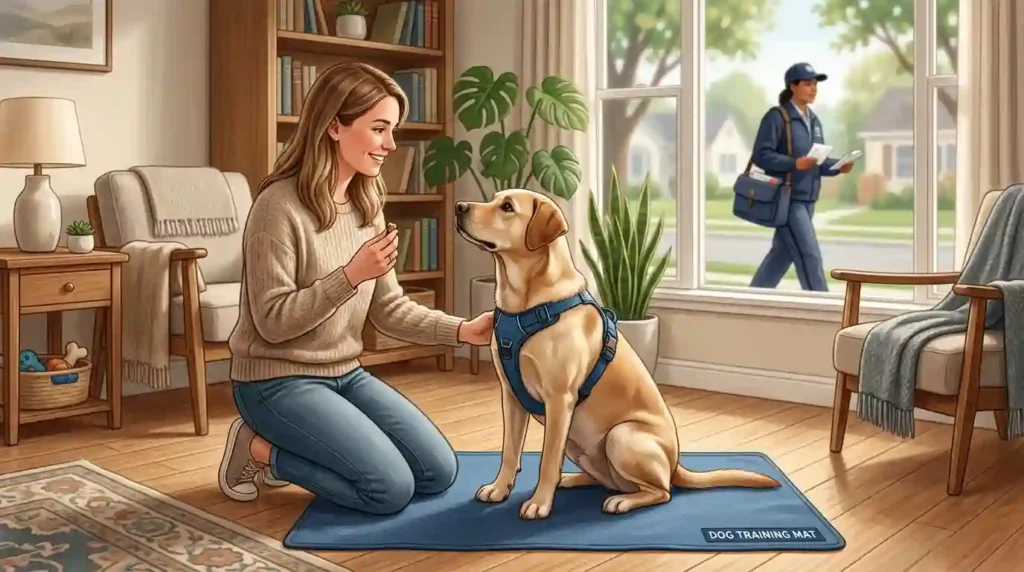
Window Barking
Window barking is often caused by territorial alerting and visual stimulation. The dog sees people, dogs, delivery workers, cars, or wildlife and barks until they leave. Unfortunately, the dog may think barking made the person go away.
Training tips:
- Block the view with curtains or window film
- Reward your dog for walking away from the window
- Use a mat to cue away from the window
- Practice with controlled triggers
- Feed calm behavior before barking begins
Doorbell Barking
Doorbells are intense because they predict visitors, excitement, or intrusion. Treats should be used before the dog explodes.
Training plan:
- Play a low-volume doorbell sound.
- Reward quiet.
- Send the dog to the mat.
- Reward staying on the mat.
- Gradually increase volume.
- Practice with real door knocks.
- Add visitor entry only when the dog can stay calm.
Do not open the door while your dog is barking and lunging. That can reward the barking with access to the visitor.
Barking at Other Dogs on Walks
Leash barking can come from fear, frustration, excitement, or a lack of social skills. Treats should be used before the dog reacts.
Use this pattern:
Dog notices another dog → you mark calm looking → treat near your leg → move away or continue walking.
Do not wait until your dog is barking wildly. At that point, food may become a distraction rather than true training.
Barking for Attention
Attention barking needs a careful plan. If barking makes you look, talk, scold, laugh, or toss food, it may continue.
Better approach:
- Ignore the barking if safe
- Wait for quiet
- Ask for a known behavior
- Reward calm engagement
- Increase daily enrichment
- Reward your dog when they are resting quietly
The secret is to reward quiet moments throughout the day, not only after barking episodes.
Barking in Senior or Rescue Dogs
Senior rescue dogs may bark because of anxiety, confusion, sensory changes, pain, past experiences, or unfamiliar triggers. These dogs often need gentler training, more routine, and careful observation.
For deeper guidance, read Dog Barking Triggers in Senior Rescue Dogs.
Training should focus on safety and confidence. Use treats to create positive associations, but avoid pushing the dog too close to triggers.
When Treats Are Not Enough
Treats are helpful, but they are not magic. Some barking problems need management, environmental changes, veterinary support, or help from a qualified professional.
Consider Health Issues
Sudden barking changes may be related to:
- Pain
- Cognitive decline
- Hearing loss
- Vision loss
- Anxiety
- Medication changes
- Sleep disruption
- Neurological issues
If your dog’s barking changes suddenly, especially in an older dog, consult a veterinarian.
Add Enrichment and Exercise
Many dogs bark more when they are under-stimulated. Mental and physical enrichment can reduce barking by lowering stress and boredom.
Helpful options include:
- Sniff walks
- Food puzzle toys
- Lick mats
- Scatter feeding
- Chew time
- Training games
- Scent work
- Calm social exposure
- Predictable routines
A tired dog is not automatically a quiet dog, but a fulfilled dog usually has better emotional control.
Avoid Punishment-Based Tools
Shock collars, yelling, leash jerks, and intimidation may suppress barking temporarily, but they can increase fear, anxiety, and aggression. They also fail to teach the dog what to do instead.
Reward-based training is more effective when it teaches replacement behaviors, builds trust, and reduces the emotional cause behind barking.
Practical Training Schedule for the First 7 Days
A short daily plan can help owners stay consistent.
Day 1: Identify the Barking Pattern
Write down:
- What triggers the barking
- Time of day
- Location
- Intensity
- What happens after barking
- Whether treats or attention are involved
You cannot fix a pattern you have not identified.
Day 2: Stop Accidental Rewards
Remove rewards that follow barking. This may mean no treat, no door opening, no toy toss, and no attention until your dog is quiet.
Day 3: Teach a Quiet Gap
Practice rewarding two to five seconds of silence. Keep sessions short and easy.
Day 4: Add an Alternative Behavior
Teach sit, down, hand target, or go to mat. Reward the alternative behavior instead of the bark.
Day 5: Practice With Mild Triggers
Use low-level sounds, distant movement, or controlled setups. Do not begin with the hardest trigger.
Day 6: Build Duration
Increase quiet time before rewarding. Move from five seconds to ten seconds, then longer.
Day 7: Reduce Treat Predictability
Begin using praise, petting, movement, or occasional treats. Keep rewarding excellent choices, but do not make every bark-to-quiet sequence produce food.
Conclusion
Treats can absolutely help stop barking, but only when they are used with clear timing and purpose. The main goal is to reward quiet, calm, and better choices—not the barking itself.
To use treats correctly, wait for a real pause in barking, mark the quiet behavior, reward away from the trigger, and gradually increase the amount of silence required. For demand barking, do not give food, attention, toys, or access while the dog is barking. Instead, teach polite alternatives like sitting, checking in, going to a mat, or calmly watching a trigger.
The best training happens before barking starts. Catch your dog noticing a trigger calmly, reward that choice, and help them learn that quiet behavior works better than noise. With consistency, patience, and smart reward timing, treats become a tool for building peace—not a payment for barking.
FAQs
Can treats make barking worse?
Yes, treats can make barking worse if they are given immediately after barking without a clear, quiet gap. Your dog may learn that barking starts the reward process. To prevent this, wait for several seconds of silence or reward an alternative calm behavior.
How long should I wait before giving a treat after barking stops?
Start with two to five seconds of silence, then gradually increase the duration. For dogs that already bark to get treats, wait longer and reward only calm behavior, not a quick pause.
Should I say “quiet” before giving a treat?
Yes, but only if the cue has meaning. Say “quiet” calmly, wait for silence, then mark and reward. Do not repeat the cue over and over while your dog continues barking.
What if my dog barks once and then looks at me for a treat?
This usually means your dog has learned a bark-then-reward chain. Ignore the demand bark, wait for a longer period of quiet, and reward calm behavior at random times throughout the day.
Are treats better than punishment for barking?
Treats are better when used to reinforce desired behavior. Punishment may suppress barking temporarily, but can increase stress or fear. Reward-based training teaches the dog what to do instead.
What treats work best for barking training?
Use small, soft, high-value treats for difficult barking triggers. For easier situations, kibble or low-value treats may work. The treat should be small enough that your dog can eat it quickly and return to training.
Can I use treats for barking at other dogs?
Yes, but timing is critical. Reward your dog before they bark when they calmly notice the other dog. If your dog is already barking intensely, increase the distance and make the situation easier.
Why does my dog bark more when I hold treats?
Your dog may be frustrated, excited, or trying to demand the treat. Keep treats hidden, reward calm waiting, and avoid showing the food before your dog offers quiet behavior.
Should I reward every time my dog is quiet?
In early training, frequent rewards help. Once your dog understands, switch to random rewards and include praise, petting, toys, sniffing, or access to something they enjoy.
When should I get professional help?
Get help if barking is severe, fear-based, aggressive, sudden, related to separation anxiety, or linked to senior dog confusion. A veterinarian, certified trainer, or veterinary behaviorist can help identify the cause and create a safe plan.