
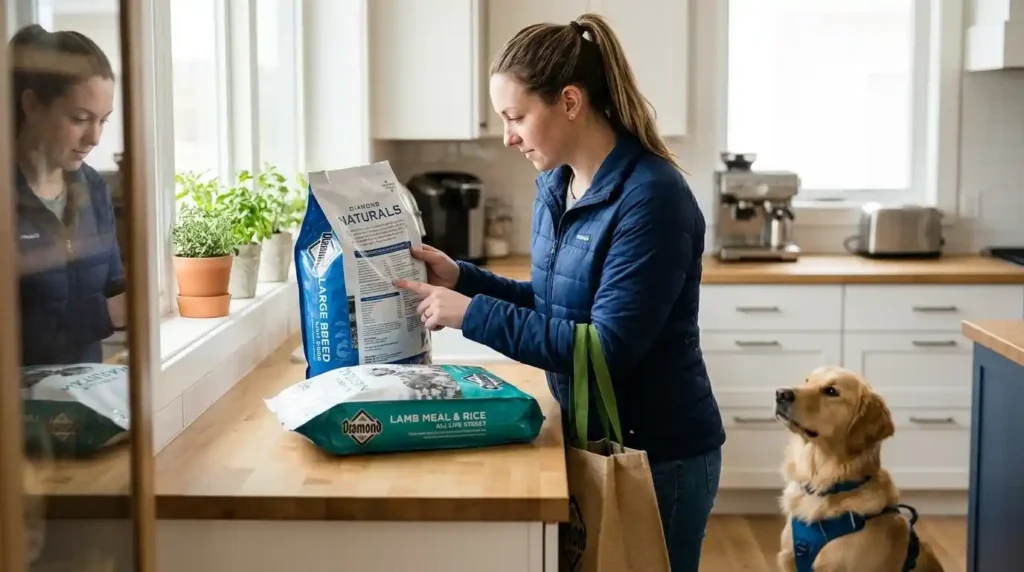

Summary: Is Diamond Naturals a good dog food? For many healthy dogs, it can be a reasonable choice—provided the specific formula fits their life stage, activity, and dietary needs. The line includes foods for puppies, adults, seniors, large breeds, and active dogs. Some recipes include grains, while others are grain-free. Many feature named animal ingredients, and the dry formulas include added probiotics. However, an appealing ingredient list does not settle every question. Owners should also check the nutritional adequacy statement, calories, feeding directions, and full ingredient list on the current bag. Diamond Pet Foods’ historical recalls deserve consideration as well. This guide takes you through those checks, explains what the ingredients and label can—and cannot—tell you, and shows how to calculate feeding cost. It also helps you decide when an ordinary formula may be appropriate and when your veterinarian should help choose your dog’s diet.
Table of Contents
- Is Diamond Naturals a Good Dog Food?
- Who Makes Diamond Naturals?
- What Is in Diamond Naturals Dog Food?
- How Does Diamond Naturals’ Nutrition Measure Up?
- Which Diamond Naturals Formula Should You Choose?
- Is Diamond Naturals Safe?
- Is Diamond Naturals Right for Your Dog?
- What Are the Pros and Cons of Diamond Naturals?
- What Does Diamond Naturals Cost Per Day to Feed?
- How Does Diamond Naturals Compare With Other Dog Foods?
- What Do Dog Owners Report About Diamond Naturals?
- How Do You Switch Your Dog to Diamond Naturals?
- Final Verdict: Is Diamond Naturals Worth Buying?
- Frequently Asked Questions
Is Diamond Naturals a Good Dog Food?
Diamond Naturals can be a good choice for a healthy dog when you choose a suitable recipe and feed an appropriate amount. Its formulas serve different life stages and activity levels, so the answer is more specific than a simple yes or no.
A growing puppy, an older adult, and a highly active dog do not necessarily need the same calories or nutrients. Likewise, an ingredient that suits one dog may cause trouble for another with a confirmed food allergy. That is why a review of the brand cannot replace a check of the exact bag you plan to purchase.
If you are asking, “Is Diamond Naturals good for dogs?”, begin with three practical questions. Is the food complete and balanced for your dog’s life stage? Does its calorie content fit your dog’s needs? Does the full ingredient list avoid anything your dog must not eat? When those answers are clear, the brand becomes much easier to assess.
Quick Verdict: Strengths, Limitations, and Best Fit
Diamond Naturals’ main advantage is choice. Its range includes puppy, adult, senior, Skin & Coat, and Extreme Athlete options. Owners can also compare grain-inclusive and grain-free recipes. Product labels and manufacturer pages provide the details needed to make a more informed selection.
The limitations matter too. Ingredients differ between formulas, so you cannot judge the range from one recipe. The company has a documented recall history. Additionally, added probiotics or a named meat ingredient do not guarantee that an individual dog will prefer or tolerate the food.
Best fit: a healthy dog whose owner can select the right life-stage formula, measure portions, and monitor the response to a gradual transition. If a dog has a medical condition or diagnosed allergy, a veterinarian should guide the choice.
Who Makes Diamond Naturals?
Brand History and Where the Food Is Made
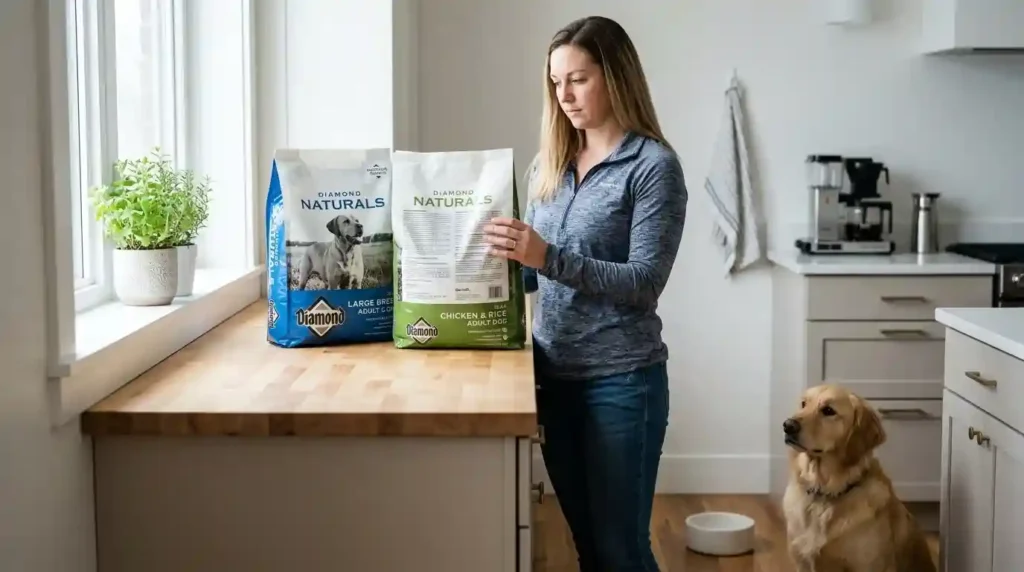
Diamond Naturals is a line from Diamond Pet Foods, a family-owned company founded in 1970. The company makes more than one food line. Consequently, a review of a product called “Diamond” does not automatically describe a product called “Diamond Naturals.”
This distinction is especially important when comparing ingredient lists or reading about recalls. Identify the complete product name, recipe, and date. A broad statement about the manufacturer may provide context, but it cannot tell you the nutrient profile of the bag in your cart.
For a look at the company’s other foods, see Is Diamond Dog Food Good. This review focuses on the Naturals line.
Where Does Diamond Naturals Source Its Ingredients?
Diamond Naturals is made in the United States, but a US manufacturing location does not mean that every ingredient comes from the United States. Manufacturers may source different ingredients from different suppliers and countries.
If the origin of a particular protein, vitamin, or other ingredient affects your purchase, ask Diamond Pet Foods about the specific formula. Keep the bag’s lot code when contacting the company. That gives its customer service team a clearer reference than the brand name alone.
For most owners, ingredient origin is only one part of the decision. The food must also be nutritionally appropriate, tolerable for the dog, and fed in a suitable portion.
Which Quality and Testing Claims Can Buyers Verify?
Buyers can read a product’s published ingredient list, guaranteed analysis, feeding guide, calorie information, and nutritional adequacy statement. Diamond also describes formulation features such as its K9 Strain Probiotics.
These details are useful, but they distinguish a verifiable label claim from an outcome promised for your dog. A probiotic guarantee tells you about a stated feature of the food; it does not prove that the recipe will resolve your dog’s diarrhea. An ingredient list confirms that an ingredient is present; it does not show that it will improve coat condition.
If testing practices strongly influence your choice, ask the company what it tests, whether the specific formula has undergone feeding trials, and who formulates its diets. Record the date of the answer because company practices and products may change.
What Is in Diamond Naturals Dog Food?
There is no single ingredient list for every Diamond Naturals product. The large breed adult lamb meal and rice formula, for example, differs from a salmon and potato recipe. Always check the current bag rather than copying an ingredient list from a review of another formula.
Meat and Other Protein Sources
Depending on the recipe, Diamond Naturals may feature chicken, lamb meal, beef meal, or salmon. A named meat meal identifies the animal source. “Lamb meal” is more specific than an unspecified “meat meal.”
Yet the first ingredient alone does not show how much of the finished kibble’s protein comes from animals. Fresh meat contains substantial moisture before processing, while meat meal has already had much of that moisture removed. Plant ingredients can also contribute protein.
Read the first several ingredients and the complete list. Then consider the guaranteed analysis and the food’s intended life stage. If your dog needs a particular protein for a veterinary-directed diet, confirm every relevant animal ingredient—not only the one emphasized on the front of the package.
Grains, Carbohydrates, and Fiber
Grain-inclusive recipes may contain brown rice, barley, oatmeal, or sorghum. Grain-free recipes use other ingredients that supply carbohydrates, potentially including potato, sweet potato, peas, or lentils. Grain-free does not mean carbohydrate-free.
Some recipes include fiber sources such as beet pulp or chicory root. Fiber can support normal digestion, but the amount and overall formula matter. There is little value in calling every plant ingredient a “filler” without considering what it contributes to the finished food.
If your dog has a confirmed sensitivity, check for that specific ingredient. Do not assume grains cause every episode of itching or loose stool. Many health issues can produce similar signs.
Fats, Omega Fatty Acids, and Added Nutrients
Fat supplies concentrated energy as well as essential fatty acids. Diamond Naturals recipes can include ingredients such as chicken fat, fish oil, or flaxseed. Certain product descriptions highlight omega-3 and omega-6 fatty acids in relation to skin and coat health.
The foods also contain added vitamins and minerals to help meet their nutritional targets. Some recipes feature ingredients such as pumpkin, blueberries, kale, and carrots. Those foods may contribute nutrients, but their presence does not tell you how much is in each serving.
Evaluate the finished recipe. A long list of appealing produce ingredients should not carry more weight than the nutritional adequacy statement, calorie content, and your dog’s actual response.
Probiotics and Other Featured Ingredients
Diamond says its Naturals dry formulas include K9 Strain Probiotics. It also highlights ingredients described as prebiotic fiber and sources of antioxidants in some recipes.
These are relevant distinctions between foods, especially for an owner comparing labels. Still, they are not a treatment plan. If your dog has persistent digestive symptoms, speak with a veterinarian rather than repeatedly switching among products marketed for digestive support.
When you change food, monitor stool quality and appetite. That observation will tell you more about your dog’s response than a general claim on the front of a bag.
Ingredients That May Concern Some Owners
Ingredient concerns should be tied to an actual need. A dog with a confirmed chicken allergy needs a check for all chicken-derived ingredients, even when a product advertises lamb or salmon. An owner considering grain-free food should look at the carbohydrate sources and discuss relevant concerns with a veterinarian.
Calories and fat can matter as much as the featured protein. A dog that needs fewer calories may not suit a formula intended for high activity. Conversely, a very active dog may require more energy than another adult recipe supplies at a practical portion size.
Do not reject a food because one ingredient sounds unfamiliar. Equally, do not approve it because one ingredient sounds especially wholesome. Judge the full label in the context of your dog.

How Does Diamond Naturals’ Nutrition Measure Up?
Protein, Fat, and Estimated Carbohydrate Content
A guaranteed analysis generally provides minimum crude protein and fat values and maximum crude fiber and moisture values. These numbers help compare products, but they are label guarantees, not necessarily the exact amount in every serving.
Carbohydrate percentage often does not appear on the label. A reviewer may estimate it from the other available figures, but an estimate is not a laboratory result. Compare such figures cautiously, especially when different websites use different methods.
Wet food and dry dog food also contain very different amounts of water. Comparing their printed protein percentages directly can mislead you. If your dog needs a specific nutrient target because of a medical condition, ask your veterinarian to review suitable product data.
How to Read a Recipe Label and Guaranteed Analysis
Read the label in a useful order. First, identify the exact recipe. Next, find its nutritional adequacy statement and intended life stage. Then look at calories, feeding directions, guaranteed analysis, and the complete ingredient list.
That order answers the most important question first: Can this product serve as an appropriate regular diet for this dog? A favorite ingredient is not enough if the life-stage claim does not fit.
When comparing two dry foods, place the labels side by side. Record calories per cup and the suggested daily amount for a dog of your dog’s size. These details also let you estimate which bag will cost less to feed.
How to Check the AAFCO Statement on Your Specific Bag
The nutritional adequacy statement usually appears near the ingredients or feeding directions. It tells you whether the food is intended to be complete and balanced and identifies the life stage or stages it covers.
Check the actual bag, even if an online article says that Diamond Naturals “meets AAFCO standards.” That statement may refer to a different formula. The current package is also more reliable than an old screenshot when a recipe or label has changed.
If you cannot interpret the wording, photograph it and ask your veterinarian. This check is especially valuable for puppies, large breed puppies, and dogs whose food will be their sole diet.
Formulation, Feeding Trials, and Life Stage Claims
A food may support its nutritional adequacy claim through formulation to nutrient profiles or through feeding trials. These approaches are distinct. Neither promises that every dog will like the food or that a recipe will suit a particular medical condition.
The life-stage wording deserves your attention. Adult maintenance is not the same claim as growth. Likewise, “all life stages” requires closer reading when a puppy is expected to become a large dog.
Use the statement as a starting point. Then consider the dog’s age, activity, body condition, ingredient tolerance, and any veterinary advice.
Which Diamond Naturals Formula Should You Choose?
Select the formula by your dog’s life stage and needs, then verify the current label. Product names can narrow the options, but they should not replace that final check.
Puppy and Large Breed Puppy Formulas
Growing puppies need a food appropriate for growth. Diamond Naturals offers puppy choices, including a large breed puppy lamb and rice recipe. The product page for that specific recipe states that it is formulated for all life stages, including growth of large-sized dogs.
That wording applies to the identified recipe, not automatically to every puppy food from the brand. Check the bag you buy and feed an appropriate amount. Growth and body condition are more useful measures than simply giving a puppy as much kibble as it will eat.
Is a Specific Formula Suitable for Your Large Breed Puppy?
Look for adequacy wording that explicitly includes growth of large-sized dogs. “Puppy” on the front of a bag is not enough information by itself. The expected adult size of your puppy matters here.
If you are unsure how large your puppy may become, or you cannot find the statement, ask your veterinarian to review a photo of the label. This is particularly sensible before buying a large bag intended to last several weeks.
The goal is to choose a food designed for the puppy’s growth stage and to feed a portion that maintains an appropriate body condition.
Adult and Small Breed Formulas
For a healthy adult dog, confirm the appropriate adequacy statement, then compare calories. A small breed formula may offer kibble and portions suited to smaller dogs. However, a small dog can still gain weight if the total daily intake exceeds its needs.
Use the feeding guide as a starting point. Review your dog’s body condition and include treats, chews, and toppers in the day’s intake.
Senior Formula
A senior label does not tell you everything an older dog needs. Some seniors must lose weight; others struggle to maintain it. Their health conditions and activity also differ.
Compare calories, ingredients, and the product’s adequacy statement. If an older dog suddenly loses weight, drinks much more, or seems less interested in food, arrange a veterinary assessment rather than assuming a senior kibble will fix the change.
Skin & Coat Formula
The Skin & Coat salmon and potato formula may appeal to owners comparing protein sources and fatty acids. It gives them a different option from a lamb meal and rice or chicken and rice recipe.
However, persistent itching does not prove a food allergy. Fleas, environmental allergens, infections, and other conditions can also affect skin and coat. Use veterinary advice to identify the cause rather than treating a formula name as a diagnosis.
Extreme Athlete Formula
Extreme Athlete targets a higher-activity use case. An active dog may need more energy, but its actual requirements depend on size, workload, climate, and condition.
Check calories per cup and monitor weight. If a dog’s exercise decreases, the portion may need to change. A product intended for active dogs is not automatically a better choice for every adult dog.
Wet Food Options
Wet dog food offers a different texture and moisture level. Some dogs prefer it, while owners may use it as part of mixed feeding.
Check whether the particular can is complete and balanced for the relevant life stage. If you add wet food to kibble, account for calories from both. A full serving of each may provide more food than the dog needs.
Should You Choose Grain-Free or Grain-Inclusive Diamond Naturals?
For a dog without a diagnosed reason to avoid grains, a grain-inclusive recipe is a sensible option to consider. Grain-free is not automatically healthier. It replaces grains with other ingredients and does not eliminate carbohydrates.
The U.S. Food and Drug Administration has investigated reports of canine dilated cardiomyopathy associated with certain diets. That investigation does not establish that every grain-free recipe causes heart disease. Nevertheless, owners should discuss a grain-free choice with their veterinarian, particularly when a dog has a heart condition or other relevant concerns.
Choose based on the complete formula and your dog’s needs, not on the assumption that “free from” always means “better.”
Is Diamond Naturals Safe?
An honest safety discussion includes documented incidents and practical steps for a current purchase. Diamond Pet Foods has a recall history. That does not mean every present-day Diamond Naturals bag is contaminated, but the history belongs in your decision.
Diamond Pet Foods’ Recall History
Diamond Pet Foods has been associated with a 2005 aflatoxin contamination event and Salmonella-related recalls in 2012. The company makes multiple product lines, so a recall notice must be read for the precise affected products, dates, and lot information.
Avoid two opposite shortcuts. Calling the whole brand unsafe forever ignores the details of current products. Claiming that its history is irrelevant prevents owners from making a fully informed choice.
For a newly purchased bag, check current recall information when you have a concern and keep its identifying details available.
The 2005 Aflatoxin Event
Aflatoxins are toxins produced by certain molds that can contaminate ingredients. The 2005 event involving Diamond-produced pet food was serious and associated with severe illness in dogs.
It is a historical safety event, not evidence that a bag purchased today contains aflatoxin. Its practical relevance is that owners should evaluate a manufacturer’s record honestly and take unusual illness or food quality concerns seriously.
The 2012 Salmonella Recall
A 2012 Salmonella incident involving Diamond-produced dry dog food led to recalls and was linked to human illness. It reminds owners that pet food safety can affect people handling the food, not only the animals eating it.
Wash your hands after handling kibble, clean bowls and scoops, and follow any recall’s directions. If a notice names your product, do not continue feeding it while waiting to see whether your dog develops symptoms.
What to Check Before Feeding a Purchased Bag
Inspect the package for tears, moisture, or other damage. Note the best-by date and lot code. If the food smells or looks notably different from previous bags of the same recipe, contact the seller or manufacturer before feeding it.
Keep the original packaging even if you transfer food to a storage container. A lot code is much harder to recover once the bag is discarded. Clean the container between bags and avoid mixing new kibble into old crumbs.
What Should You Do If Your Dog Ate a Recalled Product?
Stop feeding the food and keep its packaging. Follow the recall notice’s instructions about the affected product and disposal or returns.
Contact your veterinarian if your dog develops vomiting, diarrhea, poor appetite, unusual tiredness, or other concerning signs. Give the clinic the exact product name and lot code. Do not assume that removing visibly unusual pieces makes the remaining food safe.
Is Diamond Naturals Right for Your Dog?
Dogs With Food Allergies or Sensitive Stomachs
A dog with a confirmed food allergy needs a careful check of the entire ingredient list. A formula named for salmon or lamb may still contain another animal-derived ingredient. The protein featured on the front of the bag is not necessarily the only one inside it.
If your veterinarian has prescribed an elimination diet, follow that plan. An ordinary store-bought food may not serve the same diagnostic purpose.
For a sensitive stomach, switch gradually and note the response. Persistent diarrhea, vomiting, or itching deserves veterinary advice. You can also explore our broader Dog Food guides when comparing regular diets.
Active Dogs and Dogs With Different Calorie Needs
A dog’s daily energy needs depend on more than weight. Activity, age, body condition, and individual variation all matter. Start with the feeding guide, but observe whether the dog maintains a healthy condition.
Training treats and food rewards also count. If you use them frequently, consider how they fit into the day’s total intake. Our Dog Behavior and Training resources can help you plan consistent training routines while you keep feeding portions in mind.
Do not judge a recipe solely because a dog gains or loses weight on it. First review the amount fed, treats, exercise, and any possible health issues.
When to Ask Your Veterinarian About Another Diet
Seek individual advice for a dog with a diagnosed medical condition, suspected food allergy, repeated digestive trouble, unexplained weight change, or known heart concerns. A standard commercial food may not meet the requirements of a veterinary therapeutic diet.
Bring the precise recipe name, photos of the label, your daily feeding amount, and notes about symptoms. That information helps a veterinarian assess whether to adjust portions, choose another regular food, or recommend a different type of diet.
What Are the Pros and Cons of Diamond Naturals?
The advantages and drawbacks depend on the recipe, but this comparison captures the decisions most owners face:
| Potential benefit | What to check |
| Several life-stage and activity-focused formulas | The exact bag’s adequacy statement |
| Named animal ingredients in many recipes | The full list for any confirmed allergen |
| Both grain-inclusive and grain-free choices | Whether grain-free has a clear reason for your dog |
| Published calories and feeding guidance | Your dog’s portion and body condition |
| Probiotics in dry formulas | Your dog’s actual digestive response |
| Multiple bag sizes | Daily feeding cost, not just bag price |
| An established manufacturer | Historical recalls and current safety information |
The most useful comparison is between two specific foods that suit the same dog. For more options, browse our Dog Food Brand Reviews.
What Does Diamond Naturals Cost Per Day to Feed?
Bag price alone can be misleading. A food that costs less per pound may require a larger daily serving. A more expensive bag may last longer. Prices also change, so a permanent daily-cost figure without a dated price and defined dog would be unreliable.
How to Compare Formulas by Calories and Feeding Amount
Take the current price of the exact bag. Use its feeding guide to estimate how much your dog would eat each day. Calculate approximately how many days the bag would last. Then divide the price by that number:
Estimated feeding cost per day = bag price ÷ estimated days the bag lasts
Compare calories per cup as well. The same-size scoop of two different foods may deliver different amounts of energy. Your final portion should reflect body condition, treats, and veterinary advice—not only the number printed in a feeding chart.
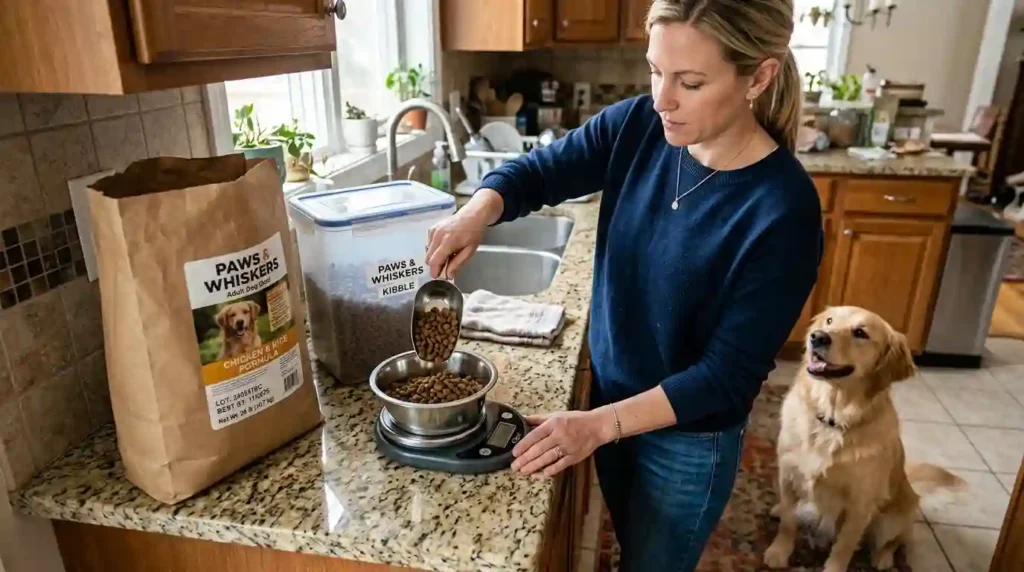
A scale can make portions more consistent than a heaped measuring cup. Keeping food properly contained and retaining the original bag can also make daily feeding and lot-code checks easier.
Relevant Amazon Products for Feeding and Storage
These are accessories, not substitutes for choosing the right food. Both links go directly to the named Amazon product pages:
| Product | Why it fits this article | Amazon product link |
| Etekcity Digital Kitchen Scale | Helps measure kibble portions consistently when comparing feeding amounts | View the Etekcity scale on Amazon |
| Gamma2 Vittles Vault, 25 lb capacity | Provides a dedicated dry-food storage container; keep the original bag for its label and lot code | View the Gamma2 Vittles Vault on Amazon |
Check each listing’s current reviews, seller, capacity, dimensions, and price before purchasing. Choose a container that fits the food bag you actually buy; the linked 25 lb container may not hold a larger bag.
How Does Diamond Naturals Compare With Other Dog Foods?
Diamond Naturals vs. Other Diamond Product Lines
Diamond Pet Foods makes more than the Naturals line. Different lines and recipes can vary in ingredients, nutrient levels, calories, and intended use. One product’s review should not stand in for another’s.
Compare exact labels side by side, beginning with life-stage adequacy. Our Is Diamond Dog Food Good article addresses the broader brand question.
To compare foods from other manufacturers, read Is Beneful a Good Dog Food and is black gold dog food good. Then return to the current labels of the recipes that could actually suit your dog.
Diamond Naturals vs. Taste of the Wild
Diamond Pet Foods also makes Taste of the Wild. A shared manufacturer does not make the two brands nutritionally identical.
Pair formulas intended for the same life stage. Compare their adequacy statements, calories, ingredients, feeding amounts, and daily cost. If one recipe is grain-free, include that distinction in the decision.
A higher bag price or a more unusual protein source does not, by itself, make one formula better for your dog.
What Do Dog Owners Report About Diamond Naturals?
Common Positive and Negative Experiences
Owners may describe a dog’s appetite, stool quality, coat appearance, energy, or reaction to a food change. They may also comment on value or a problem with a particular bag. These experiences can suggest useful questions, but an individual review cannot establish what will happen with your dog.
Read reviews for the exact recipe you are considering. Check whether the reviewer mentions the dog’s age, how long the food was fed, and whether anything else changed. Treat an unusually glowing or alarming account as a prompt to investigate, not as a substitute for a label check or veterinary advice.
How Do You Switch Your Dog to Diamond Naturals?
Make the change gradually unless your veterinarian gives different instructions. Begin with a small amount of the new food mixed with the old. Increase the new portion over several days while reducing the old food.
Keep the total daily amount appropriate. Giving a full serving of both foods during the change may unintentionally increase calories. A dog with a history of digestive upset may need a slower transition.
What Should You Monitor During the First Few Weeks?
Watch appetite, stool consistency, vomiting, itching, weight, and body condition. A short dated note can help you notice a pattern. Record the recipe and approximate portion, particularly if more than one person feeds the dog.
Once the change is complete, reassess the serving size. Your old and new foods may have different calories per cup, so the same scoop may no longer be suitable.
What If Your Dog Refuses the Food or Develops Symptoms?
Check that the bag is intact and the food appears normal. If you suspect a product problem, stop using that bag and contact the retailer or manufacturer.
If your dog repeatedly refuses meals or develops persistent vomiting, diarrhea, or itching, contact your veterinarian. Avoid rapid switches between several recipes, which can make it difficult to identify the cause of a problem.
Final Verdict: Is Diamond Naturals Worth Buying?
Diamond Naturals is worth considering for many healthy dogs, but the decision belongs to a particular formula—not the brand name by itself. Its range gives owners several options, and the published labels allow meaningful comparisons. At the same time, ingredient differences, calorie needs, individual sensitivities, and the company’s historical recalls deserve attention.
Before buying, check the current bag’s nutritional adequacy statement and full ingredient list. Compare its calories and estimated feeding cost with another appropriate formula. Introduce it gradually, measure portions, and observe your dog’s response. Ask your veterinarian to guide the choice if your dog has a medical condition, confirmed allergy, or special growth needs.
Frequently Asked Questions
Is Diamond Naturals Good for Puppies?
It can be when the exact puppy formula’s adequacy statement matches the puppy’s growth needs.
Is Every Diamond Naturals Recipe Grain-Free?
No. Diamond Naturals offers both grain-inclusive and grain-free recipes.
Where Can You Buy Diamond Naturals in the United States?
Check the manufacturer’s current retailer locator and compare the exact recipe and bag size at pet stores and online retailers.
Final Thoughts
If you are still asking, “Is Diamond Naturals a good dog food for my dog?”, focus on the bag you intend to feed. Confirm its life-stage claim, review the ingredients, calculate a realistic daily portion and cost, and consider the manufacturer’s safety history. Then watch your dog during a gradual transition. A brand review can help you shortlist foods, but your dog’s condition and the current product label should guide the final choice. If you cannot confidently match a recipe to your dog’s needs, show the label to your veterinarian before buying a large bag.