


Summary
Is Diamond dog food good? For many healthy dogs, the answer is yes—provided you choose the right recipe for the dog’s age, activity level, body condition, and dietary needs. Diamond offers affordable formulas with useful amounts of animal protein, fats, probiotics, and essential nutrients. However, quality varies considerably between the basic Diamond line, Diamond Naturals, Diamond Care and Diamond Pro89. Some recipes contain economical ingredients such as wheat flour, whole-grain corn, rice bran or chicken by-product meal, while premium options rely more heavily on named meat meal, real salmon and functional ingredients.
Diamond can therefore be a practical budget-friendly dog food, but it is not automatically the right choice for every puppy, senior, inactive pet or dog with a food allergy. Its historical recalls also deserve consideration. This guide examines the ingredients, nutritional value, product lines, safety record, and signs that can help you decide whether Diamond is suitable for your dog.
Table of Contents
- Is Diamond Dog Food Good? Quick Verdict
- What Is Diamond Pet Foods?
- Understanding the Diamond Product Lines
- How Good Is Diamond Dog Food Based on Its Ingredients?
- Nutritional Quality and AAFCO Statements
- Is Diamond Dog Food Good for Puppies?
- Is Diamond Dog Food Grain Free?
- Digestive, Skin and Coat Considerations
- Diamond Dog Food Recall History
- Do Vets Recommend Diamond Dog Food?
- How to Choose the Right Diamond Recipe
- How to Transition Your Dog Safely
- Conclusion
- Frequently Asked Questions
Is Diamond Dog Food Good? Quick Verdict
Diamond dog food occupies a broad middle section of the pet-food market. It is generally more affordable than many premium brands, yet several formulas offer meaningful nutritional features such as named animal protein, omega fatty acids, chelated minerals, antioxidants and probiotics.
The most important point is that “Diamond dog food” does not refer to one uniform recipe. The company produces several ranges for different budgets and needs. A basic Diamond Maintenance formula is not nutritionally identical to Diamond Naturals, Diamond Care, or Diamond Pro89. Even two products within the same line may have different crude protein, crude fat, calorie content, and primary ingredients.
For an average healthy adult dog, an appropriate Diamond formula may provide complete and balanced nutrition at a manageable price. Diamond Naturals is often the most attractive all-around range because it generally combines named meat ingredients, grains or vegetables, functional fats, and K9 Strain Probiotics. Diamond Care may be more relevant when a veterinarian recommends a specialized formula, while Diamond Pro89 is designed with active dogs and working dogs in mind.
The standard Diamond line is economical, but some recipes use chicken by-product meal, wheat flour, whole-grain corn, or other lower-cost ingredients. These ingredients are not automatically harmful. Nevertheless, owners who prioritize a clearly identified meat source and fewer controversial ingredients may prefer one of the company’s higher-tier formulas.
The practical verdict is simple:
- Diamond may be a good choice when the recipe matches the dog’s life stage and energy needs.
- Diamond Naturals usually provides a stronger balance between ingredient quality and affordability.
- High-energy products may not suit inactive dogs or pets prone to weight gain.
- A sensitive dog may need a limited-ingredient diet or veterinary guidance.
- The label and the individual dog’s response matter more than the brand name alone.
Readers comparing different affordable foods can explore additional Dog Food guides before deciding which formula deserves a place in their dog’s bowl.
What Is Diamond Pet Foods?
Diamond Pet Foods is a family-owned pet-food manufacturer founded in 1970. The company produces food under the Diamond name and manufactures other familiar labels, including Taste of the Wild. It has also been associated with the production of private-label foods, including certain Kirkland dog food products.
Diamond operates U.S. manufacturing facilities and sells both dry kibble and wet dog food. Its portfolio covers puppies, adults, seniors, large breeds, active dogs, performance dogs, and pets with particular dietary sensitivities.
This wide product range is helpful, but it can also create confusion. A shopper may see “Diamond” on two bags and assume their formulas are nearly identical. In reality, their protein sources, fat-to-protein ratio, grains, supplements, and calorie density may differ significantly.
When evaluating whether Diamond is a good brand of dog food, examine the exact recipe rather than relying on the manufacturer’s overall reputation. Look at the first several ingredients, guaranteed analysis, calorie statement, feeding directions, and AAFCO nutrient profile.
Understanding the Diamond Product Lines
Original Diamond formulas
The original range includes economical products such as Diamond Maintenance, Diamond Original, Diamond High Energy, Diamond Performance, Diamond Premium, and Diamond Puppy Formula. These recipes are designed to offer practical nutrition at relatively accessible prices.
Some formulas use chicken by-product meal as a concentrated source of animal protein. A by-product meal may contain nutrient-rich organs in addition to other rendered poultry components. It can supply substantial protein, but its quality and consumer appeal are generally considered less consistent than clearly named chicken meal.
The original recipes may also contain wheat flour, whole-grain corn, rice bran, grain sorghum, beet pulp, egg product, and dried yeast. These ingredients can provide carbohydrates, dietary fiber, amino acids, and energy. However, owners seeking meat-forward food or avoiding corn and wheat may not consider this range their best option.
Diamond Naturals
Diamond Naturals is positioned above the standard Diamond range. Depending on the recipe, it may contain chicken meal, beef meal, lamb meal, real salmon, chicken fat, flaxseed, grains, vegetables, fruits, and probiotics.
Supporting ingredients can include rice, barley, oatmeal, sweet potato, peas, pumpkin, quinoa, chia seed, blueberries, coconut, kale, spinach, carrots, papaya and oranges. These ingredients contribute different combinations of carbohydrates, fiber, antioxidants, and micronutrients.
The presence of a long list of colorful “superfoods” should not distract from the fundamentals. The primary protein source, total nutrient profile, calorie content, and suitability for the dog remain more important than small quantities of fruits or vegetables near the end of an ingredient panel.
Even so, Diamond Naturals is often the company’s most balanced option for owners seeking reasonable ingredient quality without entering the highest price tier.
Diamond Naturals Grain-Free
Diamond Naturals Grain-Free recipes replace traditional grains with ingredients such as sweet potato or peas. Protein sources may include beef, chicken, or whitefish protein, depending on the specific recipe.
A grain-free formula can be useful for a dog with a properly identified reaction to a particular grain. However, grain-free food is not automatically healthier, higher in animal protein, or more digestible. Many dogs tolerate rice, barley, and oatmeal perfectly well.
Do not select grain-free food solely because the front of the bag sounds more premium. The entire formula matters.
Diamond Care
Diamond Care includes specialized foods designed around particular needs. Options may include a sensitive-skin formula or formulas intended to support digestive or weight-management goals.
A sensitive-skin formula may use hydrolyzed salmon protein. Hydrolysis breaks protein into smaller components, reducing the likelihood that a sensitive immune system will recognize and react to it. Some Diamond Care products also follow a limited-ingredient diet approach.
These formulas should not replace veterinary diagnosis. Itchy skin, ear irritation, paw licking and hot spots can result from food sensitivity, environmental allergies, parasites, infections, or several other conditions.
Diamond Pro89
Diamond Pro89 is a high-protein formula aimed primarily at performance, athletic, and working dogs. It uses a combination of animal protein and ancient grains to support sustained activity, muscle condition, and energy requirements.
This type of food may be appropriate for a highly active dog that burns substantial calories. It can be excessive for an inactive pet that spends most of the day indoors. Feeding an energy-dense product without adjusting the portion can lead to unwanted weight gain.

How Good Is Diamond Dog Food Based on Its Ingredients?
Animal protein and named meat meal
Dogs require dietary protein to provide essential amino acids. Diamond recipes may obtain animal protein from chicken meal, beef meal, lamb meal, real salmon, whitefish protein, or chicken by-product meal.
A named meat meal is a rendered, concentrated ingredient with much of its water and fat removed. Because fresh meat contains considerable moisture, a properly produced meat meal can provide more protein by weight than fresh meat.
“Meal” therefore does not automatically mean poor quality. Specific labeling matters. “Lamb meal” tells the buyer more than a vague term such as “meat meal.”
Some recipes also contain plant ingredients that contribute protein. When reviewing crude protein, remember that the percentage does not reveal how much comes from animals and how much comes from peas, grains, flaxseed or other plants.
Fats and fatty acids
Chicken fat is a common energy source and provides linoleic acid, an essential omega-6 fatty acid. Salmon oil and flaxseed can contribute omega-3 fatty acids, although plant-based omega-3s are not identical to the forms naturally found in marine oils.
A suitable balance of omega-3 and omega-6 fatty acids can support normal skin and coat health. These nutrients may help maintain the skin barrier and coat condition, but they cannot cure every cause of itching or inflammation.
Crude fat and total calorie content deserve particular attention. Athletic and performance recipes may carry more fat to fuel active dogs. That same energy density may be unnecessary for inactive dogs, seniors with lower calorie requirements, or pets already above their ideal body condition.
Carbohydrates and grains
Diamond’s grain-inclusive formulas may use wheat flour, whole-grain corn, rice bran, grain sorghum, barley or oatmeal. These ingredients provide energy and, in some cases, dietary fiber and other nutrients.
Corn and wheat are often described as fillers, but that term oversimplifies their nutritional function. Properly processed grains can be digestible energy sources. The more useful question is whether the complete recipe provides appropriate nutrition and whether the individual dog tolerates it.
Rice bran is the fiber-rich outer layer produced during rice milling. Grain sorghum is a cereal grain, while barley and oatmeal contribute different forms of fiber and carbohydrates. Beet pulp is another commonly debated ingredient. In reasonable amounts, it can serve as a fermentable fiber that supports stool quality and intestinal function.
Probiotics and prebiotic fiber
Many Diamond products contain fermentation products or proprietary K9 Strain Probiotics. These beneficial bacteria are added to support digestive health and immune-system function.
Probiotics may help some dogs maintain regular digestion and firm stool, while prebiotic fiber provides nourishment for beneficial intestinal microorganisms. Pumpkin, beet pulp, and other fibers may contribute to this effect.
These ingredients are useful, but they do not guarantee that every dog will digest the food well. Persistent diarrhea, vomiting, excessive gas, or gastrointestinal upset requires attention, especially when symptoms are severe or accompanied by lethargy or appetite loss.
Vitamins, antioxidants and minerals
Diamond formulas can include vitamin supplements, antioxidants, and chelated minerals. Chelated minerals are attached to proteins or amino acids, which may improve nutrient absorption.
Ingredients such as blueberries, spinach, kale, carrots and oranges also contain naturally occurring antioxidant compounds. Their presence adds variety, although the quantities in dry kibble may be relatively small.
Glucosamine may occur naturally in chicken meal or be added to some recipes to support joint health. It can be a welcome inclusion for large, active, or aging dogs, but the amount in regular food may not equal a therapeutic supplement recommended by a veterinarian.
Artificial additives and feed-grade ingredients
Some Diamond Naturals recipes are marketed without artificial colors, artificial flavors or artificial preservatives. Owners should still check the specific label because formulas can change and claims may not apply equally across every product line.
Most conventional kibble is produced using feed-grade ingredients rather than ingredients marketed for human consumption. “Feed grade” does not automatically mean unsafe. It refers to the standards and supply chain governing animal food. What matters is whether ingredients are lawfully sourced, properly handled, nutritionally appropriate, and protected by effective quality-control testing.
For another comparison of an affordable mainstream brand, read Is Beneful a Good Dog Food, which applies many of the same ingredient and label-reading principles.
Nutritional Quality and AAFCO Statements
An attractive ingredient panel cannot independently prove that a food is nutritionally complete. The packaging should include a nutritional adequacy statement identifying the relevant AAFCO nutrient profile.
The statement may indicate that the food is formulated for:
- Adult maintenance
- Growth, including puppies
- All life stages
- Growth of large-size dogs
- Supplemental or intermittent feeding
A product labeled for adult maintenance should not automatically be fed to a growing puppy. Likewise, “all life stages” means the formula meets nutrient levels for growth and reproduction, which may make it richer than some inactive adult dogs need.
Complete and balanced nutrition means the food is designed to provide the essential nutrients for the stated life stage when fed according to directions. It does not mean that the food is ideal for every medical condition or individual dog.
When comparing formulas, consider:
- Crude protein
- Crude fat
- Dietary fiber
- Moisture
- Calorie content per cup
- Primary animal protein
- AAFCO life-stage statement
- Feeding amount
- Dog’s current weight and body condition
For broader comparisons across manufacturers, the Dog Food Brand Reviews section can help owners evaluate foods using consistent criteria.
Is Diamond Dog Food Good for Puppies?
Diamond puppy food can be good when the selected recipe is explicitly formulated for growth. Diamond Puppy Formula and certain Diamond Naturals puppy recipes are designed to provide the protein, fat, vitamins, and minerals required by developing dogs.
Large-breed puppies require special attention. Excessive energy intake or an inappropriate mineral balance can encourage growth that is too rapid, potentially increasing orthopedic stress. A large-breed puppy formula should specifically state that it is appropriate for the growth of large-size dogs.
Do not assume that every all-life-stages food is the best puppy option merely because it meets minimum requirements. Consider breed size, expected adult weight, activity, stool quality, and growth rate.
A suitable puppy food should support:
- Steady, controlled growth
- A healthy body condition
- Consistent energy
- Normal digestion
- Firm stool
- Healthy skin and coat
- Appropriate bone and muscle development
Measure portions rather than keeping the bowl constantly full. Reassess the amount as the puppy grows, and ask a veterinarian whether the puppy is maintaining a lean, healthy shape.
Is Diamond Dog Food Grain Free?
Some Diamond products are grain-free, but the brand as a whole is not. Diamond sells both grain-inclusive and grain-free formulas.
Traditional recipes may contain rice, barley, oatmeal, corn, wheat, or grain sorghum. Diamond Naturals Grain-Free and certain Diamond Care products use alternatives such as peas or sweet potato.
A food allergy to grain is less common than many owners assume. Dogs can also react to animal proteins, including chicken or beef. If a food allergy is suspected, random switching between retail foods may make the cause harder to identify. A veterinarian may recommend a structured elimination diet or hydrolyzed formula.
Grain-free feeding has also been examined in relation to canine heart-health concerns. The relationship is complex and is not explained simply by the absence of grain. Owners considering grain-free food without a medical reason should discuss the choice with their veterinarian.

Digestive, Skin and Coat Considerations
No dog-food review is complete without considering the animal eating it. A formula can look impressive on paper and still fail to suit a particular dog.
Positive signs include:
- Stable appetite
- Formed, consistent stool
- Comfortable digestion
- Healthy body condition
- Stable energy level
- Soft coat and normal skin
- Minimal excessive gas
- No recurring vomiting or diarrhea
Possible signs of poor tolerance include:
- Persistent loose stool
- Repeated gastrointestinal upset
- New or worsening itchiness
- Paw licking
- Ear irritation
- Hot spots
- Excessive dandruff
- Significant weight gain or loss
- Reduced appetite
- Unusual lethargy
These symptoms do not prove that Diamond dog food is responsible. Fleas, environmental allergies, infections, parasites, illness, overfeeding, and sudden food changes can create similar problems.
For dogs with suspected food sensitivity, Diamond Care may provide a more targeted option than a standard formula. However, a proper veterinary workup is more reliable than selecting a bag based solely on “sensitive” language.
Nutrition can also influence mood, comfort, and daily behavior. Owners interested in the wider relationship between health, routines and canine responses can explore Dog Bahavior and psychology resources alongside nutritional guidance.
Diamond Dog Food Recall History
Recall history is one of the most important concerns for shoppers asking, “Is Diamond a good dog food brand?”
Diamond Pet Foods has been associated with several significant historical recall events. These have included:
Aflatoxin contamination
In 2005, certain foods manufactured by Diamond were recalled because of aflatoxin contamination. Aflatoxins are toxins produced by particular molds that can grow on crops such as corn. Significant exposure can cause severe illness and liver damage.
Melamine-related recall
Diamond was affected by the widespread 2007 pet-food recall involving melamine-contaminated ingredients. Numerous manufacturers and brands were involved in that industry-wide event.
Salmonella-related recalls
In 2012, Diamond issued voluntary recalls involving potential Salmonella contamination at a manufacturing facility. Salmonella can affect pets and humans who handle contaminated food or come into contact with infected animals.
Historical recalls should not be ignored, but they also require context. A recall does not prove that every current product is unsafe. Owners should consider the seriousness of the event, how the company responded, subsequent quality-control testing and whether new safety systems were introduced.
Before buying or feeding any pet food, check the lot code and current notices through the U.S. Food and Drug Administration’s recalls and safety-alert system. Store kibble in its original bag inside a clean, sealed container so the lot number and expiration information remain available.
Signs that may require immediate veterinary attention after possible food contamination include repeated vomiting, severe diarrhea, fever, profound weakness, refusal to eat, yellow discoloration of the eyes or gums, and unusual bleeding. Do not wait for online confirmation if a dog appears seriously ill.
Do Vets Recommend Diamond Dog Food?
Some veterinarians may consider particular Diamond recipes acceptable for healthy dogs. Others may prefer brands with different research, formulation, feeding-trial or quality-control practices. There is no honest universal answer because veterinarians evaluate the individual animal and the exact product.
A veterinarian is more likely to consider:
- The dog’s age and breed size
- Current body condition
- Activity level
- Medical history
- Digestive tolerance
- Skin or ear problems
- Kidney, liver, or heart conditions
- The recipe’s nutritional adequacy
- The manufacturer’s safety and formulation practices
A pet nutritionist can also help compare nutrient profiles when a dog has complex dietary requirements.
Instead of asking only, “Do vets recommend Diamond dog food?” bring the exact product name, ingredient list, guaranteed analysis, and calorie statement to the appointment. That produces a more useful discussion than asking about the brand in general.
How to Choose the Right Diamond Recipe
For a typical healthy adult dog
A grain-inclusive Diamond Naturals adult recipe may be a reasonable starting point. Look for a named protein source, suitable calorie density, and an adult-maintenance statement.
For a puppy
Select a puppy formula that meets growth requirements. For a puppy expected to become a large adult, confirm that the statement specifically covers the growth of large-size dogs.
For a highly active or working dog
Diamond Performance, Diamond High Energy or Diamond Pro89 may provide the additional protein, crude fat and calories required by a working dog. Adjust the amount according to workload and body condition.
For an inactive or overweight dog
Avoid choosing a high-energy food merely because it sounds more nutritious. An inactive dog usually benefits from controlled calories, measured portions, and sufficient protein without excessive fat.
For a senior dog
A senior formula should provide adequate animal protein while matching the dog’s calorie needs. Older dogs do not always need low protein; medical status, muscle condition, and kidney health should guide the decision.
For sensitive skin or digestion
A Diamond Care formula or another limited-ingredient diet may be worth discussing with a veterinarian. Hydrolyzed salmon protein can be useful in certain dietary trials, but retail food should not replace diagnosis.
For budget-conscious owners
The standard Diamond line offers affordability, although ingredient quality may be less appealing than Diamond Naturals. Compare the feeding amount and calories per cup rather than looking only at the price of the bag. A cheaper bag is not always cheaper per day.
Owners comparing foods for active and working dogs may also find the review is black gold dog food good useful because it examines another brand associated with performance-oriented feeding.
How to Transition Your Dog Safely
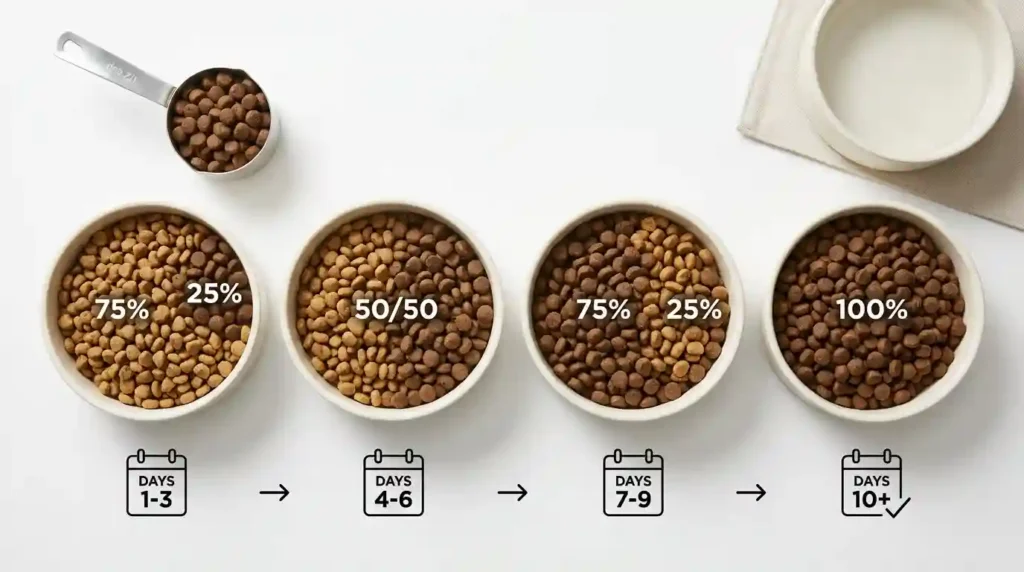
A gradual food transition can reduce diarrhea, gas, and other gastrointestinal upset. Unless a veterinarian advises otherwise, change foods over approximately seven to ten days.
A practical schedule is:
- Days 1–2: 75% old food and 25% new food
- Days 3–4: 50% old food and 50% new food
- Days 5–6: 25% old food and 75% new food
- Day 7 onward: 100% new food
Sensitive dogs may require a slower transition. Measure the total amount carefully so that combining two foods does not result in overfeeding.
During the change, monitor stool, appetite, energy level, skin, ears, and body condition. Mild stool softening can occur, but persistent diarrhea, vomiting, blood in the stool, facial swelling, breathing difficulty, or marked lethargy requires prompt veterinary attention.
Is Diamond Dog Food a Good Brand Overall?
Diamond is a legitimate, established pet-food manufacturer with a broad product portfolio and U.S. manufacturing facilities. It offers foods for different life stages, activity levels, budgets, and sensitivities.
Its strengths include:
- Competitive affordability
- Multiple recipe choices
- Named animal protein in many formulas
- Grain-inclusive and grain-free options
- Probiotics and prebiotic fiber
- Omega fatty acids
- Chelated minerals
- Specialized puppy, senior, and performance products
Its limitations include:
- Noticeable quality differences between product lines
- Corn, wheat, or by-product meal in some budget recipes
- High calorie density in certain performance foods
- Historical recalls involving serious contaminants
- Specialized marketing that can make recipe selection confusing
So, is Diamond dog food good quality? Some Diamond recipes are good-quality options for their price, particularly within the Diamond Naturals range. Others are better described as functional budget formulas. The brand should not be labeled entirely “excellent” or “poor” because its products are too varied for a single rating.
Conclusion
Diamond dog food can be good for dogs when the exact formula is nutritionally appropriate and well tolerated. Diamond Naturals generally provides the most appealing middle ground, combining named meat ingredients, useful fats, fiber, probiotics and complete and balanced nutrition at a budget-conscious price.
The standard Diamond range is more economical but may rely on ingredients such as chicken by-product meal, corn and wheat. Diamond Pro89 and other high-energy recipes can suit active dogs and working dogs, while Diamond Care may help address certain dietary sensitivities under professional guidance.
Recall history remains a valid consideration. The aflatoxin, melamine, and Salmonella events should encourage owners to monitor current recall notices and retain packaging information. They do not, by themselves, establish that every modern Diamond recipe is unsafe.
Ultimately, the best food is not determined by marketing language or the number of superfoods printed on a bag. It is the formula that meets the correct AAFCO life stage, fits the dog’s calorie needs, supports healthy digestion and body condition, and earns the approval of a veterinarian familiar with that dog.
Frequently Asked Questions
Is Diamond dog food good?
Yes, several Diamond formulas can provide complete and balanced nutrition. Diamond Naturals is generally the strongest everyday option within the brand.
Is Diamond a good dog food brand?
Diamond is an established, budget-friendly brand with varied product quality. The specific recipe should be assessed rather than judging every formula together.
Is Diamond dog food good for dogs?
It can be good for healthy dogs when the formula matches their age, size, activity level, and dietary tolerance.
Is Diamond puppy food good?
Diamond puppy food can be appropriate when labeled for growth. Large-breed puppies should receive a formula specifically approved for large-size growth.
Is Diamond dog food grain free?
Some Diamond Naturals and Diamond Care recipes are grain-free, but many Diamond foods contain rice, barley, oatmeal, corn or wheat.
Is Blue Diamond dog food good?
“Blue Diamond dog food” is commonly a mix-up between Diamond and Blue Buffalo. Check the package because they are separate brands.
Is Blue Diamond a good dog food?
There is no major U.S. dog-food line commonly sold as Blue Diamond. Evaluate whether you mean Diamond Pet Foods or Blue Buffalo.
Do vets recommend Diamond dog food?
Some veterinarians may approve specific Diamond recipes for healthy dogs, but recommendations depend on the individual dog and formula.
How good is Diamond dog food?
Quality ranges from economical maintenance food to stronger natural, sensitive-care, and performance recipes. Diamond Naturals usually offers the best balance.
Is Diamond dog food good quality?
Many Diamond Naturals recipes offer good quality for their price, while some basic Diamond formulas use more economical ingredients.
Does Diamond dog food contain probiotics?
Many formulas include K9 Strain Probiotics or fermentation products intended to support digestive and immune-system health.
Has Diamond dog food been recalled?
Yes. Historical recalls have involved aflatoxin, melamine and potential Salmonella contamination.
Is Diamond dog food suitable for sensitive skin?
Diamond Care includes sensitive-skin options, but recurring itching or ear problems should be evaluated by a veterinarian.
Is Diamond Pro89 suitable for every dog?
No. It is designed for active or performance dogs and may provide more calories than an inactive pet requires.
Is Diamond Naturals better than regular Diamond?
Diamond Naturals generally uses more premium ingredients and offers a stronger nutritional profile, although the best choice still depends on the dog.
Does Diamond dog food contain chicken?
Many recipes contain chicken, chicken meal or chicken fat. Check the complete label if your dog has a confirmed chicken allergy.
Where is Diamond dog food made?
Diamond dry foods are produced in company-operated manufacturing facilities in the United States, though ingredient sourcing may vary.
Should I switch my dog to Diamond immediately?
No. Unless directed by a veterinarian, introduce the new food gradually over seven to ten days to reduce digestive upset.