
Summary
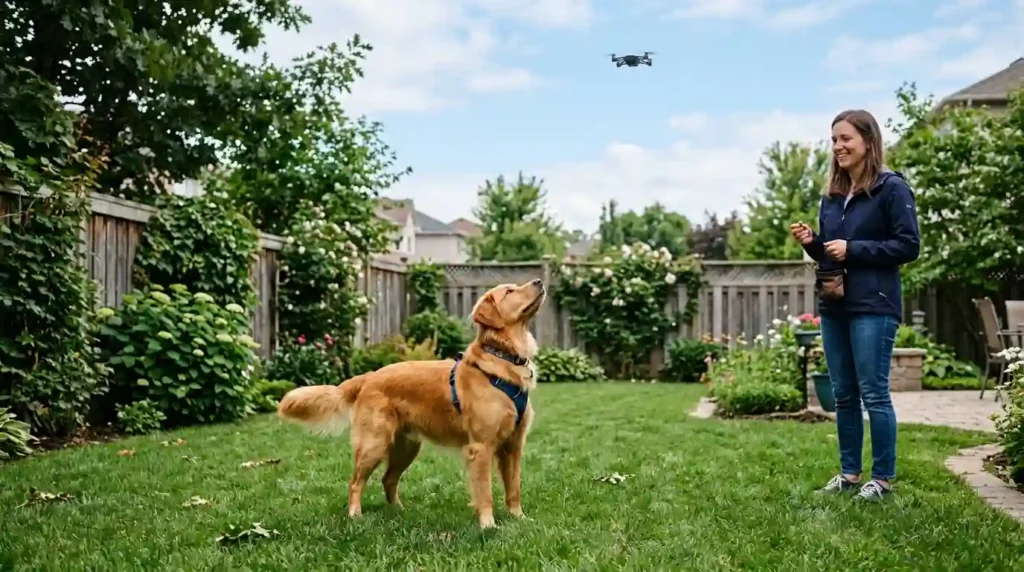
Dog barking at drones or flying objects overhead usually happens because the dog is reacting to an unfamiliar sound, sudden movement, perceived intrusion, prey drive, fear, or territorial alarm. The key is not to punish the barking, but to understand the trigger, manage exposure, and teach a calmer replacement behavior through reward-based training.
Table of Contents
- Why Dogs React to Objects in the Sky
- Why Dog Barking at Drones or Flying Objects Overhead Happens
- Common Triggers: Drones, Birds, Planes, Kites, and Balloons
- Reading Your Dog’s Body Language
- How to Stop Dog Barking at Drones or Flying Objects Overhead Safely
- Training Plan for Calm Outdoor Behavior
- What Not to Do When Your Dog Barks at Flying Objects
- When to Get Professional Help
- Conclusion
- FAQs
Why Dogs React to Objects in the Sky
Dogs are highly tuned to motion, sound, vibration, and environmental change. Something moving above them can feel strange because it is outside the usual pattern of ground-level activity. A person walking past the fence, a squirrel running along a wall, or another dog passing the gate makes sense to most dogs. A buzzing drone, a low helicopter, a kite snapping in the wind, or a bird circling overhead can be much harder for them to interpret.
From a dog’s perspective, the sky is not an empty background. It is a moving sensory field. Dogs may notice aircraft noise before humans do, track fast-moving shadows across the lawn, or react to a drone’s high-pitched propeller sound. Some dogs bark once or twice and move on. Others become fixated, frantic, or difficult to redirect.
Barking itself is normal canine communication. The ASPCA notes that barking can serve different purposes, including alerting, fear, attention-seeking, and territorial responses in its dog barking behavior guide. That distinction matters because the solution depends on why your dog is barking, not just what they are barking at.
Why Dog Barking at Drones or Flying Objects Overhead Happens
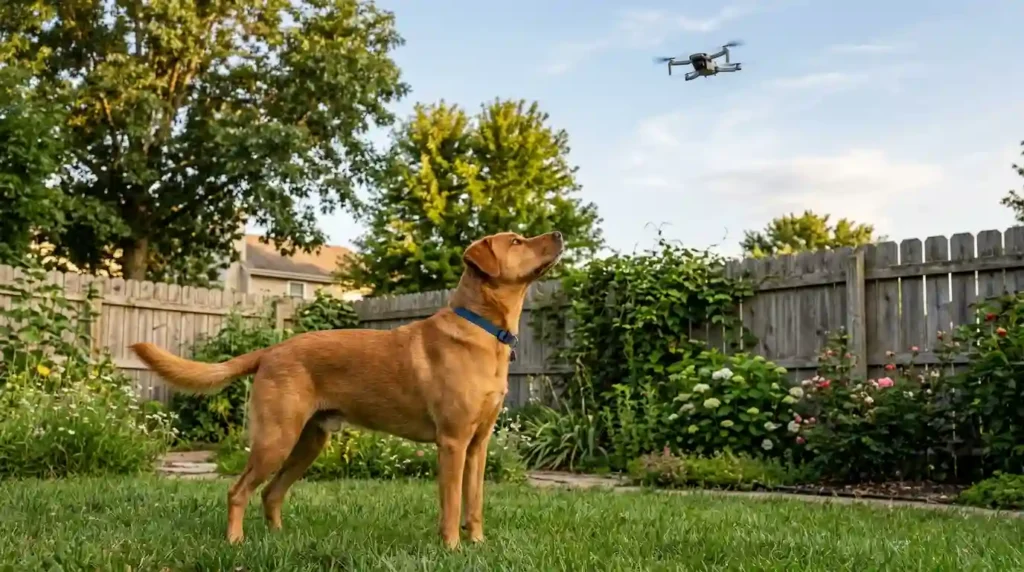
When a dog sees or hears something overhead, several instincts and learned behaviors can overlap. The barking may look simple from the outside, but it often has more than one cause.
Alarm Barking
Alarm barking happens when a dog detects something unexpected and announces it. Drones are especially likely to trigger this because they combine unusual motion with mechanical sound. They hover, dip, pause, and move in ways that birds or airplanes usually do not.
A dog may think, “Something strange is here,” and bark to warn the household. This is common in dogs that are already alert to doorbells, delivery drivers, garden noises, or activity beyond the fence.
Territorial Response
Some dogs treat the yard, balcony, driveway, or porch as part of their territory. If a drone flies over the garden or a kite appears above the fence line, the dog may perceive it as an intrusion. Since the object eventually moves away, the dog may learn that barking “worked.”
This creates a reinforcement loop. The drone passes, the dog barks, the drone disappears, and the dog’s brain connects barking with success. The same pattern can happen with mail carriers, joggers, or wildlife. If your dog also reacts to small animals outdoors, you may find related training ideas in this guide on Dog Barking at Rabbits or Squirrels in the Garden.
Prey Drive and Chase Instinct
Some breeds and individual dogs are naturally drawn to moving objects. Herding breeds, terriers, sighthounds, sporting dogs, and high-energy mixed breeds may be especially reactive to fast motion. A fluttering bird, low-flying drone, model airplane, or wind-tossed balloon can activate the same chase system that responds to squirrels, cats, toys, or thrown balls.
This type of barking may sound sharp and excited rather than fearful. The dog may leap, spin, chase shadows, or run the fence line.
Noise Sensitivity
Drones can produce a buzzing, whining, or chopping sound that many dogs find unpleasant. Some dogs are sensitive to high-frequency noises, engine sounds, fireworks, thunder, vacuum cleaners, or power tools. For them, a drone is not just a visual trigger. It is an auditory stressor.
Noise-sensitive dogs may bark, tuck their tail, pace, pant, hide, tremble, or refuse treats. This is different from a confident dog barking out of excitement.
Fear of the Unknown
Dogs rely on pattern recognition. When something does not behave like a familiar object, they may treat it as suspicious. A drone that hovers silently for a moment and then suddenly moves can feel unpredictable. Even a harmless balloon or kite may cause anxiety if it appears suddenly above the house.
Fear-based barking often comes with backward movement, lowered posture, wide eyes, pinned ears, or repeated checking in with the owner.
Common Triggers: Drones, Birds, Planes, Kites, and Balloons
Not all flying objects trigger the same response. Understanding the specific trigger helps you build a better training plan.
Drones
Drones are one of the most common modern aerial triggers for dogs. They move in irregular patterns, produce mechanical sound, and may hover directly over private spaces. A dog may bark because the drone seems alive, threatening, noisy, or chaseable.
If drones are common in your area, supervise your dog outside and avoid leaving them unattended in the yard. A dog that becomes fixated may injure themselves by jumping, crashing into fences, or running without awareness.
Birds
Birds can trigger prey drive, especially when they swoop low, gather on the roof, or land in the garden. Crows, pigeons, gulls, hawks, and noisy flocking birds may all provoke barking. Some dogs bark only when birds enter their yard, while others react to birds crossing the sky.
Airplanes and Helicopters
Most dogs habituate to distant airplanes, but low-flying aircraft can be startling. Helicopters are more likely to trigger barking because they are louder, slower, and more vibrational. Dogs that dislike thunder or construction noise may also react strongly to aircraft.
Kites, Balloons, and Flags
Wind-driven objects can be confusing because they move unpredictably. A kite bobbing above a park or a balloon drifting over the fence may trigger fear, chase behavior, or alarm barking. Large flags, tarps, and patio umbrellas can create similar reactions when they flap overhead.
Shadows and Reflections
Some dogs are not reacting to the flying object itself, but to the shadow it casts. Drone shadows, bird shadows, and flickering reflections from windows can create intense fixation. If your dog chases light spots or shadows indoors, speak with a qualified trainer or veterinary behavior professional because compulsive patterns can develop.
Reading Your Dog’s Body Language
Before you train, observe. The same bark can mean different things depending on posture, movement, and recovery time.
Signs of Excitement
An excited dog may have a high tail, forward body posture, bouncing movement, quick barking, play bows, or rapid running. They may still take treats and respond to cues, even if they are distracted.
Signs of Fear or Stress
A stressed dog may crouch, tuck the tail, pin the ears, pant, drool, yawn, lick lips, pace, shake off, or try to escape. The bark may sound sharper, higher, or more frantic. If your dog cannot eat a favorite treat, the trigger is probably too intense or too close.
Signs of Frustration
A frustrated dog may lunge, jump, bark repeatedly, bite the leash, scratch at the door, or run back and forth. This often happens when the dog wants to chase but cannot reach the object.
Signs of Overarousal
Overarousal means the dog’s nervous system has gone past easy learning. They may ignore cues, bark continuously, scan the sky, or stay worked up long after the object is gone. Training should begin at a lower intensity before the dog reaches this state.
How to Stop Dog Barking at Drones or Flying Objects Overhead Safely
The goal is not to make your dog ignore everything forever. A reasonable alert bark is normal. The practical goal is to reduce panic, prevent obsessive barking, and teach your dog to disengage when asked.
Step 1: Manage the Environment
Management prevents rehearsal. Every time your dog practices intense barking, the habit becomes stronger.
Bring your dog indoors when drones are active nearby. Use a leash in the yard if overhead triggers are common. Add shade cloth, privacy screening, or covered areas where your dog feels safer. If your dog reacts from a balcony, limit access during high-traffic times or use indoor enrichment instead.
For dogs that bark during motion-heavy situations, the same management principle applies in cars. If travel is also a trigger, this article on Dog Barking During Car Rides can help you understand how movement, sound, and visual stimulation affect barking.
Step 2: Create Distance
Distance lowers emotional intensity. If your dog barks at drones in the yard, start training indoors near a window, in a quieter part of the garden, or at a park where flying objects are far away.
The right distance is where your dog notices the object but can still eat, think, and respond to their name.
Step 3: Pair the Trigger With Good Things
This is counterconditioning. When your dog notices a flying object, calmly feed high-value treats. Chicken, cheese, soft training treats, or a favorite toy can work well.
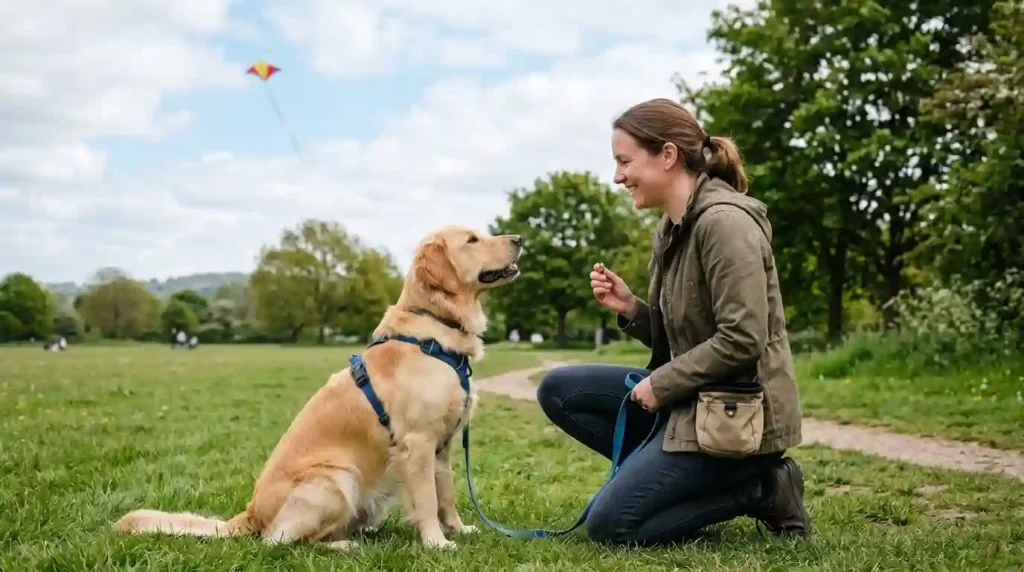
The sequence matters:
The dog notices an object.
You mark with “yes” or a click.
You reward.
The dog looks back at the object.
You mark and reward again.
Over time, the trigger predicts something pleasant instead of panic or frustration.
Step 4: Teach a “Look at Me” Cue
Practice away from distractions first. Say your dog’s name or “look,” then reward eye contact. Once this is easy indoors, try it outside with mild distractions.
Do not wait until your dog is already barking hard. Ask for attention while they are still capable of responding.
Step 5: Teach a Mat or Settle Behavior
A settle mat gives your dog a clear job. Place a mat indoors or on a patio. Reward your dog for stepping onto it, lying down, and relaxing. Later, use it when distant overhead triggers appear.

This works best for dogs that need structure. Instead of scanning the sky, they learn, “When something odd happens, I go to my mat and get rewarded.”
Step 6: Use Pattern Games
Pattern games are simple, predictable training routines that help dogs feel safer. One easy version is “find it.” Say “find it” and scatter a few treats on the ground. Sniffing lowers visual fixation and gives the dog a calming task.
Another option is “1-2-3 treat.” Count aloud in a steady voice, then give a treat on three. Repeat as the flying object passes. Predictability can help anxious dogs stay grounded.
Training Plan for Calm Outdoor Behavior
Week 1: Observation and Prevention
Track when barking happens. Note the trigger, distance, location, time of day, body language, and recovery time. Prevent full barking episodes as much as possible by bringing your dog inside or redirecting early.
Week 2: Foundation Cues
Practice name response, “look at me,” “find it,” recall, and mat settling indoors. Keep sessions short, around three to five minutes. Reward generously.
Week 3: Low-Level Exposure
Train outside when triggers are mild. Reward your dog for noticing distant birds, planes, or kites without barking. If they bark, increase the distance or lower the difficulty.
Week 4: Real-Life Practice
Use the same tools during everyday events. When a drone or loud aircraft appears, calmly move your dog farther away, reward attention, and use “find it” or mat work. End the session before your dog becomes overwhelmed.
Long-Term Maintenance
Continue rewarding calm behavior. Dogs do not need treats forever for every trigger, but intermittent reinforcement helps maintain the habit. Praise, play, sniff breaks, and access to the house can all become rewards.
What Not to Do When Your Dog Barks at Flying Objects
Do Not Yell
Yelling often adds more intensity. Your dog may think you are barking too, or they may become more anxious because you sound alarmed.
Do Not Use Shock Collars
Aversive tools may suppress barking temporarily, but they can increase fear, stress, and negative associations with the trigger. If your dog already finds drones scary, punishment can make the sky feel even more threatening.
Do Not Force Exposure
Flooding a dog with the trigger until they “get over it” can backfire. A dog trapped in the yard while a drone circles overhead may become more reactive, not less.
Do Not Reward Barking by Accident
If your dog barks at the sky and you immediately open the door to let them chase around the garden, the barking may become part of the routine. Instead, reward quiet attention, recall, or moving away with you.
When to Get Professional Help
Consider help from a certified positive-reinforcement trainer, veterinary behaviorist, or behavior consultant if your dog:
- Cannot recover after the flying object is gone
- Panics, hides, trembles, or refuses food
- Lunges dangerously or risks injury
- Chases shadows or light compulsively
- Barks at many triggers, not only flying objects
- Shows aggression when interrupted
- Has suddenly started barking much more than usual
A sudden change in barking can also be linked to pain, hearing changes, cognitive changes, or anxiety. If the behavior appears suddenly or intensifies quickly, a veterinary check is wise.
Conclusion
Dogs bark at drones, birds, helicopters, kites, balloons, and other flying objects because those triggers can be noisy, unpredictable, exciting, or frightening. The best solution starts with observation. Is your dog scared, frustrated, territorial, or eager to chase? Once you understand the motivation, you can manage the environment, create distance, reward calm attention, and teach practical replacement behaviors like “look at me,” “find it,” recall, and mat settling.
The most important principle is simple: help your dog feel safe enough to learn. Punishment may stop the sound for a moment, but it does not teach confidence. Calm, consistent, reward-based training gives your dog a better answer when the sky suddenly gets interesting.
FAQs
Why does my dog bark at drones?
Your dog may bark at drones because they make unfamiliar buzzing sounds, move unpredictably, hover overhead, or seem like an intruder in the dog’s territory.
Is it normal for dogs to bark at flying objects?
Yes, occasional barking is normal. It becomes a problem when the dog cannot stop, becomes distressed, risks injury, or reacts to every overhead movement.
Can drones scare dogs?
Yes. Some dogs are frightened by drone noise, movement, shadows, or sudden appearance. Noise-sensitive and anxious dogs may react more strongly.
How do I stop my dog barking at birds overhead?
Start by keeping enough distance for your dog to stay calm. Reward them for noticing birds without barking, then redirect with cues like “look,” “find it,” or recall.
Should I let my dog chase drones?
No. Chasing drones can be dangerous. The dog could run into fences, roads, garden furniture, or become more reactive over time.
Will my dog grow out of barking at flying objects?
Some dogs become less reactive with maturity and repeated calm exposure, but many need training. Without guidance, barking can become a stronger habit.
What treats work best for this training?
Use high-value treats your dog loves, such as small pieces of chicken, cheese, soft meat-based treats, or another vet-approved favorite. The reward should be more interesting than the trigger.
When should I call a trainer?
Call a qualified positive-reinforcement trainer if your dog panics, cannot recover, lunges dangerously, ignores all cues, or becomes increasingly reactive.