

Summary
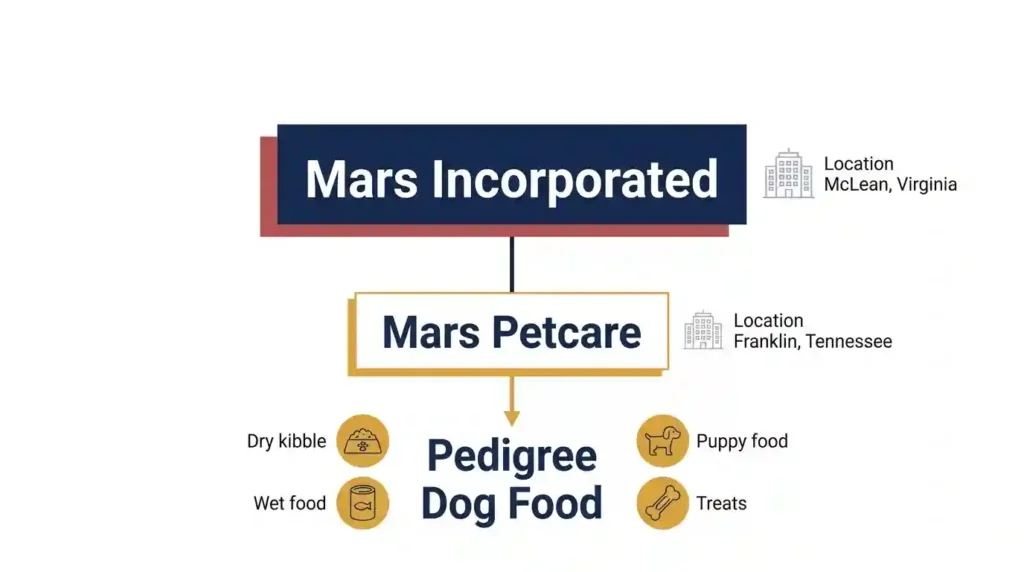
If you want to know who makes Pedigree dog food, the direct answer is Mars Petcare, the pet-care division of Mars Incorporated. Mars is a privately held, family-owned American company headquartered in McLean, Virginia, while Mars Petcare US operates from Franklin, Tennessee. Many Pedigree products sold in the United States are manufactured domestically using ingredients sourced from the United States and other countries. However, manufacturing and sourcing can vary between recipes, package sizes, and markets, so the product label is the best place to confirm where a specific bag or can was made.
Pedigree produces affordable dry dog food, wet dog food, canned meals, puppy food, adult formulas, size-specific recipes, and dog treats. This guide examines the brand’s ownership, history, manufacturing practices, ingredients, nutritional standards, recalls, label information, and useful Amazon products for storing and serving the food safely.
Table of Contents
- Who makes Pedigree dog food today?
- Who owns Pedigree?
- Where is Pedigree dog food made?
- Where is Pedigree dog food manufactured for U.S. buyers?
- The history of Pedigree
- Does Mars manufacture Pedigree in-house?
- Where do Pedigree’s ingredients come from?
- Pedigree product types
- Understanding Pedigree ingredients
- Is Pedigree complete and balanced?
- Pedigree recalls and safety concerns
- How to read a Pedigree product label
- Helpful Amazon products for feeding and storage
- Is Pedigree right for your dog?
- Pedigree compared with other manufacturers
- Conclusion
- Frequently asked questions
Who Makes Pedigree Dog Food Today?
Mars Petcare makes and manages Pedigree dog food. Mars Petcare is a major division of Mars Incorporated, the parent company behind numerous pet nutrition, veterinary, confectionery, and food businesses.
Mars Incorporated is not listed on a public stock exchange. It remains a privately held company owned by the Mars family. Therefore, Pedigree belongs to one of the largest family-owned companies in the United States rather than to a corporation controlled by public shareholders.
Several related company names may appear during your research:
- Pedigree is the consumer-facing dog food brand.
- Pedigree Petfoods is a business name historically associated with the brand.
- Mars Petcare is the division responsible for Pedigree and other pet-care brands.
- Mars Petcare US handles the company’s American pet-care operations.
- Mars Incorporated is the ultimate parent company.
- The Mars family owns the privately held parent business.
Therefore, Mars Petcare is the most useful answer when someone asks who manufactures Pedigree. Mars Incorporated is the final corporate owner behind it.
Who Makes Pedigree Dog Food, and What Other Brands Does Mars Own?
Pedigree is one of several pet food brands operated under Mars Petcare. Other brands associated with the company include Royal Canin, Whiskas, Sheba, Cesar, and Nutro.
Although these brands share a parent company, they do not necessarily use the same ingredients, formulas, suppliers, manufacturing equipment, or nutritional strategies.
Royal Canin is known for specialized breed, size, life-stage, and veterinary formulas. Cesar is primarily associated with small-dog meals and wet food. Nutro serves consumers interested in more ingredient-focused recipes. Whiskas and Sheba are mainly cat food brands.
Pedigree occupies a different market position. Its emphasis is on affordable dog food that is widely available in supermarkets, mass retailers, pet stores, and online marketplaces.
Shared ownership also does not mean that every Mars Petcare product is made in the same manufacturing facility. Large pet food companies usually operate multiple factories, production lines, warehouses, and regional supply networks. Each formula may have its own ingredient specifications and quality-control requirements.
The History of Pedigree Dog Food
The history of Pedigree began before the brand became a common sight in American stores.
Its roots are connected to Chappel Brothers, a Manchester, England, business that produced canned dog food under the name Chappie. Mars Limited acquired Chappel Brothers in 1934 and expanded its pet food operations during the following decades.
Another important part of Pedigree’s history involves Kal Kan Foods. Mars acquired Kal Kan in 1968. In 1988, the company changed the name of its American Kal Kan dog food line to Pedigree, aligning the U.S. products with the brand name already being used internationally.
This history explains why several names appear in discussions about Pedigree:
- Chappel Brothers represents the early business acquired by Mars.
- Chappie was an original canned dog food name.
- Kal Kan Foods helped establish Mars in the U.S. pet food market.
- Pedigree Petfoods became associated with the growing international business.
- Mars Petcare now controls the modern Pedigree brand.
- Mars Incorporated remains the ultimate parent company.
Over time, Pedigree expanded into dry food, canned dog food, pouches, puppy recipes, adult formulas, dog-size options, dental products, and treats.
Where Is Pedigree Dog Food Made?
Many Pedigree recipes sold in the United States are made in the USA. Official product information for several Pedigree dry foods states that the finished food is manufactured domestically with ingredients sourced from around the world.
That wording contains two separate pieces of information:
- The finished food is manufactured in the United States.
- Some of its ingredients may originate in other countries.
A “made in the USA” statement does not necessarily mean every ingredient was grown, raised, processed, or produced in America. The recipe may contain globally sourced ingredients while still undergoing final mixing, cooking, quality testing, and packaging at a U.S. facility.
This global sourcing model is common among large pet food manufacturers. Companies may obtain meat ingredients, fish, vitamins, minerals, oils, grains, and other raw materials from approved suppliers in different countries.
Pedigree is also a global brand. Products intended for markets outside the United States may be made at regional Mars facilities closer to their final destinations. Therefore, no single country-of-origin answer applies to every Pedigree product sold worldwide.
Where Is Pedigree Dog Food Manufactured for U.S. Buyers?
For consumers asking where is Pedigree dog food manufactured, the most accurate answer is that many U.S.-market recipes are produced domestically, but the location should be confirmed on the exact package.
Mars Incorporated has its corporate headquarters in McLean, Virginia. Mars Petcare’s U.S. operations are associated with Franklin, Tennessee. These are important corporate locations, but neither address automatically identifies the factory that produced a particular bag or can.
A headquarters is where management and administrative operations may be based. A manufacturing facility is where the product is physically processed and packaged. Confusing these two locations can lead to inaccurate claims about where dog food is made.
Pet food production may also shift between approved facilities according to demand, recipe, package size, equipment availability, and regional distribution. Mars does not provide a simple public list matching every Pedigree recipe and lot code to one named factory.
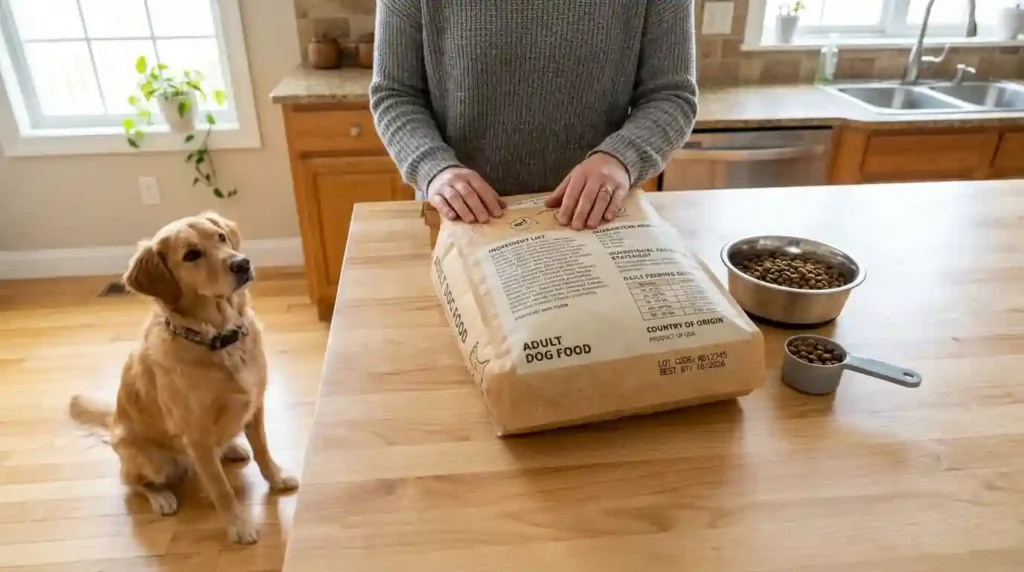
To confirm the origin of a particular product, examine the package for:
- A “made in the USA” or other country-of-origin statement
- The name of the responsible manufacturer or distributor
- The exact product and recipe name
- The UPC
- The lot code
- The best-by date
- Mars consumer care contact information
If the package does not provide enough detail, contact Mars consumer care and provide all these identifiers. A company representative may be able to give more specific information than a general online search.
Does Mars Use In-House Manufacturing?
Mars Petcare conducts substantial pet food production through its own manufacturing network. This is generally regarded as in-house manufacturing rather than complete dependence on unrelated contract manufacturers or co-packers.
In-house manufacturing may give a pet food manufacturer more direct control over:
- Formula specifications
- Supplier requirements
- Production equipment
- Staff training
- Ingredient handling
- Quality-control procedures
- Testing and traceability
- Packaging records
- Corrective actions
This does not guarantee that manufacturing problems can never occur. It means the brand owner has a more direct role in production than a company that simply hires an outside factory to make all its products.
Manufacturing control and nutritional suitability should also be treated as separate issues. A consistently manufactured recipe may still be inappropriate for a dog with food allergies, pancreatitis, kidney disease, obesity, or another special nutritional need.
Where Do Pedigree Ingredients Come From?
Pedigree states that certain U.S. recipes are made domestically using ingredients from around the world. The company does not publish a detailed origin map showing the source country of every ingredient in every formula.
That means the origins of beef, lamb, fish, eggs, soy, vegetable oil, vitamins, minerals, or other components may depend on the recipe and current supply arrangements.
Global sourcing is not automatically evidence of poor quality. Ingredient safety depends on multiple factors, including:
- Supplier approval
- Ingredient specifications
- Transportation conditions
- Storage procedures
- Contaminant testing
- Manufacturing controls
- Traceability
- Finished-product testing
Nevertheless, some consumers prefer greater supply chain transparency. If sourcing is a major part of your buying decision, contact Mars Petcare about the exact recipe. Avoid assuming that an answer about one Pedigree product applies to the entire brand.
What Types of Dog Food Does Pedigree Produce?
Pedigree offers food for different ages, sizes, feeding preferences, and household budgets.
Dry Dog Food
Pedigree dry dog food is conventional kibble. It is generally easy to store, measure, and serve. It also tends to cost less per meal than many wet or refrigerated foods.
The range includes adult food, puppy food, high-protein recipes, healthy-weight formulas, and dog-size options. Some foods are marketed for skin and coat health, digestion, dental care, or lean muscle support.
Dry kibble contains relatively little moisture, so dogs eating it should always have access to fresh drinking water.
Wet and Canned Dog Food
Pedigree wet dog food includes cans and pouches in loaf-style and cuts-in-gravy formats. Wet foods contain substantially more moisture than dry kibble and may appeal to dogs that prefer softer textures and stronger aromas.
Depending on its nutritional adequacy statement, a wet recipe may be served as:
- A complete meal
- A topper
- A mixer
- An occasional addition to dry food
When combining wet and dry food, reduce the amount of kibble to account for the calories added by the wet food.
Puppy Food
Puppies require nutrition formulated for growth. Pedigree sells wet and dry puppy food intended to support development.
Buyers should verify that the label identifies the recipe as complete and balanced for growth or all life stages. Large-breed puppies may require closer control of calories and minerals, so veterinary advice can be helpful.
If you are comparing puppy diets across food formats, read Is Freshpet Good for Puppies for additional life-stage considerations.
Adult and Size-Specific Food
Pedigree adult food is intended for maintenance after growth. Some recipes are designed for small dogs or large dogs, with differences in kibble dimensions, calorie density, serving recommendations, or nutritional emphasis.
Dog Treats and Dental Products
Pedigree also offers crunchy treats, chewy products, and dental-care items. Treats are generally intended for supplemental feeding rather than as a complete meal.
Treat calories should be included in the dog’s daily total. Giving several high-calorie treats in addition to a full food portion can gradually contribute to weight gain.
Understanding Pedigree Dog Food Ingredients
The ingredient list differs between Pedigree products. It is more useful to evaluate an exact recipe than to judge the entire brand from a single formula.
Whole Corn
Whole corn is used in several Pedigree dry foods. Corn can contribute carbohydrates, fiber, amino acids, and linoleic acid.
Corn is not automatically harmful to dogs, but it should be avoided if a veterinarian has identified a corn allergy. Owners who prefer an animal ingredient as the first component may be less satisfied with a formula that lists corn first.
Meat and Bone Meal
Some Pedigree recipes use meat and bone meal. This rendered animal ingredient can supply protein, calcium, phosphorus, and other nutrients.
Meat and bone meal is more concentrated than fresh meat because much of the water has been removed. However, the phrase is less specific than a named protein source such as chicken meal or beef meal.
Meat By-Products
Wet recipes may contain meat by-products. These can include nutritionally useful organs and tissues that are not commonly purchased as human food.
By-products should not automatically be considered useless or unsafe. However, an unnamed animal ingredient offers less transparency than a clearly identified chicken, beef, lamb, or fish ingredient.
Beet Pulp and Fiber
Beet pulp is used as a source of dietary fiber. Suitable amounts of fiber can support digestion and stool quality.
A sudden change in fiber intake may cause temporary digestive issues. Dogs should be transitioned to a new food gradually unless a veterinarian recommends an immediate change.
Vegetable Oil and Linoleic Acid
Vegetable oil can supply linoleic acid and other fatty acids that contribute to skin health and coat health.
Persistent itching, hair loss, diarrhea, vomiting, or inflammation should not be diagnosed only by reading an ingredient list. A veterinarian can investigate whether the cause is dietary, environmental, parasitic, or medical.
Protein, Fat, Carbohydrates, and Moisture
The guaranteed analysis usually lists crude protein, crude fat, fiber, and moisture. These numbers provide basic nutritional information, but they do not tell the full story.
Protein supports tissues and lean muscle. Fat supplies concentrated energy and fatty acids. Carbohydrates provide energy and help create kibble structure. Moisture affects texture, hydration, and nutrient concentration.
Wet and dry food percentages cannot be compared directly without accounting for water. Canned dog food naturally appears lower in protein on its label because the product contains much more moisture.
The protein source also matters. A formula may receive some protein from corn, soy, or other plant ingredients in addition to animal protein.
Is Pedigree Complete and Balanced?
Many Pedigree foods are formulated to provide complete and balanced nutrition for a stated life stage.
“Complete” means the food contains the nutrients required for its intended use. “Balanced” means those nutrients are present in appropriate proportions.
The nutritional adequacy statement should explain whether a formula is intended for:
- Puppy growth
- Adult maintenance
- All life stages
- Intermittent or supplemental feeding
Pedigree states that applicable recipes are formulated to meet nutritional levels established by the AAFCO Dog Food Nutrient Profiles. AAFCO does not manufacture, test, certify, or personally approve individual products. It develops model regulations, nutrient profiles, ingredient definitions, and feeding-trial protocols.
For an authoritative explanation, see the AAFCO guidance on selecting the right pet food.
AAFCO formulation is not the same as meeting every WSAVA manufacturer criterion. WSAVA’s questions cover subjects such as nutrition professionals, formulation responsibility, research, quality control, and the availability of nutritional information. AAFCO and WSAVA serve different functions and should not be described as competing product certifications.
Pedigree Recalls and Food-Safety Considerations
Pedigree has experienced product recalls. A recall should be evaluated according to the exact product, package size, date, distribution area, lot code, and reason.
In July 2026, Mars Petcare US announced a voluntary recall involving two lots of Pedigree High Protein Chopped Chicken & Duck Flavor wet dog food in 13.2-ounce cans. According to the FDA recall announcement, the affected cans might contain hard or sharp metal and plastic foreign material.
Mars reported that the products had not met its safety and quality standards and had been sent to a third-party vendor for destruction. The company later determined that the products appeared to have been diverted back into the marketplace.
Sharp foreign objects can create a choking risk, internal lacerations, or a gastrointestinal blockage. A dog that may have swallowed metal or hard plastic should be evaluated by a veterinarian.
In May 2024, Mars Petcare US also recalled 315 bags of Pedigree Adult Complete Nutrition Grilled Steak & Vegetable Flavor dry food because of possible loose metal pieces. The limited recall applied to one package size, best-by date, lot code, and Walmart distribution area. The FDA later classified that recall as terminated.
Earlier recalls have involved possible metal fragments, plastic fragments, or salmonella contamination. These events do not mean every Pedigree product is unsafe, but they demonstrate why owners should retain the original package and monitor official recall information.
What to Do With a Recalled Product
- Stop using the food immediately.
- Record the complete product name and package size.
- Photograph the front and back labels.
- Save the UPC, lot code, and best-by date.
- Separate the product from other pet food.
- Follow the disposal or return instructions in the recall.
- Contact Mars consumer care about a refund or product replacement.
- Monitor the dog for vomiting, lethargy, choking, abdominal discomfort, appetite loss, or unusual behavior.
- Contact a veterinarian if pet illness or injury is suspected.
Diarrhea alone does not prove food contamination. Digestive issues can also result from sudden diet changes, parasites, infections, food intolerance, scavenging, or an underlying medical condition.
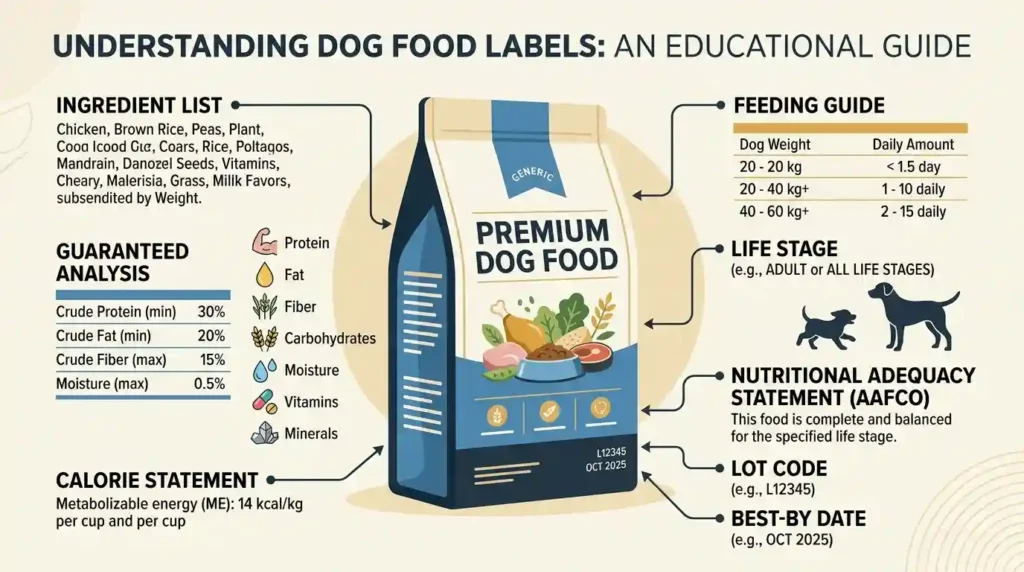
How to Read a Pedigree Product Label
The back and sides of the package provide more useful information than most front-label claims.
Confirm the Exact Recipe
Pedigree sells many products with similar colors and naming styles. Record the complete recipe, life stage, food format, flavor, and package weight.
Check the Manufacturing Statement
Look for wording such as “made in the USA with ingredients from around the world.” Do not use the corporate headquarters address as proof of the manufacturing location.
Examine the Ingredient List
Check whether the first ingredients include corn, a named animal protein, meat and bone meal, or meat by-products. Look for any ingredient your veterinarian has recommended avoiding.
Formulas can change. Always use the ingredient list printed on the current package instead of depending entirely on an old review.
Find the Nutritional Adequacy Statement
Verify that the food is complete and balanced for the dog’s life stage. A topper, mixer, treat, or supplemental food may not be intended as the sole diet.
Save the Lot Code and Best-By Date
These details are essential during a recall or product-quality complaint. If you transfer kibble into another container, keep the original bag until all the food has been used.
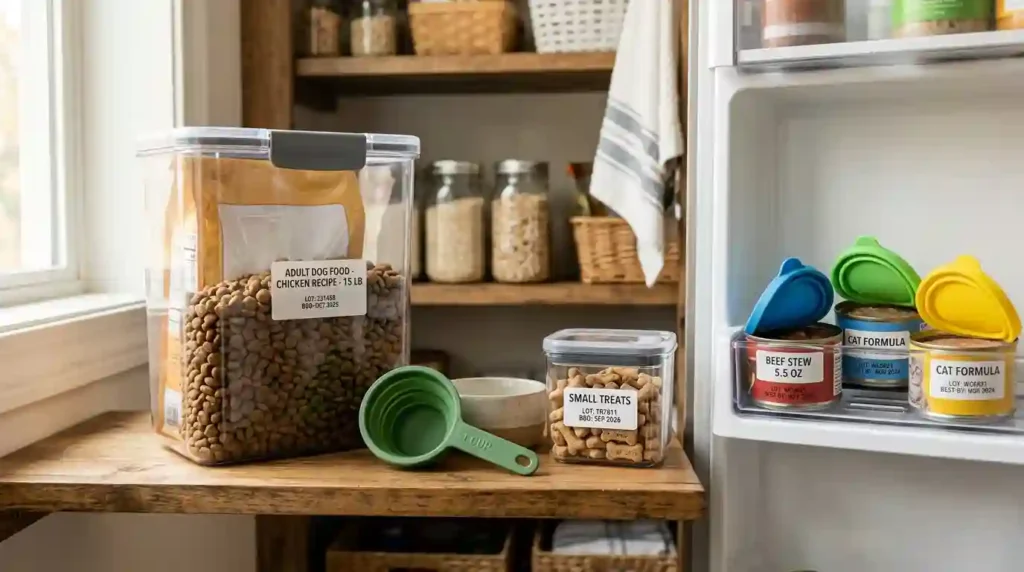
Helpful Amazon Products for Storing and Serving Pedigree Dog Food
The food you choose is only one part of safe feeding. Storage, portion consistency, and handling also affect freshness and daily calorie intake.
The following products are relevant to dry kibble, wet food, and dog treats. Each had a strong customer rating on Amazon when checked in September 2026. Ratings, prices, availability, and product specifications may change, so confirm the current listing before purchasing.
Disclosure: The following are product suggestions for reader convenience.
GAMMA2 Vittles Vault Airtight Pet Food Storage Container
For households purchasing larger bags of Pedigree kibble, the GAMMA2 Vittles Vault Airtight Pet Food Storage Container provides protected dry-food storage. At the time of review, it held a 4.7-star rating from more than 110,000 Amazon ratings.
The container uses a threaded lid and double-gasket design intended to reduce exposure to moisture and pests. The linked size can hold up to approximately 25 pounds, although actual capacity can differ according to kibble shape and density.
For best traceability, keep the food in its original bag and place the entire bag inside the container when possible. This preserves the lot code, best-by date, ingredient information, and manufacturer contact details while adding another protective layer.
Do not continuously pour new kibble on top of old crumbs. Empty and clean the container between bags according to its care instructions.
Dexas Popware Collapsible KlipScoop
Consistent measurement is useful when following the feeding guide or adjusting calories with a veterinarian. The Dexas Popware Collapsible KlipScoop combines a one-cup measuring scoop, food scoop, and bag clip.
It had a 4.8-star rating from more than 5,000 Amazon ratings when checked. Its collapsible design also saves storage space.
A measuring scoop is more reliable than estimating portions by eye, but volume measurements are not perfectly precise because different kibbles have different densities. For the most accurate calorie control—particularly for overweight dogs—use the product’s grams-per-cup information and weigh each meal on a kitchen scale.
The built-in clip can help close a food bag, but it does not replace proper storage in a cool, dry environment.
Comtim Silicone Pet Food Can Covers
Owners who feed Pedigree canned dog food may not use the entire can at once. The Comtim Silicone Pet Food Can Covers are designed to fit several common pet food can diameters, including larger cans.
When checked, the product held a 4.8-star Amazon rating from more than 37,000 ratings. The flexible silicone design creates a reusable cover and helps control refrigerator odor.
A can cover does not make opened wet food shelf-stable. Refrigerate leftovers promptly and follow the storage instructions on the food label. Discard food that has remained at room temperature too long or has developed an unusual smell, color, or texture.
Write the opening date on the can or use a small removable label if several foods are stored in the refrigerator.
OXO Good Grips Pet POP Container
Pedigree treats should be stored separately from complete meals so owners can monitor treat use. The OXO Good Grips Pet POP Container holds approximately one pound of treats and uses a push-button lid that creates an airtight seal.
It had a 4.6-star rating from more than 4,600 Amazon ratings at the time of review. Its square design allows it to be stacked or placed neatly in a pantry.
Keeping treats in a dedicated container can make daily use more organized, but the original packaging should still be retained for its ingredient list, calorie information, expiration date, and lot code.
If several family members give treats, place a small daily allowance in the container each morning. Once that portion is gone, no more treats should be offered that day. This simple method can reduce accidental overfeeding.
Which Product Is Most Useful?
Choose according to the food format you actually use:
- The Vittles Vault is most relevant for large dry-food bags.
- The Dexas KlipScoop supports consistent kibble portions.
- The Comtim covers help store partially used canned food.
- The OXO container is intended for organizing dog treats.
These products do not improve the nutritional quality of Pedigree or prevent every storage problem. Their value is practical: they can make feeding, portion control, freshness management, and package organization easier.
Is Pedigree a Good Choice for Your Dog?
Pedigree may be a practical option for healthy dogs whose owners need affordable, widely available food. The brand offers multiple textures, flavors, package sizes, and life-stage choices.
However, one Pedigree formula may suit a dog better than another. Some recipes rely heavily on whole corn, plant-based protein, meat and bone meal, or unnamed meat by-products. Owners who prefer a named animal protein as the first ingredient may want to compare alternatives.
Seek veterinary guidance when a dog has:
- Diagnosed food allergies
- Chronic digestive problems
- Frequent diarrhea or vomiting
- Obesity or unexplained weight loss
- Kidney or liver disease
- Pancreatitis
- Urinary disease
- Persistent skin or coat problems
- Unusual puppy-growth requirements
- A need for therapeutic nutrition
Do not select food from the ingredient list alone. Veterinary science also considers calorie density, nutrient balance, digestibility, life stage, feeding history, health condition, and the dog’s response.
Diet can influence appetite, elimination patterns, training rewards, energy, and daily routines. For broader information about habits and canine responses, explore Dog Behavior. More nutrition and brand resources are available in the Dog Food section.
Pedigree Compared With Other Dog Food Manufacturers
Ownership and production vary significantly across the dog food market. Useful comparison points include manufacturing transparency, ingredient specificity, storage requirements, nutritional adequacy, recall history, calories, and daily cost.
For information about another traditional pet food manufacturer, read the guide to Diamond Dog Food. You can also examine the ownership and manufacturing history of Natural Balance Dog Food.
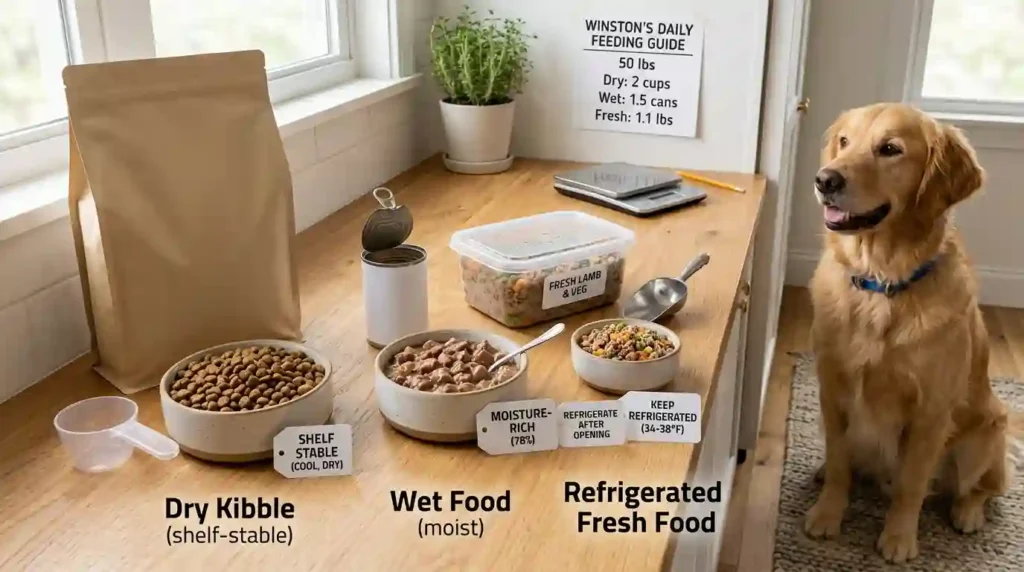
Fresh refrigerated diets operate differently from shelf-stable Pedigree kibble and canned food. Begin with the overview of Freshpet Dog Food and the company profile explaining who makes Freshpet dog food.
Storage, cost, and serving sizes also change when using refrigerated food. These supporting resources explain How Long Does Freshpet Last, the estimated Freshpet Dog Food Cost monthly, and how much Freshpet to feed dog according to feeding guidance.
Compare exact recipes rather than brand names alone. A useful comparison should include:
- Life-stage suitability
- Nutritional adequacy statement
- Ingredient specificity
- Protein and fat levels
- Calories per serving
- Feeding quantity
- Manufacturing information
- Storage requirements
- Recall history
- Estimated daily cost
- Your dog’s health and response
Conclusion
Mars Petcare makes Pedigree dog food, while Mars Incorporated is the privately held, family-owned parent company. The brand’s history connects modern Pedigree products with Chappel Brothers, Chappie, Pedigree Petfoods, and Kal Kan Foods.
So, where is Pedigree dog food made? Many Pedigree recipes sold in the United States are manufactured domestically with globally sourced ingredients. Because the company sells numerous formulas across international markets, buyers should verify the manufacturing statement on the exact package instead of relying on a single answer for every product.
Pedigree’s main strengths are affordability, widespread availability, multiple food formats, and recipes for different life stages and dog sizes. Potential limitations include less-specific animal ingredients in some formulas, significant plant ingredients, limited public supplier-origin details, and a history of recalls.
Safe feeding also depends on handling. Retain the original package, store kibble in a cool and dry place, refrigerate opened canned food promptly, measure portions consistently, save the lot code, and clean storage tools between products.
Most importantly, select food according to your dog’s age, body condition, activity, health, and individual response. A veterinarian is the best resource when allergies, illness, unexplained symptoms, or special nutritional needs are involved.
Frequently Asked Questions
Who makes Pedigree dog food?
Mars Petcare makes Pedigree dog food. It is the pet-care division of the family-owned parent company Mars Incorporated.
Is Pedigree owned by Purina?
No. Pedigree is owned by Mars Incorporated, while Purina is owned by Nestlé.
Where is Pedigree dog food manufactured?
Many Pedigree products sold in the United States are manufactured domestically. Check the country-of-origin statement on the exact package.
Is Pedigree dog food made in China?
Pedigree operates internationally, so production may vary by market. U.S. buyers should check their specific product label instead of relying on a global claim.
Is Pedigree made in the USA?
Many U.S. Pedigree recipes state that they are made in the USA with ingredients sourced from around the world.
Is Mars Petcare an American company?
Mars Petcare is part of Mars Incorporated, a privately held American company headquartered in McLean, Virginia.
Does Mars own Royal Canin?
Yes. Royal Canin, Pedigree, Whiskas, Sheba, Cesar, and Nutro are among the brands associated with Mars Petcare.
Is Pedigree AAFCO approved?
AAFCO does not approve individual products. Pedigree states that applicable recipes are formulated to meet AAFCO Dog Food Nutrient Profiles.
Has Pedigree dog food been recalled?
Yes. Specific Pedigree products have been recalled for concerns including possible metal, plastic, or salmonella contamination.
Is Pedigree suitable for puppies?
Pedigree offers puppy-specific formulas. Confirm that the label states the food is complete and balanced for growth.
Does Pedigree contain real meat?
Some recipes contain named animal ingredients such as chicken, while others use meat and bone meal or meat by-products. Check the current ingredient list.
How should Pedigree dry dog food be stored?
Keep it in its original bag in a cool, dry location. The closed bag can be placed inside a clean airtight container for added protection.
How long can opened Pedigree wet food remain out?
Follow the package instructions and refrigerate leftovers promptly. Discard wet food that has been left unrefrigerated for an unsafe period.
Should Pedigree food be measured?
Yes. Measuring meals supports consistent calorie intake. Dogs needing precise weight control may benefit from portions weighed in grams.
Is Pedigree considered affordable dog food?
Yes. Pedigree is positioned as an affordable, widely distributed brand available from supermarkets, pet stores, mass retailers, and online sellers.