

Is Natural Balance dog food good? For many healthy dogs, the answer can be yes—provided you choose a recipe that matches your dog’s life stage, calorie needs, size, and individual health requirements. Natural Balance offers a broad range of dry, wet, limited-ingredient, grain-inclusive, grain-free, weight-management, sensitive-stomach, puppy, and size-specific formulas. Its Limited Ingredient Diets are particularly appealing to owners trying to simplify the number of animal proteins in a dog’s diet, while Health Protection and Original Ultra offer more conventional everyday nutrition. However, Natural Balance is not automatically the right choice for every dog. Some formulas are relatively expensive, several grain-free recipes rely substantially on peas or potatoes, and an over-the-counter limited-ingredient food should not be confused with a veterinarian-supervised diagnostic allergy diet. In this full review, we’ll examine Natural Balance ingredients, nutrition, AAFCO statements, manufacturing, recalls, customer feedback, formula differences, prices, Amazon product options, and the dogs most likely to benefit from each line.
Table of Contents
- Is Natural Balance Dog Food Good? Quick Answer
- What Is Natural Balance Dog Food?
- Natural Balance Dog Food Formulas Compared
- Which Natural Balance Formula Fits Your Dog?
- Natural Balance Ingredients and Nutrition
- Are Limited Ingredient Diets Right for Dogs With Food Sensitivities?
- Natural Balance Dog Food Recalls and Safety
- Natural Balance Dog Food Reviews
- Is Natural Balance Dog Food Worth the Price?
- How to Transition Your Dog to Natural Balance
- How We Reviewed Natural Balance Dog Food
- Frequently Asked Questions About Natural Balance Dog Food
- Final Verdict: Should You Feed Natural Balance to Your Dog?
Is Natural Balance Dog Food Good? Quick Answer
The short verdict
Natural Balance can be a good dog food for many dogs, but the answer depends more on the specific recipe and the individual dog than on the brand name alone.
The brand’s strongest features include:
- Several single-animal-protein Limited Ingredient Diet recipes
- Both grain-inclusive and grain-free choices
- Puppy, adult, small-breed, and large-breed options
- Weight-management food
- Sensitive-skin and sensitive-stomach formulas
- Dry and wet foods
- Vegetarian options
- Current formulas carrying appropriate AAFCO nutritional adequacy statements
- A large portion of production occurring in the United States
- Company-reported batch testing for nutrients and microbiological safety
- Clear calorie and guaranteed-analysis information on product pages
Natural Balance is particularly useful for owners who want more control over the major protein source in the bowl.
It is not automatically superior because a package says “natural” or “limited ingredient,” however.
Some Natural Balance recipes contain ingredients such as peas, pea protein, pea starch, chickpeas, potatoes, and other plant ingredients that owners may want to evaluate in context. Grain-free food is also unnecessary for most healthy dogs unless there is a specific reason to avoid a grain ingredient.
A dog food should ultimately be judged by whether it:
- Is complete and balanced for the dog’s life stage.
- Provides an appropriate calorie level.
- Is tolerated by the individual dog.
- Supports a healthy body condition.
- Fits any medical or dietary restrictions.
- Is practical enough for the owner to feed consistently.
If those conditions are met, Natural Balance can be a reasonable long-term option.
Readers comparing several brands can browse our broader Dog Food resources and Dog Food Brand Reviews for side-by-side research.
Who may want to consider Natural Balance
Natural Balance may be particularly worth considering for:
Dogs that do well on a simpler ingredient approach:
The Limited Ingredient Diet line is built around a single animal protein source in many recipes, paired with a more restricted selection of major carbohydrate ingredients.
Dogs whose owners want to avoid a particular animal protein:
Recipes using salmon, lamb, duck, venison, beef, bison, and other sources make it easier to choose around a protein your dog has previously eaten.
Dogs that prefer grain-inclusive food:
Not every Natural Balance recipe is grain-free. Recipes containing brown rice, barley, oatmeal, or other grains are available.
Dogs needing weight-management nutrition:
Fat Dogs is formulated with lower calorie density, relatively low fat, substantial fiber, and L-carnitine.
Dogs with sensitive digestion:
Specialized Nutrition and Health Protection recipes include ingredients aimed at digestive support, although persistent digestive symptoms still warrant veterinary investigation.
Small dogs:
Small-breed recipes provide smaller kibble pieces, which may be easier for compact dogs to eat.
Large adult dogs:
Natural Balance has expanded its large-breed offerings, including size-specific recipes with larger kibble and joint-support nutrients in some formulas.
Puppies:
Current puppy products include formulas intended to meet growth requirements when the package’s AAFCO statement specifies that life stage.
Who should consult a veterinarian before choosing it
A veterinarian should be involved before making a major dietary change if your dog has:
- A suspected or confirmed food allergy
- Chronic vomiting or diarrhea
- Recurrent ear or skin disease
- Kidney disease
- Liver disease
- Heart disease
- A history or elevated risk of dilated cardiomyopathy
- Pancreatitis
- Diabetes
- Severe obesity
- Unexplained weight loss
- Poor appetite
- Urinary disease
- A requirement for a therapeutic diet
- Multiple chronic illnesses
- Pregnancy or lactation
- Significant nutritional deficiencies
Owners of large-breed puppies should also pay particular attention to whether the exact formula is appropriate for growth of dogs expected to reach 70 pounds or more as adults.
A food that is perfectly reasonable for a healthy adult Labrador may not be appropriate for a dog with pancreatitis, chronic kidney disease, or a medically managed food allergy.
That distinction is central to answering is Natural Balance good for dogs accurately.
What Is Natural Balance Dog Food?
Natural Balance is an established American pet-food brand that has been selling dog and cat food since 1989.
The brand became particularly well known for Limited Ingredient Diets, but its current catalog extends far beyond LID recipes.
Brand background and product range
Natural Balance currently sells or markets dog products across lines and formats including:
- Limited Ingredient
- Health Protection
- Specialized Nutrition
- Original Ultra
- Fat Dogs
- Freshly Cooked foods
- Wet foods
- Treats and rewards
- Size-specific foods
- Puppy formulas
- Vegetarian recipes
The brand has also offered freeze-dried products and other formats during its history. Availability changes over time, so older Natural Balance reviews may describe lines that are no longer central to the current catalog.
Natural Balance and Canidae are now under Ethos Pet Brands.
This matters because ownership, manufacturing facilities, formulations, and product names can change even when the Natural Balance brand name stays the same.
When researching any commercial dog food, check the current package rather than relying on a review written several years earlier.
Where Natural Balance dog food is made
One of the most common questions is where Natural Balance dog food is made.
Natural Balance states that the majority of its diets are manufactured in the United States.
Production occurs through a combination of:
- A company-owned manufacturing facility in Brownwood, Texas
- Carefully selected manufacturing partners
The Brownwood facility was originally opened in 2012 and is now used within the Ethos Pet Brands manufacturing network.
Natural Balance also says its manufacturing sites are required to meet recognized food-safety standards such as SQF certification.
That does not mean every ingredient comes from the United States.
The brand describes its ingredients as globally sourced based on quality and availability.
Those are two different questions:
Where is the food manufactured?
Mostly in the United States.
Where do all the ingredients originate?
Potentially multiple countries.
Owners who care about the sourcing of a particular ingredient should contact Natural Balance with the exact recipe, lot, and ingredient in question because supplier origins can change.
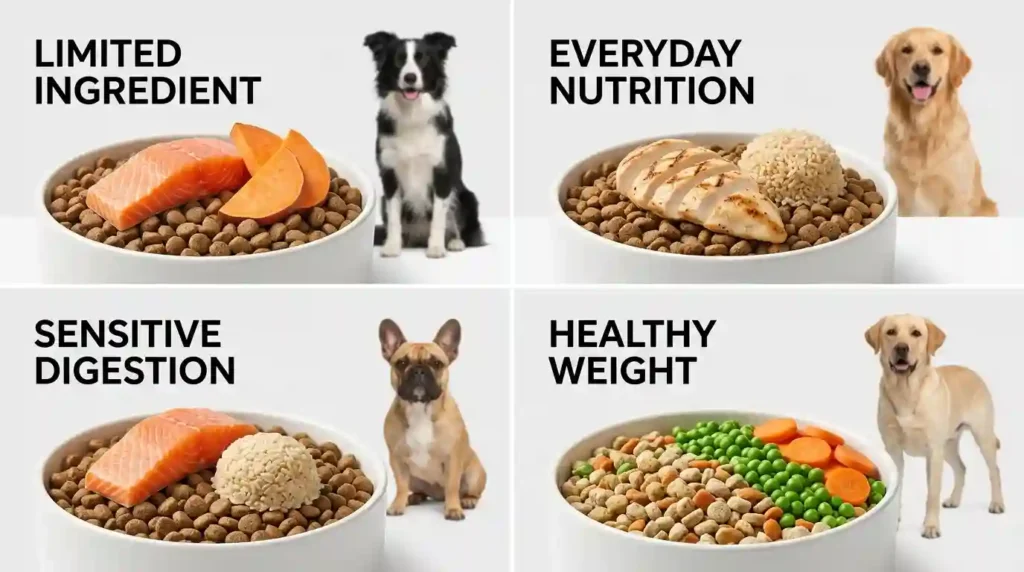
How the product lines differ
The easiest way to understand Natural Balance is to think of each line as solving a somewhat different feeding problem.
Limited Ingredient Diets:
Simplifies the major protein and carbohydrate profile and typically uses one animal protein source.
Health Protection:
Everyday nutrition with additional digestive, skin, immune, and joint-support features depending on the recipe.
Original Ultra:
Traditional multi-ingredient nutrition intended as a broad everyday food.
Specialized Nutrition:
Recipes targeted toward needs such as sensitive skin or digestion.
Fat Dogs:
Lower-calorie weight-management nutrition.
Freshly Cooked:
Shelf-stable, gently cooked meals that can be used according to their nutritional adequacy labeling as a meal or topper.
Vegetarian/Plant Powered choices:
Animal-free recipes available for owners who have a specific reason for choosing vegetarian dog food.
This variety is useful, but it also means that asking whether Natural Balance is “good” without naming the recipe is somewhat like asking whether an entire supermarket is healthy.
The specific product matters.
Natural Balance Dog Food Formulas Compared
Natural Balance’s catalog covers enough different feeding goals that owners should compare individual lines rather than simply choosing whichever bag looks most appealing.
Limited Ingredient Diets
Natural Balance’s Limited Ingredient Diets, often shortened to LID, remain one of the brand’s most recognizable offerings.
These recipes are designed around a relatively simple principle:
- One primary animal protein source
- A selected group of carbohydrate ingredients
- Essential vitamins and minerals
- Nutrients needed to meet the stated life-stage requirement
Available protein sources across the line can include:
- Salmon
- Lamb
- Duck
- Beef
- Bison
- Venison
Both grain-free and grain-inclusive options exist.
A representative Salmon & Sweet Potato grain-free adult recipe lists salmon as the primary animal protein source and provides approximately:
- 24% minimum crude protein
- 10% minimum crude fat
- 4.5% maximum crude fiber
- About 365 kcal per cup
It also includes omega-3 and omega-6 fatty acids and taurine.
This kind of recipe may appeal to an owner who wants salmon rather than chicken as the major animal protein.
It should not automatically be described as hypoallergenic, however.
“Limited ingredient” is not the same thing as “proven safe for every dog with food allergies.”
Amazon product suggestion: Natural Balance Limited Ingredient Lamb & Brown Rice Recipe
Owners wanting a grain-inclusive Limited Ingredient Diet can consider the Natural Balance Limited Ingredient Lamb & Brown Rice Dry Dog Food, which has maintained strong customer ratings on Amazon.
Original Ultra
Original Ultra is closer to a conventional everyday dog food than the LID line.
A current Chicken & Barley recipe includes ingredients such as:
- Chicken
- Barley
- Oat groats
- Brown rice
- Flaxseed
- Vegetables and fruits such as carrots, spinach, or blueberries depending on formulation
Representative nutrition is around:
- 24% crude protein
- 14% crude fat
- 5% maximum fiber
- Approximately 380 kcal per cup
Original Ultra may make sense for a dog that does not need a restricted-protein approach and whose owner prefers a grain-inclusive formula.
It provides more ingredient diversity than many LID recipes.
For some dogs, that is a benefit.
For a dog undergoing a formal food-elimination trial, it may make interpretation more difficult because more ingredients are being introduced.
Health Protection
Health Protection is one of Natural Balance’s more modern functional-nutrition lines.
A representative Chicken, Brown Rice & Pumpkin Adult formula includes:
- Chicken as a major animal protein
- Brown rice
- Pumpkin
- Prebiotic fiber
- Probiotic-coated kibble
- Omega fatty acids
- Taurine
- Glucosamine and chondroitin in some formulations
Typical guaranteed analysis is approximately:
- 24% protein
- 12% fat
- 5% fiber
- Around 365 kcal per cup
The line also includes puppy and size-specific recipes.
Health Protection is likely to appeal to owners who want a more conventional grain-inclusive food with additional digestive and wellness features rather than a restricted ingredient list.
Specialized Nutrition
Specialized Nutrition focuses on more specific feeding concerns.
For example, Sensitive Skin & Stomach Salmon & Oatmeal combines salmon with ingredients such as oatmeal, pumpkin, flaxseed, and probiotic components.
Representative analysis:
- 24% crude protein
- 14% crude fat
- 4.5% fiber
- Approximately 370 kcal per cup
Salmon and flaxseed contribute fatty acids that may support normal skin and coat condition, while oatmeal and pumpkin provide carbohydrate and fiber sources.
This does not turn the food into a treatment for unexplained itching.
A dog that repeatedly chews its paws, develops ear infections, loses hair, or has chronic diarrhea needs a diagnostic plan—not just a bag labeled “sensitive.”
Fat Dogs
Natural Balance Fat Dogs is designed for weight management.
A representative Chicken Meal, Salmon Meal & Barley formula provides approximately:
- 26% minimum crude protein
- 7.5% minimum crude fat
- 10.5% maximum crude fiber
- About 315 kcal per cup
- Added L-carnitine
Ingredients can include:
- Chicken meal
- Salmon meal
- Chickpeas
- Peas
- Oat groats
- Barley
- Beet pulp
- Pea fiber
- Oat fiber
- Pea protein
The comparatively low calorie density and higher fiber level can make calorie control easier than using a more energy-dense food.
However, weight loss still depends on total calorie intake.
A dog can gain weight on a “weight-management” food if too much is fed.
Similarly, a controlled amount of ordinary food can sometimes support weight loss when properly calculated.
Plant Powered
“Plant Powered” or vegetarian Natural Balance products deserve a little clarification.
Natural Balance has offered vegetarian dog foods, but current vegetarian recipes may appear within its broader Limited Ingredient or specialty catalog rather than as a large standalone flagship line.
A vegetarian dry recipe can include ingredients such as:
- Brown rice
- Oat groats
- Barley
- Green peas
- Vegetable ingredients
- Added amino acids
- Taurine
- Vitamins and minerals
Natural Balance also offers or has offered wet vegetarian formulas.
Dogs are not obligate carnivores in the same way cats are, and a properly formulated plant-based food can theoretically meet canine nutrient requirements.
That does not mean owners should casually formulate a vegan diet at home.
Achieving proper amino acid, vitamin, mineral, fatty-acid, and overall nutrient balance is far more complicated than removing meat from a bowl.
A commercial vegetarian formula should carry an appropriate nutritional adequacy statement for the dog’s life stage.
Dogs with medical reasons for avoiding multiple animal proteins should have the plan reviewed with their veterinarian.
Puppy, adult, and senior formulas
Natural Balance offers puppy-specific formulas as well as numerous foods labeled for adult maintenance or all life stages.
A representative Health Protection Puppy Chicken, Brown Rice & Pumpkin formula provides approximately:
- 26% crude protein
- 14% crude fat
- 385 kcal per cup
- DHA/EPA
- Controlled calcium and phosphorus information
- An AAFCO statement for growth, including growth of large-size dogs when specified on the label
That last detail is important.
Large-breed puppies have different nutritional considerations than small adult dogs, particularly around energy and mineral balance.
For senior dogs, Natural Balance does not currently appear to organize its main 2026 catalog around a large dedicated “senior” line in the same way some competitors do.
That is not necessarily a problem.
There is no universal nutrient profile called “senior” under AAFCO comparable to growth or adult maintenance. Many healthy older dogs can eat an appropriate adult-maintenance food.
However, senior dogs vary enormously.
An active healthy eight-year-old may need something very different from a 14-year-old with kidney disease, muscle loss, dental problems, or obesity.
Small-breed and large-breed options
Natural Balance now provides more size-specific choices.
A Health Protection Small Breed Chicken, Brown Rice & Pumpkin recipe uses smaller kibble and provides around:
- 24% protein
- 12% fat
- 5% fiber
- 370 kcal per cup
A Health Protection Large Breed Salmon, Brown Rice & Pumpkin recipe provides around:
- 24% protein
- 11% fat
- 5% fiber
- 400 kcal per cup
- Added glucosamine and chondroitin
Limited Ingredient large-breed recipes are also available.
Size-specific food can be useful because kibble dimensions, energy density, joint-support ingredients, and feeding quantities can be tailored to the intended dog.
Amazon product suggestion: Natural Balance LID Salmon & Sweet Potato Small Breed Bites
For small dogs, the Natural Balance Limited Ingredient Salmon & Sweet Potato Small Breed Bites is another well-reviewed Amazon option.
It is particularly relevant for:
- Small adult dogs
- Owners seeking smaller kibble
- Dogs whose diet is centered on salmon rather than poultry
- Owners specifically looking for a grain-free LID recipe
Formula comparison at a glance
| Natural Balance Line | Typical Purpose | Example Protein | Grain Status | Representative Calories | Best Suited For |
| Limited Ingredient | Simplified protein/carbohydrate profile | Salmon, lamb, duck, beef | Both available | ~365 kcal/cup | Dogs needing a simpler recipe |
| Original Ultra | Everyday balanced nutrition | Chicken | Grain-inclusive | ~380 kcal/cup | Healthy dogs without restrictions |
| Health Protection | Everyday functional nutrition | Chicken or salmon | Mostly grain-inclusive options | ~365–400 kcal/cup | Digestive/whole-body support |
| Specialized Nutrition | Targeted feeding needs | Salmon | Formula-dependent | ~370 kcal/cup | Sensitive skin/stomach |
| Fat Dogs | Weight management | Chicken meal + salmon meal | Grain-inclusive | ~315 kcal/cup | Dogs needing calorie control |
| Vegetarian | Animal-free nutrition | Plant proteins | Usually grain-inclusive | Recipe-dependent | Dogs needing/using vegetarian diets |
| Puppy | Growth | Chicken | Grain-inclusive options | ~385 kcal/cup | Growing puppies |
| Small Breed | Smaller kibble | Chicken or salmon | Both available | ~370 kcal/cup | Small adult dogs |
| Large Breed | Larger-dog nutrition | Salmon or lamb | Grain-inclusive options | ~400 kcal/cup | Large adult dogs |
Nutrition changes by recipe. Always check the current bag rather than applying one formula’s numbers to the entire brand.
Which Natural Balance Formula Fits Your Dog?
There is no single “best Natural Balance dog food.”
The better question is:
Which formula best fits this particular dog?
Best fit by life stage, size, and feeding needs
A practical starting point looks like this:
Growing puppy:
Choose a food whose nutritional adequacy statement specifically covers growth. For a puppy expected to weigh more than 70 pounds as an adult, verify that the formula is appropriate for growth of large-size dogs.
Healthy adult without known sensitivities:
Health Protection or Original Ultra may provide straightforward everyday nutrition.
Adult with a suspected sensitivity to a previously eaten animal protein:
A carefully selected LID formula may simplify the diet, but a veterinarian should direct any true diagnostic allergy trial.
Small adult dog:
A small-breed formula may provide more convenient kibble size and appropriate feeding portions.
Large adult dog:
Large-breed recipes can offer appropriate kibble dimensions and, in some formulas, glucosamine or chondroitin.
Overweight adult:
Fat Dogs may make calorie restriction easier because of its lower energy density and higher fiber.
Dog with recurring mild digestive sensitivity:
Specialized Nutrition Sensitive Skin & Stomach or a suitable Health Protection recipe may be worth discussing with a veterinarian.
Dog needing an animal-free food:
A complete and balanced vegetarian recipe may be considered under veterinary guidance, especially when the choice is driven by medical dietary restrictions.
Compare protein sources and calorie density
Two foods can look similar on the shelf while producing very different feeding outcomes.
Suppose one dry food provides:
315 kcal per cup
and another provides:
400 kcal per cup
If an owner feeds both at exactly two cups per day, the difference is:
630 kcal versus 800 kcal
That is 170 calories per day.
For a small dog, that difference could be substantial.
Likewise, protein source matters.
A dog that has eaten chicken for years may be placed on salmon, lamb, duck, venison, or another protein during a veterinarian-directed dietary trial.
But “novel” is dog-specific.
Lamb is not novel for a dog that has eaten lamb treats every week.
Salmon is not novel if salmon oil, salmon treats, or fish-based food has been part of the dog’s routine.
Review the complete diet history, not just the current kibble.
When to consider another food or ask your veterinarian
Natural Balance may not be the best fit when:
- Your dog requires a prescription therapeutic diet
- The chosen recipe causes persistent vomiting or diarrhea
- Your dog develops recurrent itching or ear problems
- Weight changes unexpectedly
- Your dog has pancreatitis and requires strict fat management
- Kidney or heart disease changes nutrient requirements
- Your veterinarian recommends a hydrolyzed-protein diagnostic diet
- Your dog has difficulty maintaining muscle mass
- Your puppy needs a different growth profile
- Your dog refuses the food despite a reasonable transition
- The price makes consistent feeding impractical
Brand loyalty should never outweigh the dog’s actual response.
If you are comparing Natural Balance with other mainstream brands, our reviews of Is Beneful a Good Dog Food, is black gold dog food good, and Is Diamond Dog Food Good can help you evaluate different ingredient and pricing approaches.
Natural Balance Ingredients and Nutrition
Ingredient lists attract a lot of attention, but they are only one piece of nutritional evaluation.
A bag can contain ingredients that sound appealing and still be poorly suited to one particular dog.
Conversely, an ingredient with an unattractive technical name can serve an important nutritional purpose.
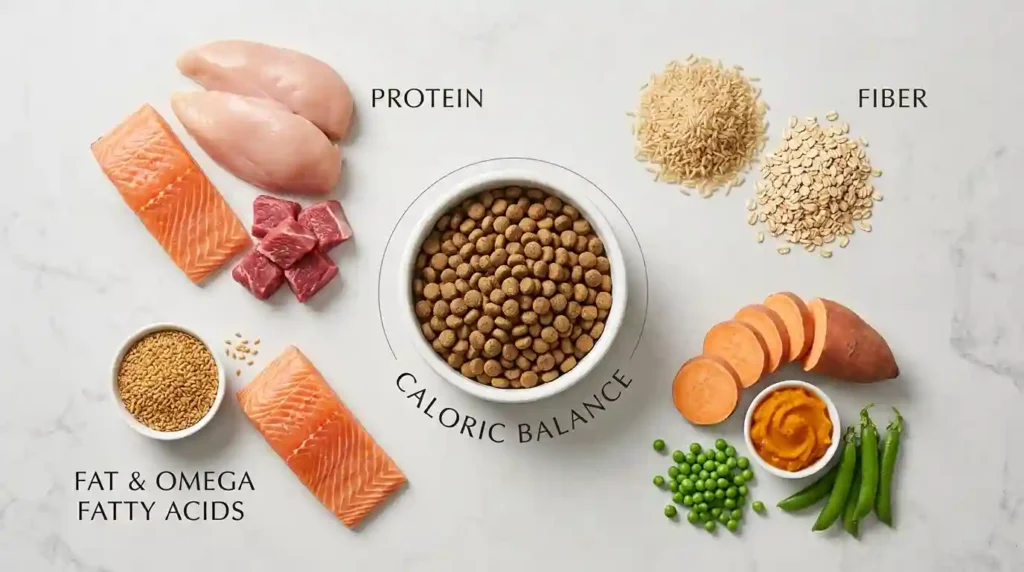
What ingredients appear in Natural Balance recipes?
Ingredients vary substantially across the brand.
Animal-protein ingredients may include:
- Chicken
- Chicken meal
- Salmon
- Salmon meal
- Lamb
- Duck
- Venison
- Bison
- Beef
- Whitefish
Carbohydrate and fiber ingredients may include:
- Sweet potato
- Brown rice
- Barley
- Oatmeal
- Oat groats
- Chickpeas
- Peas
- Pea starch
- Pea fiber
- Potato
- Pumpkin
- Beet pulp
Fat and functional ingredients may include:
- Chicken fat
- Sunflower oil
- Flaxseed
- Fish-derived fats
- Omega-3 fatty acids
- Omega-6 fatty acids
- L-carnitine
- Glucosamine
- Chondroitin
- Probiotic organisms
- Prebiotic fiber
Vitamin and mineral premixes help make a commercial food nutritionally complete.
You may also see ingredients such as choline chloride, which supplies choline and should not automatically be viewed negatively because its name sounds chemical.
Dog food is nutrition, not a contest to create the shortest ingredient label.
How to read the ingredient list
Pet-food ingredients are generally listed in descending order by weight before cooking.
That creates several important limitations.
Fresh meat contains water
Fresh chicken or salmon can appear high on the ingredient list partly because fresh meat contains substantial moisture.
After cooking removes water, its contribution by dry weight is smaller than the raw ingredient position alone might suggest.
Meals are concentrated
A named ingredient such as chicken meal has already had much of its moisture removed.
That makes it more concentrated in protein by weight than fresh chicken.
“Meal” is therefore not automatically an inferior ingredient.
Ingredient splitting can affect visual ranking
A formula may contain separate ingredients such as:
- Peas
- Pea protein
- Pea starch
- Pea fiber
Because they are listed separately, each appears lower than a hypothetical combined “pea ingredients” total might.
This is sometimes called ingredient splitting.
It does not prove that a manufacturer is doing something deceptive, but it is a reminder that an ingredient list cannot tell you exact recipe percentages.
Focus on the complete nutritional profile rather than counting how many attractive ingredients appear before the first plant ingredient.
How to read the AAFCO nutritional adequacy statement
One of the most useful pieces of information is often printed in small text on the package.
Look for language similar to:
“Formulated to meet the nutritional levels established by the AAFCO Dog Food Nutrient Profiles for maintenance of adult dogs.”
or:
“…for growth and reproduction.”
or:
“…for all life stages.”
The exact wording matters.
AAFCO establishes model nutrient profiles and feeding-test protocols, but AAFCO does not personally approve individual bags of dog food.
Therefore, phrases such as “AAFCO approved dog food” are imprecise.
The nutritional adequacy statement tells you the life stage for which the food is intended.
Complete and balanced food versus supplemental feeding
A complete and balanced food is designed to provide the essential nutrients required for the stated life stage when fed appropriately.
A product labeled only for:
- Intermittent feeding
- Supplemental feeding
- Treat use
- Topping
should not automatically replace the dog’s complete diet.
This matters with fresh foods, mixers, toppers, broths, and treats.
Some Natural Balance Freshly Cooked products are formulated to work as complete meals as well as toppers, but owners should check the statement on the exact package.
Never assume every product in a dog-food aisle is nutritionally complete.
What “natural” means on a dog food label
The word natural causes considerable confusion.
In pet-food labeling, “natural” generally relates to how ingredients are derived and processed under regulatory definitions.
It does not automatically mean:
- Organic
- Human-grade
- Raw
- Unprocessed
- Free of additives
- Superior nutrition
- Better digestibility
- Better for allergies
- Healthier than every non-“natural” competitor
Vitamins, minerals, and other nutritionally necessary substances may still be added.
Similarly, Natural Balance is not automatically a human-grade dog food simply because some ingredients are recognizable foods such as chicken, pumpkin, rice, salmon, or sweet potato.
“Human-grade” has a specific regulatory meaning involving ingredients and manufacturing.
If a package does not make and substantiate that claim, do not assume it.
Guaranteed analysis, calories, and nutrient levels
The guaranteed analysis usually includes at least:
- Crude protein minimum
- Crude fat minimum
- Crude fiber maximum
- Moisture maximum
Some Natural Balance recipes also list:
- Omega-3 fatty acids
- Omega-6 fatty acids
- Taurine
- L-carnitine
- Glucosamine
- Chondroitin
- Calcium
- Phosphorus
- DHA/EPA
- Probiotic counts
Calories may be shown as:
kcal/kg
and:
kcal/cup
or, for wet food:
kcal/can
Calories per cup are particularly useful for everyday feeding calculations.
How recipes differ in protein, fat, and carbohydrates
Representative Natural Balance dry foods illustrate how much recipes can vary:
| Example Recipe | Protein | Fat | Fiber | Approx. kcal/cup |
| LID Salmon & Sweet Potato | 24% | 10% | 4.5% | 365 |
| Health Protection Adult Chicken | 24% | 12% | 5% | 365 |
| Specialized Salmon & Oatmeal | 24% | 14% | 4.5% | 370 |
| Original Ultra Chicken & Barley | 24% | 14% | 5% | 380 |
| Fat Dogs | 26% | 7.5% | 10.5% | 315 |
| Health Protection Puppy | 26% | 14% | 5% | 385 |
These are as-fed guaranteed values, not precise measurements of the actual nutrient content in every bag.
Wet food cannot fairly be compared with dry food just by looking at the label percentage.
A canned food might show only 8% protein because most of the product is water. Converting both foods to a dry-matter basis provides a better comparison.
Carbohydrates are another source of confusion.
Most dog-food labels do not list a guaranteed carbohydrate percentage.
People sometimes estimate carbohydrates by subtracting protein, fat, fiber, moisture, and ash from 100%.
The problem is that ash is not always disclosed.
Without accurate laboratory values, claiming an exact carbohydrate percentage can create false precision.
Are Limited Ingredient Diets Right for Dogs With Food Sensitivities?
Natural Balance built much of its reputation around Limited Ingredient Diets.
They can be useful.
They can also be misunderstood.
What limited-ingredient recipes are designed to offer
A limited-ingredient food generally attempts to reduce the number of major protein and carbohydrate sources.
Natural Balance describes its current LID approach as using a single animal protein source in many formulas along with selected carbohydrate sources.
Potential benefits include:
- Easier ingredient tracking
- More options for avoiding a previously problematic protein
- A simpler diet history
- Grain-free and grain-inclusive choices
- Novel-protein possibilities for some dogs
For example, an owner whose dog has previously eaten chicken and beef may choose a salmon-based recipe.
Another dog may use lamb.
But the term limited ingredient has no universal magic threshold.
A recipe can still contain many ingredients once oils, fiber sources, vitamins, minerals, and functional nutrients are counted.
Limited ingredients versus a veterinary-directed allergy diet
This is one of the most important distinctions in the review.
An over-the-counter Natural Balance LID food is not automatically equivalent to a prescription veterinary elimination diet.
When veterinarians investigate a true food allergy, they may recommend:
- A hydrolyzed-protein veterinary diet
- A carefully selected novel-protein therapeutic diet
- Strict feeding for a defined trial period
- No flavored medication unless approved
- No treats containing other proteins
- No table scraps
- No chews or supplements that interfere with the trial
- A controlled food challenge afterward
Why be so strict?
Because diagnosing food allergy requires controlling exposure.
If a dog improves while eating five other treats and supplements, you may not know which change mattered.
Likewise, an over-the-counter food produced on equipment that also handles other proteins may not provide the same level of ingredient control as a veterinary therapeutic diet specifically manufactured for diagnostic elimination trials.
That does not make Natural Balance LID “bad.”
It simply means its purpose is different.
Questions to discuss with your veterinarian
Before choosing an LID food for chronic symptoms, ask:
- Does my dog’s history actually suggest food allergy?
- Could fleas be responsible?
- Could environmental allergies be more likely?
- Has the dog already eaten this protein?
- Should we use a hydrolyzed diet instead?
- How long should the elimination trial last?
- Which treats are allowed?
- Can flavored heartworm or flea medication interfere?
- Do we need to rule out parasites or infection?
- When should we perform a food challenge?
Skin disease is especially easy to misinterpret.
A dog may be itchy because of pollen, dust mites, fleas, bacterial infection, yeast, contact irritation, or other causes.
Repeatedly switching food without diagnosis can delay effective treatment.
Natural Balance Dog Food Recalls and Safety
Natural Balance has had recalls during its long history.
That fact should neither be hidden nor exaggerated.
A recall means a specific safety or quality issue triggered action for specific products or lots. It does not automatically mean every food currently sold under the brand is unsafe.
Natural Balance recall history
Important historical events include:
| Year | Product/Issue | Key Point |
| 2007 | Certain pet foods | Part of the broader melamine-era pet-food recalls; some additional products were affected through outside manufacturing events |
| 2010 | Sweet Potato & Chicken dry dog food | Recalled over potential Salmonella contamination |
| 2012 | Certain dry dog foods | Included in the wider Diamond Pet Foods Salmonella-related recall |
| 2020 | Ultra Premium Chicken & Liver Pâté cat food | One cat-food lot recalled for elevated choline chloride |
| 2021 | LID Green Pea & Chicken dry cat food | Certain cat-food lots recalled for potential Salmonella |
The two most recent Natural Balance recalls identified in this review involved cat food, not dog food.
The last identified Natural Balance dog-food recall occurred in 2012.
That does not guarantee that no future recall can happen.
Food-safety monitoring is ongoing across the entire pet-food industry.
Natural Balance says its current quality program includes testing for:
- Nutrient composition
- Microbiological hazards such as Salmonella
- Toxins
- Oxidation
- Shelf stability
- Packaging integrity
The company also describes a batch-testing program under its “Feed with Confidence” quality approach.
How to check a recall notice against your product
Do not throw away every bag from a brand just because you see the word “recall” on social media.
First, compare the official notice with the product in your home.
Check:
- Brand
- Exact recipe name
- Dry or wet format
- Package weight
- UPC
- Lot number
- Best-by or expiration date
- Production code
Recall notices usually identify specific lots.
If your package does not match the affected codes, it may not be included.
When in doubt, contact the manufacturer with photographs of the label and codes.
What to check on the package, including lot and date codes
Before opening a new bag, it can be useful to photograph:
- Front of bag
- Back label
- Lot code
- Best-by date
- UPC
Why?
If a safety notice appears after you have discarded the outer packaging, these details can help identify whether your food is affected.
Amazon product suggestion: Gamma2 Vittles Vault Pet Food Storage Container
The Gamma2 Vittles Vault is a highly reviewed Amazon pet-food storage option and can be useful for protecting dry kibble from moisture and pests.
A good storage routine is to:
- Keep the original bag or at minimum its complete label and lot information
- Place the bag inside a clean food-storage container when practical
- Avoid mixing the last oily crumbs of one bag with a fresh bag
- Wash and completely dry reusable containers between batches if food contacts the container directly
- Keep food in a cool, dry location
The storage container improves convenience, but it does not replace proper package tracking.
What the FDA’s diet-associated DCM investigation means for dog owners
Grain-free diets became the subject of intense concern after the U.S. Food and Drug Administration investigated reports of canine dilated cardiomyopathy, or DCM, occurring in some dogs eating certain diets.
Many reported diets were labeled grain-free and commonly contained ingredients such as:
- Peas
- Lentils
- Other pulses
- Potatoes
Natural Balance was among multiple brands named in an early FDA summary of reported cases.
That does not establish that Natural Balance caused DCM.
Adverse-event reports are not controlled clinical trials, and the FDA has repeatedly described the issue as complex and potentially involving multiple nutritional and biological factors.
By late 2022, the FDA stated that it did not intend to issue further routine case updates unless meaningful new scientific information emerged.
No simple causal rule such as:
“grain-free food causes DCM”
has been established.
At the same time, there is little reason for most healthy dogs to avoid grains simply because “grain-free” sounds healthier.
If your dog has heart disease, belongs to a breed predisposed to DCM, or eats a diet heavily based on pulses or potatoes, discuss the diet with your veterinarian.
Owners who want to read the regulator’s own explanation can review the FDA information on diet-associated canine DCM.
The practical lesson is not to panic.
It is to avoid making diet choices solely on marketing terms such as:
- Grain-free
- Ancestral
- Natural
- Holistic
- Premium
Choose food based on nutritional appropriateness.

Natural Balance Dog Food Reviews
Customer reviews are useful—but only for certain questions.
They can tell you whether owners frequently report that:
- Dogs like the flavor
- Kibble is easy to eat
- Packaging arrives intact
- A recipe has changed
- A dog refused the food
- Stool consistency changed
- Bag size feels expensive
They cannot reliably prove that a food prevents disease or cures allergies.
What customers report about taste and acceptance
Several Natural Balance products currently have strong ratings across major retailers.
For example, owner feedback for the LID Salmon & Sweet Potato line commonly mentions:
- Dogs enjoying the taste
- Picky dogs accepting the food
- Owners liking the single-animal-protein concept
- Small dogs doing well with small-breed kibble
- Some owners perceiving skin or coat improvement
Health Protection receives similar positive comments around:
- Palatability
- Easy transitions
- Stool quality
- Ingredient preferences
Original Ultra also earns generally positive taste-related feedback.
However, palatability is individual.
A food with thousands of five-star reviews can still be rejected by your dog.
Common positive feedback
Themes frequently seen in favorable customer reviews include:
Good acceptance:
Many dogs appear willing to eat the recipes consistently.
Small-breed kibble options:
Owners of small dogs appreciate recipes designed with smaller pieces.
Protein choice:
Salmon, lamb, duck, beef, and other options make rotation or protein selection easier.
Limited Ingredient concept:
Owners appreciate being able to identify the primary animal protein more easily.
Stool quality:
Some reviewers report firmer or more regular stools after transitioning.
Skin and coat observations:
Owners sometimes report less scratching or improved coats, especially with fish-based foods.
These reports are worth noting but should not be turned into medical claims.
A customer saying “this cured my dog’s allergy” does not establish that the food clinically treated an allergy.
Common complaints and concerns
Negative themes include:
Some dogs refuse the food:
No food is universally palatable.
Kibble changes:
Some customers report differences in size, color, smell, or texture between purchases.
Digestive upset:
Individual dogs may develop soft stool, gas, vomiting, or reduced appetite after changing foods.
Price:
Limited-ingredient and specialty recipes can cost significantly more than mainstream supermarket foods.
Bag crumbs:
Some owners complain about excess broken kibble or powder near the bottom.
Formula-change concerns:
When packaging or recipes change, long-term customers may worry that their dog will not tolerate the revised version.
Any sudden illness after feeding should be taken seriously, but one review cannot establish causation.
If multiple pets become ill after eating the same newly opened bag, stop feeding it, save the packaging, contact your veterinarian, contact the manufacturer, and consider filing an appropriate safety report.
What customer reviews can and cannot tell you
Customer reviews are best used for:
- Palatability
- Kibble size
- Packaging
- Delivery experience
- Perceived value
- Ease of transition
They are weak evidence for:
- Nutritional completeness
- Allergy diagnosis
- Long-term disease prevention
- Ingredient digestibility
- Safety of all batches
- Clinical superiority over competitors
Reviews also suffer from selection bias.
People whose dogs have either a very good or very bad experience may be more motivated to leave a rating than the thousands of customers whose dogs simply eat the food without incident.
Use reviews as one input—not the final verdict.
For comparison with other brands that use different manufacturing and ingredient strategies, see our reviews of Is Diamond Naturals a Good Dog Food, Is Freshpet Good for Dogs, and is hills a good dog food.
Is Natural Balance Dog Food Worth the Price?
Natural Balance generally sits above economy dog food in price.
Whether it is “worth it” depends on why you are buying it.
Paying more for a salmon LID recipe may make sense if the simplified protein choice solves a practical feeding problem.
Paying more purely because the package says “natural” may provide less meaningful value.
Price by product type and package size
Representative U.S. online prices checked around October 2026 were approximately:
| Product | Package | Approx. Price |
| Health Protection Chicken, Brown Rice & Pumpkin | 4 lb | $20 |
| Health Protection Chicken, Brown Rice & Pumpkin | 24 lb | $55 |
| LID Salmon & Sweet Potato | 24 lb | Around $73 |
| Specialized Sensitive Skin & Stomach | 22 lb | Around $75 |
| Fat Dogs | 4 lb | Around $21 |
| Fat Dogs | 11 lb | Around $37 |
| Fat Dogs | 24 lb | Around $70 |
| Original Ultra Chicken & Barley | 24 lb | Around $65 |
| Freshly Cooked meals | 9 oz | Around $6 |
| Freshly Cooked select recipes | 16 oz | Around $10 |
Retail prices change frequently due to:
- Autoship discounts
- Promotions
- Bag size
- Retailer
- Region
- Formula
- Subscription pricing
- Online versus store pricing
Use these values as a snapshot rather than a permanent price list.
Estimate the cost per day for your dog
Comparing price per pound is useful, but it does not tell the full story.
Two foods may have different calorie densities.
A better comparison is often:
Cost per 1,000 calories
Using representative pricing and current calorie data, rough estimates for selected dry foods are:
| Formula | Approx. Cost per 1,000 kcal |
| Health Protection Adult | ~$1.44 |
| Original Ultra Chicken & Barley | ~$1.66 |
| LID Salmon & Sweet Potato | ~$2.00 |
| Specialized Sensitive Skin & Stomach | ~$2.08 |
| Fat Dogs | ~$2.09 |
Imagine a hypothetical dog eating 1,000 calories per day.
At those prices, food alone would cost approximately:
- $1.44/day on Health Protection
- $1.66/day on Original Ultra
- $2.00/day on LID Salmon
- $2.08/day on Specialized Nutrition
- $2.09/day on Fat Dogs
That example is only for comparison.
Your dog may need dramatically fewer or more than 1,000 calories.
A 10-pound Shih Tzu and a 90-pound Labrador obviously do not eat the same quantity.
How to compare value across formulas
Ask what the higher price is actually buying.
Useful differences may include:
- A specific animal protein
- A smaller ingredient profile
- Size-specific kibble
- Higher or lower calorie density
- Added probiotics
- Omega fatty acids
- Joint-support nutrients
- Weight-management formulation
- Freshly cooked format
- More convenient feeding
Do not pay extra merely because an ingredient list contains fashionable words.
Likewise, do not reject a reasonably priced food because it contains an ingredient such as chicken meal or brewer’s yeast.
Value is a combination of:
Nutrition + suitability + calorie density + tolerance + price + convenience
For readers comparing premium fresh options, our review of is just food for dogs good explains how a fresh-food model differs from conventional kibble.
How to Transition Your Dog to Natural Balance
Even a nutritionally appropriate food can cause temporary digestive problems if introduced too quickly.
Follow the feeding directions for the selected recipe
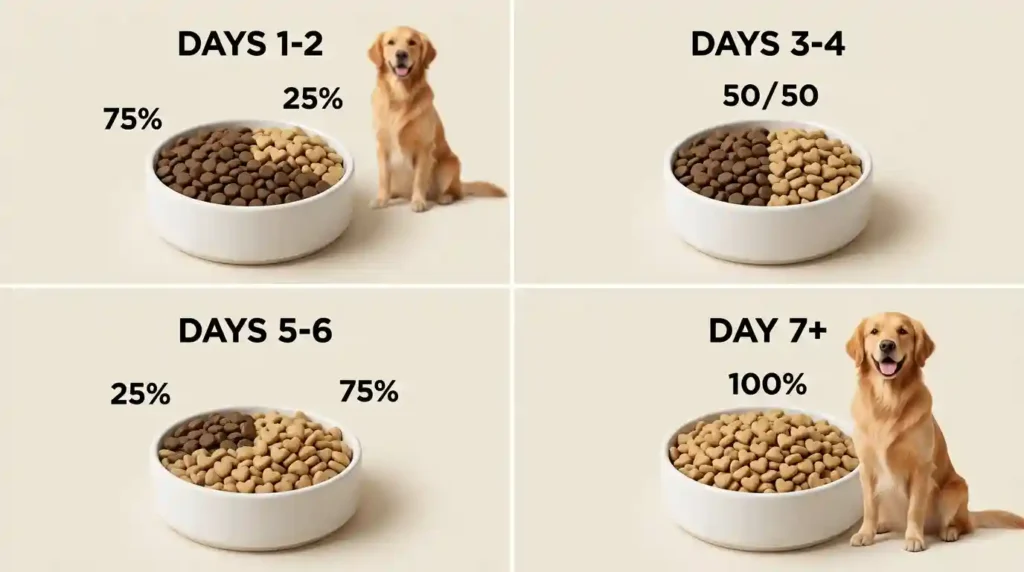
A gradual transition often looks roughly like this:
Days 1–2:
75% old food + 25% Natural Balance
Days 3–4:
50% old food + 50% Natural Balance
Days 5–6:
25% old food + 75% Natural Balance
Day 7 onward:
100% Natural Balance
Some dogs need a slower transition.
Dogs with a history of sensitive digestion may take 10–14 days or longer.
If your veterinarian is changing food for a medical reason, follow their specific instructions instead.
A feeding chart is only a starting point.
Adjust food based on:
- Body condition
- Weight trend
- Activity
- Age
- Neuter status
- Treat intake
- Medical condition
Treat calories count too.
A dog receiving 20% of daily calories from biscuits, cheese, peanut butter, and table food is not really eating the diet represented on the kibble label.
Monitor appetite, stool, and how your dog responds
During the transition, observe:
- Appetite
- Stool frequency
- Stool consistency
- Vomiting
- Gas
- Abdominal discomfort
- Energy
- Water intake
- Itching
- Ear irritation
- Coat
- Body weight
Mild temporary stool changes can occur during food transitions.
Persistent or severe symptoms should not be dismissed as “detox.”
Dogs do not need to suffer through repeated vomiting or diarrhea to “adjust” to a food.
Amazon product suggestion: Outward Hound Fun Feeder Slo Bowl
For dogs that gulp kibble very quickly, the Outward Hound Fun Feeder Slo Bowl is a highly reviewed Amazon feeding accessory that can make meals take longer.
It can be useful when:
- A dog inhales dry kibble
- You want to slow the pace of eating
- A regular bowl allows the dog to finish in seconds
Choose the correct bowl size and maze pattern for your dog.
It is not necessary for every dog, and aggressive chewers should not be left unsupervised with a plastic bowl.
A slow feeder does not replace veterinary evaluation for repeated vomiting, swallowing problems, bloating, or other medical signs.
When to contact your veterinarian
Contact your veterinarian promptly if the new food is associated with:
- Repeated vomiting
- Severe or persistent diarrhea
- Blood in stool
- Swelling of the face
- Hives
- Trouble breathing
- Extreme lethargy
- Refusal to eat
- Significant abdominal pain
- Rapid weight loss
- Worsening chronic disease
Difficulty breathing, collapse, severe swelling, or signs of a serious allergic reaction require urgent veterinary care.
If the problem is milder but persistent, do not keep switching foods every few days.
Frequent diet changes can make gastrointestinal problems harder to interpret.
Good nutrition supports overall wellbeing, but feeding is only one part of responsible ownership. Our Dog Behavior and Training resources cover the routines, training, and everyday management that also influence a dog’s quality of life.
How We Reviewed Natural Balance Dog Food
A dog-food review should explain how conclusions were reached.
Otherwise, statements such as “premium,” “high quality,” or “bad ingredients” are difficult to evaluate.
Recipe labels and product information reviewed
For this review, we examined current Natural Balance information available through October 5, 2026, including representative products from:
- Limited Ingredient Diets
- Original Ultra
- Health Protection
- Specialized Nutrition
- Fat Dogs
- Vegetarian options
- Puppy recipes
- Small-breed formulas
- Large-breed formulas
- Freshly Cooked products
We reviewed details such as:
- Ingredient lists
- Guaranteed analysis
- Calorie content
- AAFCO nutritional adequacy statements
- Life-stage labeling
- Product format
- Manufacturing information
- Brand quality-control descriptions
Because Natural Balance can reformulate products, the bag in your home should always take priority over an older online review.
How we compared nutrition, ingredients, and cost
We did not rank recipes based solely on whether individual ingredients sounded appealing.
Instead, we considered:
- Animal protein source
- Major carbohydrate ingredients
- Grain-inclusive versus grain-free formulation
- Crude protein
- Crude fat
- Fiber
- Calories per cup
- Life stage
- Size-specific design
- Functional ingredients
- AAFCO statement
- Intended feeding purpose
For cost, we compared representative online prices and estimated cost per 1,000 kcal where sufficient data was available.
This is more useful than comparing bag price alone.
A 24-pound bag costing $70 may not necessarily cost more per feeding than another food if its energy density is significantly different.
How we handled customer feedback and recall information
Customer reviews were used to identify recurring experiential themes such as:
- Palatability
- Kibble size
- Packaging
- Perceived digestive tolerance
- Price concerns
They were not treated as controlled scientific evidence.
For recall analysis, the focus was on documented recall events and the difference between:
- A recall
- An individual consumer complaint
- An adverse-event report
- A regulatory investigation
These categories should not be mixed together.
An adverse event submitted to a regulator does not, by itself, prove that the food caused the reported illness.
Review limitations and product data date
This review reflects product and pricing information checked through October 5, 2026.
Several limitations apply:
Recipes change.
Manufacturers may alter ingredients, suppliers, package sizes, or nutrient levels.
Prices change.
Retail promotions and autoship discounts can alter cost substantially.
Availability changes.
A formula available nationally today may later be regional, reformulated, renamed, or discontinued.
We did not laboratory-test each food ourselves.
Nutrient values are based on manufacturer labeling and published product information.
Customer experience varies.
No review can predict whether an individual dog will like or tolerate a food.
Medical suitability cannot be determined from a general article.
Dogs with disease need individualized veterinary advice.
This approach is the same reason we encourage readers to compare brands rather than rely on one marketing claim. Our separate reviews of Is Diamond Dog Food Good and other brands can help build that comparison.
Frequently Asked Questions About Natural Balance Dog Food
Is Natural Balance a high-quality dog food?
Natural Balance can be a good-quality option for many dogs, but quality should be judged recipe by recipe based on nutritional adequacy, life stage, calorie needs, tolerance, and individual health.
Is Natural Balance dog food good for dogs with allergies?
Its Limited Ingredient Diets may simplify protein exposure, but dogs undergoing a true food-allergy diagnosis may need a veterinarian-directed hydrolyzed or controlled novel-protein elimination diet.
Is Natural Balance grain-free?
Some Natural Balance recipes are grain-free, while others contain grains such as brown rice, barley, or oatmeal.
Does Natural Balance meet AAFCO guidelines?
Many current Natural Balance recipes are formulated to meet specific AAFCO Dog Food Nutrient Profiles; always verify the nutritional adequacy statement on the exact product.
Has Natural Balance dog food been recalled?
Yes; Natural Balance has had historical recalls, with the most recent identified dog-food recall occurring in 2012 and later 2020–2021 recalls involving cat foods.
Can puppies eat Natural Balance dog food?
Yes, but use a recipe whose AAFCO statement specifically covers growth and verify large-breed growth suitability when applicable.
How much Natural Balance should I feed my dog?
Start with the feeding directions for the exact formula, then adjust based on body condition, weight, activity, treats, age, and veterinary guidance.
Is Natural Balance good for dogs?
It can be a good choice for many healthy dogs when the selected recipe matches the dog’s nutritional needs and is well tolerated.
Where is Natural Balance dog food made?
The majority of Natural Balance diets are manufactured in the United States at its company-owned Brownwood, Texas facility or selected manufacturing partners.
Does Natural Balance use ingredients from the United States only?
No; Natural Balance describes its ingredients as globally sourced, so individual ingredient origins may vary.
Is Natural Balance Limited Ingredient Diet hypoallergenic?
No over-the-counter LID should automatically be called hypoallergenic; it may help simplify ingredients but is not equivalent to a veterinary diagnostic allergy diet.
Does Natural Balance have chicken-free food?
Yes, several recipes center on proteins such as salmon, lamb, duck, venison, beef, or bison, but always read the entire current label if chicken avoidance is medically important.
Is Natural Balance Salmon & Sweet Potato grain-free?
The commonly sold LID Salmon & Sweet Potato adult recipe is grain-free, although Natural Balance also sells grain-inclusive LID options.
Does Natural Balance make grain-inclusive food?
Yes; recipes containing brown rice, barley, oatmeal, and other grains are available.
Is grain-free Natural Balance better than grain-inclusive Natural Balance?
Not automatically; most dogs do not need grain-free food, so the better choice depends on the individual dog’s nutritional and medical needs.
Is Natural Balance good for sensitive stomachs?
Some recipes are designed with digestive sensitivity in mind, including Specialized Nutrition options, but chronic gastrointestinal symptoms require veterinary evaluation.
Is Natural Balance good for itchy dogs?
A suitable formula may help when a particular food ingredient is involved, but itching is frequently caused by environmental allergy, fleas, infection, or other conditions.
Does Natural Balance contain peas?
Some formulas contain peas, pea protein, pea starch, or pea fiber, while others have different carbohydrate profiles.
Does Natural Balance contain potatoes?
Some recipes use sweet potato or potato, particularly certain grain-free Limited Ingredient Diets.
Does Natural Balance use animal by-product meals?
Several current product lines emphasize avoiding animal by-product meals, although the exact ingredient list should always be checked.
Are animal by-product meals inherently bad for dogs?
No; appropriately processed named animal by-products can provide useful nutrients, so their presence or absence alone does not determine food quality.
Does Natural Balance contain artificial colors?
Many Natural Balance products are marketed without artificial colors, flavors, or preservatives, but verify the exact current package.
Is Natural Balance human-grade?
Natural Balance should not be assumed to be human-grade unless the specific product explicitly makes and substantiates that regulated claim.
Is Natural Balance natural?
The brand uses “Natural” in its name and formulates around pet-food definitions of natural ingredients, but “natural” does not automatically mean organic, raw, minimally processed, or nutritionally superior.
Is Natural Balance made by Diamond?
Natural Balance is currently under Ethos Pet Brands and operates its own Brownwood, Texas manufacturing facility while also using selected manufacturing partners; historical recall connections with Diamond do not mean Diamond currently owns the brand.
Who owns Natural Balance dog food?
Natural Balance is part of Ethos Pet Brands, which also owns Canidae.
Does Natural Balance test its dog food?
The company reports nutrient, microbiological, toxin, oxidation, shelf-life, packaging, and batch quality testing as part of its current safety program.
Does Natural Balance perform animal testing?
The company describes non-invasive feeding and palatability research conducted with veterinary oversight rather than invasive animal experimentation.
Is Natural Balance Fat Dogs good for weight loss?
Its lower calorie density, lower fat, higher fiber, and L-carnitine can support a calorie-controlled weight plan, but successful weight loss still depends on total calorie intake.
How many calories are in Natural Balance dog food?
It varies by formula; representative dry foods range from roughly 315 kcal/cup for Fat Dogs to around 400 kcal/cup for some large-breed recipes.
Can senior dogs eat Natural Balance?
Many healthy seniors can eat an appropriate adult-maintenance food, but older dogs with kidney, heart, weight, dental, or muscle-loss problems may need more individualized nutrition.
Does Natural Balance have a senior formula?
A large dedicated senior range was not prominent in the current 2026 catalog reviewed, so choose based on the older dog’s actual nutritional needs rather than the word “senior.”
Is Natural Balance good for small dogs?
Yes, the brand offers small-breed formulas with smaller kibble, including Health Protection and Limited Ingredient options.
Is Natural Balance good for large dogs?
Natural Balance offers large-breed options, including current Health Protection and LID recipes designed for larger adult dogs.
How long should I transition to Natural Balance?
About seven days works for many healthy dogs, but sensitive dogs may benefit from a slower 10–14-day transition unless a veterinarian recommends otherwise.
What should I do if Natural Balance gives my dog diarrhea?
Pause the transition or contact your veterinarian depending on severity; persistent, severe, bloody, or recurrent diarrhea needs veterinary evaluation.
Can I mix Natural Balance with another dog food?
Yes, provided the combined diet remains nutritionally appropriate and portions are adjusted, although mixing foods can complicate allergy investigations.
Can I use Natural Balance Freshly Cooked as a topper?
Some current Freshly Cooked products are designed for meal or topper use; check the exact package’s nutritional adequacy and feeding instructions.
Should I rotate Natural Balance proteins?
Routine protein rotation is not necessary for every dog and can make future food-allergy elimination trials more difficult, so there is no need to rotate simply because it sounds more varied.
Is expensive dog food always better?
No; higher price may reflect ingredients, format, distribution, or marketing, but nutritional suitability is more important than price alone.
Final Verdict: Should You Feed Natural Balance to Your Dog?
So, is Natural Balance dog food good? For many healthy dogs, yes. Natural Balance offers a useful mix of grain-inclusive and grain-free foods, single-animal-protein Limited Ingredient Diets, sensitive-digestion formulas, puppy nutrition, size-specific options, and a genuine weight-management recipe. Its current manufacturing transparency and quality-testing information are also positive factors. The biggest cautions are price, the unnecessary use of grain-free diets for dogs without a reason to avoid grains, and the misconception that an over-the-counter LID can replace a veterinarian-directed allergy diet. Rather than judging the entire brand as simply “good” or “bad,” compare the exact recipe’s AAFCO statement, calories, protein source, fat level, ingredients, and feeding purpose with your dog’s individual needs. If the food is nutritionally appropriate, affordable, well tolerated, and keeps your dog in healthy condition, Natural Balance can be a practical long-term choice.