


Summary
Too Long for a Dog to Bark Continuously becomes a problem — physically, psychologically, and socially — when it extends beyond 10 to 15 minutes without pause. While occasional barking is completely normal canine communication, prolonged vocalization signals underlying distress such as separation anxiety, boredom, fear, or even undiagnosed medical conditions. This guide explores the science, thresholds, causes, health consequences, and proven solutions surrounding excessive barking, helping dog owners understand when their pet’s behavior crosses the line from normal to concerning — and what to do about it.
Table of Contents:
- How Long Is Too Long for a Dog to Bark Continuously?
- Understanding Why Dogs Bark
- How Long Is Too Long? Setting the Threshold
- Health Consequences of Prolonged Barking
- Common Causes of Excessive and Continuous Barking
- Breed-Specific Barking Tendencies
- How Continuous Barking Affects the Household and Neighbors
- How to Diagnose the Root Cause
- Practical Solutions to Reduce Excessive Barking
- FAQs About Dog Barking Duration
How Long Is Too Long for a Dog to Bark Continuously?
Understanding Why Dogs Bark
The Natural Purpose of Barking
Barking is one of the most fundamental forms of canine communication. Unlike wolves, which rarely bark in the wild, domestic dogs have evolved over thousands of years to use vocalization as a primary tool to interact with humans and other animals. From an ethological standpoint, barking serves as an adaptive behavior that allows dogs to alert their pack, signal emotions, and respond to stimuli in their environment.
Dogs bark to communicate fear, excitement, hunger, territorial warnings, and social greetings. It is a deeply wired behavioral trait, not simply noise. Understanding this is the first step in assessing when barking becomes excessive rather than normal.
Types of Barking and Their Triggers
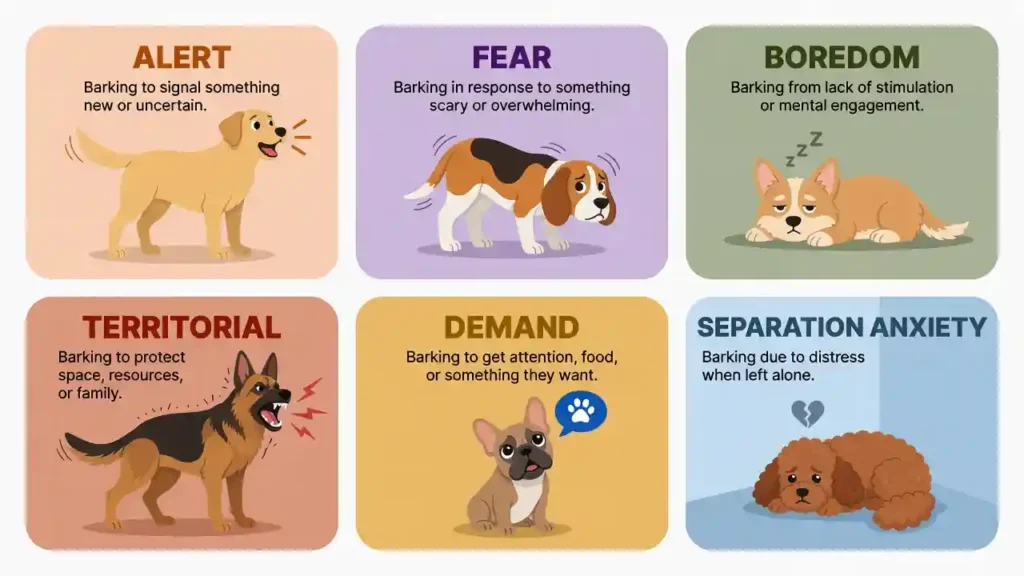
Not all barking is created equal. Behavioral linguistics in canine science identifies several distinct vocalization patterns:
- Alert barking: Sharp, rapid bursts triggered by an unfamiliar sound or presence
- Demand barking: Repetitive, persistent barking aimed at getting attention, food, or play
- Fear barking: High-pitched, often accompanied by retreating body language
- Boredom barking: Monotonous, rhythmic barking that can go on for long periods
- Separation anxiety barking: Continuous, distressed vocalization when left alone
- Territorial barking: Directed at perceived intruders, often near fences or windows
- Compulsive barking: Repetitive vocalization with no obvious trigger, potentially neurological
Each type has a different root cause and requires a different management strategy.
How Long Is Too Long? Setting the Threshold
Occasional Barking vs. Excessive Barking
There is no universal scientific cutoff for exactly when barking becomes “excessive,” but animal behavior specialists generally agree on a practical framework. A dog barking for 1 to 5 minutes in response to a clear trigger — a doorbell, a stranger passing by, or a car pulling in — is considered normal and acceptable. This is reactive barking and typically self-resolves.
Barking that continues for more than 10 to 15 minutes without a discernible or ongoing trigger is generally considered excessive. When a dog barks for 30 minutes or longer continuously, or in repeated bouts throughout the day totaling more than an hour, it suggests a deeper behavioral or emotional issue that needs to be addressed.
Duration Benchmarks: What Experts Say
According to veterinary behaviorists, dogs that bark for prolonged durations — particularly when left alone — are very likely experiencing distress. The American Veterinary Medical Association (AVMA) acknowledges prolonged vocalization as one of the key indicators of separation anxiety, a condition affecting an estimated 14 to 20% of dogs in the United States alone.
Behaviorists use a simple rule of thumb: if the dog cannot calm down within 15 minutes of the triggering stimulus being removed, the barking has moved into the territory of a behavioral problem that warrants investigation and intervention.
Legal and Neighborhood Noise Thresholds
In many municipalities and countries, noise ordinances apply to dog barking. In the UK, for example, a dog that barks continuously for more than 10 minutes or intermittently for more than 30 minutes during nighttime hours can be considered a statutory noise nuisance. In the United States, local ordinances vary but many cities have similar thresholds.
For pet owners in shared housing, apartments, or dense neighborhoods, prolonged barking can lead to formal complaints, fines, and even legal action. This makes addressing excessive barking not just an animal welfare concern but also a legal one.
Health Consequences of Prolonged Barking

Physical Strain on the Dog’s Vocal Cords
Just like humans who shout for long periods, dogs that bark continuously put significant mechanical strain on their larynx and surrounding vocal structures. Chronic excessive barking can lead to:
- Laryngitis — inflammation of the larynx causing a hoarse or weakened bark
- Vocal cord nodules — small benign growths from repeated strain
- Sore throat and discomfort — which may make a dog reluctant to eat or drink
- Dehydration — continuous barking causes rapid water loss through respiration
If your dog’s bark suddenly sounds raspy or weaker after a period of intense vocalization, this is a sign of physical strain that may need veterinary attention.
Psychological Stress and Anxiety Indicators
Continuous barking is not just a symptom of stress — it amplifies it. When a dog is in a heightened state of arousal, the body releases cortisol, the primary stress hormone. Prolonged barking without resolution keeps cortisol levels elevated, which can lead to:
- Chronic anxiety and hypervigilance
- Difficulty relaxing or sleeping
- Increased reactivity and aggression
- Digestive problems including diarrhea and appetite loss
This creates a negative feedback loop: the dog is anxious, so it barks; the barking prolongs the anxiety state; and the elevated anxiety makes future barking episodes more likely and more intense.
Sleep Deprivation and Behavioral Deterioration
Dogs require between 12 and 14 hours of sleep per day. Dogs that bark excessively often do so at the cost of rest, both their own and their owner’s. Chronic sleep deprivation in dogs is associated with increased irritability, reduced cognitive function, impaired memory, and a weakened immune system — closely mirroring the effects seen in humans.
Common Causes of Excessive and Continuous Barking
Separation Anxiety
Separation anxiety is the single most common cause of prolonged, continuous barking. Dogs are pack animals by nature, and being left alone triggers a genuine panic response in anxious individuals. Signs include barking that begins within minutes of the owner leaving and does not stop until they return, often accompanied by destructive behavior and inappropriate elimination.
Just as some dogs bark at unusual stimuli like their own body parts — a phenomenon explored in detail in this guide on Dog Barking at Its Own Feet or Tail — separation anxiety can also manifest in bizarre or misdirected ways that require careful behavioral diagnosis.
Boredom and Under-Stimulation
A mentally unstimulated dog is a loud dog. Working breeds like Border Collies, Siberian Huskies, and Belgian Malinois were bred for hours of daily activity. When confined to a small space without adequate exercise or mental enrichment, these dogs will vocalize persistently simply because they have excess energy and nothing productive to direct it toward.
Puzzle feeders, long-duration chews, interactive toys, training sessions, and daily walks are all critical tools in managing boredom barking.
Fear, Phobias, and Environmental Triggers
Thunder, fireworks, traffic, construction noise, and even unfamiliar smells can trigger fear responses that manifest as prolonged barking. Dogs with noise phobias or generalized anxiety disorders may bark uncontrollably during storms or other events, sometimes for hours.
Similarly, dogs often react to social dynamics in public environments. Understanding why your dog barks in specific social scenarios — like the behavior explored in Dog Barking at Children Playing — is essential to crafting an effective management plan.
Territorial and Alarm Barking
Some dogs are hardwired to bark at anything entering what they perceive as their territory. This type of barking can become excessive when the dog is in a high-traffic area where people, animals, or vehicles are constantly triggering alarm responses. Unlike separation anxiety barking, this typically occurs in the owner’s presence.
Medical Conditions That Cause Excessive Vocalization
Several medical issues can cause a dog to vocalize more than normal:
- Cognitive Dysfunction Syndrome (CDS): The canine equivalent of dementia, causing confusion and anxiety-driven barking, especially at night
- Pain: Dogs in pain from arthritis, injury, or internal conditions may whimper or bark persistently
- Hyperthyroidism: Though less common in dogs than cats, thyroid issues can increase restlessness and vocalization
- Neurological disorders: Seizure activity or brain lesions may cause uncontrolled, compulsive barking
Always rule out medical causes before assuming a behavioral origin, especially in older dogs who develop new barking habits.
Breed-Specific Barking Tendencies
High-Energy and Vocal Breeds
Some breeds have been selectively developed for alerting or communication, making them naturally more vocal. These include:
- Beagles — bred as scent hounds, they have a distinctly loud, melodic bark
- Chihuahuas — highly alert and territorial despite their small size
- Miniature Schnauzers — watch dogs by nature, they bark at virtually everything
- Yorkshire Terriers — feisty and vocal
- Siberian Huskies — tend to howl rather than bark, but can do so for extended periods
For owners of these breeds, higher barking frequency should be expected. The goal is not eliminating barking entirely but keeping it within manageable limits through training and enrichment.
Breeds That Are Naturally Quieter
Some breeds are significantly calmer in their vocalization patterns. Basenjis are famously known as the “barkless dog,” producing a unique yodel-like sound instead. Greyhounds, Shiba Inus (in many cases), and Whippets are also relatively quiet breeds. That said, even a quiet breed can develop excessive barking habits under chronic stress or anxiety.
How Continuous Barking Affects the Household and Neighbors
Noise Pollution and Human Stress
Research in environmental psychology consistently shows that involuntary, unpredictable noise — which is precisely what continuous dog barking represents — significantly elevates cortisol levels and blood pressure in humans. Neighbors and family members exposed to prolonged dog barking report higher rates of sleep disturbance, reduced concentration, irritability, and overall reduced quality of life.
For a detailed overview of the effects of noise pollution from domestic animals on human well-being, the American Kennel Club’s behavioral resources at akc.org provide an evidence-based foundation for understanding and addressing the issue.
Legal Implications for Pet Owners
Repeated complaints about a barking dog can escalate to formal animal control intervention, fines, and in extreme cases, legal orders requiring the removal of the animal from the property. Responsible ownership includes ensuring your dog’s behavior does not constitute a nuisance under local law.
How to Diagnose the Root Cause
Observing Patterns and Triggers
Keep a barking log for 5 to 7 days, recording: time of day, duration, apparent trigger, your location (home or away), and the dog’s body language. This data helps identify whether the barking is fear-based, attention-seeking, territorial, or anxiety-driven — each requiring a different intervention approach.
Setting up a home camera or baby monitor can also reveal behavior that occurs exclusively in your absence, which is a hallmark of separation anxiety.
When to See a Veterinarian or Behaviorist
If barking is sudden in onset, especially in an older dog, always consult a veterinarian first. If medical causes are ruled out and the behavior persists beyond 2 to 3 weeks despite management attempts, a certified applied animal behaviorist (CAAB) or veterinary behaviorist is the appropriate next step.
Practical Solutions to Reduce Excessive Barking

Training Techniques
- “Quiet” command training: Teach your dog to stop barking on cue using positive reinforcement. Reward silence, not barking cessation in response to punishment.
- Desensitization and counter-conditioning: Gradually expose your dog to triggers at low intensity while pairing them with positive experiences (treats, play) to reduce reactivity.
- Ignore demand barking: Never reward barking with attention. Wait for silence before responding.
Environmental Modifications
- Use white noise machines or calming music to mask triggering sounds
- Limit window access for dogs that bark at passersby
- Provide a safe den-like space (crate or covered bed) for anxious dogs
- Increase daily physical exercise — a tired dog is a quiet dog
Anti-Anxiety Tools and Products
- Adaptil (DAP) diffusers: Release synthetic dog-appeasing pheromones to reduce stress
- ThunderShirts or anxiety wraps: Gentle, constant pressure has a calming effect
- Calming chews with L-theanine, melatonin, or chamomile: Natural supplements that reduce anxiety in some dogs
- Prescription medications: For severe separation anxiety, veterinarians may prescribe fluoxetine (Prozac for dogs) or other anxiolytics
According to ASPCA behavioral resources at aspca.org, a multimodal approach combining training, environmental management, and when necessary, medication, yields the best outcomes for dogs with chronic excessive barking.
Professional Help
For complex or deeply ingrained barking problems, professional intervention is not just helpful — it’s often necessary. Board-certified veterinary behaviorists can prescribe medication and design structured behavior modification plans. Certified professional dog trainers (CPDTs) can implement those plans in real-world settings.
FAQs About Dog Barking Duration
Q: Can a dog bark itself hoarse?
Yes. Extended continuous barking can cause laryngitis and temporary voice changes. In severe cases, it may require veterinary care.
Q: Is it cruel to let a dog bark for hours?
Yes, if the dog is in distress. Prolonged barking from anxiety or fear is a sign the dog is suffering and needs intervention, not just management.
Q: Will my dog eventually stop barking on its own?
Some dogs tire themselves out, but many anxious dogs can bark for hours without stopping. Exhaustion is not a solution to the underlying cause.
Q: How do I stop my dog barking when I leave?
Start with short absences, gradually increase duration, and use enrichment tools to build positive associations with alone time. If the issue is severe, consult a veterinary behaviorist.
Q: At what point should I be worried about my dog’s barking?
If your dog barks continuously for more than 15 minutes, does so daily, or the behavior is new and sudden, it warrants investigation — either behavioral or medical.