


Summary
Learning how to stop dog barking at 5am begins with finding out what wakes your dog—not simply trying to silence the noise. Bathroom urgency, hunger, daylight, outside activity, anxiety, and a reinforced early-riser routine can all produce the same frustrating result. This guide will help you identify the cause, prevent accidental rewards, and gradually move your dog toward a later, calmer wake-up time using humane, reward-based training.
Table of Contents
- Why Dogs Bark So Early in the Morning
- How to Identify Your Dog’s Barking Trigger
- How to Stop Dog Barking at 5 AM: Step-by-Step Plan
- How to Stop Dog Barking at 5 AM Without Reinforcing It
- Improving Your Dog’s Evening Routine
- Creating a Better Sleeping Environment
- Mistakes That Make Early Morning Barking Worse
- When Early Barking Requires Veterinary Help
- Conclusion
- Frequently Asked Questions
Why Is My Dog Barking So Early in the Morning?
Early morning barking is rarely random. Dogs repeat behaviors that meet a need or produce a useful result. If barking causes breakfast to appear, a door to open, or an owner to enter the room, the behavior can quickly become part of the dog’s internal alarm clock.
Some dogs begin with a genuine need, such as a potty break. Over time, however, the response they receive can turn the original behavior into a learned behavior. A dog that once barked because of bathroom urgency may later bark because it expects attention, food, or outdoor access.
Your Dog Has Learned an Early-Riser Routine
Dogs are exceptionally good at recognizing patterns. If you regularly get out of bed after your dog barks at 5 a.m., the dog may learn a simple sequence:
Bark → owner gets up → exciting things happen.
Opening the crate, speaking to the dog, serving breakfast, or taking a walk can all reinforce this sequence. Even annoyed attention may strengthen attention-seeking behavior because your dog still succeeds in making you respond.
Early barking can therefore become a self-rewarding behavior. The dog may enjoy vocalizing during outside activity, while your eventual appearance provides an additional reward.
Daylight and Outside Noise Act as Environmental Cues
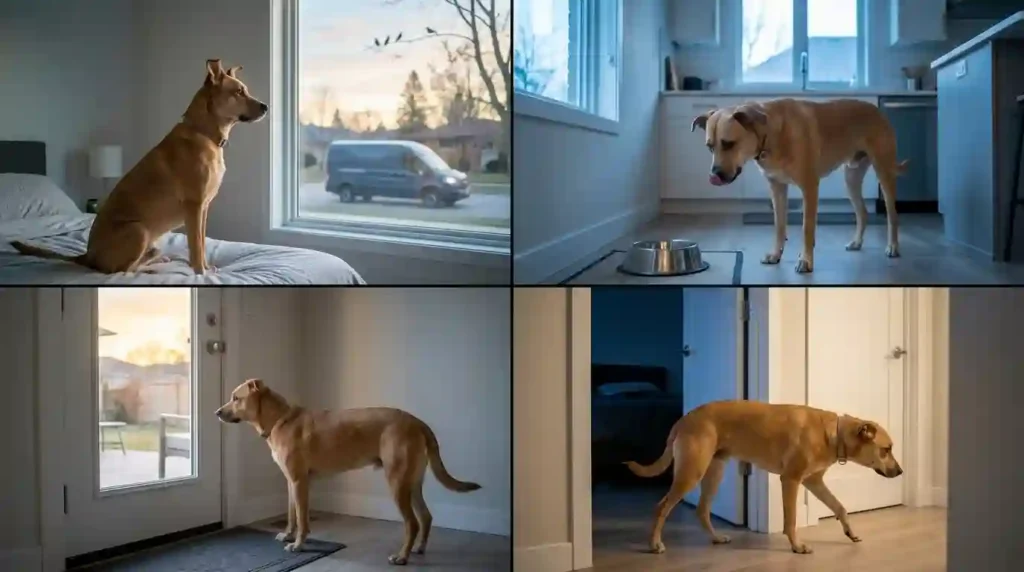
Dogs do not read clocks, but they notice environmental changes. Sunrise, birds, garbage trucks, delivery vehicles, passersby, neighborhood dogs, and people preparing for work can act as a barking trigger.
Owner movement matters too. A dog may hear an alarm, footsteps, a bathroom door, or movement in bed and assume the day has started. During summer, earlier daylight can move the dog’s sleep schedule forward even when the household schedule remains unchanged.
Hunger or Thirst May Be Waking Your Dog
A dog that eats its evening meal very early may feel hungry before the desired wake-up time. If breakfast is served immediately after barking, hunger and learned anticipation can combine into a powerful habit.
Thirst may also cause restlessness or whining, particularly after intense evening exercise, warm weather, salty treats, or insufficient water intake. Dogs should normally have appropriate access to fresh water unless a veterinarian has given different medical instructions.
Your Dog Needs a Potty Break
Bathroom urgency is an important possibility, particularly for puppies, senior dogs, small dogs, and dogs experiencing digestive upset. A last potty break that occurs too early in the evening can make sleeping until morning unrealistic.
Some dogs also develop an elimination habit. Their bodies become accustomed to urinating or defecating at approximately the same time every morning. Changing that pattern requires gradual adjustments rather than expecting the dog to wait several additional hours immediately.
Boredom and Excess Energy Can Interrupt Sleep
A dog that sleeps for much of the day may be fully rested by 5 a.m. Working and herding breeds can be especially sensitive to insufficient physical stimulation and mental stimulation. For breed-related context, read Dog Barking Behavior in Herding Breeds.
Daytime exercise, sniffing opportunities, problem-solving games, and short training exercises can help create healthy tiredness. The goal is relaxation, not exhausting or overstimulating the dog immediately before bedtime.
Fear, Excitement, or Anxiety May Be Involved
Some dogs bark from excitement when the neighborhood becomes active. Others react because outside noise produces fear or hypervigilance. Whining, pacing, panting, scratching at doors, howling, drooling, or destructive behavior may point toward anxiety rather than ordinary protest.
If vocalizing happens mainly when the dog cannot reach you, compare the signs in Separation Anxiety Barking vs. Normal Protest Barking. True separation anxiety requires a different plan from routine demand barking.
How to Identify the Real Barking Trigger
Before changing the routine, keep a behavior diary for seven to ten days. Record:
- The exact time barking begins
- Whether barking starts before or after daylight
- Sounds or movement occurring outside
- The time of the evening meal and the last water intake
- The time and result of the last potty break
- Daytime naps, exercise, and mental enrichment
- Your response to the barking
- How quickly the dog settles after food, attention, or toileting
- Signs such as pacing, panting, whining, howling, or house soiling
Patterns often become visible within a week. Barking at sunrise suggests an environmental cue. Barking that stops immediately after elimination suggests bathroom urgency. Barking followed by excited anticipation at the food area may involve the feeding schedule.
A camera can also reveal what happens before you hear the barking. You may discover that the dog wakes when a neighbor leaves, becomes distressed after the owner’s movement, or lies awake for a long period before vocalizing.
Separate a Genuine Need From Demand Barking
Do not ignore a dog that may be ill or physically unable to wait. If you are uncertain, provide a calm, boring potty break:
- Keep the lights low.
- Avoid play, petting, and excited conversation.
- Take the dog directly to the toilet area.
- Give the dog a few minutes to eliminate.
- Return indoors and settle the dog again.
- Delay breakfast until the planned feeding time.
If the dog eliminates urgently every morning, adjust the potty schedule and discuss sudden changes with a veterinarian. If the dog does not eliminate and immediately seeks play or food, learned behavior may be contributing.
How to Stop Dog Barking at 5 AM: Step-by-Step Plan
Once medical and toileting needs have been considered, use a consistent training plan. Trying a different response every morning makes the outcome unpredictable, which can make a dog even more persistent.
Step 1: Choose a Realistic Desired Wake-Up Time
If your dog currently wakes at 5:00 a.m., do not immediately insist on silence until 7:30. Start slightly later than the dog’s established waking time—perhaps 5:10 or 5:15—and extend the interval gradually.
A puppy or senior dog may need a temporary early potty break even if breakfast and social attention occur later.
Step 2: Set an Alarm Before the Barking Begins
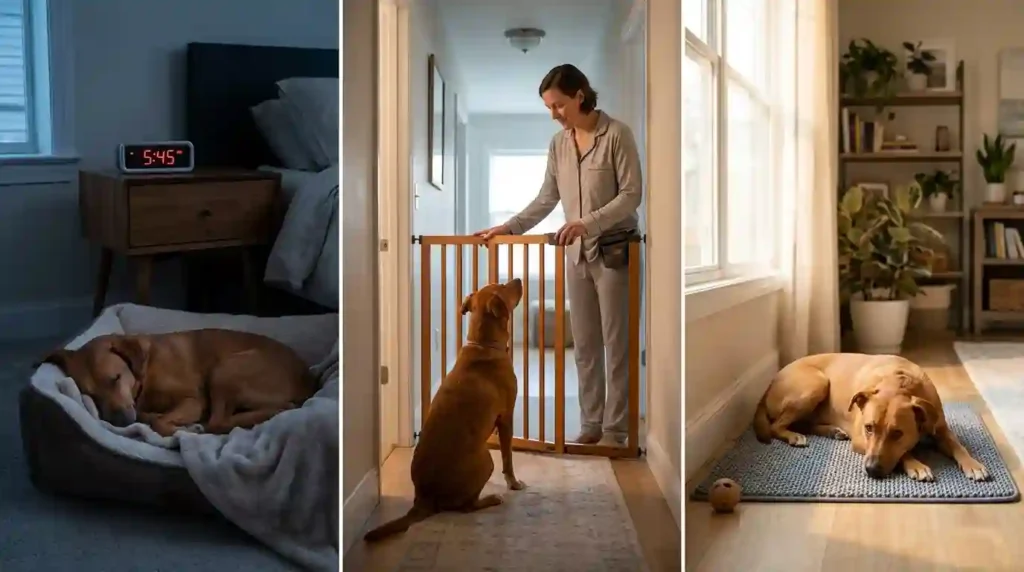
For alarm-clock training, set an alarm five to ten minutes before your dog normally barks. Get up while the dog is quiet, provide necessary care, and begin the morning routine.
The alarm becomes the new environmental cue: the day starts when the sound occurs, not when the dog barks.
After several quiet mornings, move the alarm five minutes later. Continue using gradual time extension every few days. If barking returns, the increase was probably too large; move back to the last successful time.
Step 3: Reward Silence, Not Vocalizing
Wait for a brief pause before opening the crate, crossing the baby gate, or giving attention. At first, one or two seconds of quiet may be enough. Calmly mark and reward the silence, then gradually require a longer quiet period.
This delayed attention teaches the dog that calm behavior opens access to valued resources. Barking does not.
If your dog is highly aroused, avoid repeatedly saying “quiet.” Constant talking can become attention. A quiet command is most effective when it has already been taught in easy daytime sessions.
Step 4: Teach an Alternative Behavior
Dogs learn faster when shown what to do. Useful alternative behavior options include:
- Settling on a mat
- Lying quietly in a comfortable bed
- Relaxing inside an exercise pen
- Chewing an approved food-filled toy
- Waiting behind a baby gate
- Resting calmly after an early potty trip
Practice mat training during the day. Reward the dog for approaching the mat, lying down, and remaining relaxed. Once the behavior is reliable, use it as part of the bedtime and morning routine.
A food-filled Kong may help some dogs settle, but it should not appear immediately after barking. Provide it proactively or after an appropriate period of silence. If using peanut butter, confirm that it contains no xylitol, also called birch sugar, because xylitol is toxic to dogs.
Step 5: Separate Breakfast From Wake-Up Time
Feeding immediately after getting up can make the owner’s movement a signal that breakfast is coming. Break that association by inserting calm, predictable activities before the meal.
For example:
- Quiet potty break
- Return indoors
- Five to ten minutes of calm mat time
- Brief grooming or another neutral activity
- Breakfast at the scheduled time
Move the feeding schedule gradually. A sudden one-hour delay may cause frustration, while changes of five to fifteen minutes are easier to tolerate.
Step 6: Be Consistent for Several Weeks
One person releasing the dog at 5 a.m, “just this once,” can strengthen the behavior. Intermittent rewards are powerful because they teach the dog that persistence sometimes works.
Ask everyone in the household to follow the same routine. Decide in advance who handles genuine potty needs, what counts as sufficient silence, and when breakfast and attention begin.
How to Stop Dog Barking at 5 AM Without Reinforcing It
Ignoring barking can help when the behavior is purely attention-driven, but ignoring is not a complete plan. It must be combined with trigger removal, environmental management, and reinforcement of a more appropriate response.
Expect a Possible Extinction Burst
When barking previously worked and suddenly stops working, the dog may bark louder, longer, or more urgently. This temporary escalation is called an extinction burst.
Responding during the loudest episode may teach the dog that stronger barking is required. However, never assume every escalation is behavioral. Check for fear, pain, illness, and bathroom urgency before using planned ignoring.
Make Quiet Behavior More Valuable
Notice calm behavior throughout the day—not only when barking is a problem. Quietly place a treat between the dog’s paws while it rests. Reward relaxed mat behavior and calm waiting at doors.
Positive reinforcement makes the preferred behavior worth repeating. The American Veterinary Society of Animal Behavior advises using reward-based methods for training and behavior modification and cautions against aversive techniques in its humane dog-training guidance.
Use Cues Carefully
A trained quiet command can be useful, but shouting “quiet” over repeated barking usually adds noise and attention. Teach the cue during controlled daytime practice:
- Create a mild, manageable barking trigger.
- Let the dog bark once or twice.
- Present a treat near the dog’s nose.
- When the dog becomes silent, say “quiet.”
- Reward the silence.
- Gradually increase the quiet interval.
A “leave” command may help a dog disengage from passersby or outside sounds, but it should be reinforced positively and rehearsed before dawn disturbances occur.
Improve the Evening Routine
A successful morning often begins the night before. Review your dog’s daytime sleep, exercise, food, water, and elimination opportunities.
Balance Physical and Mental Stimulation
Provide appropriate daytime exercise based on the dog’s age, breed, health, and fitness. A sniff-focused walk, gentle play, or reward-based training exercise can provide both physical stimulation and mental enrichment.
Avoid intense evening exercise immediately before bed if it leaves your dog excited. Finish vigorous activity earlier, then use calm sniffing, chewing, or relaxation work to help the dog settle.
Adjust Meals Carefully
If hunger appears to contribute, consider moving the evening meal slightly later or reserving a small portion of the daily food allowance as a bedtime snack. Do not simply add calories, particularly if weight management is a concern.
Changes to meal timing should be gradual. Dogs with diabetes, digestive conditions, medication schedules, or prescribed diets need veterinary guidance before feeding changes.
Schedule the Last Potty Break Later
Take your dog outside immediately before bedtime rather than assuming an earlier outing will be sufficient. Keep the trip calm and allow enough time for complete elimination.
Puppies cannot always sleep through the night. Senior dogs may also need more frequent access because of age-related changes or medical conditions. The appropriate goal is a sustainable routine, not forcing the dog to hold urine beyond its comfort or ability.
Create a Sleep-Friendly Environment
Environmental management can prevent the triggers that start the barking cycle.
Block Early Daylight
Use a blackout curtain if sunrise wakes the dog. Check for narrow gaps that allow a beam of light to reach the dog’s crate or sleeping area.
A crate cover may reduce visual stimulation for a dog that is already comfortable with crate training. Ensure generous ventilation, monitor room temperature, and never use a cover to force a distressed dog to remain confined.
Mask Outside Noise
A white noise machine, fan, or soft classical music can reduce the contrast between a quiet home and sudden outside noise. Place the device near the sleeping area, but keep the volume comfortable.
Move the bed or crate away from street-facing windows, shared walls, doors, or rooms where early owner movement is obvious.
Make the Sleeping Area Comfortable
Provide a supportive, comfortable bed suited to the dog’s size and physical condition. Check whether the room becomes too warm, too cold, or too bright before morning.
A crate, exercise pen, or gated room can work well if the dog feels secure there. If confinement produces panic, howling, escape attempts, or heavy panting, do not treat it as simple disobedience. Seek qualified help.

Mistakes That Make Early Morning Barking Worse
Yelling or Punishing the Dog
Yelling may sound like participation to an excited dog and may increase fear in an anxious one. Physical punishment and intimidation can damage trust without addressing hunger, fear, outside noise, or elimination needs.
Using Anti-Barking Devices
A shock collar, ultrasonic device, or other anti-barking device may suppress vocalization without resolving the underlying cause. The dog may remain frightened, uncomfortable, or desperate, but lose an important way to communicate.
These tools can also create unintended associations. A dog may connect discomfort with a passing person, another dog, its crate, or being left alone.
Releasing the Dog During Barking
Opening the door while the dog is barking teaches that noise makes access happen. When practical and safe, wait for a brief pause before releasing the dog.
This does not mean withholding an urgent potty break for a long period. Even in urgent situations, you can often capture one second of silence before calmly opening the door.
Making Changes Too Quickly
Moving breakfast, toileting, and wake-up time by an hour overnight may create frustration or accidents. Gradual changes are more likely to succeed.
If progress suddenly collapses, return to the last manageable step. Training is not always linear, especially when daylight, weather, household activity, or health changes.
When to Seek Veterinary or Behavioral Help
Arrange a veterinary evaluation if early morning barking begins suddenly, becomes excessive, or appears alongside:
- Increased thirst or urination
- House-soiling accidents
- Diarrhea, vomiting, or other digestive upset
- Difficulty standing, walking, or getting comfortable
- Restlessness, confusion, or nighttime wandering
- Changes in appetite or weight
- Signs of pain
- New hearing loss or vision changes
- Panic, escape attempts, or persistent howling
- Major changes in sleep or personality
A urinary tract infection, gastrointestinal problem, pain, endocrine disorder, sensory decline, or age-related cognitive change may disrupt sleep and increase vocalization. Training should not replace medical investigation when a physical cause is possible.
If health problems have been excluded but barking continues, consult a qualified reward-based dog trainer. Complex fear, anxiety, or separation anxiety may require a veterinary behaviorist or certified applied animal behaviorist. Bring your behavior diary and video recordings so the professional can evaluate the pattern accurately.
Conclusion
Stopping early morning barking requires more than silencing a noisy dog. First, identify whether the cause is bathroom urgency, hunger, anxiety, excess energy, owner movement, daylight, outside noise, or a reinforced routine. Then change the environment, protect the dog’s genuine needs, and make quiet behavior more rewarding than barking.
Use a consistent sleep schedule, a later last potty break, appropriate enrichment, alarm-clock training, gradual time extension, and delayed attention. Progress may take several weeks, especially if barking has worked for a long time. Patience and consistency are far more effective than yelling, punishment, or aversive anti-barking devices.
Frequently Asked Questions
How do I get my dog to stop barking at 5 am?
Identify the trigger, meet genuine toilet or health needs, and use alarm-clock training to move wake-up time later in small increments. Reward silence rather than barking.
How can I stop a dog from waking up early and barking?
Improve evening exercise, meal, and potty timing, block daylight, mask outside noise, and avoid giving breakfast or attention immediately after barking.
Why is my dog barking so early in the morning?
Common causes include hunger, bathroom urgency, daylight, outside activity, boredom, anxiety, owner movement, or a learned early-riser routine.
Should I ignore my dog when it barks early?
Only ignore barking after ruling out pain, illness, fear, and an urgent need to eliminate. Pair planned ignoring with trigger management and rewards for silence.
Will a later bedtime stop early barking?
It may help some dogs, but bedtime alone will not fix barking driven by outside noise, hunger, anxiety, medical problems, or accidental reinforcement.
How long does it take to change a dog’s wake-up time?
Some dogs improve within one or two weeks, while established habits may require several weeks of gradual, consistent training.
Should I use a shock collar for morning barking?
No. Aversive devices may increase stress and do not address the reason for barking; use environmental management and reward-based training instead.
When should I take my dog to a veterinarian?
Schedule an examination if barking starts suddenly or occurs with increased thirst, accidents, pain, digestive signs, confusion, restlessness, or sensory changes.