
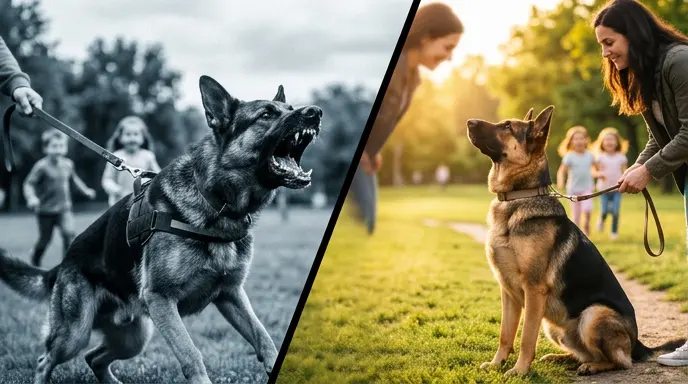

Summary: Dogs barking at children in the park is one of the most common and misunderstood behavioral challenges dog owners face. This guide Dog Barking at Children in the Park unpacks the root causes — from fear and overstimulation to poor socialization and instinctive breed behaviors — and walks you through evidence-based training methods, including desensitization, counter-conditioning, and threshold management. Whether your dog is reactive, excitable, or territorial, you’ll find practical strategies, expert-backed insights, and clear red flags to watch for, so that both your dog and the children around them can enjoy the park safely and peacefully.
Table of Contents
- Understanding Why Dogs Bark at Children
- Common Triggers: What Sets Your Dog Off in the Park
- Breed Tendencies and Barking Behavior Around Kids
- Signs to Watch: Reading Your Dog’s Body Language
- How to Stop a Dog from Barking at Children in the Park
- Socialization Strategies for Dogs Around Kids
- When to Seek Professional Help
- Environmental and Lifestyle Factors That Contribute to Reactivity
- Frequently Asked Questions
Why Is My Dog Barking at Children Playing in the Park?
Few situations are more stressful for a dog owner than standing in a public park while your dog lunges and barks at a group of laughing, running children. It’s embarrassing, exhausting, and — if left unaddressed — potentially dangerous. But before you can fix the behavior, you need to understand it.
Dog barking directed at children is not random. It is a communication signal rooted in emotion, instinct, past experience, and physiological state. This comprehensive guide covers every dimension of why dogs bark at playing children, what your dog is actually trying to say, and how you can systematically and humanely reduce or eliminate the behavior.
Understanding Why Dogs Bark at Children
The Psychology Behind Dog-Child Reactivity
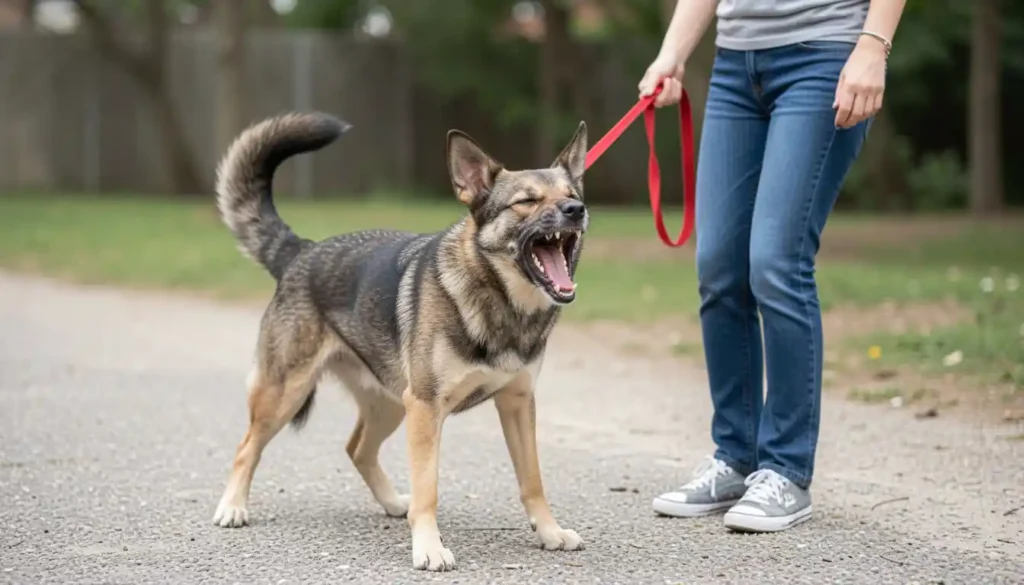
From a canine cognitive standpoint, children are genuinely strange creatures. They move unpredictably, make loud, high-pitched noises, flail their arms, run in erratic patterns, and sometimes invade personal space without warning. To a dog that has not been properly socialized around kids, this behavior can register as genuinely threatening or alarmingly unfamiliar.
Is Your Dog Scared, Excited, or Territorial?
Not all barking looks or means the same. There are three dominant emotional states driving a dog’s bark at children:
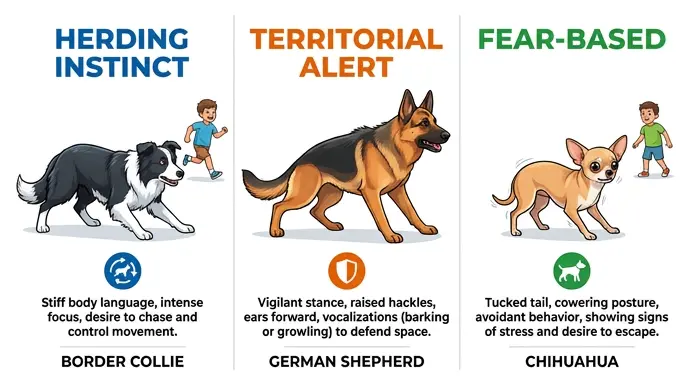
Fear-based barking: The dog perceives children as a threat. Body posture will typically include tucked tail, flattened ears, whale eye (showing whites of eyes), and possible backing away while barking. This is the most common driver in adult dogs with poor early socialization.
Excitement/overstimulation barking: Some dogs — especially young ones — are not afraid of children but are simply overwhelmed by the stimulus. They want to interact but don’t know how, and the barking is a release of frustrated energy. Body language here is looser and wigglier.
Territorial or protective barking: Dogs with strong guarding instincts may bark at children who approach too close to their owner or a familiar space. This bark tends to be deep, sustained, and accompanied by a stiff, forward-leaning posture.
Understanding which category your dog falls into is foundational because each requires a different training approach.
Common Triggers: What Sets Your Dog Off in the Park
Movement and Unpredictability of Children
Dogs are highly sensitive to movement patterns. Children at play run, stop suddenly, spin, fall, and jump — all behaviors that can trigger a predatory drift response in some dogs, or simply spike anxiety levels past the dog’s arousal threshold. The more chaotic the movement, the more likely a reactive dog will respond with barking or lunging.
High-Pitched Voices and Sounds
Children scream, squeal, and laugh in frequencies that are meaningfully different from adult voices. Research in canine auditory processing confirms that dogs are more sensitive to sound than humans, with a hearing range extending to approximately 65,000 Hz compared to 20,000 Hz in humans. High-pitched, sudden sounds — like a child shrieking with delight — can startle a dog into a reactive state even from a significant distance.
Crowded or Enclosed Park Spaces
In small, fenced dog parks or enclosed play areas, dogs may feel they cannot escape the children’s energy. This spatial pressure is a major amplifier of reactivity. A dog that might tolerate children at 20 meters may completely lose composure when trapped at 5 meters with no exit route.
Breed Tendencies and Barking Behavior Around Kids
Herding Breeds and Child-Directed Barking
Border Collies, Australian Shepherds, Corgis, and other herding breeds are neurologically wired to chase and control movement. Running children can activate strong herding instincts, resulting in intense barking, nipping at heels, and circling behavior. This is not aggression in the traditional sense — it is deeply encoded working behavior being misdirected.
Guardian and Protective Breeds
Breeds like German Shepherds, Rottweilers, Dobermans, and Akitas were selectively bred for protective work. They are more likely to exhibit territorial barking at unfamiliar children, particularly when those children approach the owner or enter what the dog perceives as its zone. Proper early socialization between 3 and 14 weeks is especially critical for these breeds.
Small Dogs and Fear-Based Reactivity
Smaller breeds — Chihuahuas, Jack Russell Terriers, Dachshunds — often have exaggerated fear responses to children because children are physically large relative to them, unpredictable, and sometimes rough in their handling. The small dog syndrome often seen in these breeds is typically a manifestation of anxiety, not dominance.
Signs to Watch: Reading Your Dog’s Body Language
Stress Signals vs. Playful Excitement
Before addressing barking, owners must develop fluency in canine body language. Stress signals include: yawning (displacement behavior), lip licking, panting without heat, paw raising, avoidance, piloerection (raised hackles), and stiff tail carriage. Playful excitement typically presents as a play bow, loose body movements, and a high wagging tail.
Misreading stress signals as excitement — and forcing a dog to continue the encounter — is one of the most common mistakes owners make and can escalate behavior significantly.
When Barking Escalates to Aggression
Any of the following are red flags that your dog’s barking has moved into dangerous territory: snapping, lunging with intent to make contact, growling with a fixed stare, or a history of biting. If your dog has bitten a child or come very close, professional intervention is not optional — it is urgent.
How to Stop a Dog from Barking at Children in the Park
Desensitization and Counter-Conditioning
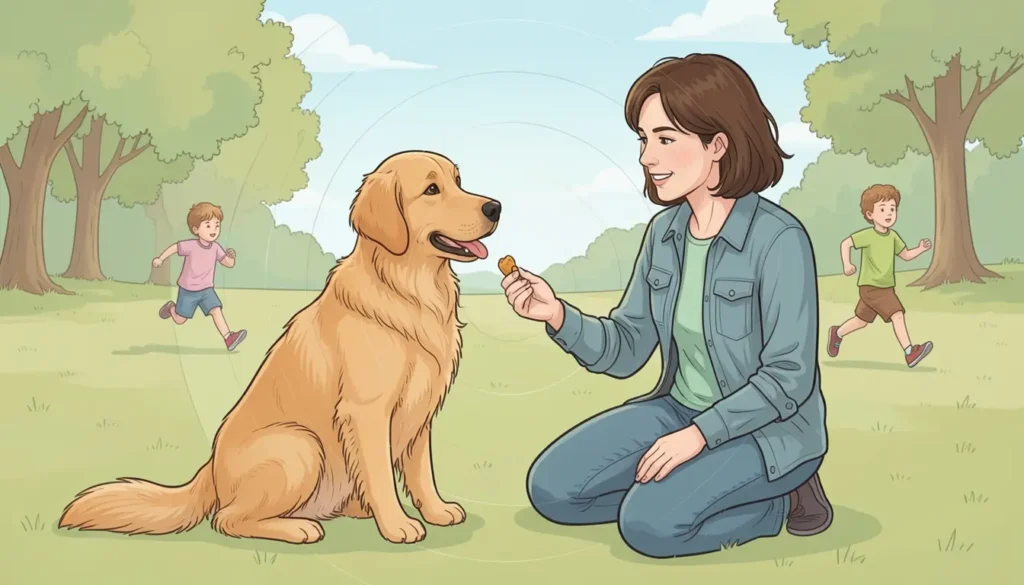
These are the gold standard of behavior modification for dog reactivity. Desensitization involves gradually and systematically exposing your dog to children at sub-threshold distances — far enough away that the dog notices them but doesn’t react. Counter-conditioning pairs that exposure with something the dog loves (high-value treats, play) to change the emotional association from negative/anxious to positive/neutral.
The protocol is simple but requires patience: start at a distance where your dog can see children without reacting. Reward calm behavior generously. Over sessions, gradually decrease the distance. If the dog reacts at any point, you’ve moved too fast — go back to the last successful distance.
Positive Reinforcement Training Techniques
Never punish barking at children with leash corrections, shouting, or aversive tools. Punishment increases anxiety and can cause the dog to associate children with pain, worsening the problem. Instead, use differential reinforcement of incompatible behavior (DRI) — teach your dog to perform a behavior that is physically incompatible with barking, such as sitting calmly or focusing on you.
Using Distance and Threshold Management
Every reactive dog has an arousal threshold — the point at which the stimulus becomes too much. Staying under the threshold during training sessions is essential. In practical terms, this means identifying how close your dog can get to children before reacting, and always working at or slightly below that distance. Over time, as your dog builds positive associations, the threshold distance naturally decreases.
The “Look at That” (LAT) Method
Developed by trainer Leslie McDevitt in her Control Unleashed curriculum, the LAT method teaches dogs to calmly look at a trigger and look back at the handler for a reward. The goal is to change the emotional response from “children = danger/excitement spike” to “children = I look at them, I look at my human, I get a treat.” This method is highly effective for child-reactive dogs and is widely used by certified professional dog trainers.
Socialization Strategies for Dogs Around Kids
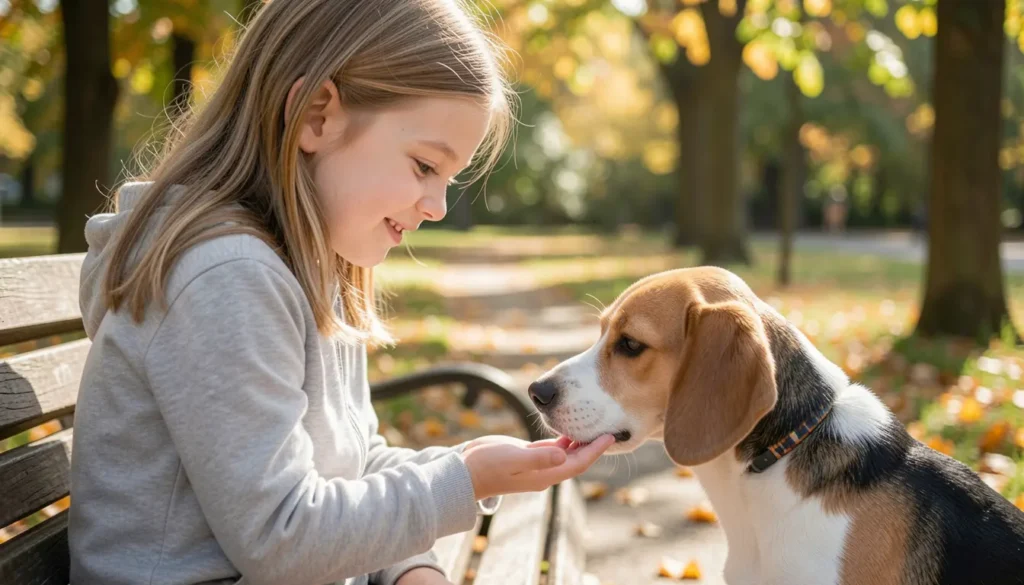
Controlled Introductions to Children
When introducing your dog to children, control is everything. Ask children to remain calm, avoid direct eye contact initially, stand sideways, and let the dog approach on its own terms. Never allow children to rush at a dog, reach over its head, or hug it without signs of consent from the dog. These rules protect both parties.
Age-Appropriate Socialization Windows
The critical socialization window in dogs runs from approximately 3 to 14 weeks of age. Puppies exposed positively to children, varied sounds, and park environments during this window are statistically far less likely to develop reactivity later. If you adopted an adult dog with limited socialization history, you can still make significant progress — it simply takes more time and consistency.
Park Etiquette and Safe On-Leash Protocols
Always keep a reactive dog on leash in public parks. Use a front-clip harness or head halter for better control. Position yourself between your dog and the children when necessary. Communicate clearly with parents — most are happy to give space when asked respectfully. Avoid peak park hours initially and train during quieter times of day.
When to Seek Professional Help
Working with a Certified Dog Trainer
If your dog’s barking at children is severe, persistent, or escalating, seek help from a Certified Professional Dog Trainer (CPDT-KA) or a Board Certified Veterinary Behaviorist (DACVB). Look for professionals who use force-free, science-based methods and have experience with reactive dogs. For deeper reading on canine behavior science and evidence-based training, the International Association of Animal Behavior Consultants (IAABC) is an excellent resource for locating qualified professionals.
When Medication or Veterinary Evaluation Is Needed
In cases of severe anxiety-driven reactivity, behavioral medication prescribed by a veterinary behaviorist can make a meaningful difference. Medications like fluoxetine or trazodone do not sedate the dog — they lower baseline anxiety enough to make behavior modification trainable. Always pair medication with a structured training plan. The American Veterinary Society of Animal Behavior (AVSAB) publishes position statements on humane training approaches and when pharmacological support is appropriate.
Environmental and Lifestyle Factors That Contribute to Reactivity
Exercise and Mental Stimulation Deficits
A dog that is under-exercised and mentally under-stimulated has a much lower stress tolerance. Pent-up energy converts directly into heightened reactivity. Ensure your dog is receiving appropriate physical exercise for its breed and age, as well as mental enrichment: sniff walks, food puzzles, training sessions, and nose work games. A tired, cognitively satisfied dog is a calmer dog.
How Diet and Nutrition Play a Role
Nutritional status has a measurable impact on canine behavior and emotional regulation. Diets deficient in certain amino acids — particularly tryptophan, the precursor to serotonin — can contribute to anxiety and heightened reactivity. Inflammatory diets may also influence neurochemistry. If you’re exploring how what your dog eats might be driving reactivity patterns, read more about how Diet and Nutrition Affect Dog Barking Behavior.
Interestingly, resource-guarding behavior — which is closely related to territorial reactivity — also has nutritional and emotional components. If your dog also shows signs of tension or vocalization around food, you may find it helpful to explore why My Dog Bark Near the Food Bowl Before Meals and what that reveals about your dog’s broader anxiety profile.
Frequently Asked Questions
Q: Is it normal for dogs to bark at children? It is common, but not something to ignore. Some level of alerting is normal; persistent, intense, or escalating barking is a training issue that should be addressed.
Q: Will my dog grow out of barking at children? Not without intervention. Reactivity that is not addressed typically worsens with time as the behavior pattern becomes more ingrained.
Q: Can a dog that barks aggressively at children ever be safe around them? In many cases, yes — with proper behavior modification and professional guidance. However, prognosis depends on the severity, history of biting, and the dog’s individual temperament.
Q: Should I muzzle my dog at the park? A properly fitted basket muzzle is a responsible management tool, not a punishment. It prevents bites while you work on training and allows your dog to still pant, drink, and take treats.
Q: How long does it take to stop a dog from barking at children? Timelines vary widely. Mild cases may improve in weeks; severe reactivity can take months of consistent work. Progress is nonlinear — celebrate small wins.