

Summary
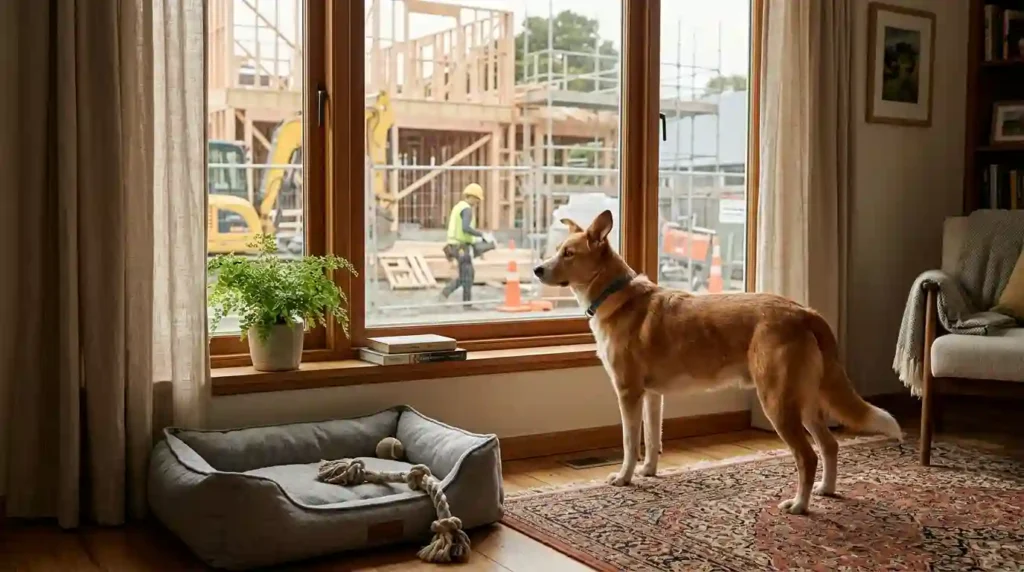
When your Dog barking at construction sounds nearby becomes a daily problem, the barking is usually more than simple “bad behavior.” Construction noise can trigger fear, alert barking, territorial instincts, stress, or sound sensitivity. The goal is not to punish your dog for reacting, but to help them feel safer, reduce noise exposure, and gradually teach calmer responses through management, enrichment, desensitization, and positive reinforcement.
Table of Content
- Dog Barking at Construction Sounds Nearby: Why It Happens
- Dog Barking at Construction Sounds Nearby: Signs Your Dog Is Stressed
- Common Construction Sounds That Trigger Dogs
- How to Calm Your Dog During Nearby Construction
- Training Plan to Reduce Barking at Construction Noise
- What Not to Do When Your Dog Barks at Construction
- When to Call a Professional
- Conclusion
- FAQs
A dog barking at construction sounds nearby can quickly turn a normal day into a stressful one. The sudden banging of hammers, grinding of machines, reversing truck alarms, workers shouting, drilling, concrete cutting, and falling debris can make even a confident dog feel unsettled. For some dogs, construction noise is simply irritating. For others, it feels threatening, unpredictable, and impossible to escape.
Barking is one of the main ways dogs communicate. When your dog barks at construction sounds, they may be saying, “Something strange is happening,” “I’m scared,” “Stay away,” or “I don’t know what to do with this noise.” Understanding the reason behind the barking is the first step toward solving it.
Construction noise is difficult for dogs because it is loud, irregular, and often paired with vibration. Unlike a television, fan, or dishwasher, construction sounds do not follow a predictable pattern. One minute there is silence, and the next there is a sharp crash or metallic bang. Dogs with sensitive hearing, nervous temperaments, poor socialization, previous trauma, or general noise anxiety may react strongly.
A good solution combines comfort, environmental control, exercise, mental stimulation, and gentle training. Punishment can increase fear and make the barking worse. Calm guidance works better because it teaches your dog that construction noise does not have to mean danger.
Dog Barking at Construction Sounds Nearby: Why It Happens
Dogs bark at construction noise for several reasons. Some dogs are naturally alert and protective, while others become overwhelmed by unfamiliar sounds. A dog may also bark because construction noises interrupt their rest, trigger prey-like sound responses, or create a sense of territory invasion.
1. Fear and Noise Sensitivity
Many dogs are sensitive to sudden sounds. Drills, jackhammers, nail guns, dump trucks, and metal clanging can be intense for them. Dogs hear frequencies and sound details that humans may not notice, so a noise that seems tolerable to you may feel sharp and threatening to your dog.
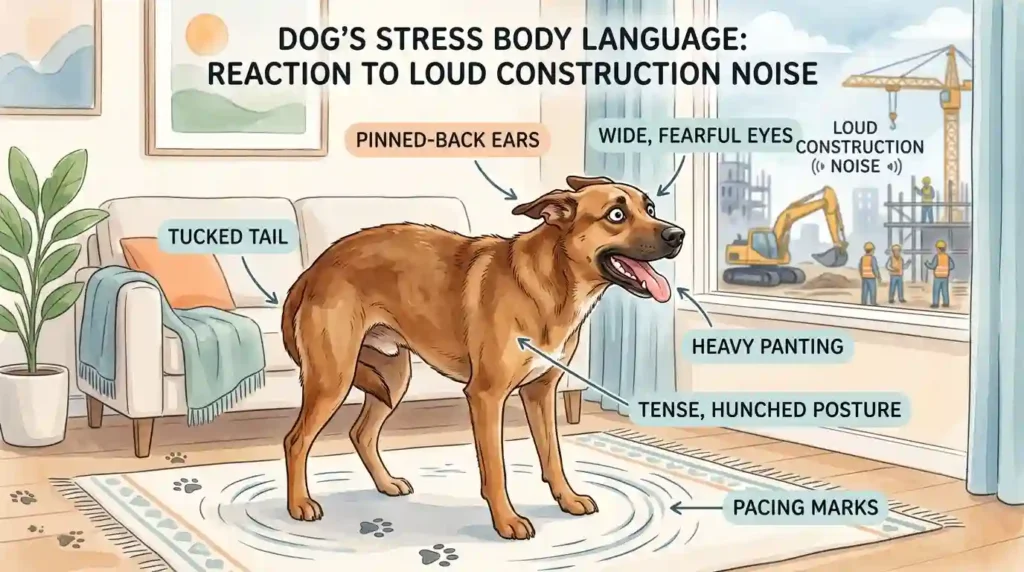
A fear-based bark often sounds urgent, repetitive, or high-pitched. Your dog may also pace, tremble, hide, pant, tuck their tail, or refuse food. If your dog reacts this way, the barking is not stubbornness. It is a stress response.
2. Territorial Alert Barking
If construction is happening near your home, your dog may think strangers are entering their territory. Workers, ladders, vehicles, voices, and equipment can all look suspicious from your dog’s perspective. This is especially common when a dog watches the construction site from a window, balcony, gate, or yard.
Territorial barking may sound deep, sharp, and repetitive. Your dog may run from window to window, stare outside, raise their hackles, or bark more when workers move closer.
3. Startle Response
A sudden bang can cause an instant bark. This is normal. The problem begins when your dog stays in a heightened state after every noise. Once a dog becomes overstimulated, even smaller sounds can restart the barking cycle.
4. Lack of Exposure to Urban Noise
Dogs raised in quiet environments may struggle with construction sounds later in life. Puppies who were not gradually exposed to city noise, tools, vehicles, and household sounds may find these noises confusing or frightening as adults.
5. Boredom and Frustration
Sometimes construction barking gets worse because the dog has too much unused energy. A bored dog may fixate on every sound outside. Without enough exercise, sniffing, chewing, training, and enrichment, barking becomes an outlet.
6. Previous Negative Experiences
A dog that once had a frightening experience near loud machinery, fireworks, storms, traffic, or a construction site may associate similar sounds with danger. This can create long-term sound aversion.
If your dog has recently lost a canine friend, their stress levels may also be higher than usual. Grief and separation-related anxiety can make dogs more reactive to noise. You may find this related guide helpful: Dog Barking After Losing a Companion Dog.
Dog Barking at Construction Sounds Nearby: Signs Your Dog Is Stressed
Not every bark means fear. Some dogs bark once or twice and then relax. Others struggle to recover. Learning your dog’s body language helps you decide whether they need training, comfort, distance, or professional support.
Common Stress Signals
Your dog may be stressed by construction sounds if you notice:
- Excessive barking that continues after the noise stops
- Pacing, whining, or restlessness
- Panting when it is not hot
- Hiding under furniture or behind you
- Trembling or shaking
- Dilated pupils or wide eyes
- Ears pinned back
- Tail tucked low
- Refusing treats or meals
- Drooling
- Scratching at doors or windows
- Trying to escape the room or yard
- Sudden clinginess
- Destructive chewing during construction hours
A dog that refuses high-value treats is often over threshold. This means the sound is too intense for learning. In that moment, your priority should be reducing exposure, not forcing training.
Common Construction Sounds That Trigger Dogs
Construction sites create many different noise triggers. Your dog may react to one specific sound or to the whole environment.
Loud Impact Sounds
Hammering, dropping wood, falling metal, and concrete breaking can startle dogs because they are sharp and unpredictable.
Mechanical Sounds
Jackhammers, drills, saws, cement mixers, generators, and air compressors create continuous vibration and harsh tones that can irritate sensitive dogs.
Vehicle Noises
Dump trucks, excavators, forklifts, reversing alarms, engines, and hydraulic lifts may trigger dogs that already react to traffic or delivery vehicles.
Human Voices
Dogs may bark at workers talking, shouting instructions, laughing, or walking near the property. For territorial dogs, people are often as triggering as the equipment.
Visual Triggers
Your dog may not only be reacting to sound. Movement outside the window can intensify barking. Hard hats, ladders, reflective vests, scaffolding, tarps, and moving machinery can all look unusual to a dog.
How to Calm Your Dog During Nearby Construction
The first step is management. Training is important, but during active construction, your dog may need immediate relief.
Create a Quiet Safe Zone
Choose the room farthest from the construction. Interior rooms, basements, closets, laundry rooms, and bedrooms with thick curtains often work well. Add your dog’s bed, water, favorite toys, and a long-lasting chew.
Close windows and doors. Use curtains, blinds, or window film to block visual triggers. A dog that cannot see workers and machinery may bark much less.
Use Sound Masking
White noise, a fan, calming music, or a sound machine can soften construction sounds. The goal is not to make the home silent, but to reduce sudden contrast between quiet moments and loud bangs.
Offer Chewing and Licking Activities
Chewing and licking can help dogs settle. Try a stuffed food toy, lick mat, frozen treat, safe chew, or puzzle feeder. Give these before construction becomes intense when possible.
Move Walks Away From the Noise
If construction happens during predictable hours, walk your dog before work starts or choose a quieter route. Avoid forcing your dog to walk directly beside active machinery if they are already scared.
Reward Calm Behavior
When your dog hears a sound and stays calm, quietly reward them. Use treats, praise, or a favorite toy. This teaches your dog that calm behavior around noise pays off.
Stay Calm Yourself
Dogs often look to their owners for emotional cues. You do not need to ignore your dog, but avoid panicking, yelling, or rushing around. A calm voice and steady routine can help your dog feel safer.
Training Plan to Reduce Barking at Construction Noise
Long-term improvement usually comes from desensitization and counterconditioning. Desensitization means exposing your dog to a trigger at a low intensity they can handle. Counterconditioning means pairing that trigger with something positive, such as food or play. The American Kennel Club describes this approach as a safer way to change a dog’s negative emotional response into a positive association. American Kennel Club
Step 1: Identify the Trigger
Write down what sets your dog off. Is it hammering? Reversing alarms? Workers near the fence? Drilling? Trucks arriving? The more specific you are, the easier training becomes.
Example trigger list:
- Hammering from next door
- Workers walking past the window
- Concrete drilling
- Metal clanging
- Truck backup beeping
- Construction vehicles starting engines
Step 2: Reduce the Intensity
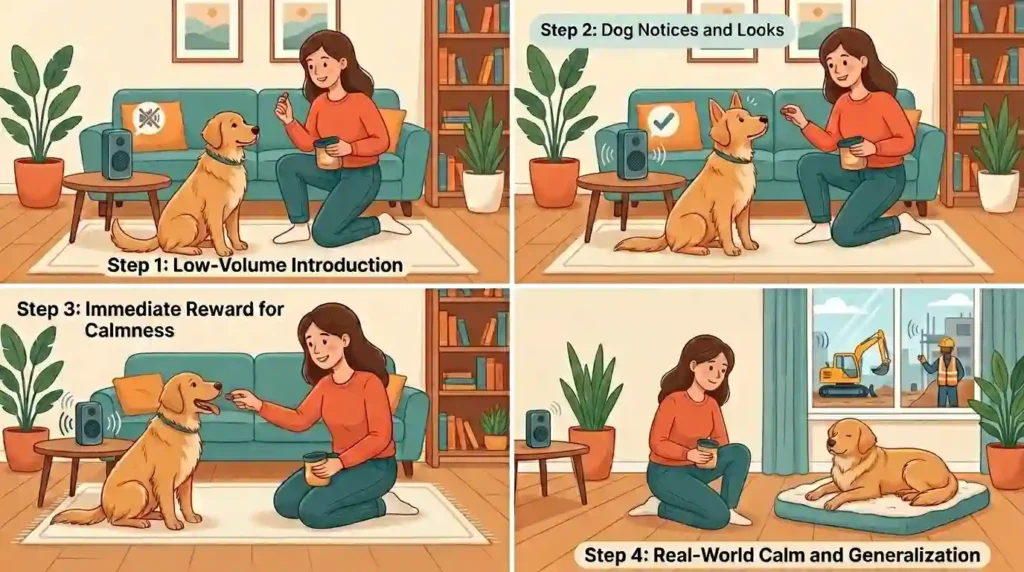
Training should begin below your dog’s reaction threshold. This may mean moving to a quieter room, closing windows, using white noise, or playing a low-volume recording of construction sounds.
If your dog is already barking intensely, the trigger is too strong. Increase distance, reduce volume, or change the environment.
Step 3: Pair the Sound With Rewards
Every time your dog hears a low-level construction sound, give a treat. The sound should predict something good. Use tiny pieces of chicken, cheese, soft training treats, or another reward your dog loves.
The pattern is simple:
Sound happens → treat appears.
Sound stops → treats stop.
Over time, your dog may begin looking at you when they hear the sound instead of barking.
Step 4: Teach a “Quiet” Cue
Do not start by shouting “quiet” during full barking. Teach it when your dog is calm.
Here is a simple method:
- Wait for a small bark or controlled trigger.
- Let your dog bark once or twice.
- Say “quiet” in a calm voice.
- When your dog pauses, mark it with “yes.”
- Reward immediately.
With repetition, your dog learns that silence earns rewards.
Step 5: Teach an Alternative Behavior
Instead of only telling your dog what not to do, teach them what to do instead.
Good alternative behaviors include:
- Go to bed
- Find a treat
- Touch your hand
- Look at me
- Bring a toy
- Settle on a mat
For example, if construction starts, cue “go to bed” and reward your dog on their mat. This gives them a predictable job.
Step 6: Practice Short Sessions
Keep sessions short. Five minutes of successful calm training is better than thirty minutes of frustration. End before your dog becomes overwhelmed.
Step 7: Gradually Increase Difficulty
Once your dog handles low-volume sounds, slowly increase the challenge. Open the window slightly, reduce white noise, practice closer to the construction side of the house, or increase the volume of a recording.
Move slowly. If barking returns, the training became too difficult too quickly.
Best Tools and Home Adjustments for Construction Barking
The right tools can make training easier. They do not replace behavior work, but they help your dog stay under threshold.
Window Film or Curtains
Blocking the view is one of the fastest ways to reduce barking. Frosted window film, blackout curtains, or closed blinds can prevent your dog from watching workers and machinery.
White Noise Machine
A sound machine, fan, air purifier, or calming playlist can reduce sudden noise contrast.
Food Puzzles
Puzzle feeders, snuffle mats, treat balls, and stuffed toys keep your dog busy during noisy periods.
Calming Mat or Bed
Train your dog to relax on a specific bed or mat. Reward them there often, even when construction is not happening.
Crate or Den Space
Some dogs feel safer in a covered crate or cozy den. Never use the crate as punishment. It should feel like a secure retreat.
Harness and Leash Indoors
For dogs that charge windows, a lightweight leash can help guide them away safely. Do not yank or punish. Simply redirect them to a calmer area.
What Not to Do When Your Dog Barks at Construction
Some common reactions can accidentally make barking worse.
Do Not Yell
Yelling may sound like you are barking, too. It can increase excitement, fear, and confusion.
Do Not Punish Fear
If your dog is barking because they are scared, punishment may suppress the bark but increase the fear. The dog may become more anxious, reactive, or defensive.
Do Not Force Your Dog Near the Noise
Dragging your dog toward a construction site to “show them it is fine” can backfire. This is too overwhelming for many dogs.
Do Not Leave a Panicked Dog Outside
A frightened dog left in the yard may bark nonstop, dig, jump fences, or develop stronger noise anxiety. Bring your dog indoors during active construction whenever possible.
Do Not Wait Until the Barking Is Severe
Start helping your dog early. Mild barking is easier to change than a deeply rehearsed habit.
Special Tips for Puppies, Senior Dogs, and Rescue Dogs
Different dogs need different approaches.
Puppies
Puppies should be introduced to sounds gently. Play construction recordings at a very low volume during meals or playtime. Keep sessions positive and short.
Senior Dogs
Older dogs may have hearing changes, pain, cognitive decline, or lower tolerance for stress. If your senior dog suddenly starts barking at construction sounds, consider a veterinary checkup.
Rescue Dogs
Rescue dogs may have unknown histories. Loud tools, shouting, or machinery may remind them of past stressful experiences. Go slowly and focus on trust.
When to Call a Professional
Some barking problems need expert help. Contact a veterinarian, certified dog trainer, or veterinary behaviorist if your dog:
- Panics due to construction noise
- Tries to escape
- Injures themselves
- Cannot eat during noise exposure
- Shows aggression toward workers, family members, or other pets
- Barks for hours without settling
- Has sudden behavior changes
- Has severe separation anxiety or noise phobia
A veterinarian can check for medical causes and discuss anxiety support if needed. A qualified trainer can create a safe behavior modification plan.
Conclusion
A dog barking at construction sounds nearby is reacting to a stressful, noisy, and unpredictable environment. Your dog is not trying to annoy you. They may be frightened, overstimulated, territorial, bored, or confused by the sudden sounds and movement.
The best solution is a combination of management and training. Create a quiet safe zone, block visual triggers, use white noise, provide enrichment, and reward calm behavior. Then use gradual desensitization and counterconditioning to change your dog’s emotional response.
Progress may take time, especially if your dog has strong noise anxiety. Be patient, stay consistent, and avoid punishment. With the right approach, your dog can learn that construction sounds are not a threat and that calm behavior brings comfort, safety, and rewards.
FAQs
Why does my dog bark so much at construction sounds nearby?
Your dog may bark because construction sounds are loud, sudden, unfamiliar, and stressful. They may feel afraid, territorial, startled, or overstimulated by machinery, workers, hammering, drilling, and vehicle alarms.
Should I comfort my dog when they bark at construction noise?
Yes, calm comfort is okay. Comforting a scared dog does not “reward fear” in the way many people think. Use a calm voice, guide your dog to a safe space, and reward quiet behavior when they are able to relax.
Can construction noise cause anxiety in dogs?
Yes, some dogs develop noise anxiety from repeated exposure to loud or unpredictable sounds. Dogs that already fear thunder, fireworks, traffic, or garbage trucks may also react strongly to construction.
How do I stop my dog from barking at workers outside?
Block your dog’s view with curtains, blinds, or window film. Move them to a quieter room and reward calm behavior. You can also teach cues such as “quiet,” “go to bed,” and “look at me.”
Is it okay to play construction sounds for training?
Yes, if the volume is very low and your dog stays relaxed. Pair the sound with treats or play. Increase volume gradually only when your dog remains calm. If your dog barks, trembles, or refuses food, lower the intensity.
Why does my dog bark more at construction trucks than tools?
Construction trucks combine several triggers: engine noise, movement, vibration, beeping alarms, and unfamiliar people. For many dogs, moving vehicles feel more threatening than stationary objects.
Should I use a bark collar for construction barking?
A bark collar is not recommended for fear-based barking. It may stop the sound temporarily, but it can increase anxiety and make your dog more sensitive to construction noise.
How long does it take to train a dog not to bark at construction sounds?
It depends on your dog’s age, temperament, history, and severity of fear. Some dogs improve in days with better management, while others need weeks or months of gradual training.
What is the fastest way to calm my dog during construction?
Move your dog to the quietest room, close windows, block the view, turn on white noise, and offer a chew, food puzzle, or lick mat. Once your dog is calmer, reward quiet behavior.
When should I talk to a vet about construction noise anxiety?
Talk to a vet if your dog panics, shakes, refuses food, tries to escape, becomes destructive, or cannot recover after the noise stops. Severe noise anxiety may need professional treatment.