

Summary
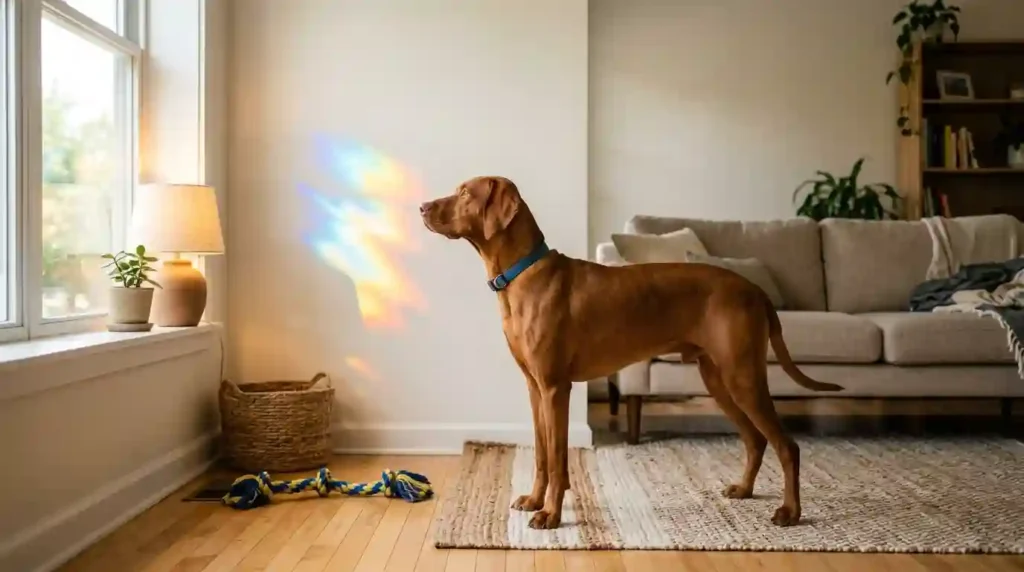
If your dog bark at certain colors or lights, the behavior usually has less to do with the color itself and more to do with how dogs perceive contrast, motion, reflections, shadows, flickering light, and unfamiliar visual patterns. Dogs do not see the world exactly like humans do, so a bright object, flashing LED, shiny reflection, moving shadow, or high-contrast color patch may look strange, threatening, or exciting to them. This guide explains the science behind canine vision, why some lights or colors trigger barking, when the behavior is normal, and how to help your dog feel calmer around visual triggers.
Table of Content
- Why Does My Dog Bark at Certain Colors or Lights?
- How Dog Vision Works
- Why Dog Bark at Certain Colors or Lights in the Home
- Common Visual Triggers That Make Dogs Bark
- Why Dog Bark at Certain Colors or Lights During Walks
- Behavioral Reasons Behind Barking at Colors and Lights
- How to Stop Your Dog Barking at Colors, Reflections, or Lights
- When to Call a Vet or Dog Behaviorist
- Conclusion
- FAQs
Why Does My Dog Bark at Certain Colors or Lights?
It can feel confusing when your dog suddenly barks at a red jacket, a flashing toy, a shiny wall reflection, a bright LED strip, or sunlight bouncing off a phone screen. To humans, these things look harmless. To dogs, however, certain colors, light patterns, and moving reflections can appear unusual or even suspicious.
The main reason dogs bark at certain colors or lights is that their visual system is built differently from ours. Dogs are especially sensitive to movement, contrast, low-light changes, and flickering visual cues. They may not understand that a reflection on the wall is just sunlight or that a blinking decoration is not alive. Instead, their brain may interpret it as a strange moving object, a possible intruder, prey-like movement, or something worth alerting you about.
This does not mean your dog is “afraid of colors” in the same way a person may dislike a color. Most of the time, the barking is connected to visual confusion, surprise, anxiety, curiosity, overstimulation, or learned behavior.
How Dog Vision Works
To understand why a dog reacts to certain colors or lights, you first need to understand canine vision.
Dogs See Fewer Colors Than Humans
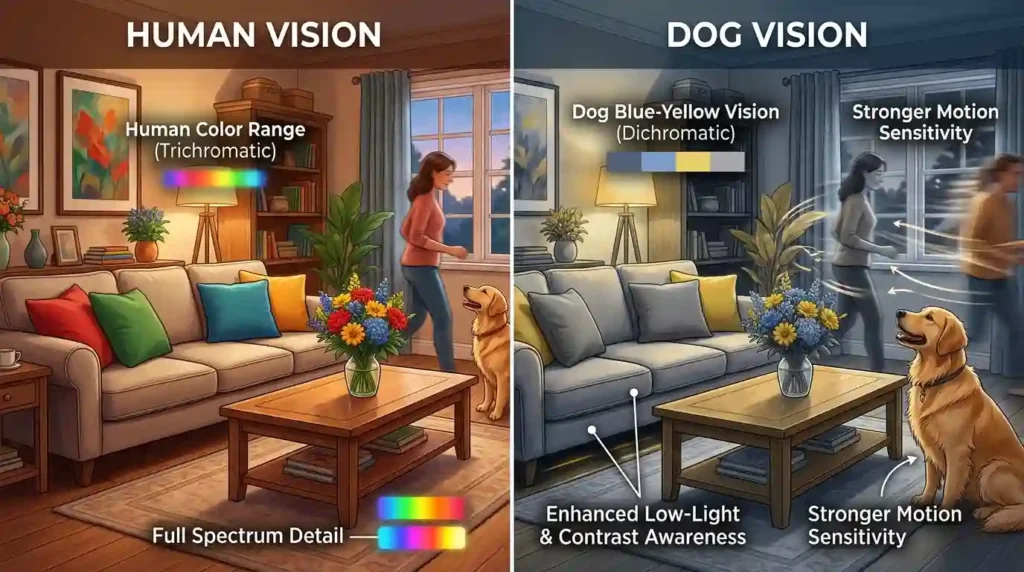
Humans usually have three types of color-sensitive cone cells, which help us see a broad range of red, green, blue, yellow, orange, purple, and many blended shades. Dogs have two main types of cone cells, so their color perception is closer to red-green color blindness in humans.
According to VCA Animal Hospitals, dogs mainly distinguish blue and yellow, while red, orange, and green may appear more muted, grayish, yellowish, or brownish to them.
This means your dog may not be barking because an object is “red” or “green” the way you see it. Instead, the object may stand out because of brightness, contrast, movement, shine, or placement against the background.
Dogs Are More Sensitive to Motion
Dogs have more rod cells than humans. Rods help detect movement and improve vision in dim light. This is one reason dogs often notice tiny motions that people ignore, such as curtains shifting, a plastic bag moving outside, shadows sliding across the floor, or light flickering on a wall.
A still color is usually less interesting to a dog than a moving color, flashing light, or changing reflection. If a colored object moves unpredictably, your dog may bark because it resembles prey movement or an unfamiliar environmental change.
Dogs Notice Contrast and Brightness
A dog may react strongly when an object sharply contrasts with its surroundings. For example, a bright yellow raincoat against a dark hallway, a blue toy on a beige rug, or a glowing light in a dark room can look visually intense.
Dogs may also notice sudden brightness changes. A phone flashlight, camera flash, holiday lights, car headlights, or sunlight reflecting off glass can startle them. Barking becomes their way of saying, “What is that?”
Dogs See Better in Low Light
Dogs are adapted to see better than humans in dim conditions. Their eyes include a reflective layer called the tapetum lucidum, which helps amplify available light. This is also why a dog’s eyes may glow in photos or at night.
Because dogs process dim light differently, shadows, reflections, and faint movements during dawn, dusk, or nighttime may seem more important to them than they do to us.
Why Dog Bark at Certain Colors or Lights in the Home
Indoor lighting and household objects can create many strange visual effects for dogs. A dog may bark at colored lights, wall reflections, glossy surfaces, TV screens, LED strips, or shadows because these things appear to move or change without an obvious source.
Reflections Can Look Like Moving Creatures
Sunlight reflecting from a watch, phone, glass table, mirror, or metal bowl can create a bright moving spot on the floor or wall. Many dogs chase or bark at these reflections because the light moves quickly and unpredictably.
To your dog, the reflection may seem alive. It appears, disappears, jumps, and changes direction without smell or sound. Since dogs rely heavily on scent, a moving object with no scent can be confusing and frustrating.
Flickering Lights May Cause Alert Barking
Some dogs bark at flickering lights from televisions, computer monitors, LED bulbs, holiday decorations, or car headlights passing through windows. Dogs can detect motion and changes in light very well, so flickering may capture their attention more strongly than it captures yours.
If your dog barks every time a light flickers, they may be responding to the sudden change rather than the light color itself.
Colored Objects May Appear Unfamiliar
A bright object in an unusual place can trigger suspicion. For example, if you leave a neon jacket on a chair, your dog may bark because the shape and contrast look strange. A yellow balloon, blue tarp, red umbrella, or reflective safety vest may create an unfamiliar silhouette.
Dogs are highly aware of environmental changes. If something looks different from yesterday, some dogs will bark until they investigate.
LED Lights Can Overstimulate Some Dogs
Color-changing LED strips, flashing toys, smart bulbs, and gaming lights may overstimulate sensitive dogs. Rapidly changing colors, pulsing brightness, and moving light patterns can create sensory overload.
This is especially common in puppies, anxious dogs, herding breeds, terriers, and high-energy dogs that are naturally tuned into movement.
Common Visual Triggers That Make Dogs Bark
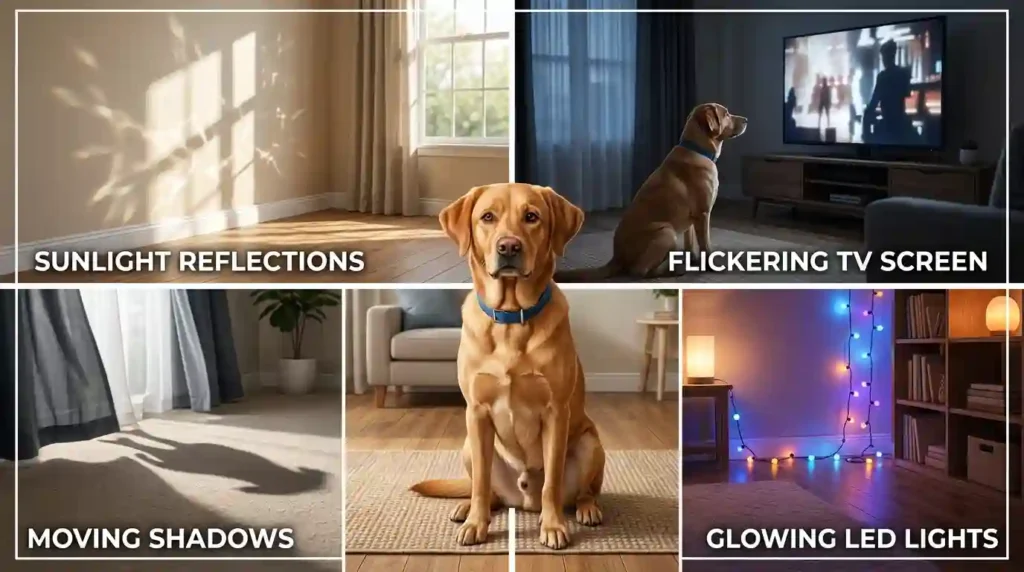
Not every dog reacts to the same visual stimulus. Some dogs ignore flashing lights completely, while others bark at a single reflection. The most common triggers include:
Sunlight Reflections
Sunlight bouncing off windows, mirrors, watches, phones, glass doors, or water bowls can create moving light spots. Dogs may bark, chase, pounce, or whine because the reflection behaves like prey but cannot be caught.
Shadows
Moving shadows from curtains, trees, ceiling fans, people, or passing cars can make dogs bark. Shadows may appear larger or stranger than the object causing them, especially in low light.
Flashing Lights
Holiday lights, emergency vehicle lights, bicycle lights, camera flashes, and LED collars can startle or excite dogs. The sudden change in brightness may trigger alert barking.
Bright Clothing or Objects
Neon jackets, reflective vests, umbrellas, balloons, plastic bags, tarps, and traffic cones may stand out in a dog’s visual field. Sometimes the color matters less than the unusual shape, movement, or contrast.
TV Screens and Projectors
Some dogs bark at animals, fast movement, flashing scenes, or bright colors on television. Dogs that can recognize motion on screens may respond to moving animals, bouncing balls, or sudden light changes.
Laser Pointers
Laser dots can be especially problematic. They move quickly, cannot be caught, and may create frustration or obsessive chasing behavior in some dogs. Many behavior experts discourage using laser pointers with dogs because they can increase compulsive light-chasing habits.
Why Dog Bark at Certain Colors or Lights During Walks
Outdoor environments are full of visual surprises. Your dog may bark at certain lights or colors during walks because the world is constantly changing.
Reflective Surfaces Outside
Cars, bicycles, puddles, windows, road signs, and metal fences can reflect sunlight or headlights. These reflections may flash suddenly as you move, which can startle a dog.
A dog may bark at a parked car not because they dislike the car, but because a reflection moved across the windshield or a bright glare hit their eyes.
High-Contrast Outdoor Objects
Traffic cones, construction signs, umbrellas, flags, and plastic bags can look strange to dogs, especially when they move in the wind. Many dogs bark at unfamiliar objects because they are unsure whether the object is safe.
For a related behavior, read this guide: My Dog Bark at Plastic Bags Blowing in Wind.
Headlights and Streetlights
At night, car headlights, bicycle lights, porch lights, and streetlights can create strong contrast. If your dog is already alert in the dark, sudden light movement may make them bark.
Moving Colors Can Trigger Prey Drive
A colorful ball rolling across a park, a child’s bright scooter, or a fluttering flag may activate prey-drive or chase instincts. Dogs bred for herding, chasing, hunting, or guarding may be especially reactive to fast-moving visual stimuli.
Behavioral Reasons Behind Barking at Colors and Lights
A dog’s bark is communication. When your dog barks at colors, lights, reflections, or shadows, the reason may be emotional, instinctive, or learned.
Alert Barking
Many dogs bark to alert their family about something unusual. If a light reflection appears on the wall, your dog may think, “Something changed. Everyone should know.”
Alert barking is common in guarding breeds, sensitive dogs, and dogs that are naturally watchful.
Fear or Uncertainty
A dog may bark when it feels unsure. Unfamiliar colors, flashing lights, or sudden reflections can make some dogs nervous. Fear-based barking may come with a tucked tail, lowered body, pinned ears, pacing, lip licking, or backing away.
Curiosity
Some barking is curious rather than fearful. Your dog may bark, tilt their head, approach, sniff, and then relax. This is common when a dog is trying to understand a strange object.
Frustration
Reflections and light spots can frustrate dogs because they cannot be caught or smelled. A dog may bark more intensely if they keep chasing a light but never succeeds.
Overstimulation
Fast flashing lights, busy rooms, loud TV scenes, and moving shadows can overstimulate dogs. When a dog becomes overwhelmed, barking may release tension.
Learned Behavior
Sometimes, dogs bark at lights or colors because the behavior has been accidentally rewarded. For example, if your dog barks at a reflection and you immediately chase the light, laugh, talk excitedly, or give attention, the dog may repeat the behavior.
Even negative attention can reinforce barking if the dog finds it engaging.
How to Stop Your Dog Barking at Colors, Reflections, or Lights
The best approach depends on why your dog is barking. The goal is not to punish the dog, but to help them feel safe and teach a calmer response.
Identify the Exact Trigger
Start by observing patterns. Ask yourself:
- Does the barking happen during a certain time of day?
- Is sunlight hitting a mirror or a window?
- Does the dog bark only at moving lights?
- Does the dog react more at night?
- Is the trigger a specific object, color, shadow, or reflection?
- Does the dog seem scared, excited, frustrated, or playful?
Once you know the exact trigger, you can manage it more effectively.
Reduce Reflections and Glare
If your dog barks at sunlight reflections, try closing blinds, moving shiny objects, covering reflective surfaces, changing the angle of mirrors, or using matte bowls instead of stainless steel bowls in sunny areas.
For outdoor glare, avoid walking directly into strong sunlight if your dog becomes reactive. Choose calmer routes during training.
Avoid Encouraging Light Chasing
Do not use laser pointers or flashlight games with dogs that already bark at lights. These games may seem fun at first, but they can increase obsessive scanning, frustration, and compulsive chasing.
Instead, use toys your dog can physically catch, such as tug ropes, balls, flirt poles, puzzle toys, or scent games.
Teach a “Look at Me” Cue
Train your dog to look at you when they notice a trigger.
Start in a quiet room. Say “look” or “watch me.” When your dog makes eye contact, reward with a treat. Practice until the response is easy. Then use the cue when your dog notices a mild visual trigger from a distance.
The goal is to teach your dog, “When you see something weird, check in with me instead of barking.”
Use Desensitization
Desensitization means exposing your dog to the trigger at a low intensity that does not cause a big reaction. For example, if your dog barks at LED lights, start with the lights dim, still, and far away. Reward calm behavior. Slowly increase brightness or movement over time.
Never start with the most intense version of the trigger. That can make barking worse.
Use Counterconditioning
Counterconditioning changes your dog’s emotional response. When the trigger appears, something good happens.
For example, if your dog sees a harmless reflection and stays calm, give a high-value treat. Over time, your dog may learn that the reflection predicts rewards, not danger.
Redirect to a Job
Some dogs need an alternative task. Ask for a sit, down, touch, heel, find-it game, or place command. This gives your dog something productive to do instead of barking.
Scent-based games work especially well because sniffing can calm many dogs.
Keep Your Dog Mentally Enriched
Dogs with too little stimulation may become more reactive to small environmental changes. Daily walks, sniffing time, training games, food puzzles, chew toys, and calm play can reduce boredom-related barking.
Reward Calm Investigation
If your dog notices a strange object but does not bark, reward immediately. Calm looking, sniffing, turning away, or checking in with you should all be praised.
You are teaching your dog that calm curiosity is better than alarm barking.

When to Call a Vet or Dog Behaviorist
Most barking at lights or colors is harmless, but sometimes it can point to a deeper issue.
Sudden New Barking at Visual Stimuli
If your dog suddenly starts barking at lights, shadows, or objects they previously ignored, schedule a veterinary checkup. Changes in eyesight, eye pain, neurological issues, aging, or anxiety can affect how a dog reacts to visual stimuli.
Obsessive Light or Shadow Chasing
If your dog constantly scans walls, chases reflections, cannot settle, or becomes fixated on shadows, speak with a veterinarian or certified dog behavior consultant. Compulsive behaviors can become worse without proper help.
Signs of Vision Problems
Watch for bumping into objects, hesitation on stairs, cloudy eyes, squinting, pawing at the eyes, increased startle response, or reluctance to move in dim light. These signs may suggest your dog needs an eye exam.
Severe Fear or Aggression
If your dog lunges, growls, snaps, hides, trembles, or panics around certain lights or objects, professional support is recommended. A qualified behaviorist can design a safe training plan.
Conclusion
When a dog barks at certain colors or lights, the behavior is usually connected to how the dog sees and interprets the world. Dogs have different color perception, strong motion sensitivity, good low-light vision, and a natural instinct to notice environmental changes. A bright object, flashing LED, moving shadow, or strange reflection can easily catch their attention.
Your dog is not being silly or stubborn. They may be confused, alert, excited, anxious, or overstimulated. The best solution is to identify the trigger, reduce unnecessary glare or flashing lights, avoid laser games, reward calm behavior, and use gentle training methods like desensitization and counterconditioning.
If the barking becomes obsessive, sudden, or extreme, a vet or certified behavior professional can help rule out vision issues, anxiety, or compulsive behavior. With patience and the right approach, most dogs can learn to stay calm around unusual colors, lights, shadows, and reflections.
FAQs
Why does my dog bark at flashing lights?
Your dog may bark at flashing lights because sudden changes in brightness and movement grab their attention. Dogs are highly sensitive to motion, so flashing lights can seem exciting, strange, or threatening.
Can dogs see colors like humans?
No. Dogs do not see the full color range humans see. They mainly distinguish blue and yellow tones, while red, orange, and green may appear muted or similar to other shades.
Why does my dog bark at reflections on the wall?
Reflections move quickly, appear suddenly, and have no smell. This can confuse dogs and trigger barking, chasing, or pouncing behavior.
Is it bad if my dog chases laser lights?
Yes, laser chasing can be harmful for some dogs because they can never catch the light. This may create frustration, obsessive scanning, or compulsive behavior.
Why does my dog bark at shadows?
Dogs may bark at shadows because shadows move, change shape, and appear unpredictable. In low light, shadows may look more suspicious to a dog.
Do certain colors scare dogs?
Usually, the color itself is not the main issue. Dogs are more likely to react to contrast, brightness, movement, unfamiliar shape, or the way the object appears in their visual field.
Why does my dog bark at LED lights?
LED lights may flicker, pulse, change color, or appear very bright. Sensitive dogs may find this overstimulating or confusing.
Should I punish my dog for barking at lights?
No. Punishment can increase fear or anxiety. Instead, calmly redirect your dog, reward quiet behavior, and reduce exposure to intense visual triggers.
Can vision problems make a dog bark at lights?
Yes. Eye discomfort, aging, poor vision, or sudden changes in eyesight can make dogs more reactive to lights, shadows, and objects. A vet check is recommended if the behavior appears suddenly.
How do I train my dog to ignore reflections?
Start by reducing strong reflections. Then reward your dog for calmly noticing the reflection without barking. Use cues like “look at me,” “leave it,” or “place” to redirect attention.