

Summary
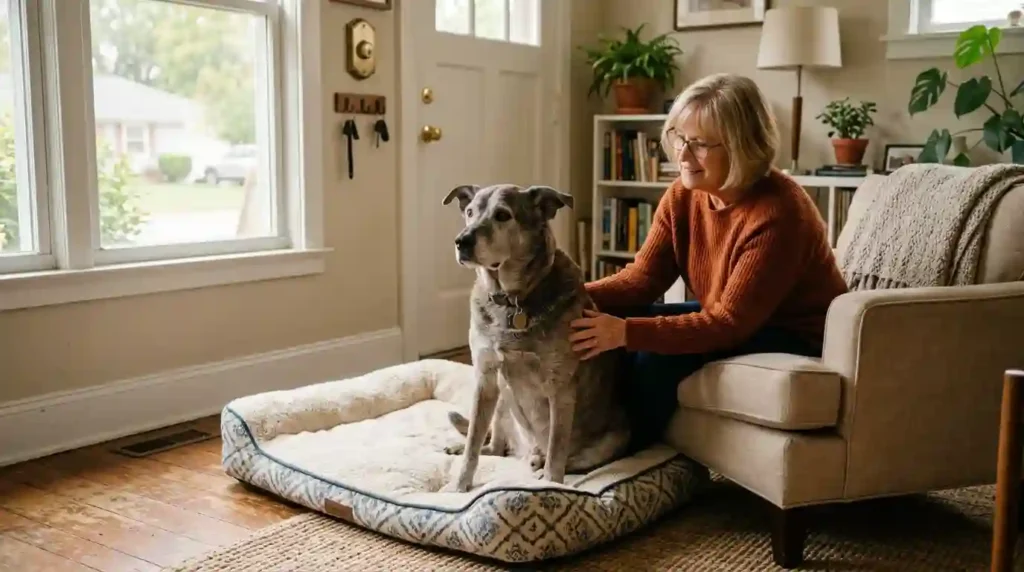
Understanding Dog barking triggers in senior rescue dogs helps pet parents respond with patience instead of frustration. Older rescue dogs may bark because of anxiety, past trauma, hearing or vision changes, cognitive decline, pain, unfamiliar environments, separation stress, or confusion. Unlike younger dogs, senior rescue dogs often carry a mix of aging-related challenges and unknown life experiences, so their barking is rarely “bad behavior.” This guide explains the most common triggers, how to identify patterns, and gentle ways to reduce excessive barking while building trust, comfort, and emotional security.
Table of Content
- What Makes Dog Barking Triggers in Senior Rescue Dogs Different?
- Common Dog Barking Triggers in Senior Rescue Dogs
- Medical Reasons Behind Barking in Older Rescue Dogs
- Emotional and Environmental Barking Triggers
- How to Read Your Senior Rescue Dog’s Barking Pattern
- Gentle Training Methods to Reduce Barking
- Home Adjustments That Help Senior Dogs Feel Safe
- When to Ask a Vet or Behavior Professional for Help
- Conclusion
- FAQs
What Makes Dog Barking Triggers in Senior Rescue Dogs Different?
Barking is normal canine communication. Dogs bark to alert, request attention, express fear, respond to pain, protect territory, communicate excitement, or release stress. But senior rescue dogs are unique because their barking may come from several overlapping causes at once.
A senior dog may have age-related hearing loss, poor eyesight, arthritis, canine cognitive dysfunction, or reduced tolerance for sudden changes. A rescue dog may also have a history of neglect, abandonment, inconsistent handling, shelter stress, punishment-based training, or traumatic experiences. When these two realities combine, barking can become more frequent, intense, or confusing.
For example, a young dog may bark at the doorbell because it is excited. A senior rescue dog may bark at the same sound because it cannot clearly identify the source, feels unsafe, remembers previous stressful events, or struggles to settle after being startled.
The key is to stop asking, “How do I make my dog stop barking?” and start asking, “What is my dog trying to communicate?”
Senior rescue dogs need observation, routine, medical support, emotional safety, and gentle training. Punishment, yelling, shock collars, or harsh corrections can increase fear and make barking worse. A calm, compassionate approach is usually far more effective.
Common Dog Barking Triggers in Senior Rescue Dogs
Senior rescue dogs may bark for many reasons, but some triggers appear more often than others. Identifying the trigger is the first step toward solving the problem.
1. Sudden Noises
Doorbells, knocks, garbage trucks, motorcycles, fireworks, thunder, children playing, construction sounds, or loud voices can startle older rescue dogs. If the dog has hearing changes, it may not hear clearly but may still feel vibrations or detect certain pitches. This can make sounds more confusing and frightening.
A senior dog may bark because it feels unsure: “What was that?” “Where did it come from?” “Am I safe?”
2. Strangers Near the Home
Many dogs bark when people pass by windows, enter the yard, or approach the front door. For senior rescue dogs, this alert barking may be stronger if they feel vulnerable, physically slower, or protective of their new safe space.
Some rescue dogs become hyper-aware after shelter life. They may have learned that barking creates distance from scary people or unpredictable situations.
3. Other Dogs Barking
Dogs often respond to the sound of other dogs. A senior rescue dog may bark back because of social frustration, fear, confusion, territorial instinct, or past negative experiences with dogs.
This may happen more in apartments, neighborhoods with close fences, boarding environments, or homes near dog parks.
4. Being Left Alone
Separation-related barking is common in rescue dogs, especially those who have experienced abandonment. Senior dogs may become even more dependent on routine and caregiver presence.
A dog that barks when left alone may also pace, whine, scratch doors, drool, refuse food, or become destructive. This is not stubbornness. It may be separation anxiety, isolation distress, or panic.
5. Nighttime Confusion
Some senior dogs bark more at night. This may be linked to poor vision in low light, cognitive changes, discomfort, needing to potty, hunger, anxiety, or disorientation.
A rescue dog that already feels insecure may become more anxious when the house gets quiet and dark.
6. Pain or Physical Discomfort
Pain can lower a dog’s tolerance. Arthritis, dental disease, ear infections, digestive discomfort, urinary tract issues, injuries, or age-related stiffness can make a dog more reactive.
A senior rescue dog may bark when touched, approached, moved, picked up, or asked to get off furniture because it hurts.
The ASPCA notes that medical or degenerative problems such as pain, arthritis, dental disease, impaired sight, or impaired hearing can lead to increased sensitivity, anxiety, irritability, and behavior changes in older dogs. ASPCA guide on behavior problems in older dogs

Medical Reasons Behind Barking in Older Rescue Dogs
Before treating barking as a training issue, always consider health. Senior dogs often bark more when they are uncomfortable, confused, or losing sensory awareness.
Hearing Loss
Hearing loss can make a dog feel disconnected from its environment. Some dogs bark louder because they cannot hear themselves clearly. Others bark when startled because they did not hear someone approach.
Signs may include ignoring verbal cues, sleeping through noises, becoming startled when touched, barking at unusual times, or relying more on visual signals.
Vision Loss
Cloudy eyes, cataracts, retinal changes, and poor night vision can make ordinary objects look frightening. A coat hanging on a chair, a shadow in the hallway, or movement near a window may trigger barking.
A senior rescue dog with vision loss needs predictable furniture placement, night lights, and gentle verbal warnings before being touched.
Canine Cognitive Dysfunction
Canine cognitive dysfunction, sometimes compared to dementia in humans, can cause disorientation, changed sleep cycles, anxiety, house-soiling, altered social behavior, and unexplained vocalization.
A senior dog with cognitive decline may bark at walls, corners, empty rooms, mirrors, nighttime silence, or familiar people. The dog is not being difficult. It may be confused or unable to process the environment normally.
Arthritis and Mobility Pain
Pain-related barking can happen when a dog stands up, lies down, climbs stairs, jumps off furniture, or is handled. Rescue dogs may hide pain until it becomes intense.
Watch for stiffness, limping, reluctance to walk, licking joints, irritability, or barking when moved.
Dental Disease
Dental pain is common in older dogs and can affect mood. A senior rescue dog with mouth pain may bark, growl, avoid touch around the face, drop food, chew on one side, or resist grooming.
Urinary or Digestive Problems
Barking at night or near doors may mean the dog needs to go outside more often. Senior dogs may develop urinary urgency, kidney issues, digestive sensitivity, or medication-related thirst.
Instead of assuming attention-seeking behavior, check whether your dog is trying to communicate a physical need.
Emotional and Environmental Barking Triggers
Rescue dogs often need time to decompress. Even if your home is loving, the dog may not understand that it is safe yet.
Shelter Stress and Decompression
Many rescue dogs need weeks or months to fully relax. A senior dog may have moved from a previous home to a shelter, foster home, transport vehicle, vet clinic, and then a new house. That is a lot of change.
During decompression, barking may increase because the dog is processing new sounds, people, smells, routines, and boundaries.
Fear of Men, Children, or Specific Objects
Some rescue dogs bark at men, hats, canes, bicycles, loud shoes, vacuum cleaners, or children. These reactions may come from limited exposure or negative past experiences.
Do not force your dog to “face the fear.” Instead, create distance, reward calm behavior, and allow slow, positive associations.
Territorial Barking
Once a rescue dog starts feeling attached to a home, it may bark to protect it. This can happen at windows, fences, balconies, gates, or doors.
Territorial barking often sounds sharp and repetitive. The dog may run toward the trigger, stand stiffly, raise hackles, or stare intensely.
Attention-Seeking Barking
Some senior rescue dogs bark because it has worked before. If barking brings food, petting, eye contact, or conversation, the behavior may continue.
However, attention-seeking barking should still be handled kindly. The goal is to teach a better communication method, such as sitting, touching a hand target, going to a mat, or using a potty bell.
Frustration Barking
Frustration barking happens when a dog wants something but cannot access it. This may include seeing another dog, waiting for dinner, being behind a baby gate, or wanting to join the owner on the couch.
Senior rescue dogs may have lower patience because of pain, anxiety, or cognitive changes.
How to Read Your Senior Rescue Dog’s Barking Pattern
To reduce barking, track the pattern. Barking is easier to solve when you know what happens before, during, and after it.
Keep a Barking Journal
For one week, write down:
- Time of day
- Location
- Trigger
- Type of bark
- Body language
- What happened afterward
- How long does it take your dog to settle
You may notice patterns such as barking mostly at dusk, after meals, when delivery trucks arrive, when left alone, or when touched near the hips.
Watch Body Language
Barking with a loose body and wagging tail may mean excitement. Barking with stiff posture, tucked tail, whale eye, pinned ears, or trembling may mean fear. Barking with pacing and panting may suggest anxiety. Barking with sudden snapping or guarding may indicate pain.
Notice Recovery Time
A confident dog may bark once and settle quickly. An anxious or confused senior rescue dog may bark repeatedly and struggle to calm down.
For a deeper explanation of why some dogs bark briefly while others continue for long periods, read Why Some Dogs Bark Once and Some Bark Non-Stop.
Gentle Training Methods to Reduce Barking
Training a senior rescue dog is not about dominance. It is about communication, emotional safety, and predictable routines.
Use Positive Reinforcement
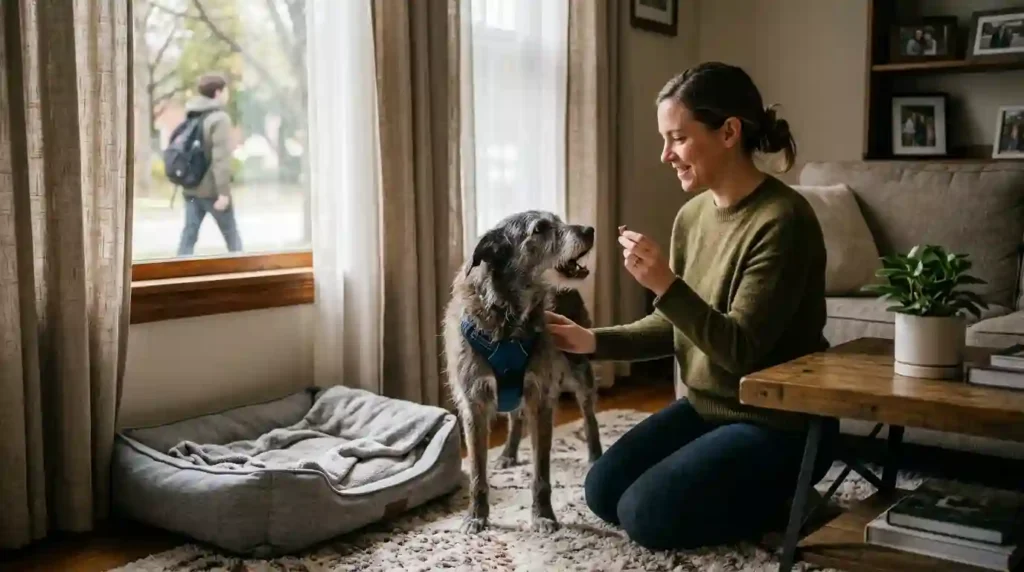
Reward quiet moments before barking begins. For example, if your dog looks at the window but stays quiet, calmly say “yes” and offer a treat. This teaches your dog that noticing a trigger without barking is rewarding.
Teach a “Quiet” Cue Carefully
Do not yell “quiet” while your dog is already overwhelmed. Instead, practice during mild barking.
Say “quiet” in a calm voice, wait for a tiny pause, then reward. Over time, your dog learns that silence earns something good.
Teach “Go to Mat”
A mat or bed cue gives your dog a safe job. Practice when the house is calm first.
Reward your dog for stepping on the mat, lying down, and relaxing. Later, use the cue when the doorbell rings or guests arrive.
Block Visual Triggers
If your senior dog barks at windows, use curtains, frosted window film, furniture placement, or baby gates. Reducing exposure is not avoidance. It is smart management.
Pair Triggers With Good Things
If your dog barks at delivery trucks, start rewarding as soon as the truck appears or makes noise, before barking escalates. Over time, the trigger predicts treats instead of danger.
Avoid Punishment
Punishment may suppress barking temporarily, but it does not fix fear, pain, confusion, or anxiety. Shock collars, yelling, leash jerks, and spray collars can make senior rescue dogs more stressed.
A dog that feels unsafe may bark more, not less.
Home Adjustments That Help Senior Dogs Feel Safe
A calm environment can reduce barking dramatically.
Create a Safe Zone
Give your senior rescue dog a quiet space with a soft bed, water, a familiar scent, and low traffic. This may be a corner of the living room, a crate with the door open, or a gated room.
Use White Noise
Fans, calming music, or white noise machines can soften outdoor sounds that trigger barking.
Add Night Lights
Night lights help dogs with poor vision navigate the home and reduce nighttime barking caused by shadows or disorientation.
Keep Furniture Consistent
Avoid rearranging furniture often. Senior dogs with vision loss or cognitive decline need predictable pathways.
Maintain a Routine
Feed, walk, potty, rest, and bedtime routines help rescue dogs feel secure. Predictability reduces anxiety-driven barking.
Provide Senior-Friendly Enrichment
Use gentle enrichment such as snuffle mats, lick mats, soft puzzle toys, slow sniff walks, and simple scent games. Mental stimulation can reduce boredom barking, but avoid activities that frustrate or exhaust your older dog.

When to Ask a Vet or Behavior Professional for Help
Some barking problems need professional support. Contact your veterinarian if barking appears suddenly, increases quickly, happens mostly at night, occurs with signs of pain, or comes with confusion, aggression, house-soiling, appetite changes, or mobility problems.
A vet can check for pain, ear problems, vision changes, dental disease, urinary issues, neurological concerns, medication side effects, and cognitive dysfunction.
A certified force-free trainer or veterinary behaviorist can help if your dog has separation anxiety, fear-based barking, reactivity, panic, or trauma-related behaviors.
Red Flags That Need Attention
Seek help if your senior rescue dog:
- Barks suddenly for no clear reason
- Seems confused or lost in familiar rooms
- Barks when touched or approached
- Shows aggression after barking
- Barks for hours when left alone
- Paces, pants, or trembles with barking
- Has disrupted sleep
- Stops responding to familiar cues
- Shows changes in appetite, drinking, or bathroom habits
Early help can improve the quality of life for both you and your dog.
Conclusion
Dog barking triggers in senior rescue dogs are often layered. Your dog may be reacting to fear, pain, hearing loss, vision changes, cognitive decline, separation stress, unfamiliar people, outdoor sounds, or memories from a difficult past.
The best approach is patient investigation. Track patterns, rule out medical causes, reduce environmental triggers, reward calm behavior, and create a predictable home. Senior rescue dogs do not need harsh correction. They need safety, understanding, and clear communication.
When you respond to barking with compassion, you help your dog feel secure. Over time, many senior rescue dogs learn that they no longer need to bark at every sound, shadow, stranger, or moment of uncertainty. They can relax, trust, and enjoy their golden years in peace.
FAQs
1. Why does my senior rescue dog bark more than my younger dog?
Senior rescue dogs may bark more because of anxiety, past trauma, hearing loss, vision problems, pain, cognitive decline, or difficulty adjusting to a new home. Older dogs may also have less tolerance for sudden noises or changes in routine.
2. Is barking at night normal in senior rescue dogs?
Night barking can happen in senior dogs, but it should not be ignored. It may be caused by poor night vision, confusion, canine cognitive dysfunction, needing to potty, discomfort, hunger, or anxiety.
3. Can hearing loss cause barking in senior dogs?
Yes. Dogs with hearing loss may become startled more easily, bark louder, or bark because they cannot identify sounds clearly. They may also rely more on visual cues and become anxious when approached unexpectedly.
4. How do I stop my senior rescue dog from barking at the window?
Block the view with curtains or window film, move furniture away from the window, reward calm behavior, and teach a “go to mat” cue. Avoid yelling, because it can increase excitement or fear.
5. Should I use a bark collar on a senior rescue dog?
A bark collar is not recommended for senior rescue dogs, especially if barking is caused by fear, pain, confusion, or anxiety. Punishment may increase stress and worsen the underlying problem.
6. Why does my rescue dog bark when I leave the house?
This may be separation anxiety or isolation distress. Rescue dogs with abandonment history may panic when left alone. Start with short absences, create a safe space, use enrichment, and ask a professional for help if barking is intense.
7. Can pain make a senior dog bark more?
Yes. Arthritis, dental disease, ear infections, injuries, or other health problems can make a senior dog more sensitive and reactive. Sudden barking changes should be discussed with a veterinarian.
8. How long does it take for a senior rescue dog to stop barking so much?
It depends on the cause. Some dogs improve in a few weeks with routine and trigger management. Others need months, especially if they have anxiety, trauma, sensory decline, or medical issues.
9. What is the best first step for excessive barking in a senior rescue dog?
Start with a vet check, especially if the barking is new or worsening. Then track triggers in a barking journal and use gentle, reward-based training.
10. Can senior rescue dogs still learn new quiet behaviors?
Yes. Senior dogs can learn with patience, repetition, and positive reinforcement. Training sessions should be short, calm, and adapted to the dog’s physical comfort and sensory abilities.