


Summary
Why some dogs bark once and some bark non-stop comes down to a mix of breed traits, emotional state, environment, training history, socialization, health, and how strongly the dog reacts to a trigger. A single bark may be a quick alert, greeting, or mild curiosity, while non-stop barking often signals high arousal, fear, boredom, anxiety, territorial behavior, learned attention-seeking, or an unmet need. Understanding the difference helps dog owners respond calmly, reduce excessive barking, and support healthier canine communication.
Table of Content
- Why Some Dogs Bark Once and Some Bark Non-Stop: The Core Difference
- Why Some Dogs Bark Once and Some Bark Non-Stop in Different Environments
- What a Single Bark Usually Means
- Why Some Dogs Bark Non-Stop
- Breed, Temperament, and Genetics
- Training Tips to Reduce Excessive Barking
- When Barking May Signal a Health Problem
- Conclusion
- FAQs
Why Some Dogs Bark Once and Some Bark Non-Stop
Barking is one of the most familiar sounds in the dog world, but not all barking means the same thing. One dog may hear a knock at the door, give a single sharp “woof,” and walk away. Another dog may hear the same knock and bark intensely for several minutes. This difference often confuses dog owners, especially when two dogs live in the same home but respond completely differently to the same sound, person, animal, or situation.
The truth is that barking is not random noise. It is a form of canine communication. Dogs bark to alert, warn, greet, demand attention, express excitement, release stress, protect territory, show frustration, or respond to fear. The reason one dog barks once while another barks non-stop depends on emotional intensity, breed tendencies, reinforcement history, confidence level, environment, and the dog’s ability to calm down after being triggered.
The American Kennel Club notes that barking is a natural way dogs communicate, but excessive barking can become a behavioral problem when it is repeated, intense, or difficult to interrupt. For a helpful external resource, see the AKC’s guide on why dogs bark at each other.
Understanding why dogs bark differently is the first step toward managing barking in a fair, humane, and effective way.
Why Some Dogs Bark Once and Some Bark Non-Stop: The Core Difference
The main difference between a one-bark dog and a non-stop barker is usually the dog’s arousal level and recovery time.
A dog that barks once is often saying, “I noticed something.” This dog may feel curious, mildly alert, or briefly surprised. After the bark, the dog quickly evaluates the situation and decides there is no need to continue. These dogs often have better impulse control, lower anxiety, more confidence, or a calmer temperament.
A dog that barks nonstop is usually experiencing stronger emotional activation. The dog may feel threatened, overstimulated, excited, frustrated, lonely, territorial, or unable to settle. Instead of processing the trigger and moving on, the dog stays locked into the barking cycle.
The Barking Cycle
Many dogs continue barking because of a simple behavioral loop:
- The dog notices a trigger.
- The dog barks.
- The trigger moves away, the owner reacts, or the dog receives attention.
- The dog learns that barking “worked.”
- The barking becomes stronger next time.
For example, a delivery driver walks past the house. The dog barks nonstop from the window. The driver leaves. From the dog’s perspective, the barking successfully chased the person away. Even though the driver was leaving anyway, the dog connected barking with success.
This is why repeated barking can become a learned behavior, not just an emotional reaction.
Why Some Dogs Bark Once and Some Bark Non-Stop in Different Environments
The environment plays a huge role in barking behavior. A dog living in a quiet home with few outdoor triggers may bark less often. A dog living near traffic, sidewalks, neighbors, livestock, wildlife, or other dogs may bark much more because there are more things to react to.
Urban dogs often hear doors closing, people walking, elevators, bikes, sirens, and other pets. Rural dogs may react to coyotes, farm animals, distant vehicles, open spaces, and unfamiliar nighttime sounds. If you want a deeper look at how location affects barking patterns, read this related guide on Dog Barking at Night in Rural vs. Urban Areas.
Trigger Density Matters
Some environments create “trigger stacking.” This happens when a dog experiences multiple small stressors close together. One sound may not cause much barking, but five sounds in a row can push the dog over the threshold.
For example:
- A neighbor’s dog barks.
- A car door slams.
- A stranger walks past.
- A child runs near the fence.
- A squirrel appears in the yard.
By the fifth trigger, the dog may bark non-stop because the nervous system is already overloaded.

What a Single Bark Usually Means
A single bark is not always a problem. In many cases, it is a normal, healthy form of communication. Dogs may bark once to acknowledge a sound, signal mild concern, or get a person’s attention.
1. Alert Barking
A single sharp bark often means, “Something is happening.” The dog may hear a knock, a doorbell, a branch tapping the window, or a person approaching the property. Once the dog realizes the situation is safe, the barking stops.
Alert barking is especially common in watchdog breeds and dogs with strong environmental awareness. These dogs are not necessarily aggressive. They are simply reporting a change.
2. Greeting Bark
Some dogs bark once when they see their owner, another dog, or a familiar visitor. This bark is often high-pitched and paired with a wagging tail, soft eyes, loose body movement, or playful bouncing.
This type of bark is usually excitement-based rather than fear-based.
3. Startle Bark
A dog may bark once when surprised. For example, if a book falls, a phone rings loudly, or someone suddenly appears around a corner, the dog may give one quick bark and then stop after realizing there is no danger.
4. Request Bark
Some dogs give one bark to ask for something. They may want the door opened, food, playtime, or attention. If the dog barks once and waits calmly, this is different from a dog that barks repeatedly and demands a response.
However, even one bark can become a habit if owners always reward it immediately. Over time, a quiet request can turn into persistent barking if the dog learns that louder barking gets faster results.
Why Some Dogs Bark Non-Stop
Non-stop barking usually means the dog is struggling to regulate emotion or has learned that barking brings results. It may happen indoors, outdoors, on walks, in crates, behind fences, at windows, or when the dog is left alone.
1. Fear and Anxiety
Fear is one of the most common causes of excessive barking. A fearful dog may bark continuously at strangers, other dogs, loud noises, unfamiliar objects, or sudden movement. The barking is often meant to increase the distance from the trigger.
Fearful barking may come with:
- Tucked tail
- Raised hackles
- Backward ears
- Pacing
- Growling
- Lunging
- Hiding
- Whale eye
- Trembling
A dog that barks nonstop out of fear is not being stubborn. The dog is overwhelmed.
2. Territorial Barking
Territorial dogs bark when they believe someone or something is entering their space. This may include the yard, home, car, crate, front window, or even the owner’s personal space.
Common territorial triggers include mail carriers, delivery drivers, neighbors, guests, passing dogs, cyclists, and vehicles.
Territorial barking often becomes intense because the dog feels responsible for protecting the area. Each time the person leaves, the barking is reinforced.
3. Separation Anxiety
Some dogs bark nonstop when left alone. This may be linked to separation anxiety or isolation distress. These dogs are not barking to annoy anyone. They may be panicking because they feel unsafe without their person.
Signs may include:
- Barking or howling when alone
- Scratching doors or windows
- Pacing
- Drooling
- Destructive behavior near exits
- Accidents indoors
- Refusing food when alone
Separation-related barking often requires a careful behavior plan, gradual alone-time training, and sometimes help from a veterinarian or certified canine behavior professional.
4. Boredom and Lack of Mental Stimulation
Dogs need mental enrichment, not just food and shelter. A bored dog may bark because barking becomes an activity. This is common in dogs left in yards for long periods or dogs with too little exercise, play, sniffing, chewing, or training.
Working breeds, herding breeds, terriers, hounds, and high-energy dogs often need more structured enrichment than owners expect.
Helpful outlets include puzzle feeders, scent games, decompression walks, chew toys, obedience training, trick training, and safe social interaction.
5. Attention-Seeking Barking
Some dogs bark because it gets a reaction. Even negative attention can reinforce barking. If a dog barks and the owner looks, talks, yells, touches, or chases the dog, the dog may learn that barking is a reliable way to create interaction.
This is why yelling often makes barking worse. To some dogs, a yelling human sounds like a barking teammate.
6. Frustration Barking
Frustration barking happens when a dog wants access to something but cannot reach it. This is common when a dog sees another dog through a fence, wants to greet a person while on leash, or wants a toy that is out of reach.
Leash reactivity is often driven by frustration, fear, or both. The dog may bark, lunge, whine, spin, or pull hard because the leash prevents natural movement.

Breed, Temperament, and Genetics
Breed traits can strongly influence barking style. Some dogs were historically bred to alert, herd, guard, hunt, or track using their voices. Others were bred to work quietly or stay calm in close human spaces.
Vocal Breeds
Some breeds and breed types are naturally more vocal, including:
- Beagles
- Dachshunds
- Chihuahuas
- Miniature Schnauzers
- Yorkshire Terriers
- Shetland Sheepdogs
- German Shepherds
- Siberian Huskies
- Coonhounds
- Australian Shepherds
- Border Collies
This does not mean every dog from these breeds will bark nonstop. It means they may have a lower threshold for vocalizing.
Quieter Breeds
Some breeds are often known for being quieter, though individual personality still matters. These may include:
- Greyhounds
- Basenjis
- Great Danes
- Bernese Mountain Dogs
- Whippets
- Shiba Inus
- Newfoundlands
Even quiet breeds can bark excessively if they are anxious, under-stimulated, poorly socialized, or living in a stressful environment.
Temperament Matters More Than Breed Alone
Two dogs from the same breed can behave very differently. One Labrador may bark once at the doorbell and relax. Another may bark continuously because of poor socialization, excitement, or fear.
Important temperament factors include:
- Confidence
- Sensitivity to sound
- Social experience
- Prey drive
- Territorial instinct
- Frustration tolerance
- Impulse control
- Recovery speed after stress
A dog with a fast recovery time may bark once and settle. A dog with slow recovery may bark long after the trigger is gone.
The Role of Socialization
Socialization teaches dogs what is normal in the world. A well-socialized dog has been gradually and positively exposed to different people, places, sounds, surfaces, dogs, and daily-life situations.
Poor socialization can make ordinary experiences feel threatening. A dog that has rarely seen children, bicycles, hats, delivery trucks, or other dogs may bark nonstop because every new thing feels suspicious.
Socialization Does Not Mean Overexposure
Good socialization is not forcing a dog to meet everyone. It means helping the dog feel safe around normal life experiences.
For example, a puppy can learn to calmly watch people from a distance, hear traffic without panic, and see other dogs without needing to bark or pull.
Adult dogs can also improve, but the process may take longer. Desensitization and counterconditioning can help a dog form better emotional associations with triggers.
Reinforcement History: How Owners Accidentally Teach Barking
Many barking habits are unintentionally trained by humans. Dogs repeat behaviors that work.
If a dog barks and receives food, attention, door access, play, or freedom, the barking becomes useful. Over time, the dog may bark faster, louder, and longer.
Common Accidental Rewards
Owners may accidentally reward barking by:
- Opening the door while the dog is barking
- Giving treats to stop noise without waiting for calm
- Yelling repeatedly
- Picking the dog up every time it barks
- Letting the dog chase animals from the yard
- Allowing window barking all day
- Giving attention during demand barking
This does not mean owners are doing something wrong on purpose. It simply means dogs are excellent learners.
Better Alternative
Reward calm behavior before barking starts. For example, if your dog looks at a passerby and stays quiet, reward immediately. If your dog hears the doorbell and looks at you instead of barking, reward that choice.
You are teaching the dog, “Quiet observation works better than explosive barking.”
Body Language: How to Read the Bark
To understand why a dog barks once or non-stop, look at the whole body. Barking alone does not tell the full story.
Relaxed or Happy Barking
A playful or excited dog may show:
- Loose body
- Wagging tail
- Open mouth
- Play bow
- Bouncy movement
- Soft eyes
- High-pitched bark
Fearful or Defensive Barking
A worried dog may show:
- Stiff body
- Tail tucked or high and rigid
- Ears pinned back
- Raised hackles
- Hard staring
- Growling
- Backing away
- Lunging if trapped
Alert or Territorial Barking
An alert dog may show:
- Forward posture
- Upright ears
- Focused stare
- Tail raised
- Barking toward a boundary
- Running to windows, doors, or fences
Reading body language helps owners choose the right response. A fearful dog needs distance and confidence-building. A bored dog needs enrichment. A territorial dog needs management and training. An attention-seeking dog needs consistent boundaries.
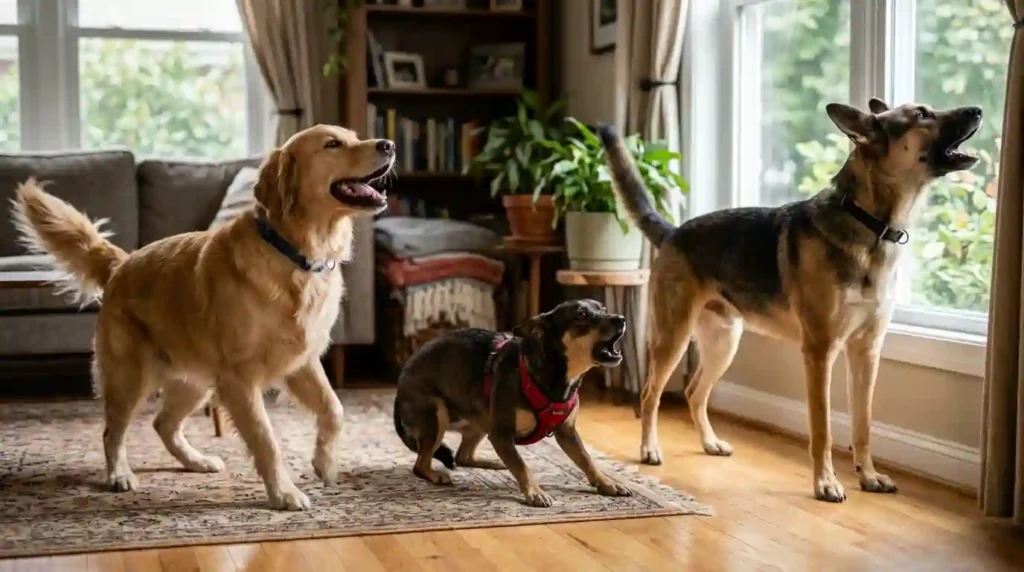
Training Tips to Reduce Excessive Barking
The goal is not to stop all barking. Dogs should be allowed to communicate. The goal is to reduce unnecessary, stressful, or uncontrollable barking.
1. Identify the Trigger
Before correcting barking, ask: What starts it?
Common triggers include:
- Doorbells
- Visitors
- Other dogs
- Passing cars
- Wildlife
- Children
- Loud sounds
- Being alone
- Hunger
- Boredom
- Lack of exercise
Once you identify the trigger, training becomes more specific and effective.
2. Manage the Environment
Management prevents rehearsal. The more a dog practices non-stop barking, the stronger the habit becomes.
Helpful management tools include:
- Closing curtains or using window film
- Moving furniture away from windows
- Using white noise
- Bringing outdoor dogs inside during peak trigger times
- Avoiding known high-stress walking routes temporarily
- Creating a quiet rest area
- Supervising yard time
- Using baby gates or crates safely
Management is not a failure. It gives the dog’s nervous system a break while training builds new skills.
3. Teach a “Quiet” Cue Correctly
A quiet cue works best when taught calmly.
Start when your dog is only mildly barking, not in a full emotional explosion. Wait for a brief pause, say “quiet,” then reward. Over time, the dog learns that silence after the cue brings something good.
Do not scream “quiet” during intense barking. That often adds more energy.
4. Reward Calm Observation
If your dog sees a trigger and does not bark, reward quickly. This teaches the dog that noticing something calmly is valuable.
For example:
- A dog sees another dog.
- The dog stays quiet for one second.
- You mark with “yes.”
- You give a treat.
- You move away before barking begins.
This is especially helpful for leash reactivity and window barking.
5. Use Desensitization and Counterconditioning
Desensitization means exposing your dog to a trigger at a low enough level that the dog can stay calm. Counterconditioning means pairing the trigger with something positive.
For example, if your dog barks at bicycles, start far enough away that your dog can notice a bicycle without reacting. Feed high-value treats while the bicycle is visible. Over time, the dog learns that bicycles predict good things instead of danger.
6. Increase Enrichment
A tired, fulfilled dog is less likely to bark from boredom or frustration.
Try:
- Sniff walks
- Food puzzles
- Lick mats
- Scent work
- Chew toys
- Short training sessions
- Tug or fetch
- Hide-and-seek games
- Calm decompression time
Mental exercise can be as important as physical exercise.
7. Avoid Punishment-Based Bark Control
Shock collars, yelling, and harsh corrections may suppress barking temporarily, but they can increase fear, anxiety, or aggression. They also do not teach the dog what to do instead.
Positive reinforcement, management, and behavior modification are safer and more effective long-term approaches.
When Barking May Signal a Health Problem
Sometimes, a sudden change in barking is not behavioral. It may be medical.
A dog that suddenly barks more than usual may be experiencing pain, cognitive decline, hearing loss, vision changes, hormonal issues, neurological problems, or general discomfort.
Warning Signs to Watch
Talk to a veterinarian if barking changes suddenly and comes with:
- Restlessness
- Confusion
- Night waking
- Appetite changes
- Limping
- Whining
- Increased fear
- House soiling
- Disorientation
- Sudden aggression
- Excessive panting
- Sensitivity to touch
Senior dogs may bark more due to canine cognitive dysfunction, reduced hearing, or anxiety caused by sensory decline.
Medical issues should always be ruled out when barking appears suddenly, becomes extreme, or seems out of character.
Why One Dog in a Multi-Dog Home Barks More
Many owners wonder why one dog barks once while another dog in the same house barks nonstop. The answer usually lies in individual personality and social influence.
One dog may be naturally calm, while the other is sensitive and reactive. One dog may have learned that barking gets attention, while the other has not. One dog may feel responsible for alerting the household, while the other simply watches.
Dogs can also trigger each other. If one dog starts barking, the second may join because of social facilitation. This does not always mean both dogs are upset. One may be reacting emotionally, while the other is copying the sound.
How to Manage Multi-Dog Barking
Train each dog separately first. Reward calm behavior individually. Then practice together once each dog understands the skill.
It can also help to interrupt early. The first bark is easier to redirect than a full group barking session.
Conclusion
Some dogs bark once because they are calm, confident, briefly alert, or naturally less vocal. Other dogs bark nonstop because they are anxious, excited, bored, territorial, frustrated, overstimulated, or have learned that barking gets results.
The key is to understand the reason behind the barking instead of treating all barking as bad behavior. A single bark may be normal communication. Continuous barking may be a sign that the dog needs training, enrichment, environmental management, confidence-building, or medical attention.
When owners look at the full picture—breed traits, emotional state, body language, environment, socialization, reinforcement history, and health—they can respond more effectively. With patience, positive reinforcement, and the right management plan, most dogs can learn to bark less, settle faster, and communicate in healthier ways.
FAQs
1. Why does my dog bark only once at noises?
Your dog may be giving a quick alert bark. This usually means the dog noticed a sound, checked the situation, and decided there was no need to continue barking. Calm, confident dogs often recover quickly after mild triggers.
2. Why does my dog bark nonstop at strangers?
Non-stop barking at strangers may come from fear, territorial behavior, poor socialization, excitement, or frustration. Watch your dog’s body language to understand whether the barking is defensive, playful, or anxious.
3. Is non-stop barking a sign of aggression?
Not always. Continuous barking can be caused by anxiety, boredom, excitement, or frustration. Aggression is only one possible reason. Look for stiff posture, hard staring, growling, lunging, or snapping before assuming aggression.
4. Can I train my dog to bark less?
Yes. Most dogs can learn to bark less through positive reinforcement, trigger management, desensitization, counterconditioning, enrichment, and calm training. The goal is not total silence, but better emotional control.
5. Why does my dog bark more than my other dog?
Dogs have different temperaments, breed traits, confidence levels, and learning histories. One dog may be naturally more sensitive or vocal, while another may be calmer and less reactive.
6. Should I ignore my dog when it barks?
It depends on the reason. Ignoring may help with attention-seeking barking, but it is not enough for fear, anxiety, territorial barking, or separation distress. First identify the cause, then choose the right response.
7. Why does my dog bark nonstop when left alone?
This may be boredom, isolation, distress, or separation anxiety. If your dog also paces, destroys items, drools, howls, or tries to escape, consult a veterinarian or certified behavior professional.
8. Do some breeds bark more than others?
Yes. Some breeds were developed for alerting, guarding, herding, hunting, or tracking, so they may be more vocal. However, training, environment, and individual personality matter just as much as breed.
9. Is it bad to let my dog bark at the window?
Occasional alert barking may be normal, but repeated window barking can increase territorial behavior and stress. Use curtains, window film, redirection, and calm rewards to reduce the habit.
10. When should I see a vet about barking?
See a vet if barking suddenly increases, happens mostly at night, appears linked to pain, or comes with confusion, restlessness, appetite changes, aggression, or other unusual behavior.