

Summary
Dog barking when you come home after a long day is usually a mix of excitement, attention-seeking, habit, pent-up energy, anxiety, or learned greeting behavior. The good news is that most homecoming barking can be reduced with calm routines, positive reinforcement, impulse-control training, enrichment, and consistent responses from every person in the household.
Table of Content
- Why Dog barking when you come home after a long day happens
- What your dog is trying to communicate
- Common causes of homecoming barking
- How to stop Dog barking when you come home after a long day
- Training mistakes that make barking worse
- When barking may signal anxiety or a deeper issue
- Conclusion
- FAQs
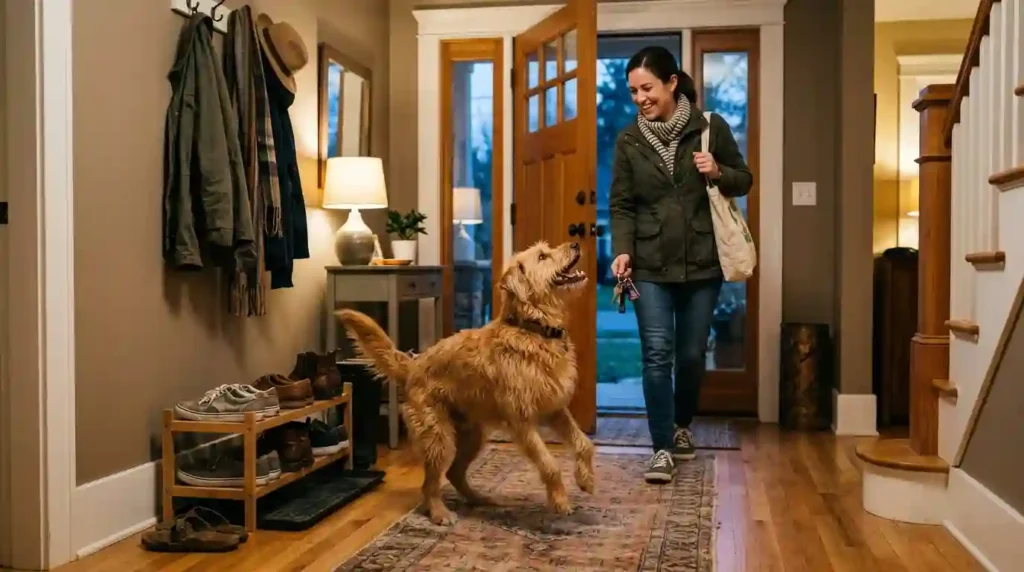
Coming home after work should feel peaceful. You unlock the door, set down your bag, and hope for a warm greeting from your dog. Instead, your dog explodes into barking, jumping, spinning, whining, or running in circles. While it can be sweet to feel missed, constant barking at the door can quickly become stressful, especially if you live in an apartment, have sleeping children, work late shifts, or simply need a quieter transition after a long day.
The first thing to understand is this: your dog is not barking to “be bad.” Barking is a natural form of canine communication. Dogs bark to express excitement, alertness, frustration, uncertainty, fear, boredom, and social connection. When the barking happens, specifically when you arrive home, the trigger is usually the emotional intensity of your return.
Your arrival means attention, movement, smells from outside, dinner time, a walk, play, relief from boredom, or the end of being alone. For many dogs, that is a lot to process in one moment.
Why Dog Barking When You Come Home After a Long Day Happens
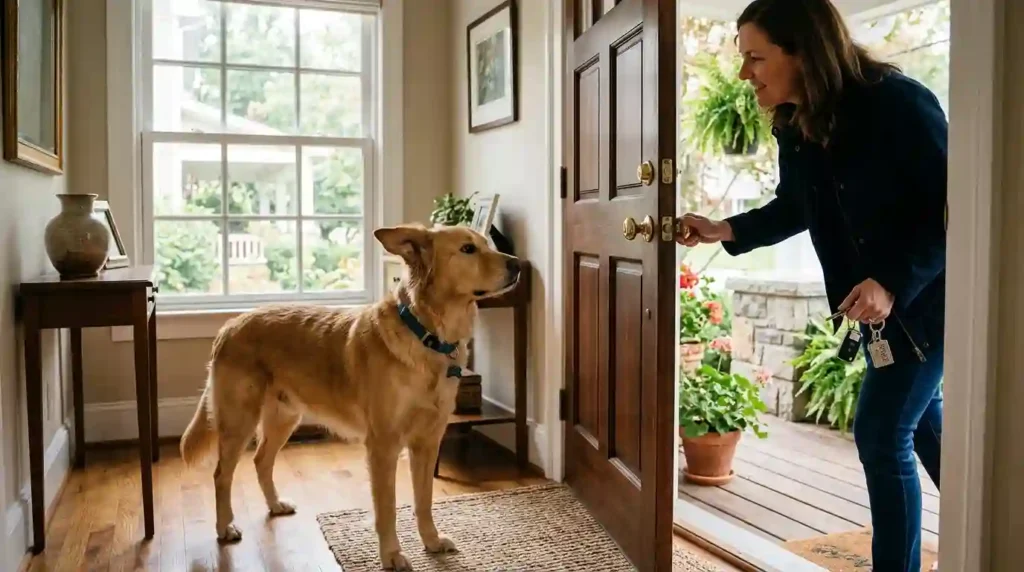
Dogs are experts at reading patterns. They know the sound of your car, the rhythm of your footsteps, the jingle of your keys, and even the time you usually return. By the time you open the door, your dog may already be emotionally activated.
This kind of barking is often called greeting barking or excitement barking. It can sound sharp, repetitive, high-pitched, and intense. Some dogs pair it with jumping, tail wagging, zoomies, pawing, mouthing, or bringing toys. Others bark from behind a crate, baby gate, window, or door because they are frustrated that they cannot reach you immediately.
The American Kennel Club notes that excessive barking is best addressed by understanding the cause and using calm, consistent training methods such as rewarding quiet behavior and teaching cues like “quiet” or calm focus. You can read more in their guide on how to stop nuisance dog barking.
Your Return Is a Powerful Trigger
For your dog, your homecoming is not just a normal event. It may be the biggest emotional moment of the day. If your dog has been alone, under-stimulated, or waiting for interaction, your arrival can feel like the start of everything good.
Common homecoming triggers include:
- The sound of your keys or garage door
- Footsteps in the hallway
- The doorbell or door opening
- Your scent after being outside
- Anticipation of food, walks, or play
- Relief from being alone
- Habitual excitement built over months or years
Barking Can Become a Learned Routine
If your dog barks and you immediately talk, touch, laugh, scold, feed, or leash them, your dog may learn that barking makes things happen. Even negative attention can reinforce barking if the dog is desperate for interaction.
For example, if your dog barks and you say, “Okay, okay, I’m here!” while petting them, the barking stops. If they bark and you rush to take them outside, barking worked. If they bark and you bend down to push them off, barking still gets your focus.
That does not mean you should ignore your dog emotionally. It means you need to reward the behavior you want: calm paws, softer body language, quiet breathing, sitting, settling, or bringing a toy without frantic barking.
What Your Dog Is Trying to Communicate
Homecoming barking can mean different things depending on the dog’s body language, daily routine, age, breed, and emotional state.
Excitement Barking
This is the most common reason dogs bark when their owners come home. Excitement barking is usually paired with a loose body, wagging tail, play bows, bouncing, spinning, and bright eyes. The dog is happy, but over threshold.
“Over threshold” means your dog is too emotionally aroused to think clearly or respond well to cues. They may know “sit” perfectly at 2 p.m. in the kitchen, but when you walk through the door at 6 p.m., their brain is in celebration mode.
Attention-Seeking Barking
Some dogs bark because barking reliably gets human attention. They may bark directly at your face, follow you from room to room, paw your legs, or escalate if you look away.
Attention-seeking barking often develops when a dog is unintentionally rewarded for noisy greetings. This is especially common with smart, social, high-energy breeds that quickly learn which behaviors produce a response.
Anxiety-Related Barking
Not all homecoming barking is happy. Some dogs bark because your return releases stress that built while you were gone. This may be linked to separation anxiety, isolation distress, confinement frustration, or general nervousness.
Signs that barking may be anxiety-related include:
- Drooling while you are gone
- Destructive chewing near doors or windows
- Scratching exits
- Indoor accidents despite housetraining
- Pacing or panting before you leave
- Barking that starts before you enter
- Extreme clinginess after you return
If your dog seems panicked rather than excited, the training plan should focus on emotional safety, gradual alone-time conditioning, and professional behavior support.
Alert or Territorial Barking
Some dogs initially bark because they hear someone approaching the home. Once they realize it is you, the bark may shift from alarm barking to greeting barking. This is common in dogs who are sensitive to hallway sounds, neighbors, delivery drivers, or outdoor movement.
If your dog is generally sound-sensitive, you may also notice reactions to doorbells, vehicles, drones, birds, or unfamiliar objects outside. For related environmental triggers, see Dog Barking at Drones or Flying Objects Overhead for a deeper look at overhead sounds and visual triggers.
Common Causes of Homecoming Barking
Lack of Physical Exercise
A dog who has spent the whole day resting may have unused energy. When you return, barking becomes an outlet. This is especially common in working breeds, herding breeds, terriers, adolescent dogs, and young adult dogs.
A calm greeting often starts before you leave. A morning walk, sniffing session, puzzle feeder, or short training game can reduce the emotional pressure that builds throughout the day.
Boredom and Under-Stimulation
Dogs need mental enrichment, not just physical exercise. If your dog’s day is empty, your return becomes the most exciting event imaginable. Food puzzles, scent games, chew items, safe enrichment toys, and rotating activities can help your dog feel more satisfied.
Reinforced Jumping and Barking
Many owners accidentally create a noisy greeting ritual. If the dog barks, jumps, and spins, then receives affection, the dog learns that high-energy behavior is part of the welcome-home routine.
This is not your fault. Most people naturally respond to an excited dog. But changing the pattern is essential.
Separation Stress
Dogs with separation-related problems may bark when you return because they are emotionally flooded. In these cases, the homecoming is not the real problem; it is the symptom you see at the end of a stressful absence.
Predictable Post-Work Rewards
If your dog always gets dinner, a walk, or a car ride immediately after you come home, the barking may be anticipation. Dogs are excellent at predicting routines. If travel or motion also excites your dog, you may find useful related tips in Dog Barking During Car Rides, especially if your dog’s barking is linked to transitions, movement, or high-arousal routines.
How to Stop Dog Barking When You Come Home After a Long Day
The goal is not to punish barking. The goal is to teach your dog a calmer homecoming pattern.
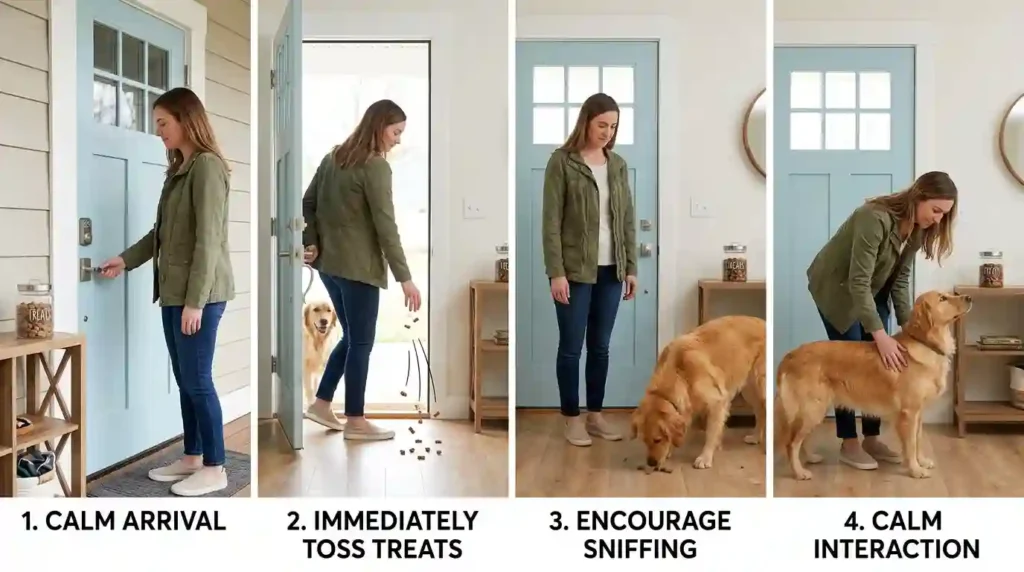
Step 1: Make Your Entrance Boring
When you walk in, stay calm. Avoid high-pitched greetings, excited touching, direct eye contact, or bending over your dog immediately. Move slowly. Put your bag down. Take off your shoes. Breathe.
This teaches your dog that your arrival is normal, not a dramatic event.
Step 2: Reward Quiet Moments
Wait for even one second of quiet, then calmly mark it with “yes” and offer a treat, gentle praise, or access to attention. At first, the quiet moment may be tiny. That is fine.
You are showing your dog: quiet makes good things happen.
Step 3: Teach an Alternative Greeting Behavior
Instead of only trying to stop barking, give your dog something specific to do.
Good alternatives include:
- Sit on a mat
- Bring a toy
- Go to bed
- Touch your hand
- Sit before greeting
- Find a treat scatter
- Wait behind a baby gate
A “go to mat” cue is especially useful because it gives your dog a predictable job.
Step 4: Use Treat Scatters to Lower Arousal
Keep a small container of treats near the entry area. When you come in, calmly toss a few treats on the floor away from the door. Sniffing naturally lowers arousal for many dogs and redirects the barking into a quieter search activity.
Do not toss treats while your dog is barking wildly every time without a plan. Instead, use the scatter early, before the barking peaks, or after a brief quiet pause.
Step 5: Practice Fake Arrivals
Training only during real homecomings can be hard because your dog is already excited. Practice mini-arrivals when the stakes are low.
Try this:
- Step outside for 10 seconds.
- Come back in calmly.
- Reward quiet behavior.
- Repeat several times.
- Gradually increase the time outside.
Your dog learns that doors opening and humans returning are normal, repeatable, and not worth explosive barking.
Step 6: Build a Calm Routine
Dogs relax when routines are predictable. Create a simple post-work ritual:
- Enter calmly
- Ignore frantic barking for a moment
- Reward quiet
- Ask for a known cue
- Offer a short sniff walk or enrichment activity
- Give affection once your dog is calmer
This does not remove love from the greeting. It simply delays the big affection until your dog can receive it calmly.
Step 7: Meet Your Dog’s Daily Needs
A dog who is mentally and physically fulfilled will have an easier time staying calm.
Helpful daily activities include:
- Sniff walks
- Puzzle feeders
- Frozen lick mats
- Safe chew toys
- Short obedience sessions
- Scent work games
- Tug with rules
- Calm mat training
- Predictable potty breaks
Even 10 minutes of focused enrichment can make a noticeable difference.
Training Mistakes That Make Barking Worse
Yelling Over the Barking
When you yell, your dog may think you are joining the noise. Loud corrections can increase excitement, confusion, or anxiety. Calmness is more effective than volume.
Petting During Barking
If barking leads to affection, the barking is rewarded. Wait for quiet, even briefly, then pet.
Inconsistent Household Rules
If one person rewards barking and another ignores it, your dog receives mixed signals. Everyone should follow the same greeting plan.
Waiting Until the Dog Is Over Threshold
Once your dog is spinning, barking, and jumping uncontrollably, learning becomes harder. Practice calm greetings outside of real arrival times so the skill is already familiar.
Expecting Instant Results
Homecoming barking is often a deeply rehearsed behavior. It may take days or weeks of consistent practice to change. Progress may look like barking for 20 seconds instead of two minutes. That still counts.
When Barking May Signal a Deeper Issue
Some barking needs more than a basic greeting routine. Consider getting help from a certified professional dog trainer, veterinary behaviorist, or veterinarian if your dog:
- Barks for long periods after you return
- Cannot settle after 10 to 15 minutes
- Shows panic when left alone
- Destroys doors, crates, or windows
- Injure themselves trying to escape
- Growls, snaps, or bites during greetings
- Has sudden behavior changes
- Is elderly and newly vocal
- Shows signs of pain, confusion, or sensory decline
Medical issues can also affect barking. Pain, cognitive dysfunction, hearing loss, thyroid problems, and anxiety disorders may change how a dog responds to daily events. If the barking is new, intense, or paired with other symptoms, a vet check is wise.
Conclusion
Dog barking when you come home after a long day is usually your dog’s way of saying, “You’re back, and I have big feelings about it.” Those feelings may be joy, relief, frustration, anxiety, anticipation, or habit. The solution is to change the emotional pattern around your arrival.
Stay calm when you enter. Reward quiet moments. Teach an alternative behavior, like going to a mat or bringing a toy. Use enrichment to reduce boredom, and practice short fake arrivals so your dog can learn without being overwhelmed. With patience and consistency, your homecoming can become warm, connected, and much quieter.
FAQs
Why does my dog bark so much when I come home?
Your dog may bark because of excitement, attention-seeking, separation stress, boredom, or anticipation of a walk, meal, or playtime. The barking becomes stronger if it consistently gets a reaction from you.
Should I ignore my dog when I get home?
You do not need to ignore your dog completely. Instead, ignore frantic barking and reward calm behavior. Once your dog is quieter, offer affection, praise, or a calm greeting.
Is my dog barking because of separation anxiety?
Possibly, especially if your dog also paces, drools, destroys items, scratches doors, has accidents, or barks while you are gone. If you suspect separation anxiety, speak with a veterinarian or certified behavior professional.
How long does it take to stop homecoming barking?
Some dogs improve in a few days, while others need several weeks of consistent training. The timeline depends on your dog’s age, temperament, routine, anxiety level, and how long the barking habit has been practiced.
What is the best command for barking?
“Quiet” can help, but it works best when taught calmly with rewards. Many dogs also benefit from cues like “go to mat,” “sit,” “touch,” or “bring your toy” because these give them a clear replacement behavior.
Why does my dog bark and jump at the same time?
Barking and jumping together usually mean high arousal. Your dog is excited and trying to get closer to your face or attention. Teach a calm greeting routine and reward four paws on the floor.
Can treats make barking worse?
Treats can make barking worse if given randomly while the dog is barking. Use treats strategically to reward quiet pauses, calm behavior, sniffing, sitting, or going to a mat.
Should I punish my dog for barking when I come home?
Punishment can increase anxiety or excitement and may damage trust. Positive reinforcement, routine changes, and calm handling are usually more effective for greeting barking.