
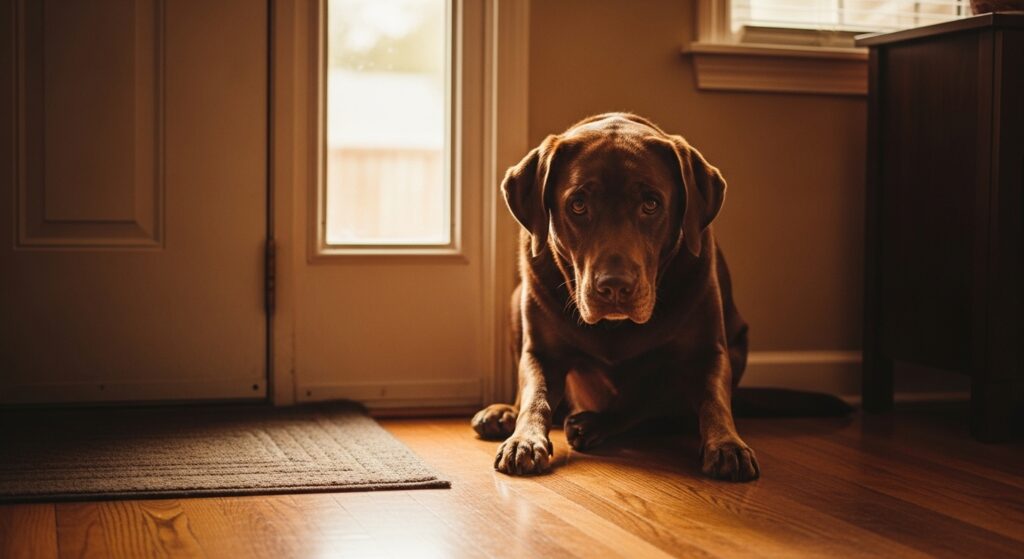

Summary: Dog separation anxiety is one of the most prevalent and emotionally distressing behavioral disorders in domestic dogs, affecting an estimated 20–40% of canine patients referred to veterinary behaviorists. It is characterized by excessive fear, panic, and distress triggered by the absence or anticipated absence of an attachment figure — typically the dog’s primary owner. This comprehensive guide covers every aspect of canine separation anxiety, from its neurological and psychological underpinnings to evidence-based treatment protocols, preventive strategies, and management tools, equipping dog owners and caregivers with everything they need to support a dog suffering from this condition.
Table of Contents
- What Is Dog Separation Anxiety?
- The Science Behind Separation Anxiety in Dogs
- Types of Separation Anxiety in Dogs
- Common Causes and Risk Factors
- Signs and Symptoms of Dog Separation Anxiety
- How Veterinarians and Behaviorists Diagnose Separation Anxiety
- Treatment Options for Dog Separation Anxiety
- Behavioral Modification Techniques
- Medications for Separation Anxiety in Dogs
- Natural Remedies and Complementary Approaches
- Creating a Safe Environment for an Anxious Dog
- How to Prevent Separation Anxiety in Puppies
- Separation Anxiety in Rescue and Adopted Dogs
- Living With a Dog That Has Separation Anxiety
- When to Seek Professional Help
- Frequently Asked Questions
What Is Dog Separation Anxiety?
Dog separation anxiety (DSA) is a complex, stress-induced behavioral syndrome in which a dog exhibits intense psychological and physiological distress when separated — or anticipating separation — from a specific person or group of people. Unlike mild boredom or loneliness, true separation anxiety involves a dysregulated threat-response system, meaning the dog’s nervous system interprets the owner’s departure as a life-threatening event.
Separation Anxiety vs. Separation-Related Behavior
Not every destructive or vocal dog is experiencing clinical separation anxiety. The umbrella term separation-related behavior (SRB) covers a broader range of issues, including:
- Boredom-based destruction — chewing and digging due to under-stimulation
- Frustration barking — vocalization triggered by restricted movement
- Noise phobia — panic caused by external stimuli (thunder, traffic)
- True separation anxiety — panic response tightly linked to owner absence
Distinguishing between these is critical because each requires a different intervention. True separation anxiety, for example, does not resolve with increased exercise alone, while boredom-based destruction often does.
Hyper-Attachment and Velcro Dog Syndrome
A closely related concept is hyper-attachment, sometimes referred to as “velcro dog syndrome.” Hyper-attached dogs follow their owners from room to room, become visibly distressed before departure cues, and never truly relax unless in physical proximity to their person. While hyper-attachment doesn’t always lead to clinical separation anxiety, it is widely regarded as a significant predisposing factor.
The Science Behind Separation Anxiety in Dogs
Neurological Mechanisms
At its core, canine separation anxiety involves dysregulation of the hypothalamic-pituitary-adrenal (HPA) axis — the body’s central stress-response system. When a dog with separation anxiety perceives owner departure, the amygdala (the brain’s fear center) fires a threat signal, triggering a cascade of stress hormones including cortisol and adrenaline. This is the same “fight or flight” response seen in human panic disorders.
Research using functional imaging and behavioral biomarkers has confirmed that dogs experiencing separation anxiety show elevated cortisol levels, increased heart rate variability, and heightened autonomic nervous system arousal — all hallmarks of acute anxiety.
The Role of Oxytocin and Attachment Bonding
Dogs have co-evolved with humans over approximately 15,000 years, developing an oxytocin-based bonding mechanism remarkably similar to that found between human parents and infants. When a dog and owner make eye contact or engage in physical contact, both experience an oxytocin surge. This “social bonding hormone” reinforces attachment — and also explains why the sudden removal of the attachment figure can be so destabilizing for predisposed dogs.
NLP and Cognitive Framing of Anxiety
From a natural language processing (NLP) and cognitive behavioral perspective, separation anxiety in dogs involves maladaptive associative learning. The dog builds a robust fear schema — an entrenched cognitive pattern — around pre-departure cues (picking up keys, putting on shoes, grabbing a bag). Over time, these cues alone become sufficient to trigger a full panic response, even before the owner has left the room.
Types of Separation Anxiety in Dogs
Owner-Specific Separation Anxiety
The most common form, in which distress is tied to one specific person (usually the primary caregiver). The dog may be perfectly calm when left with another person but becomes frantic when that one individual is absent.
Social Isolation Anxiety
Some dogs experience distress when left alone, regardless of who specifically is absent. This is often seen in dogs that were raised with constant companionship (e.g., multi-dog households) and have never learned to tolerate solitude.
Confinement Anxiety
A subset of dogs display anxiety specifically in response to being confined — in a crate, a room, or behind a baby gate — rather than to owner absence per se. Confinement anxiety can co-occur with separation anxiety or exist independently.
Barrier Frustration
Related to confinement anxiety, barrier frustration occurs when a dog can see or hear the owner but cannot access them. This triggers frustration-driven behaviors that can resemble, but are neurologically distinct from, true anxiety.
Common Causes and Risk Factors
Understanding the etiology of canine separation anxiety is essential for designing effective treatment plans.
Genetic Predisposition
Certain breeds show significantly higher rates of separation anxiety, suggesting a heritable component. High-risk breeds include Labrador Retrievers, German Shepherds, Border Collies, Cavalier King Charles Spaniels, Bichon Frises, and Vizslas. These are all breeds selectively bred for close human collaboration, which may have amplified attachment-dependency traits.
Early Life Experiences and Socialization Gaps
Dogs that were prematurely weaned (before 8 weeks), raised in puppy mills, or denied adequate early socialization are at significantly elevated risk. The critical socialization window (3–12 weeks) shapes a dog’s baseline stress reactivity and coping capacity for life.
Traumatic Events and Life Changes
Separation anxiety can be triggered or worsened by:
- A sudden change in schedule (e.g., owner returning to work post-pandemic)
- Moving to a new home
- Loss of a companion animal or human family member
- A traumatic event experienced while alone (e.g., a thunderstorm)
- Surrendering to a shelter and re-homing
Age-Related Cognitive Changes
Senior dogs experiencing canine cognitive dysfunction syndrome (CCDS) — the canine equivalent of dementia — frequently develop new-onset separation anxiety as cognitive decline reduces their ability to regulate fear and maintain spatial memory of the owner.
Signs and Symptoms of Dog Separation Anxiety
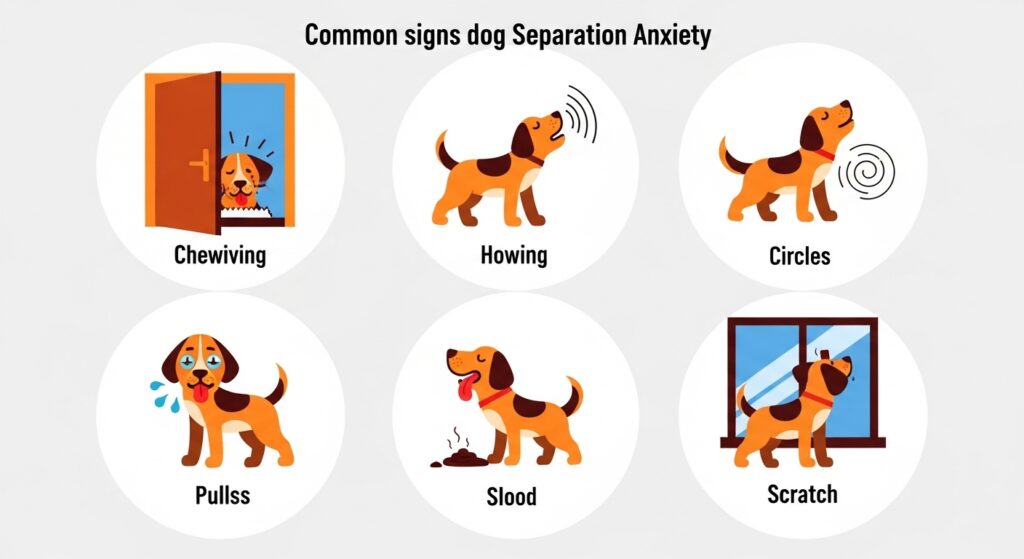
Recognizing the clinical signs of separation anxiety is the first step toward helping your dog. Symptoms typically begin within 30 minutes of the owner’s departure and may include:
Behavioral Indicators
- Destructive behavior — targeted chewing near exit points (doors, window sills, crates)
- Excessive vocalization — barking, howling, or whining that continues for extended periods
- House soiling — urination or defecation in house-trained dogs, occurring only during owner absence
- Escape attempts — digging under fences, scratching through doors, breaking out of crates (often resulting in self-injury)
- Pacing and restlessness — repetitive movement patterns indicating hyperarousal
- Excessive salivation — wet spots left on floors or bedding
Physiological Signs
- Dilated pupils
- Panting unrelated to temperature or exercise
- Trembling or shaking
- Vomiting or diarrhea
- Self-directed licking or grooming to the point of self-harm
Pre-Departure Anxiety Signals
Because dogs develop strong associative memories around pre-departure cues, many anxious dogs begin showing distress before the owner even leaves:
- Shadowing the owner throughout the home
- Whining or panting when the owner picks up keys or puts on shoes
- Refusal to eat treats or engage with toys as departure approaches
- Yawning, lip-licking, or “whale eye” (displacement behaviors)
Setting up a home camera (such as a Furbo or Wyze cam) to observe your dog’s behavior during absences is one of the most valuable diagnostic steps an owner can take. For a deeper understanding of how this condition develops and how to use home monitoring effectively, explore this How to Stop Dog Bark at Night from Dog Sense Guide.
How Veterinarians and Behaviorists Diagnose Separation Anxiety
Clinical History and Owner Interview
Diagnosis begins with a detailed behavioral history. Key questions include:
- When did symptoms first appear?
- Are symptoms consistent or situational?
- Do symptoms occur only during owner absence or at other times?
- Has there been a recent life change?
- What is the dog’s daily routine and exercise level?
Video Evidence
Behavioral video footage (recorded during a test absence) is considered the gold standard for ruling out alternative explanations (noise phobia, medical conditions) and confirming the timing, nature, and severity of distress.
Validated Behavioral Assessment Tools
Veterinary behaviorists use structured tools such as the Canine Behavioral Assessment & Research Questionnaire (C-BARQ) and the Lincoln Sound Sensitivity Scale to quantify anxiety severity and track treatment progress.
Treatment Options for Dog Separation Anxiety
Effective treatment of separation anxiety almost always requires a multimodal approach combining behavioral modification, environmental management, and sometimes pharmacological support.
Systematic Desensitization
Systematic desensitization is the cornerstone of evidence-based separation anxiety treatment. It involves gradually exposing the dog to increasingly long absences, always keeping the dog below the threshold of panic. The key principles are:
- Start with absences of just seconds
- Return before the dog begins to show distress
- Slowly, incrementally increase duration over days and weeks
- Never push beyond the dog’s current threshold
Counter-Conditioning
Counter-conditioning pairs previously feared stimuli (departure cues) with positive experiences. For example, picking up keys while giving a high-value food reward helps the dog build a new, positive association with that cue. Used alongside desensitization, counter-conditioning accelerates recovery.
Protocol-Based Training Programs
The McConnell Protocol and Malena DeMartini’s Mission: Impossible Program are two of the most widely respected structured training frameworks for separation anxiety. Both emphasize sub-threshold training, meticulous record-keeping, and patience. DeMartini’s work, in particular, has helped establish separation anxiety training as a specialized professional discipline. Learn more about evidence-based separation anxiety protocols at the American Veterinary Society of Animal Behavior (AVSAB).
Behavioral Modification Techniques
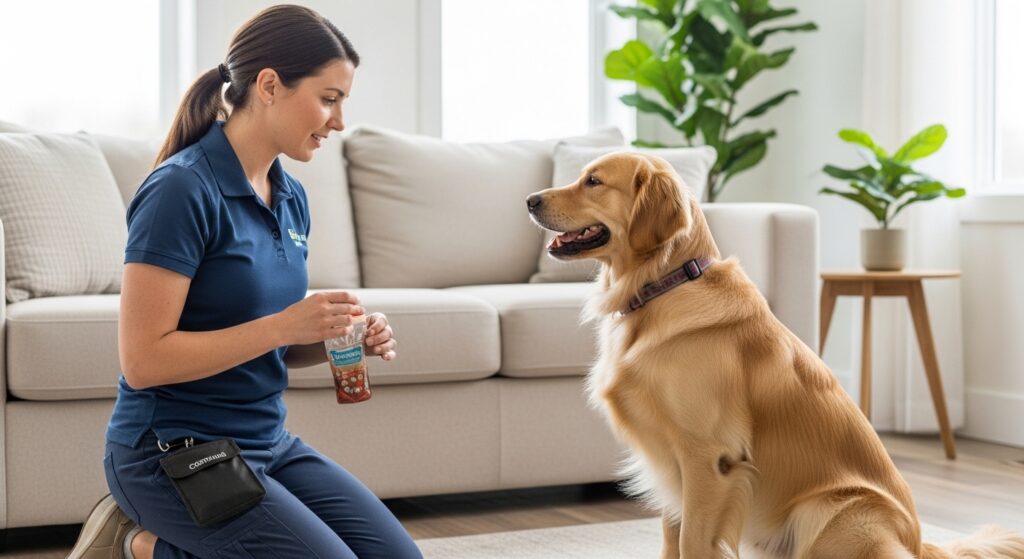
Independence Training
Teaching a dog to be comfortable in a separate room while the owner is home builds independence and self-sufficiency. Simple exercises include:
- “Go to your mat” and rewarding sustained, calm relaxation at a distance
- Closing doors between owner and dog for brief, positive intervals
- Rewarding the dog for choosing to rest away from the owner
Departure Cue Desensitization
Repeatedly performing departure cues (putting on shoes, picking up keys) without actually leaving — dozens of times per day — reduces the emotional charge these stimuli carry. Over time, the cues lose their predictive value and the dog’s anticipatory anxiety diminishes.
The “Boring Goodbye” Method
Dramatic departures and emotional reunions amplify a dog’s perception that the owner’s absence is a significant event. Practicing calm, low-emotion departures and arrivals — ignoring the dog for a few minutes before leaving and upon returning — reduces the emotional amplitude of the separation event.
Medications for Separation Anxiety in Dogs
Medication is not a shortcut, but for moderate-to-severe cases it is often a necessary tool that enables the dog to engage with behavioral training without being overwhelmed by panic.
FDA-Approved Medications
Two medications are FDA-approved specifically for canine separation anxiety:
- Clomicalm (clomipramine) — a tricyclic antidepressant that modulates serotonin and norepinephrine reuptake
- Reconcile (fluoxetine) — an SSRI (selective serotonin reuptake inhibitor) that reduces overall anxiety reactivity
Both require 4–6 weeks to reach therapeutic effect and are most effective when combined with behavioral modification.
Situational Medications
For dogs with predictable, acute anxiety episodes, veterinarians may prescribe:
- Trazodone — a serotonin modulator used for short-term situational anxiety
- Alprazolam (Xanax) — a benzodiazepine for acute panic, used cautiously
- Sileo (dexmedetomidine oromucosal gel) — FDA-approved for noise aversion, sometimes used off-label
Always consult a licensed veterinarian before introducing any pharmacological intervention.
Natural Remedies and Complementary Approaches
Adaptil (Dog Appeasing Pheromone)
Adaptil is a synthetic analogue of the dog appeasing pheromone (DAP) secreted by nursing mothers. Available as a diffuser, collar, or spray, it has been shown in several studies to reduce anxiety-related behaviors, though results are variable. It works best as a complementary tool alongside behavioral modification.
Calming Supplements
Several nutraceuticals show modest evidence for reducing anxiety in dogs:
- L-theanine (found in products like Anxitane) — promotes relaxed alertness
- Alpha-casozepine (milk-derived) — shown to reduce anxiety in some clinical trials
- Melatonin — may support relaxation, particularly in noise-phobic or situationally anxious dogs
- Zylkene (hydrolyzed casein) — a popular supplement with growing evidence
Music Therapy and Auditory Enrichment
Research by Dr. Deborah Wells and the team behind “Through a Dog’s Ear” has demonstrated that species-appropriate music (classical piano at slower tempos) reduces heart rate and behavioral arousal in kenneled dogs. Leaving calming music or a white noise machine playing during absences can meaningfully reduce anxiety.
Pressure Wraps
Products like the Thundershirt apply gentle, constant pressure across the dog’s torso, mimicking the calming effect of swaddling. While not a standalone solution, many owners report noticeable reduction in anxiety-related behaviors, particularly for milder cases.
Creating a Safe Environment for an Anxious Dog
Designing a Comfort Zone
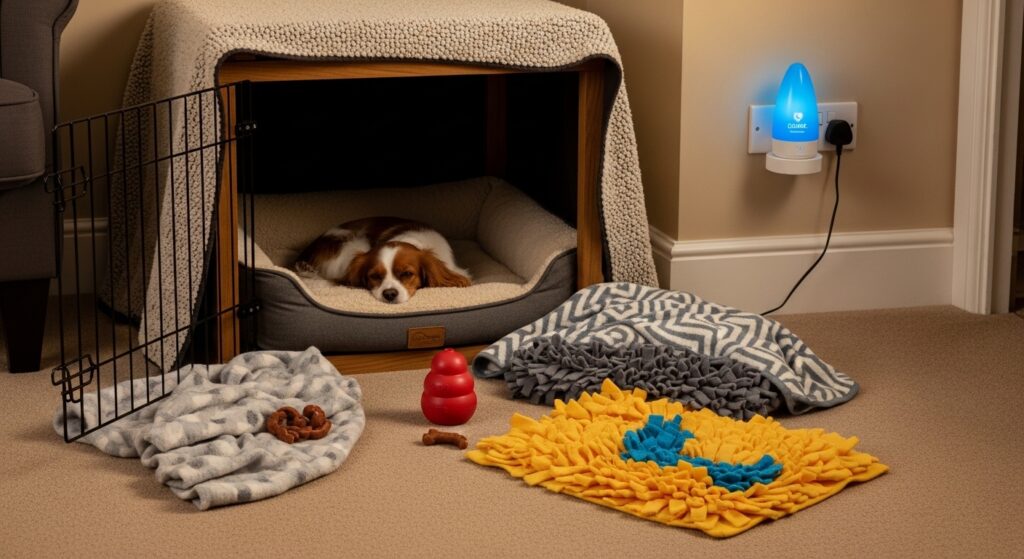
A dog’s resting area should feel genuinely safe — not like a punishment zone. Elements of an effective comfort zone include:
- An item carrying the owner’s scent (unwashed clothing)
- A high-value, long-lasting chew or food puzzle (Kong, snuffle mat, lick mat)
- A covered crate or den-like space if the dog has a positive crate history
- Calming pheromone diffuser nearby
Food Puzzles and Enrichment
Mentally engaging toys serve a dual function: they provide stimulation and create a positive association with owner absence. Frozen Kongs, snuffle mats, and LickiMats can be prepared in batches and given only when the owner leaves, creating a “departure ritual” the dog can look forward to.
Dog Walkers, Daytime Care, and Doggy Daycare
For working owners whose dogs cannot yet tolerate full-day absences, management solutions like dog walkers, pet sitters, and doggy daycare are not permanent fixes but valuable tools that reduce daily suffering while training progresses.
How to Prevent Separation Anxiety in Puppies
Teaching Alone Time Early
The single most important prevention strategy is teaching puppies that being alone is safe and normal from the very first week in the home. This means:
- Not allowing the puppy to follow the owner everywhere constantly
- Practicing brief crate separations from day one
- Building up alone time incrementally during the day
Avoiding Inadvertent Reinforcement of Clinginess
Owners who respond to every whimper, always have the puppy in physical contact, and never allow voluntary separation inadvertently reinforce hyper-attachment. Responding selectively — rewarding calm, settled behavior — builds emotional independence.
Crate Training as a Prevention Tool
A properly introduced crate — associated with meals, treats, and positive experiences before any confinement occurs — gives a puppy a safe personal space they choose voluntarily. Dogs with a positive crate history often experience less severe separation anxiety because they have a pre-built coping mechanism.
Separation Anxiety in Rescue and Adopted Dogs
Rescue dogs face unique challenges. Many have experienced abandonment, multiple re-homings, or shelter stress — all of which prime the stress-response system toward hypervigilance and anxious attachment.
The “Two-Week Shutdown” and Its Limitations
Many rescue organizations recommend a “two-week shutdown” — a period of low stimulation and low demands as the dog settles in. While this approach limits overwhelming the dog, it can inadvertently create hyper-attachment if the new owners maintain constant contact throughout this period. A better strategy is to balance comfort and reassurance with deliberate, gentle alone-time practice from the beginning.
Working With a Rescue Dog’s History
Understanding a rescue dog’s history — even partially — can inform training strategy. A dog with known abandonment trauma may need slower desensitization timelines and more emphasis on building trust before departure training begins.
Living With a Dog That Has Separation Anxiety
Owner Mental Health and Caregiver Burnout
Caring for a dog with severe separation anxiety is emotionally exhausting. Owners often experience guilt, sleep deprivation, social isolation, and relationship strain. Recognizing that caregiver burnout is real and valid — and seeking support through veterinary behaviorists, online communities like Malena DeMartini’s SA Pro community, or therapy — is as important as treating the dog.
Setting Realistic Expectations
Separation anxiety recovery is not linear. Progress often involves setbacks — a sick day with the owner home all day, a vacation, a schedule change — that temporarily reverse gains. Reframing setbacks as data points rather than failures is essential for long-term success.
Tracking Progress
Maintaining a training log with video evidence of absences helps owners and veterinary behaviorists objectively measure improvement, identify sticking points, and adjust protocols accordingly.
When to Seek Professional Help
While mild separation anxiety may respond to owner-led behavioral modification, moderate-to-severe cases require professional intervention. Seek help from a certified veterinary behaviorist (Dip. ACVB) or a certified separation anxiety trainer (CSAT) if:
- Symptoms have persisted for more than 4–6 weeks without improvement
- The dog is injuring itself attempting to escape
- House soiling is occurring consistently
- The dog is unable to tolerate even 30 seconds of separation
- You are experiencing significant caregiver burden
For evidence-based guidance on canine behavioral health, the American College of Veterinary Behaviorists (ACVB) maintains a directory of board-certified specialists.
Frequently Asked Questions
Can separation anxiety be cured?
Many dogs achieve full resolution of separation anxiety with consistent, properly executed behavioral modification, especially when combined with appropriate medication. Others reach a “managed” state in which symptoms are minimal and quality of life is excellent, even if full independence is never achieved. Early intervention dramatically improves prognosis.
Is crating a dog with separation anxiety cruel?
Crating a dog with untreated, severe separation anxiety can be genuinely distressing and even dangerous (self-injury is common). However, for dogs with a positive crate history and mild anxiety, a crate can provide security. The key is that confinement should never be introduced during a state of panic.
How long does it take to treat separation anxiety?
Timeline varies enormously. Mild cases may show significant improvement in 4–8 weeks. Severe cases may require 6–18 months of consistent work. The single biggest predictor of timeline is consistency of training and the owner’s ability to manage alone time during treatment.
Can older dogs develop separation anxiety?
Yes. New-onset separation anxiety in older dogs is common, often linked to cognitive dysfunction, sensory decline (hearing or vision loss), or a significant life change. Senior dogs with new anxiety symptoms should receive a full veterinary workup to rule out underlying medical causes before a behavioral diagnosis is confirmed.
This guide is intended for educational purposes. Always consult a licensed veterinarian or certified veterinary behaviorist for a diagnosis and individualized treatment plan for your dog.