

Summary
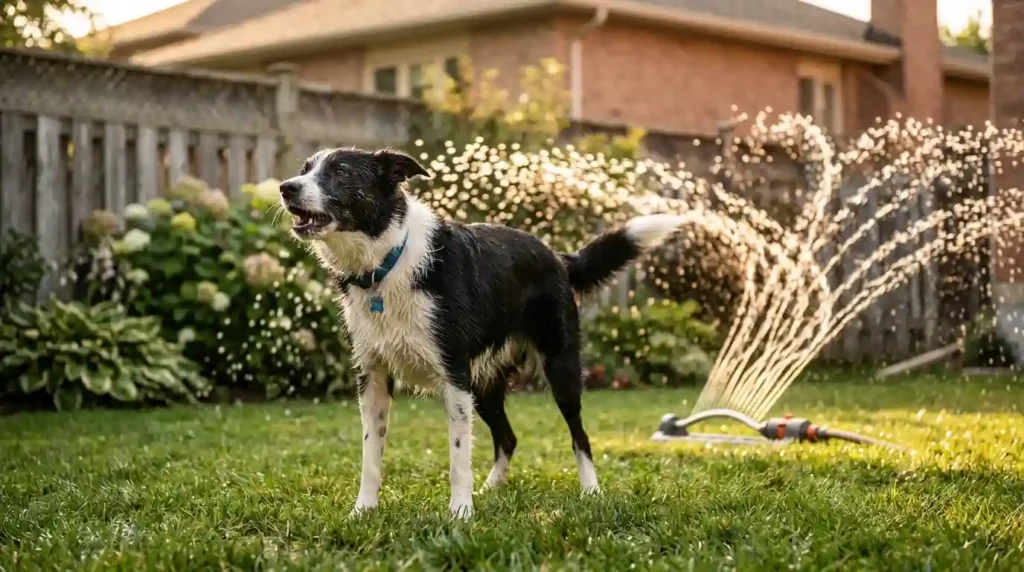
Many pet owners notice their dog barking at sprinklers or running water and wonder why this happens and how to stop it. This behavior usually stems from prey drive, startle response, or excitement triggered by movement and sound. This article explores the root causes, training solutions, and when professional help is needed to manage this common canine quirk.
Table of Contents
- Introduction
- Why Is Your Dog Barking at Sprinklers or Running Water?
- Is It Normal for a Dog to Bark at Running Water?
- Breeds More Prone to This Behavior
- How to Stop Dog Barking at Sprinklers or Running Water
- When to Consult a Professional
- Long-Term Management Tips
- Conclusion
- FAQs
Introduction
If you’ve ever stepped into your backyard during sprinkler season only to find your dog barking, lunging, or chasing the spray with wild enthusiasm, you’re far from alone. This is one of the most commonly reported quirky canine behaviors among dog owners, and it spans breeds, ages, and temperaments. Whether it’s a garden hose, a rotary sprinkler, a dripping faucet, or even a toilet flushing, moving water seems to trigger something deep in a dog’s instinctual wiring.
Understanding why your dog reacts this way is the first step toward managing or correcting the behavior. In this guide, we’ll break down the psychology behind this reaction, explore which breeds are most prone to it, and offer practical, vet-approved training techniques to help your dog stay calm around water features.
Why Is Your Dog Barking at Sprinklers or Running Water?
Prey Drive and Predatory Instincts
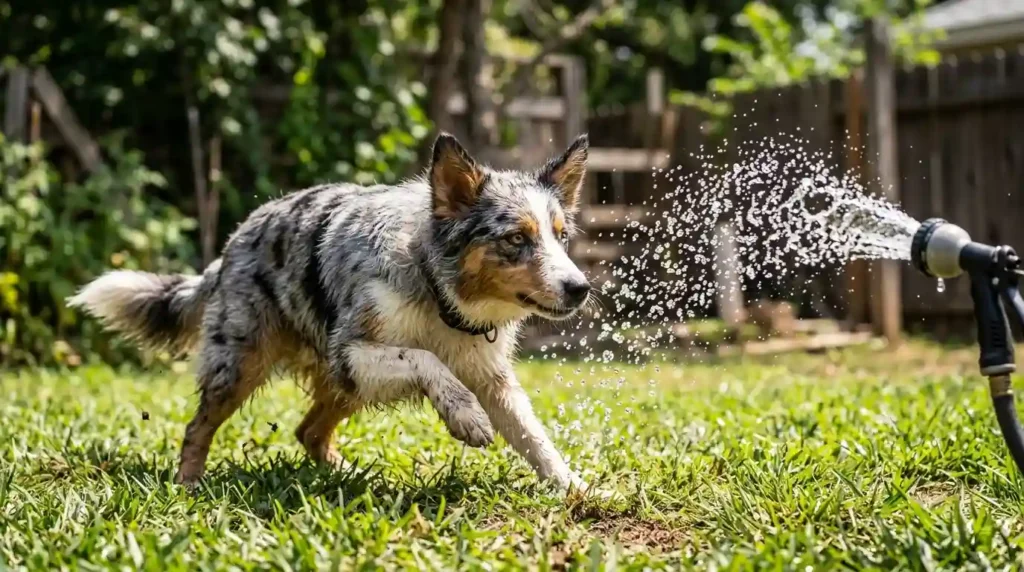
Dogs are descended from wolves, and many retain strong predatory instincts even after generations of domestication. The erratic, unpredictable movement of water spraying from a sprinkler or trickling from a hose mimics the motion of small prey animals like rodents or birds. This visual stimulus can trigger a dog’s chase-and-capture sequence, which includes stalking, barking, lunging, and biting at the water.
This is particularly common in terriers and herding breeds, which were selectively bred over centuries to react quickly to movement.
Sound Sensitivity and Startle Reflex
The hissing, spraying, or rushing sound of water can also be an auditory trigger. Dogs have far more sensitive hearing than humans, and a sudden burst from an automatic sprinkler system can startle them. Barking, in this case, becomes a defensive or alert response rather than playful excitement.
Herding Instincts in Certain Breeds
Herding breeds like Border Collies, Australian Shepherds, and Corgis are wired to control movement. When water sprays in unpredictable directions, these dogs may instinctively try to “herd” or contain it, barking as part of their natural attempt to manage perceived chaos in their environment.
Boredom and Excess Energy
Sometimes the explanation is far simpler: your dog is bored. Chasing and barking at sprinklers can become a self-rewarding game, especially for dogs that don’t get enough physical or mental stimulation throughout the day. The unpredictability of the water keeps them engaged in a way that few stationary toys can match.
Is It Normal for a Dog to Bark at Running Water?
Yes, in most cases, this behavior falls within the range of normal canine instinct and is not inherently a sign of aggression or anxiety. According to the American Kennel Club, herding and chasing behaviors are deeply rooted instincts that, when not given an appropriate outlet, often surface in everyday situations like sprinklers, vacuum cleaners, or even shadows.
However, if the barking is accompanied by signs of distress, such as trembling, hiding, or refusal to go outside, it may indicate fear-based reactivity rather than playful instinct, and should be addressed differently.
Breeds More Prone to This Behavior
While any dog can develop this habit, certain breeds show a higher predisposition due to their genetic background:
- Border Collies and Australian Shepherds – Strong herding instincts make them react to fast, erratic movement.
- Terriers (Jack Russell, Rat Terrier) – High prey drive originally bred for hunting small animals.
- Labrador Retrievers and Golden Retrievers – Water-loving breeds that often associate running water with play.
- Dalmatians and Australian Cattle Dogs – High energy levels combined with herding tendencies.
If your dog falls into one of these categories, this reaction is likely instinctual rather than behavioral dysfunction.
How to Stop Dog Barking at Sprinklers or Running Water
Desensitization Techniques
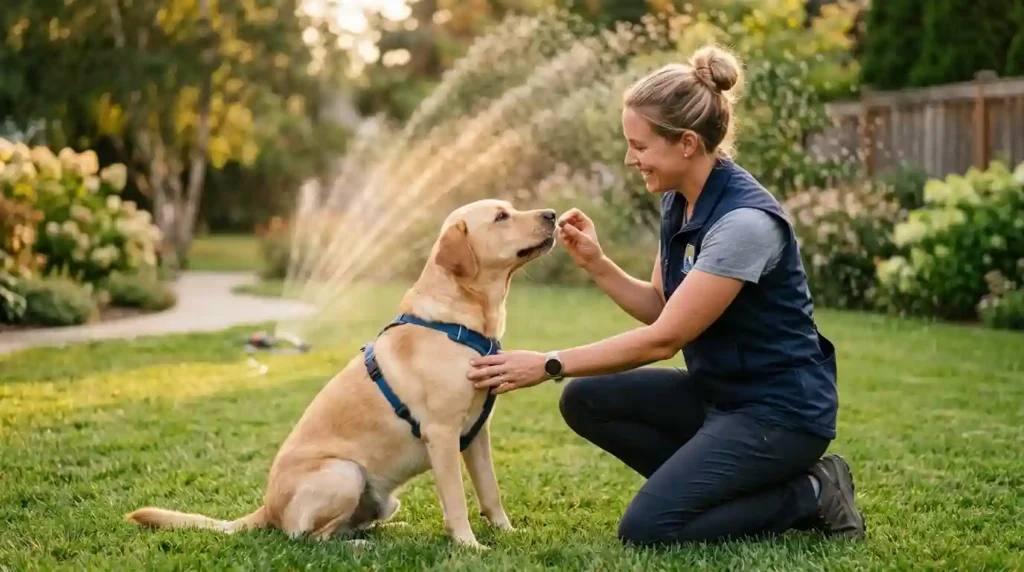
Desensitization involves gradually exposing your dog to the trigger at a low intensity and slowly increasing exposure as they remain calm. Start by turning the sprinkler on at a distance where your dog notices it but doesn’t react intensely. Reward calm behavior with treats, and gradually decrease the distance over several sessions.
Counter-Conditioning with Positive Reinforcement
Pair the sound or sight of water with something positive, like high-value treats or a favorite toy. Over time, your dog begins to associate running water with calm, rewarding experiences rather than excitement or threat. Consistency is key, and sessions should remain short to avoid overstimulation.
Redirecting Attention
Teaching your dog to focus on you instead of the water trigger is a powerful tool. Commands like “sit,” “stay,” or “watch me” can interrupt the barking cycle. If your dog struggles with excessive barking in general, not just around water, our guide on Teach a Dog the “Quiet” Command in 7 Days offers a structured, easy-to-follow training plan that complements this approach well.
Managing the Environment
In some cases, the simplest solution is environmental management. Adjusting sprinkler timers to run when your dog is indoors, using soaker hoses instead of spray sprinklers, or supervising outdoor time during watering schedules can prevent the behavior from being reinforced repeatedly.
When to Consult a Professional
If the barking is accompanied by aggressive behavior, excessive anxiety, or if training attempts at home haven’t shown improvement after several weeks, consulting a certified dog behaviorist or veterinarian is recommended. Persistent reactivity could be linked to underlying anxiety disorders or compulsive behavior patterns that require a tailored intervention plan.
The American Veterinary Society of Animal Behavior is one such authoritative resource for finding qualified veterinary behaviorists.
Long-Term Management Tips
- Increase daily physical exercise to reduce excess energy.
- Introduce puzzle toys or scent games for mental stimulation.
- Maintain consistent training routines rather than occasional corrections.
- Avoid punishment-based methods, as they can increase anxiety and worsen reactivity.
- Celebrate small wins, like a few seconds of calm behavior near water.
Conclusion
Dog barking at sprinklers or running water is a common and largely instinctual behavior rooted in prey drive, herding tendencies, or simple excitement. While it’s rarely a cause for serious concern, understanding the root trigger helps owners apply the right training approach, whether that’s desensitization, counter-conditioning, or redirection. With patience, consistency, and the right resources, most dogs can learn to remain calm around water features, allowing both pet and owner to enjoy a peaceful backyard.
FAQs
1. Why does my dog bark and chase the sprinkler every time it turns on?
This is usually driven by prey drive or herding instinct, where the erratic movement of water mimics small prey or something that needs to be controlled.
2. Is barking at water a sign of aggression?
Not typically. It’s more often playful or instinct-driven excitement rather than true aggression, unless paired with growling, stiff body language, or guarding behavior.
3. Can puppies outgrow this behavior?
Some puppies may grow out of it as they mature, but many dogs need structured training to fully stop the behavior, especially high-drive breeds.
4. Should I let my dog play in the sprinkler if they enjoy it?
If the behavior is purely playful and not anxiety or aggression-based, supervised sprinkler play can be a fun, safe outlet for energy.
5. How long does training take to stop this behavior?
With consistent desensitization and counter-conditioning, most dogs show noticeable improvement within 2 to 6 weeks, though timelines vary by individual dog.
Also, Check out the Article “Teach a Dog the “Quiet” Command in 7 Days“.