

Summary
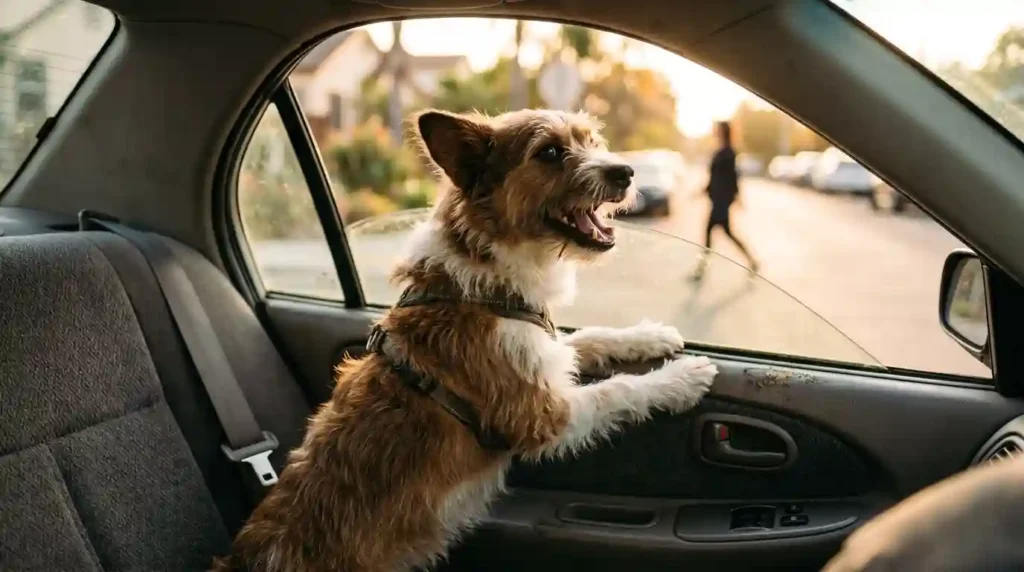
If your dog turns into a furious, lunging alarm system every time a stranger walks past your parked vehicle, you’re dealing with one of the most common car-related behavior complaints pet parents bring to trainers: dog barking at people outside the car window. This reaction usually isn’t random — it’s a predictable mix of territorial instinct, fear, frustration, and excitement that builds inside the confined space of a car. The good news is that this behavior is highly responsive to training. This guide breaks down exactly why it happens, what’s going on in your dog’s brain, the most common real-world triggers, and a practical, step-by-step plan — backed by force-free training principles — to help your dog stay calm the next time someone walks by the car.
Table of Contents
- Why Is My Dog Barking at People Outside the Car Window?
- The Science Behind Car Window Barking
- Common Triggers That Set Off Car Window Barking
- How to Stop Dog Barking at People Outside the Car Window: Step-by-Step Training
- Tools and Products That Can Help Reduce Window Barking
- When to Seek Professional Help
- Preventing Car Window Barking in Puppies and New Dogs
Why Is My Dog Barking at People Outside the Car Window?
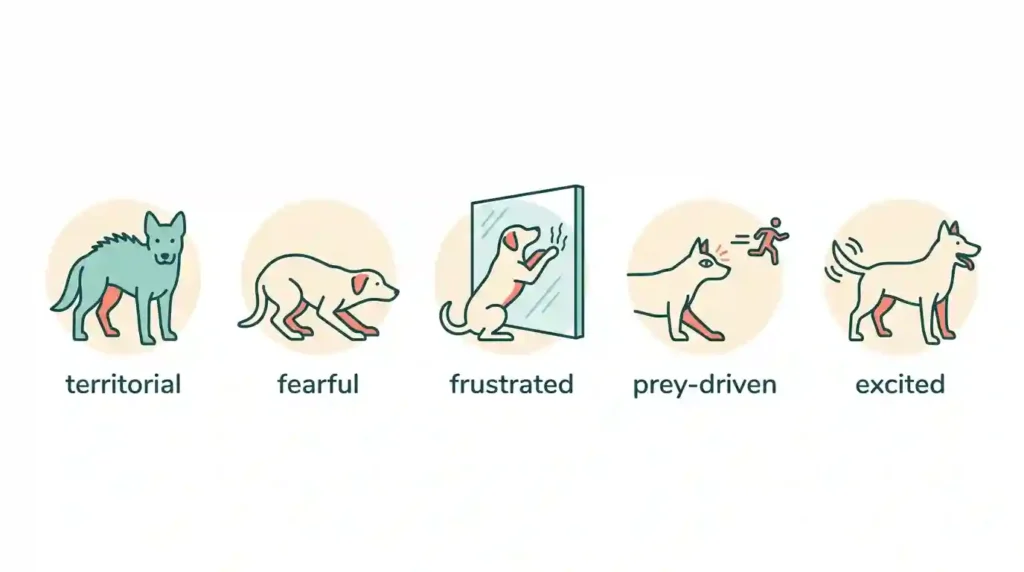
Most dogs aren’t barking “for no reason.” Barking is a form of canine communication, and when it’s aimed at people outside the car window, it almost always falls into one of a handful of well-documented behavioral categories. According to the ASPCA’s guide to canine barking behavior, each type of bark serves a distinct purpose, and identifying the underlying motivation is the first step toward correcting it. A car simply concentrates several of these triggers — confinement, visual stimulation, and unpredictable strangers — into one small space.
Territorial Instinct and the “Mobile Den” Effect
Dogs are naturally territorial animals, and many treat the car the same way they treat the house: as an extension of their den. When a pedestrian, jogger, or cyclist passes close to the vehicle, the dog perceives it as an intruder approaching home turf. This is called territorial barking, and it’s reinforced every time the “intruder” eventually walks away — the dog’s brain registers the barking as having successfully driven the threat off, even though the person was simply walking down the sidewalk.
Fear, Anxiety, and Past Negative Experiences
Some dogs bark out of genuine fear rather than confidence. A dog that had a frightening experience near a car — a loud noise, a near-miss with a stranger reaching toward the window, or simply limited early socialization — may associate the car window with vulnerability. Fear-based barking is often accompanied by other stress signals like a tucked tail, pinned ears, whale eye (showing the whites of the eyes), or pacing on the seat.
Frustration and Barrier Reactivity
This is one of the most common explanations for car window barking. A dog that would happily greet a stranger off-leash and out of the car may become reactive the moment a physical barrier — the window glass or door — prevents them from approaching. This is known as barrier frustration or barrier reactivity, and it’s the same mechanism behind fence-running and leash reactivity at the front gate.
Prey Drive and Predatory Chase Instinct
Movement is a powerful trigger for dogs with strong prey drive. A person jogging, a cyclist, a skateboarder, or even a person pushing a stroller can activate the predatory motor pattern — the instinctive sequence of orient, stalk, chase — that’s hardwired into most dogs regardless of breed. Since the dog can’t act on the chase impulse inside the car, the energy is released as barking and lunging at the glass.
Excitement, Overstimulation, and Attention-Seeking
Not every car window bark is negative. Some dogs are simply overstimulated by the sights and sounds of a parking lot or busy street and bark out of excitement, the same way they might bark when greeting a beloved family member. This greeting-style barking tends to come with loose, wiggly body language, tail wagging, and a higher-pitched bark rather than a deep, sustained one.
The Science Behind Car Window Barking
Understanding what’s happening physiologically and psychologically inside your dog helps explain why simply yelling “quiet” rarely works — and sometimes makes things worse.
Stress Hormones and the Fight-or-Flight Response
When a dog perceives a threat — real or imagined — the body releases cortisol and adrenaline, the same stress hormones involved in the fight-or-flight response in humans. This hormonal surge increases heart rate, narrows focus, and primes the muscles for action. Because the dog is physically trapped in the car, the “flight” option is unavailable, so the nervous system defaults to “fight,” which often manifests as barking and lunging at the window.
Classical Conditioning: How Cars Become “Trigger Zones”
Every time a dog barks at a passerby and that person eventually moves on, the dog’s brain forms an association: bark equals the scary or exciting thing goes away. Over repeated exposures, this becomes a deeply ingrained classical conditioning loop. The car itself — the engine sound, the seatbelt click, even the parking lot smell — can become a conditioned cue that primes the dog’s arousal level before a single person has even walked by.
Common Triggers That Set Off Car Window Barking
Identifying your dog’s specific triggers makes training far more targeted and effective than generic “stop barking” advice.
Strangers Walking Close to the Vehicle
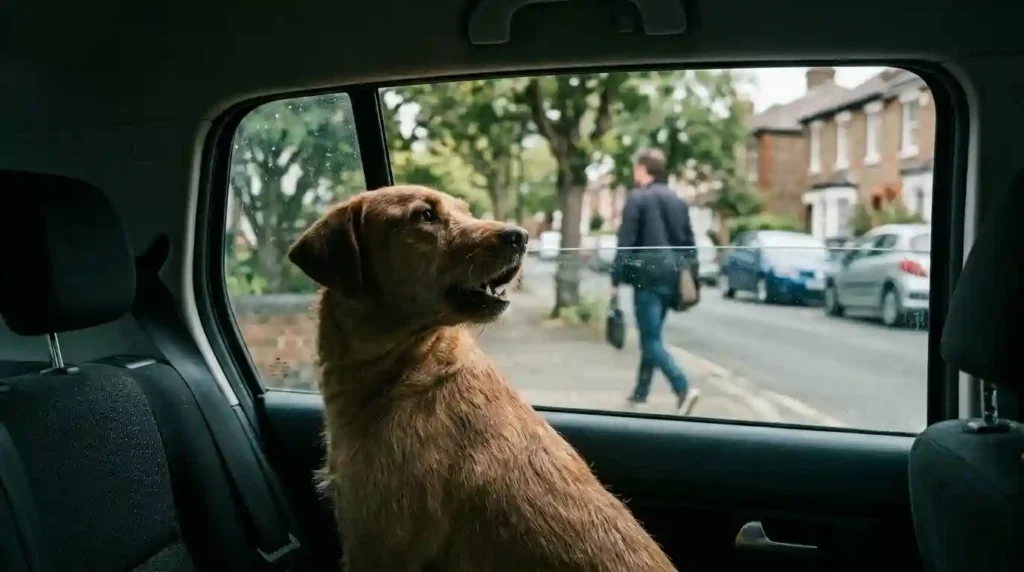
Proximity matters enormously. A dog might stay relatively calm watching someone fifty feet away but erupt the instant a pedestrian walks within a few feet of the door. This distance is often called the “threshold distance,” and it’s a key variable trainers use when designing a desensitization plan.
Other Dogs and Animals Outside
Dogs walking past with their owners, squirrels darting across a parking lot, or even birds landing nearby can trigger the same barrier-frustration and prey-drive responses described earlier, often layered on top of the reaction to a human pedestrian.
Sounds, Movement, and Visual Stimuli
Sudden movement and unfamiliar sounds are some of the strongest barking triggers because dogs are wired to react to motion before they consciously process what’s causing it. This is the same underlying mechanism behind dogs that react explosively to fast, erratic, unpredictable movement in other contexts. If your dog also tenses up or lunges at backyard irrigation, our companion guide on Dog Barking at Sprinklers or Running Water explains why sudden bursts of movement and sound trigger this exact startle-and-chase reflex, and how the same desensitization principles used for car window barking apply there too.
How to Stop Dog Barking at People Outside the Car Window: Step-by-Step Training
The most reliable, long-term fixes use force-free, positive reinforcement methods recommended by certified professional dog trainers (CPDT-KA) and veterinary behaviorists rather than punishment-based corrections, which can increase fear and worsen reactivity over time.
Step 1: Manage the Environment First
Before training begins, reduce the number of times your dog rehearses the unwanted behavior. Park farther from foot traffic when possible, crack the windows only partially, or use a sunshade to limit visual access to passersby. Management doesn’t fix the underlying issue, but it stops the behavior from being practiced and reinforced while you work on the real training.
Step 2: Desensitization and Counterconditioning
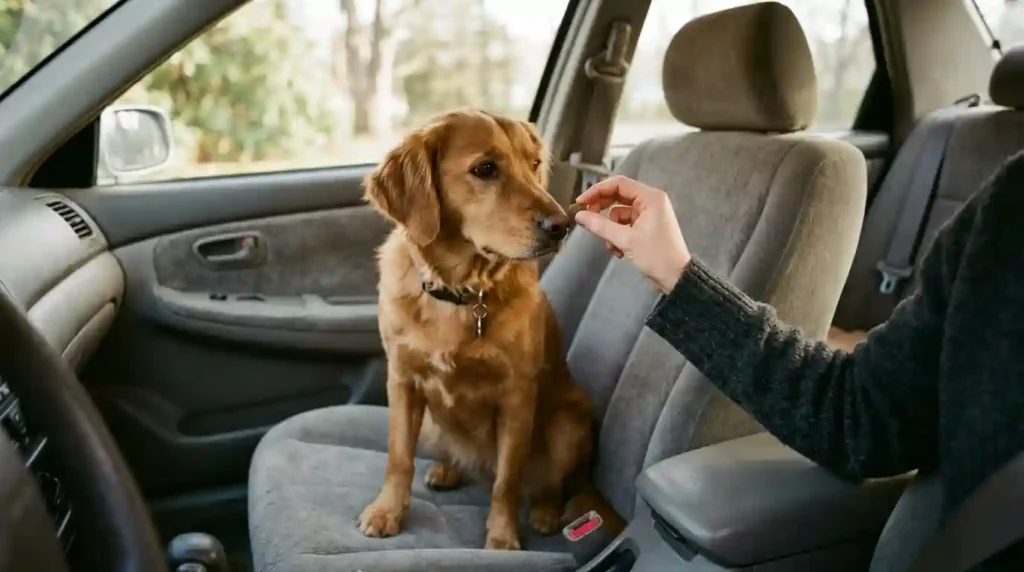
This is the gold-standard behavior modification technique for fear- and frustration-based reactivity. Start with your dog far enough from foot traffic that they notice a person, but stay under their barking threshold. Pair the sight of a person with high-value treats, repeating this until your dog starts looking at you in anticipation of a reward instead of fixating on the person. Gradually decrease the distance over many short sessions, never rushing the process.
Step 3: Teach an Incompatible Behavior
Train a “look at that” cue or a settle-on-mat behavior that your dog can perform instead of barking. Because a dog physically cannot bark and calmly hold eye contact with you (or rest quietly) at the same time, this incompatible-behavior approach gives the dog a clear, rewarding job to do whenever a trigger appears.
Step 4: Use Tools and Products Wisely
Visual barriers, calming aids, and proper restraint equipment (covered in detail in the next section) can meaningfully support training, especially in the early stages when full desensitization isn’t yet realistic for every car ride.
Step 5: Practice Consistency and Patience
Behavior change rooted in emotion — fear, frustration, or arousal — takes weeks to months of consistent, short, well-managed sessions. Avoid flooding your dog with overwhelming exposure, and celebrate small wins like a shorter bark burst or faster recovery time.
Tools and Products That Can Help Reduce Window Barking
While no product replaces training, the right tools can lower your dog’s baseline arousal and make training sessions far more manageable.
Window Film and Privacy Shades
Static-cling window film, mesh screens, or fabric sunshades reduce the visual triggers that set off barking without fully blocking airflow or your dog’s view of you. These are especially useful for dogs that are overstimulated by constant visual movement rather than specific sounds.
Calming Aids and Anxiety Wraps
Pheromone-based calming sprays, pressure wraps such as a Thundershirt, and white noise or calming music designed for dogs can lower baseline anxiety, particularly for dogs whose barking stems from fear rather than excitement or territorial instinct. These should be used alongside, not instead of, behavior training.
Crates and Travel Carriers
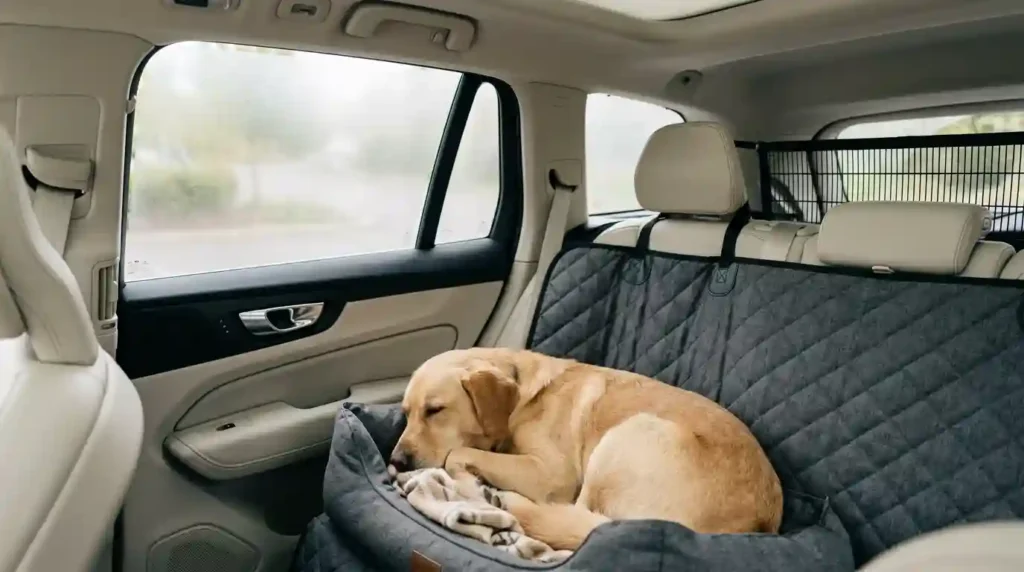
For some dogs, a covered travel crate secured in the car reduces visual access to triggers entirely and creates a den-like sense of security. This can be especially helpful for puppies, fearful dogs, or dogs still early in the desensitization process.
When to Seek Professional Help
Signs Your Dog Needs a Certified Trainer or Behaviorist
If barking is accompanied by growling, snapping at the glass, an inability to settle even after the trigger has passed, or visible signs of extreme distress such as excessive drooling or trembling, it’s time to bring in a certified professional dog trainer or a veterinary behaviorist. These professionals can design an individualized desensitization plan and rule out more serious underlying anxiety disorders.
Ruling Out Medical Causes
Sudden-onset barking, especially in an older dog who previously tolerated car rides well, can occasionally signal pain, vision or hearing changes, or cognitive decline. A veterinary check-up is a reasonable first step whenever a long-standing behavior pattern changes abruptly.
Preventing Car Window Barking in Puppies and New Dogs
Early Socialization
Puppies exposed gradually and positively to car rides, parking lots, and passing pedestrians during their primary socialization window (roughly three to fourteen weeks of age) are far less likely to develop window-barking habits later in life.
Building Positive Car Associations from Day One
Make early car rides short, low-pressure, and full of positive associations — treats, calm praise, and rides to enjoyable destinations rather than only stressful trips to the vet. This builds a foundation where the car itself signals safety rather than alertness.
Conclusion
Dog barking at people outside the car window is a behavior rooted in instinct, emotion, and learned habit rather than disobedience, which is exactly why punishment-based corrections so often backfire. By identifying whether your dog’s reaction stems from territorial instinct, fear, frustration, prey drive, or simple excitement, you can apply the right combination of management, desensitization, counterconditioning, and supportive tools. With consistent, patient training — and professional support when needed — most dogs can learn to relax and watch the world go by from the car window without sounding the alarm every time.
FAQs
Why does my dog only bark at people from the car, not on walks?
The confined space of a car amplifies barrier frustration and removes the dog’s ability to flee or properly investigate, which often intensifies reactions that wouldn’t occur in open, unrestricted settings like a walk.
Is it normal for dogs to bark at strangers near the car?
Yes, it’s a common behavior rooted in territorial instinct and barrier frustration, but frequent or intense barking is very treatable with consistent desensitization and counterconditioning training.
Should I let my dog bark it out until the person passes?
No. Letting the behavior continue unaddressed reinforces the cycle, since the dog learns that barking “successfully” makes the trigger go away. Early intervention and training produce far better long-term results.
Will rolling up the windows completely stop the barking?
It may reduce sound-based triggers slightly, but most dogs will still react to visual movement through the glass, so window film, distance management, and training remain more effective long-term solutions.
Can anti-bark collars fix this behavior?
Most veterinary behaviorists and organizations like the ASPCA recommend trying positive, force-free behavior modification first, since aversive tools can increase underlying fear or frustration without addressing the root cause.
How long does it take to stop a dog from barking at the car window?
Timelines vary widely depending on the dog’s history and the intensity of the reaction, but most dogs show noticeable improvement within four to eight weeks of consistent, short daily desensitization sessions.