


Summary
Excessive barking is one of the most common behavioral complaints among dog owners, and learning how to teach a dog the quiet command can transform a noisy household into a peaceful one within just a week. This guide breaks down a structured, day-by-day training plan rooted in positive reinforcement, operant conditioning, and consistency, using techniques recommended by certified dog trainers and veterinary behaviorists. Whether your dog barks at strangers, other animals, or random noises, this article Teach Dog the Quiet Command in 7 Days walks you through impulse control exercises, verbal cues, hand signals, and reward-based methods that build a reliable “quiet” response. By the end of this 7-day plan, you’ll have practical tools to manage nuisance barking, strengthen your bond with your dog, and create a calmer home environment for everyone.
Table of Contents
- Why Dogs Bark: Understanding the Root Cause
- Essential Tools and Setup Before You Begin
- Day 1–2: Teaching the “Speak” and “Quiet” Foundation
- Day 3–4: Reinforcing Quiet Behavior Around Triggers
- Day 5–6: Practicing in Real-Life Distracting Situations
- Day 7: Testing Reliability and Long-Term Maintenance
- How to Teach a Dog the Quiet Command Without Punishment
- Common Mistakes Pet Owners Make When They Teach Their Dog the Quiet Command
- When to Seek Professional Help
- Conclusion
- FAQs
Why Dogs Bark: Understanding the Root Cause
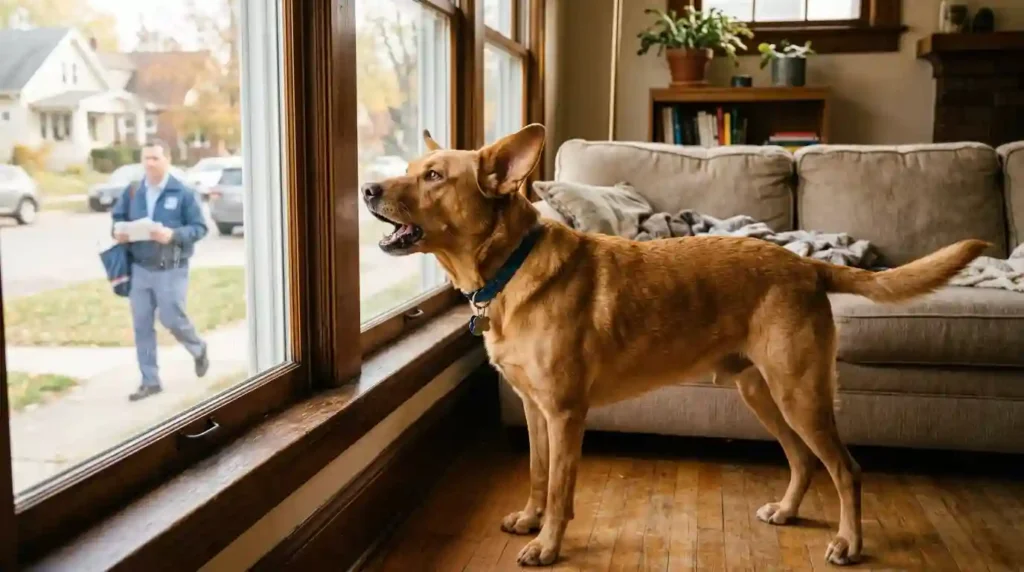
Before you can successfully teach a dog the quiet command, it’s essential to understand why dogs vocalize in the first place. Barking is a natural form of canine communication, and according to the American Kennel Club, dogs bark for reasons ranging from territorial alerting, fear, boredom, separation anxiety, attention-seeking, and excitement, to even genetic predisposition in certain breeds like Beagles or Shelties. Treating barking as a behavior to be eliminated entirely is unrealistic and unfair to the dog; instead, the goal is teaching impulse control so your dog learns when barking is appropriate and when it should stop on cue.
Identifying your dog’s specific bark triggers, such as doorbells, passing cars, other animals, or being left alone, is the first diagnostic step. Many owners write in describing scenarios like “my dog barks every time I cook,” which is often rooted in anticipation, excitement, or resource guarding around food preparation. If this sounds familiar, our related guide on My Dog Bark Every Time I Cook dives deeper into kitchen-specific triggers and solutions that pair well with the quiet command training outlined here.
Essential Tools and Setup Before You Begin
Successful training relies on preparation. Before starting the 7-day plan, gather the following:
- High-value treats (small, soft, and easy to chew quickly — think freeze-dried liver or boiled chicken)
- A treat pouch for quick access during real-time training
- A clicker (optional, but useful for marker-based training)
- A consistent verbal cue word, such as “quiet,” “enough,” or “settle”
- A calm, distraction-controlled environment for initial sessions
- Patience and a flexible daily schedule (10–15 minutes per session is sufficient)
Consistency in word choice and tone matters significantly. Dogs respond to consistent auditory and visual patterns, so the entire household should agree on one cue word and one hand signal (commonly, a flat palm raised near the chest, similar to a “stop” gesture) to avoid confusing the dog with mixed signals.
Why a 7-Day Structure Works
A condensed, focused training week leverages the principles of spaced repetition and behavioral conditioning. Short, daily sessions prevent overtraining and frustration while reinforcing neural pathways associated with the desired behavior. This mirrors methodologies used in clicker training and positive reinforcement protocols endorsed by certified professional dog trainers (CPDT-KA)
Day 1–2: Teaching the “Speak” and “Quiet” Foundation
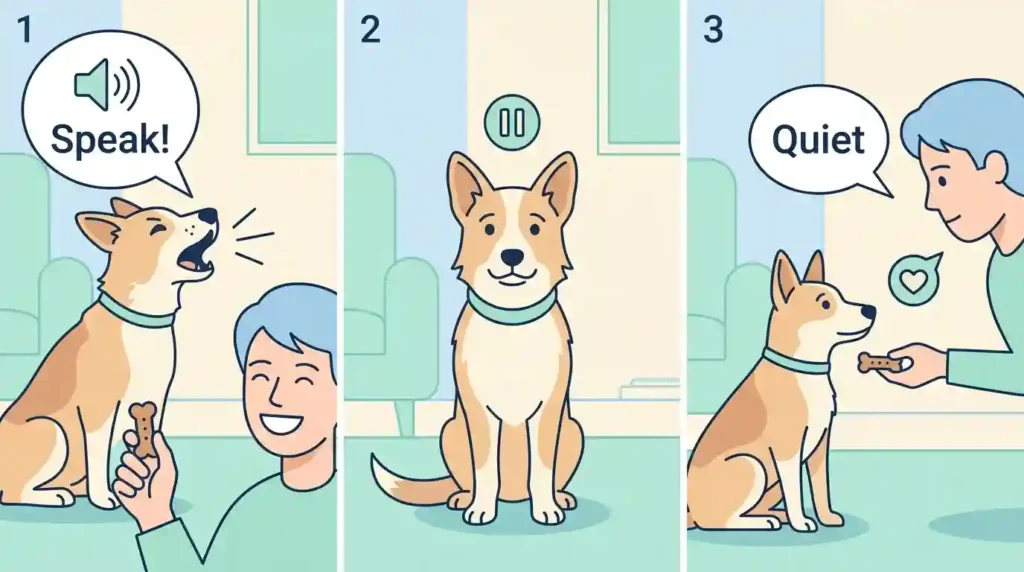
Counterintuitively, the most effective way to teach a dog the quiet command is to first teach the “speak” command. This gives you control over the barking behavior itself, allowing you to put it on cue before teaching the off-switch.
Step-by-step process:
- Trigger a natural bark (doorbell sound, knocking, or a toy squeak).
- The moment your dog barks, say “speak” and reward immediately with a treat.
- Repeat 5–10 times until your dog associates the word “speak” with barking on command.
- Once “speak” is reliable, wait for a natural pause in barking (even a one-second pause counts).
- The instant silence occurs, say “quiet” in a calm, firm tone and reward generously.
This technique works because it rewards the absence of barking rather than punishing the presence of it, which aligns with reward-based training philosophy used by behaviorists at organizations like the ASPCA.
Day 3–4: Reinforcing Quiet Behavior Around Triggers
By day three, your dog should understand the basic word association. Now it’s time to introduce mild distractions to test and reinforce the behavior under slightly more realistic conditions.
Building Duration Before Reward
Instead of rewarding the very first second of silence, begin extending the duration: wait two seconds, then three, then five, before delivering the treat. This builds what trainers call “duration tolerance,” teaching your dog that quiet behavior must be sustained, not just momentary.
Introducing Low-Level Triggers
Use a recorded doorbell sound at low volume, a knock on a nearby wall, or a family member walking past a window. When your dog barks, give the cue calmly: “Quiet.” The moment they stop, reward immediately. Avoid yelling, as raising your voice can be misinterpreted as joining in the barking, which reinforces the very behavior you’re trying to eliminate.
Pairing with a Hand Signal
Introduce the flat-palm hand signal alongside the verbal cue. Dogs are highly attuned to visual cues, and pairing both modalities increases command reliability, especially useful in noisy environments where verbal cues might be harder to hear.

Day 5–6: Practicing in Real-Life Distracting Situations
This phase moves training out of the controlled environment and into real-world scenarios where barking typically occurs.
Practicing at the Front Door
Have a friend or family member ring the doorbell or knock while you practice the quiet command in real time. This is one of the most common bark triggers and directly applies the skills learned in earlier sessions.
Practicing During Mealtime or Cooking
Many dogs bark excitedly when food preparation begins, anticipating scraps or mealtime. If your dog barks every time you’re in the kitchen, this is a perfect opportunity to practice the quiet command in a high-motivation context. For a deeper breakdown of this specific scenario, the article My Dog Bark Every Time I Cook offers targeted strategies that complement this training plan.
Practicing Outdoors
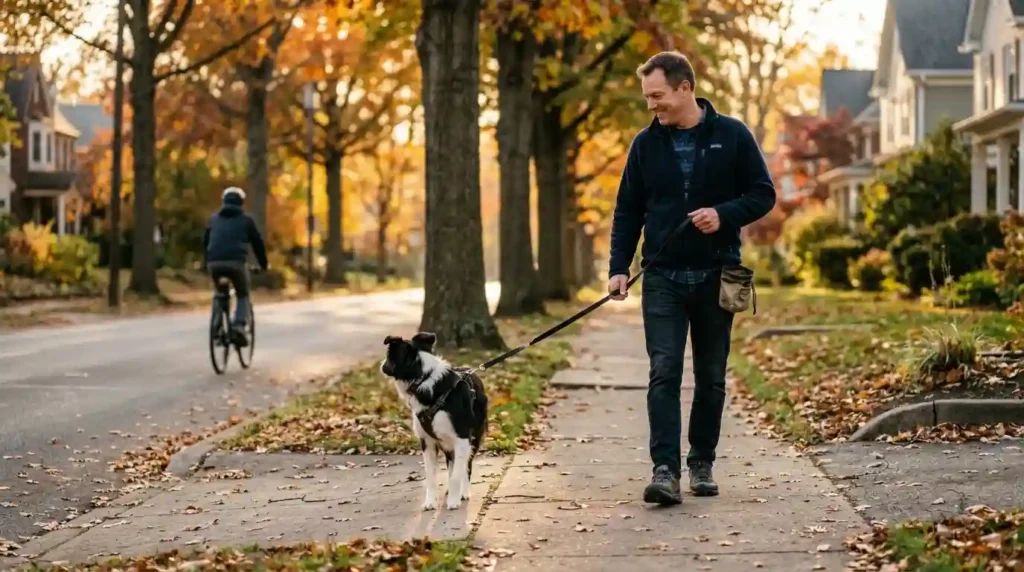
Take your dog for a short walk in a moderately busy area (not overly stimulating) and practice the cue when they react to passing dogs, cyclists, or pedestrians. Outdoor environments introduce more variables, including scent distractions and unpredictable movement, making this a critical generalization step.
Day 7: Testing Reliability and Long-Term Maintenance
The final day focuses on testing whether the command holds up without constant treat reinforcement and establishing a maintenance routine.
The “Three Successes in a Row” Test
Test the quiet command across three different trigger scenarios (doorbell, kitchen, outdoor distraction). If your dog responds correctly to all three with minimal prompting, the command can be considered reliably learned, though ongoing reinforcement remains important.
Transitioning Away from Constant Treats
Begin using intermittent reinforcement, rewarding every second or third successful response rather than every single one. This mirrors variable-ratio reinforcement schedules, which research in behavioral psychology shows create more durable, long-lasting habits than constant reward schedules.
Maintaining the Behavior Long-Term
Continue practicing the cue a few times weekly, even after the initial week concludes. Behaviors that aren’t periodically reinforced can weaken over time, a phenomenon trainers refer to as “extinction.”
How to Teach a Dog the Quiet Command Without Punishment
A critical aspect of how to teach a dog the quiet command effectively is avoiding punishment-based methods such as shock collars, spray bottles, or yelling. According to veterinary behaviorists cited by the American Veterinary Society of Animal Behavior, aversive methods can increase anxiety, suppress communication rather than resolve the underlying cause, and damage the trust between dog and owner. Positive reinforcement remains the gold standard because it addresses the emotional root of barking while building a cooperative relationship.
Why Positive Reinforcement Outlasts Punishment
Dogs trained using reward-based methods show better long-term retention of commands and reduced fear-based behaviors compared to dogs trained with corrective tools. This is well-documented in canine behavioral studies and is echoed by organizations like the American Kennel Club, which emphasizes reward-based bark management as the most sustainable approach for pet owners.
Common Mistakes Pet Owners Make When They Teach Their Dog the Quiet Command
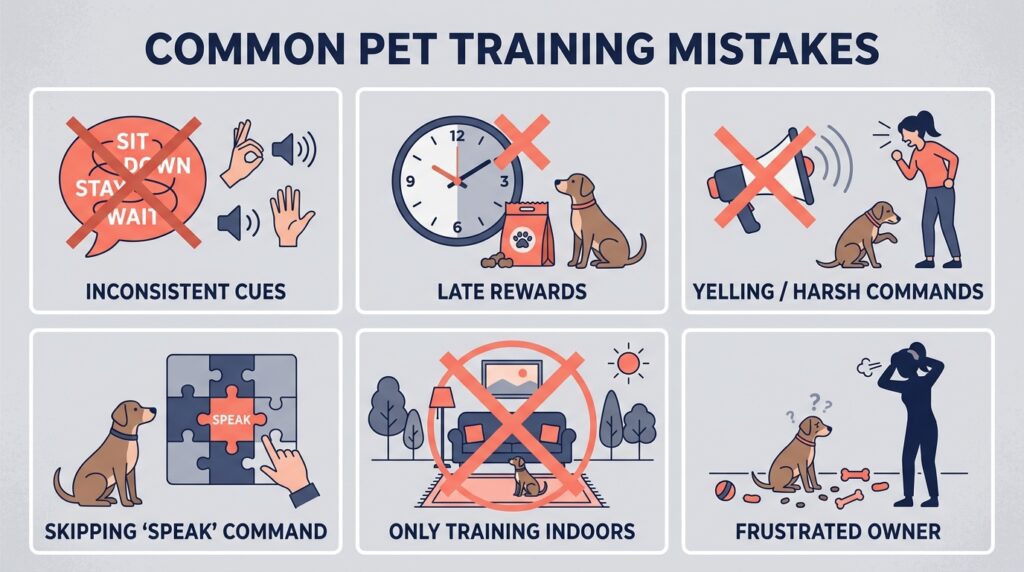
Even well-intentioned owners can sabotage progress. Watch for these pitfalls:
Inconsistent cue words. Switching between “quiet,” “stop,” and “enough” confuses your dog and slows learning.
Rewarding is too late. Treats delivered more than 2–3 seconds after the desired silence lose their association with the behavior.
Yelling over barking. This often escalates barking rather than reducing it, since dogs may perceive raised voices as joining in.
Skipping the “speak” foundation. Without first putting barking on cue, it’s harder to control when and how the quiet command is taught.
Training only in calm environments. Failing to generalize the command across real-world distractions means the behavior won’t hold up when it matters most.
When to Seek Professional Help
If barking persists despite consistent training or stems from separation anxiety, compulsive behavior, or aggression, consulting a certified professional dog trainer or veterinary behaviorist is recommended. Persistent excessive barking can sometimes indicate underlying medical issues, including pain or cognitive decline in senior dogs, which a veterinarian should rule out before behavioral training continues.
Conclusion
Learning how to teach a dog the quiet command in 7 days is entirely achievable with consistency, patience, and the right reward-based techniques. By starting with foundational “speak” and “quiet” associations, gradually introducing real-world distractions, and avoiding common training pitfalls like inconsistent cues or punishment-based corrections, most dogs can develop a reliable quiet response within a week. Remember that ongoing reinforcement and patience are key to maintaining this behavior long-term, and specific triggers like kitchen excitement deserve targeted attention using resources like the guide on dogs barking during cooking. With dedication, your home can become a calmer, quieter space for both you and your dog.
FAQs
Q1: How long does it realistically take to teach a dog the quiet command? While many dogs show noticeable improvement within 7 days using consistent daily training, full reliability across all environments can take 2–4 weeks, depending on the dog’s age, breed, and prior reinforcement history.
Q2: What’s the best treat to use when teaching the quiet command? Small, soft, high-value treats that can be consumed quickly work best, such as boiled chicken, freeze-dried liver, or commercial training treats, since they minimize disruption to the training flow.
Q3: Can older dogs learn the quiet command as easily as puppies? Yes, dogs of any age can learn this command, though older dogs with long-established barking habits may require slightly longer training periods and extra patience.
Q4: Is it okay to use a clicker instead of a verbal cue? Absolutely. Clicker training can be paired with or used instead of verbal cues, as it provides a precise, consistent marker for the exact moment of desired behavior.
Q5: My dog barks specifically when I’m cooking. Does this training method still apply? Yes, kitchen-related barking responds well to this same method, though it often requires additional context-specific strategies. For more targeted advice, refer to the dedicated guide linked above for cooking-related barking triggers.
Q6: What if my dog stops responding to the quiet command after a few weeks? This usually indicates the behavior wasn’t sufficiently reinforced long-term. Reintroducing short refresher sessions a few times weekly typically restores reliability.