

Summary
If your dog bark at empty corners of the room, it can feel strange, confusing, and even a little scary. However, most of the time, your dog is not barking at “nothing.” Dogs hear, smell, and notice things humans often miss. A corner may have hidden sounds, tiny insects, old scent trails, shadows, reflections, drafts, or even signs of anxiety, boredom, or age-related confusion. Understanding the real reason behind this behavior helps you respond calmly instead of punishing your dog or assuming the worst.
Table of Contents
- Why Does My Dog Bark at Empty Corners of the Room?
- Is It Normal When a Dog Bark at Empty Corners of the Room?
- Dogs Can Hear Things Humans Cannot
- Your Dog May Smell Something in the Corner
- Shadows, Reflections, and Light Can Trigger Barking
- Hidden Pests May Be Behind the Wall
- Anxiety and Stress Can Make Dogs Bark at Corners
- Senior Dogs and Cognitive Changes
- Attention-Seeking and Learned Barking Behavior
- How to Respond When Your Dog Barks at an Empty Corner
- When Should You Contact a Vet?
- Conclusion
- FAQs
Why Does My Dog Bark at Empty Corners of the Room?
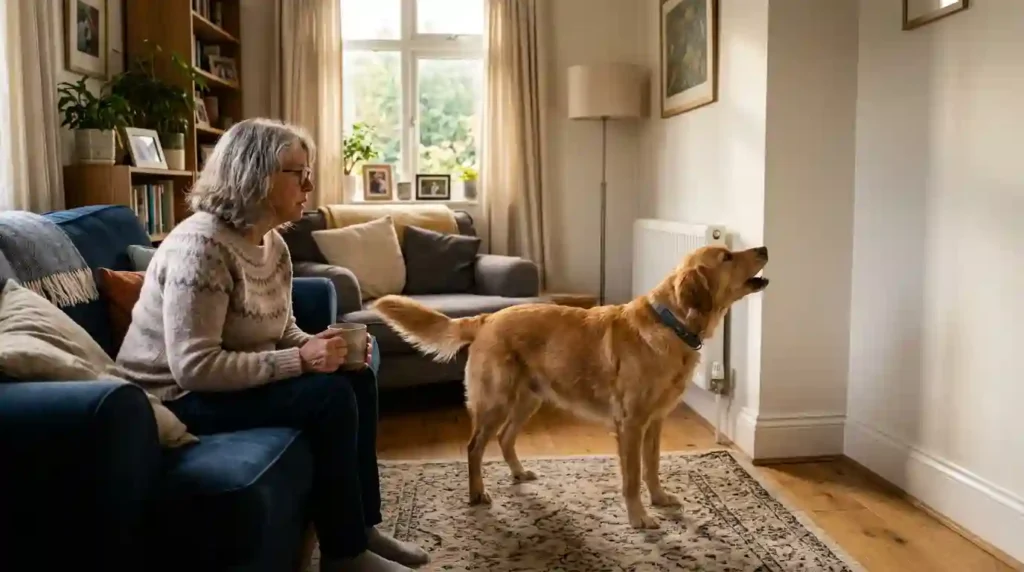
When a dog suddenly stares at a blank wall or barks at an empty corner, many owners immediately wonder what the dog is seeing. The room looks normal. There is no person, no toy, no moving object, and no obvious reason for the barking. Still, your dog may stand alert, raise its ears, growl softly, bark repeatedly, or refuse to move away from that spot.
The simple answer is this: your dog may be reacting to something you cannot easily detect.
Dogs experience the home differently from humans. Their hearing is more sensitive, their sense of smell is far stronger, and their attention to small movements can be intense. A corner of the room may hold a faint odor, a sound from inside the wall, an insect, a draft, a shadow, or a reflection from a window or screen. To your dog, that “empty” area may not feel empty at all.
Sometimes the behavior is harmless and temporary. Other times, it may point to fear, stress, boredom, compulsive behavior, pain, sensory decline, or canine cognitive dysfunction in senior dogs. The key is to look at the full pattern: when it happens, how often it happens, what your dog’s body language looks like, and whether other behavior changes are present.
Is It Normal When a Dog Bark at Empty Corners of the Room?
Yes, it can be normal for a dog to bark at corners occasionally. Dogs bark to communicate, alert, investigate, warn, seek attention, and release frustration. A dog that barks once or twice at a corner and then moves on may simply be responding to a sound, smell, or visual trigger.
However, frequent or intense barking at corners should not be ignored. If your dog does it every night, seems frightened, cannot settle, growls at the same spot, or shows other changes like pacing, hiding, shaking, accidents in the house, or sleep disruption, then the behavior deserves closer attention.
Occasional Barking vs. Problem Barking
Occasional barking may happen when:
- A strange noise comes from the wall
- A bug moves near the baseboard
- A reflection appears on the wall
- A smell from outside enters the room
- Your dog is startled by a new sound
- Your dog is curious and alert
Problem barking may happen when:
- The barking is repetitive and hard to stop
- Your dog looks anxious, panicked, or confused
- The behavior happens at the same time daily
- Your dog is losing sleep
- Your dog starts barking at many random places
- Your dog is a senior and seems disoriented
- Your dog shows sudden behavior changes
The goal is not to stop all barking. Barking is part of canine communication. The goal is to understand what your dog is trying to tell you.
Dogs Can Hear Things Humans Cannot
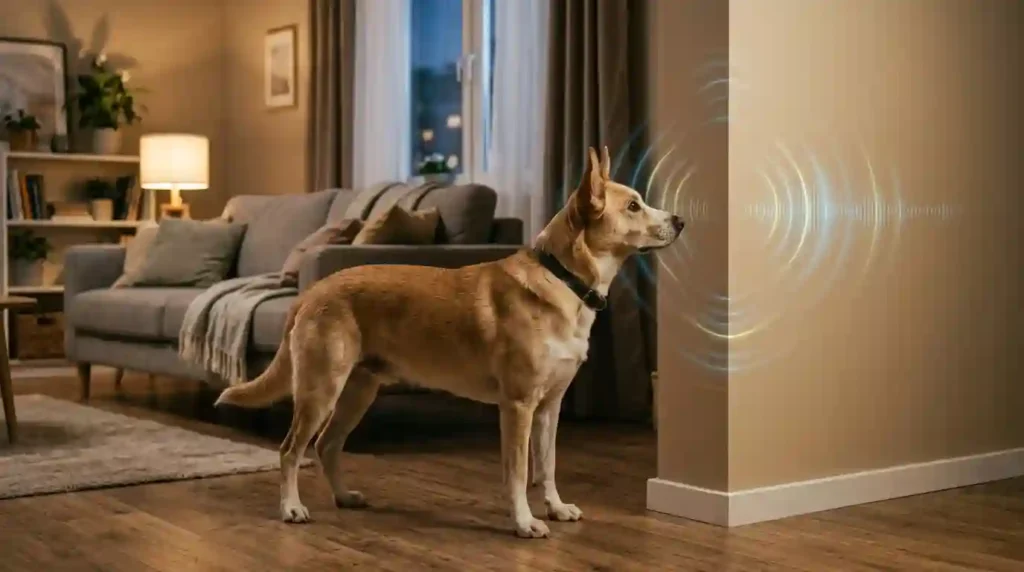
One of the most common reasons dogs bark at empty corners is sound. You may not hear anything, but your dog might.
Dogs can detect higher-pitched and quieter sounds than humans. This means your dog may hear tiny noises from behind the wall, above the ceiling, under the floor, or outside the house. Pipes, electrical buzzing, insects, rodents, HVAC systems, distant footsteps, and even appliances can create sounds that are easy for humans to miss but noticeable to dogs.
A corner can amplify sound, especially where two walls meet. If the sound travels through drywall, vents, or flooring, your dog may focus directly on that area.
Sounds That May Trigger Corner Barking
Your dog may be reacting to:
- Rodents or insects in the wall
- Water moving through pipes
- Air passing through vents
- A refrigerator or appliance vibration
- Electrical buzzing
- Wind outside the window
- Footsteps from another room
- Sounds from neighbors in an apartment
- Distant dogs barking outside
- Floorboards settling at night
This is why many dogs bark at corners during quiet hours. At night, the house becomes still, background noise drops, and faint sounds become more noticeable.
Your Dog May Smell Something in the Corner
A dog’s nose is one of its strongest tools. Even if a corner looks clean, it may contain scent information your dog finds important.
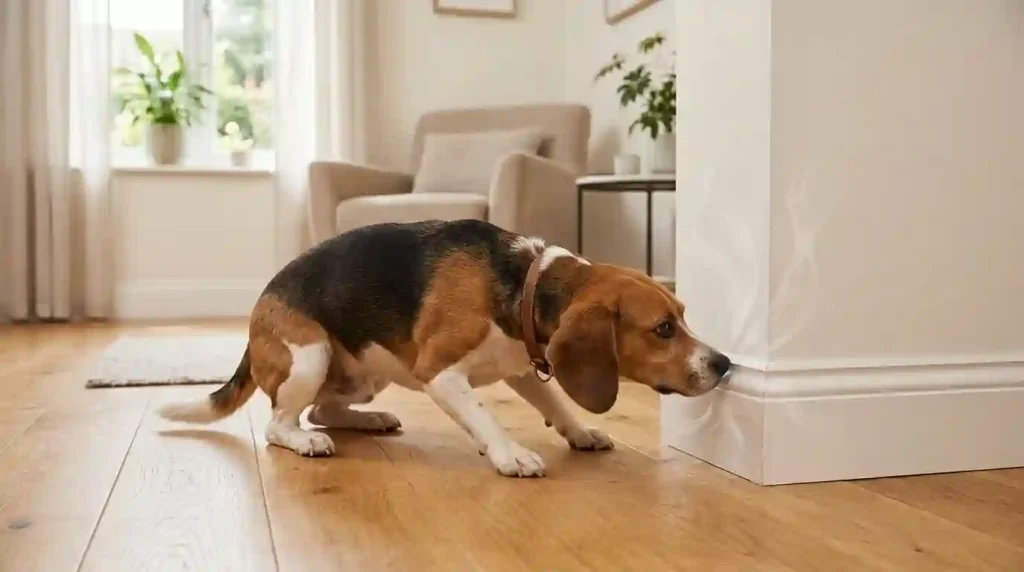
Corners can trap smells. Dust, moisture, food crumbs, pet scent, cleaning products, mold, insects, or outdoor smells can collect there. If another animal passed near the wall, a mouse moved behind the baseboard, or a previous pet marked the area long ago, your dog may smell something that you cannot.
Dogs use scent to understand their environment. A corner may smell like something unfamiliar, interesting, threatening, or exciting. Barking may be your dog’s way of saying, “Something is here,” even when you cannot see it.
Common Smells That Can Attract Dogs to Corners
Your dog may smell:
- Old food crumbs
- Mouse or insect scent
- Dampness or mold
- Another pet’s scent
- Cleaning chemical residue
- Outdoor air coming through a crack
- A previous urine mark
- Dust or trapped odors
- A new object was placed nearby
If your dog keeps sniffing the corner before barking, scent is a strong possibility. Watch whether the dog’s nose stays low, whether they lick the floor, paw at the baseboard, or repeatedly return to the same spot.
Shadows, Reflections, and Light Can Trigger Barking
Sometimes the trigger is visual. Dogs may notice movement, shadow, or light reflection that seems meaningless to us.
A passing car’s headlights, a phone screen reflection, sunlight bouncing off glass, a ceiling fan shadow, or a curtain moving in the air can all create strange shapes on the wall. To a dog, these small visual changes may look like movement.
Dogs are especially sensitive to motion. Even a tiny flicker in a corner can catch their attention. If your dog barks mostly during sunrise, sunset, or when lights are on, reflections and shadows may be involved.
Visual Triggers to Check
Look for:
- TV light reflecting on the wall
- Car headlights through a window
- Sunlight from mirrors or glass
- Moving curtain shadows
- Ceiling fan shadows
- Light from phone or laptop screens
- Flashing electronic devices
- Laser pointer history
- Insects moving near lamps
Some dogs become obsessed with light reflections. If a dog repeatedly chases shadows, barks at light spots, or cannot disengage, it may develop a compulsive behavior. In that case, avoid encouraging it and consider speaking with a veterinarian or certified behavior professional.
Hidden Pests May Be Behind the Wall
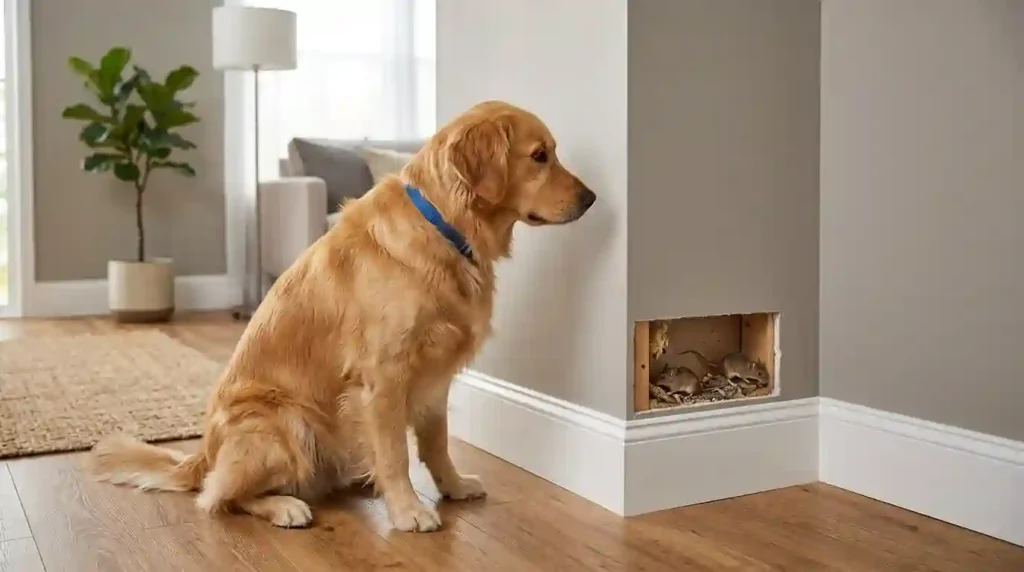
If your dog stares, sniffs, scratches, or barks at the same corner often, hidden pests may be the reason. Dogs may hear or smell rodents, termites, ants, cockroaches, spiders, or other small creatures before humans notice any signs.
This is especially possible if the barking happens near:
- Kitchen corners
- Pantry walls
- Basements
- Laundry rooms
- Exterior walls
- Garages
- Attics
- Damp areas
- Old wooden baseboards
Signs That Pests Could Be the Cause
Check for:
- Scratching sounds in the walls
- Droppings near baseboards
- Small holes or gaps
- Chewed wood or wires
- Unusual smells
- Insect activity
- Your dog is pawing at the wall
- Barking at the same corner every night
If you suspect pests, inspect the area carefully. You may need pest control support, especially if you hear movement inside the walls or see droppings. Do not let your dog chew or scratch unknown areas because pests, wiring, or chemicals could create safety risks.
Anxiety and Stress Can Make Dogs Bark at Corners
Not every case is about hearing or smell. Sometimes a dog barks at empty corners because of anxiety.
An anxious dog may become hyper-alert. Small sounds, shadows, or changes in the environment can feel threatening. If your dog already struggles with noise sensitivity, separation anxiety, fear of strangers, or stress after a move, corner barking may be part of a bigger anxiety pattern.
A dog may bark at the corner of the room because it feels unsafe, confused, or overstimulated. The corner becomes the target, but the real issue may be emotional stress.
Signs Your Dog May Be Anxious
Watch for:
- Pacing
- Panting when not hot
- Whining
- Trembling
- Hiding
- Clinginess
- Refusing food
- Destructive chewing
- Barking at night
- Overreacting to small noises
- Following you from room to room
If barking is linked with fear or stress, punishment can make the problem worse. Yelling, scolding, or using harsh corrections may confirm to your dog that something scary is happening. Instead, stay calm, redirect gently, and reward relaxed behavior.
If your dog’s barking is intense or anxiety-driven, you may find this related guide helpful: How Anxiety Medication Helps Dogs That Bark Excessively.
How Anxiety Changes a Dog’s Perception
A relaxed dog may ignore a tiny sound. An anxious dog may treat the same sound as danger. Stress changes how dogs respond to normal household triggers. A small creak, a flicker of light, or a faint smell may become enough to cause barking.
That is why solving anxiety-based barking usually requires more than saying “quiet.” You need to reduce the dog’s stress level, provide predictable routines, increase enrichment, and create a calm environment.
Senior Dogs and Cognitive Changes
If an older dog suddenly starts barking at corners, staring at walls, pacing at night, or seeming confused, canine cognitive dysfunction may be a possible factor. This condition is sometimes compared to dementia in dogs.
Senior dogs can experience changes in memory, sleep patterns, awareness, and emotional regulation. They may get stuck in corners, stare at empty spaces, bark at night, forget familiar routines, or appear unsure of where they are.
Signs of Cognitive Dysfunction in Dogs
Possible signs include:
- Staring at walls or corners
- Getting stuck behind furniture
- Barking at night
- Wandering or pacing
- Confusion in familiar rooms
- Not responding to known cues
- Sleep-wake cycle changes
- Accidents in the house
- Increased anxiety
- Less interest in play
- New fearfulness or irritability
Not every senior dog that barks at a corner has cognitive dysfunction. Vision loss, hearing changes, pain, arthritis, urinary issues, or anxiety can also cause behavior changes. A vet check is important because many medical problems can look like behavioral issues.
Why Nighttime Barking Matters
Many senior dogs become more restless at night. The house is darker, quieter, and less predictable. If your dog has reduced vision or hearing, shadows and small sounds may become more confusing. They may bark because they feel lost, uncertain, or unable to settle.
If this behavior is new, frequent, or worsening, schedule a veterinary visit. Early support can improve comfort and quality of life.
Attention-Seeking and Learned Barking Behavior
Dogs learn from consequences. If your dog barks at a corner and you immediately jump up, run over, talk loudly, or give treats to distract them, your dog may learn that barking at corners gets attention.
This does not mean your dog is “bad” or “manipulative.” It simply means barking worked. Dogs repeat behaviors that get results.
How Owners Accidentally Reward Barking
You may accidentally reward barking by:
- Talking excitedly
- Giving food immediately
- Picking the dog up
- Opening doors
- Rushing to the corner every time
- Playing after the barking starts
- Giving intense eye contact
- Laughing or reacting dramatically
The solution is not to ignore every bark. First, check that your dog is safe and nothing serious is happening. Once you know the area is safe, respond calmly and avoid turning the event into a big reward.
Better Ways to Respond
Try this approach:
- Calmly check the area.
- Use a neutral phrase like “thank you” or “all done.”
- Redirect your dog to a known cue such as “come” or “place.”
- Reward calm behavior, not the barking itself.
- Provide enrichment before the usual barking time.
Over time, your dog can learn that calm attention, not repeated barking, gets the reward.
Environmental Changes Can Cause Corner Barking
Dogs notice changes in the home. A new piece of furniture, a moved plant, a new smell, a recently painted wall, a new appliance, or even a different cleaning product can make a familiar corner seem strange.
If the barking started suddenly, think about what changed.
Recent Changes to Consider
Ask yourself:
- Did you move furniture?
- Did you clean the room with a new product?
- Did you bring home a new pet?
- Did a guest visit recently?
- Did you install a new device?
- Did the weather change recently?
- Did construction happen nearby?
- Did you hear pests or pipe noises?
- Did your dog have a stressful event?
- Did your dog recently become ill?
Dogs build mental maps of their environment. When something changes, some dogs investigate calmly. Others bark, especially if they are sensitive, anxious, or territorial.
Breed Traits and Alert Barking
Some breeds are more likely to bark at subtle triggers. Guarding breeds, herding breeds, terriers, hounds, and highly alert companion dogs may react faster to sounds, movement, and unfamiliar scents.
A German Shepherd may bark because it feels responsible for guarding the home. A terrier may react to tiny animal movement. A hound may focus on scent. A herding dog may notice small motion. A small companion dog may bark because it feels unsure or protective.
Breed does not explain everything, but it can influence the barking style.
Alert Barking vs. Fear Barking
Alert barking often looks like:
- Upright posture
- Ears forward
- Quick sharp barks
- Running to investigate
- Returning to normal after checking
Fear barking may look like:
- Body leaning back
- Tail tucked
- Trembling
- Growling
- Refusing to approach
- Hiding behind the owner
- Barking that continues after the trigger is gone
Understanding body language helps you choose the right response.
How to Respond When Your Dog Barks at an Empty Corner
The best response is calm, practical, and consistent. Do not panic, yell, or assume your dog is being dramatic. Also, do not ignore sudden changes that could indicate a health or environmental issue.
Step 1: Check the Corner Safely
Look for insects, droppings, mold, loose wires, drafts, reflections, or strange sounds. Check the baseboard, wall outlet, nearby window, vent, and floor.
Step 2: Observe Your Dog’s Body Language
Is your dog curious, playful, alert, fearful, or confused? Body language tells you whether the barking is investigation, warning, anxiety, or possible disorientation.
Step 3: Reduce Triggers
Close curtains, move reflective objects, turn off flickering lights, clean the corner, block drafts, or inspect for pests.
Step 4: Use a Calm Cue
Say something simple like “thank you” or “quiet” in a calm voice. Avoid shouting because your dog may interpret your loud voice as joining the alarm.
Step 5: Redirect to a Positive Behavior
Ask your dog to come, sit, lie down, go to bed, or find a toy. Reward the behavior you want.
Step 6: Add Mental and Physical Enrichment
A bored dog is more likely to fixate on small triggers. Add sniff walks, puzzle toys, training games, chew toys, and calm play sessions.
Step 7: Track the Pattern
Write down when the barking happens, where it happens, what your dog was doing before it started, and how long it lasted. Patterns can reveal the cause.
What Not to Do When Your Dog Barks at a Corner
Many owners react emotionally because the behavior feels strange. However, the wrong response can make barking worse.
Avoid Punishment
Do not hit, yell, scare, or punish your dog for barking at a corner. If your dog is afraid or anxious, punishment can increase stress and make the corner seem even more threatening.
Avoid Encouraging the Alarm
Do not rush dramatically to the corner every time. Your dog may think you are also alarmed. Stay calm and controlled.
Avoid Using Fear-Based Tools
Shock collars, harsh corrections, or intimidation may suppress barking temporarily but can increase anxiety and damage trust.
Avoid Ignoring Medical Changes
If the barking is sudden, intense, or paired with other changes, do not assume it is just behavior. Pain, vision loss, hearing changes, neurological issues, or cognitive decline may be involved.
Training Tips to Reduce Corner Barking
Training works best when it teaches your dog what to do instead of barking. The goal is not silence through fear. The goal is calm communication and confidence.
Teach a “Quiet” Cue
Wait for a pause in barking, say “quiet,” then reward. Do not shout the cue during intense barking. Practice when your dog is calm and gradually use it in real situations.
Teach a “Place” Cue
Train your dog to go to a bed or mat. This gives your dog a clear job when they feel alert. Reward relaxed behavior on the mat.
Use Desensitization
If the trigger is a sound or reflection, expose your dog to a mild version at a low intensity and reward calm behavior. Increase difficulty slowly.
Reward Calm Investigation
Suppose your dog notices the corner but stays calm, reward immediately. This teaches your dog that noticing something does not always require barking.
Create a Predictable Routine
Dogs feel safer with routine. Feeding, walks, bedtime, and play sessions at predictable times can reduce stress-based barking.
When Should You Contact a Vet?
You should contact a veterinarian if the barking is sudden, intense, repetitive, or linked with unusual behavior. This is especially important for senior dogs.
Call a Vet If You Notice:
- Sudden barking at walls or corners
- Confusion or disorientation
- Nighttime pacing
- New aggression
- Loss of appetite
- Trembling or panic
- House-soiling accidents
- Staring into space
- Head pressing
- Seizure-like episodes
- Pain signs
- Vision or hearing changes
- Excessive vocalization in an older dog
A veterinarian can check for medical causes. If the issue is behavioral, they may recommend a certified dog trainer, a veterinary behaviorist, a behavior modification plan, or anxiety support.
For general dog barking behavior and humane guidance, the American Kennel Club has a helpful resource on why dogs bark at nothing.
Related Barking Behaviors to Watch
Dogs that bark at empty corners may also bark in other confusing situations. For example, some dogs bark at people outside the car window because they feel trapped, territorial, excited, or overstimulated. If your dog reacts strongly in the car, too, read this helpful resource:Dog Barking at People Outside the Car Window Guide.
These behaviors may look different, but they often share similar causes: alertness, fear, frustration, anxiety, excitement, or lack of training around triggers.
Conclusion
When your dog barks at an empty corner of the room, it does not always mean something strange is happening. In most cases, your dog is reacting to a sound, smell, shadow, reflection, pest activity, or small environmental change that you may not notice.
The best response is calm investigation. Check the area, observe your dog’s body language, reduce possible triggers, and reward calm behavior. Avoid punishment, especially if your dog seems scared or anxious.
If the behavior is sudden, frequent, intense, or happening in a senior dog, speak with a veterinarian. Corner barking can sometimes be connected to anxiety, pain, sensory changes, or cognitive decline. Understanding the cause helps you protect your dog’s comfort and create a calmer home.
FAQs
1. Why does my dog bark at an empty corner at night?
Your dog may hear small sounds from pipes, walls, pests, or outdoor activity. At night, the house is quieter, so dogs may notice sounds that humans miss. Senior dogs may also become more confused or anxious at night.
2. Is my dog seeing something when barking at the corner?
Your dog may be reacting to movement, shadows, reflections, insects, or light changes. Dogs often notice small visual details that humans overlook. It does not necessarily mean your dog is seeing something supernatural.
3. Should I stop my dog from barking at empty corners?
You should calmly check the area first. If there is no danger, redirect your dog to a calm behavior like sitting, going to bed, or playing with a toy. Do not punish your dog, especially if they seem afraid.
4. Can anxiety make a dog bark at corners?
Yes. An anxious dog may become hyper-alert and bark at small sounds, shadows, or unfamiliar smells. If your dog also paces, trembles, hides, or follows you constantly, anxiety may be part of the issue.
5. Why does my senior dog stare at corners and bark?
Senior dogs may experience cognitive changes, vision loss, hearing changes, or confusion. If your older dog suddenly starts staring at walls, barking at corners, pacing at night, or having accidents, schedule a vet visit.
6. Could there be mice or insects in the wall?
Yes. Dogs may hear or smell rodents, insects, or other pests before you notice signs. If your dog focuses on the same corner repeatedly, inspect the wall, baseboard, and nearby areas for droppings, holes, or scratching sounds.
7. Why does my dog bark at the same corner every day?
A repeated pattern usually means there is a consistent trigger. It could be a sound from pipes, a smell, sunlight reflection, pest activity, or a learned attention-seeking habit. Track the time and situation to identify the cause.
8. Should I take my dog to the vet for barking at corners?
Yes, if the behavior is sudden, intense, repetitive, or paired with confusion, anxiety, appetite changes, sleep disruption, pain signs, or senior dog behavior changes. A vet can rule out medical causes.