
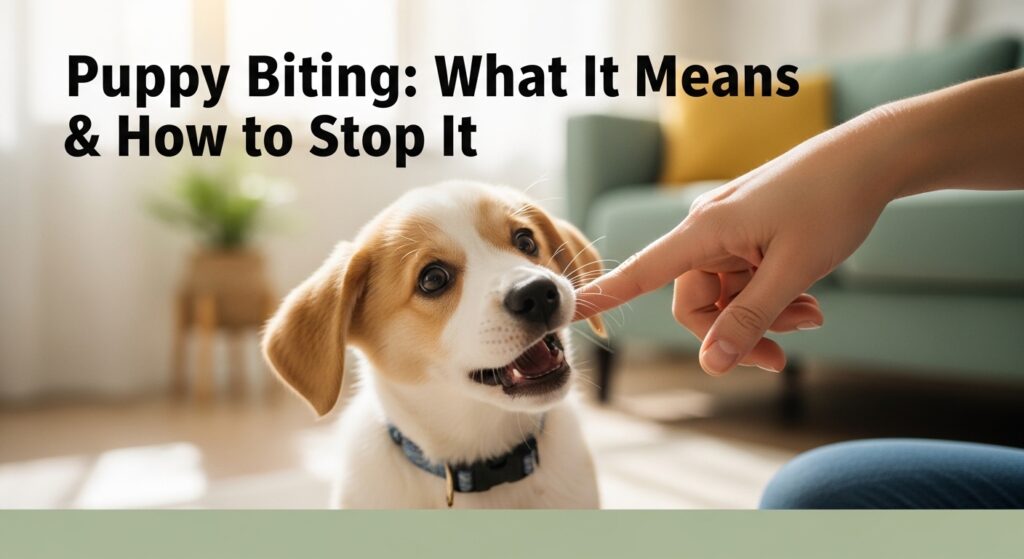

Summary: Puppy biting is one of the most common behavioral challenges new dog owners face. While it is entirely normal — rooted in instinct, play, and teething — it must be addressed with consistent, compassionate training before it becomes a deeply ingrained habit. This guide covers everything from the root causes of puppy mouthing and nipping to science-backed strategies for bite inhibition training, redirection, and positive reinforcement, helping you raise a well-mannered, socially confident dog.
Outline:
Understanding Puppy Biting Behavior
- Why Do Puppies Bite? The Science Behind the Nip
- Is Puppy Biting Normal? Separating Facts from Myths
- The Role of Bite Inhibition in Puppy Development
Types of Puppy Biting and What Each Means
- Playful Mouthing vs. Aggressive Biting
- Fear-Based Biting
- Attention-Seeking and Demand Biting
- Teething Biting
When Puppy Biting Becomes a Concern
- Red Flag Behaviors to Watch For
- Age Milestones: What’s Normal at 8 Weeks, 12 Weeks, and Beyond
How to Stop Puppy Biting — Proven Training Methods
- The Yelp Method (Bite Inhibition Training)
- Redirecting to Toys
- Time-Out Strategy
- Positive Reinforcement Techniques
- Teaching the “Leave It” and “Gentle” Commands
Common Mistakes Owners Make That Encourage Biting
- Rough Play with Hands
- Inconsistency in Training
- Punishment-Based Approaches
Socialization and Its Impact on Biting
- The Critical Socialization Window (3–16 Weeks)
- Puppy Classes and Supervised Playdates
How Long Does Puppy Biting Last?
- The Teething Timeline
- When to Expect Full Improvement
Tools and Products That Help With Puppy Biting
- Best Chew Toys for Teething Puppies
- Bitter Spray and Its Effectiveness
- Puppy Pens and Safe Spaces
Frequently Asked Questions About Puppy Biting
Puppy Biting: What It Means and How to Stop It
Bringing home a new puppy is one of life’s most joyful experiences — until those tiny teeth find your fingers, ankles, or furniture. If you’ve found yourself Googling “why does my puppy keep biting me” or “how to stop puppy nipping,” you’re not alone. Puppy biting is arguably the number-one concern raised by new pet owners, and for good reason. Left unaddressed, puppy mouthing can escalate into serious behavioral problems as your dog grows. The good news? With the right knowledge and consistent training techniques, puppy biting is very manageable. This comprehensive guide walks you through everything — from what puppy biting actually means to the most effective, expert-recommended methods to stop it.
Understanding Puppy Biting Behavior
Why Do Puppies Bite? The Science Behind the Nip
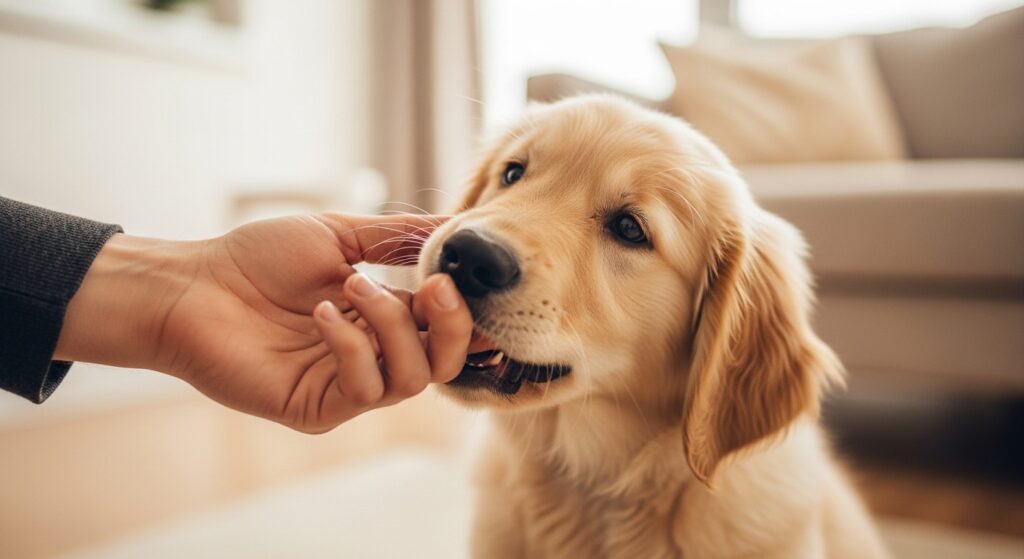
Puppies do not bite out of malice. From a behavioral science and canine ethology standpoint, biting, mouthing, and nipping are deeply wired survival mechanisms. In the litter environment, puppies use their mouths to explore their world — much the way human infants use their hands. Their sensory apparatus is largely mouth-based in the early weeks of life. Through oral exploration, puppies gather information about textures, temperatures, and social dynamics.
Beyond exploration, biting is a primary mode of social communication among littermates. Puppies bite each other constantly during play, and this is exactly how they begin to learn what behavioral scientists call bite inhibition — the ability to regulate the pressure of their bite. When a puppy bites a sibling too hard, the sibling yelps and disengages from play. This social feedback loop is nature’s original training mechanism.
Key NLP and LSI terms that relate to this section: puppy mouthing, dog nipping behavior, puppy jaw development, canine social learning, bite force regulation, play aggression in puppies.
Is Puppy Biting Normal? Separating Facts from Myths
Yes — puppy biting is completely normal. It is not a sign of aggression, a “bad” dog, or poor breeding. Nearly every puppy, regardless of breed, bites during their developmental stages. Labrador Retrievers, German Shepherds, Golden Retrievers, and even toy breeds like Chihuahuas and Pomeranians all go through a mouthing phase.
Common myths about puppy biting:
- “My puppy is aggressive because it bites.” — False. Playful mouthing and true aggression have very different body language cues.
- “Biting means my puppy doesn’t like me.” — False. Puppies often bite the people they are most bonded to, simply because they’re engaged and excited.
- “My puppy will grow out of it without training.” — Partially true. Teething fades, but without guidance, habituated mouthing behaviors can persist into adulthood.
The Role of Bite Inhibition in Puppy Development
Bite inhibition (BI) refers to a dog’s learned ability to control the force of its mouth. Dogs with good bite inhibition can communicate, play, and interact without causing injury, even if they do make mouth contact. The critical window for learning bite inhibition is between 3 and 16 weeks of age — which is why it’s so important that puppies stay with their mother and littermates for a minimum of 8 weeks before rehoming.
Puppies taken from their litter too early often display hard biting with no self-regulation because they missed this critical feedback period. Understanding bite inhibition is foundational to all puppy bite training.
Types of Puppy Biting and What Each Means
Playful Mouthing vs. Aggressive Biting
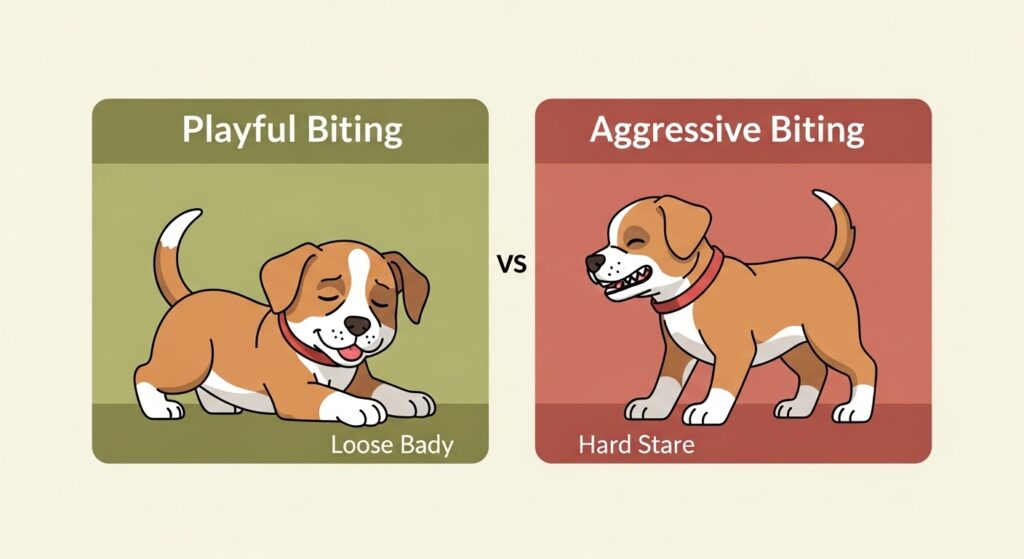
The most important distinction any owner needs to make is whether their puppy’s biting is play-motivated or fear/aggression-motivated. The body language tells the story.
- Playful mouthing looks like:
- Loose, wiggly body posture
- Play bow (front end down, back end up)
- Soft eyes, relaxed ears
- Bite pressure is low, teeth barely break the surface
- The puppy easily disengages when you stop engaging
Aggressive biting looks like:
- Stiff, rigid body
- Hard, fixed stare
- Growling with low, guttural tones
- Snarling, exposed teeth in a tense muzzle
- Bite pressure is hard and intent is to cause harm
True aggression in very young puppies (under 12 weeks) is rare but not impossible, particularly in dogs with trauma histories. If you observe aggressive biting patterns consistently, consulting a certified applied animal behaviorist (CAAB) or veterinary behaviorist is strongly recommended.
Fear-Based Biting
Fear-based biting is one of the most commonly misunderstood forms of puppy biting. A frightened puppy that is cornered, restrained, or overwhelmed will bite as a last-resort self-defense behavior. Signs of fear include: tail tucked, ears pinned back, crouching posture, whale eye (showing the whites of eyes), and attempting to flee before biting. Never punish fear-based biting — it worsens the underlying anxiety and can accelerate aggression.
Attention-Seeking and Demand Biting
Some puppies learn very quickly that biting gets a reaction. Whether you laugh, yell, or jump back, your response is reinforcing. This is called operant conditioning — the puppy’s behavior is being reinforced by the consequence (your reaction). Attention-seeking biting is particularly common in high-energy, intelligent breeds.
Teething Biting
Between 3 and 6 months, puppies lose their 28 baby teeth and grow 42 adult teeth. During this period, gum discomfort drives puppies to chew and bite on everything in reach — including you. Teething-related biting tends to be more persistent, unfocused, and accompanied by chewing on furniture, shoes, and household items. Providing appropriate chew toys is the primary solution during this phase.
When Puppy Biting Becomes a Concern
Red Flag Behaviors to Watch For
While biting is normal, certain patterns warrant professional attention:
- Hard biting that draws blood repeatedly, despite training efforts
- Biting accompanied by growling, snarling, or snapping that isn’t play-related
- Resource guarding biting — when a puppy bites over food, toys, or spaces
- Biting during routine handling — ear checks, nail trims, grooming
- Biting that escalates rather than decreases over weeks of training
These behaviors can indicate underlying anxiety, poor early socialization, genetic predisposition to reactivity, or in rare cases, a medical issue causing pain or neurological changes.
Age Milestones: What’s Normal at 8 Weeks, 12 Weeks, and Beyond
| Age | Expected Biting Behavior |
|---|---|
| 6–8 weeks | Frequent mouthing, learning bite inhibition from mom/siblings |
| 8–12 weeks | Mouthing continues but with growing awareness of human reactions |
| 12–16 weeks | Biting should visibly reduce with training; teething begins |
| 4–6 months | Teething peaks; chewing intensifies |
| 6–8 months | Biting should be well-controlled; adult teeth arrive |
| 8+ months | Persistent biting at this stage needs professional review |
How to Stop Puppy Biting — Proven Training Methods
The Yelp Method (Bite Inhibition Training)
This method mimics the natural feedback puppies receive from their littermates. When your puppy bites too hard, let out a high-pitched “Ouch!” or “Ow!” — not a scream, just a clear yelp — and immediately withdraw your hand and disengage from play for 20–30 seconds. Turn your back or stand up and ignore the puppy briefly.
This communicates the same message a sibling would: “That hurt. Play stops when you bite too hard.” Over repetition, the puppy calibrates its bite pressure and eventually stops biting entirely during play. According to the American Kennel Club’s guidance on puppy development, this method is most effective when applied consistently by every member of the household.
For more behavioral training insights, explore this comprehensive resource on puppy socialization and bite prevention from the ASPCA.
Redirecting to Toys
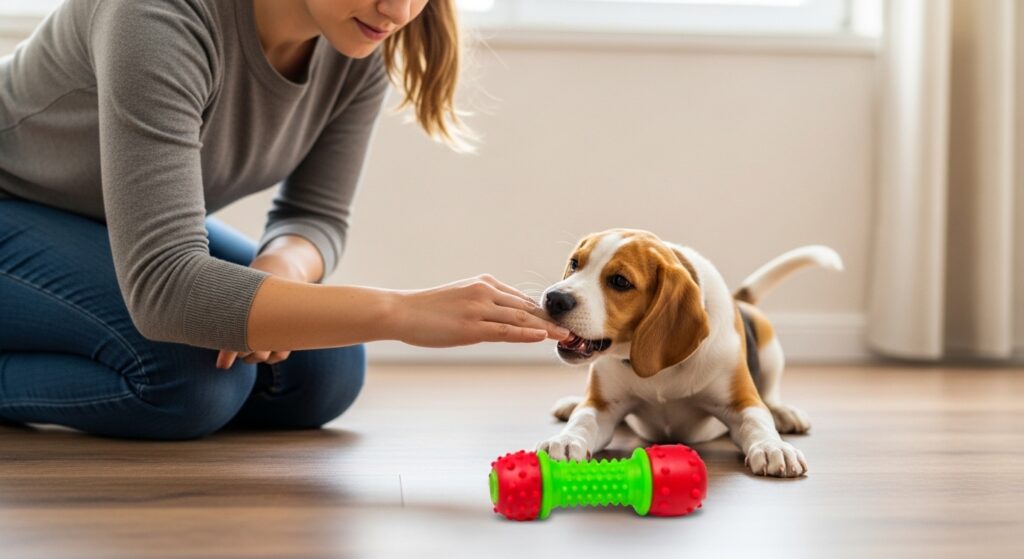
Redirection is one of the most effective and puppy-friendly anti-biting strategies available. The moment your puppy begins to mouth your hand, calmly and immediately substitute a chew toy or tug rope. The key word here is immediately — redirection must happen within one to two seconds of the bite to be cognitively linked by the puppy.
Keep chew toys in every room so redirection is always possible without delay. Over time, the puppy forms a strong association: hands are not for biting; toys are. This is a core principle of positive reinforcement training, and it also simultaneously satisfies the puppy’s natural chewing urge.
Time-Out Strategy
For puppies who don’t respond to the yelp method, a structured time-out can be effective. When your puppy bites, say “too bad” or “oops” in a calm tone, stand up, and either leave the room or place the puppy briefly (30–60 seconds) behind a baby gate or in a pen. Do not use the crate as a punishment space — the crate should always be a safe, positive environment.
The time-out communicates the same fundamental message: biting ends play and social interaction. Dogs are highly social animals, and social withdrawal is one of the most powerful consequences you can use in training.
Positive Reinforcement Techniques
Reward the behaviors you want. When your puppy plays without biting, or licks rather than mouths, immediately mark the behavior with a clicker or verbal marker (“yes!”) and reward with a small, high-value treat. This uses classical and operant conditioning principles to build the neural pathway: gentle behavior = good things happen.
Consistency is paramount. The puppy’s brain is in a critical learning period — neural plasticity is at its highest during the first 16 weeks of life, making this the most influential window for shaping behavior.
Teaching the “Leave It” and “Gentle” Commands
Two commands are especially valuable for managing biting:
“Leave It” — Teaches the puppy to disengage from anything it’s mouthing or approaching, including your hand. Start by placing a treat in your closed fist, say “leave it,” and wait. The moment the puppy stops trying to get the treat and backs away, reward with a different treat from your other hand. Gradually generalize the command to hands, feet, and objects.
“Gentle” — Teaches the puppy to take treats and interact with your hand softly. Hold a treat between your fingers. If the puppy snatches or bites hard, close your fist. When it sniffs gently or licks, say “gentle” and release the treat. This builds voluntary bite inhibition paired with a verbal cue.
Common Mistakes Owners Make That Encourage Biting
Rough Play with Hands
Using your hands as toys — letting the puppy chase your fingers, wrestle with your palms, or tug on your sleeve — sends a deeply confusing signal. You are actively teaching the puppy that biting human body parts is acceptable and fun. This is the single most common mistake new owners make, and it is responsible for prolonging the biting phase significantly.
Inconsistency in Training
If one family member enforces “no biting” rules while another laughs it off and rough-houses, your puppy receives contradictory information. Dogs learn through repetition and consistent consequence patterns. Inconsistency delays learning and frustrates both the dog and the owner. Every person in the household must follow the same protocol.
Punishment-Based Approaches
Physically punishing a puppy for biting — hitting its muzzle, holding it by the scruff, alpha rolls — is not only ineffective but counterproductive and potentially harmful. Research in behavioral science consistently shows that punishment-based methods increase anxiety, fear, and the likelihood of aggression over time. They also damage the trust bond that is foundational to all effective training. Just as you would approach other behavioral challenges — like how to stop a dog from barking at night — patience and positive reinforcement yield far better results than force.
Socialization and Its Impact on Biting

The Critical Socialization Window (3–16 Weeks)
The socialization period is the single most consequential window of a dog’s life. During this time, the brain is building its internal model of what is safe, familiar, and normal. Puppies exposed to a wide variety of people, sounds, environments, textures, and other animals during this window are far less likely to develop fear-based behaviors, reactivity, and defensive biting later in life.
Proper socialization doesn’t just reduce biting — it shapes the entire emotional architecture of your dog’s adult personality. The goal is quality and variety, not volume or force. Never push a frightened puppy into situations that overwhelm it.
Puppy Classes and Supervised Playdates
Professionally run puppy socialization classes provide a structured, safe environment for controlled interaction. Supervised off-leash play teaches natural canine communication skills, including appropriate use of the mouth during play. Puppies that attend regular classes and playdates consistently show faster bite inhibition development than those raised in isolation.
The Association of Professional Dog Trainers (APDT) recommends that puppy classes begin as early as 7–8 weeks of age, provided initial vaccinations have been administered. For breed-specific guidance on puppy training timelines, the American Kennel Club’s puppy development guide is an authoritative resource.
How Long Does Puppy Biting Last?
The Teething Timeline
The teething phase — during which biting intensifies due to gum discomfort — typically spans from 3 to 6 months of age. During this period, even well-trained puppies may regress in their biting behavior. This is normal and expected. Continue with your training protocols and supplement with appropriate chew toys to ease gum discomfort.
When to Expect Full Improvement
With consistent training beginning around 8 weeks, most owners see:
- Significant reduction in biting frequency by 12–14 weeks
- Near-elimination of hard bites by 4–5 months
- Full cessation of problematic mouthing by 6–7 months
Dogs that receive inconsistent training, limited socialization, or who were separated from their litter early may take longer. Patience, consistency, and positive reinforcement remain your most powerful tools throughout.
Tools and Products That Help With Puppy Biting
Best Chew Toys for Teething Puppies
Look for toys that are:
- Appropriately sized for your breed (small breeds need smaller toys to avoid jaw strain)
- Textured or ridged to provide gum relief during teething
- Durable but not too hard — if you can’t dent the toy with your thumbnail, it’s too hard for puppy teeth
Top picks by veterinary behaviorists include rubber KONG toys (stuffable with frozen treats for extended engagement), rope toys for supervised tug, and rubber teething rings designed specifically for puppies.
Bitter Spray and Its Effectiveness
Bitter-tasting deterrent sprays (such as Grannick’s Bitter Apple) can be applied to hands, ankles, and furniture to discourage mouthing. They work well for some puppies but have little effect on others. They are best used as a supplemental tool alongside active training, not as a standalone solution.
Puppy Pens and Safe Spaces
When training sessions end or you’re unable to supervise, confining the puppy to a puppy pen or gated area with enrichment toys prevents rehearsal of unwanted biting behaviors. The less a puppy practices biting on inappropriate targets, the weaker that behavior pattern becomes.
Frequently Asked Questions About Puppy Biting
Q: My puppy bites only me and not my partner — why?
A: This is often an attention-seeking or over-excitement response directed at the person the puppy has the strongest attachment to. It may also reflect a difference in how each person plays with the puppy.
Q: Should I say “no” when my puppy bites?
A: A calm, clear “no” followed by disengagement is acceptable. Shouting or repeating the command multiple times is ineffective. The withdrawal of attention is more powerful than the word itself.
Q: Can I use a spray bottle to stop puppy biting?
A: Spray bottles are generally not recommended by modern behaviorists. They can increase anxiety and fear without addressing the root cause. Positive, reward-based methods are consistently more effective and kinder.
Q: My puppy bites more in the evening — why?
A: Evening biting surges are often called the “witching hour” or zoomies period. Overtired puppies lose impulse control, much like overtired toddlers. An earlier, calmer pre-bedtime routine with structured play followed by rest can significantly reduce this pattern.
Q: Is there a breed that bites more than others?
A: Herding breeds (Border Collies, Australian Shepherds, Heelers) and terrier breeds are often cited for more persistent puppy nipping. However, all breeds bite during puppyhood and all respond well to consistent training.