

Summary
If your dog barking at rabbits or squirrels in the garden has become a daily soundtrack in your backyard, you’re far from alone. This instinct-driven behavior stems from your dog’s deep-rooted prey drive, territorial instincts, and natural alertness to movement. In this comprehensive guide, we’ll explore why dogs react this way, what breeds are most prone to it, how to distinguish playful excitement from genuine aggression, and practical, science-backed training methods to manage or reduce the barking. Whether you’re dealing with a persistent Beagle or an easily-triggered Border Collie, this article gives you everything you need to restore peace to your garden.
Table of Contents
- Why Is My Dog Barking at Rabbits or Squirrels in the Garden?
- Understanding Prey Drive and Canine Instincts
- Breeds Most Likely to Chase and Bark at Small Animals
- Is This Normal Behavior or a Sign of a Problem?
- The Difference Between Excitement Barking and Anxiety Barking
- How Garden Wildlife Triggers Territorial Instincts
- Health and Environmental Factors That Worsen Barking
- Step-by-Step Training to Manage Dog Barking at Rabbits or Squirrels in the Garden
- Tools and Products That Can Help
- When to Consult a Professional Trainer or Behaviorist
- Conclusion
- FAQs
Why Is My Dog Barking at Rabbits or Squirrels in the Garden?
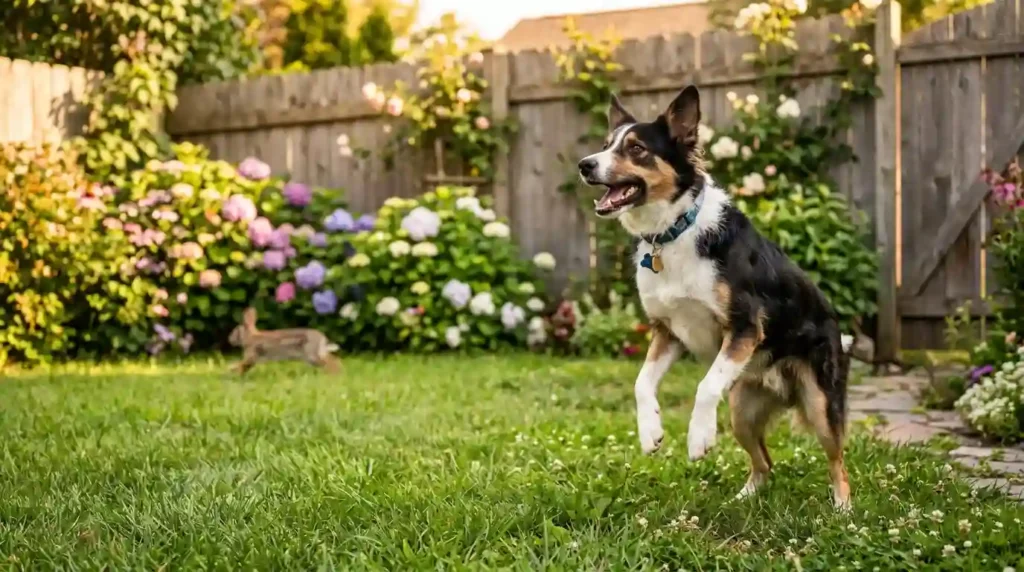
Few things get a dog’s heart racing faster than the sudden appearance of a rabbit darting across the lawn or a squirrel scurrying up a tree. For most dogs, this triggers an immediate, almost involuntary reaction: barking, lunging, sometimes even attempting to give chase. This behavior is rooted in thousands of years of canine evolution. Long before dogs were domesticated, companions curled up on our sofas. They were hunters, and small, fast-moving prey like rabbits and squirrels activate what behaviorists call the “prey drive.”
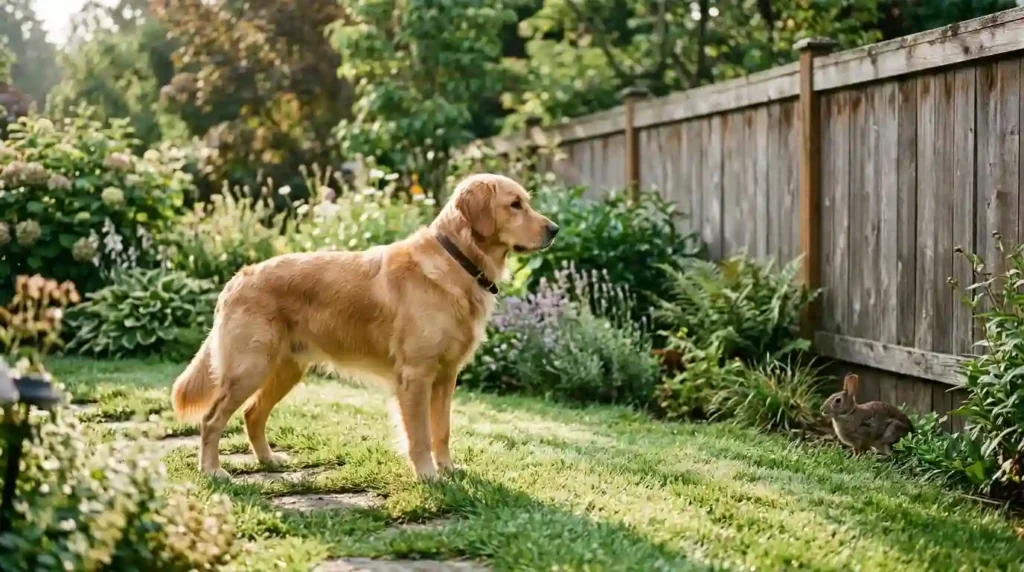
When your dog barks at wildlife in the garden, they’re not being naughty for the sake of it. They’re responding to a powerful combination of instinct, excitement, territorial defense, and sometimes frustration at not being able to catch the animal. Understanding this root cause is the first step toward managing it effectively.
Understanding Prey Drive and Canine Instincts
Prey drive is an umbrella term used by canine behaviorists and trainers to describe the instinctual sequence dogs follow when they detect prey: orient, stalk, chase, grab-bite, kill-bite, dissect, and consume. In most domesticated dogs, this sequence has been interrupted or modified through selective breeding, but the early stages—especially orienting and chasing—remain very much intact.
When a rabbit or squirrel enters your dog’s field of vision, their brain rapidly processes the movement, size, and speed of the animal, categorizing it as potential prey. This triggers a rush of adrenaline and dopamine, the same neurochemical pathways involved in reward-seeking behavior. That’s why many dogs seem almost “addicted” to chasing garden wildlife—the behavior is self-reinforcing.
According to the American Kennel Club, prey drive varies significantly by breed, individual temperament, and early socialization experiences, which explains why some dogs barely notice a squirrel while others become fixated for hours.
Breeds Most Likely to Chase and Bark at Small Animals
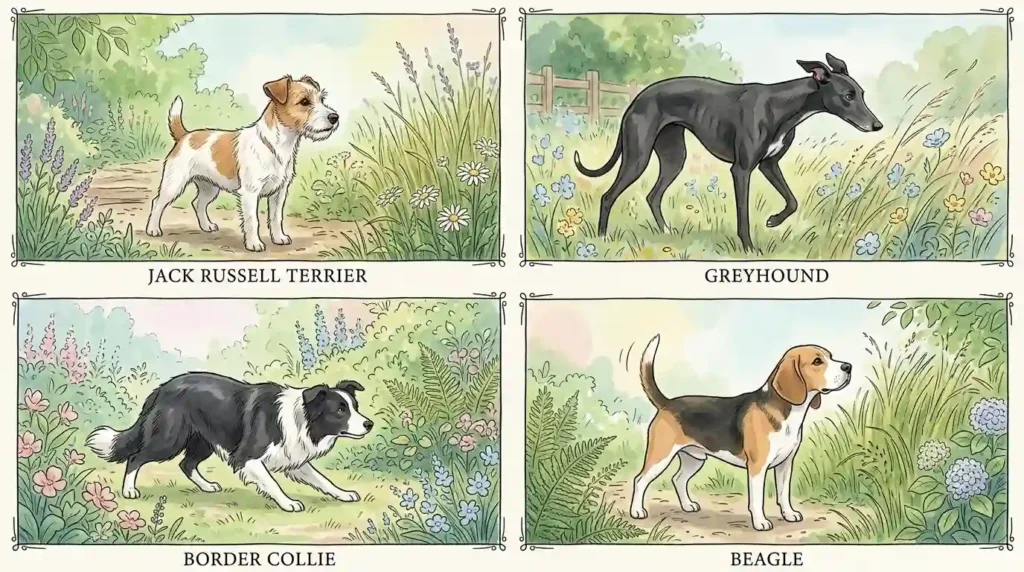
While any dog can develop this behavior, certain breeds are genetically predisposed to stronger prey drives due to their working history:
Terriers
Bred specifically for hunting vermin, terriers like Jack Russells, Rat Terriers, and Fox Terriers often have an intense, almost single-minded focus on small, fast-moving animals.
Sighthounds
Greyhounds, Whippets, and Salukis were developed to visually track and chase prey across open ground, making them highly reactive to sudden movement.
Herding Breeds
Border Collies, Australian Shepherds, and Cattle Dogs may not always chase to kill, but their instinct to control movement often manifests as intense barking and stalking behavior toward garden animals.
Hounds
Beagles and Bassett Hounds, originally bred for scent-tracking small game, often combine barking with an eagerness to follow a trail left by a rabbit or squirrel.
Is This Normal Behavior or a Sign of a Problem?
In most cases, a dog barking at rabbits or squirrels in the garden is completely normal and not cause for concern. It’s an expression of natural instinct rather than a behavioral disorder. However, there are situations where this barking crosses into problematic territory:
- The barking is excessive, lasting well beyond the animal’s presence
- Your dog becomes destructive, trying to reach the animal (digging under fences, damaging plants)
- The behavior escalates into redirected aggression toward people or other pets
- Your dog shows signs of stress, such as excessive panting, drooling, or pacing, even after the animal is gone
If you’re noticing escalating reactivity patterns in your dog, it may be worth exploring how they respond to other triggers as well. For instance, some owners have found surprising parallels between garden-based reactivity and unrelated triggers, such as those discussed in this piece on Dog Barking at Baby Crying, where sound and movement sensitivity play a similar triggering role.
The Difference Between Excitement Barking and Anxiety Barking
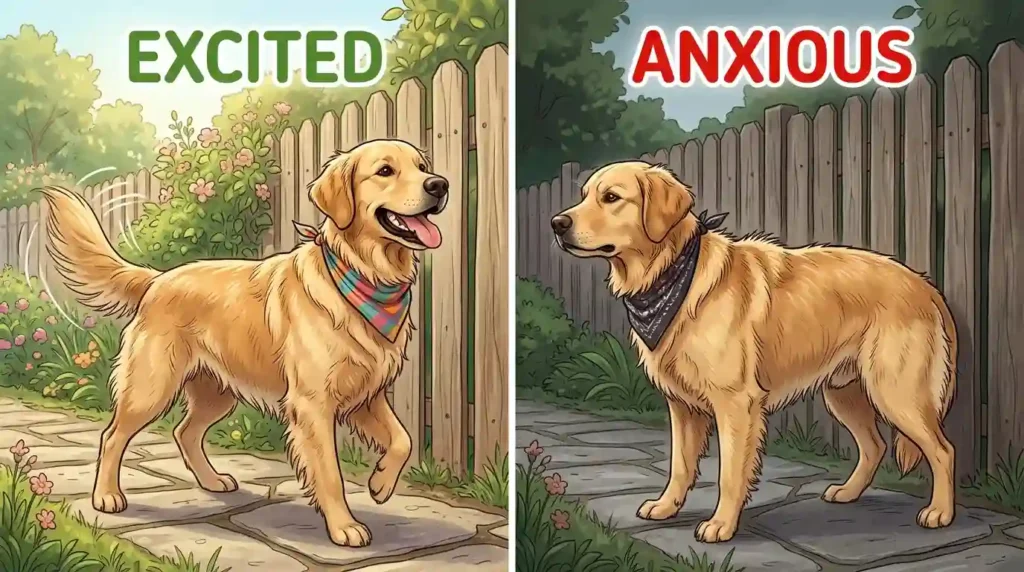
Not all barking sounds the same, and learning to distinguish between different vocal patterns can help you respond appropriately.
Excitement Barking
This type is typically high-pitched, rhythmic, and accompanied by a wagging tail, bouncy body language, and forward-leaning posture. Your dog is essentially saying, “I see something fun, let me at it!”
Frustration Barking
Often lower and more repetitive, this occurs when your dog wants to chase but is physically restrained (behind a fence, on a leash, etc.). It can sound more urgent and may include whining.
Anxiety or Territorial Barking
This is usually deeper, more continuous, and paired with stiff body posture, raised hackles, and a fixed stare. This type of barking suggests your dog perceives the animal as a threat to their territory rather than simply an exciting chase opportunity.
Understanding these distinctions matters because the training approach differs. Excitement-based barking often responds well to redirection and impulse control training, while anxiety-driven barking may require a more gradual desensitization approach.
How Garden Wildlife Triggers Territorial Instincts
Beyond prey drive, dogs are territorial animals. Your garden, in your dog’s mind, is an extension of their den—a space to be protected from intruders. When a rabbit or squirrel enters this space, it’s not just potential prey; it’s also an uninvited guest crossing into guarded territory.
This territorial response is often heightened in dogs that already display protective tendencies in other contexts. Interestingly, territorial reactivity can show up in seemingly unrelated situations, too. Some dog owners have noticed their pets reacting strongly to specific types of people entering their space, a pattern explored in detail in this article on My Rescue Dog Bark at Men Specifically, which highlights how past experiences and territorial instincts can combine to produce selective reactivity.
Fencing, garden layout, and visibility all play a role here. Dogs with a clear, unobstructed view of the yard (through chain-link fences or low hedges) tend to notice and react to wildlife more frequently than dogs whose view is blocked by solid fencing or dense landscaping.
Health and Environmental Factors That Worsen Barking
Several external and physiological factors can amplify a dog’s tendency to bark at garden wildlife:
Lack of Physical Exercise
Under-exercised dogs often have pent-up energy that gets channeled into hyper-vigilant behavior, including obsessive watching and barking at any movement outside.
Boredom
Dogs left alone in the garden for long periods without mental stimulation may turn to squirrel-watching and barking as their primary source of entertainment.
Age and Hormonal Changes
Younger dogs, particularly adolescents between 6 months and 2 years, often show heightened reactivity due to developing hormones and impulse control still being established.
Vision and Hearing Sensitivity
Dogs with heightened visual acuity to movement (a trait more pronounced in sighthounds) or acute hearing may detect wildlife long before their owners do, leading to seemingly “sudden” barking outbursts.
Seasonal Wildlife Activity
Spring and early autumn typically see increased rabbit and squirrel activity as they forage and prepare nests, which naturally increases the frequency of your dog’s reactions during these months.
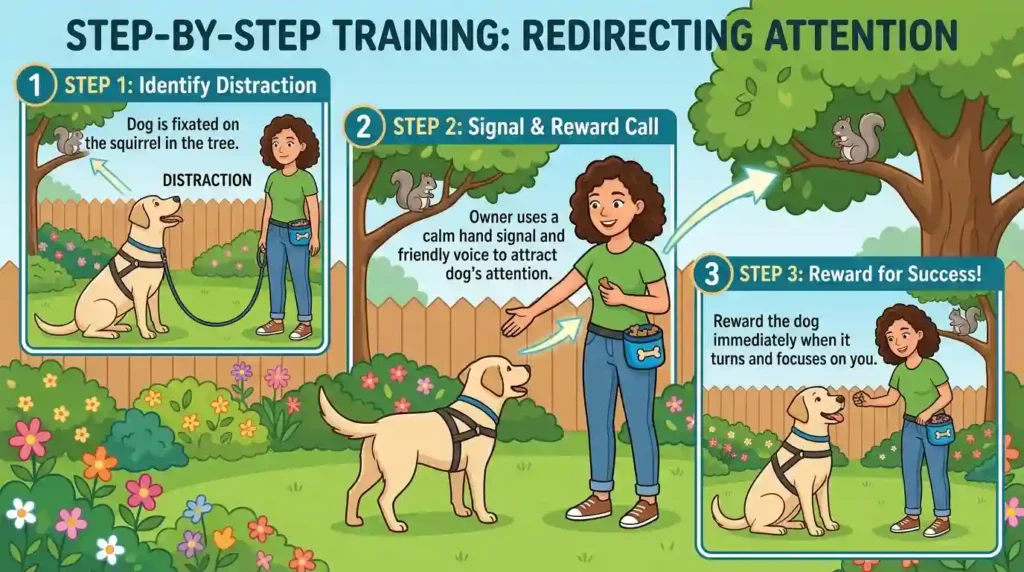
Step-by-Step Training to Manage Dog Barking at Rabbits or Squirrels in the Garden
Now let’s get into the practical solutions. The goal isn’t necessarily to eliminate your dog’s instincts entirely (that’s unrealistic), but to teach impulse control and create a more manageable response.
Step 1: Establish a “Watch Me” or Focus Command
Before working on outdoor triggers, build a strong foundation indoors. Teach your dog to make eye contact with you on cue using a reward-based method. This command becomes your primary tool for redirecting attention once wildlife appears.
Step 2: Practice Impulse Control Games
Games like “leave it,” “wait,” and “settle” build the mental discipline your dog needs to resist instinctual urges. Practice these in low-distraction environments before introducing garden triggers.
Step 3: Manage the Environment
- Use privacy fencing or screening to reduce visual triggers
- Remove bird feeders or food sources that attract rabbits and squirrels to your garden
- Supervise outdoor time rather than leaving your dog unattended for long stretches
Step 4: Desensitization Through Controlled Exposure
Gradually expose your dog to distant wildlife sightings (through a window or at a distance in the yard) while rewarding calm behavior. Slowly decrease the distance over multiple sessions as your dog’s tolerance improves.
Step 5: Counter-Conditioning
Pair the appearance of a rabbit or squirrel with something highly positive, like a favorite treat or toy. Over time, your dog begins associating wildlife sightings with rewards rather than triggering an automatic chase-and-bark response.
Step 6: Increase Physical and Mental Exercise
A well-exercised dog is a calmer dog. Incorporate daily walks, interactive puzzle toys, and scent games to satisfy natural instincts in appropriate, controlled ways.
Step 7: Avoid Punishment-Based Corrections
Yelling or physically correcting your dog for barking at wildlife often increases stress and can worsen the behavior over time. Positive reinforcement consistently produces better long-term results.
Tools and Products That Can Help
- Long training leads: Allow controlled outdoor practice without risk of your dog bolting after wildlife
- Treat pouches: Keep rewards accessible for quick reinforcement during training sessions
- Interactive puzzle feeders: Reduce boredom-driven barking by providing mental stimulation
- Privacy fencing panels: Physically block the visual trigger of passing wildlife
- White noise or calming music can reduce overall reactivity levels in anxious dogs
When to Consult a Professional Trainer or Behaviorist
If your dog’s barking at garden wildlife escalates into aggressive behavior, self-injury attempts (like repeatedly slamming into fences), or generalized anxiety that spreads to other triggers, it’s time to consult a certified professional dog trainer or veterinary behaviorist. These professionals can assess whether the behavior is purely instinctual or whether underlying anxiety, past trauma, or other behavioral conditions are contributing factors.
Conclusion
A dog barking at rabbits or squirrels in the garden is, in most cases, simply your dog acting on deeply embedded instincts passed down through generations of selective breeding. While it’s rarely a cause for serious concern, understanding the root causes—prey drive, territorial instincts, and environmental triggers—empowers you to manage the behavior effectively rather than feeling frustrated by it. With consistent training, environmental management, and plenty of patience, you can significantly reduce excessive barking while still allowing your dog to enjoy their natural instincts in a healthy, controlled way.
FAQs
Q1: Is it bad for my dog to bark at squirrels and rabbits?
No, occasional barking at wildlife is a normal instinctual response. It only becomes a concern if it’s excessive, distressing to your dog, or escalates into aggressive or destructive behavior.
Q2: Can training completely stop my dog from barking at garden animals?
Training can significantly reduce the frequency and intensity of barking, but completely eliminating instinctual responses is unrealistic for most dogs, especially high-prey-drive breeds.
Q3: Should I let my dog chase rabbits or squirrels to “get it out of their system”?
No. Allowing chasing often reinforces the behavior rather than satisfying it, making future incidents more likely and more intense.
Q4: Does neutering or spaying reduce prey drive barking?
Spaying/neutering primarily affects hormone-driven behaviors like marking and roaming; it has minimal direct impact on prey drive, which is instinct-based rather than hormone-based.
Q5: My dog barks at wildlife even through windows—why?
Visual triggers alone are often enough to activate prey drive, even without physical access to the animal. Reducing window visibility or using training techniques can help manage this indoor version of the behavior.