


Summary
Do dogs get tired of barking? Yes, dogs can become physically and mentally tired after prolonged barking, but fatigue does not always make them stop. A dog driven by fear, separation anxiety, territorial instincts, frustration, or environmental stimulation may continue barking despite physical exhaustion. The most effective response is not to wait for the dog to tire out. It is to identify the trigger, address unmet needs, manage the environment, and teach a calm replacement behavior.
Table of Contents
- Do Dogs Get Tired of Barking? The Short Answer
- Why Some Dogs Never Seem to Get Tired
- What Happens During Prolonged Barking
- Why Do Dogs Get Tired of Barking at Different Rates?
- Why Dogs Bark at Night
- How to Identify the Root Cause
- How to Stop Excessive Barking Humanely
- When to Seek Professional Help
- Conclusion
- FAQs
Do Dogs Get Tired of Barking? The Short Answer
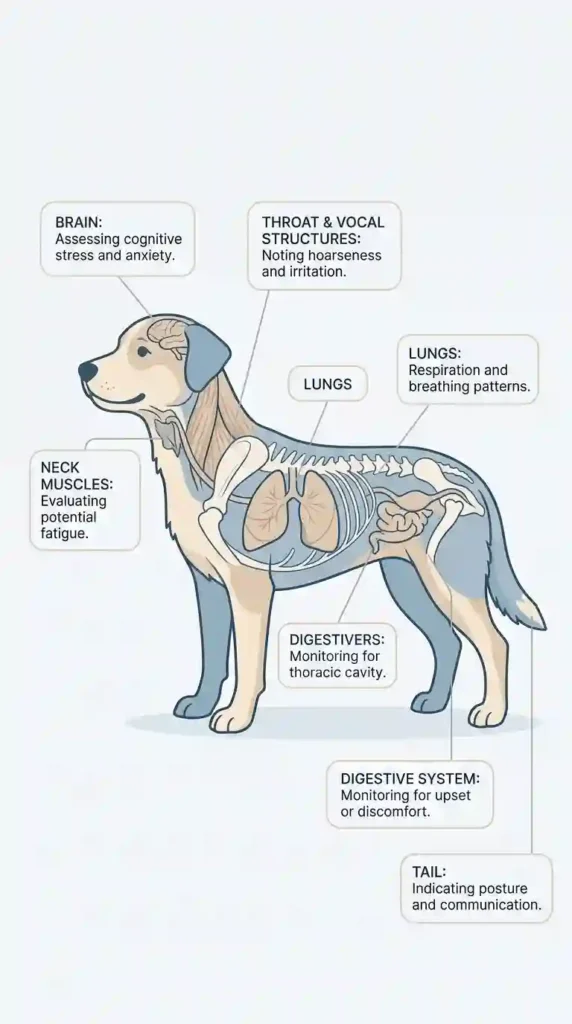
Dogs do eventually get tired of barking in a physical sense. Barking uses the respiratory system, vocal structures, abdominal muscles, and muscles around the neck and chest. Repetitive barking also demands attention and emotional energy. After a long episode, a dog may experience physical exhaustion, mental fatigue, or emotional exhaustion.
However, getting tired and choosing to stop are not the same thing.
A dog that is mildly bored may bark for several minutes and then settle. A dog experiencing intense separation anxiety may continue with nonstop barking for hours because the emotional trigger remains active. Similarly, a territorial dog watching passersby through a window may receive fresh stimulation every few minutes. Each unfamiliar person, delivery person, other dog, car, or loud noise can restart the barking cycle.
This is why asking, “When do dogs get tired of barking?” does not have a universal answer. Some stop within minutes. Others pause briefly and begin again. A highly agitated dog may continue until the trigger disappears, the dog is removed from the situation, or physical fatigue becomes overwhelming.
Barking is a normal form of canine communication. The problem is not the existence of barking but its frequency, intensity, duration, and context.
Why Some Dogs Never Seem to Get Tired
People often ask, “Why do dogs never get tired of barking?” The more accurate question is why a dog keeps barking even after becoming tired.
Barking can be self-reinforcing
Some barking produces an immediate result. Suppose a dog barks at a passerby, and that person continues down the street. From the dog’s perspective, barking successfully made the perceived threat leave. This environmental feedback strengthens the behavior through reinforcement learning.
The same process can happen with an owner. If barking results in food, playtime, petting, eye contact, or an open door, the dog learns that vocal persistence works. Even yelling can provide attention and unintentionally reward demand barking.
This self-reinforcing behavior helps explain how dogs do not get tired of barking quickly, at least from an observer’s perspective. They may be tiring, but every apparent success motivates another round.
Strong emotions override fatigue
Stress hormones and over-arousal can temporarily keep a dog active despite fatigue. Fear, anxiety, excitement, frustration, loneliness, agitation, and territorial reactivity can all sustain barking.
A fearful dog may treat an unfamiliar person as a serious threat. A socially frustrated dog may bark at another dog because a fence or leash prevents an approach. A lonely dog may use canine vocalization in an attempt to restore contact with its family.
In these situations, prolonged barking is not stubbornness. It is an outward sign that the dog cannot regulate its emotional state effectively.
Barking may serve a natural purpose
Dogs use barking for several forms of canine communication, including:
- Alarm barking in response to an unexpected sound
- Alert barking when someone approaches
- Territorial barking around the home or yard
- Social barking in response to other dogs
- Greeting behavior when a familiar person arrives
- Play initiation during an exciting interaction
- Fear-based barking when the dog feels unsafe
- Excitement barking before a walk or meal
- Frustration barking when access is blocked
- Attention seeking when the dog wants interaction
- Self-soothing during stress or isolation
Natural instinct, protective instinct, prey tracking, and breeding purpose can influence these patterns. Herding dogs, livestock guardians, scent hounds, and watchdog breeds were selected for different forms of alertness and vocal behavior. Genetic predisposition does not make training impossible, but it can affect bark frequency, sensitivity, and persistence.
What Happens During Prolonged Barking?
Prolonged barking can affect more than the household’s peace. It may also affect the dog’s physical and emotional well-being.
Physical effects
A dog that engages in repetitive barking may develop temporary hoarseness or throat strain. Vocal cord strain is possible, especially when barking is loud, forceful, and continuous. The dog may also experience neck muscle strain, heavy panting, thirst, and general physical exhaustion.
A hoarse bark does not automatically mean serious injury. Nevertheless, a sudden change in bark tone, coughing, gagging, difficulty breathing, trouble swallowing, or a persistent voice change deserves veterinary attention.
Excessive arousal can also affect appetite, sleep, and digestion. Some stressed dogs develop digestive problems such as reduced appetite, loose stool, or vomiting. These symptoms may have many causes, so they should not be attributed to barking without a veterinary assessment.
Mental and emotional effects
Nonstop barking frequently occurs alongside stress, anxiety, frustration, or fear. When the behavior continues for long periods, the dog may struggle to rest and recover. Chronic sleep disruption can further reduce emotional regulation.
In severe cases, repetitive barking can become rigid or compulsive. Compulsive barking is not simply “bad behavior.” It may be associated with chronic conflict, poor coping ability, or an underlying behavioral or medical condition.
The dog’s complete body language matters. Look at the eyes, ears, tail, mouth, weight distribution, movement, and ability to disengage. Bark pitch, bark tone, bark volume, and the spacing between barks also provide useful context:
- Rapid, sharp barks may accompany alertness or over-arousal.
- High-pitched barking may occur during excitement, distress, or frustration.
- Lower barking with a stiff posture may indicate a warning.
- Rhythmic barking while alone may suggest isolation distress.
- Barking mixed with pacing, drooling, or destructive behavior may point toward separation anxiety.
No sound characteristic should be interpreted in isolation. Context and body language are more reliable than bark tone alone.
Why Do Dogs Get Tired of Barking at Different Rates?
Several factors determine how long a dog can continue barking:
Physical condition
Age, fitness, respiratory health, hydration, temperature, and general health influence stamina. A young, physically fit dog may sustain barking longer than an older dog with reduced endurance. However, a senior dog with cognitive dysfunction may engage in persistent nighttime vocalization despite being physically tired.
Emotional intensity
A mildly excited dog may settle quickly. A panicked dog may not. Separation anxiety barking, for example, can continue because the dog perceives isolation as an urgent threat rather than a minor inconvenience.
Trigger frequency
A single doorbell produces one brief event. A busy sidewalk creates continuous environmental stimulus. If a passerby, delivery person, or other dog appears every few minutes, the dog may repeatedly return to alarm barking.
Learning history
If barking has reliably earned a treat, meal, bathroom break, playtime, or attention, persistence is likely. Inconsistent responses can make barking especially durable because the dog learns that a reward may eventually arrive.
Breed and individual temperament
Breeding purpose, sensitivity to sound, social confidence, prey drive, and territorial tendencies can all affect barking. Even within the same breed, individual differences are substantial.
Do Dogs Get Tired of Barking at Night?
Dogs can get tired of barking at night, but they may continue if the reason for barking remains unresolved. Nighttime also changes the environment. Sounds are more noticeable, visibility is reduced, and the dog may be separated from family members.
Common causes include:
- A need for a bathroom break
- Hunger or thirst
- Loneliness or separation anxiety
- Unfamiliar outdoor noises
- Wildlife or prey movement
- People or dogs passing the property
- Pain or physical discomfort
- Hearing loss
- Age-related cognitive dysfunction
- Fear of storms or other loud noises
- An uncomfortable sleeping area
- Insufficient daytime exercise
- Lack of mental stimulation
First, check basic needs and safety. Make sure the dog has had an appropriate bathroom opportunity, has access to water, and is not too hot or cold. Provide a comfortable, safe sleeping space away from busy windows.
Window coverings can block visual triggers. White noise or a fan may soften outdoor sounds. A predictable evening routine, exercise walk, calm playtime, and food puzzle can help the dog transition toward sleep.
If storms are the main trigger, some dogs benefit from pressure garments. This guide to how Thunder Shirts Reduce Stress-Related Barking explains where such garments may fit into a broader anxiety-management plan. They should support behavior work rather than replace trigger management or veterinary care.
Sudden nighttime barking in a senior dog should be discussed with a veterinarian. Pain, sensory changes, urinary problems, digestive discomfort, and cognitive dysfunction can all alter nighttime behavior.
How to Identify the Root Cause
Effective behavior management begins with trigger identification. Treating all barking as the same problem often leads to frustration because territorial barking requires a different plan from separation anxiety barking.
Keep a barking record
For several days, note:
- When the barking starts
- How long does it last
- Where the dog is positioned
- What happened immediately before it
- Who or what was present
- The dog’s body language
- What causes the barking to stop
- How people respond
- Whether the dog is alone
A camera can reveal patterns that occur when no one is home. It may show pacing, panting, scratching at exits, drooling, destruction, or an inability to eat. These signs can indicate separation-related distress rather than boredom.
Classify the likely function
Ask what the dog appears to gain or avoid. Is the dog trying to:
- Warn the household?
- Increase distance from a perceived threat?
- Obtain attention, food, or access?
- Reach another dog or person?
- Cope with loneliness?
- Initiate play?
- Express pain or discomfort?
- Release frustration or excitement?
The ASPCA’s authoritative overview of common barking types and their possible motivations reinforces an important principle: the cause and function of barking should be identified before selecting a treatment approach.
Rule out medical problems
A veterinarian should assess barking that begins suddenly, worsens without an obvious reason, or occurs with physical or neurological changes. Pain, hearing loss, cognitive dysfunction, endocrine disease, digestive problems, and other medical conditions can influence behavior.
Seek prompt veterinary help if barking is accompanied by breathing difficulty, collapse, repeated gagging, severe coughing, disorientation, marked aggression, or signs of significant pain.
How to Stop Excessive Barking Humanely
The goal is not to prevent every bark. Dogs need appropriate ways to communicate. The practical goal is to reduce excessive barking, improve recovery after a trigger, and teach behavior that works better in the situation.
Meet physical and social needs
Before beginning focused training, review the dog’s daily routine. Persistent barking may reflect an unmet need such as hunger, thirst, a bathroom break, lack of exercise, lack of socialization, or insufficient human contact.
Provide suitable physical exercise, sniffing opportunities, playtime, rest, and social interaction. Exercise should match the dog’s age, breed, health, and fitness. More exercise is not always the answer because highly arousing activity can leave some dogs more activated.
Increase mental stimulation
Environmental enrichment gives the dog constructive ways to investigate and solve problems. Options include:
- A puzzle toy
- An interactive toy
- A stuffed Kong
- A safe chew toy
- Food-search games
- Short clicker-training sessions
- Scent work
- Calm exploration walks
Enrichment is especially helpful for boredom, but it does not cure fear or clinical separation anxiety by itself.
Remove or reduce triggers
Trigger removal can offer immediate relief while training progresses. Close curtains, apply window film, move furniture away from the window, or keep the dog in a quieter room during deliveries.
For doorbell barking, consider asking visitors to text before arriving. During training, use a gate, leash, or safe room to prevent frantic rushing toward the door.
These steps are not avoidance in a negative sense. They prevent repeated rehearsal of the unwanted behavior.
Reinforce quiet behavior
Positive reinforcement teaches the dog what to do instead. Begin in a low-distraction setting. Reward quiet behavior before barking starts. A treat reward can mark calm observation, turning away from a trigger, settling on a mat, or checking in with the handler.
Useful replacement behaviors include:
- Going to a bed or a mat
- Looking at the owner
- Touching a hand target
- Finding scattered treats
- Carrying a toy
- Moving away from a window
- Sitting quietly before receiving attention
A clicker can precisely mark the desired moment, but a consistent verbal marker can work as well.
Address attention and demand barking carefully
If barking has been rewarded with attention, it may briefly become more intense when rewards stop. Avoid giving food, eye contact, play, or access while the barking is happening. As soon as the dog offers an appropriate pause or replacement behavior, reinforce it.
Owners dealing with this pattern can follow a more targeted plan to Stop Attention-Seeking Barking without accidentally teaching the dog to become louder or more persistent.
Do not ignore barking when the dog may genuinely need water, a bathroom break, medical care, or protection from a frightening situation.
Use desensitization for predictable triggers
Desensitization involves presenting a trigger at an intensity low enough that the dog can remain calm. For example, a doorbell recording can be played at very low volume while the dog receives food for relaxed behavior. The volume is increased gradually over many sessions.
If the dog begins barking, lunging, refusing food, or showing pronounced fear, the exercise has advanced too quickly. Increase the distance or lower the intensity.

Avoid yelling and punishment
Yelling often increases noise and emotional arousal. The dog may interpret it as the person joining the alarm response. Punishment can also suppress warning signals without changing the underlying fear, creating a potential risk of aggression.
Bark collars require particular caution. An electric shock collar may associate pain with a visitor, child, other dog, or environmental sound. This can worsen fear-based barking, reactivity, or aggression. It also fails to address the root cause.
Aversive methods are especially inappropriate for separation anxiety because the dog is already distressed. Adding punishment can intensify the emotional problem.
When to Seek Professional Help
Professional support is appropriate when barking is severe, persistent, driven by panic, or associated with aggression.
A qualified certified dog trainer can help with learned barking patterns, replacement behavior, environmental management, and positive reinforcement. CPDT-KA is one credential owners may encounter, although credentials should be considered alongside methods, education, and relevant experience.
For barking that happens primarily during absences, a certified separation anxiety trainer may be helpful. A veterinary behaviorist is particularly appropriate when anxiety, compulsive behavior, aggression, or an underlying medical condition may be involved. A veterinary behaviorist is a veterinarian with advanced behavioral expertise and can assess both health and behavior, including whether medication should be considered.
Your regular veterinarian, often identified professionally by the DVM credential in the United States, is an appropriate starting point for a medical examination and referral.
Seek help rather than waiting for exhaustion when:
- The dog barks for extended periods while alone.
- Barking is accompanied by panic or escape attempts.
- The dog cannot disengage from common triggers.
- Reactivity is escalating toward lunging or aggression.
- The bark has become hoarse or physically strained.
- The behavior appeared suddenly.
- A senior dog has begun barking at night.
- Neighbors have reported a continuing noise disturbance.
- Local noise ordinance complaints or legal repercussions are possible.
Recording several short videos and keeping a trigger log can help a veterinarian, trainer, or behaviorist evaluate the pattern.
Conclusion
Dogs can become tired from barking, but physical exhaustion does not guarantee that they will stop. Fear, anxiety, territorial behavior, frustration, attention seeking, excitement, and learned reinforcement can keep a dog vocalizing long after fatigue begins.
Waiting for a dog to wear itself out leaves the underlying cause untouched. A better approach combines trigger identification, veterinary screening when appropriate, environmental management, adequate exercise, mental stimulation, and positive reinforcement of quiet or alternative behaviors.
The most useful question is not simply, “Do dogs eventually get tired of barking?” It is, “What is this dog trying to communicate, and what would help the dog respond differently?” Once that question is answered, barking becomes much easier to understand and manage.
FAQs
Do dogs ever get tired of barking?
Yes. Barking requires physical and mental effort, so dogs can experience fatigue after prolonged vocalization. They may also develop temporary hoarseness or throat irritation. However, a strong emotional or environmental trigger can keep them barking despite tiredness.
Do dogs eventually get tired of barking and stop on their own?
Some dogs stop when a stimulus disappears or their arousal decreases. Others pause and restart. Dogs with separation anxiety, territorial reactivity, compulsive barking, or repeated exposure to triggers may continue for extended periods. Waiting for exhaustion is not a reliable behavior plan.
Why do dogs not get tired of barking quickly?
They may actually be getting tired, but stress, excitement, reinforcement, or a perceived threat sustains the behavior. If barking appears to make a passerby leave or causes an owner to provide attention, the result can motivate the dog to continue.
Why do dogs never get tired of barking at people outside?
Each person may function as a new trigger. When a dog barks and the person walks away, the dog may believe its alarm barking was successful. Window coverings, distance from the window, quiet-behavior training, and carefully planned desensitization can interrupt this cycle.
Do dogs not get tired of barking at night?
Dogs can become tired at night, but they may keep barking because of outdoor sounds, wildlife, loneliness, discomfort, bathroom needs, anxiety, hearing changes, pain, or cognitive dysfunction. Persistent nighttime barking, particularly in an older dog, warrants veterinary discussion.
Can a dog hurt its throat from nonstop barking?
Prolonged, forceful barking may contribute to hoarseness, vocal cord irritation, and throat strain. Contact a veterinarian if the voice change persists or occurs with coughing, gagging, swallowing difficulty, breathing problems, lethargy, or reduced appetite.
Should I ignore excessive barking?
It depends on the cause. Briefly withholding attention may be useful for clearly identified attention-seeking barking, provided the dog’s needs have been met. Do not ignore barking caused by fear, pain, separation anxiety, danger, thirst, or the need for a bathroom break.
How long before a dog gets tired of barking?
There is no fixed duration. Age, health, fitness, emotional arousal, breed tendencies, trigger intensity, and learning history all affect endurance. The reason for barking is more useful than the number of minutes when deciding how to intervene.
Why does my dog start barking again after resting?
The trigger may still be present, or a new trigger may have appeared. The behavior may also have become habitual or self-reinforcing. Management and replacement-behavior training are more effective than relying on temporary fatigue.
What is the fastest humane way to reduce barking?
First, meet immediate needs and create distance from the trigger. Block visual access, move the dog to a quiet area, and reward calm behavior. For lasting improvement, identify the function of the barking and use an individualized plan based on management, enrichment, positive reinforcement, and gradual desensitization.