

Summary
When a dog barks before pooping, the behavior is usually a bathroom signal, a learned request to go outside, or an expression of excitement, impatience, or anxiety. Some dogs also bark while searching for a safe, familiar place to relieve themselves. However, new or distressed vocalization—especially when accompanied by straining, hard stool, blood, diarrhea, or abdominal pain—may point to physical discomfort or a medical condition. Understanding your dog’s body language, bathroom routine, and stool quality will help you distinguish an ordinary potty habit from a warning sign that deserves veterinary attention.
Table of Contents
- Why Does My Dog Bark Before Going to the Bathroom?
- Common Reasons a Dog Barks Before Pooping
- Normal Pre-Elimination Behavior in Dogs
- When Barking May Indicate Pain or Illness
- Medical Conditions That Can Make Defecation Painful
- How to Respond to Bathroom Barking
- How to Reduce Excessive Barking Before Potty Breaks
- When to Contact a Veterinarian
- Conclusion
- Frequently Asked Questions
Why Does My Dog Bark Before Going to the Bathroom?
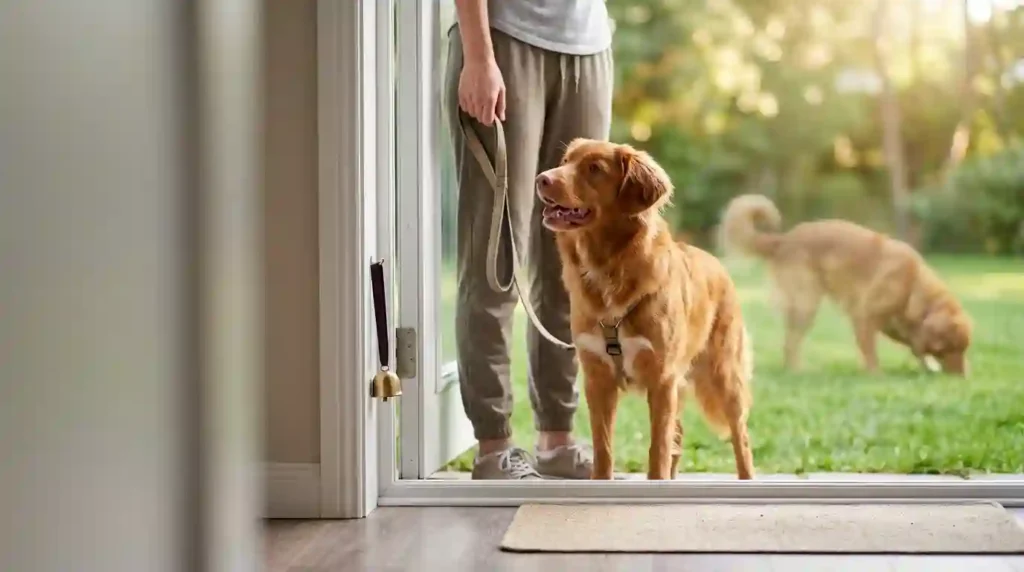
Dogs cannot say, “I need to go outside,” so they communicate through sounds, movements, and repeated routines. Barking before a bowel movement may simply be your dog’s chosen bathroom signal.
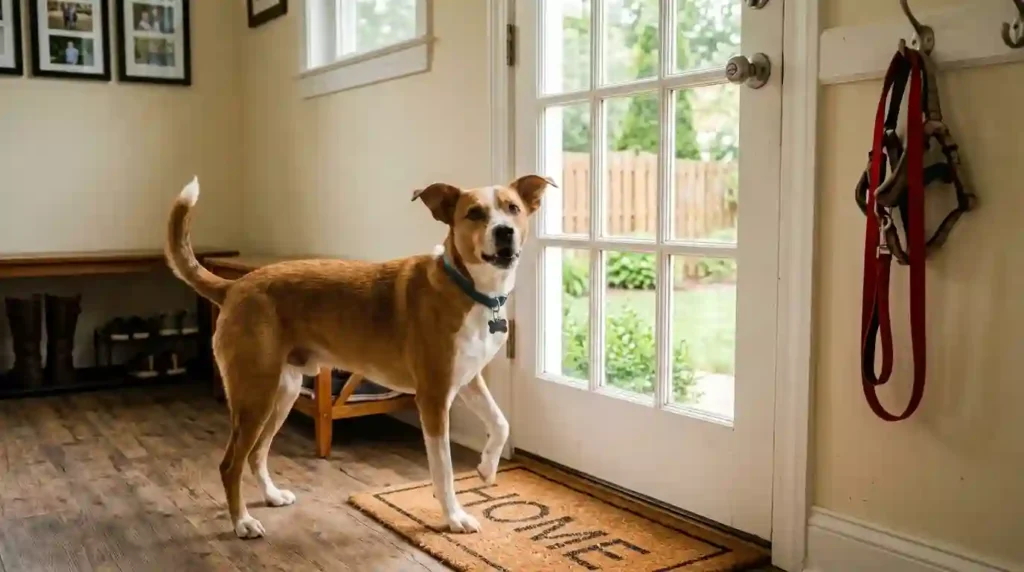
One dog may sit silently beside the door, while another scratches the door, makes eye contact, brings over the leash, paces through the house, or barks until someone responds. These behaviors are all forms of dog communication.
In many cases, the bark means one of the following:
- “I need to go outside.”
- “Please open the door.”
- “Come with me.”
- “I’m excited about my walk.”
- “I cannot find the right place.”
- “I feel uncomfortable.”
- “Something hurts when I try to poop.”
The timing and tone of the vocalization matter. A single alert bark near the door is different from repeated yelping while squatting. You should consider what happens immediately before, during, and after elimination rather than evaluating the barking by itself.
A dog that has always barked politely before a scheduled potty break is probably using an established communication system. A dog that suddenly begins barking, crying, or looking frightened before defecation may need closer observation.
Is barking before pooping normal?
Yes, it can be completely normal. Many dogs develop an individual “potty dance” that includes sniffing, circling, pacing, restlessness, whining, or barking. These actions help them communicate, locate a preferred potty spot, and prepare for elimination.
The behavior becomes more concerning when it is new, intense, difficult to interrupt, or associated with physical symptoms such as straining, dry stool, bloating, or loss of appetite.
Common Reasons a Dog Barks Before Pooping
1. Your dog has learned to announce bathroom needs
During potty training or house training, owners often reward a puppy for signaling before an accident occurs. If barking successfully causes the door to open, the dog learns that it works.
This is a classic learned behavior:
- The dog feels the need to eliminate.
- The dog barks.
- The owner provides attention and opens the door.
- The dog goes outside.
- The behavior is reinforced.
This is not necessarily a bad habit. A clear bathroom signal can prevent indoor accidents and improve communication between dogs and their families.
Problems arise when the dog discovers that barking also produces walks, play, treats, or immediate attention, even when no bathroom break is needed. The original potty cue may then become a general demand behavior.
2. Excitement about going outside
For some dogs, a potty break is also an opportunity to explore. The sight of the leash, the sound of a door unlocking, or the owner putting on shoes can create excitement.
An excited dog may bark because it expects:
- An outdoor walk
- New smells
- Other dogs or people
- Playtime
- A chance to investigate the yard
- Praise or treats after elimination
This barking usually sounds energetic rather than distressed. The dog may wag its tail, bounce, spin, or run between the owner and the door.
3. Impatience or urgency
A dog that has been waiting too long may bark because the need to defecate has become urgent. Puppies, senior dogs, and dogs experiencing diarrhea may have less ability to wait.
Review the bathroom schedule if your dog regularly becomes restless or vocal before being taken outside. Long gaps between outings, changing meal times, or an unpredictable household routine can create impatience.
A more consistent scheduled potty break may solve the problem without requiring formal behavior modification.
4. Anxiety or uncertainty
Some dogs feel vulnerable while eliminating. Defecation temporarily limits their ability to react to what is happening around them, so they may assess environmental safety before squatting.
A nervous dog might bark because of:
- Loud traffic or construction
- Unfamiliar people
- Nearby dogs
- Fireworks or thunderstorms
- A dark outdoor potty area
- Wind, rain, or snow
- A recent frightening encounter
- Separation from the owner
The dog may seek eye contact or bark to encourage its person to stay nearby. It may also repeatedly approach a potty spot and then retreat.
Anxiety-related elimination can affect stool consistency. Stress sometimes speeds movement through the digestive tract, resulting in an urgent or loose bowel movement—often informally called “anxiety poop.”
5. Attention-seeking behavior
Dogs are skilled observers. If every pre-potty bark leads to conversation, petting, play, or a special snack, attention may become part of the reward.
Your dog could genuinely need to go outside while also enjoying the attention created by the routine. These motivations are not mutually exclusive.
Respond calmly and meet the dog’s bathroom needs, but avoid turning every trip into an exciting event. Quiet, predictable responses help preserve the bark as a functional signal.
6. Searching for the right location
Many dogs are selective about where they defecate. Before settling, they may inspect several areas by sniffing, circling, and reading olfactory information left by other animals.
The preferred potty spot may be influenced by:
- Surface texture
- Familiar scent
- Distance from the home
- Privacy
- Wind direction
- Nearby animals
- Territory marking opportunities
- Perceived environmental safety
Urine is more commonly associated with territory marking, but feces also carry scent information. A dog may spend considerable time investigating the environment before choosing where to eliminate.
If access to its usual location is blocked, the dog may bark out of frustration or uncertainty. A new fence, landscaping work, snow cover, unfamiliar smells, or another animal in the yard may disrupt the normal bathroom routine.
Normal Pre-Elimination Behavior in Dogs
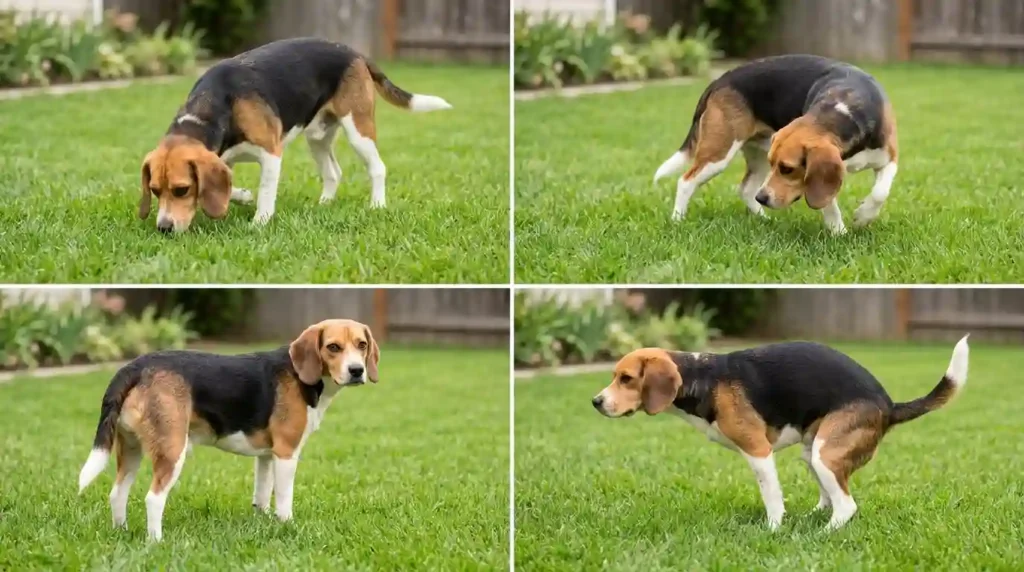
Before defecation, dogs commonly display a recognizable sequence known as pre-elimination behavior. Individual dogs vary, but normal signs include:
- Intensely sniffing the ground
- Walking in small circles
- Pacing between several locations
- Becoming temporarily restless
- Holding the tail in a different position
- Looking toward the owner
- Moving away from busy areas
- Scratching at the door
- Squatting after finding a suitable spot
Circling may help a dog inspect the ground, align its body, spread scent, or confirm that the area feels safe. Sniffing allows the dog to gather olfactory information about animals that have recently visited the location.
A short period of pacing is generally normal. Pacing becomes concerning if the dog repeatedly tries to squat without producing stool, appears unable to get comfortable, or continues the routine for an unusually long time.
Dog owners sometimes mistake communication signals for defiance. For example, pointing toward the door or a potty location may confuse an inexperienced or sensitive dog. If your pet responds vocally to gestures in other situations, understanding why a Dog Bark When I Point at Something can provide helpful context about canine reactions to human body language.
When Barking May Indicate Pain or Illness
Barking immediately before or during defecation can sometimes be a response to pain. Painful or difficult defecation is called dyschezia. Affected dogs may cry, bark, yelp, tremble, or suddenly stop trying to pass stool.
Pay attention to whether vocalization occurs:
- When the dog first feels the urge
- While assuming the squatting position
- During straining
- As stool passes
- Immediately after the bowel movement
Barking at the door with relaxed body language is more likely to be communication. Vocalization while repeatedly straining suggests physical discomfort and deserves prompt attention.
Warning signs to watch for
Look for changes in both behavior and stool, including:
- Repeated straining with little or no result
- Hard stool or unusually dry stool
- Small, pebble-like pieces of stool
- Diarrhea
- Fecal mucus
- Fresh blood in stool
- Dark or black stool
- Abdominal pain
- A tense or swollen abdomen
- Bloating
- Loss of appetite
- Vomiting
- Low energy
- Scooting or licking beneath the tail
- Swelling near the anus
- Reluctance to sit
- Sudden indoor accidents
- Crying while squatting
A single unusual bowel movement may not indicate a serious disease, but persistent symptoms should not be ignored.
Medical Conditions That Can Make Defecation Painful
Constipation and dehydration
Constipation is one of the most common explanations for straining and uncomfortable elimination. Stool stays in the colon longer than usual, allowing more water to be absorbed. It then becomes hard and difficult to pass.
Possible contributors include dehydration, insufficient dietary fiber, reduced activity, medication side effects, or swallowing indigestible material. Senior dogs may be particularly vulnerable because they are more likely to have mobility problems or underlying disease.
Never give a human laxative or enema unless a veterinarian has specifically instructed you to do so. Some products intended for people can be unsafe for dogs.
Diarrhea and intestinal irritation
Diarrhea can also cause straining. An irritated colon may create repeated urgency even when there is very little stool left to pass. The dog may bark because it feels cramping, pressure, or panic about reaching the outdoor potty area.
Mucus or bright red blood can occur with large-bowel irritation, but these changes still warrant veterinary guidance—especially when persistent, frequent, or accompanied by weakness or vomiting.
Intestinal blockage or a swallowed foreign object
A foreign object, such as a toy fragment, cloth, corn cob, bone, or other non-food item, can obstruct the digestive tract. An intestinal blockage may cause vomiting, abdominal pain, bloating, poor appetite, lethargy, reduced stool production, or straining.
A suspected obstruction is not a wait-and-see situation. Contact a veterinarian promptly, particularly if the dog is vomiting, cannot keep water down, appears painful, or may have swallowed an object.
Anal gland infection or impaction
Dogs have anal sacs on either side of the anus. When these glands become impacted, inflamed, infected, or abscessed, bowel movements can be painful.
A dog with an anal gland infection may scoot, lick the area, avoid sitting, smell unusually strong, or vocalize during defecation. Swelling or discharge near the anus requires veterinary care rather than home expression.
Colon or rectal disorders
A colon disorder or rectal disorder can interfere with normal stool passage. Inflammation, narrowing, injury, a polyp, or cancer may cause persistent straining, diarrhea, blood, mucus, or painful defecation.
According to the Merck Veterinary Manual’s guidance on rectal and anal disorders in dogs, conditions involving the anus and rectum can produce signs such as painful elimination, straining, blood in the feces, constipation, or diarrhea. Proper diagnosis may require a physical and rectal examination.
Perineal hernia or perineal fistula
A perineal hernia occurs when weakened muscles near the pelvis allow tissues or organs to shift into the area beside the anus. It is seen most often in older, unneutered male dogs and may be associated with constipation, swelling, or repeated straining.
A perineal fistula causes painful, inflamed tracts around the anus. Dogs may lick or bite the area, resist defecation, or develop discharge and a strong odor.
Both conditions need veterinary treatment.
Prostate problems
An enlarged or diseased prostate can place pressure on the colon, particularly in an older, unneutered male. A prostate problem may cause straining, thin or flattened stool, urinary changes, pain, or difficulty walking.
Because urinary obstruction can become an emergency, contact a veterinarian promptly if a dog strains but cannot urinate.
Pelvic injury or orthopedic pain
A dog must position its hips, back, and rear legs in a specific way to defecate. Arthritis, spinal disease, a pelvic injury, or pain in the knees and hips may make squatting uncomfortable even when the digestive system is functioning normally.
You may notice stiffness, trembling legs, a shortened squat, difficulty climbing stairs, or reluctance to assume the usual posture.
How to Respond to Bathroom Barking
Observe before trying to stop it
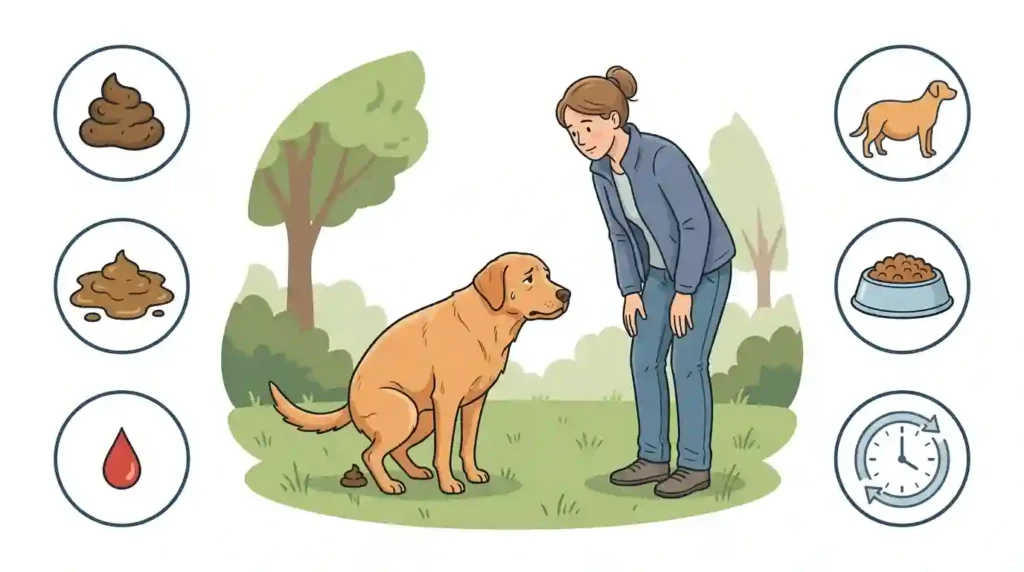
First, determine whether barking is useful communication, emotional arousal, or a possible pain signal. Record:
- The time of day
- The dog’s most recent meal
- The interval since the last bathroom break
- What the dog was doing before barking
- Whether the stool passes normally
- Stool color and consistency
- How long the behavior lasts
- Whether the dog appears relaxed afterward
A short video can help a veterinarian or animal behaviorist evaluate posture and behavior, provided the recording does not delay urgent care.
Take the dog outside calmly
When the dog gives its normal signal, attach the leash and go directly to the designated outdoor potty area. Keep the trip quiet and predictable.
Avoid immediately starting an exciting walk. Give the dog several minutes to eliminate first. Once it finishes, offer praise, a treat, or permission to explore.
This teaches the dog that the bathroom routine has a clear order: signal, go outside, eliminate, receive positive reinforcement, and then enjoy other activities.
Check the stool
Stool provides useful information about digestive health. Observe it without handling it directly. Note whether it is formed, soft, watery, dry, unusually narrow, coated with mucus, or streaked with blood.
If your veterinarian requests a stool sample, collect a fresh portion using a clean bag or container and follow the clinic’s storage instructions.
Maintain appropriate supervision
Supervision is particularly important for puppies, older dogs, and pets with recent digestive problems. Watching elimination allows you to see whether the dog is merely taking time to choose a spot or is repeatedly straining.
It also helps prevent chewing plants, swallowing stones, or eating foreign material that might later cause illness.
How to Reduce Excessive Barking Before Potty Breaks
If your dog is healthy and the behavior is simply too loud or persistent, you can teach a quieter signal.
Establish a regular bathroom routine
Take your dog outside at predictable times, such as:
- Shortly after waking
- After meals
- After vigorous play
- After naps
- Before bedtime
- At age-appropriate intervals during the day
A scheduled potty break reduces the need for urgent demand barking. Consistency is particularly helpful for puppies and dogs adjusting to a new home.
If early-morning vocalization has become part of the schedule, these strategies to Stop Dog Barking at 5AM can help you separate a genuine bathroom need from a reinforced wake-up routine.
Teach a quieter potty cue
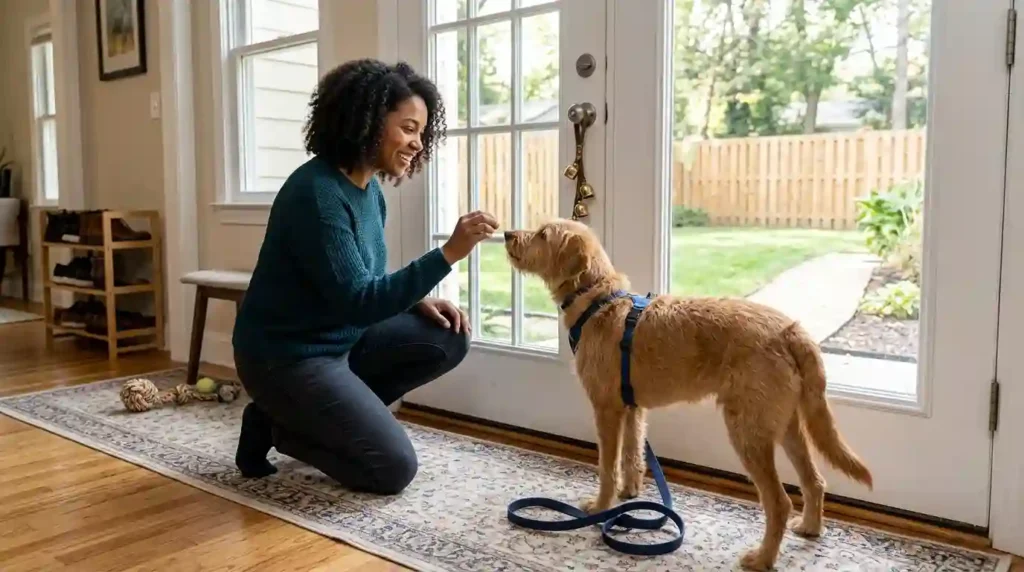
Choose a clear alternative, such as sitting by the door, touching a potty bell, or standing on a small mat.
To teach a potty bell:
- Place the bell beside the exit at nose level.
- Reward the dog for calmly touching it.
- Ask for a touch before each bathroom trip.
- Open the door immediately after the signal.
- Go directly to the potty area.
- Reward successful elimination with praise or treats.
The bell should lead to a functional potty trip, not automatic play. Otherwise, your dog may ring it whenever it wants entertainment.
Reinforce calm behavior
Wait for a brief pause in non-urgent barking before opening the door, then calmly proceed outside. Even one or two seconds of silence can be rewarded at first.
Do not delay if a puppy, senior dog, or dog with diarrhea genuinely needs immediate access. Preventing an accident and protecting the animal’s comfort take priority over a training exercise.
Positive reinforcement works best when the reward follows the desired behavior quickly. Praise a quiet signal, relaxed waiting, and prompt elimination.
Avoid punishment
Scolding a dog for its bathroom signal can create confusion or anxiety. The dog may become afraid to communicate, eliminate in front of you, or use the designated area.
Punishment is especially inappropriate when dog barking is caused by pain. Focus on identifying the underlying reason and teaching a practical replacement behavior.
Address fear in the environment
If your dog is reluctant to eliminate outside, make the area feel safer. Choose a quiet location, provide adequate lighting, keep the dog on a comfortable leash, and remain nearby without hovering.
Gradually introduce frightening noises or environments at a level the dog can tolerate. For persistent fear, consult a qualified animal behaviorist or a veterinarian with behavior expertise.
When to Contact a Veterinarian
Arrange a veterinary examination if the barking is new and your dog repeatedly shows pain, difficulty, or unusual stool. Contact your veterinary clinic promptly if you notice:
- Repeated unsuccessful straining
- No bowel movement despite frequent attempts
- Blood in stool
- Persistent diarrhea
- Vomiting
- Abdominal pain or bloating
- Marked lethargy
- Loss of appetite
- Swelling, wounds, or discharge near the anus
- Suspected foreign-object ingestion
- Trouble urinating
- A mass protruding from the anus
A veterinarian may perform a physical examination, abdominal palpation, rectal examination, stool analysis, or another diagnostic test. Depending on the findings, bloodwork, X-rays, ultrasound, or tissue sampling may be recommended.
Seek urgent care when your dog appears severely painful, repeatedly vomits, has a swollen abdomen, cannot pass urine, collapses, or may have an intestinal blockage. Do not wait for the barking to resolve on its own when serious warning signs are present.
Conclusion
Barking before a bathroom trip is often a normal part of dog communication. Your pet may be announcing the need to go outside, expressing excitement, requesting your presence, or searching for a safe and familiar place to eliminate. Sniffing, circling, pacing, and making eye contact can all belong to a normal pre-elimination routine.
The most important distinction is whether the dog looks comfortable and passes normal stool. Calm, predictable barking followed by an easy bowel movement is usually a behavioral signal. New vocalization accompanied by dyschezia, straining, constipation, diarrhea, blood, pain, bloating, or appetite loss may indicate a medical problem.
Observe the full pattern, maintain a reliable potty schedule, and reward calm signals. If you want to stop dog barking at night, first confirm that your pet does not genuinely need a bathroom break or feel unwell. Consult a veterinarian when symptoms suggest discomfort. Your dog’s bark may be inconvenient, but it can also provide valuable information about what the animal needs.
Frequently Asked Questions
Why is my dog barking before pooping?
Your dog may be signaling that it needs the door opened, expressing excitement, or asking you to stay nearby. Sudden barking with straining or pain warrants veterinary attention.
Why does my dog act crazy before pooping?
The “potty dance” may include zooming, circling, sniffing, and pacing while the dog searches for a safe spot. Stress, urgency, or digestive discomfort can intensify it.
Why does my dog pace so much before going to the bathroom?
Dogs pace while evaluating scents, surfaces, and environmental safety. Prolonged pacing with repeated unsuccessful squatting may indicate constipation or pain.
What do dogs do before pooping?
Common behaviors include sniffing, circling, pacing, becoming restless, looking at the owner, scratching the door, and assuming a squatting position.
What is anxiety poop in dogs?
“Anxiety poop” describes urgent or loose stool triggered by stress or emotional arousal. Recurrent diarrhea should still be discussed with a veterinarian.
How can I get my dog to focus on going to the bathroom?
Use a quiet, designated spot, keep the dog on a leash, limit distractions, introduce a consistent potty cue, and reward elimination immediately.