


Is Pure Balance dog food good? Yes, Pure Balance can be a good budget-friendly dog food for many healthy dogs, particularly owners who want named meat ingredients, grain-inclusive options, and specialized formulas without paying premium-brand prices. Sold by Walmart, Pure Balance offers dry kibble, wet food, grain-free recipes, and Pro+ formulas designed for different life stages and nutritional needs. Its ingredient profiles are generally competitive for its price category, and no Pure Balance-specific recalls were identified in the records reviewed through October 2026.
However, there are important considerations before choosing it. The brand does not consistently provide publicly accessible details about its current manufacturing partners, feeding trials, complete nutrient profiles, or formulation expertise. Some grain-free recipes also contain legumes that deserve consideration in light of ongoing research into diet-associated heart disease.
This review examines Pure Balance dog food ingredients, nutritional quality, safety, recall history, popular recipes, customer experiences, prices, and alternatives. You’ll also find practical feeding guidance and recommendations to help determine whether Pure Balance is appropriate for your dog’s age, size, activity level, and individual health needs.
Table of Contents
- Pure Balance Dog Food: Quick Overview
- Pure Balance Brand History, Manufacturing, and Transparency
- Pure Balance Dog Food Product Lines and Formulas
- Pure Balance Dog Food Ingredients Analysis
- Pure Balance Dog Food Nutritional Analysis
- Pure Balance Dog Food Safety, Recalls, and Concerns
- Best Pure Balance Dog Food Recipes Reviewed
- Which Dogs Is Pure Balance Dog Food Best For?
- Pure Balance Dog Food Feeding Guide
- Pure Balance Dog Food Customer Reviews and Experiences
- Pure Balance Dog Food Pricing, Availability, and Value
- Pure Balance vs. Other Dog Food Brands
- Best Alternatives to Pure Balance Dog Food
- How to Switch Your Dog to Pure Balance Safely
- Pure Balance Dog Food Storage and Shelf Life
- How Pure Balance Dog Food Was Evaluated
- Final Verdict: Is Pure Balance Dog Food Worth Buying?
- Frequently Asked Questions
- Final Thoughts
1. Pure Balance Dog Food: Quick Overview
1.1 Is Pure Balance Dog Food Good? Quick Verdict and Overall Rating
Pure Balance is a reasonable option for budget-conscious dog owners who want an accessible food with named animal proteins and a variety of recipes. Many formulas are designed to provide complete and balanced nutrition for their labeled life stage.
The strongest advantages are affordability, recipe variety, and straightforward availability through Walmart. The main limitations concern nutritional transparency and the difficulty of independently verifying manufacturer-specific information.
Our editorial assessment: 3.5 out of 5 — a good budget option with some transparency limitations.
This is a qualitative, label-based editorial rating, not a laboratory-tested nutritional score or a veterinarian’s clinical evaluation.
Pure Balance is worth considering when its nutritional adequacy statement matches your dog’s life stage, the ingredients are tolerated, and the manufacturer can answer any important nutrition or safety questions.
For owners exploring different foods, our Dog Food guides explain the factors that matter when comparing everyday feeding options.
1.2 What Is Pure Balance Dog Food?
Pure Balance is Walmart’s private-label pet food brand, launched in 2012 to offer what the retailer described as premium-style nutrition at accessible prices.
The brand initially emphasized real meat as a primary ingredient and recipes without certain additives. Over time, the range expanded to include grain-free diets, specialized dry foods, canned meals, and other feeding formats.
Pure Balance is positioned between basic economy products and higher-priced specialty brands. Its recipes are intended to appeal to owners seeking recognizable protein sources, nutritional supplements, and options for different life stages.
Because Pure Balance includes multiple product lines, it is important to evaluate each recipe individually rather than assuming every product has the same nutritional quality.
1.3 Pure Balance Dog Food at a Glance
| Feature | Pure Balance Dog Food |
| Brand owner | Walmart |
| Year introduced | 2012 |
| Brand category | Private-label pet food |
| Main retail availability | Walmart stores and Walmart.com |
| Food formats | Dry kibble, canned/wet food, and selected other formats |
| Recipe types | Grain-inclusive, grain-free, and specialized formulas |
| Common protein sources | Chicken, lamb, salmon, beef, turkey, and other named meats |
| Life stages | Depends on the recipe’s nutritional adequacy statement |
| Specialized range | Pure Balance Pro+ |
| Documented brand recall history | No Pure Balance-specific recall identified in records reviewed through October 2026 |
| Overall assessment | Competitive budget option; manufacturer transparency warrants further investigation |
1.4 Key Features of Pure Balance Dog Food
A major attraction of Pure Balance is its use of identifiable protein sources. Recipes frequently feature named meats or fish rather than relying solely on vaguely described animal ingredients.
Many products also contain whole grains, vegetables, fats, vitamins, and minerals. Depending on the formula, additional ingredients may include flaxseed, fish oil, prebiotics, probiotics, DHA, glucosamine, or chondroitin.
The Pro+ range offers formulas for specific feeding situations, such as puppy growth, large-breed nutrition, sensitive digestion, and weight management.
However, the presence of these ingredients does not automatically demonstrate superior nutrition. Ingredient amounts, digestibility, formulation quality, and the finished product’s nutrient profile are more important than an attractive ingredient list alone.
1.5 Pros and Cons of Pure Balance Dog Food
| Pros | Cons |
| Generally affordable compared with many premium brands | Limited publicly accessible manufacturing details |
| Named animal proteins in many recipes | Complete nutrient analyses are not consistently easy to obtain |
| Grain-inclusive and grain-free choices | Some grain-free formulas contain substantial legume ingredients |
| Specialized Pro+ range | Feeding-trial and research information is not uniformly disclosed |
| Dry and wet feeding formats | Primarily available through Walmart |
| No documented Pure Balance-specific recalls found through October 2026 | Recipe availability and labels may change |
| Options for different ages and sizes | Not every formula suits puppies, large breeds, or dogs with medical conditions |
The advantages are meaningful, but owners should prioritize nutritional adequacy and individual tolerance over marketing claims.
2. Pure Balance Brand History, Manufacturing, and Transparency
2.1 Pure Balance Brand History
Walmart introduced Pure Balance in August 2012 as an alternative to more expensive specialty dog foods.
Its original launch included Chicken and Brown Rice and Lamb and Brown Rice recipes. Walmart highlighted real meat ingredients and the absence of certain artificial additives in those original products.
The brand subsequently expanded into several formula categories, including Pure Balance Pro+ and Wild & Free.
The development of specialized recipes reflects the broader pet food industry’s movement toward life-stage nutrition, ingredient-conscious shopping, and targeted feeding needs.
2.2 Who Owns and Makes Pure Balance Dog Food?
Walmart owns Pure Balance and markets it as a store-exclusive brand.
Walmart does not operate as the sole direct manufacturer of the complete Pure Balance range. Instead, the company uses third-party pet food manufacturing arrangements.
Ainsworth Pet Nutrition and the J.M. Smucker Company have appeared in historical discussions of Pure Balance manufacturing. However, historical industry relationships should not be treated as proof that either company currently manufactures every Pure Balance recipe.
The identity of the current producer may depend on the specific product, production period, and manufacturing contract.
For the most reliable product-specific information, check the packaging and contact the distributor using the details provided on the bag or can.
2.3 Where Is Pure Balance Dog Food Manufactured?
Pure Balance is associated with U.S. pet food manufacturing, and third-party reviews describe domestic production using ingredients that may come from domestic or international suppliers.
However, a complete current factory-by-factory breakdown of the product line is not consistently publicly available.
A label that says “Distributed by Walmart” identifies the distributor rather than necessarily naming the manufacturing plant.
Country of manufacture and ingredient country of origin are also different concepts. A food manufactured in the United States may contain globally sourced ingredients.
Owners concerned about ingredient sourcing should request details for their exact recipe and lot number.
2.4 Pure Balance Manufacturing and Quality Control Standards
Reliable pet food manufacturing should include supplier verification, ingredient testing, process controls, sanitation procedures, traceability, and finished-product quality checks.
Quality-control systems may evaluate moisture, nutrient consistency, microbiological contamination, foreign materials, and packaging integrity.
Walmart describes working with third-party producers under its brand requirements, but detailed plant-level testing schedules and independently audited results are not consistently available to consumers.
This does not establish that the food is unsafe. It means some important quality-control claims cannot be independently assessed from publicly available information.
2.5 Who Formulates Pure Balance Dog Food Recipes?
Some Pure Balance products, especially within the Pro+ range, are marketed as veterinarian-formulated.
That description is useful context but does not identify the qualifications, responsibilities, or ongoing involvement of the professionals responsible for each recipe.
For a more meaningful assessment, owners can ask whether a board-certified veterinary nutritionist or appropriately qualified animal nutrition specialist develops and reviews the formulations.
It is also useful to establish whether the same experts monitor nutrient consistency and adjust recipes when ingredients or manufacturing processes change.
2.6 Does Pure Balance Publish Complete Nutritional Analyses?
Product packaging typically provides a guaranteed analysis and a calorie declaration where required.
A guaranteed analysis usually contains minimum crude protein, minimum crude fat, maximum crude fiber, and maximum moisture. Some specialized products disclose additional nutrients.
However, these figures are not equivalent to a complete typical nutrient analysis.
More comprehensive information would include actual measured protein, fat, carbohydrates, amino acids, calcium, phosphorus, sodium, fatty acids, and relevant vitamin concentrations.
For puppies, dogs with chronic illnesses, and animals requiring precise dietary management, these additional measurements can be particularly important.
2.7 Independent Testing, Animal Feeding Research, and Quality Verification
Feeding trials and published nutritional research can provide evidence beyond ingredient-based evaluation.
A company may assess diets through laboratory nutrient analysis, digestibility studies, controlled feeding trials, or combinations of these methods.
For Pure Balance, publicly accessible information does not consistently establish the scope of feeding research or independent testing performed across every current recipe.
This limitation should not be confused with proof that testing never occurs.
The appropriate distinction is between information that is publicly confirmed and information that remains undisclosed or unverified.
2.8 Which Manufacturing and Nutritional Details Remain Unverified?
Important unanswered questions can include the exact manufacturing facility, formulation credentials, finished-product digestibility, independent laboratory testing, and availability of full nutrient reports.
Owners may also want to know whether individual recipes have undergone Association of American Feed Control Officials (AAFCO) feeding trials rather than being evaluated only against published nutrient profiles.
For a healthy adult dog, the absence of publicly available answers may not automatically rule out the food. For a medically vulnerable dog, greater transparency can substantially improve decision-making.
3. Pure Balance Dog Food Product Lines and Formulas
Pure Balance offers several food styles, but not every recipe or sub-line is continuously available. Product names and assortments can vary by retailer inventory and year.
3.1 Pure Balance Original (Core) Dog Food
The Original or Core range includes everyday formulas built around named proteins and common carbohydrate sources.
Chicken and Brown Rice is an established example of the grain-inclusive range. Lamb and Brown Rice has also been associated with the brand since its launch.
These formulas can be practical starting points for healthy adult dogs without diagnosed dietary restrictions.
3.2 Pure Balance Pro+ Dog Food
Pure Balance Pro+ focuses on particular life stages, breed sizes, and feeding goals.
Examples include sensitive skin and stomach formulas, puppy recipes, large-breed diets, weight-management products, and performance-oriented foods.
Additional guaranteed nutrients or functional ingredients may be included depending on the formula.
What Is the Difference Between Pure Balance and Pro+?
Core recipes emphasize general everyday nutrition, while Pro+ formulas target more specific nutritional applications.
A Pro+ label does not automatically mean the food is healthier than every Core recipe. A healthy adult dog may do perfectly well on an appropriate standard formula.
The meaningful difference is whether the specific nutrient composition and nutritional adequacy match the dog’s needs.
3.3 Pure Balance Wild & Free Dog Food
Wild & Free is commonly associated with grain-free recipes and alternative protein combinations.
These foods may use salmon, bison, venison, poultry, or other animal ingredients alongside peas, lentils, potatoes, or similar carbohydrate sources.
Grain-free food can be useful in selected circumstances, but it is not inherently healthier than grain-inclusive food.
Dogs without diagnosed grain-related problems generally do not require a grain-free diet.
3.4 Pure Balance Wild & Fresh Dog Food
Wild & Fresh has appeared in product reviews describing meat-forward or roll-style food.
Because availability and branding may change, buyers should verify whether a specific Wild & Fresh product is currently offered through Walmart before selecting it.
The main considerations are its preservation method, storage requirements, caloric density, and whether it is labeled as a complete diet or a supplemental food.
3.5 Pure Balance Fresh Dog Food
Fresh-style products differ from traditional kibble in their moisture, texture, processing, and storage needs.
However, the word “fresh” alone does not establish a particular nutritional advantage or prove that a product requires refrigeration.
Check the packaging to establish whether a product is shelf-stable, refrigerated, fully cooked, or intended only as a topper.
3.6 Pure Balance Limited Ingredient Dog Food
Limited ingredient diets reduce the variety of selected ingredients, usually emphasizing a smaller number of protein and carbohydrate sources.
They may appeal to owners trying to avoid a known ingredient.
However, a limited ingredient formula is not necessarily a clinically validated hypoallergenic diet. Dogs with confirmed food allergies may require a veterinary elimination diet or hydrolyzed protein food.
3.7 Pure Balance Dry vs. Wet vs. Fresh Dog Food
| Food type | Main characteristics | Practical considerations |
| Dry kibble | Low moisture, concentrated calories | Convenient storage and portioning |
| Wet/canned food | Higher moisture, softer texture | Useful for hydration and palatability |
| Roll-style food | Dense, sliceable texture | Check whether it is complete or supplemental |
| Refrigerated fresh-style food | Moist texture and specific storage requirements | Requires careful refrigeration and handling |
Dry food is generally more economical per calorie, while wet food can help increase dietary moisture.
Neither format is universally superior. Nutritional adequacy, handling, and individual tolerance matter more than appearance.
3.8 Grain-Free vs. Grain-Inclusive Pure Balance Formulas
Grain-inclusive recipes may contain brown rice, oatmeal, or barley, while grain-free formulas may use peas, chickpeas, lentils, potatoes, or sweet potatoes.
Whole grains can supply digestible energy and nutrients. Legumes can contribute carbohydrates, fiber, and plant-based protein.
The best choice is not determined by grain presence alone.
For most healthy dogs without a demonstrated dietary reason to avoid grains, an appropriately formulated grain-inclusive recipe is a sensible starting point.
3.9 Pure Balance Formulas by Life Stage, Breed Size, and Dietary Needs
Dogs have different nutritional requirements during growth, adulthood, pregnancy, and lactation.
Large-breed puppies require particular attention to calcium, phosphorus, and energy intake. Senior dogs may have individual nutritional needs related to body condition, dental health, or disease.
Pure Balance offers specialized options, but the exact nutritional adequacy statement on the product is more important than a marketing description such as “puppy” or “mature.”
3.10 Pure Balance Recipe and Ingredient Label Changes
Manufacturers can change recipes, ingredient sources, nutrient guarantees, bag sizes, or packaging designs.
When comparing an older review with a current product, always check the latest ingredient declaration, nutritional adequacy statement, and calorie content.
Even a familiar product name does not guarantee an unchanged formula.
4. Pure Balance Dog Food Ingredients Analysis
Ingredient quality is an important part of evaluating Pure Balance, but a complete nutritional judgment requires more than identifying the first ingredient.
4.1 First 5 and First 10 Ingredients Breakdown
The ingredient list is arranged by weight before processing, so ingredients near the beginning generally contribute more weight to the formula at that stage.
For an established recipe such as Chicken and Brown Rice, the first ingredient may be chicken, followed by other protein, grain, fat, or fiber sources depending on the formulation.
Rather than relying on a possibly outdated list, examine the first five and first ten ingredients on the current package.
Evaluate their functions, whether protein comes from animal or plant sources, and whether similar ingredients appear under several separate names.
The ten-ingredient review is especially useful for understanding how grains and legumes are distributed throughout the formula.
4.2 Named Meat and Fish Protein Sources
Pure Balance recipes commonly use named animal proteins such as chicken, lamb, salmon, beef, turkey, bison, and venison.
Named sources help consumers identify the animal used and can be helpful when avoiding a particular protein.
Animal-derived ingredients provide essential amino acids that support muscle maintenance, tissue repair, metabolism, and normal body functions.
However, the amount of usable protein depends on formulation, processing, digestibility, and total nutrient balance.
4.3 Meat Meals and Their Nutritional Value
Chicken meal, lamb meal, fish meal, and other named meat meals are concentrated animal ingredients produced through rendering.
Because much of the water and fat is removed during processing, meat meal can contribute substantial protein.
A recipe containing chicken meal is not automatically inferior to a recipe using fresh chicken.
What matters is the quality of the source material, processing standards, nutrient availability, and how the ingredient contributes to the finished diet.
4.4 Animal By-Products and Anonymous Meat Ingredients
Animal by-products can include nutritious organ tissues and other permitted animal components.
Properly processed, identifiable by-products are not inherently harmful and can provide valuable nutrients.
More general terms such as “meat meal” offer less information about the animal source than specifically named ingredients.
For dogs with dietary allergies, precise ingredient identification becomes especially important.
4.5 Whole Grains and Carbohydrate Sources
Grain-inclusive formulas may use brown rice, oatmeal, barley, or other cereal grains.
These ingredients provide digestible energy and can contribute vitamins, minerals, and dietary fiber.
Brown rice contains bran and germ components, while refined ingredients such as brewers rice have a different nutritional composition.
Corn, wheat, and soy are also used in the broader dog food industry. They are not automatically harmful, although individual animals may require ingredient exclusions.
The nutritional role of a carbohydrate depends on its processing, digestibility, inclusion level, and the needs of the dog.
4.6 Peas, Lentils, Chickpeas, Potatoes, and Other Legumes
Grain-free formulas frequently replace traditional grains with ingredients such as peas, pea protein, pea starch, lentils, chickpeas, fava beans, potatoes, or sweet potatoes.
These ingredients can contribute energy, fiber, and protein.
However, multiple ingredients derived from the same legume may appear separately on a label. This practice can make their combined contribution difficult to estimate.
The presence of legumes does not automatically make a food unsafe, but their proportion and the overall formulation deserve careful evaluation.
4.7 Added Vitamins, Minerals, and Nutritional Supplements
Dog foods commonly contain vitamin A, vitamin D, vitamin E, B-complex vitamins, iron, zinc, copper, selenium, calcium, and phosphorus.
These nutrients support normal growth, immunity, metabolism, skin health, and organ function.
Additional ingredients may include salmon oil, flaxseed, omega-3 fatty acids, omega-6 fatty acids, DHA, taurine, L-carnitine, probiotics, prebiotics, glucosamine, or chondroitin.
A probiotic listed on a label is most meaningful when the company provides information about strain identity and viable counts through the product’s shelf life.
Similarly, the inclusion of glucosamine does not guarantee a clinically effective dose.
4.8 Artificial Colors, Flavors, and Preservatives
Pure Balance has historically promoted formulas without certain artificial colors, flavors, or preservatives.
Some dog foods use mixed tocopherols, which are forms of vitamin E, as antioxidants to help protect fats from oxidation.
Other ingredients, such as rosemary extract or citric acid, may serve preservation or formulation purposes.
A recognizable preservative system is useful, but artificial-free marketing alone does not demonstrate nutritional superiority.
Owners should review the specific current label rather than assume every formula has identical additives.
4.9 Controversial or Potentially Harmful Ingredients
Ingredients that sometimes raise questions include concentrated pea protein, certain gums, sodium selenite, and various processed carbohydrate sources.
Some canned foods contain thickening agents such as guar gum, cassia gum, or carrageenan.
These ingredients have different functional roles and safety considerations. Their presence alone is not evidence that a finished food is dangerous.
Excessive amounts of certain nutrients, contamination, inappropriate formulations, or poorly controlled manufacturing are more meaningful concerns than an ingredient name taken out of context.
4.10 Ingredient Quality Differences Between Pure Balance Recipes
A chicken-and-rice recipe and a grain-free salmon-and-pea recipe can have substantially different nutritional profiles.
Differences may involve protein sources, fat levels, fiber content, calorie density, fatty acid balance, and mineral concentrations.
For example, a weight-management formula may emphasize lower energy density, while a performance formula may contain more calories and fat.
These distinctions mean that Pure Balance should be evaluated recipe by recipe.

4.11 Understanding Pure Balance Dog Food Marketing Claims
Does Real Meat as the First Ingredient Guarantee Better Nutrition?
No. Fresh meat contains considerable water, and ingredients are listed by weight before processing.
A food with fresh meat first may still obtain a meaningful share of its protein from meals or plant ingredients.
The finished nutrient profile and protein digestibility provide more useful information than the first ingredient alone.
What Does “No Fillers” Actually Mean?
“Fillers” is a marketing term without a single universally applied nutritional definition.
Ingredients sometimes described as fillers can supply useful energy, fiber, or essential nutrients.
The better question is whether an ingredient contributes appropriately to a balanced diet.
Does “Natural” Mean Healthier or Safer?
Not necessarily.
A natural ingredient can still be poorly tolerated, contaminated, or included at an unsuitable level.
Food safety and nutritional adequacy depend on the finished product, not simply the word “natural.”
Does Grain-Free Mean Better for Dogs?
No. Most dogs can digest properly processed grains, and true grain allergies are relatively uncommon compared with reactions to certain animal proteins.
A grain-free diet should have a clear nutritional or veterinary justification rather than being chosen solely because it sounds more natural.
Are Premium Ingredients More Important Than Nutritional Adequacy?
Nutritional adequacy comes first.
A food containing fashionable ingredients may still be inappropriate for a puppy or an adult dog with special medical requirements.
The best diet is one that consistently delivers suitable nutrients, is well tolerated, and comes from a manufacturer able to explain its formulation and quality-control practices.
5. Pure Balance Dog Food Nutritional Analysis
A nutritional assessment should examine protein, fat, fiber, energy, mineral balance, and the product’s intended life stage.
5.1 How to Read a Pure Balance Dog Food Nutrition Label
Guaranteed Analysis vs. Actual Nutrient Content
The guaranteed analysis describes label guarantees, such as minimum protein and fat and maximum moisture and fiber.
These are not necessarily the exact measured values in a particular batch.
A typical nutrient analysis, when available, offers a more useful estimate of actual composition.
Dry Matter vs. As-Fed Nutritional Percentages
Wet food contains substantially more water than dry food, making direct as-fed percentage comparisons misleading.
To compare them fairly, remove the moisture mathematically.
For example, a hypothetical dry food containing 26% protein and 10% moisture has approximately 28.9% protein on a dry matter basis.
A hypothetical wet food containing 9% protein and 78% moisture has approximately 40.9% protein on a dry matter basis.
These are teaching examples, not verified Pure Balance label values.
Understanding the Nutritional Adequacy Statement on the Bag
An AAFCO nutritional adequacy statement identifies the life stage or nutritional purpose for which a product is formulated or tested.
Common designations include adult maintenance, growth, growth and reproduction, and all life stages.
For large-breed puppies, look specifically for language addressing growth of large-size dogs.
A supplemental food or topper should not replace a complete diet unless it is labeled nutritionally complete for the intended purpose.
What an Ingredient List Cannot Tell You
An ingredient list does not reveal the precise amounts of most ingredients, nutrient digestibility, amino acid availability, or how consistently the final food meets its nutrient specifications.
This is why ingredient analysis should be combined with nutrient data, manufacturing information, and nutritional adequacy.
5.2 Protein Content and Protein Sources
Protein supports muscle maintenance, enzymes, hormones, and normal tissue function.
Pure Balance dry recipes vary in crude protein content, with some specialized formulas providing higher concentrations than everyday recipes.
Both animal and plant ingredients can contribute to crude protein values.
For a meaningful comparison, consider protein on a dry matter basis and, when possible, relative to the food’s calorie content.
5.3 Fat Content and Essential Fatty Acids
Dietary fat supplies concentrated energy and essential fatty acids.
Omega-6 fatty acids, including linoleic acid, are important for skin barrier function. Omega-3 fatty acids from fish oil or other sources may support normal physiological processes.
Higher-fat foods can be useful for active dogs but may provide excessive calories for less active animals.
Dogs with certain medical conditions, including pancreatitis, may require veterinary-directed dietary fat restriction.
5.4 Fiber Content and Digestive Support
Dietary fiber contributes to stool formation, gastrointestinal function, and, depending on its type, microbial activity in the gut.
Ingredients such as beet pulp, flaxseed, vegetables, and some legumes can provide fiber.
Soluble and insoluble fibers have different characteristics.
A moderate amount can support normal digestion, but excessive fiber may reduce nutrient or energy density and cause gastrointestinal changes in some dogs.
5.5 Calories per Cup and Caloric Density
Caloric density determines how much energy a dog receives from a serving.
Two foods with similar protein percentages may provide substantially different calories per cup because of differences in fat, moisture, and kibble density.
Always locate the metabolizable energy declaration, often shown as kilocalories per kilogram and kilocalories per cup.
For weight management, calories per serving are usually more useful than simply comparing protein percentages.
5.6 Nutritional Comparison of Pure Balance Formulas
| Formula type | Main nutritional emphasis | Important information to check |
| Original grain-inclusive | Everyday nutrition | Protein, fat, calories, life-stage statement |
| Pro+ Puppy | Growth | Calcium, phosphorus, DHA, energy density |
| Pro+ Sensitive Skin and Stomach | Digestive and skin support | Protein source, fat, fiber, tolerability |
| Pro+ Weight Management | Calorie management | Calories per cup, protein, fiber |
| Pro+ Performance Sport | Higher activity demands | Fat, calories, protein |
| Wild & Free grain-free | Alternative carbohydrate and protein combinations | Legume concentration, adequacy statement |
| Wet food | Moisture and palatability | Dry matter nutrients, calories per can |
This comparison describes formulation goals rather than verified numeric differences between current products.
5.7 Calcium and Phosphorus Balance in Pure Balance Dog Food
Calcium and phosphorus contribute to bone formation, skeletal maintenance, and numerous metabolic processes.
Their absolute concentrations and balance are especially important during growth.
Why the Calcium-to-Phosphorus Ratio Matters for Growing Dogs
A growing puppy needs adequate calcium and phosphorus, but excessive or poorly balanced mineral intake can interfere with normal skeletal development.
The ratio alone is not sufficient to assess a food. The absolute nutrient amounts relative to caloric intake also matter.
Nutritional Requirements for Large-Breed Puppy Growth
Large-breed puppies are particularly sensitive to inappropriate mineral and energy intake.
A suitable growth diet should meet the relevant nutritional profile, including the requirements for growth of large-size dogs.
Avoid selecting a food for a rapidly growing large-breed puppy based solely on its protein percentage.
Which Mineral Values Need Manufacturer Confirmation?
Ask for typical calcium and phosphorus concentrations, preferably expressed per 1,000 kcal or on a dry matter basis.
For dogs with kidney disease or other mineral-sensitive conditions, veterinary guidance is essential.
5.8 Does Pure Balance Meet AAFCO Nutritional Standards?
Pure Balance products marketed as complete diets should carry a nutritional adequacy statement identifying the relevant life stage.
However, AAFCO does not individually approve or certify commercial dog food brands.
The statement reflects the nutritional substantiation method and intended feeding category.
AAFCO Feeding Trials vs. Formulation-Based Nutritional Adequacy
Formulation-based adequacy relies on meeting established nutrient profiles through formulation or analytical substantiation.
AAFCO feeding trials involve feeding a diet to animals under specified testing conditions.
Feeding trials can provide additional evidence, but they do not guarantee that a product is suitable for every dog or every medical condition.
5.9 Does Pure Balance Meet WSAVA Guidelines?
The World Small Animal Veterinary Association (WSAVA) provides questions to help pet owners and veterinarians assess pet food manufacturers.
These address nutritional expertise, quality control, research, nutrient analysis, and manufacturing transparency.
WSAVA does not publish an official universal brand approval list.
Because complete public answers to all these questions are not consistently available for Pure Balance, it would be misleading to label the brand definitively WSAVA-approved or WSAVA-noncompliant.
A fair assessment requires manufacturer-specific responses and consideration of the individual product.
6. Pure Balance Dog Food Safety, Recalls, and Concerns
6.1 Pure Balance Dog Food Recall History
One encouraging aspect of Pure Balance is its publicly documented recall history.
As of the records reviewed through October 2026, no Pure Balance-specific dog food recall was identified.
However, an absence of recorded recalls does not prove that every production batch has always been free from defects.
Recall histories are useful, but they should be considered alongside quality-control information, nutrient consistency, and manufacturer transparency.
6.2 Is Pure Balance Grain-Free Dog Food Linked to DCM?
Canine dilated cardiomyopathy (DCM) is a disease affecting the heart muscle and its ability to pump blood effectively.
The U.S. Food and Drug Administration’s investigation into diet-associated DCM examined reports involving dogs eating certain diets, many of which were grain-free and contained substantial amounts of peas, lentils, or other legumes.
The investigation has not established that every grain-free diet causes DCM or that any specific Pure Balance recipe causes the disease.
The relationship appears complex, and factors beyond a simple ingredient category may be involved.
If your dog is eating a legume-heavy grain-free formula, particularly over a long period, discuss the choice with your veterinarian.
Symptoms such as unexplained exercise intolerance, coughing, breathing difficulty, fainting, or sudden weakness warrant veterinary attention.
6.3 Reported Safety Issues and Brand Controversies
The main questions surrounding Pure Balance relate to manufacturing transparency, ingredient evaluation, and nutritional research rather than a clearly established brand-wide safety failure.
As with other commercial foods, isolated customer complaints may concern changes in appetite, stool consistency, odor, packaging, or product appearance.
Such reports deserve investigation but are not automatically proof that a food caused illness.
6.4 Common Health and Ingredient-Related Safety Concerns
Individual dogs may experience vomiting, diarrhea, flatulence, itchy skin, or other symptoms after a food change.
Possible explanations include an abrupt transition, dietary intolerance, overfeeding, an unrelated medical issue, or a reaction to a particular ingredient.
Dogs with kidney disease, pancreatitis, urinary conditions, or diagnosed food allergies may require specially formulated veterinary diets.
A food suitable for a healthy dog should not automatically be considered appropriate for a medically compromised animal.
6.5 What to Do if You Suspect a Pure Balance Dog Food Problem
How to Identify a Possible Product Quality Issue
Signs worth investigating include unusual odors, visible mold, foreign objects, damaged packaging, discoloration, or swelling and leakage in canned food.
If a dog becomes ill after eating a product, stop feeding the suspected food and contact a veterinarian.
What Packaging and Lot Information Should You Keep?
Retain the product name, lot number, best-by date, UPC, packaging photographs, and purchase information.
Keep the remaining food and original packaging when safe to do so, since this information can help identify a particular production batch.
How to Contact Walmart or the Manufacturer
Use the customer service details on the package or contact Walmart customer support.
Explain the problem clearly and provide the lot number and other identifying information.
Ask whether the issue has been reported previously and whether any product testing or investigation is planned.
How to Report a Suspected Dog Food Problem to the FDA
A suspected product defect or illness can be reported through the FDA’s pet food complaint reporting process.
Include the dog’s health history, symptoms, feeding timeline, product details, and veterinary findings when available.
Reporting helps regulatory agencies monitor potential safety patterns even when a definite causal connection has not yet been established.
7. Best Pure Balance Dog Food Recipes Reviewed
The following recipe discussions evaluate nutritional purpose and ingredient considerations. They are not based on a proprietary laboratory study or a controlled feeding test. Some historically reviewed formulas may have changed names, formulations, or availability.
7.1 Pure Balance Original and Core Recipes
Chicken and Brown Rice Dry Dog Food
Chicken and Brown Rice is one of Pure Balance’s established grain-inclusive recipes.
It appeals to owners seeking a familiar animal protein combined with a conventional carbohydrate source.
Chicken supplies amino acids, while brown rice contributes energy. Additional fats, vitamins, and minerals help complete the formulation.
Best suited for: Healthy dogs whose life stage matches the current adequacy statement and who tolerate chicken and grains.
Main consideration: Not appropriate for dogs with a confirmed chicken allergy.
Pure Balance Chicken Canned Dog Food
Chicken-based canned recipes offer a softer texture and greater moisture content than dry kibble.
Wet food may be useful for dogs that prefer moist meals or require encouragement to consume more dietary water.
Check whether the specific product is a complete diet or intended for supplemental feeding.
Best suited for: Dogs preferring wet food or owners combining appropriately balanced feeding formats.
Pure Balance Beef Dinner
Beef-based wet food provides an alternative flavor and protein source.
Depending on the current recipe, it may contain beef alongside broth, organ ingredients, vegetables, or added nutrients.
Do not assume that “beef” in a product name means beef is the only animal protein present.
Best suited for: Dogs that tolerate beef and prefer moist textures.
7.2 Pure Balance Pro+ Recipes
Pro+ Chicken and Rice
Chicken-and-rice formulations within specialized ranges emphasize familiar, generally digestible ingredients.
Their suitability depends on fat content, life-stage adequacy, and any additional features listed on the current packaging.
Best suited for: Dogs needing the specific nutritional profile of the available recipe.
Pro+ Sensitive Skin and Stomach
The sensitive skin and stomach line includes a Salmon and Rice recipe in the Walmart assortment.
Fish-based proteins and selected carbohydrate sources may suit some dogs that do poorly on certain other foods.
However, this formula should not be confused with a veterinary hydrolyzed protein diet.
Best suited for: Dogs with mild dietary sensitivities when the ingredients are appropriate and well tolerated.
Pro+ Large Breed Chicken and Brown Rice
Large-breed adult foods are intended to provide nutrition suitable for bigger dogs.
Additional components may support joint health, but owners should evaluate caloric density and actual nutrient guarantees rather than relying solely on the large-breed label.
Best suited for: Large adult dogs whose energy and nutritional requirements match the recipe.
Pro+ Puppy Chicken and Rice
Puppy formulas need to support growth, skeletal development, and normal neurological development.
Nutrients such as calcium, phosphorus, protein, and DHA may be particularly relevant.
Check whether the product is appropriate for large-breed puppies before feeding it to a puppy expected to reach a large adult size.
Best suited for: Growing puppies within the product’s labeled growth category.
Pro+ Beef and Chicken Stew for Small Breeds
Small-breed wet foods may provide softer portions and convenient serving sizes.
Beef and chicken combinations offer palatability but are unsuitable for dogs that must strictly avoid either protein.
Best suited for: Small dogs that prefer wet food and can tolerate the listed ingredients.
Pro+ Mature Wet Dog Food
Mature-dog recipes may emphasize palatability, suitable energy intake, and nutrients relevant to older animals.
Not all senior dogs need reduced calories or protein. Some older dogs require careful maintenance of lean muscle mass.
Best suited for: Older dogs whose veterinary and nutritional needs match the product.
Pro+ Performance Sport
Performance-oriented dog foods may provide greater caloric density and higher fat levels.
This can be useful for working dogs or animals with unusually high exercise demands.
For a sedentary household dog, the same food may lead to excessive calorie intake.
Best suited for: Highly active dogs with increased energy requirements.
7.3 Pure Balance Wild & Free Recipes
Wild & Free Salmon and Pea
Salmon and Pea is a recognizable Pure Balance grain-free recipe.
Salmon contributes animal protein, while peas provide energy, fiber, and some plant protein.
Owners should consider the broader legume profile and nutritional adequacy statement rather than assume grain-free status is an advantage.
Best suited for: Dogs whose nutritional needs and veterinary guidance support this formulation.
Wild & Free Bison, Pea, Potato, and Venison
This recipe combines less commonly used animal proteins with grain-free carbohydrate sources.
Bison and venison may appeal to owners interested in alternative proteins, but the recipe is not necessarily a true single-protein diet.
Best suited for: Dogs without ingredient restrictions that conflict with the full label.
Wild & Free Turkey and Chickpea
Turkey provides animal protein, while chickpeas can contribute carbohydrates, fiber, and plant protein.
The ingredient balance and calorie content are more useful for evaluation than the grain-free label alone.
Best suited for: Dogs that tolerate poultry and the other included ingredients.
Wild & Free Trout and Lentils
Trout-based formulas introduce a fish protein source alongside lentils or other carbohydrates.
Fish can supply useful nutrients, including fatty acids, although the actual fatty acid content depends on formulation.
Best suited for: Dogs that tolerate fish-based diets and whose owners have reviewed the legume content.
Pure Balance Salmon and Chickpeas
Salmon-and-chickpea combinations are another example of a fish-forward grain-free profile.
Chickpeas provide plant nutrients but do not replace the need for a properly balanced animal protein and essential amino acid profile.
Best suited for: Dogs whose dietary requirements are compatible with the exact recipe.
7.4 Pure Balance Wild & Fresh Recipes
Wild & Fresh Beef and Bison Roll
Roll-style foods can offer a different texture and feeding experience from kibble.
They may be sliced, portioned, or used in combination with another food, depending on the nutritional adequacy statement.
This particular product has appeared in historical reviews; current availability should be confirmed before purchase.
Best suited for: Dogs needing a softer, meat-forward texture when the product is appropriately formulated.
7.5 Pure Balance Limited Ingredient Recipes
Salmon and Sweet Potato Recipe
Salmon-and-sweet-potato formulas emphasize a selected animal protein and carbohydrate source.
Such recipes may help owners avoid specific ingredients, but the full label must be examined for additional animal proteins, fats, flavors, or manufacturing cross-contact risks.
Best suited for: Dogs with particular ingredient preferences or exclusions, provided the formula meets their nutritional requirements.
7.6 Pure Balance Kibble Size, Texture, and Feeding Experience
Kibble Size Differences Across Pure Balance Formulas
Kibble shapes and dimensions can vary between formulas.
A small-breed dog may find smaller pieces easier to handle, while a larger dog may eat comfortably from a broader range of kibble sizes.
There is no single ideal kibble size for every dog.
Dry Kibble vs. Wet Food Texture and Moisture Content
Dry kibble is firm and concentrated, while wet food is softer and contains more water.
Some dogs prefer one format, while others accept mixed textures.
Texture preference should be balanced with nutritional adequacy and portion control.
Considerations for Small Dogs and Dogs With Chewing Difficulties
Dogs with painful teeth, missing teeth, or oral disease may struggle with hard food.
Soft food can make eating easier, but it does not treat dental disease.
Persistent chewing problems require veterinary examination.
Does Adding Water Change the Feeding Experience?
Adding a small amount of clean water to dry kibble can soften the texture and increase moisture.
The food should be offered promptly and not left sitting at room temperature for extended periods.
Adding water changes the food’s physical texture but not its original nutrient composition or total calories.
8. Which Dogs Is Pure Balance Dog Food Best For?
8.1 How to Choose the Right Pure Balance Formula
Pure Balance Formula Selection Decision Chart
| Dog profile | Formula type to investigate | Primary consideration |
| Healthy adult dog | Grain-inclusive Original | Adult maintenance adequacy |
| Growing puppy | Pro+ Puppy | Appropriate growth nutrient profile |
| Large-breed puppy | Verified large-breed growth formula | Calcium, phosphorus, calories |
| Small adult dog | Small-breed recipe | Portion size and nutritional adequacy |
| Sensitive digestion | Pro+ Sensitive Skin and Stomach | Actual ingredient tolerance |
| Highly active dog | Performance formula | Energy and fat needs |
| Overweight adult dog | Weight-management formula | Calorie density and body condition |
| Senior dog | Appropriate adult or mature formula | Muscle maintenance and medical needs |
| Diagnosed food allergy | Veterinary-selected elimination diet | Controlled allergens and cross-contact |
Choosing by Age, Breed Size, Activity Level, and Dietary Needs
Start with the dog’s life stage and medical history.
Next, compare energy needs, protein and fat content, ingredient tolerance, and feeding costs.
A healthy, moderately active adult may not require a specialized formula. Conversely, a growing large-breed puppy needs more careful nutritional selection.
8.2 Is Pure Balance Good for Puppies?
Pure Balance may be suitable for puppies when the specific formula is labeled complete and balanced for growth.
Puppies need adequate calories and carefully balanced nutrients to support bone, muscle, brain, and organ development.
Do not use an adult-maintenance-only formula as a puppy’s primary diet unless a veterinarian specifically recommends it.
8.3 Is Pure Balance Suitable for Adult Dogs?
Healthy adult dogs are generally the most straightforward candidates for appropriately formulated Pure Balance foods.
Look for adult maintenance adequacy, suitable calories, and an ingredient profile the dog tolerates.
Long-term success should be assessed through stable body weight, normal stool, appetite, and overall health.
8.4 Is Pure Balance Good for Senior Dogs?
It can be, depending on the dog’s health.
Senior dogs vary greatly in muscle mass, activity, appetite, and underlying medical conditions.
Some benefit from a calorie-controlled food, while others need more energy or special attention to protein intake.
Age alone is not a reason to restrict protein in an otherwise healthy senior dog.
8.5 Is Pure Balance Good for Small Breeds?
Small dogs may benefit from convenient kibble sizes, suitable calorie density, and appropriately sized wet food portions.
Because small dogs consume fewer total calories, measuring food accurately is important.
Dental comfort and individual appetite can also influence formula selection.
8.6 Is Pure Balance Good for Large Breeds?
Adult large-breed dogs may do well on an appropriate Pure Balance large-breed or general adult formula.
However, large-breed growth requires stricter attention to mineral balance and excessive calorie intake.
Growth-stage suitability should always be confirmed using the nutritional adequacy statement.
8.7 Is Pure Balance Suitable for Active and Sporting Dogs?
Performance-oriented recipes can be useful for highly active dogs with substantial energy demands.
Working, sporting, or endurance dogs may need more calories and carefully balanced fat intake than sedentary pets.
Activity level should be assessed realistically. Occasional walks and playtime do not necessarily justify a high-calorie performance diet.
8.8 Is Pure Balance Good for Dogs With Sensitive Stomachs or Skin?
Some Pure Balance formulas are marketed for sensitive skin and digestion.
They may be suitable for mild dietary sensitivities, but persistent itching, diarrhea, or vomiting requires an appropriate veterinary investigation.
Food Allergies vs. Food Intolerance: What’s the Difference?
Food allergies involve immune responses to particular ingredients, often proteins.
Food intolerance refers to adverse dietary reactions that are not necessarily immune-mediated.
Symptoms can overlap, making self-diagnosis unreliable.
Common Potential Allergens in Pure Balance Recipes
Potential allergens can include chicken, beef, dairy ingredients, egg, or fish, depending on the recipe.
Any dietary protein can potentially trigger an allergy in an individual dog.
A food should not be considered hypoallergenic simply because it uses salmon or an unfamiliar meat.
Does Limited Ingredient Mean Hypoallergenic?
No. Limited ingredient food can reduce the number of potential triggers but does not guarantee the absence of allergens.
A dog with a confirmed allergy may require more controlled formulation and manufacturing standards.
Could Shared Manufacturing Introduce Other Protein Ingredients?
Cross-contact is possible in manufacturing environments that process multiple animal proteins.
For a dog with severe diagnosed allergies, ask whether the producer validates cleaning processes and tests for unintended ingredient carryover.
When a Veterinary Elimination Diet Is Necessary
A veterinarian may recommend a controlled elimination diet when food allergy is suspected.
Such diets often use hydrolyzed proteins or carefully selected novel proteins.
Over-the-counter limited ingredient foods are not always suitable substitutes for a diagnostic elimination trial.
8.9 Is Pure Balance Good for Overweight Dogs?
A suitable lower-calorie Pure Balance formula may be useful for weight management.
However, weight loss requires controlling total calorie intake while maintaining adequate protein and essential nutrients.
Understanding Calorie Density in Weight-Management Formulas
A food with fewer calories per cup may allow a larger serving volume while delivering fewer calories.
That can help some dogs feel satisfied, but the effect varies.
Check the current calorie declaration rather than relying on marketing language.
Adjusting Portions Using Body Condition Score
Body condition score (BCS) evaluates fat coverage and body shape.
A commonly used nine-point system considers a score around 4–5 out of 9 ideal for many dogs, depending on the individual.
Veterinarians can use BCS together with body weight and muscle condition to establish a feeding plan.
How to Monitor Weight Changes Without Underfeeding
Record weight at regular intervals and adjust calorie intake gradually.
Avoid severe food restriction, particularly when feeding a non-weight-management formula.
Veterinary supervision helps ensure safe weight loss and adequate nutrient intake.
8.10 Which Dogs Should Avoid Pure Balance?
Pure Balance may not be the best default choice for dogs with complex nutritional requirements when full manufacturer nutrient data are unavailable.
Examples include dogs requiring carefully controlled phosphorus, sodium, fat, or specific protein sources.
Dogs with severe food allergies may also need more tightly controlled ingredient and manufacturing standards.
The concern is not that Pure Balance is universally unsuitable, but that some dogs require more precise nutrition than general retail foods can provide.
8.11 When to Consult a Veterinarian About Prescription Diets
Veterinary therapeutic diets may be recommended for kidney disease, urinary stones, pancreatitis, certain gastrointestinal disorders, or confirmed food allergies.
A regular commercial food should not replace a prescribed therapeutic diet without professional approval.
The condition, laboratory findings, and individual dog’s response should guide the decision.
9. Pure Balance Dog Food Feeding Guide
9.1 How Much Pure Balance Should You Feed Your Dog Daily?
The correct feeding amount depends on body weight, life stage, activity, reproductive status, body condition, and the food’s calories per cup.
Start with the feeding directions on the exact Pure Balance package.
Treat these directions as a starting estimate, then adjust based on the dog’s actual weight and condition.
Treats, table food, and other supplements that supply calories must also be counted.
9.2 Pure Balance Feeding Chart by Dog Weight
The following table illustrates estimated daily energy ranges for healthy adult dogs with relatively low-to-moderate activity.
The cup values assume a hypothetical dry food containing 380 kcal per cup. They are not verified feeding recommendations for a particular Pure Balance product.
| Dog weight | Approximate daily calories | Example daily cups at 380 kcal/cup |
| 5 lb | 180–210 | 0.5–0.6 |
| 10 lb | 305–350 | 0.8–0.9 |
| 20 lb | 510–585 | 1.3–1.5 |
| 40 lb | 860–990 | 2.3–2.6 |
| 60 lb | 1,160–1,330 | 3.1–3.5 |
| 80 lb | 1,450–1,660 | 3.8–4.4 |
These are broad educational estimates. Individual requirements can differ substantially, and they are not appropriate for determining puppy growth rations or treating obesity or disease.
9.3 Adjusting Food Portions for Age and Activity Level
Highly active dogs often need more energy than sedentary dogs of the same weight.
Puppies require growth-appropriate nutrition and different feeding calculations.
Pregnant or lactating dogs may also need substantial nutritional adjustments.
Body condition and weight trends provide important feedback about whether the selected portion is suitable.
9.4 How Many Meals per Day Should Your Dog Eat?
Many healthy adult dogs do well with two meals daily.
Young puppies often require more frequent meals, with frequency decreasing as they mature.
Dogs with specific medical conditions may need individualized meal timing.
A consistent feeding schedule can also make appetite and digestive changes easier to recognize.
9.5 Measuring Pure Balance Dog Food in Cups vs. Grams
A standard measuring cup is convenient, but kibble density varies between recipes.
For more precise feeding, weigh the daily portion on a kitchen scale.
If the package provides grams per cup, use that figure rather than assuming every dog food cup weighs the same.
For example, a food weighing 105 grams per cup would require 210 grams for a two-cup portion. That number is illustrative, not a Pure Balance-specific measurement.
9.6 How to Avoid Overfeeding and Underfeeding
Measure meals consistently and account for treats.
Watch for gradual weight gain, loss of a visible waist, or increased fat coverage over the ribs.
Unintended weight loss, persistent hunger, low energy, or poor coat condition may indicate a problem requiring further evaluation.
Food portions should be adjusted using body condition and veterinary advice rather than changing them dramatically based on one day’s appetite.
10. Pure Balance Dog Food Customer Reviews and Experiences
10.1 What Dog Owners Like About Pure Balance
Positive feedback commonly emphasizes affordability, convenient Walmart availability, acceptable palatability, and the variety of recipes.
Some owners report satisfaction with their dog’s appetite, stool quality, or coat appearance after switching.
These observations can help identify practical advantages, but individual experiences are not controlled nutritional studies.
10.2 Most Common Customer Complaints
Reported concerns can include digestive changes, picky eating, differences between recipe batches, and dissatisfaction with particular product textures.
Price or availability changes may also affect purchasing decisions.
A complaint about one recipe should not automatically be generalized to the complete brand.
10.3 Taste, Palatability, and Picky Eater Feedback
Palatability depends on aroma, texture, protein source, fat content, freshness, and individual preferences.
One dog may eagerly eat a chicken-and-rice kibble while another prefers a salmon formula or canned food.
A gradual transition and consistent feeding routine can help assess acceptance more reliably.
Persistent refusal to eat may indicate a medical issue rather than simple pickiness.
10.4 Veterinarian Opinions and Real-World Testing Experiences
Veterinary opinions can differ depending on the individual dog’s needs and the evidence available for a formula.
A veterinarian may prioritize proven nutritional adequacy, digestibility, quality assurance, and the dog’s medical history over ingredient marketing.
This review does not claim to have conducted a 30-day feeding trial, independent laboratory analysis, or veterinary clinical study.
That distinction matters when interpreting product ratings and anecdotal reports.
10.5 Overall Customer Satisfaction and Sentiment
Pure Balance appears to attract buyers who value its combination of recognizable ingredients and moderate pricing.
However, customer review scores vary by recipe, package size, retailer listing, and date.
A single average rating would not accurately represent the entire range without a verified, current dataset.
The more useful approach is to examine recent reviews for the exact formula you plan to purchase.
11. Pure Balance Dog Food Pricing, Availability, and Value
11.1 How Much Does Pure Balance Dog Food Cost?
Pure Balance is generally positioned below many specialty premium dog food brands.
Actual prices depend on recipe, bag size, store location, promotions, and whether the product is purchased online or in person.
Smaller bags typically have a higher price per pound than larger packages.
For an accurate comparison, use the current shelf price and the food’s energy density.
11.2 Pure Balance Price per Cup and per 1,000 Calories
Price per pound is useful but does not tell the whole story.
A food with higher caloric density may require smaller daily portions than a lower-calorie alternative.
For example, suppose a hypothetical 20-pound bag costs $30 and provides 1,700 kcal per pound.
The bag contains approximately 34,000 kcal, making the cost around $0.88 per 1,000 kcal.
These figures are illustrative, not current Pure Balance pricing or verified caloric values.
11.3 Estimated Monthly Feeding Costs
Monthly feeding costs can be calculated by multiplying the dog’s daily calories by 30 and dividing by the food’s calorie density per purchased unit.
For example, a dog consuming 900 kcal daily would need approximately 27,000 kcal over 30 days.
Using the hypothetical $0.88 per 1,000 kcal food above, that would cost about $23.76 per month before taxes, waste, and treats.
This calculation is useful when comparing brands with different bag sizes and feeding directions.
11.4 Where to Buy Pure Balance Dog Food
Pure Balance is primarily distributed through Walmart stores and Walmart.com.
Availability can differ by store and by recipe.
When buying online, confirm the package size, seller, product condition, and current formula description.
Is Pure Balance Sold Outside Walmart?
Pure Balance is marketed as a Walmart-exclusive brand.
Third-party listings may occasionally appear elsewhere, but Walmart’s own retail channels are the most direct source.
11.5 Is Pure Balance a Good Budget Dog Food?
Yes, Pure Balance can provide reasonable value for healthy dogs when the chosen recipe is nutritionally appropriate.
Its price positioning and range of conventional and specialized formulas make it attractive to owners balancing nutrition and cost.
However, low price alone does not establish value. A more expensive food may be worthwhile when it provides better documented research, greater nutrient transparency, or a formula better suited to a specific dog.
12. Pure Balance vs. Other Dog Food Brands
Comparisons are most meaningful when made between equivalent recipes for the same life stage.
A standard adult Pure Balance food should not be judged directly against a veterinary therapeutic diet or specialized puppy formula.
12.1 Pure Balance vs. Blue Buffalo
Taste and Palatability Comparison
Both brands offer different protein flavors and textures.
Neither can be declared universally more palatable because individual dogs respond differently.
Ingredients and Nutritional Value
Pure Balance and Blue Buffalo both offer recipes with named animal proteins and selected grains or alternative carbohydrates.
The nutritional differences depend on the exact products rather than the brand names.
Protein, fat, calories, mineral balance, and nutritional adequacy should be compared directly.
Recipe Selection and Limited Ingredient Options
Blue Buffalo has an extensive range spanning multiple feeding categories.
Pure Balance provides a more Walmart-focused selection with several specialized options.
Availability may be a deciding factor for owners requiring a particular protein or life-stage formulation.
Popular Blue Buffalo Alternatives: Life Protection, Freedom, and Wilderness
Blue Buffalo Life Protection is associated with grain-inclusive everyday nutrition, while Freedom and Wilderness have been associated with grain-free and protein-focused product ranges.
Current recipe labels should be checked because names and formulations can change.
Price and Overall Value
Pure Balance is commonly more budget-oriented.
Blue Buffalo may provide greater selection, but a higher retail price does not automatically mean better nutritional outcomes.
Recall History Comparison
Pure Balance has no documented brand-specific recall in the records reviewed through October 2026.
Blue Buffalo has had recalls historically.
A recall comparison is relevant, but it does not establish which manufacturer’s current quality controls are superior.
12.2 Pure Balance vs. Purina Pro Plan
Purina Pro Plan emphasizes specialized nutrition, research, and multiple formulas for different life stages and health needs.
Pure Balance is generally more affordable but provides less publicly accessible detail about some aspects of manufacturing and formulation research.
For a healthy adult dog, either may be worth evaluating based on the individual recipe. For dogs requiring a tightly specified nutritional approach, manufacturer research and veterinary recommendations become especially important.
12.3 Pure Balance vs. Purina ONE
Purina ONE occupies a widely available mainstream nutrition category.
Both brands offer accessible products with named animal proteins in many formulas.
The practical comparison should consider current price per calorie, nutritional adequacy, and how much supporting manufacturer research is available.
12.4 Pure Balance vs. Pedigree
Pedigree is another widely distributed brand emphasizing affordable everyday feeding.
Pure Balance often markets itself through recognizable meat ingredients and selected ingredient exclusions.
However, a premium-looking ingredient list should not be the only deciding factor.
If you are comparing entry-level diets, our review of Pedigree a good dog food examines that brand’s value and nutritional considerations.
12.5 Pure Balance vs. Taste of the Wild
Taste of the Wild is known for recipes featuring alternative animal proteins and grain-free options, alongside grain-inclusive products.
Pure Balance Wild & Free may appeal to a similar audience at a different price point.
For both brands, grain-free status should be evaluated alongside nutrient balance, legumes, and veterinary guidance.
12.6 Pure Balance vs. Other Store-Brand and Value Dog Foods
Other options worth comparing include Iams, Kirkland Signature, Diamond Naturals, and selected value-focused independent brands.
Some offer a broader retail network, while others emphasize higher-calorie performance formulas or specialized nutritional profiles.
Comparing the cost per 1,000 calories and the quality of available manufacturer information is more useful than relying only on front-of-bag claims.
13. Best Alternatives to Pure Balance Dog Food
13.1 Budget-Friendly Alternatives
If Pure Balance is unavailable or does not suit your dog, several affordable alternatives may be worth considering.
Purina ONE, Iams, Pedigree, and selected Diamond products offer different approaches to everyday canine nutrition.
Our guide on Is Beneful a Good Dog Food examines another accessible supermarket-style brand.
For owners looking at energy-dense or performance-oriented products, is black gold dog food good provides a useful additional comparison.
You can also explore Is Diamond Dog Food Good and Is Diamond Naturals a Good Dog Food for more context on value-focused dry dog food lines.
13.2 Mid-Range and Premium Alternatives
Premium brands may offer expanded formulation choices, more specialized nutrition, or greater access to technical product information.
Hill’s Science Diet, Royal Canin, and Purina Pro Plan are examples of brands to evaluate when research and life-stage specificity are priorities.
Our article on is hills a good dog food examines the nutritional positioning of Hill’s products.
For dogs whose owners prefer alternative feeding formats, Is Freshpet Good for Dogs discusses refrigerated food considerations.
Similarly, is just food for dogs good explores a different approach to prepared canine meals.
13.3 Veterinary Prescription Diet Alternatives
Dogs with diagnosed medical conditions may benefit from veterinary therapeutic foods.
These diets can be formulated to manage specific nutrient concentrations or clinical requirements.
They should be selected according to a veterinary diagnosis rather than general brand popularity.
Limited ingredient commercial foods may be considered for some dogs, but they should not be confused with validated therapeutic elimination diets. Our review of is natural balance dog food good explores another brand known for ingredient-focused feeding options.
13.4 Homemade Dog Food Alternatives and Nutritional Considerations
Homemade dog food can offer control over ingredients, but it requires careful formulation.
Simply combining cooked meat, rice, and vegetables does not reliably provide complete and balanced nutrition.
A board-certified veterinary nutritionist can develop a recipe with appropriate vitamins, minerals, essential fatty acids, and energy.
Owners comparing commercial options for working or active dogs may also find our review of Is Next Level dog food good relevant before deciding whether a homemade approach is necessary.
14. How to Switch Your Dog to Pure Balance Safely
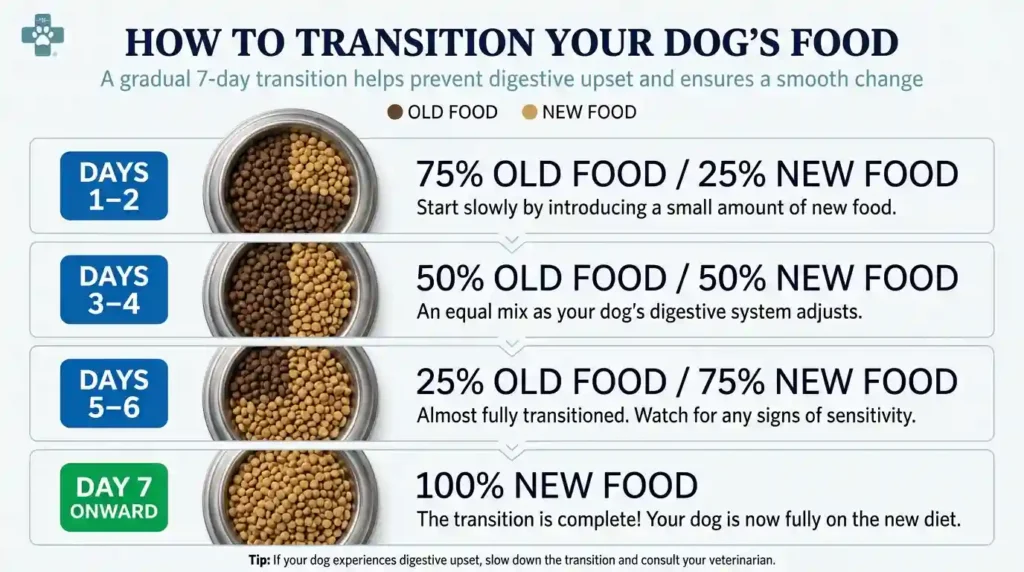
14.1 Step-by-Step Dog Food Transition Schedule
Most healthy dogs benefit from switching foods gradually over approximately seven to ten days.
| Days | Current food | New Pure Balance food |
| 1–2 | 75% | 25% |
| 3–4 | 50% | 50% |
| 5–6 | 25% | 75% |
| 7 onward | 0% | 100% |
These percentages describe the transition proportions, not equal volumes for foods with different caloric densities.
Sensitive dogs may require a slower schedule under veterinary guidance.
14.2 Signs Your Dog Is Adjusting Well
A successful transition usually involves normal appetite, consistent stool quality, comfortable digestion, and stable behavior.
Some mild changes in stool consistency may occur during the switch.
However, persistent diarrhea, vomiting, pain, or lethargy should not be dismissed as a routine adjustment.
14.3 Warning Signs of Food Intolerance or Digestive Problems
Potential concerns include ongoing loose stools, repeated vomiting, abdominal discomfort, excessive gas, persistent itching, or refusal to eat.
Symptoms can result from many causes beyond food intolerance.
Seek veterinary care promptly for repeated vomiting, bloody stool, severe diarrhea, marked lethargy, dehydration, or difficulty breathing.
14.4 What to Monitor During the First 30 Days
Week 1: Appetite, Stool Quality, and Digestive Adjustment
Monitor eating behavior, stool consistency, vomiting, and any change in appetite.
Keep meal times and treat intake consistent.
Week 2: Energy, Feeding Behavior, and Weight
Observe general energy, normal activity, and whether the dog is eating the expected amount.
Weigh the dog when practical, using the same scale and similar conditions.
Week 3: Skin, Coat, and Stool Consistency
Look for persistent itching, changes in stool quality, or other emerging symptoms.
Coat changes can take longer to become apparent and should not be interpreted as proof of nutritional success or failure after only a few weeks.
Week 4: Overall Tolerance and Body Condition
Review the dog’s weight, body condition, appetite, stool quality, and overall comfort.
A stable, healthy dog may continue on an appropriate formula, while unresolved concerns should be discussed with a veterinarian.
14.5 When to Stop the Food and Contact Your Veterinarian
Stop feeding a suspected problematic food and seek veterinary guidance when significant or persistent adverse symptoms occur.
Severe symptoms require urgent care regardless of whether the food is the cause.
Do not repeatedly reintroduce a suspected allergen without veterinary advice.
14.6 Printable 30-Day Feeding Observation Checklist
| Observation | What to record |
| Food and amount | Recipe, daily quantity, treats |
| Appetite | Normal, reduced, or increased |
| Stool quality | Consistency and frequency |
| Digestive signs | Vomiting, gas, discomfort |
| Skin and coat | Itching, redness, visible changes |
| Energy | Normal or unusual activity |
| Weight | Periodic measurements |
| Notes | Medication changes, illness, veterinary advice |
Food tracking works best when combined with a consistent routine.
Our Dog Behavior and Training resources also explore how everyday habits and feeding routines fit into a dog’s broader care.
15. Pure Balance Dog Food Storage and Shelf Life
15.1 How to Store Pure Balance Dry Dog Food Properly
Dry food should be stored in a cool, dry location away from direct sunlight, heat, pests, and moisture.
Keep the original bag tightly closed. If using an airtight storage container, placing the original bag inside it helps preserve important identifying information.
Clean and dry the container before adding a new bag.
15.2 How to Store Opened Pure Balance Wet and Fresh Food
Refrigerate unused canned or pouched food promptly after opening, unless the manufacturer provides different handling instructions.
Keep refrigerated food at 40°F (4°C) or below and follow the product’s stated use-after-opening period.
Fresh or roll-style products may require different storage methods, so check their packaging carefully.
15.3 How to Read the Best-By Date and Lot Number
The best-by date identifies the period during which the manufacturer expects the unopened food to retain its intended quality when properly stored.
The lot number helps identify a specific production batch.
Both details are important if a recall or quality complaint occurs.
15.4 Signs That Dog Food May Be Spoiled or Contaminated
Warning signs can include rancid odors, visible mold, moisture damage, unusual discoloration, insect activity, or damaged cans.
A swollen or leaking can should not be fed.
Discard suspicious food safely and consult the manufacturer or veterinarian if an animal may have consumed contaminated food.
15.5 Does Bag Size Affect Freshness and Storage Convenience?
Large bags often cost less per pound, but they may remain open longer.
Fats can oxidize during storage, especially when food is repeatedly exposed to air, heat, or moisture.
Choose a package size that your dog can finish reasonably quickly while following the manufacturer’s storage instructions.
16. How Pure Balance Dog Food Was Evaluated
16.1 Review Methodology and Evaluation Criteria
This review considers nutritional adequacy, ingredients, brand ownership, manufacturing transparency, recipe variety, safety history, practical feeding needs, and value.
The focus is on whether Pure Balance offers a sensible nutritional choice for its intended users rather than judging food quality by marketing language alone.
16.2 Recipe Label and Product Comparison Process
Product families were evaluated by their stated nutritional purpose, ingredient categories, feeding formats, and information available from Walmart and published product reviews.
Because formulations and availability change, the final purchasing decision should always rely on current packaging.
16.3 Research Sources and Veterinary References
The evaluation considers Walmart’s historical brand information, published dog food reviews, product-label information, established canine nutrition principles, and guidance from relevant veterinary and regulatory bodies.
These include AAFCO nutritional adequacy concepts, WSAVA nutritional assessment principles, and FDA pet food safety guidance.
No independent laboratory nutrient analysis was commissioned for this review.
16.4 Editorial Notes and Review Limitations
This article provides general educational information and is not a substitute for individualized veterinary advice.
The 3.5/5 rating is an editorial judgment, not a validated scientific score.
It does not represent first-hand feeding results, a controlled clinical trial, or a verified survey of all Pure Balance customers.
Manufacturing arrangements, recipe availability, prices, nutrient guarantees, and recall information can change after publication.
17. Final Verdict: Is Pure Balance Dog Food Worth Buying?
Pure Balance is worth considering for healthy dogs whose nutritional requirements align with an available recipe.
It offers several meaningful advantages: competitive pricing, named protein ingredients, grain-inclusive choices, specialized Pro+ formulas, and convenient Walmart availability.
Its documented recall history is reassuring, although the absence of recalls is not proof of superior manufacturing quality.
The main limitation is the availability of detailed, independently verifiable information about current manufacturing partners, feeding trials, formulation expertise, and complete nutrient profiles.
For an otherwise healthy adult dog, a suitable grain-inclusive Pure Balance formula can be a reasonable budget option.
For puppies, dogs with diagnosed allergies, animals with complex medical conditions, or owners seeking extensive manufacturer research, a more thoroughly documented formula may be preferable.
Overall verdict: Pure Balance is a good budget contender, but the best choice depends on the individual recipe and the dog eating it.
18. Frequently Asked Questions About Pure Balance Dog Food
Is Pure Balance a good dog food brand?
Yes, it can be a good affordable option for healthy dogs when the chosen formula is nutritionally appropriate.
Who makes Pure Balance dog food?
Walmart owns Pure Balance and uses third-party manufacturers; the exact current producer may vary by product.
Is Pure Balance dog food made in the USA?
The brand is associated with U.S. manufacturing, but the origin of each recipe and its ingredients should be verified.
Is Pure Balance dog food recommended by veterinarians?
Some products are marketed as veterinarian-formulated, but recommendations depend on the individual dog’s needs.
Has Pure Balance dog food ever been recalled?
No Pure Balance-specific recall was identified in the records reviewed through October 2026.
Is Pure Balance dog food grain-free?
Some recipes are grain-free, while others contain grains such as brown rice.
Is Pure Balance good for puppies?
Yes, when the exact formula is labeled complete and balanced for the puppy’s growth requirements.
Is Pure Balance good for dogs with allergies?
Some recipes may suit particular ingredient restrictions, but diagnosed food allergies often require veterinary dietary management.
Is Pure Balance good for sensitive stomachs?
Its sensitive skin and stomach formulas may help some dogs, depending on their individual tolerance.
Does Pure Balance dog food contain chicken?
Many recipes contain chicken, but ingredients vary by formula.
Does Pure Balance use real meat?
Many recipes include named meat or fish ingredients, although their precise nutritional contribution varies.
Is Pure Balance better than Blue Buffalo?
Neither is universally better; compare equivalent formulas, manufacturer information, and suitability for your dog.
Is Pure Balance better than Purina Pro Plan?
Pure Balance may cost less, while Purina Pro Plan offers a broader documented research and specialized nutrition framework.
Is Pure Balance dog food healthy for everyday feeding?
An appropriate complete and balanced Pure Balance formula can support everyday feeding in a healthy dog.
Can Pure Balance cause diarrhea?
Any food change can cause digestive upset in some dogs, especially if introduced too quickly.
Is Pure Balance a Walmart brand?
Yes, Pure Balance is Walmart’s private-label pet food brand.
Does Pure Balance meet AAFCO requirements?
Check the nutritional adequacy statement on the individual product for its intended life stage.
Is Pure Balance good for senior dogs?
It may be suitable, provided the formula meets the dog’s age-related and medical nutritional requirements.
Is Pure Balance dog food worth the money?
It can provide good value when its calories, ingredients, nutritional adequacy, and tolerance fit your dog’s needs.
19. Final Thoughts
So, is Pure Balance dog food good? For many healthy dogs, it is a practical and reasonably priced option with recognizable ingredients, multiple feeding formats, and recipes for different nutritional needs. Its lack of documented brand-specific recalls is encouraging, but limited public information about manufacturing and nutritional research remains an important consideration.
The smartest approach is to compare individual formulas rather than judge the entire brand by its name, packaging, or price. Check the AAFCO statement, current ingredients, calories, and your dog’s age, activity level, and health requirements before choosing.
If you’re considering other foods, explore our Dog Food Brand Reviews for more detailed comparisons. With the right information and veterinary guidance when needed, you can select a diet that supports your dog’s long-term health without unnecessarily stretching your budget.