
Summary
Learning How to calm a dog that barks at the vet starts with understanding why your dog is barking in the first place. For many dogs, the veterinary clinic is full of unfamiliar smells, strange sounds, other animals, slippery floors, close handling, and memories of uncomfortable exams. Barking may be your dog’s way of saying, “I’m scared,” “I need space,” or “I don’t know what is happening.”
The good news is that most dogs can improve with calm preparation, positive reinforcement, desensitization, counterconditioning, smart appointment planning, and support from your veterinary team. This guide explains why dogs bark at the vet, what to do before the appointment, how to manage barking in the waiting room, and how to create better long-term veterinary visits.
Table of Content
- Why Dogs Bark at the Vet
- How to Calm a Dog That Barks at the Vet Before the Visit
- How to Calm a Dog That Barks at the Vet in the Waiting Room
- What to Bring to the Vet for a Barking Dog
- Training Exercises to Reduce Vet Anxiety
- When Barking Turns Into Fear or Aggression
- How Your Veterinarian Can Help
- Common Mistakes Dog Owners Make
- Conclusion
- FAQs
Why Dogs Bark at the Vet
A dog barking at the vet is not always being “bad.” In most cases, barking is communication. Your dog may be overwhelmed by the veterinary clinic environment, worried about being touched by strangers, reacting to other pets, or remembering a previous painful or stressful experience.
Veterinary offices are intense sensory environments. Dogs smell disinfectants, medications, other animals, treats, stress pheromones, and unfamiliar people. They hear barking, whining, metal exam tables, doors opening, phones ringing, and equipment sounds. Add close handling, restraint, vaccines, nail trims, ear checks, temperature checks, or blood draws, and it becomes easy to see why some dogs bark.
Common reasons dogs bark at the vet include:
- Fear or anxiety
- Leash reactivity around other dogs
- Frustration from being restrained
- Overexcitement
- Protective behavior near the owner
- Pain or discomfort
- Lack of socialization
- Negative past experiences
- Stress from car rides
- Sensitivity to handling
The American Animal Hospital Association explains that unfamiliar sights, sounds, smells, and handling can make veterinary visits stressful for pets, and preparation at home can help create more positive visits. AAHA’s stress-free veterinary visit guidance is a helpful external resource for pet owners.
Barking Is Often a Stress Signal
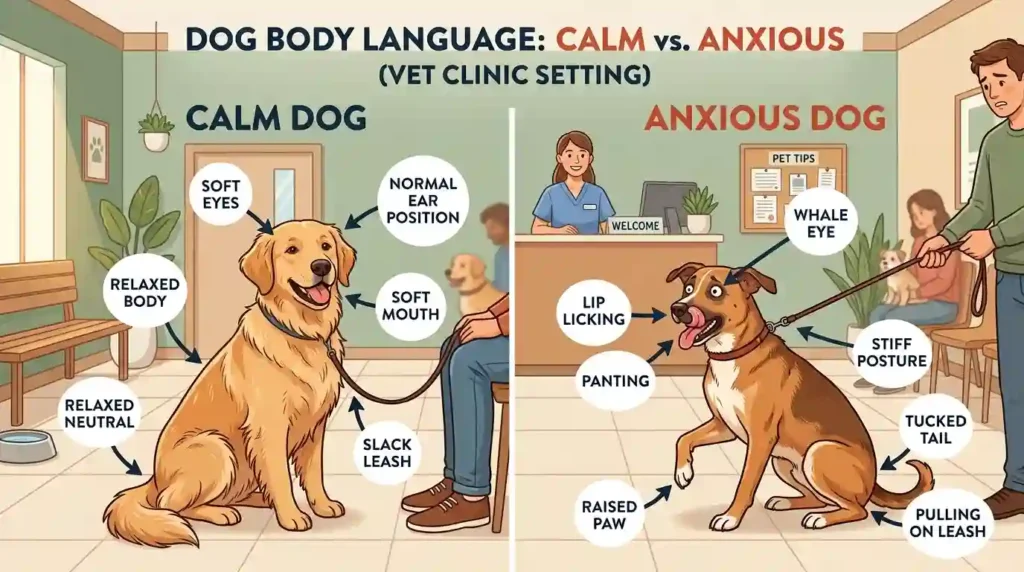
If your dog barks nonstop at the vet, look at the full body language. A stressed dog may pant, pace, tremble, hide behind you, tuck the tail, lick the lips, yawn, refuse treats, growl, raise hackles, or stare intensely at other dogs.
Some dogs bark because they want distance. Others bark because they are overstimulated. A few may bark because they are excited to greet people. The solution depends on the emotional cause.
How to Calm a Dog That Barks at the Vet Before the Visit
The best way to calm a barking dog at the vet is to start before you arrive. Waiting until your dog is already barking in the lobby makes training harder because the dog may already be over threshold.
Practice Calm Handling at Home
Many dogs bark at the vet because they dislike being touched in certain ways. You can reduce this fear by practicing gentle handling at home.
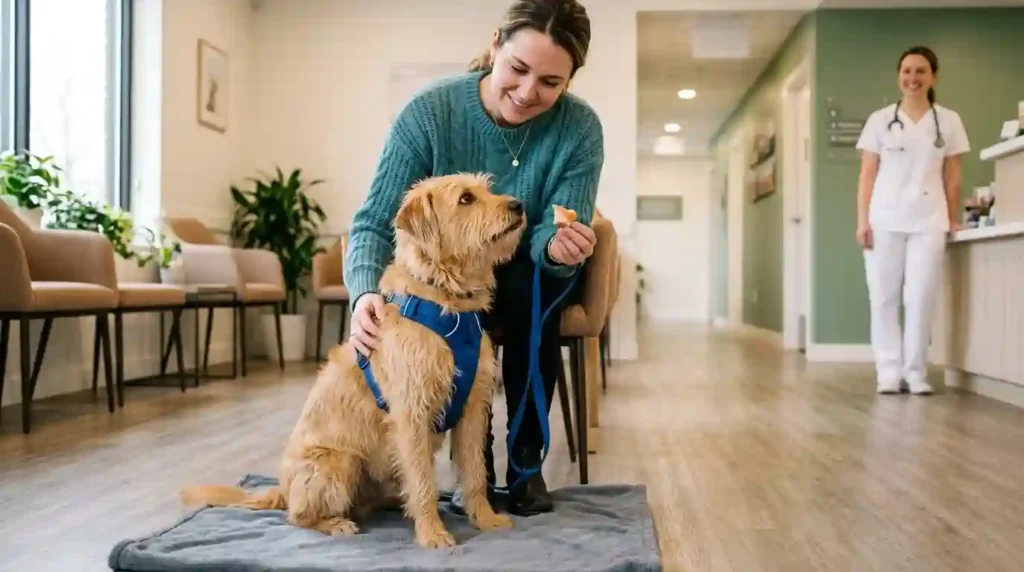
Touch your dog’s paws, ears, mouth, tail, belly, and shoulders for one or two seconds, then reward with a high-value treat. Keep sessions short and positive. Do not force your dog to tolerate long handling sessions right away.
Over time, your dog learns that human hands near sensitive body parts predict good things. This is called cooperative care training, and it can make veterinary exams much easier.
Take Happy Visits to the Clinic
A “happy visit” is a short trip to the veterinary clinic with no exam, needle, or procedure. You may simply walk into the lobby, give treats, say hello to staff, and leave.
Ask your clinic whether they allow brief social visits. Some clinics are happy to help dogs build positive associations when they are not busy.
Start with the parking lot if the lobby is too much. Let your dog sniff, eat treats, and leave before barking begins. Then slowly progress to the entrance, lobby, scale, and exam room.
Use Desensitization and Counterconditioning
Desensitization means exposing your dog to a trigger at a low intensity. Counterconditioning means pairing that trigger with something your dog loves.
For example, if your dog barks when seeing the vet clinic door, start far away in the parking lot. When your dog looks at the clinic calmly, give a treat. If your dog barks, you are too close. Move farther away and make it easier.
This method works best when your dog stays under threshold. A dog under threshold can still eat, listen, sniff, and respond to simple cues. A dog over threshold may bark, lunge, ignore food, or panic.
Exercise Before the Appointment
A short walk before the vet visit can help reduce nervous energy. Avoid exhausting your dog, especially if the visit is for illness, injury, or surgery. The goal is not to tire your dog completely but to help them release some tension.
For high-energy dogs, sniffing walks are especially useful. Sniffing can lower arousal and give dogs a calming mental activity before entering the clinic.
How to Calm a Dog That Barks at the Vet in the Waiting Room
The waiting room is often the hardest part of the visit. Dogs are close to other animals, people are moving around, and the dog may feel trapped on leash.
Call From the Parking Lot
One of the easiest solutions is to avoid the waiting room. Call the clinic when you arrive and ask whether you can wait in the car until an exam room is ready.
This is especially helpful for reactive dogs, fearful dogs, puppies, senior dogs, and dogs recovering from pain or illness.
Create Distance From Other Pets
Distance is your friend. If your dog barks at other dogs, do not sit right beside them. Stand outside, wait near a quiet corner, or ask the receptionist for a less crowded space.
Your dog is not being stubborn. They may simply need more space to feel safe.
Use a Visual Barrier
A visual barrier can reduce barking by blocking triggers. Stand behind a wall, sit behind a chair, use your body as a shield, or face your dog away from other pets.
Some owners bring a towel or light blanket to partially block their dog’s view. Never cover a dog’s face in a way that scares them or restricts breathing. The goal is gentle management, not force.
Reward Quiet Moments
Do not wait for perfect behavior. Reward small wins.
If your dog looks at another dog and stays quiet for one second, reward. If your dog turns back to you, reward. If your dog sniffs the floor instead of barking, reward. These tiny moments build better behavior.
Use soft praise and calm body language. Loud excitement can raise your dog’s arousal and make barking worse.
Teach a Simple Focus Cue
A cue like “look,” “watch me,” or “touch” can redirect your dog before barking starts.
Practice at home first. Say “look,” wait for eye contact, then reward. Once your dog understands, practice in slightly more distracting places. Eventually, you can use the cue in the vet parking lot or waiting area.
What to Bring to the Vet for a Barking Dog
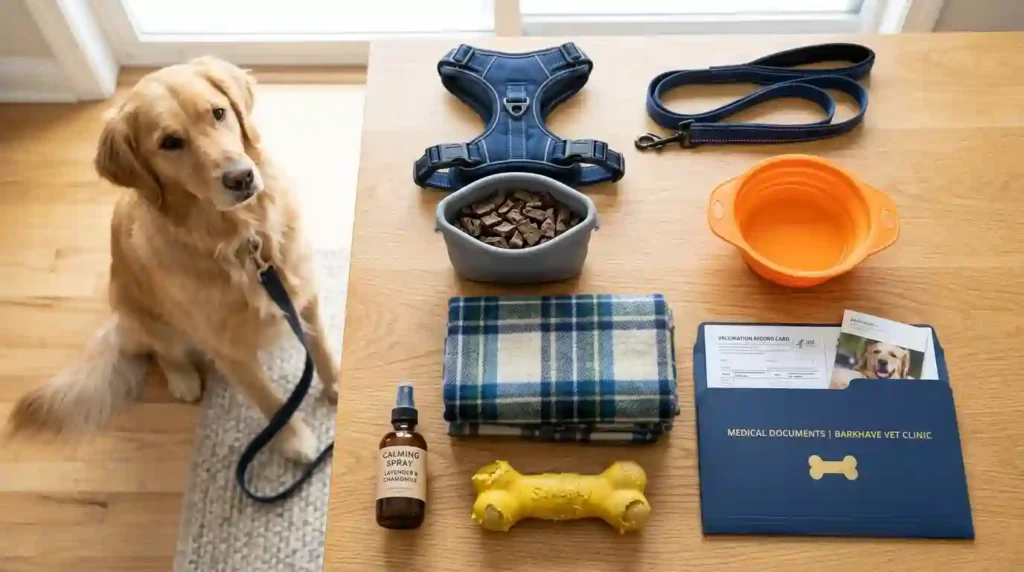
Preparation can make a huge difference. Pack a small “vet visit kit” before you leave home.
High-Value Treats
Bring treats your dog rarely gets at home. Good options include small pieces of chicken, cheese, freeze-dried liver, soft training treats, or a favorite food pouch.
If your vet approves and the visit does not require fasting, arriving slightly hungry may make treats more valuable.
A Secure Harness and Leash
A comfortable harness gives you better control without putting pressure on your dog’s throat. Avoid retractable leashes at the vet. Use a standard leash that keeps your dog close and safe.
A secure setup also prevents accidental escapes in parking lots or clinic entrances.
Familiar Comfort Items
Some dogs calm down with a familiar blanket, mat, or toy. A mat is especially useful because you can teach your dog to settle on it at home, then bring it to the clinic.
This gives your dog a predictable “safe spot” in an unpredictable place.
Calming Products
Some dogs benefit from calming aids such as pheromone sprays, calming wraps, anxiety vests, or vet-approved supplements. These tools are not magic fixes, but they may support a broader training plan.
Always ask your veterinarian before using supplements, especially if your dog takes medication or has a health condition.
Training Exercises to Reduce Vet Anxiety
If you want long-term improvement, practice between appointments. Training should not happen only when your dog is already stressed.
Teach Mat Relaxation
A relaxation mat can help your dog settle in the exam room. At home, place a mat on the floor and reward your dog for stepping on it. Then reward sitting, lying down, and staying relaxed.
Once your dog loves the mat, practice in different rooms, the car, the driveway, and near the vet clinic.
Practice Mock Exams
Do short pretend vet exams at home. Touch one paw, reward. Lift an ear, reward. Look at teeth, reward. Place gentle pressure on the shoulder, reward.
Keep every session easy. If your dog pulls away, growls, or freezes, stop and make the next session simpler.
Pair Vet Sounds With Rewards
Some dogs react to clinic sounds such as barking, metal tables, clippers, or nail trimmers. You can play low-volume recordings of these sounds at home while giving treats.
Start quietly. If your dog reacts, the sound is too loud. Gradually increase volume over several sessions.
Train a Chin Rest
A chin rest is a cooperative care behavior where your dog places their chin in your hand or on a towel. This can help during exams because it gives your dog a predictable position.
Teach it slowly. Hold out your palm. When your dog investigates, reward. Gradually reward longer chin contact. Never force the dog’s head down.
Teach Muzzle Comfort
Muzzle training is not punishment. A properly fitted basket muzzle can protect everyone while also allowing your dog to pant and take treats.
Introduce the muzzle at home with peanut butter, soft food, or treats. Let your dog choose to put their nose inside. Build slowly over days or weeks.
A muzzle should never be slapped on only during scary moments. That creates a negative association.
When Barking Turns Into Fear or Aggression
Some dogs do more than bark. They may growl, snap, lunge, bite, or panic. If this happens, safety comes first.
Know the Warning Signs
Warning signs include stiff posture, hard staring, freezing, snarling, air snapping, whale eye, raised hackles, or refusing food. These signals mean your dog is struggling.
Do not punish growling. Growling is communication. If you punish it, your dog may skip the warning and go straight to biting next time.
Ask for a Fear-Free or Low-Stress Handling Approach
Many veterinary teams use low-stress handling techniques. These may include slower introductions, treat-based handling, minimal restraint, quiet rooms, non-slip mats, and breaks during the exam.
Tell the clinic before the appointment that your dog barks or becomes fearful. This helps them prepare.
Discuss Medication With Your Veterinarian
For some dogs, training alone is not enough at first. Your veterinarian may recommend pre-visit medication to reduce panic and help the dog cope.
Medication is not a failure. For severely anxious dogs, it can make learning possible. Never give human medication or leftover pet medication without veterinary guidance.
How Your Veterinarian Can Help
Your vet team is part of the solution. Be honest about your dog’s behavior. Do not minimize barking, growling, or biting history. The more your clinic knows, the safer and calmer the visit can be.
Schedule Quiet Appointment Times
Ask for the first appointment of the day or a less busy time. A quieter clinic can reduce barking triggers.
Use the Exam Room Quickly
Some clinics can move anxious dogs directly into an exam room instead of waiting in the lobby. This helps dogs who bark at other animals.
Break the Visit Into Smaller Steps
If your dog is very anxious, ask whether the visit can be split into shorter sessions. For example, one visit might focus on a basic exam, while another handles vaccines or bloodwork.
Consider House-Call Veterinary Care
For dogs who panic at clinics, a mobile veterinarian may be an option. This is not available everywhere, but it can be useful for senior dogs, reactive dogs, or dogs with severe vet anxiety.
Common Mistakes Dog Owners Make
Even loving owners can accidentally make vet barking worse. Avoid these common mistakes.
Waiting Until the Appointment to Train
Training should happen before the visit. A dog who is already barking in the waiting room is not in the best state to learn.
Using Punishment
Yelling, leash jerks, or scolding may suppress barking temporarily, but they often increase fear. Your dog may learn that the vet is even scarier.
Use calm management, distance, and rewards instead.
Forcing Greetings
Do not force your dog to greet staff, other dogs, or strangers. A nervous dog needs choice and space.
Ignoring Pain
A dog that suddenly starts barking at the vet may be in pain. Ear infections, dental pain, arthritis, injuries, skin problems, and stomach discomfort can make handling feel threatening.
Bringing the Wrong Energy
Dogs notice our tension. If you are embarrassed, frustrated, or nervous, your dog may become more alert. Take slow breaths, speak softly, and move calmly.
Related Barking Behavior Guides
Barking can happen in many everyday situations, not just at the veterinary clinic. If your dog becomes vocal after grooming or bathing, read this helpful guide on Dog Barking After a Bath.
If you have a young dog that reacts to other dogs, especially mature dogs, you may also find this guide useful: My Puppy Bark at Older Dogs.
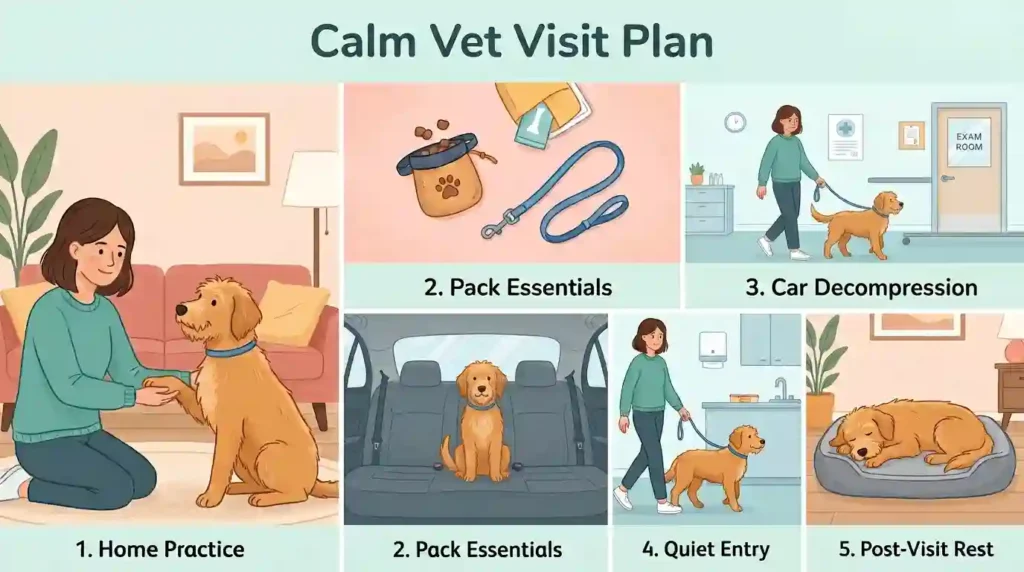
Step-by-Step Vet Visit Plan for a Barking Dog
Here is a simple plan you can follow.
One Week Before the Visit
Practice handling exercises for two to five minutes daily. Touch paws, ears, and mouth gently, then reward. Practice getting in and out of the car calmly. If possible, visit the vet parking lot for treats without going inside.
One Day Before the Visit
Prepare your treat pouch, leash, harness, records, medication if prescribed, and comfort items. Call the clinic to explain that your dog may bark and ask whether you can wait in the car.
Appointment Day
Take your dog for a short sniffing walk. Keep your own energy calm. Arrive early enough that you do not feel rushed, but do not spend unnecessary time in the waiting room.
At the Clinic
Reward calm behavior immediately. Keep distance from other pets. Use simple cues your dog already knows. Ask staff for help if your dog is struggling.
After the Visit
Give your dog time to decompress. Some dogs need a nap, quiet room, or gentle walk after a stressful visit. Avoid crowded places immediately afterward.
Conclusion
Knowing how to calm a dog that barks at the vet is about more than stopping noise. It is about helping your dog feel safer, more confident, and easier to handle during important medical care.
Start with preparation at home. Practice gentle handling, reward calm behavior, take happy visits, and build positive associations with the clinic. During the appointment, use distance, treats, visual barriers, and calm communication. If your dog has severe fear, aggression, or panic, work with your veterinarian on a low-stress plan that may include behavior training, medication, muzzle conditioning, or special scheduling.
Your dog does not need to love the vet overnight. Small improvements matter. A quieter parking lot visit, one calm moment in the lobby, or a successful exam with fewer barks is progress. With patience and the right plan, vet visits can become less stressful for both you and your dog.
FAQs
Why does my dog bark so much at the vet?
Your dog may bark at the vet because of fear, anxiety, unfamiliar smells, other animals, restraint, pain, or past negative experiences. Barking is often a stress signal, not simple disobedience.
How do I stop my dog barking in the vet waiting room?
Create distance from other pets, use high-value treats, reward quiet moments, face your dog away from triggers, and ask the clinic if you can wait in the car until the exam room is ready.
Should I punish my dog for barking at the vet?
No. Punishment can increase fear and make future vet visits worse. Use positive reinforcement, calm handling, and management strategies instead.
Can I give my dog calming medicine before the vet?
Only give calming medication if your veterinarian recommends it. Some dogs with severe vet anxiety benefit from pre-visit medication, but it must be prescribed and dosed correctly.
What treats are best for calming a dog at the vet?
Use high-value treats such as chicken, cheese, soft training treats, freeze-dried liver, or another food your dog loves. Small, soft treats work best because your dog can eat them quickly.
Is muzzle training good for dogs that bark at the vet?
Yes, when done properly. A basket muzzle can keep everyone safe and still allow your dog to pant and take treats. Muzzle training should be slow, positive, and practiced before the vet visit.
Why is my dog calm at home but reactive at the vet?
The vet clinic has many triggers your home does not have, including strange animals, medical smells, slippery floors, unfamiliar people, and uncomfortable handling. Your dog may feel safe at home but overwhelmed at the clinic.
Can socialization help my dog bark less at the vet?
Yes. Positive socialization, happy visits, and gentle exposure to clinic-like experiences can help. The goal is not to force interaction but to teach your dog that new places and people can be safe.
What should I tell my vet if my dog barks or growls?
Tell your vet before the appointment. Explain what triggers your dog, whether your dog has bitten before, what treats they like, and what handling they dislike. This helps the clinic plan a safer visit.
How long does it take to train a dog to stay calm at the vet?
It depends on the dog. Mild barking may improve in a few weeks, while severe vet anxiety may take months of training, happy visits, and veterinary support. Consistency matters more than speed.