


Summary
If you have wondered, “Why does my dog bark when I laugh loudly?” the answer usually involves sound sensitivity, excitement, uncertainty, or learned behavior. Loud laughter can be sudden, high-pitched, and physically expressive. To a dog, it may resemble an alarm sound, playful vocalization, distressed noise, or invitation to join a social interaction. Some dogs bark because they are excited, while others feel startled or anxious. The meaning becomes clearer when you consider the dog’s posture, facial expression, bark pitch, environment, and previous experiences. By identifying the emotional reason behind the barking, you can use positive reinforcement, gradual desensitization, and calm alternative behaviors to change the response without frightening or punishing your dog.
Table of Contents
- Why Does My Dog Bark When I Laugh Loudly?
- What Your Dog May Think Laughter Means
- How to Interpret the Bark Through Body Language
- Is Loud Laughter Harmful to Dogs?
- How to Stop My Dog Bark When I Laugh Loudly
- Common Training Mistakes
- When to Contact a Veterinarian or Behavior Specialist
- Conclusion
- Frequently Asked Questions
Why Does My Dog Bark When I Laugh Loudly?
Dogs do not interpret human laughter in exactly the same way people do. Humans understand laughter through language, social context, facial expressions, and cultural experience. Dogs rely more heavily on sound patterns, movement, scent, previous associations, and body language.
A loud laugh can contain several characteristics that attract a dog’s attention:
- A sudden increase in volume
- Repeated high-pitched sounds
- Rapid breathing or gasping
- Forward movement or body shaking
- Clapping, leaning, or slapping furniture
- Changes in the emotional energy of the room
Your dog may therefore respond to your laughter as a significant event rather than background noise. Barking is one of the tools dogs use to investigate, alert, request attention, express excitement, or create distance from something uncomfortable.
The ASPCA explains that dogs bark for different reasons, including alarm, attention, greeting, frustration, and socially facilitated behavior. Understanding the motivation behind the vocalization is essential before trying to change it. You can read its authoritative overview in this guide to common barking behavior.
Your Laugh Startles Your Dog
The simplest explanation is that your dog is surprised.
A quiet room may suddenly fill with a loud burst of laughter. Your dog’s nervous system detects the rapid change before the animal has time to determine whether the sound is safe. An alert bark may follow automatically.
This type of bark is often short and sharp. Your dog may immediately turn toward you, raise its head, reposition its ears, or stand up from a resting position. Once the dog recognizes that nothing dangerous is happening, it may settle again.
A startle response does not necessarily mean your dog has a serious fear problem. Even confident dogs react to unexpected noises. The important question is how quickly your dog recovers.
A dog that gives one or two barks and then relaxes is probably responding to novelty. A dog that continues barking, hides, trembles, paces, or refuses to approach may be experiencing genuine noise-related anxiety.
Your Laughter Resembles an Animal Vocalization
Human laughter can sound unusual from a canine perspective. Some laughs include squeals, snorts, gasps, repeated exhalations, and high-frequency notes. These sounds may resemble whining, yelping, howling, panting, or excited play vocalizations.
Your dog may not know whether you are happy, distressed, injured, or trying to communicate. Barking can be an attempt to ask, “What is happening?”
This is particularly likely when a person bends forward, covers their face, holds their stomach, or struggles to breathe while laughing. Those movements may look different from the relaxed body language the dog normally associates with calm conversation.
Some dogs approach the laughing person, lick their face, paw at them, or whine between barks. These behaviors can indicate social concern or an effort to investigate, rather than disobedience.
Your Dog Wants to Join the Excitement
Dogs are highly responsive to changes in group energy. When people become animated, speak loudly, clap, or move quickly, many dogs become excited too.
In this situation, barking may function as social participation. Your dog might interpret loud laughter as the beginning of play, a greeting ritual, or a lively household activity. The animal is essentially joining the moment with its own vocalization.
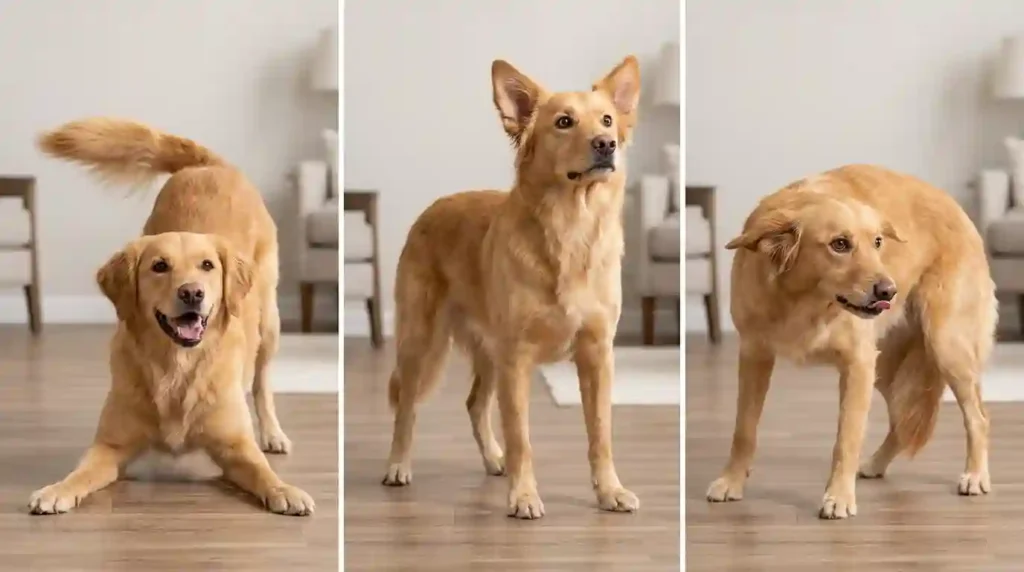
Signs of excitement-related barking include:
- A loose, wiggly body
- A broadly wagging tail
- Play bows
- Bouncing or spinning
- Bringing a toy
- Open, relaxed mouth
- High-pitched or repetitive barking
- Running between people
This response is common in social, energetic dogs and young dogs with limited impulse control. The barking may be inconvenient, but the emotional state behind it is usually positive.
Barking Has Earned Attention Before
Dogs repeat behaviors that produce useful results. If barking when you laugh causes you to look at your dog, speak to it, touch it, offer a toy, or give it food, the behavior may become reinforced.
Even saying “Stop barking” gives the dog attention. From the dog’s perspective, barking successfully changed your behavior.
A learned pattern can develop:
- You laugh.
- Your dog barks.
- You look at or talk to the dog.
- The dog learns that barking creates interaction.
- The response becomes faster and more persistent over time.
This does not mean the dog is manipulating you in a calculated way. It means the dog has discovered a predictable connection between an action and its consequence.
Your Dog Feels Uncertain or Anxious
Some dogs are sensitive to sudden noises, intense movements, or unpredictable human behavior. Loud laughter may make them uneasy because they cannot identify its meaning.
An anxious dog may bark to increase distance or stop the sound. It might also move away, retreat behind furniture, or seek another family member.
Watch for stress signals such as:
- Ears held back
- Tail tucked or lowered
- Repeated lip licking
- Yawning when the dog is not tired
- Turning the head away
- Showing the whites of the eyes
- Panting without heat or exercise
- Pacing
- Trembling
- Crouching
- Refusing treats
- Attempting to leave
Barking combined with these behaviors is different from playful vocalization. The dog is not trying to join the fun. It is communicating discomfort.
Your Dog Has Formed a Negative Association
Dogs learn through association. A sound can become emotionally significant when it repeatedly occurs before or during another event.
For example, your dog may have heard loud laughter during rough handling, crowded gatherings, arguments, teasing, or chaotic play. It may now predict that laughter will be followed by an uncomfortable experience.
The association may be specific. Your dog might react only when one particular person laughs, when several guests are present, or when laughter happens near the dog’s bed. It may remain calm when hearing softer laughter in another setting.
Careful observation can reveal whether the trigger is truly the laugh or the larger situation surrounding it.
Breed, Temperament, and Early Experience Can Affect the Response
Some dogs are naturally more alert and vocal than others. Herding breeds, livestock guardian dogs, terriers, and many watchdog breeds may respond quickly to unusual sounds.
Breed tendencies are only part of the picture. Individual temperament, socialization, genetics, training history, age, health, and previous exposure to household noises all influence behavior.
A puppy that rarely heard animated human voices during early development may find loud laughter surprising. A rescue dog may have an unknown history involving noisy environments. A senior dog experiencing sensory or cognitive changes may also become more reactive to familiar events.
Breed alone should never be used to dismiss persistent fear or excessive barking. The dog’s complete behavior and environment matter more than a general breed stereotype.
What Your Dog May Think Your Laughter Means
From your dog’s perspective, laughter does not have one fixed definition. Depending on the context, it may communicate several possible messages.
“Something Unexpected Happened”
A brief alarm bark often means the dog noticed a sudden change. This is especially likely if the dog was asleep, resting, or facing away from you.
“Are You Okay?”
Dogs monitor the movements and emotional states of familiar people. Gasping, bending over, crying with laughter, or holding your stomach may look like distress. Approaching, pawing, licking, whining, and barking can be investigative or socially concerned behavior.
“Are We Playing?”
Fast movement, smiling, high-pitched sounds, and energetic gestures may resemble a play invitation. The dog may bark, jump, bow, or bring a toy.
“Please Stop That Sound”
A noise-sensitive dog may use barking as a distance-increasing signal. It is asking for relief from something confusing or unpleasant.
“Pay Attention to Me”
If laughter normally shifts attention away from your dog and toward another person, the dog may bark to re-enter the interaction.
“I Hear Everyone Making Noise, So I Will Too”
Dogs sometimes vocalize when others in their social group become vocal. Barking may be socially facilitated, meaning the surrounding activity increases the likelihood that the dog will participate.
How to Interpret Barking Through Body Language
A bark cannot be interpreted accurately in isolation. Its pitch, frequency, timing, and accompanying body language provide the real meaning.
Signs the Barking Is Playful
Playful barking is commonly paired with loose movement. The dog may bounce, run in curves, bow, wag its entire rear end, or bring an object.
The bark may be high-pitched and repeated, but the dog’s body remains flexible. The dog may pause easily and return to normal behavior when the excitement ends.
Signs the Dog Is Alert or Startled
An alert dog often freezes briefly, faces the sound, raises its ears, and shifts its weight forward. The bark may be sharp and isolated.
A mildly startled dog should recover once it understands the situation. It may sniff, shake its body, lie down, or resume its previous activity.
Signs the Dog Is Frightened
A frightened dog tends to make itself smaller or create distance. Look for a tucked tail, lowered body, flattened ears, avoidance, trembling, or attempts to hide.
Some fearful dogs move forward while barking because they have learned that loud behavior makes uncomfortable things stop. Forward movement does not always mean confidence.
Signs the Situation Could Escalate
Take the response seriously if barking occurs with:
- A rigid, motionless body
- A hard stare
- Repeated growling
- Raised hackles
- Lip lifting
- Snapping
- Lunging
- Blocking movement
- Guarding a particular person or area
Do not lean over, grab, hug, or scold a dog showing these signals. Increase the distance and allow the animal to settle.
Is Loud Laughter Harmful to Dogs?
Ordinary laughter is not inherently harmful to a healthy dog. Many dogs live comfortably in active homes and quickly learn that human laughter is harmless.
However, the intensity and context matter. Shouting or laughing directly into a dog’s face can be overwhelming. Sudden close-range noise may be especially uncomfortable for dogs with noise sensitivity, ear pain, neurological conditions, or a history of frightening experiences.
Repeatedly provoking a dog to capture a barking reaction for entertainment is not recommended. Even when the behavior appears amusing, deliberately triggering fear or agitation can weaken trust and reinforce reactivity.
Respect the dog’s signals. If the animal moves away, hides, lowers its body, or repeatedly asks for distance, give it space.
How to Stop My Dog Bark When I Laugh Loudly
Training should focus on changing the dog’s emotional response and teaching a calmer alternative. Punishment may suppress the noise temporarily, but it does not explain what the dog should do instead.
Step 1: Identify the Exact Trigger
Observe several episodes without intentionally provoking your dog.
Record:
- Who was laughing
- How loud the laugh was
- How close the dog was
- Whether several people were present
- What the dog was doing beforehand
- The number and pitch of the barks
- The dog’s body language
- How long recovery take
- What happened immediately after barking
A simple behavior log can reveal patterns. You may discover that the dog reacts to clapping, sudden inhalation, leaning forward, or group excitement rather than laughter itself.
Step 2: Reduce the Intensity
Begin training at a level that does not trigger barking. A quiet chuckle is more useful than a full-volume laugh.
Your dog should notice the sound while remaining able to eat, think, and respond to familiar cues. If the dog barks, freezes, retreats, or refuses food, the exercise is too difficult.
Distance can also lower intensity. Practice from across the room rather than directly beside the dog.
Step 3: Pair Soft Laughter With Something Positive
This process is called counterconditioning. The goal is to change what laughter predicts.
Try the following sequence:
- Give a brief, soft laugh.
- Immediately place a high-value treat on the floor.
- Pause and allow the dog to relax.
- Repeat several times.
- End the session before the dog becomes overstimulated.
With repetition, the dog may begin to hear laughter and look calmly toward you in anticipation of a reward.
The treat should follow the laugh, not the bark. Timing matters. You are building an association between the sound and a positive consequence.
Step 4: Increase Volume Gradually
Once your dog remains relaxed during soft laughter, increase the intensity in very small steps.
You might progress from:
- A quiet chuckle
- A slightly louder chuckle
- Two seconds of natural laughter
- Louder laughter from farther away
- Natural laughter at a normal distance
- Laughter involving two people
- Laughter with mild movement
Do not move to the next level until your dog is comfortable at the current one. Progress may take several sessions or several weeks, depending on the dog’s sensitivity
Step 5: Teach an Alternative Behavior
Give your dog a simple action that is incompatible with frantic barking. Useful alternatives include:
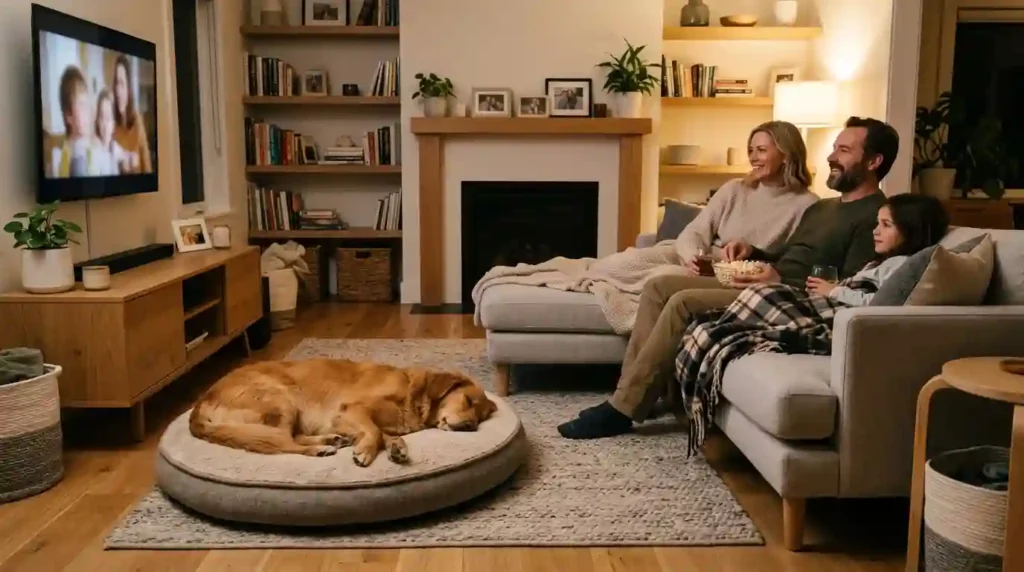
- Going to a mat
- Looking at you
- Touching your hand with its nose
- Picking up a toy
- Sitting beside you
- Searching for scattered treats
Teach the behavior in a calm environment first. Once it is reliable, practice it after a gentle laugh.
For example:
- Laugh softly.
- Say “mat.”
- Reward the dog for moving to the mat.
- Offer an additional reward for remaining quiet.
Over time, laughter can become a cue to perform the calm routine.
Step 6: Reinforce Quiet Moments
Notice and reward the behavior you want throughout the day. Calmness should be valuable even when no trigger is present.
Offer quiet praise, a treat, or access to a preferred activity when your dog:
- Hears a household sound without barking
- Settles while people talk
- Remains on its bed during conversation
- Looks at you instead of vocalizing
- Recovers quickly after being startled
Dogs learn faster when calm behavior is reinforced consistently rather than noticed only after a problem begins.
Step 7: Use a Quiet Cue Carefully
A quiet cue can be useful, but it should not be shouted over the barking.
First, wait for a natural pause. Say “quiet” in a calm voice, mark the silence with “yes” or a clicker, and provide a reward. Gradually increase the length of silence required before the reward.
The cue will be less effective if the dog is highly frightened or over threshold. In that situation, increasing distance and reducing intensity should come before obedience training.
Step 8: Prepare for Guests and Group Laughter
Dogs often react more intensely when several people are laughing. Group situations combine sound, movement, unfamiliar people, and social excitement.
Before visitors arrive:
- Provide suitable physical exercise
- Offer a sniffing or food-search activity
- Prepare a quiet resting area
- Place the dog’s mat away from the center of activity
- Give a long-lasting chew or food toy
- Ask guests not to stare at or tease the dog
Management is not a failure. It prevents the dog from rehearsing unwanted behavior while training is still developing.
Common Training Mistakes
Yelling at the Dog
Shouting can increase arousal and may sound like you are joining the barking. It can also make an anxious dog more concerned about laughter.
Use a calm voice and create distance when necessary.
Punishing Fear-Based Barking
Punishment does not remove the emotional reason for barking. A dog may stop vocalizing while remaining afraid, making its discomfort harder to recognize.
Avoid physical corrections, spray bottles, intimidation, and tools designed to create pain or fear.
Laughing Harder to “Get the Dog Used to It”
Flooding a dog with the full-strength trigger can make sensitivity worse. Effective exposure stays below the point at which the dog becomes distressed.
Rewarding the Bark by Accident
Repeatedly petting, picking up, feeding, or entertaining a dog immediately after attention-seeking barking can strengthen the pattern.
Instead, create brief quietness before offering attention. For a frightened dog, calmly increasing distance is appropriate, but avoid turning every bark into an exciting social event.
Expecting Immediate Results
Behavior changes through repetition. One successful session does not mean the response has been completely retrained.
Practice briefly and consistently. End while the dog is still relaxed.
Ignoring the Wider Sound Sensitivity
A dog that reacts to laughter may also bark at television audio, crying, coughing, sneezing, doorbells, alarms, or animal noises. For example, some dogs become highly vocal when hearing recorded canine sounds. The related guide, Dog Barking at the Sound of Other Dogs on YouTube, explains why digital sounds can trigger alertness, excitement, or territorial responses.
When to Contact a Veterinarian or Behavior Specialist
Professional support is appropriate when the response is intense, sudden, or worsening.
Contact your veterinarian if:
- The behavior appeared suddenly
- Your dog seems sensitive when its head or ears are touched
- The dog shakes its head or scratches its ears
- It appears disoriented
- It has difficulty settling after noises
- A senior dog develops new vocal or fearful behavior
- The barking occurs with changes in appetite, sleep, movement, or social behavior
Medical discomfort can influence irritability and noise sensitivity. A veterinary examination can help rule out ear disease, pain, sensory changes, or other health problems.
Consult a qualified positive-reinforcement trainer or veterinary behaviorist if the dog:
- Panics during laughter or other household sounds
- Growls, snaps, or lunges
- Guards a person who is laughing
- Cannot take food around the trigger
- Takes a long time to recover
- Becomes more reactive despite careful training
- Has bitten or attempted to bite
A professional can evaluate the dog in context and create a training plan that keeps everyone safe.

Conclusion
When a dog barks at loud laughter, the animal is responding to more than humor. It may hear a startling sound, notice unusual body movements, become socially excited, seek attention, or feel uncertain about what is happening.
The dog’s body language provides the most reliable clues. Loose movement, play bows, and toy-seeking point toward excitement. A tucked tail, avoidance, trembling, or prolonged barking suggests discomfort. A brief bark followed by rapid recovery is more consistent with a simple startle response.
Avoid scolding or deliberately provoking a reaction. Instead, introduce laughter gradually, pair it with positive experiences, reward quiet behavior, and teach a predictable alternative such as going to a mat. With patient practice, most dogs can learn that laughter is a normal and safe part of family life.
Seek professional help when barking is accompanied by panic, aggression, pain-related symptoms, or a sudden behavioral change.
Frequently Asked Questions
Why does my dog bark only when I laugh, but not when other people laugh?
Your dog may be especially sensitive to the pitch, volume, rhythm, or body movements involved in your laugh. The response could also be based on a learned association. For example, your laughter may frequently occur during exciting play or social gatherings, while another person’s laughter does not predict the same events.
Observe whether your dog reacts differently when you laugh softly, turn away, remain still, or increase your distance.
Is my dog trying to tell me to stop laughing?
Possibly. Barking accompanied by avoidance, pinned ears, a tucked tail, lip licking, or attempts to leave can indicate that the dog wants the sound to stop.
If the body remains loose and the dog brings a toy or play bows, the barking is more likely an attempt to join the excitement.
Does my dog think I am crying when I laugh?
Some dogs may have difficulty distinguishing intense laughter from crying, gasping, or distressed vocalization. This is especially possible when you cover your face, bend over, or produce breathless sounds.
A dog that approaches, licks, paws, or whines may be investigating whether you are okay.
Why does my dog jump on me when I laugh?
Jumping can result from excitement, attention-seeking, social concern, or an attempt to interrupt unusual behavior. Teach an alternative such as sitting, touching your hand, fetching a toy, or going to a mat. Reward the alternative before the dog becomes highly aroused.
Should I ignore my dog when it barks at laughter?
Ignoring can help when barking is clearly maintained by attention, but it is not appropriate as the only response to fear.
If your dog appears playful and demands interaction, wait for a brief pause before providing attention. If it appears frightened, reduce the sound, create distance, and use gradual positive training.
Can dogs understand that humans laugh because they are happy?
Dogs can learn that laughter occurs in positive social situations, particularly when it is paired with relaxed posture, friendly interaction, and predictable routines. However, they are unlikely to understand humor in the same conceptual way people do.
They learn what laughter means through repeated experience and context.
Why does my puppy bark when everyone laughs?
Puppies have limited experience with sudden household sounds and may become excited or startled by group laughter. They also have less developed impulse control than adult dogs.
Use calm, brief exposure and reward the puppy for keeping four paws on the floor, looking at you, or settling on a mat.
Will my dog eventually grow out of barking at laughter?
Some puppies become less reactive as they mature and gain experience, but repeatedly practiced behavior can become stronger. Do not rely on age alone. Reinforce calm responses and prevent barking from becoming the dog’s established routine.
Can I play recordings of laughter to train my dog?
Recordings can be useful because the volume is easy to control. Begin at a very low level while the dog is relaxed and pair the sound with treats or a calming activity.
Stop or reduce the volume if the dog stiffens, retreats, barks repeatedly, or refuses food. Recorded audio may not produce exactly the same response as live laughter because it lacks human movement and social context.
Is barking at laughter a sign of aggression?
Barking alone does not establish aggression. Consider the whole behavior. A loose body and wagging tail suggest excitement, while stiffness, staring, growling, lip lifting, snapping, and lunging require greater caution.
Give the dog space and contact a qualified behavior professional if threatening behavior occurs.