


Summary
If you are wondering what do Beagles eat, the simple answer is a complete and balanced dog food formulated for their life stage, size, activity level, and health. Most Beagles thrive on a measured diet containing high-quality animal protein, moderate healthy fat, digestible carbohydrates, dietary fiber, essential fatty acids, vitamins, minerals, and constant access to fresh water. Puppies need growth-formulated puppy food, healthy adults need calorie-controlled adult dog food, and older Beagles may benefit from digestible senior dog food.
Choosing the food is only half the job. Beagles are enthusiastic, food-motivated scent hounds with an impressive ability to find snacks. Their ravenous appetite makes portion control, a consistent feeding schedule, treat management, and regular exercise essential. This guide explains what Beagles should eat, how much to feed a Beagle, which food formats work best, and how to protect this famously hungry breed from obesity.
Table of Contents
- What Do Beagles Eat?
- Understanding Beagle Nutrition
- What Do Beagles Eat at Each Life Stage?
- How Much Food Should a Beagle Eat?
- Best Dry Dog Food for Beagles
- Other Types of Beagle Food
- Food Allergies and Digestive Problems
- Weight Management
- Safe Treats and Toxic Foods
- Amazon Product Suggestions
- Changing Your Beagle’s Food
- Conclusion
- Frequently Asked Questions
What Do Beagles Eat? The Simple Answer
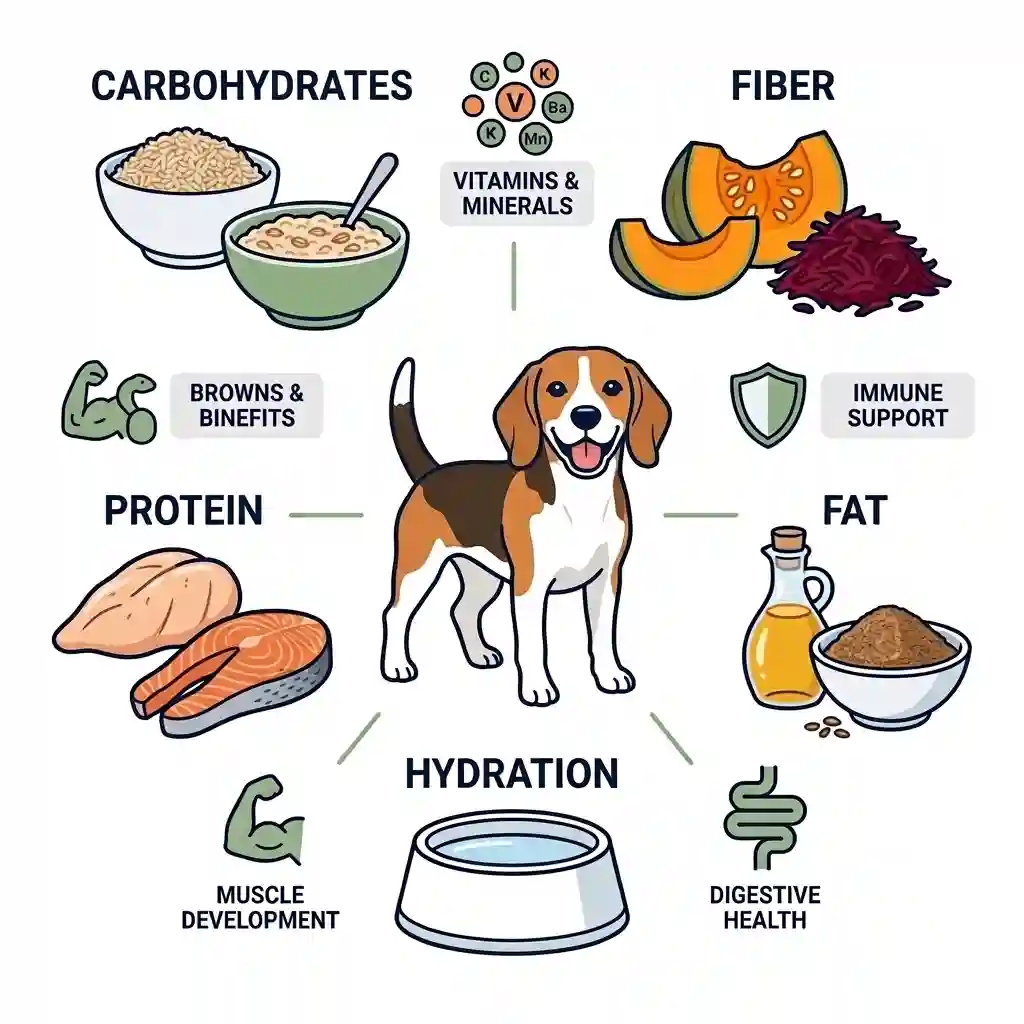
Beagles should eat a nutritionally complete food designed for dogs, not an improvised collection of meat, vegetables, and table scraps. A suitable everyday diet should provide:
- High-quality animal protein for muscle development and tissue repair
- Healthy fat for energy, palatability, and nutrient absorption
- Digestible carbohydrates for readily available energy
- Dietary fiber for digestive health and fullness
- Essential fatty acids for skin, coat, brain, and immune-system support
- Balanced calcium and phosphorus for bones and teeth
- Vitamins, minerals, and antioxidants in appropriate amounts
- Enough calories to maintain a healthy body weight without overfeeding
Commercial dog food can meet these requirements when it carries an appropriate nutritional adequacy statement. Check the label for language showing that the product is complete and balanced for maintenance, growth, or all life stages.
The official AAFCO guidance for selecting pet food recommends matching the food to the pet’s species, life stage, and condition while following the feeding directions on the package. AAFCO does not approve individual brands, but the AAFCO Dog Food Nutrient Profiles provide a recognized framework for nutritional adequacy.
For more general comparisons of formulas, ingredients, and feeding approaches, visit the Dog Food section.
Why Beagles Need Careful Feeding
The Beagle was developed as a scent hound. Its strong nose, determination, active lifestyle, and talent for scent tracking made it an effective hunting companion. Those same characteristics can create challenges in a modern kitchen.
A Beagle may smell food inside a closed bag, follow crumbs through the house, steal from a countertop, or investigate trash that another dog ignores. Most Beagles are not picky eaters. They may continue eating long after their calorie requirement has been met.
This behavior is not proof that the dog is starving. Food motivation is a breed tendency, while begging can also become a learned behavior. If whining, pawing, or staring produces a snack, the Beagle quickly learns to repeat it. Understanding Dog Psychology can help owners separate genuine hunger from habits reinforced by attention and treats.
Understanding Beagle Nutrition
High-Quality Protein
Protein supplies essential amino acids used for muscle, skin, enzymes, hormones, and normal organ function. Look for a clearly named protein source such as chicken, turkey, beef, fish, salmon, poultry, or a named meat meal.
Whole meat is a valuable ingredient, but moisture affects its position on the ingredient list. Fresh chicken contains considerable water, while chicken meal is more concentrated after processing. A named meat meal can therefore supply substantial protein. “Chicken meal” gives the buyer more information than a vague term such as “meat meal.”
Active tracking or agility dogs may do well with a relatively high-protein diet, but the highest protein content is not automatically the best. Digestibility, total calories, fat content, health, and the complete nutrient profile matter more than one percentage.
Organ meat can provide protein, vitamins, and minerals when used as part of a professionally formulated diet. Feeding large amounts of liver or other organs independently can unbalance the diet.
Fat and Essential Fatty Acids
Fat is the most calorie-dense macronutrient, so it must be balanced carefully in an obesity-prone breed. Healthy fat supports energy, flavor, cell function, and absorption of vitamin A, vitamin D, vitamin E, and vitamin K.
Sources may include chicken fat, beef tallow, fish oil, sunflower oil, safflower oil, flaxseed, or coconut oil. Omega-3 fatty acids support the skin, coat, joints, and normal inflammatory response. DHA, a type of omega-3, is particularly important for brain development and vision development in puppies.
A very active Beagle may need more dietary fat than a sedentary or neutered adult. A dog that gains weight easily may need a formula with lower calorie density rather than simply a smaller and unsatisfying portion of rich food.
Carbohydrates and Fiber
Beagles can digest properly prepared carbohydrates. Brown rice, oatmeal, whole grains, pumpkin, chickpeas, vegetables, and selected fruits can contribute energy, dietary fiber, and micronutrients.
Fiber is especially useful for a dog with a large appetite because it can add volume and support fullness. Beet pulp, pumpkin, chicory root, brown rice, and oatmeal are common sources. Prebiotic fiber also feeds beneficial intestinal bacteria and supports the gut microbiome.
More fiber is not always better. Excessive amounts can produce gas, loose stool, or poor nutrient absorption. The appropriate level depends on the dog and the overall formula.
Vitamins, Minerals, and Antioxidants
A complete and balanced diet supplies essential vitamins and minerals in controlled ratios. Calcium and phosphorus support bone development, while antioxidants such as vitamin C and vitamin E contribute to normal immune-system function.
Ingredients such as blueberries, cranberries, carrots, broccoli, cauliflower, and Brussels sprouts can provide fiber and antioxidant compounds. Their presence does not determine the overall quality of a food, however. A few “superfood” ingredients cannot correct an unbalanced recipe.
Healthy dogs eating an AAFCO-compliant diet usually do not need a general vitamin supplement. Adding calcium, vitamin D, or other concentrated nutrients without professional guidance can create excesses as easily as deficiencies.
Water and Hydration
Fresh water should be available throughout the day. Hydration becomes especially important during exercise, warm weather, illness, pregnancy, and nursing.
Wet food contains more moisture than kibble, but dogs eating dry food can remain well hydrated when they drink enough water. Clean the water bowl daily and monitor sudden changes in thirst, as excessive drinking can be associated with diabetes, kidney problems, or other health conditions.
What Do Beagles Eat at Each Life Stage?
Life-stage nutrition accounts for changing energy and nutrient requirements. Puppy food, adult dog food, and senior dog food are not interchangeable merely because they are all made for dogs.
Newborn and Weaning Beagle Puppies
During the first weeks of life, a puppy’s primary nutrition should come from its mother’s milk. If nursing is not possible, use a canine milk replacer recommended by a veterinarian. Cow’s milk is not an appropriate replacement.
Weaning generally begins by mixing puppy food with warm water or canine milk replacer to create puppy mush. The amount of liquid is gradually reduced as the puppy becomes comfortable eating solid food.
Young puppies have small stomachs and high energy requirements, so frequent puppy meals are appropriate. Contact a veterinarian promptly if a very young puppy refuses food, becomes weak, or shows signs of hypoglycemia.
Beagle Puppies From Eight Weeks to One Year
Growing puppies need a formula labeled for growth. Quality puppy food provides more concentrated protein, fat, calories, DHA, calcium, and phosphorus than typical adult maintenance food.
A practical schedule is:
- Eight weeks to about six months: three meals per day
- Six to twelve months: two or three meals per day
- Around twelve months: begin evaluating readiness for adult food
Individual growth varies. Some Beagles continue filling out beyond their first birthday, so choose the transition point with your veterinarian. Weigh the puppy regularly and assess body condition instead of trying to create rapid growth.
Avoid free feeding. Leaving a full bowl available throughout the day makes calorie intake difficult to track and may encourage overeating.
You can explore more age- and breed-focused advice through Dogs Breeds Food.
Adult Beagles
Most adult Beagles should receive two measured meals per day. Their adult food should provide digestible protein, controlled fat, useful fiber, and a calorie level that matches exercise.
An adult that hunts, runs, hikes, or competes may require more calories than a quiet companion dog. However, activity should be evaluated honestly. A daily walk and backyard play do not necessarily justify performance food with very high calorie density.
Adult Beagles commonly weigh about 20 to 30 pounds, although size and build vary. Sex, neuter status, genetics, metabolism, and lifestyle also affect energy requirements.
Owners researching other energetic breeds may find useful comparisons in these guides to Dog Food for Pitbulls and Dog Food for German Shepherds.
Senior Beagles
A Beagle may enter its senior stage at approximately seven to nine years, but age alone does not determine the correct diet. Health, body condition, digestion, dental comfort, and activity level all matter.
Older Beagles often require fewer calories as metabolism and exercise decline. They still need digestible protein to help preserve muscle. A good senior formula may also contain omega-3 fatty acids, antioxidants, prebiotics, and nutrients intended to support joint health.
Senior dogs should receive regular veterinary examinations. Weight gain can be associated with reduced activity or hypothyroidism, while unexplained weight loss can indicate dental disease, digestive trouble, cancer, or other illness.
How Much Food Should a Beagle Eat?
There is no universal cup measurement for every Beagle. The correct feeding amount depends on:
- Body weight
- Body condition score
- Age and life stage
- Sex and neuter status
- Activity level
- Metabolism and genetics
- Health conditions
- Treat calories
- The food’s calories per cup
Adult Beagle Calorie Guide
The table below provides approximate starting points for healthy adults. It is not a prescription for puppies, pregnant dogs, nursing dogs, working hounds, or dogs undergoing medical weight loss.
| Beagle weight | Approximate maintenance calories | Approximate cups at 375 kcal per cup |
| 15 pounds | 475–525 kcal/day | 1.25–1.4 cups |
| 20 pounds | 575–650 kcal/day | 1.5–1.75 cups |
| 25 pounds | 675–775 kcal/day | 1.8–2.1 cups |
| 30 pounds | 775–900 kcal/day | 2.1–2.4 cups |
| 35 pounds | 875–1,025 kcal/day | 2.3–2.75 cups |
A less active, neutered, or overweight Beagle may need less. A highly active dog may need more. Start with the package feeding guidelines, then adjust based on body condition and weight trend.
How Much Should a Beagle Eat a Day?
To calculate a daily ration, locate the food’s calorie density and divide the dog’s estimated calorie need by calories per cup:
Daily calorie requirement ÷ calories per cup = cups per day
For example, if your Beagle needs approximately 700 calories and the food contains 350 calories per cup:
700 ÷ 350 = 2 cups per day
Divide those two cups into two regular mealtimes. If training treats provide 70 calories, reduce the meal portion so the total remains near the daily target.
Do not assume that one cup of every food contains the same number of calories. Switching from a 350-calorie kibble to one containing 450 calories per cup without adjusting the serving can quickly cause weight gain.
Use Accurate Portions
A marked measuring cup is better than a random scoop, but a kitchen scale provides the greatest consistency. Weigh the recommended daily ration in grams, then divide it among meals.
Recheck your Beagle’s weight every two to four weeks after changing food or portions. You should be able to feel the ribs under a light covering of tissue. From above, the body should narrow behind the ribs; from the side, the abdomen should have a visible tuck.
If ribs are difficult to feel and the waist disappears, reduce calories gradually and speak with your veterinarian. If the dog loses weight unexpectedly, do not assume underfeeding is the only cause.
Feeding Schedule
A consistent feeding schedule helps regulate daily intake, supports house-training routines, and makes appetite changes easier to detect.
A typical schedule is:
- Adult breakfast: 7:00–8:00 a.m.
- Adult dinner: 5:00–7:00 p.m.
- Puppy midday meal: added between breakfast and dinner when age-appropriate
Avoid one enormous daily meal. Two meals provide better portion distribution and prevent a hungry Beagle from waiting all day for food.

What Is the Best Dry Dog Food for Beagles?
The best dry dog food for Beagles is a complete and balanced kibble that matches the dog’s life stage and calorie needs. Look beyond the front of the bag and evaluate the following:
Nutritional Adequacy Statement
Choose food labeled for growth, adult maintenance, or the appropriate life stage. “Intermittent or supplemental feeding only” means the product should not serve as the primary diet.
Clearly Identified Protein
Chicken, turkey, beef, salmon, fish, or another named animal protein should contribute meaningfully to the formula. A clearly named meat meal can also be nutritious and protein-rich.
Appropriate Calorie Density
A calorie-dense working-dog formula may make portion control difficult for a sedentary Beagle. Weight-management kibble with adequate protein and fiber may provide a more satisfying portion for dogs prone to obesity.
Digestive Support
Oatmeal, brown rice, beet pulp, pumpkin, prebiotics, and probiotics may support digestive health. Ingredients should be considered as part of the whole formula, not judged independently.
Responsible Manufacturer
Consider whether the company employs qualified nutrition experts, performs quality-control testing, tracks ingredients, conducts feeding research, and provides complete nutrient and calorie information.
Royal Canin makes breed-specific food for adult Beagles, while companies such as ORIJEN, Open Farm, Blue Buffalo, and other manufacturers offer non-breed-specific choices. A picture of a Beagle on the bag is less important than nutritional adequacy, calorie suitability, and your dog’s response.
Dry, Wet, Fresh, or Raw Food for Beagles
Dry Dog Food
Kibble is convenient, easy to measure, and relatively economical. It has a longer shelf life than many fresh options and works well in puzzle feeders or treat-release toys.
Store kibble in its original bag inside an airtight container. This protects freshness while preserving the lot number, expiration date, and feeding instructions.
Wet and Canned Dog Food
Wet dog food contains more water and may appeal to a picky eater, senior dog, or Beagle with dental discomfort. It can be fed alone when complete and balanced or mixed with kibble.
Calculate the total calories from both foods. Adding half a can to the normal dry-food portion adds calories unless the kibble is reduced.
Fresh and Human-Grade Dog Food
Fresh dog food and gently cooked food can provide high moisture and appealing texture. Companies such as The Farmer’s Dog, A Pup Above, JustFoodForDogs, and Raised Right offer different fresh formats.
The term “human-grade dog food” describes production and ingredient standards; it does not automatically mean that a product has the correct nutrient balance or calorie level for your Beagle. Verify the nutritional adequacy statement and storage instructions.
Freeze-Dried Food
Freeze-dried food is lightweight, shelf-stable, and often very palatable. It may also be calorie-dense, so small portions can contain more energy than expected.
Some freeze-dried foods are complete meals, while others are toppers. Read the label carefully before making one the main diet.
Home-Cooked Diet
A home-cooked diet can be safe when formulated by a board-certified veterinary nutritionist. Chicken, rice, vegetables, and organ meat may appear wholesome but can still lack calcium, essential fatty acids, or trace nutrients.
Do not create a long-term recipe by guessing ingredient ratios. Follow the formulation and required supplements precisely.
Raw, BARF, and Prey Model Raw Diets
A raw diet may include uncooked meat, organs, fruits, vegetables, and bones. The BARF diet refers to biologically appropriate raw food, while a prey model raw diet typically emphasizes raw meat, bone, and organs.
These diets create concerns involving bacterial contamination, parasites, broken teeth, intestinal injury from bones, and nutritional imbalance. Speak with a veterinarian or veterinary nutritionist before feeding raw food, particularly in homes with children, older adults, pregnant people, or immunocompromised family members.
Vegan and Grain-Free Diets
Dogs can use nutrients from both animal and plant ingredients, but a vegan diet is difficult to formulate correctly without professional expertise. It should not be improvised.
Most Beagles do not require grain-free food. Whole grains can provide energy and fiber. A genuine grain allergy is uncommon, and many suspected grain problems are reactions to another ingredient. Choose a grain-free diet only for a defensible nutritional or medical reason.
Feeding a Beagle With Food Sensitivity
Food allergy, food intolerance, and digestive sensitivity are different problems, even though their signs can overlap.
Possible symptoms include:
- Recurrent vomiting or diarrhea
- Excessive gas
- Itchy or inflamed skin
- Paw licking
- Repeated ear infections
- Hair or coat changes
- Gastrointestinal distress
- Poor appetite or inconsistent stool
Allergic dermatitis may also be caused by fleas, pollen, dust mites, or other environmental triggers. Hypothyroidism can contribute to weight gain, dry coat, hair loss, and skin changes. Do not repeatedly change food without investigating other causes.
Limited-Ingredient Diet
A limited-ingredient diet contains fewer components and often uses a single primary protein. This can reduce variables, but an over-the-counter food may not have the production controls required for a diagnostic food trial.
Hydrolyzed Protein Diet
Hydrolyzed protein is broken into very small fragments to reduce immune recognition. A veterinarian may prescribe this type of food for an elimination trial when a food allergy is suspected.
During the trial, treats, flavored medication, table scraps, and access to another pet’s bowl may interfere with the result. Follow the veterinary plan exactly.
Sensitive-Stomach Formula
A sensitive-stomach formula may contain digestible protein, moderate fat, prebiotic fiber, probiotics, oatmeal, pumpkin, or brown rice. These features can help some dogs but cannot treat parasites, pancreatitis, obstruction, infection, or chronic gastrointestinal disease.
Repeated vomiting, bloody stool, abdominal pain, dehydration, weakness, or loss of appetite requires veterinary attention.
Why Beagles Gain Weight So Easily
Beagles combine strong food motivation with a body size that does not tolerate many extra calories. A few daily treats, cheese pieces, table scraps, or unmeasured scoops can add a significant percentage to their energy intake.
Obesity can worsen arthritis, hip dysplasia, degenerative joint disease, spinal conditions, breathing difficulty, heat intolerance, and diabetes risk. It may also make regular exercise uncomfortable, creating a cycle of weight gain and reduced activity.
Practical Weight-Management Strategies
- Measure every meal.
- Include treats in the daily calorie intake.
- Avoid free feeding and unrestricted grazing.
- Use part of the daily kibble as training treats.
- Provide a daily walk and age-appropriate play.
- Use a treat-release toy for mental and physical engagement.
- Recheck body condition monthly.
- Keep food bags, trash, and human food securely stored.
- Ask a veterinarian about a prescription restricted-calorie diet when needed.
Food-motivated Labradors present many of the same portion-control challenges. The guide to the best dog food for labradors provides additional weight-management ideas.
Safe Human Foods and Foods Beagles Must Avoid
Human food should be an occasional treat, not the foundation of the diet. Plain, bite-size portions of cooked chicken, turkey, carrots, blueberries, or pumpkin may be suitable for many healthy dogs.
Treats should generally remain a small part of total daily calories. Even nutritious food can contribute to obesity when portions are excessive.
Never intentionally feed:
- Chocolate
- Coffee or other caffeine sources
- Grapes
- Raisins
- Onions
- Garlic
- Macadamia nuts
- Foods containing xylitol
- Alcohol
- Raw yeast dough
Avocado flesh is not as dangerous as the pit, skin, or plant material, but its fat content and choking risks make it a poor routine treat. Plum pits can cause obstruction and contain potentially harmful compounds, so keep whole plums away from dogs.
Contact a veterinarian or pet poison service immediately after a suspected toxic ingestion. Do not wait for symptoms to develop.
Ingredients and Label Claims to Evaluate
Artificial coloring and food dye provide no nutritional advantage to a dog. Some owners also prefer formulas without artificial flavor, chemical additives, BHA, or ethoxyquin.
Terms such as “fillers” are often used loosely. Corn, rice, and other carbohydrate ingredients are not automatically empty or harmful. Evaluate their function in the total recipe.
Likewise, a meat by-product is not necessarily nutritionally poor. Named by-products can contain useful organ tissue. Greater caution is reasonable with vague terms such as unnamed meat meal or unidentified rendered meat because they give owners less information about the source.
Corn syrup and other added sugars supply unnecessary calories and may work against weight management. The complete formulation and the manufacturer’s expertise remain more important than fear-based ingredient lists.
Helpful Amazon Products for Beagle Owners
The following products are relevant to common Beagle feeding needs and have established customer activity or reviews on Amazon. Ratings, formulas, prices, and availability change, so confirm the current listing before buying.
Royal Canin Breed Health Nutrition Beagle Adult Dry Dog Food
View Royal Canin Beagle Adult on Amazon
This breed-specific food is intended for purebred adult Beagles. Its kibble shape is designed to encourage chewing, while its fiber and calorie profile focuses on appetite and weight control. Compare its calories per cup with your Beagle’s actual needs before serving.
Hill’s Science Diet Adult Perfect Weight Dog Food
View Hill’s Science Diet Perfect Weight on Amazon
This complete adult food is designed for weight management and may be useful for a healthy Beagle that needs a lower-calorie feeding strategy. A veterinary examination is advisable before starting a formal weight-loss plan.
Outward Hound Fun Feeder Slo Bowl, Medium
View the Outward Hound Fun Feeder Slo Bowl on Amazon
This two-cup slow feeder can help extend mealtime for a Beagle that gulps kibble. Choose a pattern that allows comfortable access, supervise initial use, and wash the bowl after meals.
A slow feeder will not correct overfeeding by itself. Measure the daily ration before placing food in the bowl.
How to Transition a Beagle to New Food
A sudden food change can cause vomiting, gas, or loose stool even when the new diet is high quality. Unless your veterinarian gives different directions, transition over seven to ten days:
| Transition period | Current food | New food |
| Days 1–2 | 75% | 25% |
| Days 3–4 | 50% | 50% |
| Days 5–6 | 25% | 75% |
| Day 7 onward | 0% | 100% |
A sensitive dog may need a slower transition lasting up to two weeks. Keep other treats and foods consistent during the change so you can judge the new diet accurately.
Because calorie density varies, calculate the new feeding amount from the new package. Do not simply replace one cup of the previous food with one cup of the new formula.
Stop the transition and contact your veterinarian if your Beagle develops repeated vomiting, severe diarrhea, facial swelling, hives, extreme lethargy, or refuses food.

Conclusion
What should Beagles eat? Most should eat measured portions of complete and balanced food made for their current life stage. The strongest everyday formula combines digestible animal protein, controlled healthy fat, useful carbohydrates, dietary fiber, essential fatty acids, vitamins, minerals, and enough—but not excessive—calories.
Puppies need frequent meals and growth nutrition. Adults generally do best with two meals per day, while seniors may require fewer calories and more attention to protein digestibility, joints, and body condition.
The best diet is not determined by the loudest package claim or the longest ingredient list. Match the food to your dog, calculate portions from calories per cup, count treats, prevent free feeding, provide regular exercise, and make gradual food transitions. Because Beagles are exceptionally persuasive eaters, owners—not appetites—must control the daily ration.
Frequently Asked Questions
What do Beagles eat every day?
Beagles should eat complete and balanced puppy, adult, or senior dog food in measured portions appropriate for their weight and activity.
How much food should a Beagle eat?
Most adult Beagles eat roughly 1.5 to 2.5 cups daily, but the correct amount depends on body condition and calories per cup.
How much should a Beagle eat a day?
Calculate the daily amount using the dog’s calorie requirement and the food’s calorie density, then split it into two meals.
How many times should a Beagle eat per day?
Most adults need two meals. Young puppies usually need three or four smaller meals daily.
What is the best dry dog food for Beagles?
Choose an AAFCO-compliant kibble with named protein, appropriate calories, useful fiber, and a formula suited to the dog’s life stage.
Why is my Beagle always hungry?
Beagles are naturally food-motivated, and begging can become learned behavior. Sudden extreme hunger should be discussed with a veterinarian.
Can Beagles eat chicken?
Yes, cooked unseasoned chicken is safe for most Beagles. Avoid it if your dog has a confirmed chicken allergy or intolerance.
Can Beagles eat rice?
Yes. Properly cooked rice is digestible and is commonly included in complete dog foods and sensitive-stomach formulas.
Should Beagles eat grain-free food?
Most Beagles do not need a grain-free diet. Use one only for a specific reason discussed with your veterinarian.
Are Beagles prone to obesity?
Yes. Their strong appetite and food motivation make measured meals, controlled treats, and regular exercise especially important.
Can a Beagle eat raw food?
Raw feeding carries contamination, bone-injury, and nutritional-balance risks. Consult a veterinarian or veterinary nutritionist first.
What foods are toxic to Beagles?
Chocolate, grapes, raisins, onions, garlic, macadamia nuts, caffeine, alcohol, xylitol, and raw yeast dough can be dangerous.