

Summary
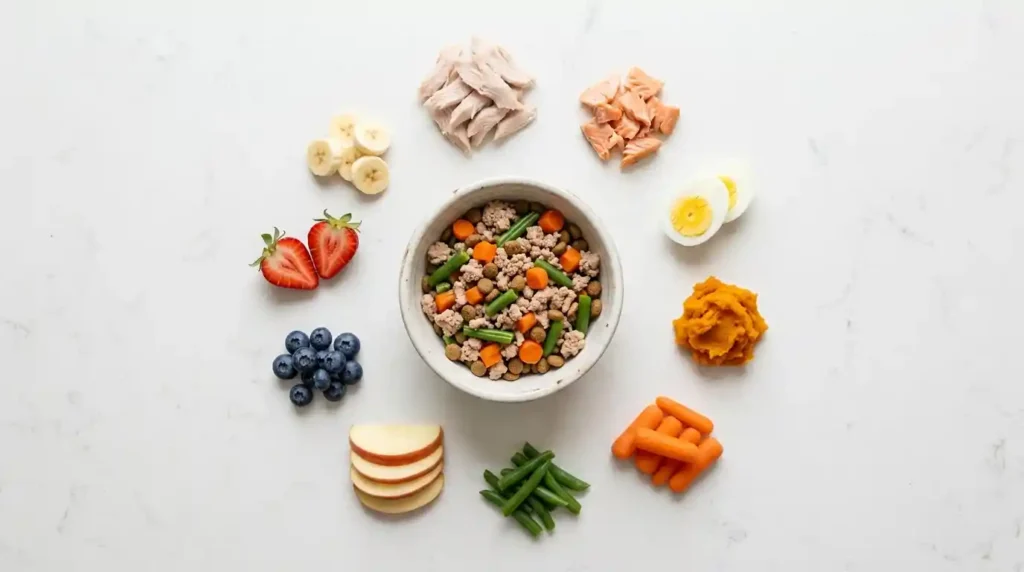
What do pugs eat to stay healthy? Most Pugs do best on complete and balanced dog food made for their age, small size, activity level, and health needs. Their meals should provide high-quality animal protein, healthy fats, digestible carbohydrates, fiber, vitamins, and minerals. Because Pugs gain weight easily and may have breathing, skin, stomach, and dental problems, measured portions are essential. Feed an adult Pug two meals daily, give puppies three or four smaller meals, limit treats, and adjust the amount according to calories, body condition, and your veterinarian’s advice.
This detailed guide explains what to feed a Pug, how much food a Pug should eat, which human foods are safe, and which ingredients must be avoided. You will also learn how to choose between dry kibble, wet food, fresh food, raw feeding, and home-cooked meals.
Table of Contents
- What do Pugs eat for a healthy life?
- The main nutrients Pugs need
- What do Pugs eat at different life stages?
- How much should a Pug eat a day?
- The best feeding schedule for Pugs
- Dry, wet, fresh, raw, and home-cooked diets
- Safe human foods for Pugs
- Foods Pugs should never eat
- Feeding Pugs with sensitive stomachs or allergies
- Weight, dental, breathing, and skin concerns
- How to read a dog-food label
- Frequently asked questions
What Do Pugs Eat for a Healthy Life?
A healthy Pug diet starts with food that is complete, balanced, easy to digest, and suitable for the dog’s life stage. The main meal may be dry kibble, wet dog food, fresh food, or a safe combination of these options. Whatever format you choose, it should supply all the nutrients your dog needs rather than relying on meat, vegetables, or table scraps alone.
Pugs belong to the toy group and are often treated as a small dog breed for feeding purposes. However, their solid body, strong appetite, and low tolerance for hard exercise make their nutritional needs different from those of many other small dogs. Understanding Dogs Breeds eating can help owners see why body shape, activity, age, and health matter more than breed size alone.
A suitable commercial food should have a nutritional adequacy statement for growth, adult maintenance, or all life stages. The Association of American Feed Control Officials’ pet-food guidance explains that “complete” food contains the required nutrients, while “balanced” means those nutrients are supplied in suitable proportions.
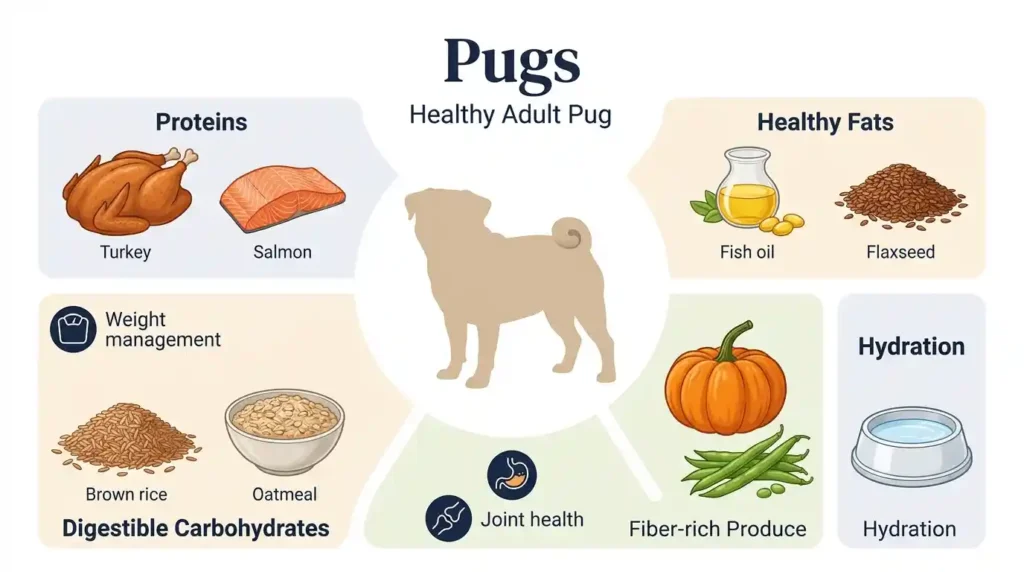
The ideal foundation of a Pug’s meal
Look for a life-stage formula with:
- High-quality animal protein
- A clearly named animal protein
- Moderate levels of healthy fat
- Digestible carbohydrates
- Dietary and prebiotic fiber
- Essential vitamins and minerals
- Omega-3 and omega-6 fatty acids
- Calories that match your Pug’s body weight and activity level
Chicken, turkey, beef, lamb, salmon, whitefish, and eggs are common protein sources. Some foods also use duck, pork, bison, mackerel, herring, walleye, or flounder. Any protein can be suitable if your Pug tolerates it and the finished food provides complete nutrition.
A named protein such as “chicken,” “turkey meal,” or “salmon” is easier to evaluate than a vague term such as “animal meat.” Organ meat, including liver and gizzards, can provide valuable nutrients when used in a balanced recipe. Meat by-products are not automatically poor ingredients either. Named, properly processed by-products may be nutritious; the greater concern is unclear labeling, generic meat sources, or a formula that does not meet recognized nutritional standards.
Why ordinary portions can be too large
Pugs love food, but they do not always stop eating when they have consumed enough. Their compact bodies need fewer calories than many owners expect. Free-feeding, frequent table scraps, and unmeasured treats can quickly cause weight gain.
This food-motivated behavior is also common in other breeds, as explained in What Do Beagles Eat. Begging does not necessarily mean that a dog is hungry. It can become a learned behavior when crying, staring, or pawing repeatedly leads to food. Broader Dog Problems guidance can help owners separate real hunger from attention-seeking habits.
The Main Nutrients Pugs Need
The quality of a Pug’s diet depends on the whole formula, not one fashionable ingredient. Protein, fat, carbohydrates, fiber, vitamins, minerals, and water work together to support the body.
High-quality protein
Protein supplies amino acids needed for healthy muscle tone, tissue repair, immune function, and normal growth. A Pug puppy needs bioavailable protein to support rapid development, while an adult Pug needs enough protein to maintain muscle without consuming unnecessary calories.
Good protein sources can include:
- Chicken
- Turkey
- Beef
- Lamb
- Pork
- Bison
- Salmon
- Mackerel
- Whitefish
- Herring
- Walleye
- Flounder
- Eggs
- Liver and other organ meat
Lean protein is helpful for weight control, but “lean” does not mean fat-free. Dogs still require dietary fat. When changing proteins because of a suspected food allergy, work with a veterinarian instead of repeatedly switching foods without a clear plan.
Large, athletic dogs may need different calorie and protein levels. For comparison, guides covering the best dog food for Labradors and Dog Food for German Shepherds address feeding needs that should not be copied directly for a small Pug.
Healthy fats and fatty acids
Healthy fats provide energy, improve taste, help the body absorb certain vitamins, and support skin and coat health. Useful sources include chicken fat, fish oil, salmon oil, flaxseed, and sunflower oil.
Omega-3 fatty acids, including EPA and DHA, may support:
- Skin-barrier health
- A shiny coat
- Normal inflammatory responses
- Brain and eye development in puppies
- Joint health in adults and seniors
- Cognitive support during healthy aging
Omega-6 fatty acids also help maintain the skin and coat, but the overall balance of fats matters. Adding oil to an already complete diet can increase calorie intake and may cause diarrhea. High-fat foods may also be unsuitable for dogs with a history of pancreatitis.
Digestible carbohydrates and fiber
Dogs can use properly cooked carbohydrates as an energy source. Whole grains such as brown rice, oatmeal, and barley can be easy to digest for many Pugs. A gluten-free or grain-free label does not automatically make a food healthier.
Other carbohydrate and fiber sources include sweet potato, potato, pumpkin, peas, lentils, green beans, lima beans, kidney beans, and butter beans. These ingredients can contribute energy, dietary fiber, vitamins, and minerals when included in suitable amounts.
Fiber from pumpkin, carrots, green beans, or prebiotic ingredients may support regular stools and healthy gut flora. Too much fiber, however, can reduce nutrient absorption or cause gas. For more general help comparing ingredients and formulas, visit the Dogs Food Guide.
Vitamins, minerals, and supporting nutrients
A complete diet should provide carefully balanced vitamins and minerals. Important nutrients include calcium, phosphorus, zinc, vitamin A, vitamin C, vitamin E, and antioxidants.
The calcium-to-phosphorus ratio is especially important during puppy growth. Adding calcium supplements to complete puppy food can disturb this balance and harm bone development. Supplements should only be used when a veterinarian or qualified canine nutritionist identifies a real need.
Some formulas also contain:
- Probiotics for beneficial intestinal bacteria
- Prebiotics or prebiotic fiber to feed healthy gut bacteria
- Glucosamine and chondroitin for joint support
- L-carnitine to support normal fat metabolism
- Antioxidants for immune support
- Digestive enzymes for specific digestive needs
These additions may be useful, but they cannot rescue a poorly balanced food. Digestive enzymes, probiotics, joint supplements, and oils should not be treated as universal requirements.
Fresh water and hydration
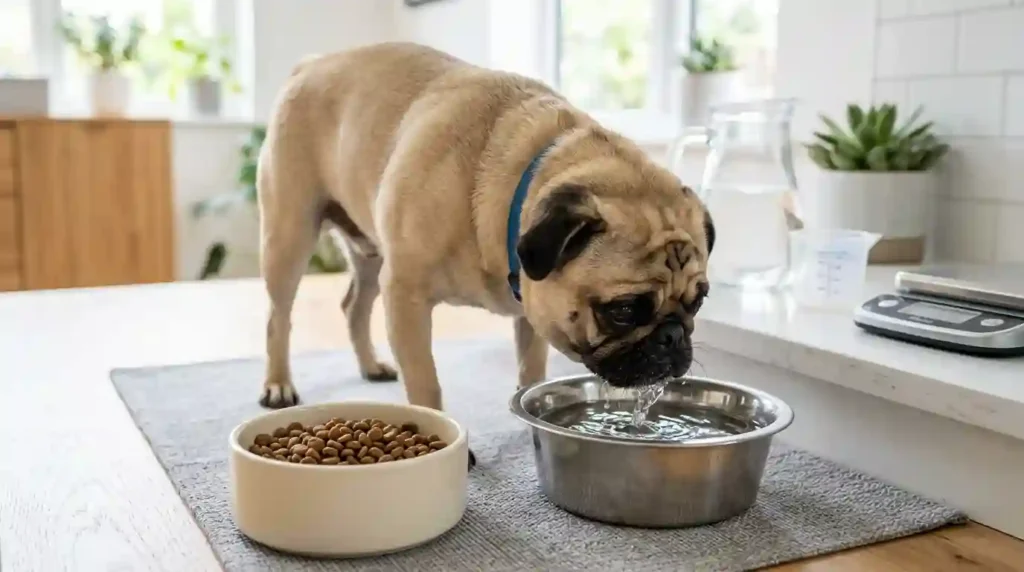
Fresh water must always be available. Wet dog food, fresh meals, and moisture-rich toppers can support hydration, but they do not replace a clean water bowl.
Pugs can struggle in hot weather because their short muzzle makes cooling through panting less effective. Dehydration and overheating can become serious quickly. Keep your Pug cool, avoid hard exercise during hot hours, and contact a veterinarian if the dog shows heavy distress, weakness, confusion, or collapse.
What Do Pugs Eat at Different Life Stages?
A puppy, adult, and senior should not automatically receive the same food. Each stage has different calorie and nutrient needs.
Pug puppy food
A Pug puppy needs nutrient-dense puppy food formulated for growth. DHA supports normal brain and eye development, while properly balanced protein, calcium, and phosphorus support muscle and bone development.
Young puppies have small stomachs, so divide their daily food into three or four small meals. Long gaps between meals may contribute to hypoglycemia, especially in very young or unusually small puppies. Warning signs can include weakness, trembling, poor coordination, confusion, extreme sleepiness, or collapse. These signs require prompt veterinary attention.
Small-sized kibble can make eating easier. A flat-shaped or cloverleaf-shaped kibble may also help a Pug grasp food with its short muzzle and brachycephalic jaw. Similar small-dog portion concerns are discussed in What Do Chihuahuas Eat and What Do Pomeranians Eat.
Do not switch to adult food too early simply to reduce calories. Ask your veterinarian when your puppy is ready, commonly around the end of its first year. Make the change through a gradual food transition.
Adult Pug food
An adult Pug generally needs adult dog food made for maintenance. A small-breed formula or breed-specific dog food may offer smaller pieces and controlled calories, but a Pug-specific label is not essential if another complete formula suits the dog.
Most adults do well with two measured meals each day. The food should support muscle while helping the dog remain at its ideal weight. A highly active adult may require more calories, while a neutered, less active, or apartment-living Pug may need less.
Do not use the portions intended for large, energetic breeds. Articles about Dog Food for Pitbulls or Dog Food for Dobermans may recommend different calorie densities because those dogs have much larger bodies and different exercise demands.
Senior Pug food
A senior Pug may benefit from senior dog food with controlled calories, high-quality protein, joint-supporting nutrients, and an easy-to-chew texture. Aging does not automatically mean a dog needs very low protein. Older dogs still require protein to preserve muscle, although kidney, liver, or other medical conditions may change the recommendation.
Glucosamine, chondroitin, fish oil, and antioxidants may support joint health and healthy aging. Wet food or softened kibble can help a senior experiencing dental pain, tooth loss, or chewing difficulty.
Monitor the senior’s weight, appetite, stool, thirst, mobility, and behavior. A reduced appetite should not be dismissed as normal aging. Dental disease, pain, digestive illness, or another medical condition may be responsible.
How Much Food Should a Pug Eat a Day?
There is no single cup measurement that works for every Pug. How much food a Pug should eat depends on:
- Current and ideal body weight
- Age and life stage
- Activity level
- Neuter status
- Metabolism
- Health conditions
- Treat intake
- Calorie density of the food
The package feeding guide is a starting point, not a guaranteed prescription. Two dry foods can look similar while providing very different calories per cup.
A practical adult calorie guide
The following estimates are broad starting ranges for healthy adult dogs. Individual needs may be higher or lower.
| Ideal body weight | Approximate daily calories | Suggested feeding frequency |
| 10 pounds | 300–360 kcal | Two meals |
| 14 pounds | 360–450 kcal | Two meals |
| 18 pounds | 420–540 kcal | Two meals |
| 20 pounds | 450–580 kcal | Two meals |
Use ideal weight rather than an overweight dog’s current weight unless your veterinarian gives different instructions. A quiet senior may need fewer calories, while a young and active adult may need more.
These figures are estimates, not medical prescriptions. Pregnancy, nursing, illness, recovery, and intensive activity require individual feeding plans.
Converting calories into cups
Check the label for calories per cup or per can. Then use this simple calculation:
Daily calories needed ÷ calories per cup = cups per day
For example, if your Pug needs about 400 calories and the food contains 400 calories per cup, the starting portion is one cup per day. Divide it into two half-cup meals. If the food contains 500 calories per cup, the same dog would start at about 0.8 cup per day.
A kitchen scale is more accurate than an unmarked scoop. Weighing meals also prevents portions from slowly increasing. The importance of careful portions for long-backed small dogs is covered in What Do Dachshunds Eat.
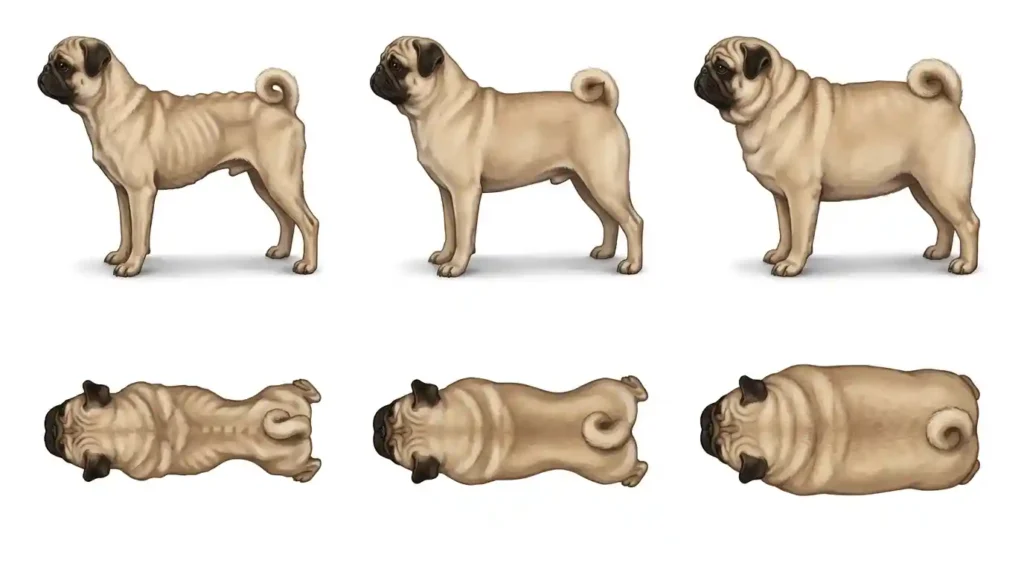
Use body condition to adjust the amount
Look at your Pug from above and from the side. You should be able to feel the ribs beneath a thin layer of fat. There should be a visible waist behind the ribs and a gentle abdominal tuck.
Reduce the daily amount slightly if the waist disappears or the ribs become difficult to feel. Increase it carefully if the ribs, spine, or hip bones become too prominent. Recheck weight every two to four weeks after changing the portion.
The Best Daily Feeding Schedule
Consistency helps control hunger, digestion, toilet habits, and calorie intake.
| Pug’s life stage | Meals per day | General approach |
| Young puppy | 3–4 | Small, frequent meals |
| Older puppy | 3 | Measured growth-formula meals |
| Adult | 2 | Morning and evening meals |
| Senior | 2–3 | Smaller meals if easier to digest |
Do not leave a full bowl available all day for a Pug that overeats. Timed, measured meals make appetite changes easier to notice.
Because Pugs may eat rapidly, consider a slow-feeder bowl or puzzle bowl. Slower eating can reduce gulping, swallowed air, choking, and regurgitation. Select a shallow design that a flat-faced dog can reach comfortably.
Training treats and low-calorie snacks must count toward daily calories. As a practical rule, treats should provide no more than about 10% of the day’s calories, with at least 90% coming from complete and balanced food.
Picky behavior can also affect the schedule. Constantly replacing rejected food with richer options may teach learned food refusal. The feeding approach described in What Do Poodles Eat offers useful comparisons for owners dealing with selective eating.
Choosing the Best Type of Food
Dry kibble
Dry kibble is convenient, easy to measure, and usually less expensive per meal. Choose small-sized kibble or a shape designed for a short muzzle. The piece should be easy to pick up without being so small that the Pug swallows it immediately.
Ordinary kibble does not clean teeth well enough to replace brushing. Some dental-focused diets have specifically designed pieces supported by feeding research, but daily dental care is still important.
Wet dog food
Wet food has a high moisture content and may be easier for puppies, seniors, or dogs with dental pain to eat. It can also help a dog that does not drink enough water.
Check whether the can is complete and balanced or intended only for supplemental feeding. A canned food topper may improve taste, but it adds calories. Measure it rather than pouring an unknown amount over the meal.
Mixed feeding
Mixed feeding combines dry and wet food. This can provide the convenience of kibble with the moisture and taste of canned food.
Do not give the full recommended amount of both products. Calculate the calories from each food and keep the combined total within the daily target. This is especially important for Pugs because even small extras can cause gradual weight gain.
Fresh and gently cooked food
Commercial fresh food can be suitable when it is complete, balanced, safely prepared, and labeled for the correct life stage. Refrigerate it correctly and follow storage directions.
“Fresh,” “natural,” or “human-grade” language does not prove that a recipe is nutritionally complete. Read the nutritional adequacy statement and calorie information. Owners comparing fresh feeding across breeds may also find What Golden Retrievers Eat helpful, although a Pug needs a far smaller portion.
Raw food diet
A raw food diet may contain raw muscle meat, organ meat, bone, vegetables, eggs, and oils. However, raw diets can expose dogs and people to harmful bacteria. Bones may also cause choking, broken teeth, digestive blockage, or internal injury.
A complete raw diet must provide the correct amounts of protein, fat, vitamins, minerals, calcium, and phosphorus. Meat alone is not balanced. If you are considering raw feeding, consult a veterinarian or qualified canine nutritionist and use careful food-handling practices.
Some imported foods may refer to FEDIAF nutritional standards, while American products more commonly use an AAFCO nutritional adequacy statement. In either case, check that the product is intended as a complete diet rather than a topper or occasional food.
Home-cooked diet
A home-cooked diet may use lean meat, fish, eggs, rice, oatmeal, vegetables, and a precisely designed supplement blend. It should be formulated by a board-certified veterinary nutritionist or another properly qualified professional.
Random recipes made from chicken, rice, and vegetables can cause nutritional deficiencies over time. They often lack the correct calcium-to-phosphorus ratio, essential fatty acids, trace minerals, or vitamins. Veterinary supervision is essential, especially for a growing puppy or a dog with pancreatitis, kidney disease, food allergy, or another medical condition.
Bone broth and toppers
Plain bone broth may add moisture and flavor, but it must not contain onion, garlic, excess salt, or cooked bone pieces. Use it as a small topper, not a replacement for balanced food.
Toppers can be useful during a gradual food transition or for a dog with a reduced appetite. If your Pug suddenly refuses food, do not keep adding richer toppings without finding the cause.
What Can Pugs Eat as Human Food?
Pugs can eat small amounts of several plain human foods. These foods should be unseasoned, correctly prepared, and offered as treats rather than full meals.
Safe protein choices
Small portions of cooked, boneless, unseasoned protein may include:
- Chicken
- Turkey
- Lean beef
- Lamb
- Pork
- Salmon
- Whitefish
- Eggs
Remove skin, bones, excess fat, sauces, and seasoning. Fish should be cooked and checked carefully for bones.
Safe vegetables
Pugs can usually eat small portions of:
- Pumpkin
- Carrots
- Green beans
- Peas
- Zucchini
- Spinach
- Bell peppers
- Butternut squash
- Asparagus
- Broccoli
- Cauliflower
- Kale
Cook hard vegetables until soft when needed, and cut them into bite-sized pieces. Too much broccoli, cauliflower, beans, or kale may cause gas or digestive upset.
Safe fruits
Suitable fruits in small amounts include:
- Apples without seeds or core
- Blueberries
- Raspberries
- Strawberries
- Banana
- Cantaloupe
- Honeydew
- Mango without the pit
- Kiwi
- Pear without seeds
- Peach without the pit
- Plum without the pit
- Nectarine without the pit
- Pineapple
Fruit contains natural sugar, so portions should remain small. Cut slippery or firm pieces to reduce choking risk.
Small breeds have similar treat-size concerns, but their full diets can differ. Read What Do Maltese Dogs Eat for another small-dog comparison.
Foods Pugs Should Never Eat
Never feed a Pug:
- Chocolate or cocoa
- Xylitol, sometimes labeled birch sugar
- Grapes or raisins
- Onions, garlic, chives, or leeks
- Macadamia nuts
- Alcohol
- Caffeine
- Raw yeast dough
- Moldy or spoiled food
- Cooked bones
- Very salty food
- Greasy or very high-fat table scraps
Chocolate contains theobromine and caffeine, which can affect the heart and nervous system. Xylitol can cause a dangerous fall in blood sugar and may lead to liver failure. Grapes and raisins can cause kidney failure in some dogs. Onion-family plants can damage red blood cells and contribute to anemia.
Cooked bones can splinter, while large food pieces can cause choking. Contact a veterinarian or animal poison service immediately if your Pug eats a toxic food. Do not wait for symptoms or induce vomiting unless a professional instructs you to do so.
Sensitive Stomachs, Allergies, and Digestive Upset
Do Pugs have sensitive stomachs?
Some Pugs experience gas, diarrhea, vomiting, or inconsistent stools. These signs may be linked to rapid eating, a sudden food change, excessive treats, food intolerance, parasites, infection, pancreatitis, or another condition.
A highly digestible food containing moderate fat and suitable fiber may help. Probiotics and prebiotic fiber can support gut flora, but persistent symptoms require veterinary assessment.
Food allergy versus food intolerance
A food allergy involves an immune response and may cause itchy skin, redness, repeated ear trouble, digestive signs, or chronic irritation. Food intolerance does not involve the same immune process but can still cause gas, diarrhea, or vomiting.
Chicken, beef, dairy, wheat, or another ingredient may be blamed, but symptoms alone cannot identify the trigger. A veterinarian may recommend a strict elimination diet using a novel protein or hydrolyzed veterinary food. Randomly changing brands every few days makes the problem harder to understand.
Make every transition gradual
Change food over about seven to ten days unless your veterinarian says otherwise:
- Days 1–2: 75% old food and 25% new food
- Days 3–4: 50% old food and 50% new food
- Days 5–6: 25% old food and 75% new food
- Day 7 onward: 100% new food
Extend the transition if your Pug has a sensitive stomach. Stop and seek advice if there is repeated vomiting, severe diarrhea, blood in the stool, swelling, breathing difficulty, or extreme weakness.
Pug-Specific Feeding Risks
Obesity and joint strain
Obesity is one of the biggest feeding risks for Pugs. Extra weight places more strain on the joints and can worsen arthritis, mobility problems, and breathing difficulty.
Keep treats controlled, use measured meals, and choose low-calorie snacks such as small carrot or green-bean pieces. Exercise should suit the dog’s breathing ability and the weather.
Long-bodied breeds face their own weight-related pressures, as discussed in What Do Dachshunds Eat. Large working breeds covered in Dog Food for Huskies may burn far more energy, so their portions should never be used as a model for Pugs.
Short muzzle and breathing concerns
A Pug is a brachycephalic breed with a flat face and short muzzle. Some develop brachycephalic obstructive airway syndrome, which can cause noisy breathing, poor exercise tolerance, gagging, sleep difficulty, or overheating.
A shallow bowl and flat-shaped kibble may make food easier to grasp. A slow-feeder can reduce rapid eating, but it should not force the dog to struggle for breath.
Weight control is especially important because excess fat can make breathing harder. Owners may find additional flat-faced feeding comparisons in What English Bulldogs Eat.
Skin and coat problems
Pugs have facial folds where moisture, food, and debris can collect. This may contribute to dermatitis, inflammation, odor, or a skin fold infection.
Wipe the face after messy meals and dry the folds gently. Omega fatty acids may support the skin barrier, but they will not cure an infection or replace veterinary treatment.
Dental crowding
A Pug’s small brachycephalic jaw may contain crowded teeth. Plaque can develop into tartar, gingivitis, dental disease, tooth loss, and dental pain.
Brush your Pug’s teeth with dog-safe toothpaste. Schedule professional dental checks and do not assume dry kibble alone will clean the teeth. Softened kibble or wet food may be more comfortable if dental pain is present, but the underlying problem still needs treatment.
Different breeds need different plans
A Pug’s compact build and breathing limits make controlled calories especially important. This differs from the needs discussed in Dog Food for Pitbulls, where muscle maintenance and higher activity may influence portions.
Likewise, the energy needs in What Golden Retrievers Eat and the growth concerns covered in Dog Food for German Shepherds should not be applied directly to a Pug.
How to Read a Pug Food Label
A polished package does not always mean better nutrition. Check the practical information on the food label.
Nutritional adequacy statement
Confirm that the food is complete and balanced for your dog’s life stage. A topper, treat, or food labeled for intermittent or supplemental use should not form the main diet.
Calorie content
Find the calories per cup, can, tray, or kilogram. Calorie density determines the real portion. A small cup of rich food may contain more energy than a much larger portion of another product.
Ingredient list
Ingredients appear in order by weight before processing. Look for clearly identified ingredients, but judge the finished formula rather than demanding that meat must always appear first.
Named animal protein is useful for transparency. However, ingredients such as corn, soy, wheat, rice, peas, or lentils are not automatically fillers. They can provide energy, amino acids, fiber, vitamins, or minerals when used in a properly formulated diet.
Preservatives and additives
Preservatives keep fat from becoming rancid and help food remain safe. Some owners prefer mixed tocopherols rather than synthetic preservatives such as BHA, BHT, or TBHQ.
Artificial colors and artificial flavors are usually unnecessary for the dog’s nutritional needs. MSG and vague generic meat descriptions may also be reasons to compare the product with a clearer formula. Still, the nutritional adequacy, manufacturer expertise, quality control, and your dog’s response matter more than a single marketing claim.
Feeding guide
Use the manufacturer’s feeding guide as a starting amount. Measure the portion, track weight and body condition, and adjust carefully.
Breed comparisons can help illustrate why package instructions vary. A portion described in best dog food for Labradors will be much larger, while What Do Chihuahuas Eat may involve even smaller servings than those of many Pugs.
Conclusion
The best answer to what do pugs eat is a complete and balanced, life-stage diet built around high-quality protein, healthy fats, digestible carbohydrates, useful fiber, and carefully controlled calories. Puppies usually need three or four small meals, while adults generally need two measured meals a day. Seniors may benefit from softer food, controlled calories, and added support for joints and healthy aging.
Whether you choose dry kibble, wet food, mixed feeding, fresh food, or another approach, check the nutritional adequacy statement and calorie content. Count treats, watch body condition, provide fresh water, and make food changes gradually. Because Pugs are prone to obesity, breathing difficulty, dental crowding, skin irritation, and sensitive stomachs, regular veterinary guidance is an important part of responsible feeding.
Frequently Asked Questions
What do Pugs like to eat?
Many Pugs enjoy meat-based dog food, wet food, eggs, cooked chicken, pumpkin, carrots, and fruit. Preference does not prove that a food is balanced or safe.
How much should a Pug eat a day?
A typical adult may need roughly 300–540 calories daily, depending on ideal weight and activity. Use the food’s calorie label and your veterinarian’s advice.
How many times should a Pug eat daily?
Most adult Pugs should eat two measured meals daily. Puppies generally need three or four smaller meals.
Can Pugs eat chicken?
Yes, most Pugs can eat plain cooked, boneless chicken. Avoid seasoning, skin, cooked bones, and chicken if an allergy has been diagnosed.
Can Pugs eat rice?
Yes, properly cooked rice can be part of a balanced diet. Rice alone does not provide complete nutrition.
Can Pugs eat eggs?
Yes, fully cooked, plain eggs can be given in small portions. Count their calories as part of the daily intake.
Can Pugs eat bananas?
Yes, but only in small pieces because bananas contain natural sugar. Treats should remain a small part of the diet.
Is dry or wet food better for a Pug?
Both can be suitable when complete and balanced. Dry food is convenient, while wet food adds moisture and may be easier to chew.
Are grain-free foods better for Pugs?
Not automatically. Most Pugs can digest suitable grains, and grain-free food should generally be chosen for a clear nutritional or veterinary reason.
Why is my Pug always hungry?
Pugs are often food-motivated, and begging can become learned behavior. Review portions, treats, weight, and health with your veterinarian.
Can a Pug eat home-cooked food every day?
Yes, but only if a qualified veterinary nutrition professional formulates the recipe. Meat, rice, and vegetables alone are not complete and balanced.
What should I do if my Pug refuses food?
Check for dental pain, vomiting, diarrhea, weakness, or other illness. Contact a veterinarian if refusal is sudden, persistent, or accompanied by symptoms.