


Summary
If you are deciding what to feed Maltese dog companions, start with a complete and balanced small-breed food made for their life stage, serve measured meals, and adjust the amount to the food’s calorie density and your dog’s body condition. Most healthy Maltese dogs do well on highly digestible animal protein, moderate healthy fat, useful fiber, and appropriate vitamins and minerals. Puppies need more frequent meals because their tiny bodies have limited energy reserves, while adults generally thrive on two meals per day. Seniors may need softer food, fewer calories, or a veterinarian-directed diet. This guide explains how to choose food, calculate portions, handle picky eating and sensitive digestion, and avoid dangerous foods.
Table of Contents
- What to feed a Maltese dog
- How to read a dog food label
- The best proteins, fats, carbohydrates, and fiber
- Feeding Maltese puppies, adults, and seniors
- Daily portions and meal frequency
- Dry, wet, fresh, and mixed feeding
- Safe human foods and toxic foods
- Picky eating and sensitive stomachs
- Weight, dental, joint, and coat health
- Food-transition plan
- Conclusion
- Frequently asked questions
What to Feed Maltese Dog Companions: The Best Everyday Diet
A Maltese dog may be small, but its nutritional needs are not simple. This toy breed has a relatively fast metabolism, a small mouth, limited stomach capacity, and a tendency to gain weight when treats and portions are not controlled. Some Maltese dogs are also picky eaters or have sensitive digestion. The best default choice is therefore a high-quality dog food that is complete and balanced for the dog’s life stage and easy to portion accurately.
Look for a small-breed dog food or an appropriate breed-specific dog food with real meat or a named animal protein near the top of the ingredient list. Chicken, turkey, beef, lamb, pork, fish, and salmon can all supply high-quality protein. The best protein is not automatically the most exotic or expensive one; it is the one your dog digests well in a nutritionally sound formula.
The diet should also provide healthy fat, essential fatty acids, digestible carbohydrate or other usable energy sources, fiber, vitamins, and minerals. Fresh water must remain available throughout the day. Once you have chosen a suitable formula, consistent portion control matters more than continually searching for a “perfect” ingredient list.
Food and behavior also influence one another. Begging, guarding a bowl, refusing meals after receiving table food, and excitement around treats are feeding-routine issues as well as nutritional ones. The Dog Behavior guide can help owners build calm, predictable habits around mealtimes.
What “complete and balanced” really means
A food intended as the main diet should carry a nutritional adequacy statement showing that it is complete and balanced for growth, adult maintenance, or all life stages. The Association of American Feed Control Officials’ pet-food label guidance explains that “complete” refers to providing all required nutrients, while “balanced” means those nutrients occur in appropriate ratios.
An AAFCO statement may say that the food was formulated to meet an AAFCO Dog Food Nutrient Profile or that an AAFCO feeding trial substantiated its nutritional adequacy. Neither statement makes one brand automatically superior, but it helps distinguish a staple diet from a treat, topper, or complementary product that is not designed to feed alone.
How to evaluate the dog food label
Read beyond attractive phrases such as “premium,” “natural,” or “human-grade.” Check five practical details:
- The nutritional adequacy statement and intended life stage
- Calories per cup, can, tray, or gram
- Feeding directions based on body weight
- Named protein and fat sources
- The manufacturer’s contact information and quality-control transparency
Ingredients appear by weight before cooking, so the first ingredient alone cannot tell you the food’s overall quality. Meat contains substantial moisture, while a concentrated meat meal may contribute more protein by dry weight. Judge the entire formulation, the company’s nutritional expertise, your dog’s response, stool quality, coat, appetite, and weight trend.
For broader help comparing formats and labels, explore the Dog eating resource before changing brands.
Core Nutrients a Maltese Diet Should Provide
Highly digestible protein for muscle and repair
Protein supplies amino acids used for muscle growth, tissue repair, enzymes, hormones, and immune function. Maltese puppies need adequate protein to build lean tissue; adults need it to preserve muscle mass; and healthy seniors still require quality protein unless a veterinarian has prescribed a low-protein diet for a specific medical condition.
Named animal protein sources such as chicken, turkey, beef, lamb, pork, fish, or salmon are common and nutritious. Less common proteins—including bison, rabbit, venison, kangaroo, alligator, or ostrich—may appear in a limited-ingredient diet. These exotic meats are not inherently healthier. Their main value is as a novel protein for selected dogs undergoing a veterinarian-managed food trial.
If chicken appears in one poorly tolerated formula, do not assume all animal protein is a problem. The reaction could relate to another ingredient, the fat level, a sudden food change, or an unrelated illness. A genuine food allergy should be assessed methodically instead of through endless recipe rotation.
Breed size changes feeding needs, but sound nutritional principles remain consistent. A large sporting dog, for example, requires a very different serving size; owners comparing households can review the best dog food for labradors to see why calories and body condition matter more than bowl volume alone.
Healthy fat and essential fatty acids
Fat is calorie-dense and makes food palatable. It also supports the skin, brain, and absorption of fat-soluble vitamins. Omega-6 fatty acids help maintain the skin barrier, while omega-3 fatty acids such as EPA and DHA can support skin, coat, brain, and joint health. Fish oil is a common source.
More is not always better. Adding fish oil to an already balanced food can increase calories and may cause digestive upset. Excessive fatty food can also trigger vomiting or diarrhea and may contribute to pancreatitis in susceptible dogs. Ask your veterinarian before adding a concentrated supplement, especially if your Maltese takes medication or has a medical history of gastrointestinal disease.
Biotin and other vitamins may appear in coat-focused formulas, but a silky white coat depends on the complete diet, skin health, grooming, and underlying health—not a single “beauty” nutrient.
Carbohydrate, grain, and fiber
Dogs can obtain usable energy from carbohydrate. Common sources include rice, brown rice, oatmeal, quinoa, potato, pea, and other legumes. A well-formulated grain-inclusive diet may use corn, wheat, rice, or oats; these ingredients are not automatically fillers. Whole and properly processed ingredients can provide energy, amino acids, fatty acids, vitamins, minerals, and fiber.
A grain-free diet is necessary only for a small minority of dogs with a properly identified dietary problem. Grain-free does not mean low-carbohydrate because potato, pea, or legume ingredients may replace grain. Owners should also avoid choosing a boutique, exotic-ingredient, or grain-free—or BEG—diet solely for marketing appeal. Research into diet-associated dilated cardiomyopathy (DCM) has been complex, and no single ingredient explains every case. Discuss any concern with a veterinarian rather than attempting a homemade correction.
Fiber supports digestive health, stool quality, satiety, and the gut microbiome. Some formulas include prebiotic, probiotic, or postbiotic ingredients. These can be useful, but the overall diet and the dog’s tolerance are more important than a fashionable label claim. Adequate stool bulk may also help normal anal gland emptying.
Different breeds may tolerate ingredients differently because of their size, energy use, and health tendencies. See Dog Food for German Shepherds for a useful contrast between toy-breed portioning and the needs of a large, active dog.
What to Feed Maltese Dog Puppies, Adults, and Seniors

Maltese puppies: growth food and frequent meals
During the first weeks of life, puppies receive mother’s milk, which supplies nutrition and antibodies. An orphaned puppy needs a veterinary-approved puppy milk replacer—not cow’s milk. Weaning gradually introduces soft food, often a complete puppy food moistened with warm water or puppy formula, until the puppy can manage solid food.
Choose puppy food labeled complete and balanced for growth. Small kibble is easier for a tiny mouth to pick up and chew. A wet puppy food or softened dry food can help during weaning, but the calories still count.
Very young Maltese puppies are vulnerable to hypoglycemia because they have small energy reserves. Three to four puppy meals distributed across the day are commonly appropriate; the breeder and veterinarian should provide a schedule for a newly adopted puppy. Warning signs such as weakness, unusual sleepiness, shaking, disorientation, collapse, or seizure require urgent veterinary care. Do not rely on feeding advice online when a puppy is symptomatic.
Growth monitoring is essential. The goal is steady development, not maximum speed. Calcium and other minerals must remain in the correct ratio, so do not add calcium powder to a complete puppy diet unless a veterinarian specifically directs it.
Toy-breed timing differs from medium and large dogs. Readers planning meals for another compact but sturdier breed may find What Do Beagles Eat helpful for comparison.
Healthy Maltese adults
An adult Maltese typically does well on adult dog food formulated for small breeds, served as two meals per day. Some individuals manage better with three smaller meals, particularly if they become nauseated on an empty stomach or cannot comfortably eat a larger portion at once.
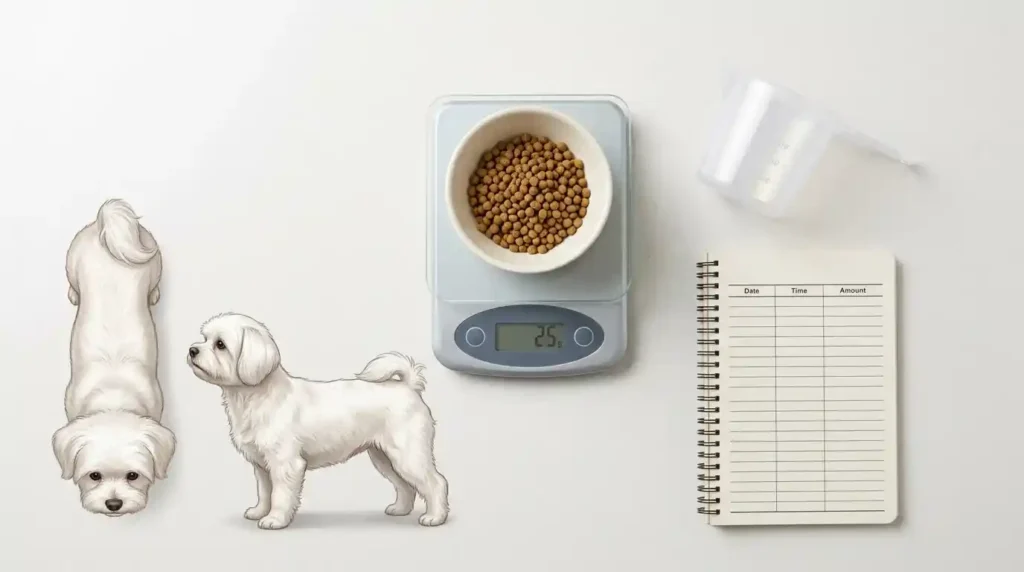
Select the starting portion from the feeding guide, then assess body condition every two to four weeks. You should be able to feel the ribs beneath a light layer of tissue, see a waist from above, and notice an abdominal tuck from the side. If the waist disappears or ribs become difficult to feel, reduce calories modestly and review treats. If ribs, spine, or hips become prominent, speak with a veterinarian before simply increasing food.
Do not free feed by repeatedly topping up the bowl. It hides changes in appetite and makes overfeeding easy. Measured meals allow better appetite monitoring and help owners notice early illness.
Small dogs share some feeding challenges, especially dental crowding and calorie sensitivity. The guide What Do Chihuahuas Eat offers another toy-breed perspective without assuming every small dog needs the same amount.
Senior Maltese dogs
Age alone does not dictate a diet change. An active senior at a healthy weight may continue doing well on adult food, while a less active dog may need senior dog food or weight-management food with lower calorie density. Preserve muscle mass with adequate, highly digestible protein unless a diagnosed disease requires a different nutrient profile.
Wet dog food, softened kibble, or fresh dog food can make meals easier for a senior with tooth loss or oral discomfort. However, difficulty eating, weight loss, bad breath, or a suddenly altered food preference warrants a dental and medical examination.
Kidney disease, diabetes, pancreatitis, liver disease, and other conditions may require therapeutic nutrition. A low-protein diet, low-fat formula, low-carbohydrate approach, or other dietary restriction should address a confirmed diagnosis and be selected with a veterinarian. Restricting nutrients “just in case” can create deficiencies or reduce palatability.
Long-backed breeds face different weight and mobility considerations; What Do Dachshunds Eat explains why breed structure changes feeding priorities.
How Much Should a Maltese Eat Each Day?
There is no universally correct cup amount. The right feeding amount depends on body weight, age, neuter status, activity level, metabolism, health, treats, and the food’s calorie density. A half cup of one dry dog food may contain far more calories than a half cup of another, while wet food contains much more water and therefore a different number of calories per ounce.
Use this process:
- Find the calories per cup, can, tray, or gram on the dog food label.
- Use the package feeding guide or a reputable dog food calculator for a starting daily calorie requirement.
- Divide the daily total into the appropriate number of meals.
- Include calories from every treat, chew, topper, and bite of human food.
- Recheck body weight and body condition score after two to four weeks.
- Adjust the daily total by about 5–10% when needed, unless your veterinarian gives another plan.
Practical starting framework
| Life stage | Typical meal frequency | Portioning approach |
| Young puppy | 3–4 meals daily | Divide the puppy-food label’s daily amount evenly; follow breeder and veterinarian guidance |
| Older puppy | 3 meals daily, progressing toward 2 | Recalculate as body weight and growth rate change |
| Healthy adult | 2 meals daily | Start with label guidance, then adjust to body condition and activity |
| Senior | Usually 2 smaller meals daily | Adjust calories, texture, and nutrients to weight, dental status, and medical needs |
Treats should usually remain a small part of the daily calorie intake. Break one treat into several training rewards, use tiny pieces of lean meat, or place part of the regular meal in a treat-dispensing toy. A thin smear of xylitol-free natural peanut butter can add interest, but it is energy-dense and should not become a daily hidden calorie surplus.
For a muscular breed with a different energy profile, Dog Food for Pitbulls shows how feeding amounts must reflect the individual rather than breed stereotypes.
Dry, Wet, Fresh, or Mixed Feeding?
Dry dog food
Dry food is convenient, generally economical, easy to measure, and available in small kibble. Store it sealed in its original bag inside an airtight container so the lot number and expiration information remain available. Dry kibble does not replace tooth brushing, even if its texture provides some mechanical action.
Wet dog food
Wet food is moisture-rich, aromatic, and often appealing to picky eaters. It may suit dogs with dental disease or a preference for soft food. Because wet formulas vary in calorie density, compare calories rather than can size. Refrigerate opened food according to the label.
Fresh dog food
A commercially prepared fresh food can be suitable if it is complete and balanced for the correct life stage. “Fresh” and “human-grade” describe features of the product, not proof that its nutrient profile is ideal. Check the adequacy statement, storage directions, calories, and feeding amount.
Mixed feeding
Mixed feeding combines formats, such as dry food at breakfast and wet food at dinner. It can improve moisture intake and palatability, but both portions must fit the same daily calorie budget. A topper should not displace so much complete food that the diet becomes unbalanced.
Home-cooked recipes require formulation by a qualified veterinary nutrition professional. Meat, rice, and vegetables alone do not reliably supply the correct calcium, fatty acid, vitamin, and mineral balance.
Large working breeds often have much higher calorie needs despite eating some of the same ingredients. Compare the principles in Dog Food for Dobermans before assuming a food format determines the portion.
What Can Maltese Eat Besides Dog Food?
Healthy extras can be offered in tiny, unseasoned portions. Suitable options may include cooked lean chicken, turkey, beef, or fish; carrot; broccoli; cucumber; apple without seeds or core; blueberry; cranberry; and strawberry. Introduce one new food at a time and watch for vomiting, diarrhea, soft stool, itching, or appetite changes.

These foods are treats, not a replacement for complete nutrition. Avoid sauces, seasoning, added butter, heavily salted food, fatty scraps, and junk food. Dairy products can cause digestive upset in dogs with lactose intolerance. Rich leftovers may increase the risk of pancreatitis.
Never feed chocolate, xylitol, grapes, raisins, onion, or garlic. Xylitol may appear in sugar-free gum, candy, baked goods, toothpaste, and some peanut butter. If a Maltese eats a potentially toxic food, contact a veterinarian or animal poison service immediately rather than waiting for symptoms.
Owners asking what can Maltese eat sometimes focus on ingredient lists while overlooking choking hazards. Cut safe foods into tiny pieces, remove pits and cores, and do not offer hard items that could fracture small teeth.
Food safety questions also vary with skull and airway structure. What English Bulldogs Eat provides a useful contrast for dogs with very different chewing and breathing considerations.
Picky Eating, Food Allergies, and Sensitive Digestion
Maltese dogs can become selective when frequent toppers teach them to wait for something better. Before labeling a dog picky, rule out dental pain, nausea, medication effects, stress, and illness. A sudden loss of appetite is a medical sign, not a training challenge.
For a healthy fussy eater, establish a feeding schedule. Offer the measured meal in a quiet place, leave it down for a limited period, and avoid immediately replacing it with cheese or meat. Warming wet food slightly or moistening kibble with warm water can increase aroma. Keep treats controlled so the dog arrives at meals appropriately hungry.
A sensitive stomach may show as recurrent vomiting, flatulence, diarrhea, or soft stool. Keep a record of food, treats, symptoms, and stool quality. A limited-ingredient diet or highly digestible protein may help some dogs, but frequent unplanned food changes can make the pattern harder to identify.
A food allergy more often causes persistent skin or gastrointestinal signs than simple fussiness. Itchy skin, recurring ear problems, or chronic digestive upset may warrant an elimination diet supervised by a veterinarian. A novel protein such as rabbit or venison is useful only if the dog has not previously eaten it and the entire trial is controlled. Blood and saliva tests sold for food sensitivity are not substitutes for a properly conducted diet trial.
Wheat allergy is possible but uncommon, and many dogs tolerate grain well. Do not remove corn, wheat, or all grain without evidence. The goal is a nutritionally appropriate diet the individual dog can digest—not the shortest ingredient list.
For comparison with a breed known for a hearty appetite, see What Golden Retrievers Eat. It reinforces why appetite alone cannot determine whether a portion is appropriate.
Health Problems That Can Change a Maltese Feeding Plan
Obesity and weight gain
Even a small calorie excess matters in a toy breed. Overfeeding increases body fat and can place more stress on joints. Weigh food rather than estimating when precise portion control is needed, and use weight monitoring with regular body condition checks. A visible waist and easily felt ribs are more informative than a breed-average number alone.
Dental and periodontal disease
Small jaws can crowd teeth, increasing the risk of plaque, tartar, gum inflammation, periodontal disease, tooth decay, bad breath, loose teeth, and tooth loss. Daily tooth brushing with dog-safe toothpaste is the foundation of dental care. A veterinarian may recommend professional dental cleaning and an appropriately sized dental chew. Do not rely on dry food alone to clean the teeth.
Joint health
Maltese dogs may develop luxating patella, and excess weight can worsen joint stress. Maintain a lean body condition and provide appropriate activity. Some foods or joint supplements contain glucosamine, chondroitin, fish oil, EPA, or DHA, but supplements should complement—not replace—diagnosis and weight control.
Liver and metabolic concerns
Congenital liver shunts can occur in small breeds. Poor growth, vomiting, disorientation, unusual behavior after meals, or seizures deserve prompt veterinary assessment. Diet changes for liver disease must be individualized.
Hypoglycemia is especially concerning in very young or undersized puppies. Diabetes, by contrast, requires consistent calories, meal timing, medical monitoring, and coordination with treatment. Never improvise either condition with random high-sugar snacks or restrictive diets.
Active northern breeds have yet another metabolic and lifestyle pattern. The Dog Food for Huskies guide illustrates why activity level can shift energy needs dramatically even when two dogs share a similar body weight.
How to Change Your Maltese Dog’s Food Safely
A gradual food transition reduces the chance of nausea, vomiting, diarrhea, and refusal. Unless your veterinarian directs otherwise, use a seven-day framework:
| Days | Current food | New food |
| 1–2 | 75% | 25% |
| 3–4 | 50% | 50% |
| 5–6 | 25% | 75% |
| 7 onward | 0% | 100% |
Dogs with sensitive digestion may need 10–14 days. Slow the transition if mild soft stool appears. Stop and call a veterinarian for repeated vomiting, severe diarrhea, blood, abdominal pain, marked lethargy, dehydration, or refusal to eat—especially in a puppy.
Change one variable at a time. Starting a new food, supplement, chew, topper, and treat on the same day makes it impossible to identify the cause of a reaction. Track appetite, stool, itching, body weight, and energy during the transition.
For more breed-specific meal planning after you finish this guide, browse Dog Breeds Feed. It provides a useful next step for comparing portion control, life-stage needs, and health priorities across different dogs.
Conclusion
The best answer to what to feed Maltese dogs is not a single meat, brand, or cup measurement. It is a complete and balanced diet designed for the correct life stage, delivered in measured portions and adjusted to the individual dog. Choose a digestible small-breed formula, prioritize quality animal protein, provide essential fatty acids and appropriate fiber, keep fresh water available, and limit extras.
Feed puppies frequent small meals, most adults twice daily, and seniors according to their weight, dental comfort, activity, and health. Watch body condition, stool, coat, appetite, and energy rather than following the package chart blindly. When symptoms are persistent, sudden, or severe, involve a veterinarian instead of solving the problem through repeated food changes.
Frequently Asked Questions
What is the best food for a Maltese dog?
A complete and balanced small-breed food appropriate for the dog’s life stage, calorie needs, and health is the best starting point.
How often should a Maltese eat?
Most adults do well with two meals daily. Young puppies usually need three to four small meals to support growth and reduce hypoglycemia risk.
Can Maltese dogs eat chicken?
Yes, most can eat plain cooked chicken or a balanced chicken-based dog food unless they have a confirmed intolerance or allergy.
Can Maltese dogs eat rice?
Yes. Properly cooked rice is safe for most Maltese dogs, and rice can be part of a nutritionally balanced commercial formula.
Is wet or dry food better for a Maltese?
Either can work if it is complete and balanced. Wet food adds moisture; dry food is convenient, but neither replaces dental care.
Are Maltese dogs picky eaters?
Some are selective, especially when offered frequent toppers. Sudden food refusal can indicate dental pain or illness and needs veterinary attention.
Do Maltese dogs need grain-free food?
Usually not. Most tolerate grain-inclusive food, and grain-free diets should be chosen for a clear nutritional or medical reason.
What foods are toxic to Maltese dogs?
Chocolate, xylitol, grapes, raisins, onion, and garlic are dangerous. Contact a veterinarian immediately after a suspected ingestion.
How do I know if I am overfeeding my Maltese?
Check for an easily felt ribcage, a visible waist, and stable weight. A disappearing waist or difficult-to-feel ribs suggests excess calories.
When should a Maltese switch from puppy to adult food?
Many toy breeds transition near physical maturity, often around 9–12 months, but your veterinarian should confirm timing for the individual puppy.