

Summary
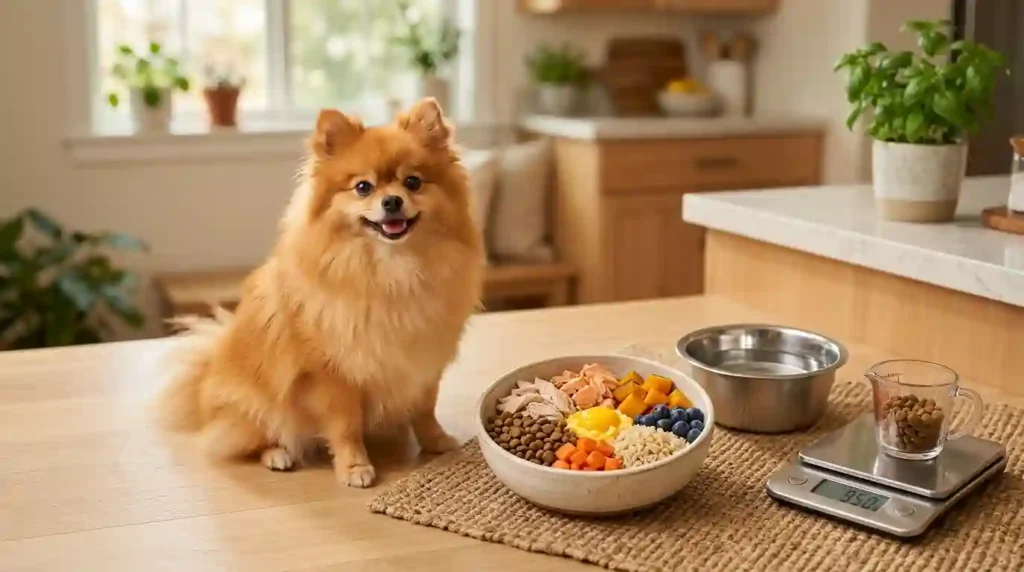
What do Pomeranians eat? Pomeranians should eat complete and balanced dog food made for their age, small size, fast metabolism, and activity level. The best everyday diet normally contains high-quality animal protein, healthy fats, digestible carbohydrates, fiber, vitamins, minerals, and plenty of fresh water. Small-sized kibble, wet dog food, or properly formulated fresh food can all work.
Most adult Pomeranians need two or three measured meals per day. Puppies require smaller, more frequent meals because their tiny stomachs and low fat stores make them vulnerable to hypoglycemia, or low blood sugar. Treats and safe human foods should remain occasional extras and provide no more than 10% of daily calories.
This guide explains what to feed a Pomeranian, how to read a food label, approximate portions by weight, suitable Amazon products, safe human foods, dangerous foods, feeding schedules, and warning signs that require veterinary attention.
Table of Contents
- What Do Pomeranians Eat for a Healthy Diet?
- What Should Pomeranians Eat at Each Life Stage?
- Best Types of Food for Pomeranians
- How Much Food Does a Pomeranian Need?
- Safe Human Foods Pomeranians Can Eat
- Foods Pomeranians Must Never Eat
- Recommended Pomeranian Products on Amazon
- Common Feeding Problems
- How to Change a Pomeranian’s Food
- Conclusion
- Frequently Asked Questions
What Do Pomeranians Eat for a Healthy Diet?
Pomeranians may look delicate, but they are lively little dogs with surprisingly high energy needs for their size. They belong to the toy breed group and usually weigh only a few pounds. Their small stomach, fast metabolism, and limited ability to store energy make food quality especially important.
A good Pomeranian diet starts with a complete and balanced life-stage formula. In the United States, look for a nutritional adequacy statement showing that the food meets the relevant AAFCO nutrient profiles. According to the Association of American Feed Control Officials’ pet-food labeling guide, “complete” means that the food supplies all required nutrients, while “balanced” means those nutrients are present in appropriate proportions.
The main meal should not be built from random meat, rice, vegetables, or supplements. Although those ingredients can be useful, they do not automatically create a nutritionally complete diet. The safest foundation is one of the following:
- Complete small-breed puppy food
- Complete adult dog food for toy or small breeds
- Complete senior dog food
- Properly formulated wet dog food
- A complete fresh or gently cooked diet
- A homemade recipe designed by a veterinary nutritionist
Readers who want to understand food choices across different dog types can explore the Dogs Food section. The nutritional foundation is similar for all dogs, but serving size, calorie density, kibble shape, and feeding frequency can differ greatly by breed.
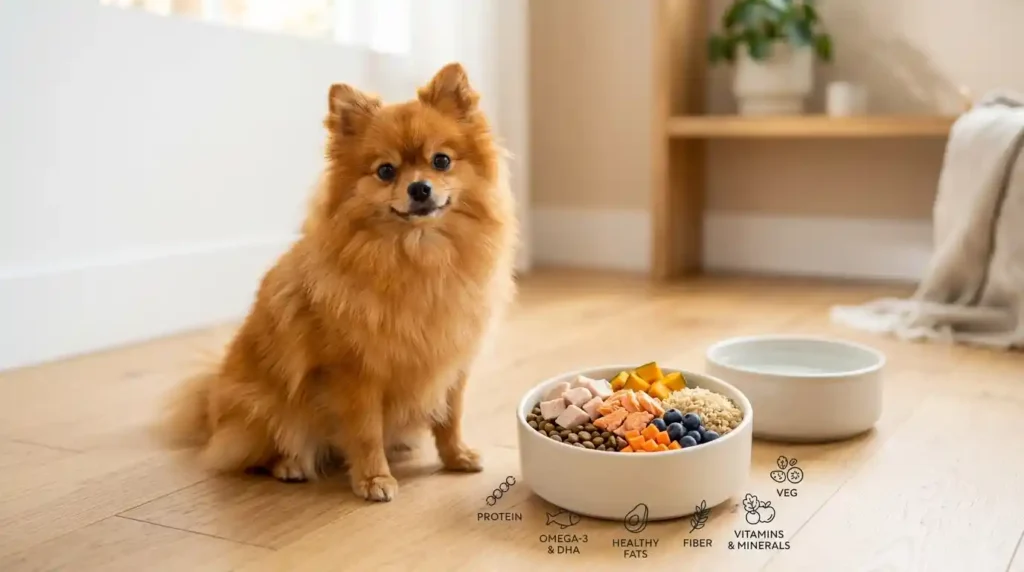
High-Quality Animal Protein
Protein supplies amino acids used for muscle development, tissue repair, immune function, healthy organs, skin, and coat growth. Look for a named protein source such as chicken, turkey, beef, lamb, duck, rabbit, fish, salmon, sardines, whitefish, or eggs.
A clear ingredient name is more useful than a vague term. Real meat, muscle meat, and properly identified organ meat can all provide valuable nutrients. Chicken liver, for example, contains protein, vitamins, and minerals, but organ meat must be included in controlled amounts within a balanced recipe.
Pomeranians do not need the same total amount of food as large, muscular breeds. Their food must still provide adequate protein in a small serving. This differs from feeding powerful breeds, as discussed in guides about Dog Food for Pitbulls and Dog Food for German Shepherds, where larger body size changes the total calorie and portion requirements.
Healthy Fats and Essential Fatty Acids
Healthy fats provide concentrated energy, improve taste, and help the body absorb fat-soluble vitamins such as vitamin A, vitamin D, vitamin E, and vitamin K. They are particularly useful for a toy breed that cannot eat a large volume of food.
Omega-3 fatty acids and omega-6 fatty acids support skin health, coat health, brain development, and normal inflammatory responses. Common sources include:
- Fish oil
- Salmon oil
- Flaxseed oil
- Chicken fat
- Turkey fat
- Oily fish
- DHA and EPA
DHA is especially important in puppy food because it supports brain and eye development. EPA and DHA may also support joints, skin, and the Pomeranian’s thick double coat.
More fat is not always better. A Pomeranian with obesity, pancreatitis, digestive problems, or another medical condition may need controlled fat levels. Ask a veterinarian before adding fish oil or another concentrated supplement.
Digestible Carbohydrates and Fiber
Pomeranians can eat digestible carbohydrates when they are included as part of a balanced formula. Suitable sources may include brown rice, oatmeal, barley, sweet potato, potato, pumpkin, peas, and selected whole grains.
Dietary fiber can support digestive health, stool quality, and healthy gut bacteria. Vegetables and fruit such as pumpkin, carrots, broccoli, spinach, kale, apples, and blueberries can supply fiber and antioxidants.
Carbohydrates should not crowd out protein and healthy fats. A food dominated by low-value fillers or refined carbohydrates may supply calories without delivering the nutrient density a tiny dog needs.
Vitamins, Minerals, and Other Nutrients
A balanced Pomeranian food should contain carefully controlled amounts of vitamins and minerals. Important nutrients include:
- Calcium and phosphorus for bones and teeth
- A suitable calcium-to-phosphorus ratio for growing puppies
- Vitamin A for vision, skin, and immune health
- B vitamins for normal energy metabolism
- Vitamin D for calcium regulation
- Vitamin E and other antioxidants for cellular protection
- Zinc and biotin for skin and coat health
- Probiotics for digestive and immune support
Puppies should not receive additional calcium simply because they are growing or teething. Too much calcium may disturb normal skeletal development. Likewise, glucosamine, chondroitin, omega-3 supplements, and multivitamins should be given only when a veterinarian believes they are suitable.
What Should Pomeranians Eat at Each Life Stage?
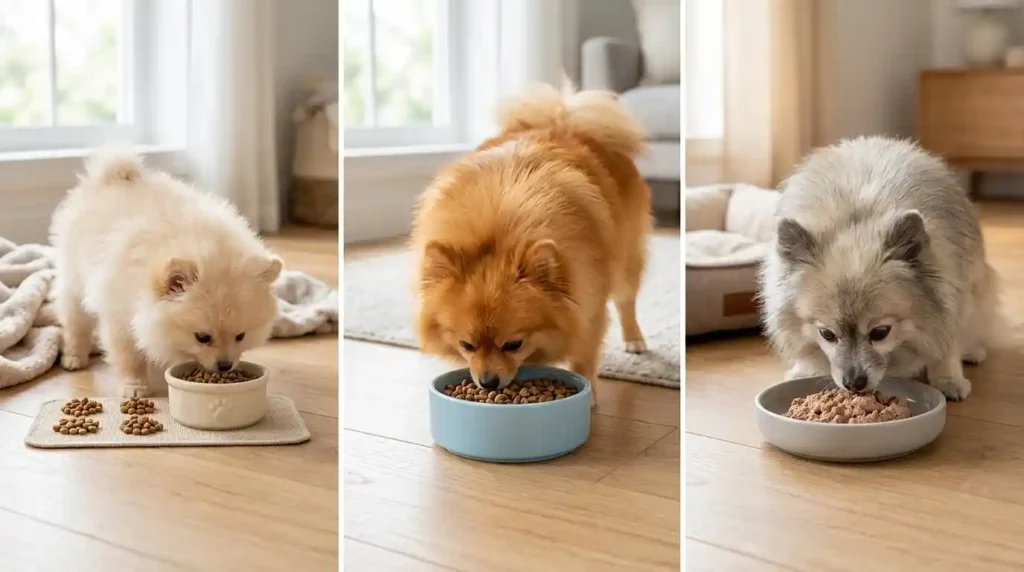
A Pomeranian’s nutritional needs change with age. Feeding an adult formula to a young puppy may cause nutrient gaps, while continuing calorie-dense puppy food into adulthood may contribute to weight gain.
Pomeranian Puppy Diet
A Pomeranian puppy needs food formulated for growth. Choose puppy food made for toy or small breeds with small pieces that are easy to chew. The formula should contain high-quality protein, healthy fats, DHA, calcium, phosphorus, antioxidants, vitamins, and minerals.
Young puppies should receive small frequent meals because they have tiny stomachs, high energy demands, and low fat stores. A common schedule is:
| Puppy age | Suggested feeding frequency |
| 8–12 weeks | 4 small meals daily |
| 3–6 months | 3–4 meals daily |
| 6–12 months | 2–3 meals daily |
| Around 12 months | Gradually move to adult food |
Very small, underweight, or unusually active puppies may need an individual schedule from a veterinarian or experienced breeder.
Toy-breed owners should learn the warning signs of hypoglycemia. These can include weakness, lethargy, trembling, unsteady movement, confusion, appetite loss, pale gums, collapse, or seizures. These symptoms require urgent veterinary help. Do not force food or liquid into the mouth of an unconscious or poorly responsive puppy.
The need for frequent meals is also important when considering What Do Chihuahuas Eat, because Chihuahuas and Pomeranians share several toy-breed feeding concerns.
Adult Pomeranian Diet
An adult Pomeranian usually moves to adult dog food at approximately 10–12 months, although the exact time depends on growth, body condition, and veterinary advice. Most adults do well with two measured meals per day. Some may be more comfortable with three smaller meals.
The adult formula should support:
- Lean muscle
- Stable energy
- Healthy body weight
- Skin and coat quality
- Dental comfort
- Digestive health
- Joint health
Adult Pomeranians gain weight easily when owners estimate portions by eye. Their thick coat may hide excess body fat, so use your hands to check the ribs and waist. You should be able to feel the ribs beneath a light layer of tissue without seeing sharply raised bones.
Portion awareness matters for many compact breeds. The same principle appears in guides about What Do Beagles Eat and What Do Dachshunds Eat, although each breed has different calorie needs and health risks.
Senior Pomeranian Diet
A senior Pomeranian may need fewer calories if activity decreases, but it still needs digestible protein to preserve muscle. Senior dog food may contain antioxidants, omega-3 fatty acids, probiotics, glucosamine, or chondroitin.
Choose food that is easy to chew if the dog has dental pain, missing teeth, gum disease, or periodontal disease. Wet dog food, softened kibble, or gently cooked food may be tastier than hard pieces.
Do not reduce protein automatically because a dog is older. A senior with kidney disease, pancreatitis, diabetes, or another medical condition needs a diet selected with veterinary guidance rather than a general senior formula.
Joint-supportive nutrition also matters in larger breeds such as those covered in What Golden Retrievers Eat, but even a small amount of excess weight can place unnecessary joint strain on a Pomeranian’s tiny frame.
Best Types of Food for Pomeranians
There is no single format that every Pomeranian must eat. The right choice is the food that provides complete nutrition, agrees with the dog’s digestive system, fits its life stage, and can be served consistently.
Small-Sized Dry Kibble
Dry kibble is convenient, easy to store, and simple to measure. Choose small-sized kibble that fits a Pomeranian’s jaw. Oversized pieces may be uncomfortable for a dog with dental crowding, tooth decay, or gum sensitivity.
Dry food does not clean teeth well enough to replace brushing and professional dental care. Chewing may provide some mechanical action, but Pomeranians can still develop plaque buildup, tartar buildup, and periodontal disease.
Owners of other small, long-coated breeds may find similar food-size considerations in What Do Maltese Dogs Eat.
Wet Dog Food
Wet dog food contains more moisture and is often easier to chew. It may help with hydration and can appeal to picky eaters because of its aroma and soft texture.
The disadvantage is that wet food can be more expensive, must be refrigerated after opening, and can make accidental overfeeding easy if serving sizes are not measured. Confirm that the product is a complete meal rather than a topper intended only for supplemental feeding.
Mixed Wet and Dry Food
Mixed wet and dry food can improve taste and moisture intake while keeping some of the convenience of kibble. Calculate the total calories from both products. Do not feed the full recommended portion of dry food and then add a full wet-food portion on top.
The same rule applies to food toppers, broth, chicken pieces, cheese, eggs, and training treats. Every extra bite adds calories.
Fresh or Gently Cooked Food
Fresh food and gently cooked food can be flavorful, moisture-rich, and easy for a small dog to eat. Human-grade dog food may sound reassuring, but the important point is whether the finished recipe is complete and balanced for the correct life stage.
A diet can use real meat and attractive ingredients yet still have a nutrient imbalance. Read the food label rather than judging quality from pictures or marketing language.
Homemade Diet
A homemade diet gives the owner control over ingredients, but meat, vegetables, and rice alone are not complete nutrition. Homemade feeding can lead to deficiencies or excesses of calcium, phosphorus, vitamins, minerals, essential fatty acids, and amino acids.
A veterinary nutritionist should create the recipe, especially for a Pomeranian puppy. Do not improvise with internet recipes or add random multivitamins.
Raw Food Diet
A raw food diet, sometimes called a BARF diet or Biologically Appropriate Raw Food diet, may include raw muscle meat, organ meat, bones, vegetables, and berries. Supporters value its fresh ingredients and limited processing, but it carries important risks.
Raw-food contamination can expose dogs and people to harmful bacteria. Bones may cause choking, broken teeth, mouth injuries, constipation, or intestinal obstruction. The diet can also become nutritionally unbalanced without professional formulation.
Households with young children, older adults, pregnant people, or immunocompromised family members should be especially careful. Discuss raw feeding with a veterinarian or board-certified veterinary nutritionist before starting it.
Grain-Free Diet
A grain-free diet is not automatically healthier. Some Pomeranians have a diagnosed food allergy or food sensitivity, but grains are not the most common problem for every dog. Wheat, corn, soy, peas, lentils, or potatoes should not be removed without a clear reason.
Concerns have also been raised about certain grain-free diets and dilated cardiomyopathy, particularly formulas high in peas, lentils, legumes, or potatoes. This topic is also relevant when researching Dog Food for Dobermans, because Dobermans already have an important breed-related heart risk.
If a Pomeranian has itching, recurring ear trouble, vomiting, diarrhea, gas, bloating, or skin irritation, ask a veterinarian about a structured elimination diet. Constantly switching proteins without a plan can make the real trigger harder to identify.
What Do Pomeranians Eat—and How Much?
The correct amount depends on body weight, age, calorie density, neuter status, activity level, health, and body condition. The feeding guide on the package provides a starting point, not a perfect prescription.
A healthy adult Pomeranian weighing approximately 3–7 pounds may need roughly 140–280 calories per day. Some dogs require less or more. A quiet, neutered adult may need fewer calories than a highly active dog of the same weight.
Approximate Adult Starting Guide
| Adult weight | Estimated daily calories | Meals per day |
| 3 pounds | 140–170 calories | 2–3 |
| 4 pounds | 155–195 calories | 2–3 |
| 5 pounds | 175–220 calories | 2–3 |
| 6 pounds | 195–250 calories | 2–3 |
| 7 pounds | 215–280 calories | 2–3 |
These are broad starting ranges for healthy adults, not medical feeding instructions. Ask your veterinarian for a personalized daily calorie target.
How to Convert Calories Into Cups
The number of cups depends on the food’s calorie density. Check the label for “kcal per cup.”
Use this formula:
Daily cups = daily calorie requirement ÷ calories per cup
For example, if a Pomeranian needs 200 calories per day and the food contains 400 calories per cup:
200 ÷ 400 = 0.5 cup per day
Split that half cup into two meals, giving one-quarter cup at each meal.
A less calorie-dense food may require a larger volume. A richer food may require a smaller amount. This is why “half a cup” cannot be applied to every brand.
High-energy breeds have very different total needs. Compare this tiny portion with the amounts discussed in Dog Food for Huskies or the best dog food for Labradors.
Measure Food Accurately
Use a standard measuring cup or, preferably, a digital kitchen scale. Grams are more precise than cups, especially when a dog’s entire daily allowance is small.
Follow these steps:
- Find the daily calorie target.
- Check calories per cup or kilogram on the food label.
- Calculate the daily portion.
- Weigh that amount with a kitchen scale.
- Divide it across the planned meals.
- Include treats, chews, and toppers in the calorie total.
- Recheck weight and body condition every two to four weeks.
Follow the 90/10 Rule
At least 90% of daily calories should come from complete and balanced dog food. Training treats, table food, chews, and toppers should stay within the remaining 10%.
For a dog eating 200 calories per day, only about 20 calories should come from extras. One large treat can use the entire allowance.
What Can Pomeranians Eat as Human Food?
Pomeranians can eat several human foods as occasional treats when those foods are plain, properly prepared, and served in tiny pieces. Human food should not replace balanced dog food.
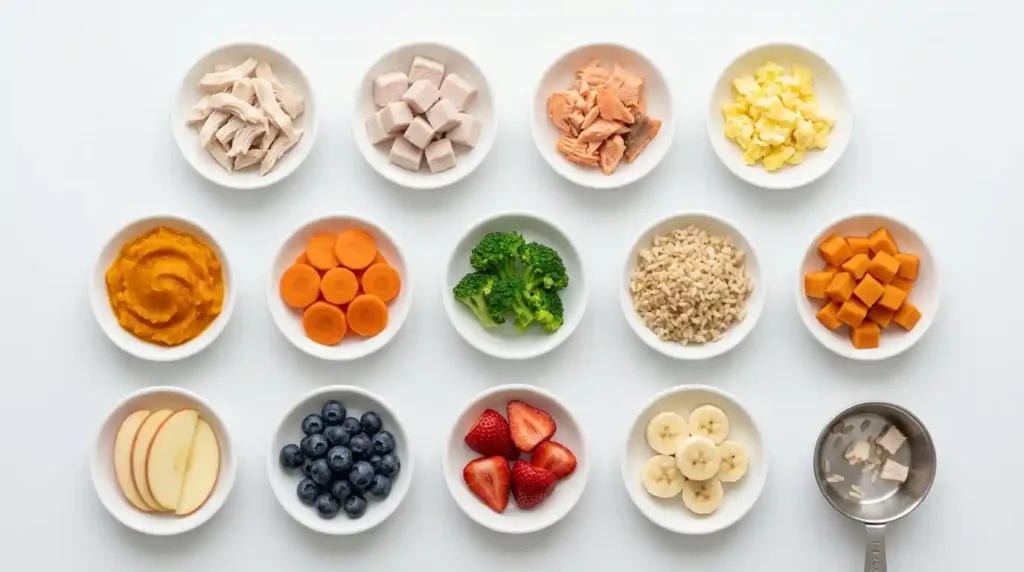
Safe Animal Proteins
Small amounts of the following can be offered fully cooked and unseasoned:
- Skinless chicken
- Turkey
- Lean beef
- Lamb
- Duck
- Rabbit
- Salmon
- Sardines packed in water without added salt
- Whitefish
- Fully cooked eggs
Remove bones, skin, excess fat, sauces, garlic, onions, and seasoning. Avoid raw fish and raw eggs unless a veterinarian has approved a professionally formulated raw diet.
Safe Fruits
Suitable fruits include:
- Apples without seeds or core
- Blueberries
- Raspberries
- Strawberries
- Bananas
- Seedless watermelon
- Pears without seeds
- Mango without the pit
Fruit contains natural sugar, so servings should be very small. One or two bite-sized pieces may be enough for a toy dog.
Safe Vegetables and Carbohydrates
Pomeranians may eat small portions of:
- Plain pumpkin
- Cooked carrots
- Green beans
- Broccoli
- Sweet potato
- Plain potato
- Brown rice
- Plain oatmeal
- Spinach
- Peas
Cook hard vegetables until soft and cut them into tiny pieces to reduce choking risk. Do not add butter, salt, sugar, oil, gravy, or spices.
Some dogs with sensitive digestion tolerate simple foods differently. Similar concerns are discussed in the guide to What English Bulldogs Eat, although food reactions should always be assessed individually.
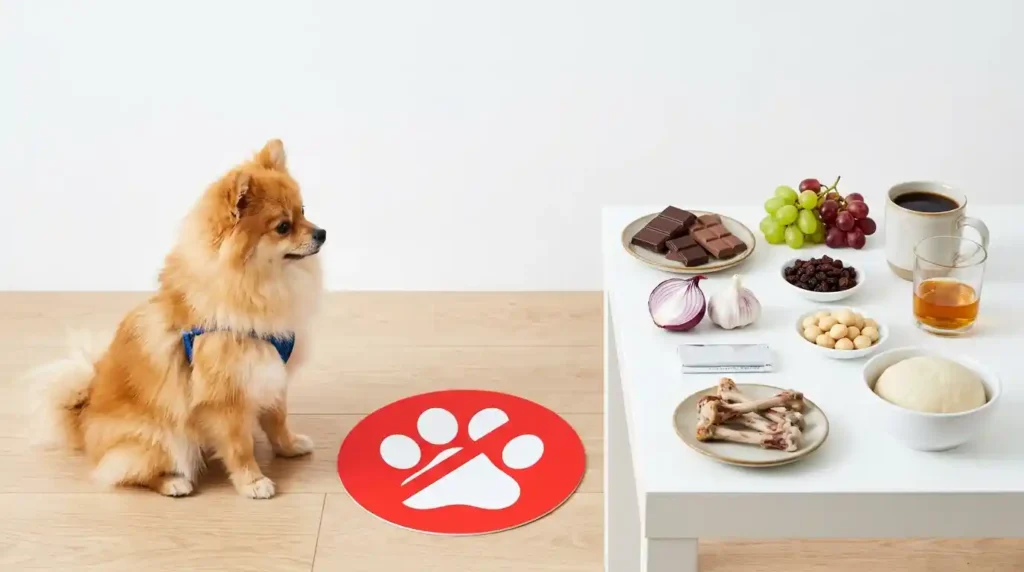
Foods Pomeranians Must Never Eat
Because Pomeranians are so small, even a limited amount of a toxic ingredient can be dangerous. Keep the following foods out of reach:
- Chocolate
- Grapes
- Raisins
- Onions
- Garlic
- Leeks
- Chives
- Caffeine
- Alcohol
- Macadamia nuts
- Xylitol or birch sugar
- Cooked bones
- Moldy food
- Spoiled food
- Raw yeast dough
- Excessively salty food
- Very fatty or spicy food
Xylitol may appear in sugar-free gum, candy, baked goods, toothpaste, medications, and some peanut butter. Always check the ingredient list before sharing peanut butter.
Cooked bones can splinter and cause choking or intestinal injury. Cow’s milk can also cause digestive upset because many adult dogs have difficulty with lactose. A small amount of plain dairy may be tolerated by some dogs, but diarrhea, gas, or vomiting means it should be stopped.
Contact a veterinarian or animal poison service immediately if your Pomeranian eats a toxic food. Do not wait for symptoms and do not induce vomiting unless a veterinary professional specifically instructs you to do so.
Recommended Pomeranian Products on Amazon
The following well-reviewed or top-rated products are relevant to Pomeranian feeding. Ratings, formulas, packaging, sellers, and availability can change, so review the current product page and confirm the life-stage statement before ordering.
1. Royal Canin Pomeranian Adult Dry Dog Food
Royal Canin Pomeranian Adult Dry Dog Food is a breed-specific food for adult Pomeranians. Its specialized small kibble is designed for a Pomeranian’s jaw, while EPA and DHA support skin, coat, bones, and joints.
At the time of review, the Amazon listing displayed a 4.7-star rating from more than 1,100 customer ratings. This can be a practical choice for a healthy adult that does well on a breed-specific formula.
2. Hill’s Science Diet Adult Small & Mini
Hill’s Science Diet Adult 1–6 Small & Mini uses chicken and brown rice in a small-breed formula. At the time checked, the listing showed a 4.8-star rating from more than 26,000 customer ratings.
It may suit healthy adult Pomeranians that need small kibble and a mainstream complete diet. Confirm the package is the correct adult formula rather than a puppy, senior, weight-management, or therapeutic recipe.
3. Hill’s Science Diet Puppy Small & Mini
Hill’s Science Diet Puppy Small & Mini is designed for growing small-breed puppies and includes DHA, protein, vitamins, and balanced minerals. Its small pieces are easier for a young Pomeranian to pick up and chew.
Introduce it gradually and use the package feeding chart as a starting point. Very small puppies may need a feeding plan from their veterinarian.
4. Purina Pro Plan Toy Breed Chicken & Rice
Purina Pro Plan Toy Breed Chicken & Rice is a high-protein formula developed for highly active toy dogs. It includes bite-sized kibble and probiotics for digestive and immune support.
This may be useful for an active adult, but calorie intake must still be measured carefully. High activity per pound does not mean a Pomeranian should have unlimited food.
5. Hill’s Science Diet Senior 11+ Small & Mini
Hill’s Science Diet Senior 11+ Small & Mini contains chicken, brown rice, barley, antioxidants, and omega-3 fatty acids. At the time checked, the listing displayed a 4.7-star rating from more than 7,000 customers.
A senior formula should be chosen according to the dog’s health, not age alone. Dental disease, kidney problems, pancreatitis, diabetes, allergies, and prescription-diet needs should be discussed with a veterinarian.
These are suggestions, not universal recommendations. A food with excellent reviews may still be unsuitable for an individual dog with a food allergy, medical condition, or poor tolerance.
Common Pomeranian Feeding Problems
Picky Eating
Picky eating can develop when refusing a normal meal repeatedly produces tastier alternatives. Once medical causes are ruled out, offer the measured meal for about 15–20 minutes and then remove it. Avoid replacing every refused meal with chicken, cheese, or treats.
Sudden appetite loss is different from ordinary selectiveness. Dental pain, nausea, stress, infection, digestive upset, or another illness may cause a dog to stop eating.
Understanding learned food behavior is part of Dog psychology. Consistent routines help prevent a clever Pomeranian from turning every meal into a negotiation.
Overfeeding and Obesity
Obesity is one of the most preventable feeding problems. Common causes include:
- Filling the bowl without measuring
- Free-feeding an adult dog
- Giving too many training treats
- Adding toppers without reducing the main meal
- Sharing table scraps
- Ignoring calories in dental chews
- Continuing puppy food too long
- Failing to reduce portions after activity declines
Excess weight may worsen joint strain, patellar luxation, breathing difficulty, inflammation, and reduced mobility. Because the coat hides body shape, weigh the dog regularly and check its ribs and waist by touch.
Low Blood Sugar
Hypoglycemia is most common in very young or exceptionally small Pomeranian puppies. Missing meals, illness, stress, vomiting, diarrhea, or using more energy than the puppy can replace may trigger it.
Regular small meals help reduce the risk. Weakness, trembling, confusion, poor coordination, collapse, or seizures require emergency veterinary attention.
Dental Problems
A Pomeranian’s small jaw can contain crowded teeth, creating spaces where plaque and food collect. Dental pain may cause the dog to drop kibble, chew on one side, approach food and walk away, or prefer wet food.
Food texture can improve comfort, but it cannot cure tooth decay or periodontal disease. Arrange a dental examination when chewing habits change.
Food Allergy or Sensitivity
Possible signs include itching, skin irritation, recurring ear problems, vomiting, diarrhea, gas, and bloating. Chicken, beef, dairy, wheat, soy, or other ingredients can cause problems in individual dogs, but no ingredient is automatically an allergen for the entire breed.
A veterinarian may recommend an elimination diet using a novel protein or hydrolyzed formula. Duck, rabbit, or selected fish may be used as novel proteins, but they will not help if the dog has eaten them before.
How to Change a Pomeranian’s Food Safely
A sudden change can cause vomiting, diarrhea, gas, or appetite problems. Use a gradual food transition over approximately seven to ten days unless a veterinarian advises otherwise.
| Days | Current food | New food |
| 1–2 | 75% | 25% |
| 3–4 | 50% | 50% |
| 5–6 | 25% | 75% |
| 7 onward | 0% | 100% |
Sensitive dogs may need a slower transition. Monitor appetite, stool quality, skin, energy, and body condition. Stop and call your veterinarian if the dog develops persistent vomiting, severe diarrhea, facial swelling, breathing difficulty, marked weakness, or collapse.
Keep meal times steady during the transition. Wash ceramic or stainless-steel bowls daily, store dry kibble in its original bag inside an airtight container, refrigerate opened wet food, and keep fresh water available.
For more breed-specific comparisons, visit the Dogs Breed Feeding collection.
Conclusion
So, what do Pomeranians eat for long-term health? They need a complete and balanced life-stage formula with high-quality animal protein, healthy fats, digestible carbohydrates, fiber, vitamins, minerals, and fresh water. The food should be nutrient-dense, easy for a small jaw to manage, and served in carefully measured portions.
Puppies need frequent meals and growth-focused puppy food. Healthy adults normally do well with two or three measured meals, while seniors may benefit from easier-to-chew food and nutrients that support joints, digestion, and aging.
Safe human foods such as plain chicken, turkey, salmon, pumpkin, carrots, apples, and blueberries can be given in tiny amounts. They should remain within the 10% treat allowance. Chocolate, grapes, raisins, onions, garlic, xylitol, alcohol, caffeine, macadamia nuts, cooked bones, and spoiled food must be avoided.
Most importantly, choose food for the individual dog rather than following trends. Monitor weight, body condition, appetite, stool quality, skin, coat, and energy. When feeding problems continue, or a medical condition is present, a veterinarian or veterinary nutritionist should guide the diet.
Frequently Asked Questions
What does a Pomeranian eat daily?
A Pomeranian should eat complete small-breed food appropriate for its age, divided into two or more measured meals.
What can Pomeranians eat besides dog food?
They can have tiny amounts of plain cooked meat, eggs, pumpkin, carrots, apples, blueberries, rice, or oatmeal as occasional treats.
How much should a Pomeranian eat per day?
Many healthy adults need approximately 140–280 calories daily, but the correct amount depends on weight, age, activity, and food calorie density.
How often should Pomeranians eat?
Puppies usually need three or four meals daily. Most adults and seniors do well with two or three smaller meals.
Can Pomeranians eat chicken?
Yes. Plain, fully cooked, boneless, skinless chicken can be given unless the dog has a diagnosed chicken allergy or sensitivity.
Can Pomeranians eat eggs?
Yes. Fully cooked, plain eggs can be offered in small amounts as part of the dog’s treat allowance.
Can Pomeranians eat rice?
Yes. Plain cooked brown or white rice can be offered in moderation, but it should not replace complete dog food.
Can Pomeranians drink milk?
Cow’s milk is unnecessary and may cause diarrhea or gas because many adult dogs have difficulty digesting lactose.
Is wet or dry food better for Pomeranians?
Either can work when complete and balanced. Wet food adds moisture, while small kibble is convenient and easier to measure.
Can Pomeranians eat raw food?
They can eat a professionally formulated raw diet, but contamination, choking, bone injuries, and nutritional imbalance are important risks.
Why is my Pomeranian refusing food?
Picky behavior is possible, but sudden refusal may indicate dental pain, nausea, stress, digestive illness, or low blood sugar.
What foods are toxic to Pomeranians?
Chocolate, grapes, raisins, onions, garlic, caffeine, alcohol, macadamia nuts, xylitol, yeast dough, and cooked bones are dangerous.
Do Pomeranians need grain-free food?
Not usually. Grain-free food should be used only for a clear nutritional or medical reason discussed with a veterinarian.
When should a Pomeranian switch to adult food?
Most switch between 10 and 12 months, but growth, weight, body condition, and veterinary advice should guide the timing.
What is the best protein for a Pomeranian?
Chicken, turkey, beef, lamb, fish, duck, rabbit, and eggs can all work. The best choice is one the dog tolerates in a balanced formula.