


Summary
What do Chihuahuas eat? A healthy Chihuahua should eat a complete and balanced dog food formulated for its life stage, preferably with small, easy-to-chew kibble, digestible animal protein, healthy fat, essential fatty acids, and controlled calories. Most healthy adults do well with two measured meals per day, while puppies need three or four smaller meals because their tiny bodies and high metabolism make them more vulnerable to low blood sugar.
The correct daily amount depends on your Chihuahua’s weight, age, activity level, body condition, health status, spay or neuter status, and the food’s calorie density. A typical adult may need roughly 130–240 calories per day, but that range is only a starting point. This guide explains how to choose nutritious food, calculate portions, feed puppies and seniors, handle picky eating, and avoid dangerous foods.
Table of Contents
- What Do Chihuahuas Eat? The Simple Answer
- Why Chihuahua Nutrition Requires Extra Attention
- What Makes a Good Dog Food for Chihuahuas?
- What Do Chihuahuas Eat at Every Life Stage?
- How Much Should a Chihuahua Eat?
- How Often Do Chihuahuas Eat?
- Dry, Wet, Fresh, or Raw Food
- Feeding a Picky Chihuahua
- Food Sensitivities and Digestive Problems
- Health Conditions That Affect Feeding
- Safe Human Foods and Foods to Avoid
- Helpful Amazon Feeding Products
- How to Change and Store Chihuahua Food
- Conclusion
- Frequently Asked Questions
What Do Chihuahuas Eat? The Simple Answer
Chihuahuas eat nutritionally complete commercial dog food or a properly formulated home-prepared diet. Although dogs are often described as omnivores or facultative carnivores, that does not mean they thrive on random mixtures of meat, vegetables, and leftovers. They require specific amounts and ratios of protein, fat, essential amino acids, vitamins, minerals, and essential fatty acids.
For most owners, the safest foundation is a commercial puppy, adult, or senior dog food carrying a nutritional adequacy statement for the correct life stage. The formula may contain chicken, turkey, beef, lamb, bison, fish, salmon, egg, organ meat, whole grains, vegetables, fruit, and carefully selected sources of dietary fiber.
A Chihuahua can eat:
- Small-breed dry dog food
- Wet dog food
- Complete fresh dog food
- A combination of wet and dry food
- A veterinary therapeutic diet when medically necessary
- A home-cooked diet formulated by a board-certified veterinary nutritionist
A Chihuahua should not live primarily on table scraps, unbalanced meat, treats, or homemade recipes found randomly online. Even wholesome ingredients can create calcium, phosphorus, vitamin, or essential fatty-acid deficiencies when combined incorrectly.
Owners exploring wider nutrition topics can visit the Dog Food resource section. Breed-specific feeding is useful because the portion appropriate for a German Shepherd or Labrador could represent several days of calories for a Chihuahua.
Why Chihuahua Nutrition Requires Extra Attention
A Chihuahua may be tiny, but its nutrition is not simply a miniature version of large-dog feeding. Small body size changes calorie management, meal frequency, kibble size, and the consequences of feeding errors.
Small stomach, concentrated energy needs
Toy breeds generally burn more energy per pound than large breeds, yet their stomachs hold much less food. A suitable small-breed formula therefore tends to provide good nutrient density and calorie density in a manageable serving.
The goal is not to find the highest-calorie food available. It is to deliver the required nutrition without making the meal physically too large or so energy-dense that a small measuring error causes weight gain.
For comparison, guides discussing the best dog food for labradors often emphasize managing a much larger daily ration. With a Chihuahua, the challenge is precision: an extra spoonful, several treats, or a piece of cheese can represent a substantial percentage of the dog’s daily calorie requirement.
High metabolism and low blood sugar
Young Chihuahua puppies have limited energy reserves and a relatively high metabolism. They can be susceptible to hypoglycemia, particularly if they are extremely small, stressed, ill, very active, or unwilling to eat.
Warning signs of low blood sugar may include:
- Lethargy
- Trembling
- Weakness
- Disorientation
- Poor coordination
- Collapse
- Seizure
Hypoglycemia can become an emergency. A weak, trembling, confused, or collapsed puppy needs immediate veterinary advice rather than an improvised long-term feeding remedy.
Miniature jaw and delicate teeth
A Chihuahua’s miniature jaw makes kibble dimensions important. Small-breed kibble or extra-small kibble is easier to pick up and chew than oversized pieces. Appropriate texture may also help a reluctant eater accept the meal.
However, dry food does not replace dental care. Chihuahuas are vulnerable to dental plaque, dental tartar, gingivitis, periodontal disease, and early tooth loss. Regular toothbrushing with dog toothpaste remains more dependable than assuming crunchy food will clean every tooth.
Obesity develops quickly
A few ounces of weight gain can be meaningful on a five-pound dog. Overfeeding also places unnecessary pressure on joints, the airway, and the cardiovascular system.
Chihuahuas need portion control, regular weight monitoring, and an honest assessment of body condition. A fluffy coat or rounded rib cage can hide excess fat, so use your hands as well as your eyes.
What Makes a Good Dog Food for Chihuahuas?
When owners ask what a good dog food for Chihuahuas is—or what is the healthiest dog food for Chihuahuas—the answer is not one universal brand. The best choice is nutritionally adequate, appropriate for the individual dog, manufactured with reliable quality control, and practical enough to feed consistently.
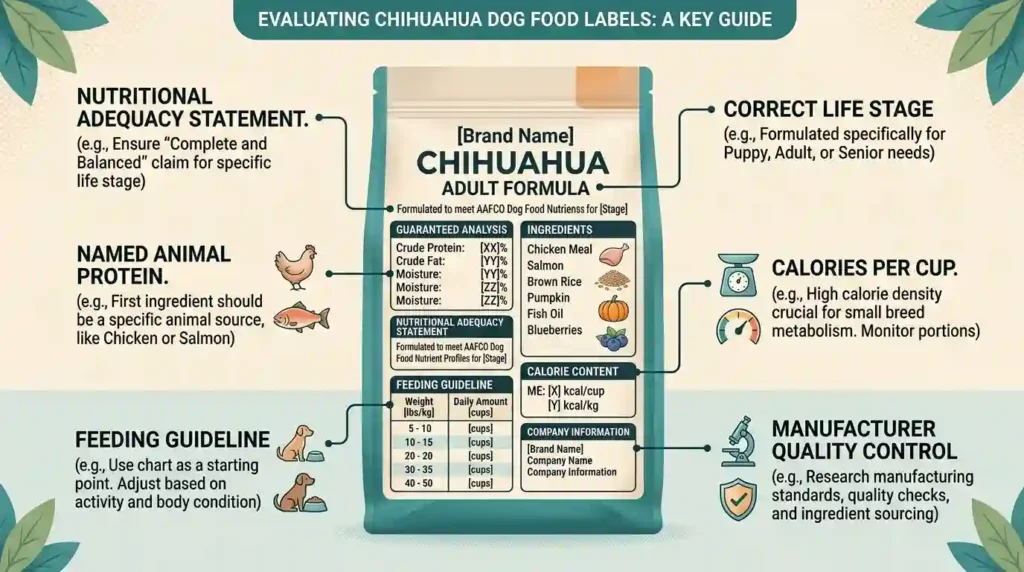
Start with nutritional adequacy
Look for a nutritional adequacy statement indicating that the food is complete and balanced for the intended life stage. A product may be formulated to meet the AAFCO Dog Food Nutrient Profiles or substantiated through an appropriate feeding protocol.
AAFCO does not approve individual foods. Its profiles and model regulations help establish nutritional standards, while pet-food oversight is handled through regulatory authorities. The AAFCO guide to selecting pet food explains why species, life stage, condition, feeding directions, and the nutritional adequacy statement matter.
Avoid using a product labeled only for intermittent or supplemental feeding as the main daily diet. Food toppers, broths, edible chews, and many treats are not complete meals.
Choose digestible animal protein
High-quality animal protein supplies essential amino acids for muscle development, tissue repair, immune-system support, and maintenance of lean body mass. Useful label terms include named animal protein, whole meat, muscle meat, and named meat meal.
Potential protein sources include:
- Chicken
- Turkey
- Beef
- Lamb
- Bison
- Salmon or other fish
- Egg
- Organ meat
A named meat meal is not automatically inferior to whole meat. Because much of the water has been removed, it can be a concentrated source of protein. Similarly, properly processed meat by-products may provide nutritious organs. The more important questions are whether the source is identified, the formulation is nutritionally sound, and the manufacturer maintains strong quality control.
A high protein percentage alone does not prove that a food is better. Bioavailable protein and digestible protein matter more than a marketing phrase. Dogs with certain medical conditions may also require individualized protein levels, so do not prescribe a high-protein diet without considering the whole dog.
The protein needs of a toy breed differ in practical application from those discussed in guides about Dog Food for Pitbulls, where supporting a much larger muscular build may be a prominent concern.
Include appropriate healthy fat
Healthy fat supplies energy, improves palatability, and supports the skin, coat, brain, and absorption of fat-soluble vitamins. Chicken fat, fish oil, and other carefully formulated fat sources may provide omega-3 and omega-6 fatty acids.
EPA and DHA from marine sources support skin health, coat health, brain development, vision development, and normal inflammatory responses. Some formulas use borage oil or other sources of omega-6 fatty acids.
More fat is not always better. Because fat is calorie-dense, a high fat content can make overfeeding easier and may be inappropriate for a dog with a history of pancreatitis or another fat-sensitive condition.
Do not fear useful carbohydrates
Dogs do not require carbohydrates in the same way they require certain amino acids and fatty acids, but properly cooked carbohydrates can provide digestible energy, dietary fiber, and useful nutrients.
Common ingredients include:
- Brown rice
- Oatmeal
- Sweet potato
- Pumpkin
- Chickpea
- Beet pulp
- Vegetables
- Fruit
- Blueberry
- Cranberry
Dietary fiber can support stool quality, satiety, and intestinal bacteria. Prebiotics nourish beneficial microorganisms in the gut microbiome, while probiotics contain live microorganisms intended to support digestive health. These features may be helpful, but they cannot compensate for a poorly balanced formula.
A grain-free formula is not automatically healthier. Unless a veterinarian identifies a specific need, whole grains can be valuable sources of energy and fiber.
Check vitamins and minerals
A complete diet should supply properly balanced calcium and phosphorus for bone development and maintenance. It should also provide B vitamins, vitamin E, antioxidants, trace minerals, and other essential nutrients.
Some dental diets use a calcium chelator to help reduce mineral buildup on the teeth, but no ingredient eliminates the need for brushing and veterinary dental examinations.
Avoid adding calcium, vitamin, or mineral supplements to a complete diet without professional guidance. An unnecessary supplement can disturb the nutrient balance rather than improve it.
Evaluate the manufacturer
A reputable manufacturer should be able to explain:
- Who formulates the food
- Whether qualified nutrition professionals are involved
- How ingredients and finished products are tested
- Where the food is manufactured
- How quality-control problems are tracked
- Whether calorie information and nutritional analyses are available
- How the company handles recalls and consumer questions
“Human-grade,” “natural,” “holistic,” and “minimally processed” can be appealing descriptions, but they do not independently establish nutritional adequacy. Read the complete label rather than judging the front of the bag.
What Do Chihuahuas Eat at Every Life Stage?
Life-stage nutrition matters because a growing puppy has different energy, amino-acid, calcium, phosphorus, and DHA needs than an adult or senior dog.
Newborn puppies
During the first weeks of life, puppies should receive their mother’s milk. If nursing is impossible or inadequate, use a canine milk replacer under veterinary guidance—not cow’s milk or homemade mixtures.
A newborn that is cold, weak, failing to nurse, or losing weight needs prompt veterinary care. Bottle or tube feeding can be dangerous when performed incorrectly because liquid may enter the lungs.
Weaning puppies
Weaning often begins around three to four weeks of age. Puppy food can be softened with warm water or canine milk replacer to make puppy mush. The texture is gradually thickened until the puppy is eating solid food, commonly by seven or eight weeks.
During rapid growth, select complete puppy food appropriate for small breeds. Small kibble, digestible protein, DHA, balanced calcium and phosphorus, and adequate calorie density support brain development, vision development, muscle development, and bone development.
Chihuahua puppies
How much to feed a Chihuahua puppy depends on age, current weight, growth rate, and the calorie density of the food. Begin with the package feeding guideline for expected adult weight, then ask your veterinarian to adjust it as the puppy grows.
Most young puppies need three or four frequent small meals per day. Very small or medically fragile puppies may need a schedule designed by a veterinarian.
Around nine to twelve months, many Chihuahuas can begin a puppy-to-adult transition. Do not switch solely because the puppy appears nearly full-sized; growth nutrition should continue until your veterinarian considers the dog mature.
The Dogs Breeds Feeding section offers additional comparisons, including how growth and portioning vary across breeds.
Healthy adults
Adult dog food should maintain a healthy body weight and provide enough protein and fat for the dog’s activity level without excessive calories. Most adults do well with twice-daily feeding.
Breed-specific food is optional. A well-formulated small-breed formula can be just as suitable as food carrying a Chihuahua image. Choose according to nutritional quality, kibble size, digestibility, calorie content, and your dog’s response—not the picture on the package.
Senior Chihuahuas
There is no single age at which every Chihuahua needs senior dog food. Many enter their senior years around age seven to ten, but health and body condition matter more than a birthday alone.
An older Chihuahua may need:
- Lower calorie density if activity decreases
- More digestible protein to help preserve muscle
- Softer food when dental disease makes chewing painful
- Additional moisture to support hydration
- A therapeutic diet for heart, urinary, kidney, digestive, or joint concerns
- Adjusted meal frequency when appetite becomes inconsistent
Unexplained weight loss, muscle loss, increased thirst, reduced appetite, vomiting, or diarrhea should not be dismissed as normal aging.
How Much Should a Chihuahua Eat?
There is no accurate one-cup answer for every Chihuahua. Two foods can look identical while providing very different calories per cup or kcal per 100 grams.
A practical adult calorie guide
The following estimates are reasonable starting ranges for healthy, neutered adults with moderate activity. They are not prescriptions.
| Chihuahua weight | Approximate daily calories | Approximate amount at 400 kcal per cup |
| 3 pounds | 130–150 kcal | 0.33–0.38 cup |
| 4 pounds | 155–180 kcal | 0.39–0.45 cup |
| 5 pounds | 180–210 kcal | 0.45–0.53 cup |
| 6 pounds | 205–240 kcal | 0.51–0.60 cup |
| 8 pounds | 250–300 kcal | 0.63–0.75 cup |
A sedentary or weight-prone adult may require less. An intact, highly active, pregnant, nursing, underweight, or recovering dog may require more. Puppies have higher energy requirements per pound than adults but must receive those calories through a growth diet and several small meals.
Convert calories into a serving size
Use this equation:
Daily cups = daily calorie target ÷ calories per cup
For example, if a five-pound Chihuahua needs 200 calories and its food contains 400 calories per cup:
200 ÷ 400 = 0.5 cup per day
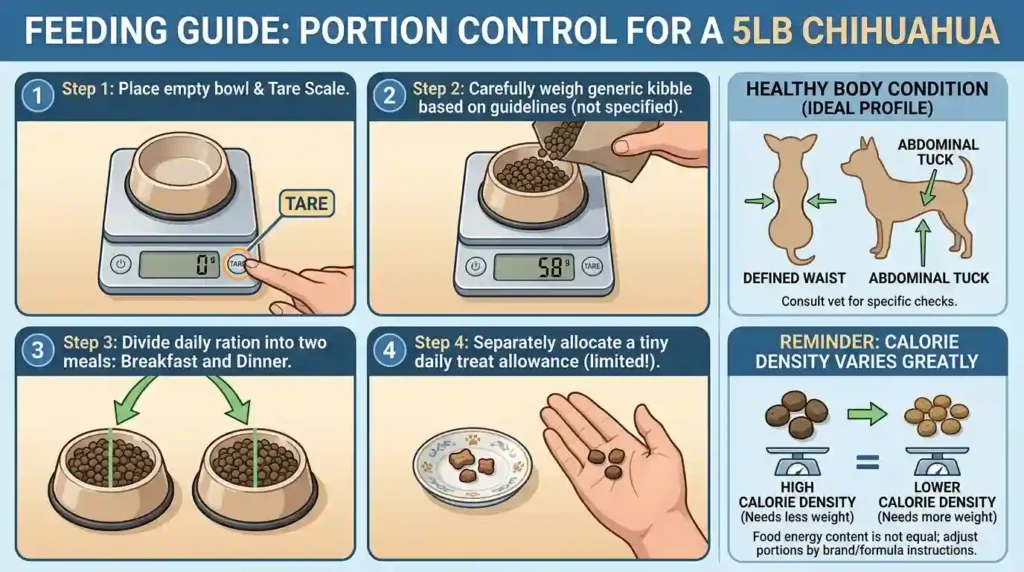
Split that daily ration into two meals, giving approximately one-quarter cup at breakfast and one-quarter cup at dinner.
If you feed wet or fresh food, use the listed calories per can, tray, package, ounce, or 100 grams. With mixed feeding, count the calories from every component.
Measure precisely
A kitchen scale is more accurate than estimating by sight. Place the empty bowl on the scale, press tare, and weigh the food in grams. This is particularly helpful with calorie-dense kibble, where a small volume difference can add many calories.
A standardized measuring cup is better than an unmarked scoop, but cups still vary depending on how the food settles. Record the gram amount once you determine the correct serving.
Use body condition to adjust the ration
A healthy body condition usually includes:
- Ribs that are easy to feel beneath a thin layer of fat
- A visible waist when viewed from above
- An abdominal tuck behind the ribs when viewed from the side
- Stable weight and muscle condition
If the ribs are difficult to feel and the waist is disappearing, reduce calories with veterinary guidance. If the ribs, spine, or hips become excessively prominent, or if muscle mass declines, arrange an examination rather than simply doubling the food.
Check weight every two to four weeks during growth, weight loss, a food transition, or a significant lifestyle change. For a stable adult, monthly monitoring is usually practical.
Count treats and toppers
Treat calories should generally stay within about 10% of the daily calorie allowance. For a dog eating 180 calories per day, that is only 18 treat calories.
Food toppers, edible chews, dental snacks, peanut butter, cheese, and training treats all count. Break safe treats into tiny pieces; dogs respond to the number of rewards more than the size of each reward.
The same principle applies to food-motivated breeds covered in What Do Beagles Eat, but the Chihuahua’s smaller calorie budget leaves even less room for extras.
How Often Do Chihuahuas Eat?
How many times a day should a Chihuahua eat? The answer changes with age and health.
| Life stage | Typical feeding frequency |
| Weaning puppy | Four small meals per day |
| Young puppy | Three to four meals per day |
| Older puppy | Three meals, gradually moving toward two |
| Healthy adult | Two measured meals per day |
| Senior | Usually two meals; sometimes three smaller meals |
Scheduled meals make it easier to monitor appetite, control calories, support housetraining, and notice illness. Free feeding—leaving food down all day—can encourage grazing, hide changes in appetite, and contribute to weight gain.
A consistent feeding schedule also helps distinguish true hunger from learned begging. For broader advice on routines, reinforcement, and food-related habits, see Dog Behavior.
Dry, Wet, Fresh, or Raw Food
The best format is the one that is complete and balanced, appropriate for the dog’s health, affordable over time, and accepted without digestive problems.
Dry dog food
Small-breed kibble is convenient, easy to portion, economical, and usually has a longer shelf life after opening than wet food. Extra-small kibble may suit a miniature jaw and reduce the struggle of chewing oversized pieces.
Dry food contains less water, so fresh water must always be available. Kibble may provide some mechanical contact with teeth, but ordinary dry food should not be treated as a substitute for toothbrushing.
Wet dog food
Wet dog food provides more moisture and can be easier for dogs with delicate teeth, missing teeth, or a reduced appetite. Its aroma and texture often appeal to a picky eater.
Because canned food can be less calorie-dense by volume, it may help some dogs feel satisfied. Other recipes are rich and energy-dense, so the label still matters. Refrigerate opened food promptly and follow the manufacturer’s storage directions.
Fresh and minimally processed food
Commercial fresh dog food and human-grade dog food can be palatable and moisture-rich. Confirm that the recipe is complete and balanced for your Chihuahua’s life stage. The ingredient list should not distract you from the nutritional adequacy statement.
Fresh foods require refrigeration and careful handling. They are generally more expensive, and the daily portion may look larger than kibble because of the additional water.
Mixed feeding
Mixed feeding combines dry and wet or fresh food. It can increase palatability and hydration while preserving the convenience of kibble.
Calculate the calories from both foods rather than providing a full ration of each. For example, if half the daily calories come from wet food, reduce the kibble to cover only the remaining half.
Home-cooked diets
A home-cooked diet can work when formulated for the individual dog by a board-certified veterinary nutritionist. Simply combining chicken, rice, carrots, and oil does not provide a reliably balanced long-term diet.
Home-prepared meals commonly become deficient in calcium, essential fatty acids, vitamins, or trace minerals. Recipes also lose balance when owners substitute ingredients or stop measuring supplements.
Raw and freeze-dried raw diets
A raw diet may follow a BARF diet or prey model raw diet. Raw meat, bones, organs, eggs, or unpasteurized ingredients can carry harmful bacteria and create nutritional imbalances.
Bones also introduce choking, dental fracture, obstruction, and gastrointestinal injury risks—serious concerns for a toy breed. Freeze-dried food is not automatically free of pathogens unless the manufacturer uses validated controls.
Owners considering raw feeding should discuss food-safety risks, household vulnerability, and formulation with a veterinarian or veterinary nutritionist. Children, older adults, pregnant people, and immunocompromised family members may face additional exposure risks.
Grain-free food
Grain-free does not mean carbohydrate-free; many recipes replace rice or oatmeal with peas, lentils, chickpeas, or potatoes. Unless a diagnosed condition requires a specific ingredient strategy, there is no general reason that a Chihuahua must avoid grains.
Feeding a Picky Chihuahua
Chihuahuas can learn to hold out for tastier options when refusing a meal repeatedly results in cheese, meat, or a new brand. Before labeling a dog a picky eater, rule out dental pain, nausea, gastrointestinal disease, medication effects, and other medical problems.
For an otherwise healthy adult:
- Offer a measured meal on a consistent schedule.
- Leave it available for about 15–20 minutes.
- Remove the bowl if the dog walks away.
- Limit snacks between meals.
- Offer the next scheduled meal normally.
- Keep water available at all times.
A spoonful of complete wet food, warm water, or a veterinarian-approved food topper may improve aroma. Count it within the daily ration.
Do not use tough love with a very young puppy, diabetic dog, underweight dog, or Chihuahua showing hypoglycemia symptoms. These dogs need professional guidance rather than a prolonged standoff.
Food Sensitivities and Digestive Problems
A sensitive stomach can describe recurring gas, loose stool, vomiting, or digestive upset, but it is not a diagnosis. Parasites, infection, pancreatitis, intestinal disease, overeating, abrupt food changes, and scavenging can create similar symptoms.
A food allergy involves an immune response, often causing itchy skin, allergic dermatitis, recurrent ear trouble, or gastrointestinal signs. Food intolerance does not necessarily involve the immune system but can still cause digestive distress. Neither problem can be diagnosed reliably from marketing claims alone.
A veterinarian may recommend:
- A controlled elimination diet
- A veterinary hydrolyzed-protein diet
- A limited-ingredient diet with a genuinely novel protein
- Diagnostic testing for other diseases
- A diet with adjusted fat or fiber
- Probiotics or other treatment when appropriate
Switching randomly among chicken, turkey, salmon, beef, and lamb can make a future elimination diet more difficult by exposing the dog to numerous proteins. Keep a record of foods, treats, flavored medications, symptoms, and stool quality.
Persistent vomiting or diarrhea, blood in stool, pain, dehydration, weakness, or refusal to eat warrants veterinary care.
Health Conditions That Affect Feeding
Dental disease
Dental plaque can harden into calculus and irritate the gums, leading to gingivitis and periodontal disease. Pain may cause slow eating, dropped food, chewing on one side, bad breath, or refusal of dry kibble.
Brush with dog toothpaste and a size-appropriate toothbrush. Human toothpaste may contain unsafe ingredients and should not be used. Professional dental treatment may be required once disease is established.
Obesity and joint stress
Obesity increases strain on the body and may worsen mobility, arthritis, and other chronic conditions. Although hip dysplasia and degenerative joint disease receive more attention in larger breeds, a Chihuahua still benefits from a healthy body weight, adequate muscle, and regular activity.
When reading about Dog Food for German Shepherds, owners will notice that large breeds have different growth and joint considerations. The shared lesson is that more food is not automatically better nutrition.
A veterinarian may recommend a restricted-calorie diet designed to maintain adequate protein, vitamins, and minerals while reducing calories. Simply feeding a very small portion of regular food can reduce essential nutrients along with energy.
Hypoglycemia
Toy-breed puppies are at greatest risk, but low blood sugar can also occur with illness, inadequate intake, certain medications, and metabolic disorders. Regular puppy meals help reduce risk, but repeated episodes need investigation.
Treat trembling, weakness, disorientation, collapse, or seizure as urgent warning signs.
Heart disease
Chihuahuas may develop cardiac problems such as patent ductus arteriosus or degenerative valve disease. A dog with heart disease should receive an individualized plan based on diagnosis, medications, body condition, kidney function, and appetite.
Do not impose severe sodium restriction or add supplements without veterinary guidance. An unbalanced dietary change can create new problems.
Urinary concerns
Urinary stones differ in mineral composition. A diet useful for one type may be inappropriate for another. Increased water intake may be beneficial in many cases, but urinary-health diets should be selected according to diagnostic results.
Collapsing trachea
A raised dog bowl may be more comfortable for some dogs with airway or neck problems, but it is not a treatment for collapsing trachea. Maintaining a healthy weight, using appropriate walking equipment, and following veterinary recommendations are more important.
Safe Human Foods and Foods to Avoid
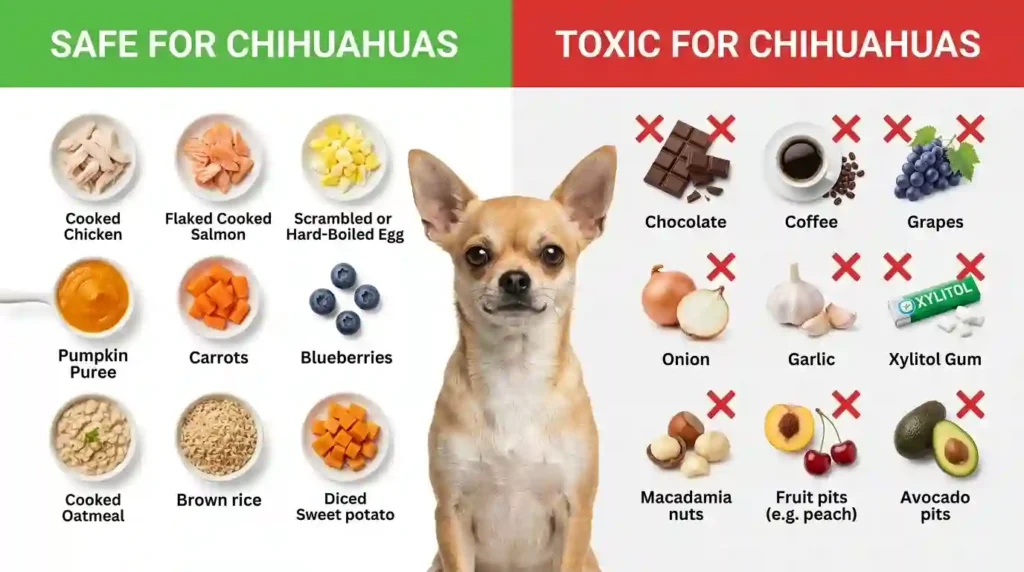
Small quantities of plain, safely prepared food can be used as treats if they fit the calorie allowance.
Potential options include:
- Plain cooked chicken or turkey without bones or skin
- Plain cooked lean beef
- Cooked salmon with all bones removed
- Cooked egg
- Plain pumpkin
- Small carrot pieces
- Blueberries
- Small amounts of cooked oatmeal or brown rice
- Plain cooked sweet potato
- Dog-safe vegetables in bite-sized pieces
Introduce one new food at a time. Cut everything small enough to reduce choking risk, and avoid oils, salt, butter, sauces, seasoning, and fatty preparation methods.
Never knowingly feed:
- Xylitol
- Chocolate
- Coffee, energy drinks, or other caffeine sources
- Grapes, raisins, and currants
- Onion, garlic, shallot, leek, or chive
- Macadamia nuts
- Alcohol or raw yeast dough
- Wild mushrooms
- Cooked bones
- Fruit pits, fruit cores, or apple seeds
- Moldy walnuts or pecans
- Excessively fatty snacks
Cherry pits and other hard fruit pits can cause choking or obstruction and may contain harmful compounds. Nightshade plants and unripe plant material should also be kept away from dogs.
If your Chihuahua eats a suspected toxin, contact a veterinarian or animal poison-control service immediately. Do not wait for symptoms or induce vomiting unless a professional specifically directs you.
Helpful Amazon Feeding Products
Food should be chosen for your individual dog rather than its review count. However, several well-reviewed tools on Amazon can make portioning, slower eating, and dental care easier. Check current seller details, dimensions, materials, and reviews before ordering because listings can change.
Etekcity digital kitchen scale
The Etekcity Food Kitchen Scale measures in grams and ounces and has a tare function. It is useful for weighing kibble or fresh food more consistently than an estimated scoop. The model appears prominently in Amazon’s kitchen-scale listings.
Outward Hound small slow-feeder bowl
The Outward Hound Fun Feeder Slo Bowl in the small ¾-cup size can help a Chihuahua that bolts kibble. Its small capacity is more practical for toy-breed portions than a large multi-cup feeder. Supervise initial use and confirm that the grooves suit your dog’s muzzle.
Virbac C.E.T. enzymatic toothpaste
The Virbac C.E.T. Enzymatic Toothpaste is formulated for dogs and cats and is intended to support plaque control and oral hygiene. Introduce toothbrushing gradually, use a dog-appropriate brush, and ask your veterinarian to demonstrate safe technique if needed.
These products are practical tools, not substitutes for veterinary care or a balanced diet.
How to Change and Store Chihuahua Food
Make a gradual food transition
An abrupt change can cause gas, vomiting, diarrhea, or refusal to eat. Unless a veterinarian directs an immediate switch, transition over approximately seven days:
| Transition day | Old food | New food |
| Days 1–2 | 75% | 25% |
| Days 3–4 | 50% | 50% |
| Days 5–6 | 25% | 75% |
| Day 7 onward | 0% | 100% |
A Chihuahua with a sensitive stomach may need a slower transition. If significant symptoms develop, pause and contact the veterinarian.
Store dry food correctly
Keep kibble in its original food bag so the lot number, expiration date, feeding directions, and manufacturer information remain available. Place the entire bag inside a clean, sealed container rather than pouring new food onto old crumbs.
Store it in a cool, dry location away from heat and sunlight. Fat oxidation can make food stale and reduce palatability. Wash and dry the storage container completely between bags.
Handle wet and fresh food safely
Refrigerate opened wet or fresh food promptly in a covered container and follow the package directions for use after opening. Discard food left at room temperature longer than the manufacturer recommends.
Wash food and water bowls daily. Stainless steel or glazed ceramic is generally easy to clean. Inspect ceramic bowls for cracks or chips that can retain debris.
Conclusion
So, what should Chihuahuas eat? Most thrive on a complete and balanced small-breed food matched to puppy, adult, or senior needs. The recipe should provide digestible animal protein, appropriate healthy fat, essential fatty acids, useful fiber, balanced vitamins and minerals, and enough moisture through food and fresh water.
The best feeding plan is measured rather than guessed. Use the food’s calorie information, divide the daily ration into age-appropriate meals, count treats, and adjust according to weight and body condition. Puppies generally need three or four meals, while healthy adults usually do well with two.
Do not let a Chihuahua’s tiny serving size suggest that nutrition is simple. Small errors have a large impact on a toy breed. When appetite, weight, digestion, skin, dental comfort, or energy changes, work with a veterinarian instead of repeatedly changing foods.
For more comparisons across different sizes and nutritional priorities, explore guides about Dogs Breeds Feeding and remember that the right diet is the one that safely meets the needs of the dog in front of you.
Frequently Asked Questions
What do Chihuahua dogs eat?
They should eat complete and balanced puppy, adult, or senior dog food, with portions adjusted for body weight, health, activity, and calorie density.
How much should a Chihuahua eat in a day?
Many healthy adults need roughly 130–240 calories daily, but the correct amount depends on size, metabolism, activity, neuter status, and body condition.
How many times a day should a Chihuahua eat?
Healthy adults usually eat twice daily. Puppies commonly need three or four smaller meals to support growth and reduce hypoglycemia risk.
What is the best dry dog food for Chihuahuas?
Choose a complete and balanced small-breed formula with appropriately sized kibble, digestible animal protein, clear calorie information, and reliable quality control.
Can Chihuahuas eat wet food every day?
Yes, if it is complete and balanced for the correct life stage. Measure the calories and refrigerate opened food according to package directions.
Can Chihuahuas eat chicken and rice?
Plain cooked chicken and rice can be used briefly when a veterinarian recommends it, but the combination is not complete and balanced for long-term feeding.
Why is my Chihuahua always hungry?
Hunger may reflect habit, high activity, an inadequate ration, medication, parasites, or disease. Review calories and body condition with a veterinarian.
Are Chihuahuas picky eaters?
Some are selective, but dental pain, nausea, digestive disease, or excessive treats can resemble picky eating. Persistent appetite changes deserve evaluation.
Can a Chihuahua eat once a day?
Two meals are generally preferable for healthy adults, and puppies need more frequent feeding. Medical needs may require a different schedule.
What foods are poisonous to Chihuahuas?
Avoid xylitol, chocolate, caffeine, grapes, raisins, currants, alliums such as onion and garlic, macadamia nuts, alcohol, and raw yeast dough.
Do Chihuahuas need grain-free food?
Usually not. Grain-free food is appropriate only when it suits the individual dog and is recommended for a clear nutritional or medical reason.
When should a Chihuahua switch from puppy food?
Many switch between nine and twelve months, but growth, body condition, neuter status, and the specific food should guide timing.