
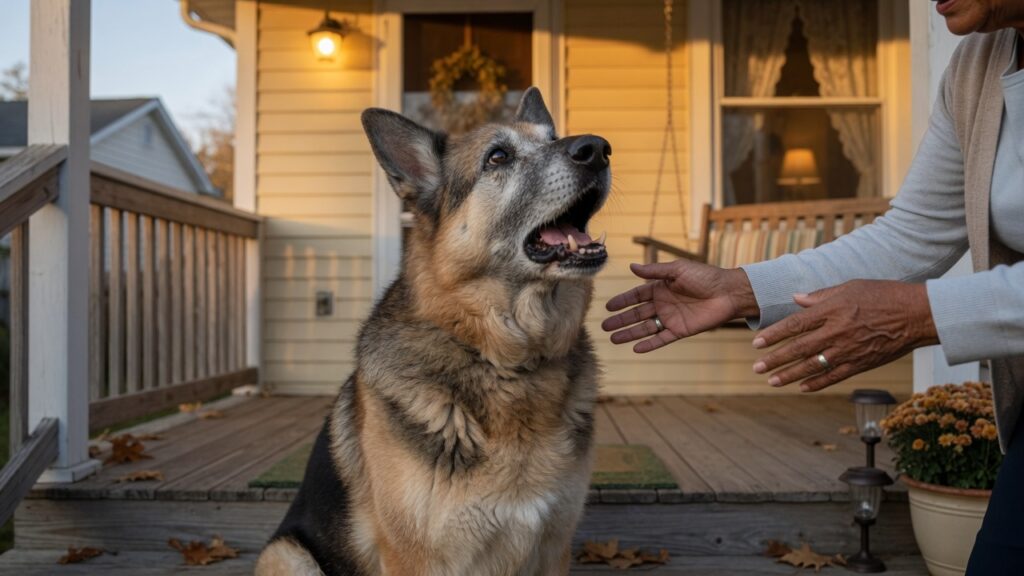

SUMMARY: If your senior dog has suddenly started barking more than usual, it is rarely a coincidence — it almost always signals a physical, neurological, or emotional change that deserves your attention. This in-depth guide explores every major cause of increased vocalization in aging dogs, from cognitive dysfunction syndrome and pain-related barking to anxiety, sensory decline, and environmental triggers, while also offering vet-backed management strategies to restore calm and comfort for both you and your beloved older companion.
Table of Content
- Why Is My Senior Dog Suddenly Barking More? Complete Guide
- Understanding Excessive Barking in Senior Dogs
- Top Medical Reasons an Old Dog Barks More
- Behavioral and Psychological Causes of Increased Barking in Older Dogs
- Environmental Triggers That Make Senior Dogs Bark More
- How to Diagnose Why Your Senior Dog Is Barking More
- How to Stop or Reduce Excessive Barking in Senior Dogs
- When Barking at Night Is the Bigger Problem
- Frequently Asked Questions About Senior Dog Barking
Understanding Excessive Barking in Senior Dogs
Barking is the primary language of dogs. It is how they communicate excitement, fear, pain, confusion, and the need for attention. However, when a dog that has been relatively quiet for years suddenly begins barking excessively — especially in their senior years — it is a meaningful signal that something has changed in their world or their body.
What Counts as “Excessive” Barking?
Excessive barking in senior dogs is broadly defined as any significant increase in vocalization frequency, duration, or intensity that is new or unexplained. This includes barking at nothing visible, barking throughout the night, persistent whining or howling, barking that seems disconnected from any stimulus, and barking that cannot be redirected. The keyword here is sudden — if your dog was quiet most of their life and is now barking regularly without an obvious cause, something has changed that warrants investigation.
Unlike younger dogs who might bark because they are undertrained or under-stimulated, senior dogs who suddenly increase vocalization are almost always responding to a real, internal or external change. Do not dismiss it as “just old age.” Old age itself is not a cause — it is a collection of conditions that need to be identified.
How Aging Changes a Dog’s Behavior
Dogs are generally considered “senior” at around seven years of age, though this varies significantly by breed and size. Large breeds age faster and may be considered senior at five or six years, while small breeds may not be considered senior until eight or nine. As dogs age, several physiological and neurological changes occur simultaneously.
The brain undergoes significant changes in aging dogs. Amyloid plaques — similar to those found in Alzheimer’s disease in humans — can accumulate in the canine brain, leading to confusion, disorientation, and behavioral changes. Sensory organs deteriorate: hearing fades, eyesight dims, and the ability to process new stimuli becomes impaired. The endocrine system may become dysregulated. Joints stiffen, and pain becomes a daily reality. The immune system weakens. All of these changes can manifest as behavioral shifts, and increased barking is one of the most common symptoms owners notice.
Top Medical Reasons an Old Dog Barks More
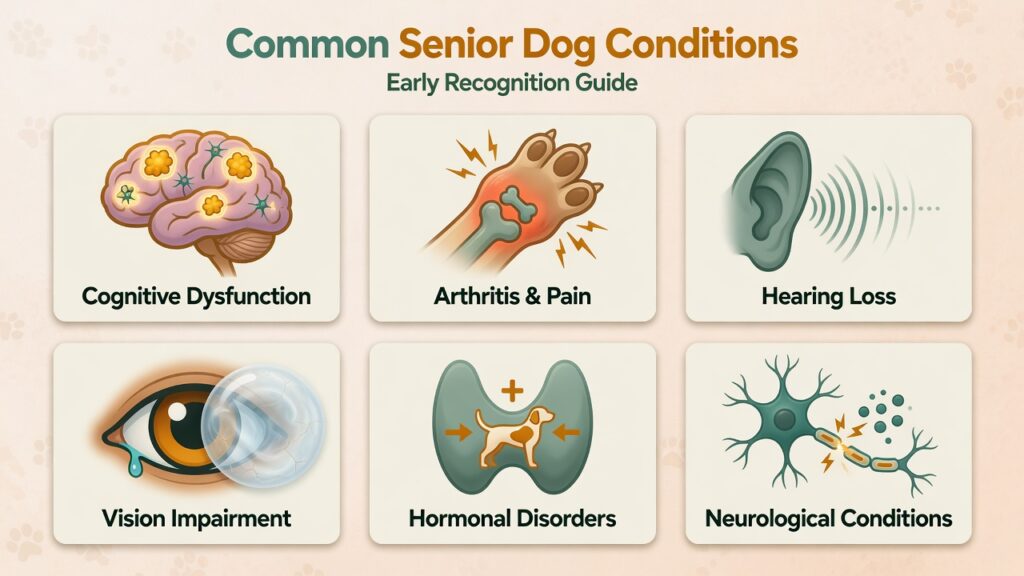
Canine Cognitive Dysfunction Syndrome (CDS)
Canine Cognitive Dysfunction Syndrome, often called “doggy dementia,” is arguably the most common medical reason for sudden increased barking in older dogs. CDS is a neurodegenerative disease that affects memory, learning, awareness, and response to environmental stimuli. It is estimated that over 50% of dogs over the age of 11 show at least one sign of cognitive decline, yet it remains significantly underdiagnosed.
Dogs with CDS often bark or howl without apparent reason, especially at night. They may appear confused, stare at walls, get stuck in corners, fail to recognize familiar people, and show altered sleep-wake cycles. The barking associated with CDS tends to be repetitive, seemingly purposeless, and often distressing to the dog itself. It is not attention-seeking behavior — it is neurological confusion expressing itself vocally.
According to the American Kennel Club’s guidance on canine cognitive dysfunction, the DISHAA acronym (Disorientation, Interactions altered, Sleep-wake cycle changes, House soiling, Activity changes, Anxiety) is commonly used to assess CDS severity in clinical settings.
Pain and Physical Discomfort
Pain is one of the most direct and immediate causes of increased barking in senior dogs. Unlike humans, dogs cannot verbally tell you they are hurting. Vocalization becomes their primary outlet. Conditions such as arthritis, hip dysplasia, intervertebral disc disease, dental disease, ear infections, urinary tract infections, and internal organ dysfunction can all cause significant pain and lead to sudden changes in barking behavior.
Arthritis, in particular, is extremely common in senior dogs — affecting an estimated 80% of dogs over eight years of age. A dog that cries out when getting up, hesitates on stairs, or barks when touched in a specific area is likely in pain. Similarly, dental pain from periodontal disease — rampant in older dogs — can cause chronic low-grade discomfort that manifests as restlessness and vocalization.
Hearing Loss and Deafness
It may seem counterintuitive, but hearing loss is a major contributor to increased barking in senior dogs. When a dog loses the ability to hear properly, they lose a crucial sensory anchor to their environment. The world becomes unpredictably silent, and dogs often compensate by vocalizing more — as though trying to “hear themselves.” They may startle more easily, bark at things they previously ignored, and show heightened anxiety because they can no longer process environmental sounds that once gave them contextual cues.
Age-related hearing loss, known as presbycusis, typically begins around eight to ten years of age in most breeds. If your dog no longer responds to their name, seems startled when approached from behind, or sleeps more deeply than before, hearing loss may be a contributing factor to their increased barking.
Vision Impairment and Blindness
Similarly, vision loss creates a state of environmental uncertainty for dogs. Conditions such as cataracts, progressive retinal atrophy, glaucoma, and nuclear sclerosis are common in aging dogs. A dog that can no longer see clearly may bark at shadows, misidentified objects, or simply out of fear of the unknown. They may appear more reactive in low-light conditions, particularly at dawn or dusk when contrast is poor.
Dogs are remarkably adaptable to blindness when their other senses are intact. However, the transition period — when vision is partially impaired — can be the most distressing, as the dog’s brain cannot reliably interpret what it is perceiving.
Thyroid and Hormonal Disorders
Hypothyroidism (underactive thyroid) and, conversely, conditions affecting adrenal function, such as Cushing’s disease, can dramatically alter a dog’s behavior, including their vocalization patterns. Hormonal imbalances affect mood regulation, sleep cycles, anxiety levels, and cognitive clarity. A dog with undiagnosed Cushing’s disease may show increased restlessness, panting, and vocalizing. A hypothyroid dog may show anxiety, fearfulness, and unusual aggression — all of which can be expressed as excessive barking.
Blood panels that measure thyroid hormone levels and cortisol are standard, inexpensive diagnostic tests that can reveal these conditions quickly.
Neurological Conditions
Beyond CDS, other neurological conditions, including brain tumors, vestibular disease, and epilepsy, can cause sudden changes in barking behavior. Canine idiopathic vestibular disease — sometimes called “old dog vestibular syndrome” — causes sudden loss of balance, head tilting, and extreme disorientation, which can trigger intense vocalization. Though it often resolves within days to weeks, it is alarming and distressing in the moment.
Brain tumors, while less common, are more prevalent in older dogs and can cause personality changes, confusion, and compulsive behaviors, including repetitive barking.
Behavioral and Psychological Causes of Increased Barking in Older Dogs

Separation Anxiety in Senior Dogs
Separation anxiety is not exclusively a young dog problem. Many senior dogs develop it for the first time in old age, or show a dramatic worsening of pre-existing mild anxiety. As dogs age, their emotional resilience can decrease. They become more dependent on their human companions and less confident in their ability to cope with change or solitude.
A senior dog with separation anxiety will bark, howl, or whine excessively when left alone, may become destructive, house-soil, or pace. This is driven by genuine distress, not behavioral defiance, and it requires compassionate management rather than punishment.
Increased Fear and Phobias
Aging dogs frequently develop new fears or intensify existing ones. Fear of thunderstorms, fireworks, loud noises, strangers, or even specific household appliances can emerge or worsen in senior years. This is partly neurological — the aging brain processes fear stimuli differently — and partly due to reduced sensory filtering, meaning sounds and sensations that were once manageable now feel overwhelming.
Interestingly, just as Dogs Bark More in Winter Than Summer due to increased indoor activity, amplified sounds, and disrupted routines, senior dogs are particularly susceptible to seasonal anxiety shifts that heighten fear responses and trigger more frequent barking episodes.
Boredom and Lack of Mental Stimulation
While medical causes should always be ruled out first, boredom should not be overlooked. Senior dogs that are no longer walked as frequently, no longer engaged with toys or training, or left alone for long periods can develop a form of behavioral frustration that manifests as barking. Mental stimulation is just as important in old age as in puppyhood — perhaps more so, as it helps slow cognitive decline.
Puzzle feeders, sniff work, gentle training sessions, and interactive play appropriate to the senior dog’s physical ability can significantly reduce boredom-driven vocalization.
Sundowning Syndrome in Dogs
Sundowning — a phenomenon well-known in human dementia patients — also occurs in dogs with CDS. It refers to increased confusion, agitation, and vocalization in the late afternoon and evening hours. As natural light fades, dogs with cognitive decline lose environmental cues that help orient them. The result is distressing barking, pacing, and restlessness that intensifies after dark and continues into the night.
Environmental Triggers That Make Senior Dogs Bark More
Changes in Household Routine
Dogs are creatures of habit, and senior dogs are even more so. The addition of a new baby, a change in work schedule, a move to a new home, renovation noise, or even rearranged furniture can destabilize a senior dog’s sense of security. Routine is a powerful calming mechanism for aging dogs, and disruption of that routine can trigger anxiety-based barking that seems inexplicable unless you consider recent changes in the household.
New People, Pets, or Sounds
Senior dogs may become more reactive to the arrival of new pets, visiting strangers, or unfamiliar sounds. Their reduced sensory acuity can make unexpected stimuli feel more threatening. A senior dog that once calmly greeted guests may now bark defensively because they cannot see or hear clearly enough to assess the situation confidently.
It is also worth noting that territorial barking can intensify with age. A dog that previously handled the letter carrier’s daily visit with minimal reaction may now respond with sustained alarm. My Dog Barks at the Mailman Every Day explains how routine territorial triggers can compound in frequency and intensity, and the same principles apply especially strongly to senior dogs whose threat-assessment processing is declining.
Seasonal and Weather Changes
Barometric pressure changes, thunder, wind, and extreme temperatures can all intensify barking in senior dogs. Arthritis pain can worsen in cold or damp weather, directly increasing pain-driven vocalization. Seasonal routine disruptions — holidays, guests, fireworks — also cluster into high-risk periods for senior dog anxiety.
How to Diagnose Why Your Senior Dog Is Barking More
What to Observe at Home
Before your veterinary appointment, document the following: When does the barking happen (time of day, specific situations)? Is it associated with any physical postures (limping, hunching, guarding a body part)? Does the dog seem confused or disoriented when barking? Is the barking new, or has it gradually increased? Has anything changed in the home environment recently? These observations will be invaluable to your vet.
When to See a Veterinarian
Any sudden, unexplained increase in barking in a senior dog warrants a veterinary visit. This is not a situation to wait and watch. The sooner an underlying medical cause is identified and treated, the better the outcome for the dog. Prompt diagnosis is particularly important for conditions like CDS, pain, and hormonal disorders, where early intervention can meaningfully improve quality of life.
Diagnostic Tests Your Vet May Run
A thorough workup for a senior dog with increased barking may include a complete blood count (CBC), chemistry panel, thyroid function test, urinalysis, blood pressure measurement, neurological examination, ophthalmological assessment, hearing evaluation (BAER test), and potentially imaging such as X-rays or MRI to assess joints, spine, or brain.
According to VCA Animal Hospitals’ resource on cognitive dysfunction in senior dogs, a scoring questionnaire combined with physical examination is typically used to assess the degree of cognitive impairment, and treatment protocols are tailored accordingly.
How to Stop or Reduce Excessive Barking in Senior Dogs

Medical Treatment Options
Treatment depends entirely on the underlying cause. Pain management for arthritis typically includes NSAIDs, joint supplements (glucosamine, omega-3 fatty acids), physiotherapy, and, in some cases, acupuncture or laser therapy. CDS may be managed with selegiline (Anipryl), a medication approved for canine cognitive dysfunction, as well as dietary interventions using antioxidant-rich senior dog foods and environmental enrichment. Hormonal conditions like hypothyroidism respond well to daily oral thyroid supplementation. Hearing and vision loss cannot typically be reversed, but can be managed through environmental adaptation.
Behavioral Modification Techniques
For anxiety-driven barking, behavioral modification is a cornerstone of management. Desensitization (gradual, controlled exposure to fear triggers at low intensity) and counter-conditioning (associating triggers with positive experiences like treats) are well-established evidence-based approaches. These techniques must be applied gently and patiently with senior dogs, whose capacity for rapid learning is reduced but whose ability to form new positive associations remains intact.
Avoid punishment-based approaches. Shouting at or scolding a barking senior dog is counterproductive and can worsen anxiety. It does not address the root cause and erodes trust between the owner and the dog.
Environmental Adjustments
Simple home modifications can dramatically reduce barking triggers. Keeping a consistent daily schedule, providing a quiet, comfortable resting area away from household noise, using white noise machines to buffer environmental sounds, ensuring nightlights are used in the dog’s sleeping area (especially for dogs with vision decline), and maintaining familiar furniture arrangements can all reduce disorientation and anxiety.
Calming Aids and Supplements
Several evidence-informed calming aids are available for senior dogs. Adaptil (synthetic dog-appeasing pheromone) diffusers have shown positive effects on anxiety in clinical studies. Zylkene (hydrolyzed milk protein) is a supplement with calming properties. Melatonin may help regulate disrupted sleep-wake cycles associated with CDS. CBD oil for dogs has growing anecdotal support, though veterinary guidance is essential before use. Prescription anti-anxiety medications such as trazodone, gabapentin, or fluoxetine may be appropriate for severe cases.
When Barking at Night Is the Bigger Problem
Why Senior Dogs Bark at Night
Nighttime barking is one of the most disruptive symptoms of senior dog behavioral changes. It is most commonly associated with CDS (sundowning), pain that intensifies when the dog lies still, disrupted sleep-wake cycles, and anxiety related to darkness and silence. Some senior dogs develop a reversal of their normal sleep cycle, sleeping heavily during the day and becoming active and vocal at night.
Managing Nighttime Barking in Old Dogs
Address nighttime barking by identifying its specific trigger. For CDS-related sundowning, melatonin, a consistent bedtime routine, and low-level nighttime lighting can help. For pain-related nighttime barking, discuss timed pain medication with your vet so that coverage peaks during night hours. For separation anxiety, having the dog sleep in or near your bedroom — even a crate nearby — can provide the social proximity they need. Never ignore nighttime barking in a senior dog without first ruling out pain or medical distress.
Frequently Asked Questions About Senior Dog Barking
Q: Is sudden barking in older dogs always a sign of dementia? No. While CDS is a common cause, pain, sensory loss, hormonal issues, and anxiety are equally prevalent and should all be evaluated by a veterinarian.
Q: My 12-year-old dog started barking at nothing. What does that mean? Barking at nothing visible — often at walls, corners, or empty spaces — is a classic sign of CDS. It can also indicate hearing loss (responding to sounds you cannot hear) or visual hallucinations associated with neurological disease. Veterinary evaluation is strongly recommended.
Q: Can I train an old dog to stop excessive barking? Yes, though progress may be slower than with younger dogs. Behavioral modification techniques, combined with medical management of any underlying condition, are effective. Patience and consistency are essential.
Q: Should I use a bark collar on my senior dog? No. Bark collars — especially shock or citronella collars — are inappropriate for senior dogs, particularly those barking due to pain, confusion, or dementia. They can worsen anxiety and cause significant distress.
Q: How long does sundowning last in dogs? Sundowning associated with CDS is a progressive condition. With appropriate management, episodes can be reduced in frequency and intensity, but the underlying cognitive decline is not reversible. Early diagnosis and management give the best long-term outcomes.