
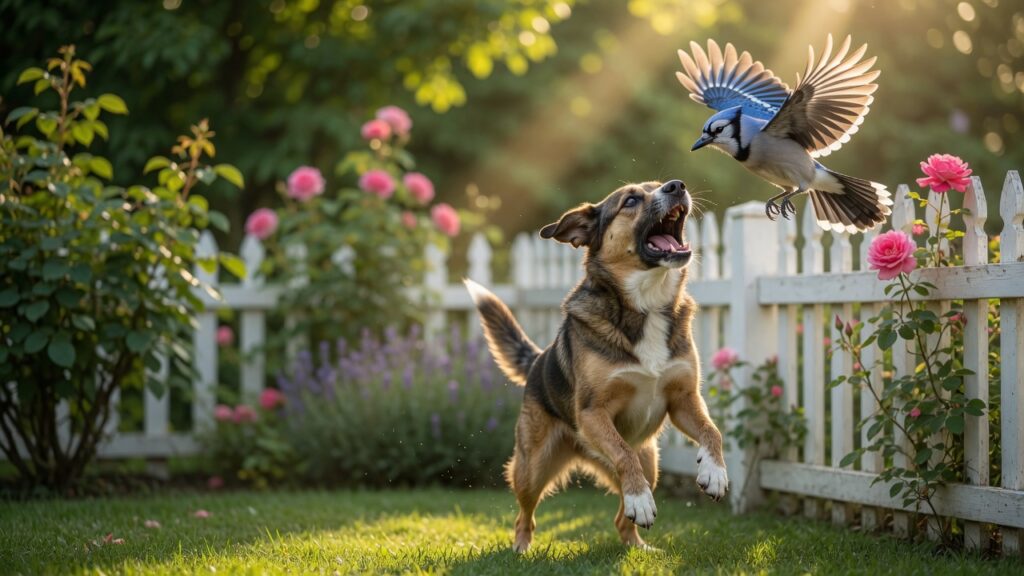

Summary: Dogs barking at birds in the yard is a deeply rooted behavioral response driven by centuries of selective breeding, predatory instinct, and heightened sensory awareness. Whether your dog is a terrier launched into a frenzy at a passing robin or a retriever whining softly at a flock of sparrows, this behavior stems from the same ancestral drives that once made dogs indispensable hunters and protectors. Understanding the biological, psychological, and environmental forces behind this behavior is the first step toward managing it effectively — helping your dog stay calm while keeping your backyard peaceful.
Table of Content
- Dog Barking at Birds in the Yard: Is It Instinct?
- The Science Behind Why Dogs Bark at Birds
- Is Dog Barking at Birds Natural or Learned?
- Types of Barking Dogs Exhibit Toward Birds
- Environmental and Seasonal Triggers
- The Psychology of the Dog-Bird Relationship
- When Bird-Directed Barking Becomes a Problem
- How to Manage and Reduce Barking at Birds
- When to Seek Professional Help
- Frequently Asked Questions
The Science Behind Why Dogs Bark at Birds
Predatory Drift and Prey Drive Explained
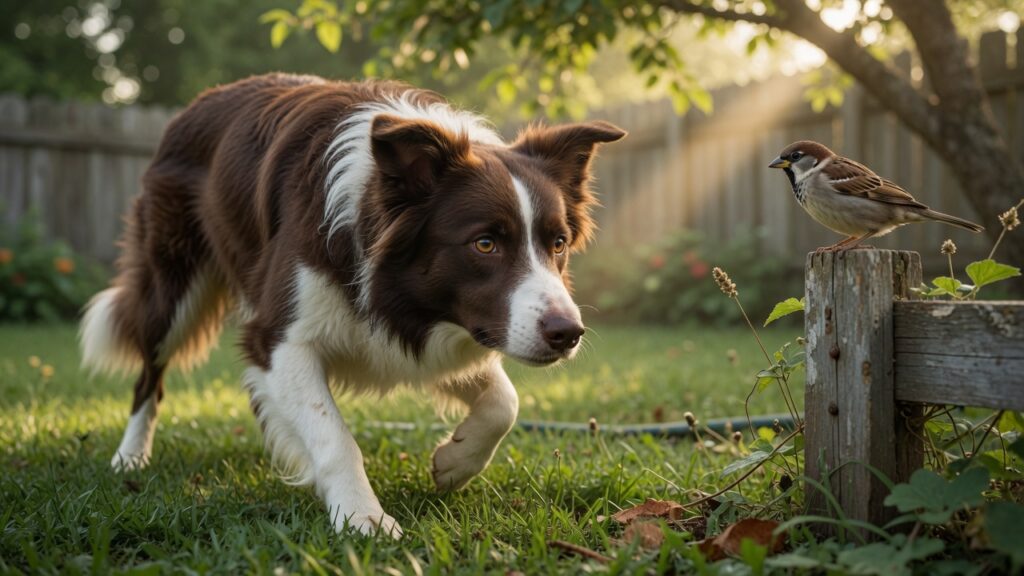
To understand why your dog erupts into a barking frenzy the moment a sparrow lands on the fence, you need to look back thousands of years. Dogs (Canis lupus familiaris) are descendants of wolves — apex predators whose survival depended on locating, tracking, and pursuing prey. Even after millennia of domestication, this predatory motor sequence — which ethologists describe as the orient → eye → stalk → chase → grab-bite → kill-bite cycle — remains encoded in canine DNA.
Prey drive is the motivational force behind this sequence. When a dog spots a bird, the moving, fluttering, small-bodied creature triggers the initial stages of this ancient sequence: orientation and the intense visual lock-on known as the “eye.” The dog may not complete the full sequence — there’s a fence in the way, or the bird flies off — but the arousal is already engaged. Barking becomes the overflow valve for that pent-up predatory energy.
Predatory drift refers to the rapid escalation of this arousal state. In a backyard context, it means your dog can shift from calm observer to frantic barker within seconds of a bird appearing. This is not defiance or misbehavior — it is a neurologically driven cascade rooted in survival biology.
How Canine Sensory Systems Detect Birds
Dogs possess sensory capabilities that make them extraordinarily tuned in to bird activity — even when we humans notice nothing at all:
Vision: Dogs detect motion with exceptional sensitivity. Their retinas contain a higher proportion of rod cells than humans, optimized for detecting movement rather than fine color detail. A bird hopping in the grass from across a yard will catch a dog’s attention well before a human would notice it.
Hearing: The canine auditory range extends up to approximately 65,000 Hz (compared to 20,000 Hz in humans). Birds communicate in complex chirp patterns, many of which fall into frequency ranges dogs can detect with precision. A dog may begin barking at birds whose calls you cannot even hear yet.
Olfaction: While less relevant in the moment of visual contact, a dog’s olfactory system — roughly 100,000 times more sensitive than ours — can detect bird scent trails left in the grass. This means your dog may begin showing excitement, sniffing, and pre-barking behavior before any bird is visually present.
The Role of the Limbic System in Reactive Barking
The limbic system — the emotional processing center of the mammalian brain — plays a central role in reactive barking. When a bird is detected, the amygdala (the brain’s threat and reward detection center) fires rapidly, triggering a stress-excitement cocktail of neurotransmitters, including dopamine, norepinephrine, and cortisol.
This chemical surge produces a state of hyperarousal. The dog is not thinking rationally at this point; the prefrontal cortex (responsible for impulse control) is effectively bypassed. Barking, lunging, and spinning are all symptoms of this high-arousal limbic state, which is also why simply telling an aroused dog to “stop” rarely works in the moment.
Is Dog Barking at Birds Natural or Learned?
Instinctive vs. Conditioned Barking Behavior
The barking-at-birds response is primarily instinctive, but it can also be reinforced and amplified through conditioning. Here’s the distinction:
Instinctive barking occurs the very first time a young puppy encounters a bird and reacts with vocalization. No one taught it. The stimulus (moving prey-like creature) naturally triggers the predatory arousal response. This is a classical conditioning-adjacent phenomenon — an unconditioned stimulus (bird) producing an unconditioned response (excitement and vocalization).
Conditioned/learned barking develops over time when the behavior is inadvertently reinforced. For example, if a dog barks at a bird and the owner comes outside to investigate, the dog learns that barking produces social reward (owner attention). If the bird flies away after the dog barks, the dog experiences negative reinforcement — the barking “worked” to remove the stimulus. Both scenarios strengthen the behavior through operant conditioning, making it progressively harder to extinguish.
Breed-Specific Tendencies Toward Bird Reactivity
Not all dogs are created equal when it comes to bird reactivity. Selective breeding has amplified specific traits in certain breeds:
High bird-reactive breeds:
- Terriers (Jack Russell, Yorkshire, Rat Terrier): Bred specifically to hunt small animals. Have extremely high prey drive and low habituation to moving targets.
- Hounds (Beagle, Coonhound): Scent and sight tracking breeds with intense focus on animal movement and smell.
- Herding breeds (Border Collie, Australian Shepherd): Possess the “eye and stalk” sequence strongly; birds trigger herding instincts.
- Sporting breeds (Labrador Retriever, Springer Spaniel, Vizsla): Literally bred to locate and retrieve birds — have extremely high bird drive.
- Nordic breeds (Siberian Husky, Alaskan Malamute): Strong prey drive with vocalizations that naturally accompany high excitement.
Lower bird-reactive breeds: Brachycephalic breeds (Bulldogs, Pugs) and low-drive companion breeds (Cavalier King Charles Spaniel, Bichon Frise) tend to show less intense bird-directed reactivity, though individual variation always applies.
Types of Barking Dogs Exhibit Toward Birds
Alert Barking
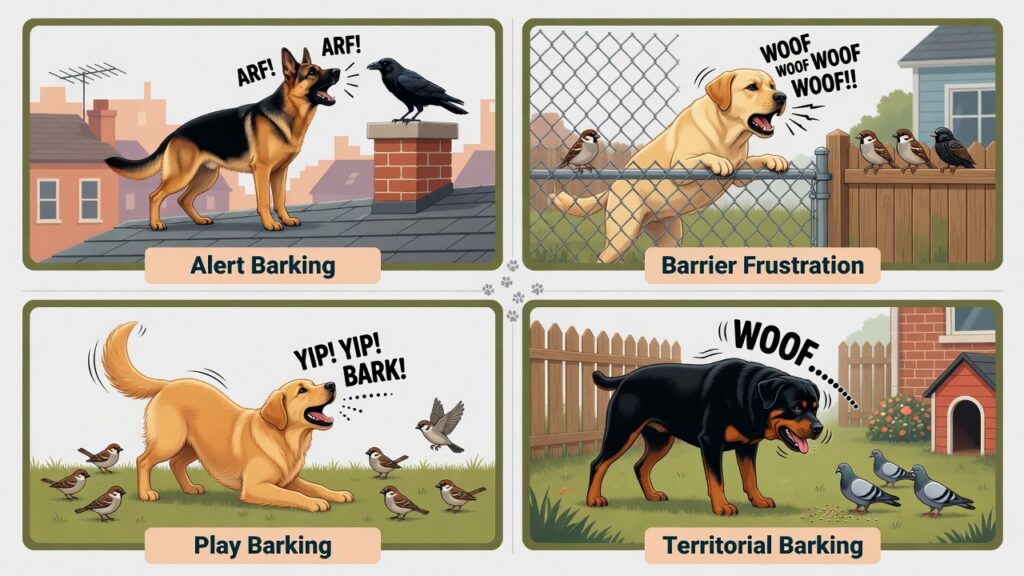
Alert barking is short, sharp, and decisive. Your dog has spotted or heard something unusual — a crow landing on the roof, a woodpecker drumming in the distance — and is communicating this information both to you and potentially to the intruder. This is territorial communication and is considered normal, healthy canine behavior in moderate amounts.
LSI-related terms: sentinel behavior, watchdog behavior, alarm response.
Frustration Barking (Barrier Frustration)
This is perhaps the most common type of bird-directed barking in backyard settings. The dog wants to chase the bird but cannot — blocked by a fence, window, or leash. The resulting barrier frustration produces an intense, repetitive bark that often escalates in pitch and urgency the longer it continues. Dogs in barrier frustration frequently also pace, whine, and scratch at the obstruction.
Barrier frustration is closely tied to the concept of redirected aggression — a dog that cannot reach the bird may redirect its arousal toward a nearby dog, person, or object.
Play or Excitement Barking
Some dogs — particularly younger, more social breeds — bark at birds from a place of excitement and play solicitation rather than predatory intent. This bark is typically higher-pitched, interspersed with play bows, and accompanied by a loosely wagging tail. The dog is essentially inviting the bird to play, unaware that this is a fundamentally asymmetric social overture.
Territorial Barking
Birds that land in what the dog considers its territory — the yard, the porch, the garden — may trigger territorial barking, a deep, sustained vocalization meant to drive the intruder away. This is more common in guarding breeds and dogs with a strong “property owner” identity. Territorial barking at birds can be reinforced when the bird eventually leaves, as the dog credits its vocalizations with the departure.
Environmental and Seasonal Triggers
Why Bird Activity Peaks Spark More Barking
Bird presence in yards is not constant — it follows predictable patterns tied to season, time of day, and weather. Dawn and dusk are peak bird activity periods (the crepuscular window), which means dogs left outside during these times will encounter the most bird stimulation. Similarly, spring migration season brings a significant surge in bird traffic, which is why many dog owners report increased backyard barking during this time.
Interestingly, cold weather can also play a role. Birds congregating around feeders during winter months create dense, highly visible clusters of targets that can push dogs into sustained barking episodes. If you’ve noticed your dog seems more vocal when temperatures drop, this phenomenon is discussed in detail at Dogs Bark More in Winter.
Yard Setup and Visual Access to Birds
The physical design of your yard significantly influences how much bird-triggered barking occurs:
- Bird feeders placed low to the ground or near fences create constant, high-value bird stimulation within visual and olfactory range.
- Open sightlines give the dog a panoramic view of bird activity, increasing the volume and frequency of encounters.
- Dense vegetation that birds shelter in creates movement-based stimulation — leaves rustling with hidden bird activity triggers the predatory orientation reflex even when no bird is visible.
- Water features (birdbaths, ponds) attract birds at predictable times, creating reliable stimulus patterns that dogs quickly learn to anticipate.
The Psychology of the Dog-Bird Relationship
Predator-Prey Dynamics in Domestic Settings
The domestic backyard creates a uniquely strange situation from a behavioral ecology perspective: a predator (dog) is repeatedly exposed to prey (birds) but is structurally prevented from completing the predatory sequence. This is a recipe for chronic frustration.
In behavioral science, when a motivated behavior is repeatedly blocked, the result is either extinction (the behavior fades if never reinforced) or frustration-induced aggression and displacement behaviors (the behavior intensifies and generalizes). For most pet dogs, because birds reliably return to the yard and reliably fly away eventually, the behavior is maintained in a variable reinforcement schedule — one of the most powerful reinforcement schedules for maintaining behavior known in operant conditioning theory.
Arousal Levels and Over-Threshold Reactions
Understanding arousal thresholds is critical for managing bird-reactive dogs. Every dog has a threshold — a tipping point beyond which rational processing stops and reactive behavior takes over. Below threshold, a dog may notice a bird, glance at it, and return to normal activity. Above threshold, the dog is barking, lunging, spinning, and unable to respond to cues.
Multiple triggers can stack — a concept called trigger stacking. A dog that is already mildly aroused from a morning walk may cross into over-threshold territory at the sight of a single bird, when the same dog in a calm baseline state would barely react. This is why bird-barking episodes can seem disproportionate and unpredictable to owners.
When Bird-Directed Barking Becomes a Problem
Signs That Barking Has Become Compulsive
While barking at birds is normal, it can cross into problematic territory. Warning signs include:
- Barking that continues for more than 15–20 minutes without interruption
- Inability to respond to any cues or commands while in the barking state
- Self-reinforcing behavioral loops where the dog seems unable to disengage, even when no bird is present
- Barking at locations where birds were previously seen, even when empty
- Physical symptoms: excessive drooling, panting, shaking, pacing alongside barking
These may indicate a compulsive spectrum disorder or extreme generalized anxiety, both of which warrant veterinary and behavioral assessment.
How Excessive Barking Affects Dog Health
Chronic, high-arousal barking episodes are not simply a nuisance — they have measurable physiological effects on dogs:
- Elevated cortisol levels: Sustained stress hormones suppress immune function and can contribute to chronic health issues.
- Vocal strain: Repeated intense barking can cause laryngeal inflammation and temporary voice loss.
- Cardiovascular stress: High-arousal states repeatedly sustained throughout the day are taxing on the heart and respiratory system.
- Sleep disruption: Dogs that spend significant daytime energy in reactive states often have disturbed sleep cycles, contributing to a worsening behavioral baseline.
Age is also a factor — if you have an older dog and notice that bird-directed barking (or any barking) is increasing or changing in character, this may reflect cognitive or sensory changes. Read more about this at My Senior Dog Suddenly Barking More for a comprehensive breakdown.
How to Manage and Reduce Barking at Birds
Counter-Conditioning and Desensitization Techniques
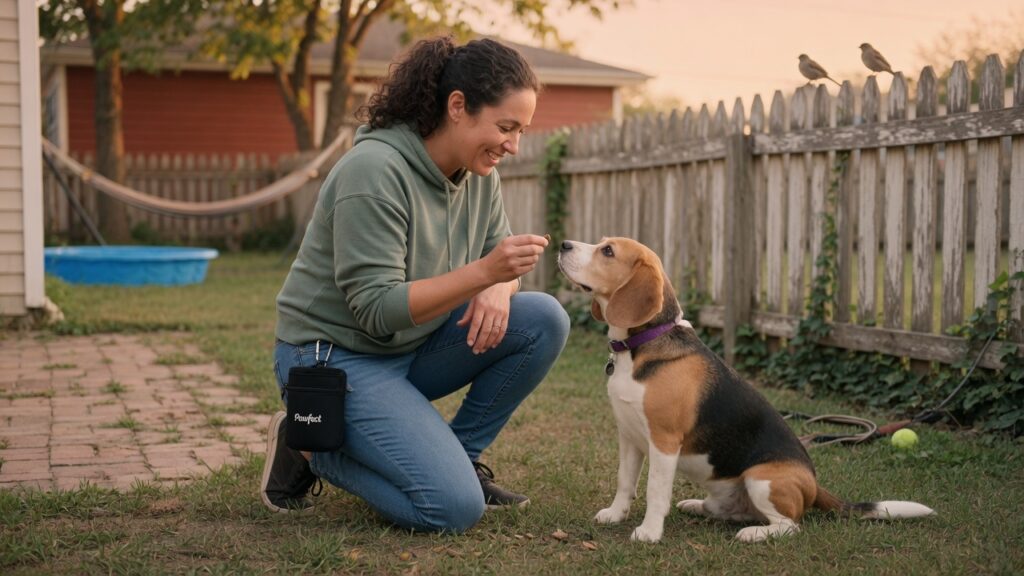
Counter-conditioning (CC) involves changing the dog’s emotional response to birds from excitement/frustration to calm neutrality. The process works by pairing the sight or sound of birds with something the dog finds highly rewarding (high-value food, a favourite toy, calm praise).
Desensitization (DS) involves gradual, systematic exposure to the bird stimulus at intensities below the dog’s reactivity threshold, slowly building tolerance.
Practical CC/DS Protocol:
- Begin at a distance where your dog notices birds but remains below threshold (can still take treats and respond to their name).
- The instant the dog notices a bird, begin delivering high-value treats continuously.
- The moment the bird is gone, or out of sight, treats stop.
- Over sessions, gradually decrease the distance or increase the intensity of exposure.
- Never push the dog over the threshold — if they’re barking, you’re moving too fast.
This process requires patience and consistency, often unfolding over weeks to months. According to the American Kennel Club’s guide on counter-conditioning, working below the reactivity threshold at all times is the non-negotiable foundation of success.
Impulse Control Training Exercises
Building general impulse control transfers beautifully to bird-reactive situations. Core exercises include:
- “Leave it”: Teaching your dog that disengaging from a target on cue earns a superior reward. Generalize this cue specifically to birds over time.
- “Look at me/Watch me”: Training sustained eye contact with the handler amid distractions builds the habit of deferring to the human in high-stimulation environments.
- Relaxation Protocol (Dr. Karen Overall’s protocol): A structured daily program that systematically teaches dogs to maintain a down-stay in progressively more stimulating environments. It is widely recognized as one of the most effective evidence-based tools for managing reactive and anxious dogs.
- “Place” or “Go to your mat”: Training an incompatible behavior — if the dog is on their mat, they cannot simultaneously be at the fence barking at birds.
Environmental Management Strategies
Management is not training, but it is the essential foundation that prevents the behavior from being reinforced while training is in progress:
- Relocate bird feeders to areas not visible from the dog’s primary outdoor access points.
- Use visual barriers: Privacy fence slats, hedging, or opaque fencing panels reduce the dog’s visual access to birds without eliminating outdoor access.
- Supervise outdoor time during peak bird activity hours (dawn, dusk, spring/fall migration periods).
- Provide enrichment alternatives: A dog that is mentally and physically fulfilled has a lower baseline arousal level and a higher threshold for reactivity. Puzzle feeders, chew items, sniff walks, and training sessions all reduce overall reactivity.
- White noise or music: For dogs that bark at bird sounds heard through windows or doors, ambient sound can mask the auditory trigger.
Using Positive Reinforcement Correctly
A common mistake owners make is using punishment (shouting “No!”, spray bottles, shock collars) to address bird-directed barking. Punishment applied during a high-arousal state is rarely effective and frequently counterproductive — it can increase anxiety, damage the human-dog bond, and create negative associations with the outdoors.
Positive reinforcement-based approaches — rewarding calm behavior, rewarding disengagement from birds, and rewarding orientation to the handler — are both more humane and more durable in their effects. According to ASPCA behavioral guidance on dog barking, the most effective long-term strategies always combine management, counter-conditioning, and teaching an incompatible behavior.
When to Seek Professional Help
Most cases of bird-directed barking are manageable with consistent home training and environmental changes. However, professional support is warranted when:
- The barking is aggressive in quality (low, sustained growling-bark) and accompanied by fence charging, snapping, or redirected aggression toward people
- The behavior is worsening despite consistent training efforts over 8–12 weeks
- The dog shows signs of generalized anxiety, compulsive behavior, or panic beyond just bird stimulation
- There are safety concerns, such as the dog injuring themselves attempting to access the birds
A certified applied animal behaviorist (CAAB), veterinary behaviorist (DACVB), or certified professional dog trainer (CPDT-KA) with a background in reactivity and prey drive management can develop an individualized behavioral modification plan. In some cases, a veterinary consultation may identify a role for behavioral pharmacology (anti-anxiety medication) to bring the dog’s baseline arousal down to a level where training can take effect.
Frequently Asked Questions
Q: Is it cruel to stop a dog from barking at birds? No — redirecting or managing bird-directed barking is not suppressing a dog’s fundamental nature. It is teaching them an alternative response to a high-arousal stimulus, which reduces their own stress and allows them to exist calmly in their environment.
Q: Will my dog ever actually catch a bird? It is possible, particularly if a bird is injured or slow. Dogs that do catch birds can develop intensified prey drive and more persistent bird-seeking behavior afterward, so management is particularly important in high bird-density yards.
Q: Does barking at birds mean my dog is aggressive? Not necessarily. Bird-directed barking is usually predatory in origin, not aggression-based. True aggression involves threat, conflict, and social communication — predatory behavior is biologically distinct. However, barrier frustration can escalate into redirected aggression toward other targets, which should be taken seriously.
Q: My puppy just started barking at birds — should I be concerned? This is developmentally normal. Prey drive typically emerges and intensifies between 4 and 6 months of age. Beginning desensitization and impulse control training early dramatically improves long-term outcomes.
Q: Do certain times of year make birds’ barking worse? Yes. Spring and fall migration seasons, early morning and evening feeding periods, and winter months when birds cluster around feeders all produce elevated bird activity — and corresponding increases in dog reactivity.