

Summary
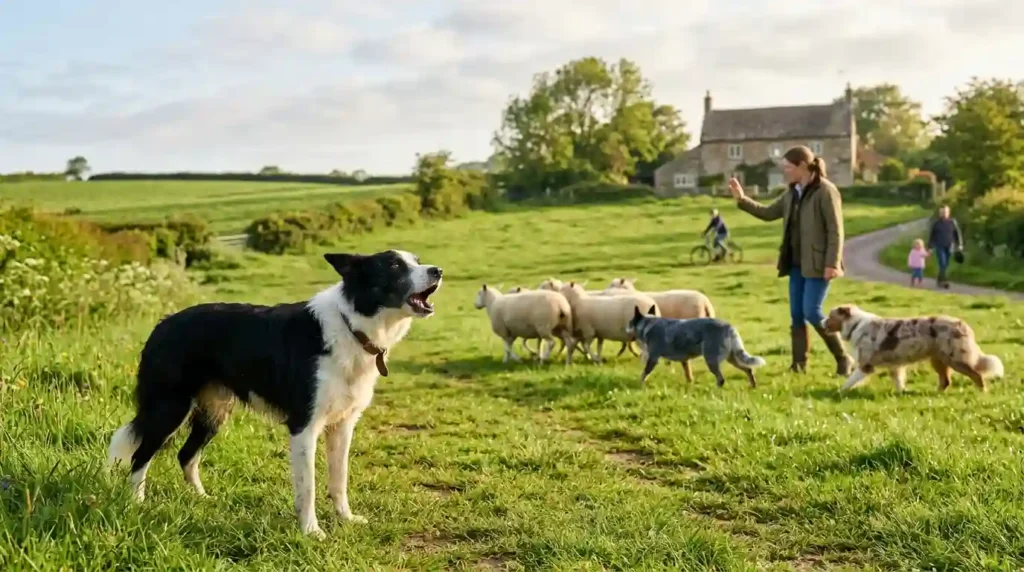
Herding dog barking behavior is often rooted in purpose, not disobedience. Herding breeds were selectively developed to notice movement, control livestock, warn handlers, and respond quickly to environmental changes. Those same qualities can cause a companion dog to bark at guests, children, bicycles, vacuum cleaners, shadows, or almost anything that moves. This guide explains the reasons behind the barking and shows you how to manage it through exercise, enrichment, environmental changes, and reward-based training—without punishing the dog for instincts humans intentionally developed.
Table of Contents
- What Makes Herding Breeds Different?
- Why Herding Dog Barking Behavior Develops
- Common Types of Barking in Herding Breeds
- Barking and Other Herding Behaviors
- Common Triggers in the Home and Outdoors
- When Normal Barking Becomes a Problem
- How to Manage Herding Dog Barking Behavior
- Exercise and Enrichment for Herding Dogs
- Training Mistakes to Avoid
- When to Contact a Professional
- Conclusion
- FAQs
What Makes Herding Breeds Different?
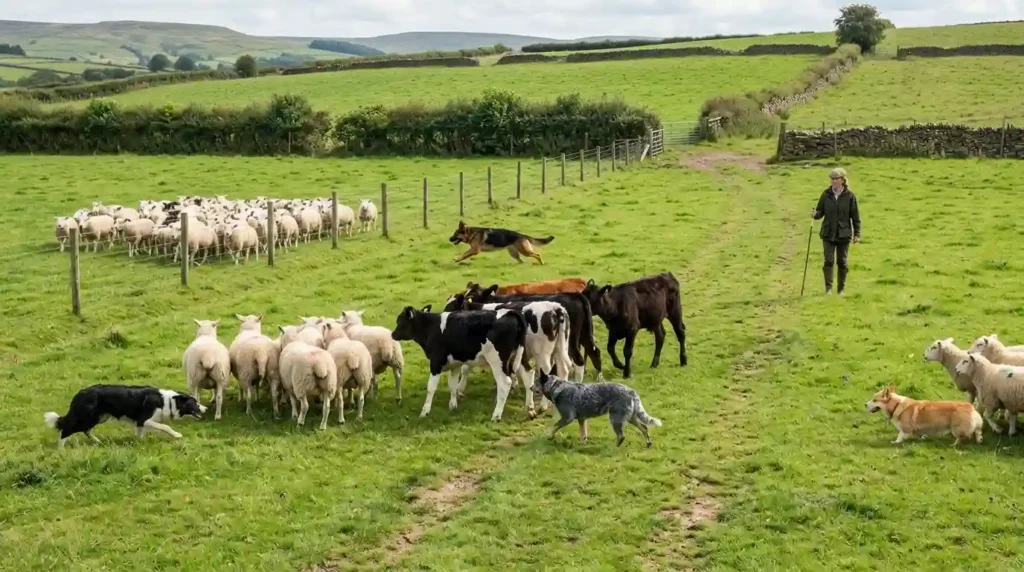
A herding breed was developed to help people manage livestock. Depending on the breed and working style, a stockdog may gather animals, drive them forward, keep them within a defined area, or move stubborn animals by applying physical pressure.
A gathering dog, such as a Border Collie, usually circles livestock and brings the animals toward its handler. A driving dog moves livestock away from the handler or pushes it in a chosen direction. A tending dog patrols an area and acts like a living boundary around a flock. A heeler, including the Australian Cattle Dog and Lancashire Heeler, may nip near an animal’s heels to encourage movement.
These working methods require a combination of:
- Strong herding instinct
- High work drive
- Sensitivity to motion
- Quick decision-making
- Environmental awareness
- Persistence and physical stamina
- Close cooperation with people
The American Kennel Club’s Herding Group guide explains that herding breeds share an instinctive ability to control the movement of other animals. Many were developed to gather, herd, or protect livestock.
Barking became part of this work for several breeds. A force bark could pressure recalcitrant livestock that refused to move. Alert barking could warn a shepherd about strangers or possible danger. Vocal communication could also help the dog coordinate its actions with its handler.
In a field, these qualities are useful. In a suburban house or apartment, the same dog may attempt to control children, runners, bicycles, cars, or household appliances.
Breeds Commonly Associated With Herding Behavior
Herding breeds vary considerably in their working methods and breed temperament. Common examples include:
- Border Collie
- Australian Cattle Dog
- Australian Shepherd
- Shetland Sheepdog
- German Shepherd
- Belgian Malinois
- Belgian Tervuren
- Pembroke Welsh Corgi
- Cardigan Welsh Corgi
- Bearded Collie
- Briard
- Bouvier des Flandres
- Finnish Lapphund
- Lancashire Heeler
- Swedish Vallhund
Not every individual belonging to these breeds will bark excessively. Genetics creates tendencies, not guarantees. Environment, socialization, health, reinforcement history, daily activity, and training all affect how a dog behaves.
Why Herding Dog Barking Behavior Develops
To understand the noise, look at the purpose behind it. Dog barking is a form of communication. It may express concern, excitement, frustration, uncertainty, or a desire to control movement.
Simply labeling a dog “noisy” does not identify why it is barking. Effective behavior management begins by studying what happens before, during, and after each episode.
Selective Breeding and Genetics
People used selective breeding to preserve traits that made a working dog effective. These traits included vigilance, protectiveness, stamina, trainability, motion sensitivity, and the confidence to influence livestock movement.
Herding behavior is related to parts of the canine predatory sequence. Behaviors such as orienting, staring, stalking, chasing, and sometimes nipping were retained, while other parts of the prey drive were modified or reduced.
This helps explain why a Border Collie may freeze and stare at a moving child, while an Australian Cattle Dog may chase and attempt heel nipping. A Shetland Sheepdog may rely more heavily on barking to control movement or announce activity.
The behavior is not necessarily an attempt to be dominant. It is often an inherited response to motion combined with excitement or uncertainty.
Motion Sensitivity and Vigilance
Many herding dogs notice movement that people ignore. A runner passing the window, a skateboard turning a corner, or a light reflection moving across the wall can immediately attract their attention.
Motion sensitivity helped working dogs detect a sheep leaving the flock. In a pet home, however, it can create hyper-alertness. The dog may monitor every moving object and feel compelled to react.
Environmental sensitivity can also extend to sound. Sirens, car horns, doors, footsteps, sneezing, and guest arrivals may trigger barking because the dog detects an abrupt change.
Breed Temperament and Work Drive
A high work drive can make inactivity difficult. Dogs developed for long days of decision-making may struggle when their only daily activity is a short walk around the block.
Without an appropriate outlet, unused energy may appear as:
- Excessive barking
- Fence running
- Fixation on moving objects
- Destructive behavior
- Repeated circling
- Chasing children or pets
- Lunging at bicycles or cars
- Obsessive shadow or light chasing
These actions are not always caused by excess physical energy alone. Herding dogs also need mental stimulation, problem-solving, training, and opportunities to complete controlled tasks.
Common Types of Barking in Herding Breeds
One herding dog may use several forms of barking. Identifying the type helps you select an effective training plan.
Alert Barking
Alert barking occurs when the dog detects a change, such as a passing stranger, a closing car door, a delivery driver, or an unfamiliar sound.
A few alert barks are normal vocal communication. Problems arise when the dog cannot disengage after the event has passed. A highly vigilant dog may continue running between windows or checking doors long after the trigger disappears.
Protective Barking
Protective barking is usually associated with a perceived threat to the home, handler, family, or territory. The dog may show a stiff posture, move forward, stare, growl, or position itself between the person and the trigger.
German Shepherds, Belgian Malinois, Belgian Tervurens, and other protective working breeds may be especially alert to unfamiliar people. However, barking at strangers does not automatically mean the dog is behaving protectively. Fear, reactivity, insufficient socialization, or suspicion of strangers may produce similar behavior.
Attention-Seeking Barking
A smart dog quickly learns which behavior gets a response. If barking causes a person to provide food, throw a toy, open a door, or begin playtime, it may develop into a reliable barking habit.
Even negative attention can reinforce it. Looking at the dog, arguing, or repeatedly saying “no” can still provide the interaction it wanted.
Playtime Barking
Excitement and happiness can cause barking during fetch, agility training, or play with another dog. Some herding breeds vocalize when anticipating a thrown toy or waiting for permission to run.
Playtime barking is not always harmful. It becomes a concern when the dog cannot control its arousal, ignores cues, begins nipping, or directs rough behavior toward people or other animals.
Frustration Barking
Frustration often appears when a dog can see something but cannot reach or control it. Common examples include barking through a fence, lunging while restrained on a leash, or vocalizing when another dog is running nearby.
Confusion and mixed signals can add to this response. If a behavior is allowed one day and punished the next, the dog may become frustrated because the rules are unclear.
Fear-Based Barking
A fearful dog may bark to increase distance from a person, animal, object, or sound. Neophobia—the fear of unfamiliar things—can make new environments especially difficult.
Fear barking must not be treated as stubbornness. Forcing the dog closer to a frightening trigger can increase panic, lunging, or biting. Counterconditioning, distance, and positive association are safer and more effective.
Barking and Other Herding Behaviors
Barking rarely occurs in isolation. It can be part of a larger sequence of controlling interactions.
Staring, Stalking, and Freezing
A gathering dog may use an intense stare to influence livestock. At home, the same dog might stare at a cat, freeze when children start running, and then begin stalking or chasing.
The posture may look focused rather than aggressive. Nevertheless, repeated fixation can make other pets or children uncomfortable and may escalate into pouncing or nipping.
Circling and Corralling
Circling allows a herding dog to gather individuals into one area. A family dog might circle guests, attempt to keep children together, block doorways, or prevent another pet from leaving a room.
This corralling behavior can become more intense during guest arrival or guest departure because movement and excitement increase simultaneously.
Heel Nipping and Ankle Biting
Heelers were expected to move livestock by working close to their legs. In a home, running children can activate chasing and heel-nipping behavior.
Ankle biting should not be dismissed as a harmless instinct. Even if the dog does not intend to injure anyone, teeth can break skin, frighten children, and reinforce a dangerous behavioral pattern.
Management should prevent the dog from rehearsing the behavior while an adult teaches recall, impulse control, and an alternate behavior.
Chasing and Lunging
A bicycle, a runner, a skateboard, or a car can stimulate chase behavior. A restrained dog may also begin lunging because it cannot investigate or control the moving object.
Never test this behavior off-leash near traffic. Use a longer leash or long line in a safe, low-distraction environment while practicing engagement and recall.
Common Barking Triggers in the Home and Outdoors
A barking trigger is anything that activates the dog’s emotional or instinctive response. Keeping a written record can reveal patterns that are otherwise easy to miss.
People and Animals in Motion
Common outdoor triggers include:
- Passing strangers
- Children running
- Joggers
- Bicycles
- Skateboards
- Cars
- Dogs moving behind fences
- Wildlife
- Unfamiliar livestock
The combination of movement and restricted access can be particularly challenging. For example, a dog behind a window sees a runner but cannot approach, investigate, or control the situation. Barking and fence running may follow.
Household Sounds and Objects
Indoor triggers may include the vacuum, doorbell, blender, washing machine, moving curtains, shadows, or a light reflection.
A vacuum cleaner is especially difficult because it is noisy, moves unpredictably, and enters the dog’s personal space. Learn more about this trigger in Dog Bark at the Vacuum Cleaner.
Sudden human sounds can also surprise a sensitive dog. If your dog reacts whenever someone sneezes, read Dog Bark on Sneeze for a closer explanation.
Changes in the Environment
Some dogs bark after furniture is moved, a new object enters the house, or an unfamiliar person changes the normal routine. Environmental sensitivity can make seemingly minor changes important to the dog.
Early socialization helps, but it must be mindful socialization rather than overwhelming exposure. Puppies should experience safe surfaces, sounds, people, animals, and environments at a pace that allows curiosity instead of panic.
When Normal Barking Becomes a Problem
Not every bark needs to be stopped. Barking becomes problematic when its intensity, frequency, duration, or consequences interfere with normal life.
Warning signs include:
- The dog cannot settle after the trigger disappears.
- Barking continues for long periods without an obvious reason.
- The behavior repeatedly interrupts sleep or daily activities.
- Barking progresses into lunging, nipping, or biting.
- The dog injures itself while chasing or fence running.
- Fixation on shadows or reflections becomes difficult to interrupt.
- The dog shows fear, panic, or severe reactivity.
- Neighbors complain about persistent noise.
- Normal eating, resting, or playing is affected.
Repeated shadow chasing, light fixation, spinning, or barking at things that are not present may require professional assessment. In some cases, these patterns can be associated with compulsive disorder or obsessive-compulsive behavior.
A sudden change in barking can also be connected to pain, illness, sensory decline, or cognitive changes. A veterinarian should assess barking that appears without an obvious environmental or training-related cause.
How to Manage Herding Dog Barking Behavior
The goal is not to remove every vocal response. A realistic plan reduces unnecessary barking, improves emotional regulation, and teaches the dog what to do instead.
Identify the Function of the Barking
Before training, answer four questions:
- What happened immediately before the barking?
- What did the dog do besides bark?
- How did people or animals respond?
- What did the dog gain or avoid afterward?
This reveals the reinforcement history. If barking at a window appears to make a passing stranger leave, the dog may believe its barking worked. If attention-seeking barking leads to a game of fetch, it has also been rewarded.
Prevent Rehearsal Through Environmental Management
Every repeated episode can strengthen a behavior. Environmental management prevents unnecessary practice while training is underway.
Useful measures include:
- Applying window film to block street-level views
- Closing curtains during busy periods
- Moving furniture away from windows
- Using a secure indoor gate
- Preventing unsupervised fence access
- Creating distance from triggers
- Walking at quieter times
- Using white noise around predictable sounds
- Keeping the dog separated during exciting guest arrivals
Trigger avoidance is not a complete cure, but it lowers stress and creates better conditions for learning.
Use Positive Reinforcement
Reward-based training teaches the dog that calm behavior produces worthwhile results. Treats, toys, sniffing, play, and access to safe activities can all serve as rewards.
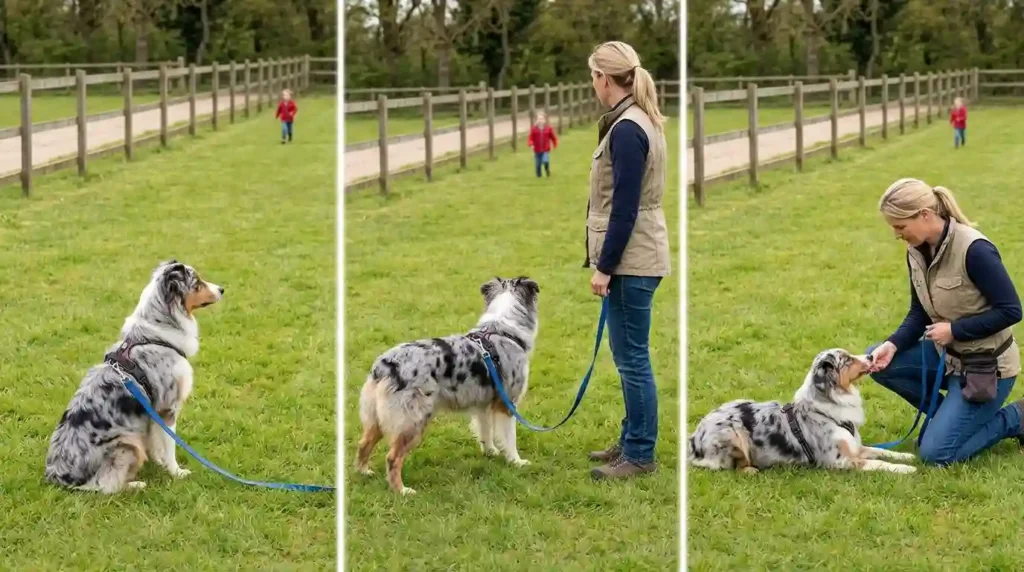
Begin at a distance where the dog notices the trigger but can still eat and respond. Mark and reward calm observation, looking back at the handler, or choosing to disengage.
If the dog is barking, lunging, refusing food, or unable to hear familiar cues, the trigger is probably too close or intense. Increase the distance rather than repeating commands.
Build Positive Associations Through Counterconditioning
Counterconditioning changes how the dog feels about a trigger.
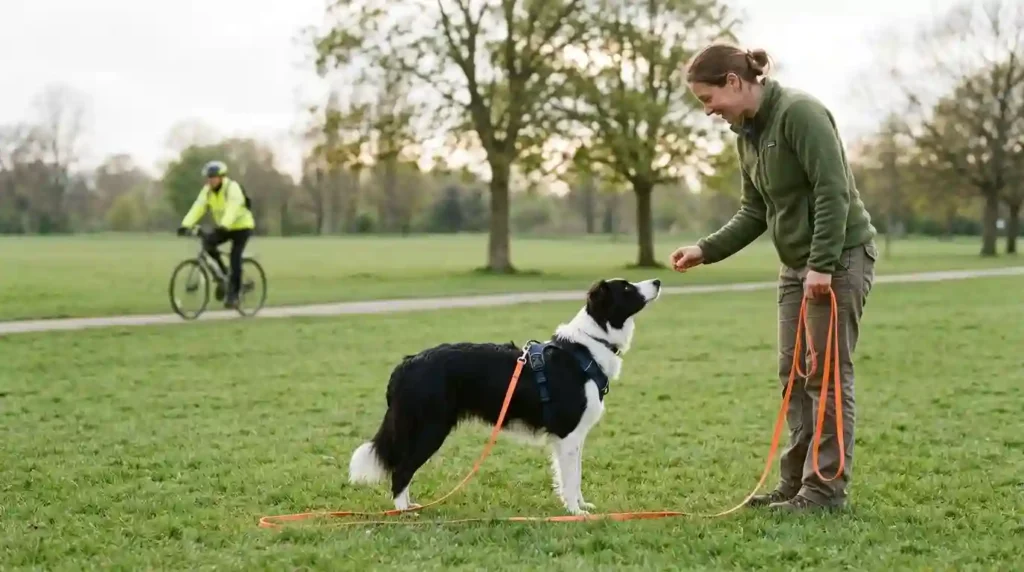
For example, if a dog barks at bicycles:
- Begin far enough away that the dog remains calm.
- Let the dog notice a bicycle.
- Immediately offer several high-value treats.
- Stop the treats when the bicycle disappears.
- Repeat through short sessions.
- Gradually reduce the distance only while the dog stays relaxed.
The bicycle begins to predict something positive instead of creating an immediate alarm or frustration.
This process is not bribery. It creates a positive association while giving the dog a safer emotional response.
Teach an Alternate Behavior
Telling a dog what not to do gives limited information. Teaching an alternate behavior provides a clear action.
Helpful options include:
- Go to a mat
- Look at the handler
- Find scattered treats
- Carry a toy
- Move behind the handler
- Perform a down cue
- Wait quietly at a doorway
A mat behavior is especially useful during guest arrival. Practice it first without visitors, then with mild distractions, and only later around real guests.
Strengthen Impulse Control and Obedience Training
Impulse control helps the dog pause before reacting. Useful skills include:
- Reliable recall
- Wait cue
- Down cue
- Leave it
- Place or mat
- Hand target
- Eye contact
- Release cue
Practice in a low-distraction environment before expecting success around runners or livestock. A dog cannot reliably use a new skill during intense excitement if it has only practiced in a silent living room.
Reinforce Quiet Moments
Do not wait for barking before interacting with the dog. Reward calm choices throughout the day.
If the dog notices a sound and remains quiet, calmly deliver a treat. If it lies down while children move in another room, reward that choice. This teaches the dog that quiet observation is valuable.
Some trainers teach “speak” and “quiet” together, but a quiet cue should not depend on yelling. Say the cue once, create a pause, and reward silence. Repeating it loudly can become part of the noise.
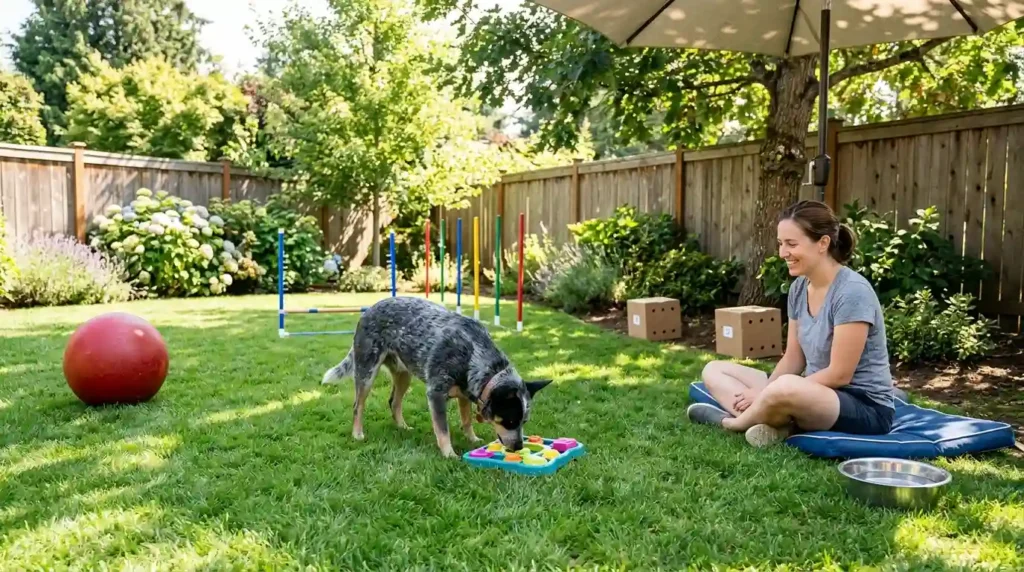
Exercise and Enrichment for Herding Dogs
Inadequate exercise and insufficient enrichment are common contributors to barking, but exhausting a dog through nonstop activity is not always the answer. Excessive high-intensity exercise can create an athlete who needs more and more activity to settle.
A balanced routine combines physical exercise, mental work, controlled excitement, sniffing, and recovery.
Structured Physical Exercise
Structured exercise may include:
- Brisk walks with training breaks
- Hiking on suitable terrain
- Fetch with start-and-stop rules
- Flirt pole games with impulse control
- Safe off-leash exercise in a secure area
- Agility training
- Swimming when appropriate
- Controlled play with compatible dogs
A flirt pole or fast fetch game can increase arousal, so include wait cues, short repetitions, and calm breaks.
Mental Stimulation
Herding breeds often benefit more from purposeful thinking than endless running. Mental stimulation can include:
- Puzzle feeder activities
- Food searches
- Scent games
- Trick training
- Obedience sequences
- Toy-name recognition
- Shaping games
- Hide-and-seek
- Simple household jobs
Meals served through a puzzle feeder can add enrichment without requiring a separate long training session.
Herding-Inspired Outlets
An appropriate outlet allows the dog to use natural skills under controlled conditions. Possibilities include:
- Treibball
- Herding ball activities
- Herding trial preparation
- Supervised livestock work
- Advanced agility
- Rally or competitive obedience
- Search games
Treibball involves directing large exercise balls toward a goal under the handler’s guidance. It can provide movement control and problem-solving without requiring access to livestock.
Dogs should not be placed with unfamiliar livestock without skilled supervision. A dog that has never worked stock may chase, grip, frighten, or injure animals. Livestock may also kick, charge, or injure the dog. Desensitized livestock and an experienced instructor are important when evaluating herding potential.
Rest and Decompression
Overstimulation can look similar to boredom. A dog receiving constant play, visitors, training, daycare, and noisy walks may become too aroused to settle.
Provide predictable quiet periods, sufficient sleep, chewing opportunities, and relaxed sniffing walks. Calmness is a skill that can be reinforced.
Training Mistakes to Avoid
A dog’s barking can worsen when the response from people is frightening, inconsistent, or accidentally rewarding.
Yelling Over the Dog
Yelling adds more noise and may sound like the person is joining the alarm. It can increase fear, excitement, or confusion without teaching an alternative.
Use a calm cue, increase distance from the trigger, and reinforce quiet behavior.
Punishing Fear or Reactivity
Punishment may stop visible barking temporarily while leaving the underlying fear unchanged. The dog may also associate pain or intimidation with the person, animal, or object already causing concern.
Suppressing warning signals can be dangerous. A dog that learns not to bark or growl may still feel threatened and progress to biting with less visible warning.
Allowing the Behavior Sometimes
Inconsistent rules create mixed signals. If ankle biting is treated as funny during family play but punished when guests arrive, the dog cannot understand the boundary.
Set clear boundaries and apply them consistently. Everyone in the home should use the same cues and management rules.
Moving Too Close to Triggers
Training directly beside a busy road, playground, or dog park may overwhelm a reactive dog. Learning is more effective when the dog remains under threshold.
Begin farther away and reduce the distance gradually. Progress is determined by relaxed behavior, not by how quickly the handler wants to approach.
Focusing Only on Physical Exercise
More running will not automatically resolve fear, attention-seeking barking, poor impulse control, or an incompatible environment. Exercise must be combined with enrichment, training, rest, and management.
Expecting the Wrong Breed Lifestyle
An incompatible environment does not mean a herding breed cannot live in a city or apartment. It means its daily needs must be met deliberately.
A highly driven Belgian Malinois may require a very different routine from an older Cardigan Welsh Corgi. Age, health, individual temperament, training history, and work drive matter as much as the breed label.
When to Contact a Professional
Seek professional guidance when barking is associated with biting, severe lunging, panic, compulsive behavior, or risk to children, visitors, other dogs, or livestock.
A qualified professional can observe body language, identify triggers, and create an individualized training plan. Look for a professional dog trainer who uses transparent, reward-based methods. A certified force-free trainer can help with skill-building, management, and common behavior problems.
A canine behaviorist or veterinary behavior specialist may be more appropriate when the dog shows:
- Severe fear or generalized anxiety
- Sudden behavioral change
- Repeated biting
- Self-injury
- Extreme reactivity
- Inability to rest
- Obsessive-compulsive behavior
- Shadow or light fixation
- Behavior that does not improve with careful training
A veterinarian should first rule out pain and medical problems, particularly when barking begins suddenly or changes significantly.
Conclusion
Dog barking in herding breeds often reflects generations of purposeful selection for vigilance, livestock movement, environmental sensitivity, and communication. A Border Collie staring at runners, a Heeler chasing ankles, or a Shetland Sheepdog announcing every visitor may be expressing traits that once supported real work.
The solution is not to fight the dog’s genetics. Identify the reason for the barking, prevent repeated trigger exposure, meet physical and mental needs, and reward an alternate behavior. With clear boundaries, consistent training, suitable enrichment, and professional help when necessary, most owners can reduce disruptive barking while preserving the intelligence and enthusiasm that make herding dogs exceptional companions.
Frequently Asked Questions
Why do herding dogs bark?
They bark to alert, communicate, control movement, express excitement, or respond to frustration and fear. Some breeds were selectively developed to use barking while working livestock.
How do I get my herding dog to stop barking?
Identify the trigger, prevent repeated practice, provide enough enrichment, and reward quiet alternate behaviors. Address fear or reactivity with gradual counterconditioning.
How can I curb herding behavior in dogs?
Manage access to moving triggers and teach recall, wait, place, and disengagement cues. Provide controlled outlets such as Treibball, agility, or supervised herding activities.
What are common herding dog behaviors?
Common behaviors include staring, stalking, circling, chasing, corralling, barking, heel nipping, freezing, and reacting strongly to movement.
How do I tire out a herding dog?
Combine structured exercise with sniffing, puzzle feeders, scent games, obedience training, and problem-solving. Include calm recovery time instead of relying only on intense running.
What is the dog command to stop barking?
Many owners use “quiet” or “enough.” Teach the cue during manageable situations and reward a brief period of silence instead of shouting it repeatedly.
What is the three-bark rule?
It is a household training approach that allows a few alert barks before asking the dog to disengage. It is not a universal scientific rule and requires consistent training.
Should I yell when my dog is barking?
No. Yelling can increase excitement, fear, or confusion. Use a calm cue, manage the trigger, and reward silence or another appropriate behavior.
How should I discipline a dog to stop barking?
Avoid physical or intimidating punishment. Use prevention, clear boundaries, reward-based training, adequate enrichment, and consistent reinforcement of the behavior you want.
What do vets recommend to stop barking?
Recommendations depend on the cause. A veterinarian may check for pain or illness and suggest behavioral management, training support, or a qualified behavior professional.