


Summary
If you’ve ever pointed at a squirrel, a toy, or the front door and had your dog erupt into a fit of barking, you’re not alone — and you’re probably wondering what’s going on in that furry head of theirs. The short answer to why does my dog bark when I point at something involves a fascinating mix of canine cognition, body language, and centuries of domestication that have made dogs remarkably skilled at reading human gestures. But barking in response to a point can mean many different things — excitement, alertness, confusion, or even anxiety — and figuring out which one applies to your dog is the key to a calmer, more connected relationship. Keep reading to decode exactly what your dog is telling you every time your finger goes up.
Table of Contents
- Why Does My Dog Bark When I Point at Something? Understanding the Basics
- How Dogs Understand Pointing Gestures and Human Communication
- Why Does My Dog Bark When I Point at Something? Common Triggers Explained
- Other Reasons Dogs Bark That Look Similar
- How to Train Your Dog to Respond Calmly to Pointing
- When Barking Becomes a Problem
- Conclusion
- FAQs
Why Does My Dog Bark When I Point at Something? Understanding the Basics
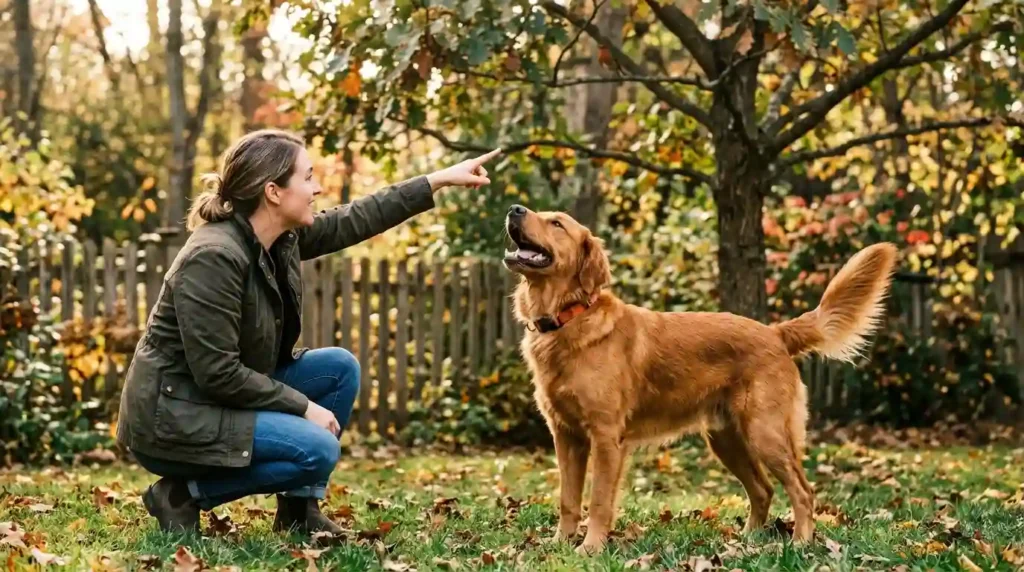
Dogs are extraordinary at reading us. Long before they understand a single word we say, they’re already tracking our hands, our eyes, and our posture for clues about what matters. Pointing — a simple flick of a finger or a full-arm gesture — is one of the clearest signals we give, and dogs have evolved to pick up on it in ways that even our closest primate relatives, chimpanzees, generally can’t match without extensive training.
So when your dog barks the moment you point at something, it isn’t random noise. It’s a response rooted in dog barking as a form of nonverbal communication, layered on top of their instinctive reading of human gestures. Your dog is essentially saying, “I see where you’re pointing, and here’s how I feel about it.” Whether that feeling is joy, alarm, confusion, or a demand for action depends on the context, your dog’s personality, and what they’ve learned pointing usually means in your household.
How Dogs Understand Pointing Gestures and Human Communication
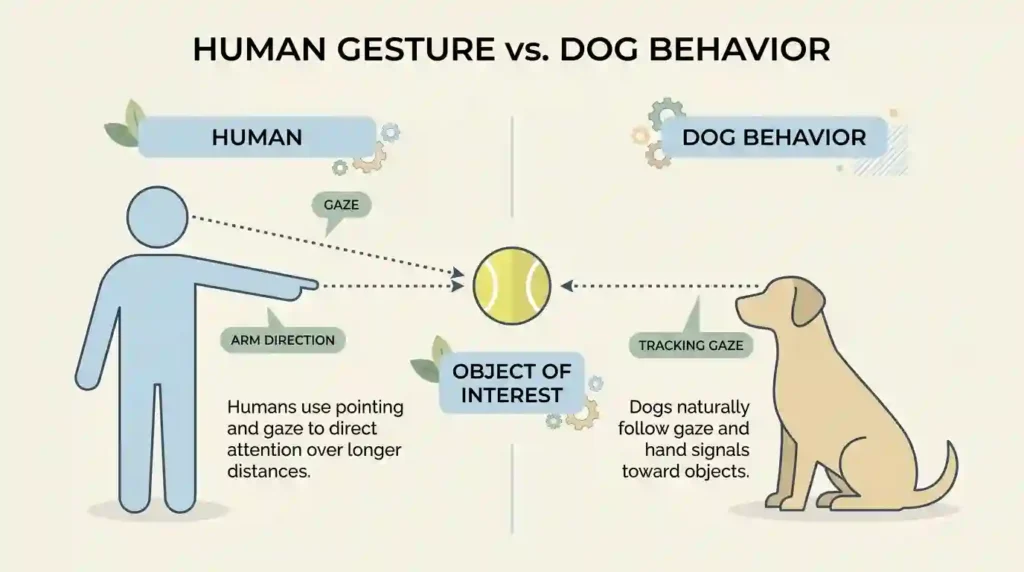
To understand the barking, you first have to understand the pointing. Unlike sitting or rolling over, pointing gesture interpretation isn’t something dogs are typically taught step by step — many puppies start responding to a pointed finger by around six weeks of age, well before formal training begins. This has led researchers in dog cognition research to ask whether this skill is at least partly innate, shaped by thousands of years of domestication alongside humans.
The Science of Referential Gesturing
Referential gesturing — using a gesture to direct another individual’s attention toward an object or location — is surprisingly rare in the animal kingdom. Wolves, dogs’ closest wild relatives, don’t reliably follow human points the way domestic dogs do, which suggests this ability developed specifically through the close partnership between dogs and people. According to research summarized by the American Kennel Club, dogs’ heightened sensitivity to human cues is tied to both their hearing sensitivity and their evolved social intelligence, allowing them to detect subtle signals — including sounds and movements — that people often miss entirely.
Gaze Following and Eye Contact
Pointing rarely happens in isolation. When you point, you’re also usually looking in that direction, shifting your posture, and possibly using a certain tone of voice. Dogs pick up on all of it. Gaze following and eye contact are core parts of canine cognition, and dogs use these combined cues — your finger pointing, your gaze, your excitement level — to figure out what you want them to notice. This is why a full hand signal paired with eye contact and an enthusiastic voice tends to get a much bigger reaction (including barking) than a lazy point without any accompanying body language.
Domestication and Canine Cognition
Over many generations, domestication selected for dogs that were socially attuned to humans — dogs that could read our body language, respond to a verbal cue, and cooperate in tasks like hunting, herding, and guarding. This shared history is why human gesture recognition comes so naturally to dogs compared to other species, and it’s a major reason pointing can trigger such a strong behavioral response, including barking.
Why Does My Dog Bark When I Point at Something? Common Triggers Explained
Now for the heart of the matter. Not all barking-at-a-point is the same, and understanding which category your dog falls into makes all the difference in how you respond.
Excitement Barking
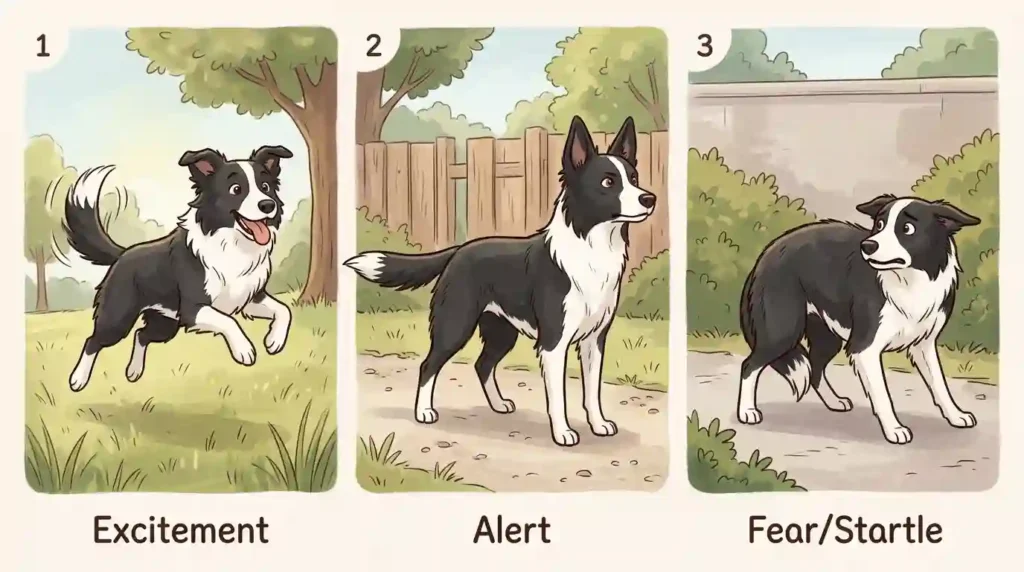
If your dog’s body is loose and wiggly, their tail is doing a full-body wagging tail wag, and they’re jumping or spinning in circles, you’re almost certainly dealing with excitement barking. This often happens when you point toward a leash, a treat bowl, a toy, or the door before a walk. Your dog has learned through experience that pointing in these contexts predicts something wonderful, and the bark is simply an outlet for that anticipation.
Alert Barking and Threat Detection
A stiffer posture, ears perked, and an intense stare toward whatever you pointed at usually signal alert barking. This taps into your dog’s natural threat detection instincts and protective instinct — especially if you’re pointing at something moving outside a window or an unfamiliar person approaching. Combined with your dog’s excellent sound sensitivity and movement detection, even a subtle point toward something in low light (thanks to dogs’ superior low-light vision) can set off a genuine warning bark.
Demand Barking and Attention-Seeking
Sometimes the bark isn’t about what you’re pointing at — it’s about what your dog wants from you. Demand barking, also called attention-seeking barking, happens when your dog interprets your point as an invitation and responds by barking to push you into action faster, especially during a fetch game or hidden object test-style play where you’re guiding them toward a hidden toy.
Fear Barking and Startle Response
If your dog flinches, ducks, or shows a startle bark — sharp, single, high-pitched — the point may have been sudden or too close to their face. Some dogs interpret an abrupt finger pointing motion as mildly threatening, particularly if they weren’t watching you closely beforehand. This is more common in dogs with limited socialization or those prone to general anxiety.
Confusion or Frustration
Occasionally, a dog barks simply because they don’t understand what’s being asked of them. If a point isn’t paired with a consistent verbal cue or reward history, your dog may bark out of frustration, unsure whether to look, fetch, sit, or come.
Other Reasons Dogs Bark That Look Similar
Not every bark near a pointing moment is actually about the point itself. It helps to rule out other common causes of vocalization.
Separation Anxiety vs. Protest Barking
If your dog only barks intensely when you point toward the door right before you leave, this could be tangled up with deeper separation anxiety rather than simple excitement. It’s worth learning the difference between anxiety-driven barking and ordinary protest, and our guide on Separation Anxiety Barking vs. Normal Protest Barking breaks down exactly how to tell them apart and respond appropriately.
Compulsive and Nuisance Barking
Some dogs develop compulsive barking patterns unrelated to any specific trigger, including pointing. These dogs may bark repetitively regardless of context, often alongside repetitive movements. This differs from typical nuisance barking or excessive barking, which usually has an identifiable trigger and responds well to training.
Pain-Related and Cognitive Dysfunction Barking
In older dogs, unexplained barking — even in response to something as benign as pointing — can occasionally signal cognitive dysfunction, similar to dementia in humans. Sudden pain-related barking when touched or approached (even via a gesture) also warrants a vet visit, since it may indicate discomfort rather than behavioral response.
How to Train Your Dog to Respond Calmly to Pointing
If the barking has become excessive or you simply want a calmer response, the good news is that this is very trainable.
Positive Reinforcement and Treat Rewards
Positive reinforcement is the gold standard in modern dog training. Every time your dog looks at what you’re pointing to without barking, mark the moment with praise and a treat reward. This activates the reward center in your dog’s brain and, according to some behavior researchers, even engages a specific brain hemisphere associated with positive emotional processing — reinforcing calm behavior over vocal outbursts.
Hand Gesture Training and Full-Arm Points
Start with hand gesture training using a slow, deliberate full-arm point rather than just a flick of the wrist — dogs read broad, clear gestures more easily than subtle ones. This mirrors techniques used in service dogs training and even basic sign language cueing, where consistency and clarity of the gesture matter more than speed.
Consistency, Verbal Cues, and Tone of Voice
Pair your point with the same verbal cue every time (“look,” “find it,” “leave it”) and keep your tone of voice calm rather than excited if you’re trying to reduce barking. Consistency in training is what separates dogs who quickly generalize the skill from those who stay confused. Over time, many owners also introduce clicker training to sharpen the timing between the gesture and the reward, which speeds up learning considerably.

When Barking Becomes a Problem
Occasional barking at a point is completely normal dog behavior. But if it escalates into constant, disruptive vocalization, it’s worth addressing directly.
Nuisance Barking and Early Morning Barking
Many owners notice that pointing-related excitement barking is worse at certain times of day — especially early mornings, when a dog’s energy and arousal level are naturally higher. If your dog’s barking (pointing-related or otherwise) is turning into a dawn disturbance, our detailed guide on how to Stop Dog Barking at 5AM walks through practical, proven strategies to reset that routine.
When to Consult a Professional
If barking is accompanied by growling, redirected aggression, signs of stress or anxiety, or seems entirely disconnected from any obvious barking triggers, it’s time to bring in help. A veterinarian can rule out medical causes, while a veterinary behaviorist, animal behavior specialist, or canine behaviorist can design a desensitization plan tailored to your dog’s specific needs. This is especially important for dogs showing signs of over-stimulation, strong prey drive-linked barking, or guarding behavior and territorial barking that seems to be intensifying rather than improving with basic training.
Conclusion
At the end of the day, a dog barking when you point at something is a window into their mind — a blend of instinct, learned associations, and the deep social intelligence that thousands of years of bonding with humans have built into the breed. Sometimes it’s pure joy at the sight of a leash. Sometimes it’s a serious alert about something moving in the shadows. And sometimes it’s simply confusion looking for clarity. By paying attention to your dog’s alert posture, whining, tail position, and overall body language alongside the bark itself, you can quickly learn to read exactly what they’re trying to tell you — and respond in a way that strengthens your human communication with your best friend rather than confusing it further.
FAQs
Why does my dog bark at me when I point at him? Your dog may interpret a direct point at himself as confrontational, attention-seeking, or simply exciting, depending on his personality and past experiences with that gesture.
How do dogs say “I’m sorry”? Dogs don’t feel guilt the way humans do, but submissive behaviors like lowered ears, avoiding eye contact, or a tucked tail often signal appeasement after tension.
What is the 3 bark rule for dogs? It’s an informal training guideline allowing a dog three barks to alert you, after which you calmly interrupt and redirect them to prevent excessive barking from becoming a habit.
Should I ignore my dog when he barks at me? For attention-seeking or demand barking, ignoring the behavior (while rewarding quiet moments) is effective; for fear, pain, or alert barking, ignoring it isn’t appropriate.