


Summary
Black fly bites on dogs are a common warm-season concern that causes red, circular lesions — most often appearing on the belly, groin, and ear flaps. While typically more irritating than dangerous, these bites can cause allergic reactions, secondary infections, and significant discomfort if left untreated. This guide covers everything you need to know: how to identify black fly bites, distinguish them from other insect bites, treat them at home, and prevent future attacks — so you can keep your dog comfortable and protected throughout peak black fly season.
Outline
- What Are Black Flies and Why Do They Target Dogs?
- What Do Black Fly Bites Look Like on Dogs?
- Symptoms of Black Fly Bites on Dogs
- How to Treat Black Fly Bites on Dogs at Home
- When to See a Vet for Black Fly Bites
- Can Black Fly Bites Cause Disease in Dogs?
- How to Prevent Black Fly Bites on Dogs
- Black Fly Season: When Is Your Dog Most at Risk?
- Frequently Asked Questions About Black Fly Bites on Dogs
Black Fly Bites on Dogs: Symptoms, Treatment, and Prevention Guide
Black fly bites on dogs are one of the most misunderstood and frequently misidentified skin problems pet owners encounter during the spring and summer months. One day, your dog is perfectly fine; the next, you notice strange red spots or bloody lesions on their belly, and panic sets in. Are these bites? A rash? Something worse?
Understanding the nature of black fly bites — how they look, what symptoms they cause, how to treat them, and crucially, how to prevent them — is essential knowledge for any responsible dog owner. This in-depth guide covers every aspect of this topic, from the biology of black flies to veterinary treatments and safe repellent options.
What Are Black Flies and Why Do They Target Dogs?
Biology and Behavior of Black Flies
Black flies (family Simuliidae), also known as buffalo gnats or turkey gnats, are small, hump-backed biting insects found across North America, Europe, and many other parts of the world. Unlike mosquitoes that pierce the skin with a needle-like proboscis, black flies use blade-like mouthparts to cut into skin and feed on the blood that pools in the wound — a feeding method called pool feeding or telmophagy.
Female black flies are the biters; they require blood to develop their eggs. They are most active during dawn and dusk, particularly in late spring and early summer, and they breed near fast-moving streams and rivers. This is why dogs living near wooded areas, trails, or bodies of water are particularly vulnerable.
Black flies are attracted to:
- Carbon dioxide exhaled by animals
- Body heat
- Dark colors and movement
- Moisture and sweat
They tend to swarm in large numbers, and a single outing can result in dozens of bites across a dog’s body in a very short time.
Why Dogs Are Vulnerable to Black Fly Attacks
Dogs are appealing targets for black flies for several reasons. Their body temperature, CO₂ output, and the fact that large areas of their skin are thinly furred or completely bare (belly, groin, inner ears, armpits) make them easy targets. Dogs also spend more time outdoors in natural environments — parks, trails, forests — right during peak black fly season.
Unlike humans, who can wave flies away and apply repellent freely, dogs cannot protect themselves, and many insect repellents safe for humans are toxic to dogs, making prevention more complex.
What Do Black Fly Bites Look Like on Dogs?
Common Bite Locations on a Dog’s Body
Black fly bites on dogs appear most frequently on:
- The belly and abdomen — the most common locations, since this skin is soft, hairless, and frequently exposed when dogs lie down
- The groin and inner thighs
- The ear flaps (pinnae) — especially the inner surface
- Around the muzzle and lips
- The chest and armpits
Dogs who are frequently outside or who sleep on the ground or grass are especially prone to belly bites because black flies tend to attack from low angles.
Visual Symptoms and Skin Changes
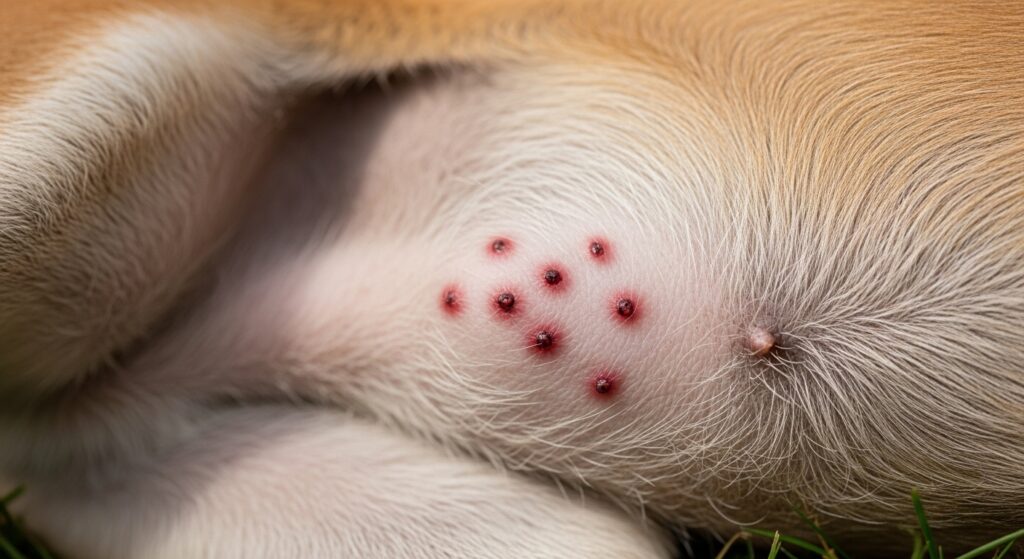
The hallmark appearance of a black fly bite on a dog is a small, circular, red lesion with a darker hemorrhagic (bloody) center — often described as looking like a bullseye or a red spot with a dark dot in the middle. This distinctive appearance is caused by the pool-feeding method: the fly cuts open the skin, causing a small bleeding point surrounded by inflamed tissue.
Key visual characteristics include:
- Round, red welts ranging from 0.5 cm to 2 cm in diameter
- Dark center — dried blood or a scab
- Swelling around the bite site
- Multiple lesions grouped together (since flies attack in swarms)
- Hair loss around the bite in chronic cases
- Crusting or scaling as bites heal
Black Fly Bites vs. Other Insect Bites on Dogs
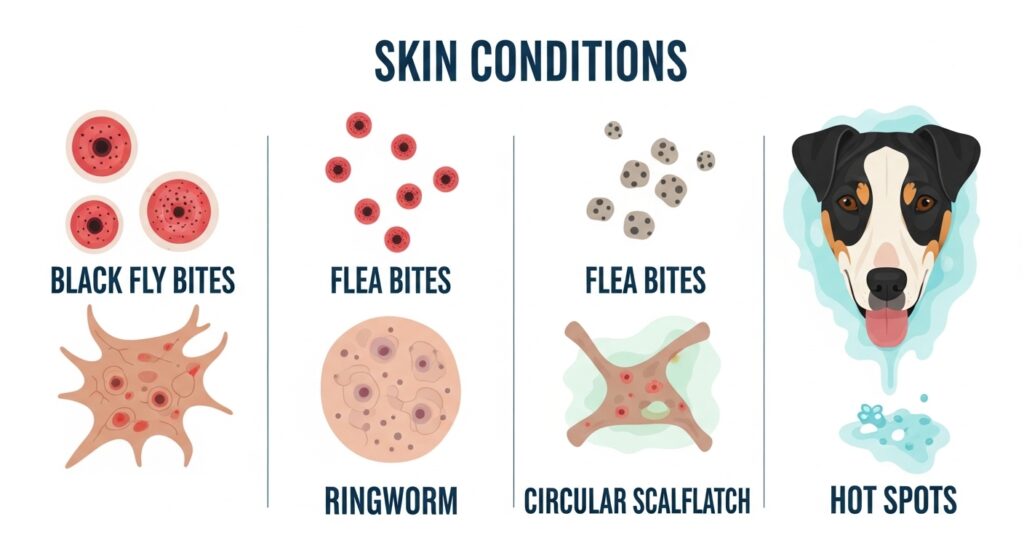
Many dog owners confuse black fly bites with other skin conditions. Here’s how to differentiate them:
| Condition | Appearance | Location | Season |
|---|---|---|---|
| Black fly bites | Round red lesion with dark center | Belly, groin, ears | Spring–Summer |
| Flea bites | Small, scattered red bumps | Base of tail, inner thighs | Year-round |
| Mosquito bites | Raised soft welts | Anywhere | Summer |
| Ringworm | Circular scaly patch, no dark center | Anywhere | Year-round |
| Hot spots | Moist, oozing lesion | Anywhere | Summer |
The bullseye-like central dark spot and the time of year (late spring/early summer) are the strongest indicators of black fly bites specifically.
Symptoms of Black Fly Bites on Dogs
Mild Symptoms
Most dogs experience only mild, localized reactions to black fly bites. These include:
- Localized redness and swelling at bite sites
- Itching and scratching — dogs may lick, bite, or rub the affected area
- Slight skin irritation that resolves within a few days
- Small scabs are forming as the bites heal
- Restlessness or discomfort, especially if bitten repeatedly
Severe and Allergic Reactions
Some dogs are hypersensitive to the anticoagulant saliva that black flies inject during feeding. In these cases, symptoms escalate significantly:
- Intense pruritus (severe itching) leading to self-trauma
- Hives (urticaria) — raised, blotchy welts across the body
- Facial swelling, particularly around the muzzle and eyes
- Anaphylactic shock in rare, extreme cases — this is a medical emergency
- Fever and lethargy if the reaction is systemic
- Secondary bacterial infection (pyoderma) from excessive scratching
When Symptoms Indicate a Serious Problem
If your dog is showing signs beyond mild skin irritation — particularly difficulty breathing, collapse, extreme swelling, or uncontrolled bleeding from bite sites — treat this as an emergency. Dogs that are suddenly aggressive or behaving unusually due to pain or discomfort may exhibit behavioral changes that seem unrelated to biting insects. If your dog’s temperament shifts suddenly during bug season, it’s worth exploring physical causes; learn more about what triggers sudden behavioral changes in dogs at Why Is My Dog Aggressive Suddenly?
How to Treat Black Fly Bites on Dogs at Home

Immediate First Aid Steps
If you discover black fly bites on your dog, take these steps promptly:
- Stay calm — most bites are more alarming-looking than they are dangerous
- Gently clean the bite sites with mild soap and lukewarm water
- Pat the area dry — never rub, as this increases irritation
- Apply a cool compress (a cloth soaked in cool water) for 5–10 minutes to reduce swelling
- Prevent licking and scratching using an e-collar (cone) if needed
- Monitor for signs of infection over the next 48–72 hours
Natural Remedies for Relief
Several safe, natural options can soothe black fly bites on dogs:
- Aloe vera gel (pure, no additives) — cooling and anti-inflammatory
- Diluted apple cider vinegar — helps reduce itching; apply with a cotton ball
- Colloidal oatmeal wash — excellent for soothing irritated skin
- Witch hazel — mild astringent that reduces inflammation
- Calendula cream — promotes healing and reduces redness
Always ensure any topical remedy is non-toxic to dogs, since dogs will likely lick the area.
Over-the-Counter and Veterinary Treatments
For more significant reactions, the following options are commonly used:
- Benadryl (diphenhydramine) — an antihistamine that can reduce itching and swelling; dosage should be confirmed with your vet (typically 1 mg per pound of body weight)
- Hydrocortisone spray or cream (0.5–1%) — reduces inflammation; use sparingly and only on areas the dog cannot lick
- Antiseptic sprays — prevent secondary bacterial infection
- Veterinary-prescribed antihistamines or corticosteroids for severe reactions
When to See a Vet for Black Fly Bites
Red Flags That Require Veterinary Attention
Seek veterinary care immediately or urgently if your dog shows:
- Difficulty breathing or wheezing
- Severe facial swelling
- Vomiting or diarrhea shortly after being bitten
- Collapse or extreme weakness
- Signs of secondary infection — increasing redness, warmth, pus, or foul odor from bite sites
- Persistent scratching is causing open wounds
- High fever or loss of appetite lasting more than 24 hours
What Your Vet May Prescribe
Depending on the severity, your vet may recommend:
- Corticosteroids (like prednisone) for severe allergic reactions
- Antibiotics if a secondary infection has developed
- Prescription antihistamines for hypersensitive dogs
- Epinephrine injection in cases of anaphylaxis
- Topical prescription creams for skin healing
Can Black Fly Bites Cause Disease in Dogs?
Risk of Infection
The most common disease risk from black fly bites in dogs is secondary bacterial skin infection (pyoderma). When dogs scratch or bite at their wounds, they introduce bacteria from their nails and mouths into the open skin, leading to localized infections that may require antibiotic treatment.
Black Flies and Canine Onchocerciasis
In certain geographic regions, black flies can transmit Onchocerca parasites — microscopic worms that can cause a condition known as canine onchocerciasis. This is more common in parts of Europe and has been reported in North America. Symptoms can include skin nodules, eye problems, and lameness. According to research published by the Companion Animal Parasite Council (CAPC), emerging vector-borne diseases transmitted by biting flies are an increasing area of veterinary concern. For more detailed information on parasitic diseases in pets, the American Kennel Club’s health resources provide regularly updated veterinary guidance.
How to Prevent Black Fly Bites on Dogs

Protective Clothing and Physical Barriers
- Dog shirts or belly wraps that cover the abdomen during walks
- Ear wraps or hoods for dogs in high-fly areas
- Avoiding outdoor activities during peak black fly hours (dawn and dusk)
- Staying away from rivers and streams where black flies breed
Dog-Safe Insect Repellents
Not all repellents are safe for dogs. Avoid DEET entirely — it is toxic to dogs. Safe alternatives include:
- Permethrin-based sprays (for dogs only — toxic to cats!)
- Picaridin-based products formulated for dogs
- Essential oil-based repellents — products containing cedarwood oil, lemongrass, or peppermint can deter flies; however, concentrations must be low and formulated for pets
- Veterinary-recommended topical repellents — ask your vet for the best option for your dog’s size and health status
According to entomology resources at the University of Kentucky Entomology Department, black flies are notoriously difficult to repel compared to mosquitoes, and physical barriers combined with repellents offer the best protection. Visit their insect identification and control resources for additional guidance on managing biting insects.
Environmental and Seasonal Management
- Keep your yard well-maintained — remove standing water and damp debris
- Use fans on patios — black flies are weak fliers and cannot navigate wind well
- Walk dogs in open, sunny areas — black flies prefer shaded, wooded environments
- Check and treat your dog after every outdoor excursion during peak season
Black Fly Season: When Is Your Dog Most at Risk?
Black fly season typically runs from late April through July in most of North America, peaking in May and June. Activity is highest in the following conditions:
- Warm days (55°F–90°F / 13°C–32°C)
- Low wind conditions
- Overcast or humid days
- Near moving water sources
Dogs in rural, forested, or riverside areas face the highest exposure. Urban dogs are not immune — parks near streams or wooded areas carry significant risk during peak months.
Frequently Asked Questions About Black Fly Bites on Dogs
Q: Are black fly bites on dogs dangerous? A: Most are not seriously dangerous, but they can cause significant discomfort, allergic reactions, and secondary infections if untreated.
Q: How long do black fly bites last on dogs? A: Mild bites typically resolve within 3–7 days. More severe reactions may take 1–2 weeks, especially if the dog has been scratching.
Q: Can I put Neosporin on my dog’s black fly bites? A: A small amount of plain Neosporin (without pain-relief additives) can be used cautiously, but it is not ideal since dogs will lick it off. Consult your vet for better alternatives.
Q: Should I pop or drain a black fly bite on my dog? A: No. Popping or draining a bite site increases infection risk significantly. Leave the site intact and clean it gently.
Q: Do black fly bites itch dogs as much as they itch humans? A: Yes — dogs experience itching and irritation from these bites, which is why preventing scratching is important for healing.