
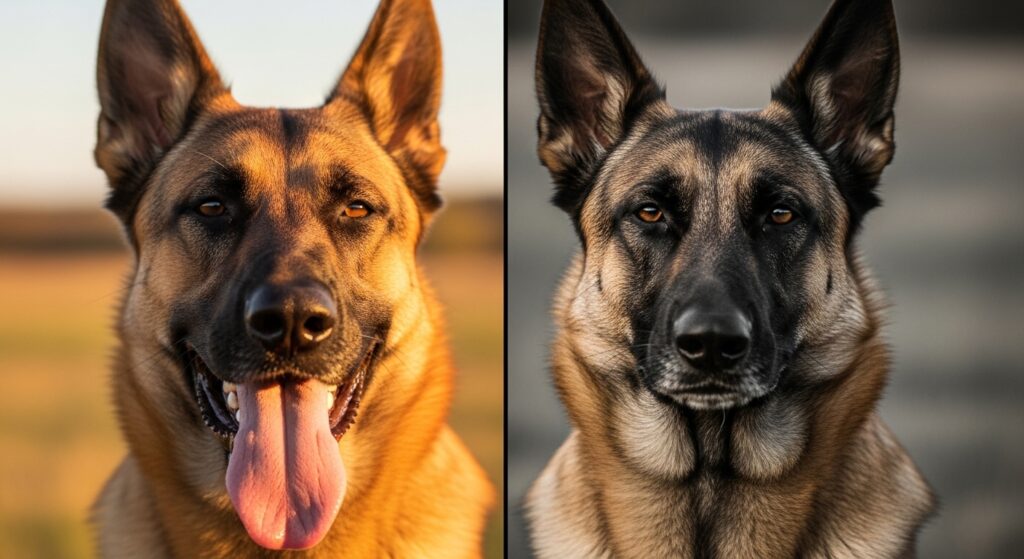

Summary: Sudden aggression in dogs is one of the most alarming behavioral changes a pet owner can face. Whether your dog is snapping, growling, or lunging without warning, this shift in temperament almost always has an underlying cause — ranging from hidden pain and medical conditions to fear, territorial instincts, hormonal changes, and trauma. Understanding the root triggers is the first step toward effective intervention. This comprehensive guide explores every major reason why dogs become suddenly aggressive, how to identify warning signs, and what steps you can take to restore peace, safety, and trust in your relationship with your dog.

Outline
- Why Is My Dog Aggressive Suddenly? A Complete Guide to Understanding & Stopping It
- What Does “Sudden Aggression” Really Mean in Dogs?
- Medical Causes of Sudden Aggression in Dogs
- Behavioral and Psychological Triggers
- Environmental and Situational Triggers
- Age-Related Aggression in Dogs
- Warning Signs Before a Dog Bites
- How to Respond When Your Dog Shows Sudden Aggression
- Professional Help: When and Who to Call
- Preventing Aggression Before It Starts
- Frequently Asked Questions About Sudden Dog Aggression
What Does “Sudden Aggression” Really Mean in Dogs?
Defining Sudden vs. Gradual Aggression
When dog owners describe their pet as “suddenly aggressive,” what they often mean is that the behavior felt like it came out of nowhere. In reality, most cases of canine aggression have a backstory — subtle warning signs that were missed, a slow build of stress and anxiety, or an internal medical issue that finally crossed a pain threshold.
True sudden-onset aggression — where a dog with no prior history snaps, bites, or lunges with zero warning — is actually a red flag for a medical emergency and should be investigated by a veterinarian immediately. More commonly, “sudden” aggression reflects a tipping point: the dog was already stressed, fearful, or in pain, and something pushed it over the edge.
Understanding this distinction is critical. It tells you whether you’re dealing with a behavioral problem, a medical condition, or a combination of both.
Types of Dog Aggression You Need to Know
Dog aggression is not a single behavior — it’s a category of responses that manifests differently depending on the trigger and context. Key types include:
- Fear aggression – The dog attacks because it feels threatened and sees no escape route
- Territorial aggression – Protecting home, yard, or owner from perceived intruders
- Possessive aggression (resource guarding) – Growling or snapping when approached near food, toys, or resting spots
- Pain-induced aggression – Lashing out due to physical discomfort when touched
- Redirected aggression – Frustration directed at a bystander instead of the actual trigger
- Predatory aggression – Instinct-driven chasing or attacking of smaller animals
- Intraspecific aggression – Aggression directed toward other dogs
- Idiopathic aggression – Rare cases with no identifiable cause, potentially neurological
Identifying which type your dog is displaying will help you and your vet or behaviorist develop the right intervention strategy.
Medical Causes of Sudden Aggression in Dogs
This is the most overlooked category — and arguably the most important to rule out first. Whenever a dog’s behavior changes dramatically and rapidly, a full veterinary examination should be the immediate priority.
Pain-Induced Aggression
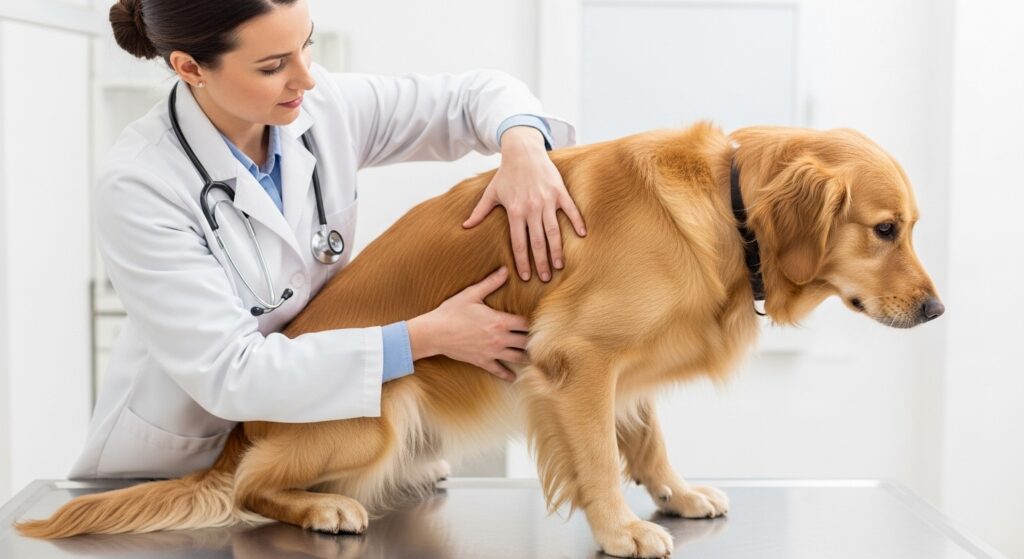
Pain is one of the most common drivers of sudden aggression in dogs. A dog that has never been aggressive may begin snapping or growling when touched in a specific area — this is pain communication, not defiance.
Common pain sources include:
- Arthritis or joint inflammation (especially in older dogs)
- Ear infections (dogs may react when their head is touched)
- Dental disease and tooth abscesses
- Spinal issues such as intervertebral disc disease (IVDD)
- Internal organ pain from gastrointestinal problems, bladder infections, or cancer
- Post-surgical discomfort
- Skin conditions like hot spots or allergies causing chronic itching
If your dog growls when you try to pick them up, pet a certain area, or approach them while they’re resting, pain should be your first suspicion. Always pair any aggression investigation with a thorough physical exam.
Neurological Disorders
Certain neurological conditions can directly alter a dog’s personality and impulse control. Brain tumors, encephalitis (brain inflammation), epilepsy, and hydrocephalus can all cause sudden behavioral changes including unprovoked aggression.
Dogs with idiopathic rage syndrome — sometimes called “Springer Rage” due to its association with English Springer Spaniels — can display explosive, unpredictable aggression with no warning and no apparent trigger. This is believed to have a neurological basis and is distinct from learned behavioral aggression.
Hormonal Imbalances and Thyroid Issues
Hypothyroidism — an underactive thyroid gland — has a well-documented association with behavioral changes in dogs, including sudden aggression, irritability, anxiety, and unpredictability. A simple blood test can screen for thyroid levels. If hypothyroidism is identified, treatment with synthetic thyroid hormone can sometimes dramatically improve behavior alongside physical symptoms.
Similarly, hormonal changes related to intact (non-neutered or non-spayed) dogs can trigger aggressive episodes. Testosterone in male dogs increases territorial and competitive aggression, while female dogs may experience significant behavioral shifts during estrus (heat cycles) or false pregnancies.
Cognitive Dysfunction Syndrome (Dog Dementia)
Senior dogs can develop Canine Cognitive Dysfunction Syndrome (CDS) — a condition analogous to Alzheimer’s disease in humans. Affected dogs experience confusion, disorientation, disrupted sleep cycles, and loss of learned behaviors. This confusion and disorientation can manifest as sudden aggression, particularly at night or in unfamiliar situations.
Signs of CDS include getting stuck in corners, failing to recognize familiar people or pets, altered sleep patterns, and increased vocalization. If your older dog is displaying new aggression alongside these symptoms, CDS may be the underlying driver.
Behavioral and Psychological Triggers
Once medical causes are ruled out, behavioral and psychological drivers become the primary focus.
Fear-Based Aggression
Fear is the single most common psychological trigger of aggression in dogs. A dog that is afraid will either flee or fight — and when flight is not possible, many dogs escalate to aggression. This is sometimes called “fight or flight” threshold behavior in behavioral science literature.
Fear-based aggression often develops following:
- Inadequate socialization during the critical developmental window (3–14 weeks)
- A traumatic event such as an attack by another dog
- Negative experiences with certain types of people (men, children, strangers in uniforms)
- Forced confrontation with something that terrifies the dog
The dog is not being “dominant” or “bad” — it is terrified. Punishment in these scenarios dramatically worsens the aggression by confirming the dog’s belief that the feared stimulus is indeed dangerous.
Territorial and Possessive Aggression
Resource guarding is a natural, evolutionarily programmed behavior in dogs. In the wild, guarding food and sleeping spots was a survival mechanism. In a domestic setting, this same drive can become problematic when a dog growls, snaps, or bites to protect food bowls, toys, furniture, sleeping spots, or even specific people.
If your dog has suddenly started guarding resources it previously didn’t, this can signal increased anxiety or competition — perhaps due to a new pet in the home, a change in feeding routine, or an underlying stressor affecting the dog’s sense of security.
Redirected Aggression
Redirected aggression occurs when a dog is aroused or frustrated by one stimulus but cannot access it, so it redirects its aggression onto whatever is nearby — including its owner. A classic example is two dogs separated by a fence who become highly aroused barking at each other; when the owner reaches in to break it up, the dog bites the owner rather than the other dog.
This is not intentional. The dog is in a state of high arousal and its aggression simply “spills over” to the nearest available target. Understanding this can prevent owners from misinterpreting a bite as unprovoked.
Frustration-Elicited Aggression
Related to redirected aggression, frustration-elicited aggression occurs when a dog is prevented from reaching something it strongly desires. Dogs on leashes that cannot greet other dogs, dogs repeatedly called away from high-value activities, or dogs confined during high-stimulation events can build up frustration that releases as aggression.
This is an important consideration for dogs that are aggressive only on leash — a phenomenon so common it has its own term: leash reactivity.
Environmental and Situational Triggers Changes in the Household
Dogs are creatures of habit with strong attachments to routine and social structure. Significant changes to the household can destabilize a dog’s sense of security and trigger anxious, defensive behaviors including aggression. Common triggers include:
- Moving to a new home
- A family member leaving (going to college, divorce, death)
- Introduction of a new baby
- Change in the owner’s work schedule
- Renovation, construction, or loud household noise
- Changes in feeding schedule or diet
The dog is not being spiteful. It is responding to a loss of predictability and safety cues.
New Pets or People
The introduction of a new dog, cat, or even a frequent houseguest can disrupt established social hierarchies and trigger territorial or competitive aggression. This is particularly pronounced in multi-dog households where existing relationships may be renegotiated when a new animal enters the dynamic.
Introductions done improperly — where dogs are forced into close contact before they’ve had time to adjust — dramatically increase the risk of aggression.
Trauma or Abuse History
Dogs that have experienced trauma, neglect, or abuse — especially rescue dogs — may carry deeply embedded fear and stress responses that can be triggered by specific stimuli: raised hands, certain tones of voice, objects resembling former weapons, or specific settings. These dogs may appear well-adjusted in most contexts but react with sudden, intense aggression when a trigger activates a traumatic memory response.
This is essentially canine PTSD, and it requires patience, desensitization, and often professional behavioral therapy.
Overstimulation and Sensory Overload
Some dogs have a low tolerance for arousal. In high-stimulation environments — busy parks, crowded events, rough play that goes on too long — their arousal levels spike beyond their ability to self-regulate. The result can be sudden snapping, biting, or full aggression. This is more common in working breeds, high-drive dogs, and dogs with anxiety disorders.
Monitoring a dog’s arousal level and removing them from stimulating situations before they reach their threshold is a key prevention strategy.
Age-Related Aggression in Dogs
Adolescent Dogs and Hormonal Surges
Many owners are caught off guard when their sweet, easy puppy becomes an adolescent and suddenly exhibits challenging behaviors including aggression. Adolescence in dogs typically begins around 6–9 months and can last until 18–24 months depending on the breed.
During this phase, hormonal surges — particularly testosterone in intact males — increase confidence, risk-taking, and competitive behavior. Dogs may begin challenging perceived boundaries, showing resource guarding they never exhibited before, or reacting aggressively to other dogs.
You may also notice your dog “forgetting” previously learned commands during this phase — this is normal adolescent cognitive restructuring. Consistent, positive-reinforcement training during this period is essential. Additionally, if your dog is also a chewer during this phase, understanding the root causes of destructive chewing behavior can help you address multiple adolescent behaviors simultaneously.
Senior Dogs and Pain or Cognitive Decline
As discussed in the medical section, older dogs face a double threat: increasing likelihood of painful physical conditions AND cognitive decline. Both can independently drive aggression. Senior dogs that were previously gentle may begin growling when disturbed while sleeping, snapping when touched near arthritic joints, or showing confusion-driven aggression.
Adjusting the household environment to reduce pain triggers — elevated food bowls, orthopedic beds, ramps instead of stairs — and consulting a vet about pain management can make a significant difference.
Warning Signs Before a Dog Bites
Body Language Signals Every Owner Must Recognize
Dogs almost always give warning signals before biting. The problem is that many owners don’t recognize — or have inadvertently trained their dogs to skip — these signals. Key warning signals include:
- Stiff, rigid body posture – A dog that suddenly “freezes” is extremely tense
- Hackles raised – Piloerection along the back and shoulders indicates high arousal
- Hard, fixed stare – Direct, unblinking eye contact is a threat signal
- Whale eye – Showing the whites of the eyes indicates extreme discomfort
- Low, rumbling growl – This is communication, never punish a growl; it’s the warning before the bite
- Lips pulled back, teeth visible – A clear “back off” signal
- Tail held high and stiff, or tucked low – Context-dependent stress signals
- Low, crouching posture – Fear-based aggression incoming
The Aggression Ladder (Escalation Stages)
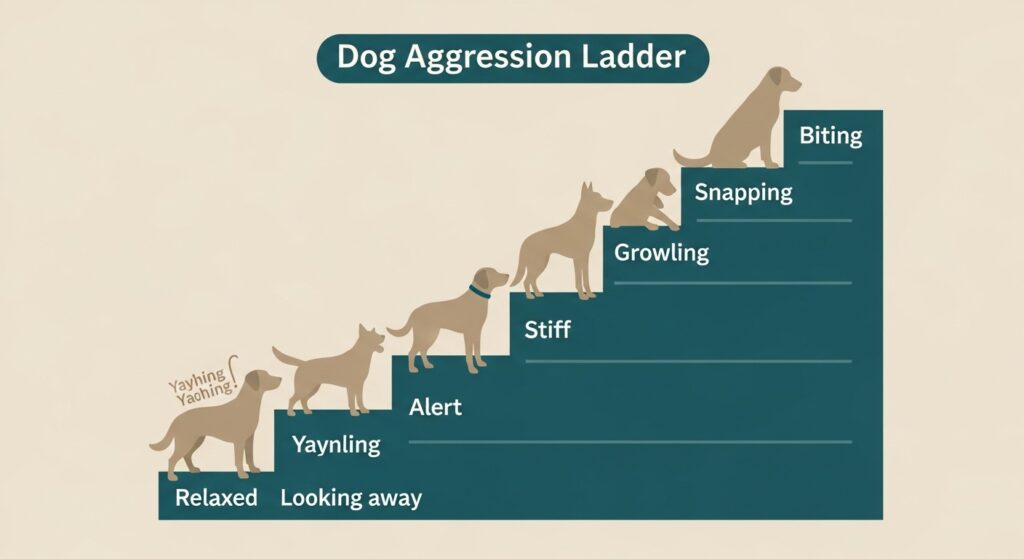
Canine behaviorists often describe a “ladder of aggression” — a progression of signals that dogs use before resorting to biting. Understanding this progression helps owners intervene early:
- Yawning, blinking, nose licking (stress signals)
- Turning head away
- Turning body away, sitting, pawing
- Walking away
- Creeping, ears back
- Standing tall, stiff, hackles raised
- Staring
- Growling
- Snapping
- Biting with control
- Biting to injure
Most bites happen because humans ignore or suppress the early signals on this ladder, forcing the dog to escalate to biting to communicate effectively.
How to Respond When Your Dog Shows Sudden Aggression
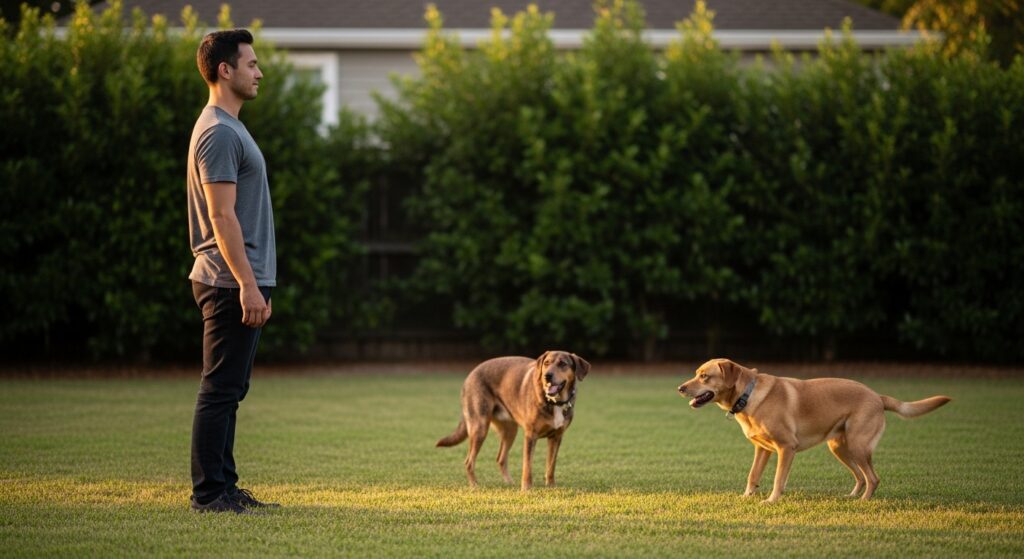
Immediate Safety Steps
- Do not panic. Sudden movements or yelling can escalate the situation.
- Avoid direct eye contact with an actively aggressive dog.
- Create distance calmly and deliberately — back away slowly.
- Remove triggers if possible — take away the resource, the other dog, or move to a calmer space.
- Do not reach for a growling or snarling dog — this is how owners get bitten.
- Use a leash or baby gate to manage access and prevent incidents while you investigate the cause.
- Document the incident — note the trigger, context, time of day, and the dog’s body language beforehand. This information is invaluable to a vet or behaviorist.
What NOT to Do
- Never punish a growl. Growling is communication. Punishing it removes your dog’s warning system without addressing the underlying emotion. The dog learns to bite without warning.
- Do not use alpha rolls or dominance-based techniques. These approaches are scientifically discredited and dramatically increase the risk of escalation and injury.
- Do not isolate the dog indefinitely without addressing the cause — social isolation increases anxiety and worsens behavioral problems.
- Do not dismiss the behavior as a “phase” if it recurs or escalates.
Professional Help: When and Who to Call
Veterinary Behaviorists vs. Dog Trainers
- Your primary care veterinarian should be the first call for any sudden aggression — to rule out medical causes.
- A veterinary behaviorist (DACVB — Diplomate of the American College of Veterinary Behaviorists) is a specialist with medical training who can prescribe medication alongside behavior modification. They are the gold standard for severe or complex aggression cases.
- A certified applied animal behaviorist (CAAB or ACAAB) holds advanced academic credentials in animal behavior.
- A certified professional dog trainer (CPDT-KA) with experience in aggression cases can be helpful for moderate behavioral issues.
Avoid trainers who rely heavily on punishment, shock collars, or dominance-based methods for aggression — these approaches have strong evidence of making aggression worse. According to the American Veterinary Society of Animal Behavior (AVSAB), punishment-based methods carry significant risks of increasing fear and aggression and are not recommended as a primary approach.
Behavior Modification Techniques That Work
Effective, evidence-based approaches include:
- Desensitization and counter-conditioning (DS/CC) – Gradually exposing the dog to its trigger at sub-threshold levels while pairing the stimulus with positive experiences (food, play) to change the emotional response
- Differential reinforcement of incompatible behaviors (DRI) – Rewarding the dog for doing something physically incompatible with aggression
- Management and avoidance – Eliminating or reducing exposure to triggers while behavior modification is underway
- Medication – Anti-anxiety medications (such as fluoxetine or clomipramine) prescribed by a veterinary behaviorist can reduce baseline anxiety and make behavior modification more effective
According to research published in Applied Animal Behaviour Science, positive reinforcement-based training significantly outperforms aversive methods in reducing fear and aggression in dogs, with lower rates of owner injury and improved long-term outcomes.
Preventing Aggression Before It Starts
Socialization Best Practices
The critical socialization window for puppies is approximately 3–14 weeks of age. During this period, exposure to a wide variety of people, animals, sounds, environments, textures, and experiences shapes the dog’s future emotional responses. Under-socialized dogs are significantly more likely to develop fear-based aggression.
Socialization should be:
- Positive and low-pressure — never force a frightened puppy toward something it fears
- Broad and varied — different people (ages, ethnicities, uniforms), animals, environments, and sounds
- Continued throughout life — socialization doesn’t stop at 14 weeks; ongoing positive experiences maintain and reinforce confidence
Enrichment, Exercise, and Mental Stimulation
A dog that is under-exercised, under-stimulated, and bored is a dog accumulating stress. Chronic, elevated cortisol (the stress hormone) lowers behavioral thresholds across the board — including the threshold for aggression. Regular physical exercise, breed-appropriate mental enrichment (puzzle feeders, nose work, training games), and positive social interactions are essential elements of a psychologically healthy dog.
Dogs with “jobs” — tasks, activities, training goals — have lower baseline stress levels and stronger impulse control. This is why working breeds that are not given sufficient outlets are disproportionately represented in aggression cases.
Frequently Asked Questions About Sudden Dog Aggression
Q: Can a dog become aggressive overnight with no prior warning? True overnight aggression with zero prior signs usually indicates a medical emergency — pain, neurological event, or severe hormonal disruption. See a vet immediately.
Q: Is sudden aggression in dogs curable? Many cases are highly manageable and significantly improved with the right combination of veterinary care, behavior modification, and management strategies. “Curable” depends heavily on the cause, the dog’s history, and the owner’s commitment.
Q: My dog only growls at one family member — why? This often indicates that the dog has had a negative experience with that person, fears something specific about them (scent, body language, tone of voice), or is resource-guarding something in that person’s presence. It can also reflect pain if that person handles the dog in a certain way.
Q: Should I rehome an aggressive dog? Rehoming is sometimes the right decision — particularly if there are young children in the home, the aggression is severe, or the root cause is not treatable. However, this decision should be made with guidance from a veterinary behaviorist, not in the immediate aftermath of an incident.
Q: Does neutering fix aggression? Neutering can reduce hormonally-driven aggression (territorial, competitive, roaming-related) in intact males. However, it does not address fear-based aggression and should not be viewed as a behavioral “fix” on its own.