

Summary
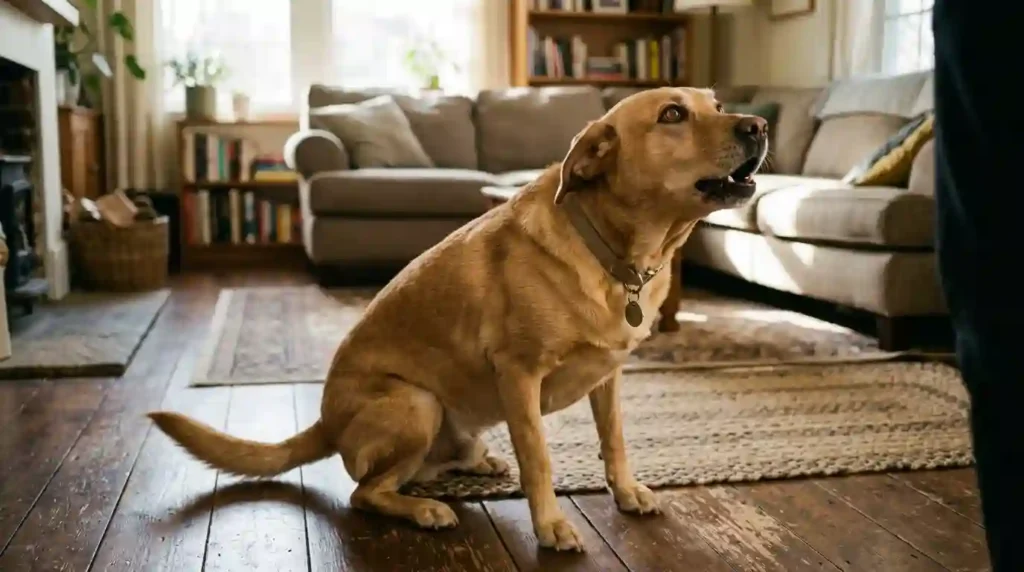
Many pet owners notice their dog barking after being scolded and wonder whether the behavior is a sign of guilt, defiance, or simple confusion. The truth is more nuanced than it appears: dogs don’t experience guilt the way humans do, but they are highly sensitive to tone of voice, body language, and inconsistent signals from their owners. This article breaks down the psychology behind post-scolding barking, explains the difference between guilt-like appeasement behavior and genuine confusion, and offers science-backed strategies to help your dog feel calmer and more secure during corrections.
Table of Contents
- Understanding Dog Barking After Being Scolded
- What Does a “Guilty Look” Really Mean in Dogs?
- Why Dogs Bark When Scolded: Common Reasons
- How to Tell If Your Dog Is Confused vs. Feeling Guilty
- The Role of Tone, Body Language, and Timing in Scolding
- Effective Ways to Respond to Dog Barking After Being Scolded
- When to Seek Professional Help
- Preventing Future Barking Episodes
- Conclusion
- FAQs
1. Understanding Dog Barking After Being Scolded
If you’ve ever raised your voice at your dog—maybe after they chewed up a shoe or had an accident on the carpet—and they responded with a sharp bark, whine-bark combo, or repeated yapping, you’re not alone. Dog barking after being scolded is one of the most commonly reported behaviors among dog owners, and it often leaves people puzzled. Is the dog talking back? Apologizing? Panicking?
To understand this behavior, we need to step back from human emotional frameworks and look at it through the lens of canine cognition, body language, and communication patterns. Dogs are masters of reading human emotion, but they don’t process abstract moral concepts like “guilt” the same way people do. Instead, their reactions are largely driven by associative learning, stress responses, and a strong instinct to read—and react to—their owner’s energy.
This article explores the layered reasons behind this behavior, helping you respond in a way that builds trust rather than fear.
2. What Does a “Guilty Look” Really Mean in Dogs?
The Science Behind the Guilty Look
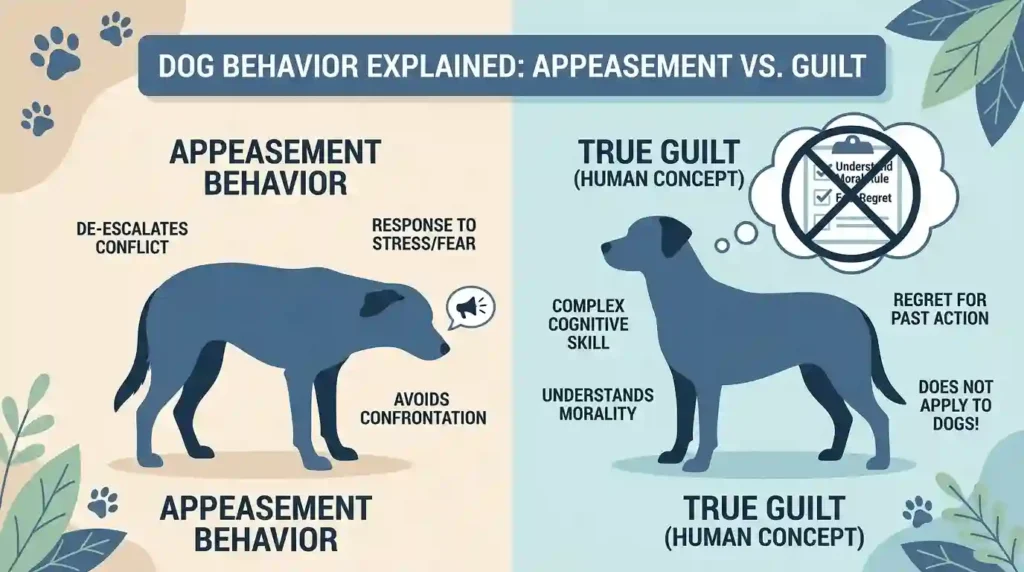
The so-called “guilty look”—lowered head, avoidance of eye contact, flattened ears, tucked tail, and sometimes a bark or whine—is often interpreted by owners as a confession of wrongdoing. However, behavioral research suggests this isn’t guilt in the moral sense. A well-known study by canine cognition researcher Alexandra Horowitz found that dogs displayed these “guilty” behaviors regardless of whether they had actually misbehaved, and the behavior appeared only when the owner scolded them—not before. This strongly indicates that the response is reactive to the owner’s tone and body language, not an internal sense of having done something wrong.
For more on the cognitive science behind this, the American Kennel Club has published detailed expert commentary on canine emotional capacity, which you can read in their article on whether dogs feel guilt and how their facial expressions and posture changes are linked to fear of punishment rather than an understanding of “rules” and “transgressions”. This is a useful external resource for owners who want to dive deeper into the research.
Guilt vs. Anticipation of Punishment
What looks like guilt is more accurately described as an appeasement display—a set of submissive signals dogs use to de-escalate tension with a perceived authority figure. When a dog barks after being scolded, it may actually be:
- Trying to communicate discomfort or stress
- Attempting to diffuse the tense interaction
- Reacting to a sudden change in your tone, posture, or volume
- Anticipating a punishment based on past experiences (even unrelated ones)
This is fundamentally different from human guilt, which involves understanding that a moral or social rule was broken. Dogs live in the present and respond to immediate cues—your raised voice, stiff posture, or pointed finger—not the memory of chewing the couch an hour ago.
3. Why Dogs Bark When Scolded: Common Reasons
Confusion and Miscommunication
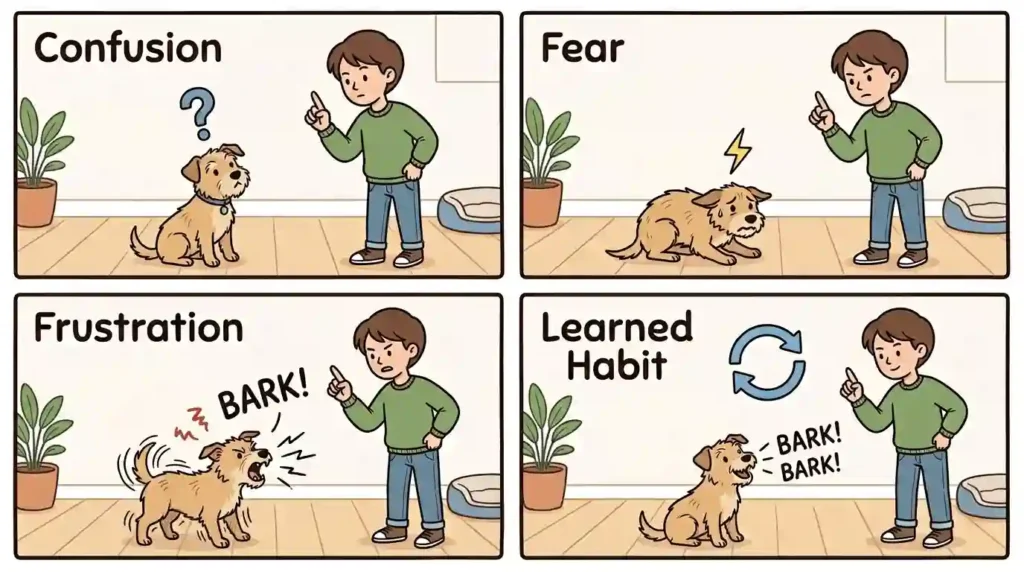
One of the most overlooked reasons for dog barking after being scolded is simple confusion. Dogs don’t speak human language, and many owners scold their dogs well after the “crime” has occurred—sometimes minutes or even hours later. When this happens, the dog has no idea why you’re upset. All they perceive is a sudden shift in your energy: raised voice, tense body language, direct eye contact (which can be perceived as confrontational in dog communication).
In this state of confusion, barking becomes a way for the dog to:
- Seek clarification through interaction
- Express anxiety about the unclear situation
- Attempt to communicate back (“What’s wrong? What do you want from me?”)
Fear and Anxiety Response
Some dogs are naturally more sensitive to vocal tone and volume. A loud or sharp scolding voice can trigger a fear response, especially in dogs with a history of harsh discipline, rescue dogs with unknown pasts, or breeds known for heightened sensitivity. Barking in this context is often accompanied by other stress signals such as:
- Lip licking
- Yawning (when not tired)
- Whale eye (showing the whites of the eyes)
- Trembling or shaking
- Trying to leave the room
Frustration or Redirected Energy
Barking can also be a frustration response. If a dog doesn’t understand what’s being asked of them, or if they’re being physically restrained or cornered during a scolding, the pent-up tension may release as vocalization. This is similar to how humans might raise their voice or gesture more when they feel misunderstood.
Learned Behavior Patterns
In some cases, dogs learn that barking after a scolding gets a reaction—even if that reaction is more attention, eye contact, or continued engagement from the owner (negative attention is still attention). Over time, this can become a reinforced pattern, especially in dogs that crave interaction and struggle with boundaries.
4. How to Tell If Your Dog Is Confused vs. Feeling Guilty (Appeasement)
Body Language Signals
While barking itself doesn’t tell the full story, the body language surrounding it gives important clues:
Signs pointing to confusion:
- Head tilts
- Ears perked forward, then back
- Pacing or circling
- Barking directed toward the owner with direct, searching eye contact
- Approaching the owner rather than retreating
Signs pointing to appeasement/fear-based response:
- Lowered body posture
- Tail tucked or low, with only the tip wagging
- Avoiding eye contact or squinting
- Barking while backing away
- Hiding behind furniture or under tables afterward
Timing of the Bark
Timing matters significantly. If the bark happens immediately during the scolding, it’s more likely a stress or appeasement response to your tone. If the bark happens after you’ve stopped talking and walked away, it could indicate the dog is still confused and trying to re-engage, possibly seeking reassurance or clarification.
5. The Role of Tone, Body Language, and Timing in Scolding
Dogs are exceptionally attuned to nonverbal communication—arguably more so than to the actual words being used. Studies on canine perception show dogs can distinguish between positive, neutral, and negative vocal tones, and they often respond more strongly to how something is said than what is said.
This means that even if your words are calm (“No, that’s not okay”), a harsh tone, sudden movements, looming posture, or prolonged direct eye contact can be perceived as threatening. The combination of these signals can trigger a stress-bark response that has little to do with the actual infraction and everything to do with how the correction was delivered.
Timing is equally critical. Dogs have a very limited window—often just a few seconds—to associate a correction with a specific action. Scolding a dog for something they did 10 minutes ago will almost always result in confusion rather than understanding, increasing the likelihood of a barking response rooted in anxiety rather than recognition of wrongdoing.

6. Effective Ways to Respond to Dog Barking After Being Scolded
Positive Reinforcement Techniques
The most effective long-term approach to managing dog barking after being scolded is shifting toward positive reinforcement-based training. This includes:
- Rewarding calm behavior immediately when it occurs
- Using a calm, neutral tone even during corrections
- Redirecting unwanted behavior toward an acceptable alternative (e.g., offering a chew toy instead of yelling about a chewed item)
- Pairing corrections with clear, consistent verbal cues, your dog has been trained to recognize
Avoiding Punishment-Based Reactions
Yelling, physical corrections, or prolonged scolding sessions tend to increase stress-related barking rather than reduce it. Punishment-based approaches can also damage the trust relationship between dog and owner, leading to increased anxiety, hypervigilance, and even reactive aggression in some cases.
Instead, focus on:
- Interrupting unwanted behavior calmly (a simple “ah-ah” or clap)
- Immediately redirecting attention
- Rewarding the correct behavior generously
Using Anti-Bark Tools Responsibly
For dogs with chronic barking issues—whether triggered by scolding, separation anxiety, or environmental stimuli—some owners consider anti-bark collars as part of a broader training plan. However, these tools should never replace behavioral training and should always be used under guidance. If you’re considering this route, our detailed guide on How Anti-Bark Collars Work explains the mechanisms, pros, cons, and humane usage considerations to help you make an informed decision.

7. When to Seek Professional Help
Signs of Anxiety-Related Barking
While occasional barking after a scolding is normal, persistent or escalating barking may indicate an underlying anxiety issue that needs professional attention. Warning signs include:
- Barking that continues for extended periods after the interaction ends
- Accompanying destructive behavior (chewing, digging, scratching at doors)
- Excessive panting, drooling, or pacing
- Signs of generalized anxiety beyond just scolding situations (e.g., separation anxiety, noise phobias)
If these signs are present, consulting a certified veterinary behaviorist or professional dog trainer is strongly recommended.
Breed-Specific Tendencies
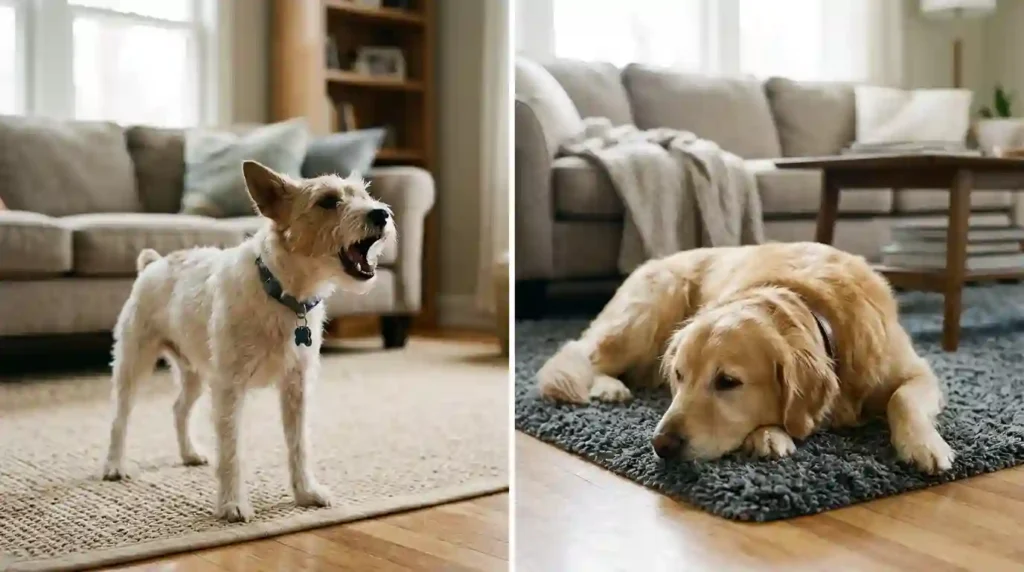
It’s also worth noting that some breeds are simply more vocal by nature, which can amplify barking responses during scolding. Smaller breeds, in particular, are often more reactive vocally due to a combination of genetics, heightened alertness, and historical breeding purposes (such as alarm-barking watchdogs). To understand how breed size influences barking tendencies, check out our related article: Why Small Dogs Bark More Than Large Dogs.
8. Preventing Future Barking Episodes
Training Consistency
Consistency is one of the most powerful tools for reducing confusion-driven barking. This means:
- Using the same verbal cues every time
- Ensuring all household members follow the same rules and corrections
- Correcting behavior immediately rather than after the fact
- Avoiding mixed signals (e.g., laughing at a behavior one day and scolding it the next)
Creating a Calm Environment
A dog’s overall stress baseline plays a major role in how they react to corrections. Dogs living in chaotic, loud, or unpredictable environments are more likely to interpret scolding as a threat, leading to defensive barking. To reduce this:
- Establish predictable daily routines
- Provide adequate physical and mental exercise
- Create safe spaces (crates, beds in quiet corners) where your dog can retreat without being followed or further corrected
- Use calming aids (pheromone diffusers, calming music) for particularly anxious dogs
Conclusion
So, is dog barking after being scolded a sign of guilt or confusion? Based on current behavioral science, it’s overwhelmingly more likely to be confusion, fear, or an appeasement response rather than genuine guilt. Dogs live in the moment, and their reactions to scolding are shaped primarily by your tone, body language, and the timing of your correction—not an internal moral compass.
Understanding this distinction is crucial for building a trusting, low-stress relationship with your dog. By shifting toward calm, consistent, positive reinforcement-based training, you can reduce anxiety-driven barking, improve communication, and strengthen your bond. If barking persists or escalates despite these changes, don’t hesitate to consult a professional trainer or veterinary behaviorist to rule out deeper anxiety issues.
FAQs
1. Why does my dog bark right after I scold them?
This is most often a stress or appeasement response triggered by your tone of voice and body language, not a sign of guilt or defiance.
2. Can dogs actually feel guilty?
Most research suggests dogs don’t experience guilt the way humans do. What looks like guilt is typically a reaction to the owner’s current emotional state, not an understanding of past wrongdoing.
3. Is it bad to scold my dog after they misbehave?
Scolding long after the behavior occurred is generally ineffective and can lead to confusion and stress-related barking. Immediate, calm redirection works better than delayed scolding.
4. Does breed affect how much a dog barks when scolded?
Yes, some breeds—especially smaller ones—tend to be more vocally reactive due to genetics and temperament.
5. Should I use an anti-bark collar to stop this behavior?
Anti-bark collars can be part of a broader training plan, but should be used responsibly and ideally alongside positive reinforcement training, not as a standalone fix.
6. How long does it take to reduce anxiety-related barking?
With consistent, positive reinforcement-based training, many dogs show noticeable improvement within a few weeks, though some cases may take longer depending on the dog’s history and temperament.