
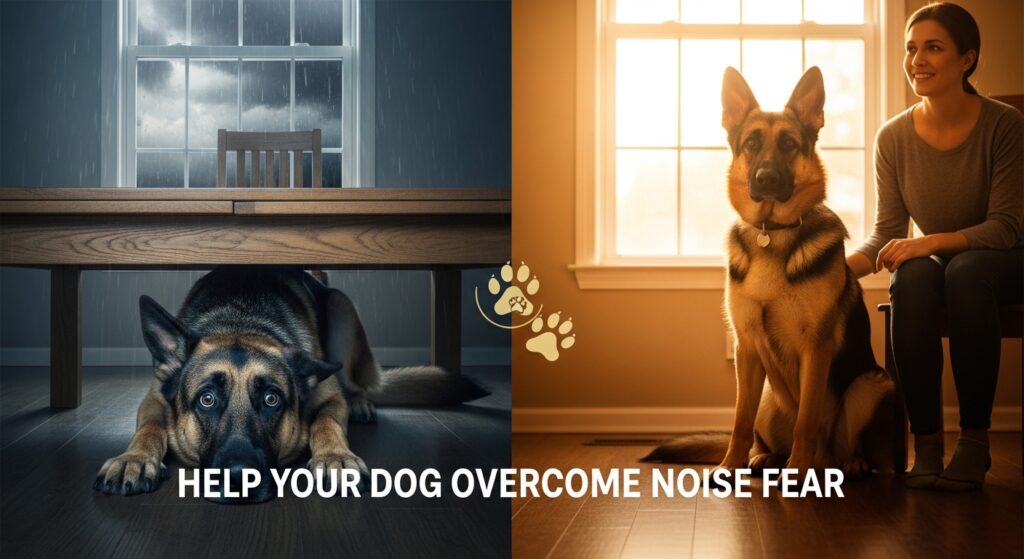

SUMMARY: If your dog is afraid of loud noises inside the house — from thunderstorms, fireworks, vacuum cleaners, or TV sounds — you are not alone. Noise phobia and sound sensitivity in dogs are among the most common behavioral concerns reported by pet owners worldwide. This in-depth guide covers every aspect of canine noise anxiety: its causes, signs, NLP-backed behavior patterns, proven desensitization techniques, veterinary options, and long-term management strategies. Whether your dog trembles at a passing truck or panics at the blender, this guide provides science-based, compassionate solutions to help your dog feel safe again.
Article Outline
1. Understanding Canine Noise Phobia — What Is It Really?
2. Common Loud Noises That Trigger Fear in Dogs Indoors
3. Signs and Symptoms of Noise Phobia in Dogs
4. Root Causes — Why Is Your Dog Afraid of Loud Noises?
5. Dog Breeds Most Prone to Noise Sensitivity
6. How Loud Noises Affect the Canine Brain and Nervous System
7. Proven Training Techniques: Desensitization and Counter-Conditioning
8. Creating a Safe Space for Your Noise-Anxious Dog
9. Veterinary and Medical Interventions
10. Mistakes Dog Owners Make When Dealing With Noise Fear
11. Long-Term Management and Prevention
12. Meta Title & Meta Description
13. Image Prompts for the Article
1. Understanding Canine Noise Phobia — What Is It Really?
Definition and Clinical Overview
Canine noise phobia — also referred to as noise aversion, sound sensitivity, or acoustic stress disorder in veterinary literature — is a condition in which a dog exhibits a disproportionately intense, fearful response to specific sounds. Unlike a simple startle reflex, noise phobia involves a persistent, predictable pattern of anxiety that is triggered by auditory stimuli and significantly disrupts the dog’s quality of life.
Noise phobia falls under the broader umbrella of canine anxiety disorders, sharing neurobiological similarities with generalized anxiety disorder (GAD) in humans. Dogs experiencing noise phobia are not simply ‘being dramatic.’ Their nervous systems are genuinely overwhelmed. Research published in peer-reviewed veterinary journals confirms that noise phobia can be progressive — meaning without intervention, the fear often intensifies over time rather than diminishing.
According to the American Kennel Club’s guide on dog anxiety, nearly 40% of all dogs exhibit some degree of noise sensitivity during their lifetime, making it one of the most prevalent behavioral health concerns in companion animals.
2. Common Loud Noises That Trigger Fear in Dogs Indoors
Not all dogs fear the same sounds, and not all sounds are equally traumatic. Understanding which specific stimuli affect your dog is the first step toward targeted intervention.
Thunder and Thunderstorm Anxiety
Thunderstorm phobia (astraphobia) is perhaps the most well-documented form of noise phobia in dogs. What makes thunder uniquely terrifying for dogs is the multi-sensory assault it delivers: low-frequency sound vibrations (infrasound), sudden sharp cracks, barometric pressure changes, static electricity in the air, and reduced lighting. Many dogs begin showing anxiety symptoms before the storm is even audible to human ears, responding to these subtle environmental cues. Dogs with thunderstorm phobia often try to hide in closets, under beds, or in bathrooms — particularly near grounded pipes and porcelain fixtures, which may offer relief from static electricity buildup.
Fireworks and Celebratory Sounds
Fireworks are the leading cause of dog disappearances in the United States, with animal shelters reporting dramatic spikes in stray intake on July 5th and New Year’s Day. The unpredictable nature of fireworks — random timing, variable intensity, and directional ambiguity — makes them especially distressing. Dogs cannot rationalize that the explosions are harmless celebrations; their primitive brain processes the sound as an existential threat.
Household Appliance Noises
Many dogs develop phobias toward everyday household sounds that humans consider entirely mundane. Common offenders include: vacuum cleaners (high-pitched motor whine combined with sudden movement), blenders and food processors, smoke alarms, power tools, hair dryers, dishwashers, and washing machines during spin cycles. These indoor noise triggers are particularly challenging because they are unavoidable parts of daily home life.
TV, Music, and Electronic Sounds
Action movies with explosions, sporting event crowds, doorbells on television, and even certain musical frequencies can trigger anxiety in noise-sensitive dogs. Interestingly, some dogs react specifically to bass frequencies rather than high-pitched sounds, which explains why a dog may be untroubled by a smoke alarm but panics during a movie scene with heavy percussion or explosions.
3. Signs and Symptoms of Noise Phobia in Dogs
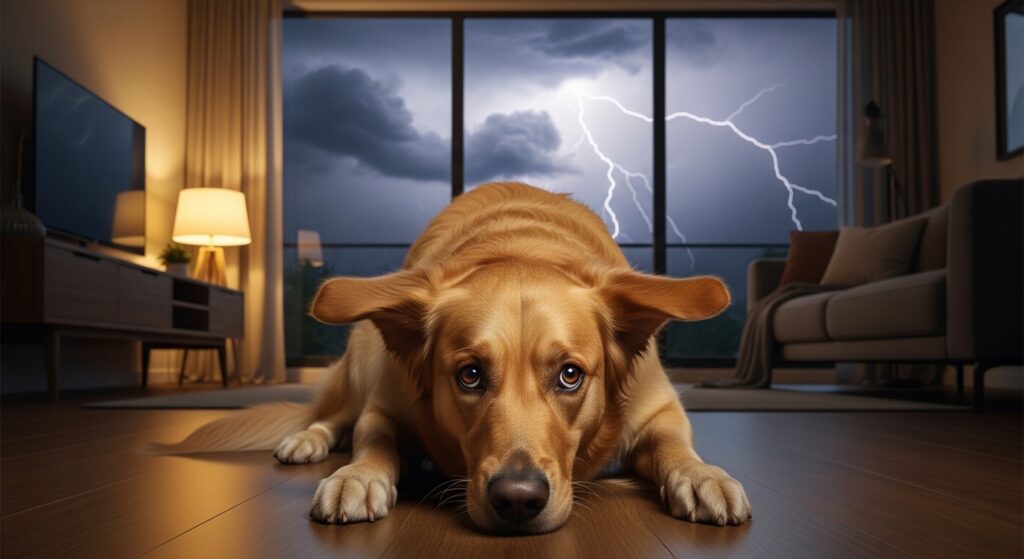
Noise phobia manifests across a spectrum of severity. Recognizing early warning signs allows for earlier intervention, which correlates strongly with better long-term outcomes.
Physical Symptoms
- Trembling or shaking uncontrollably
- Excessive panting and drooling beyond what the temperature warrants
- Dilated pupils and wide, ‘whale-eye’ expression (whites of eyes visible)
- Yawning repeatedly as a calming signal
- Tucked tail and flattened ears
- Involuntary urination or defecation
- Increased heart rate and rapid, shallow breathing
- Excessive licking of lips or paws
Behavioral Symptoms
- Seeking proximity to owners (hyper-attachment during noise events)
- Hiding under beds, in closets, behind toilets, or in dark corners
- Frantic pacing, circling, and inability to settle
- Refusing to eat, drink, or engage with toys during or after noise events
- Destructive behavior — chewing furniture, scratching doors or floors
- Attempting to escape through windows, doors, or fences
- Excessive barking, whining, or howling
- Sudden clinginess in a dog that is normally independent
Severe Panic Responses
In severe cases, dogs may self-injure in their attempts to escape or find shelter. Dogs have been documented breaking teeth on crates, shredding paws on flooring, and jumping through glass windows during severe noise panic. These extreme responses require immediate veterinary intervention and should never be managed with training alone.
⚠️ Warning: If your dog’s noise anxiety is escalating to self-injury or lasting several hours after the noise has stopped, consult your veterinarian immediately. Severe noise phobia is a medical condition, not merely a behavioral inconvenience.
4. Root Causes — Why Is Your Dog Afraid of Loud Noises?
Genetic Predisposition
Noise sensitivity has a documented heritable component. Studies of dog breeding lines have shown that offspring of noise-phobic parents are significantly more likely to develop the same condition. The neurobiological basis involves variations in serotonin transporter genes, dopamine receptor sensitivity, and baseline amygdala reactivity — the same neural pathways implicated in anxiety disorders across mammalian species. This means some dogs are quite literally wired to be more sound-sensitive from birth.
Lack of Early Socialization
The critical socialization window for puppies occurs between approximately 3 and 14 weeks of age. During this period, positive exposure to a diverse range of sounds, environments, and experiences shapes the dog’s baseline stress threshold for life. Puppies raised in quiet, isolated environments — such as puppy mills, rural farms without traffic noise, or overly protective home environments — frequently develop noise sensitivities because their brains never learned to process novel auditory stimuli as non-threatening. This is also highly relevant for understanding related behavioral challenges; for example, if you’ve noticed your puppy also has issues with outdoor environments, you may find this resource helpful:
For owners of young dogs dealing with related anxiety and outdoor behavioral challenges, understanding why your puppy won’t pee outside in cold weather can provide additional context on how environmental fear and discomfort manifest in puppies.
Past Traumatic Experience
A single frightening event paired with a loud noise can be enough to establish a lasting conditioned fear response — a process known in behavioral psychology as single-event learning. A dog who was hit by a car during a thunderstorm, punished while a smoke alarm sounded, or kenneled near construction may carry a deep acoustic fear association for years afterward. Trauma-based noise phobia tends to be more resistant to treatment and may require professional behavior modification support.
Medical Conditions That Amplify Sound Sensitivity
Several medical conditions are known to increase a dog’s sensitivity to sound or worsen pre-existing noise phobias. These include: hypothyroidism (which affects neurological function and emotional regulation), chronic pain conditions (which lower the threshold for all forms of stress), aging-related cognitive dysfunction syndrome (doggy dementia), hearing loss paradoxically increasing startle responses to audible frequencies, and audiogenic seizures in certain breeds. Always rule out medical causes before attributing noise fear purely to behavioral origins.
5. Dog Breeds Most Prone to Noise Sensitivity
While any dog can develop noise phobia, certain breeds are statistically overrepresented in clinical presentations:
Herding breeds: Border Collies, Australian Shepherds, Shelties — hypersensitivity may be an evolutionary byproduct of their heightened environmental awareness
Sporting dogs: Lagotto Romagnolos, Vizslas, German Shorthaired Pointers — gun shyness is a related phenomenon in working lines
Nordic/sled breeds: Siberian Huskies, Alaskan Malamutes
Toy breeds: Chihuahuas, Yorkshire Terriers — partially due to smaller body mass amplifying the physiological impact of adrenaline
Mixed breeds with uncertain history: may carry genetic anxiety predispositions from multiple lineages
It is important to note that breed is a risk factor, not a determinant. Thousands of Border Collies live comfortably through thunderstorms, and individual variation within any breed is enormous.
6. How Loud Noises Affect the Canine Brain and Nervous System
Fight, Flight, or Freeze Response
When a dog perceives a loud noise as threatening, the amygdala — the brain’s alarm center — fires an emergency signal through the hypothalamic-pituitary-adrenal (HPA) axis. This triggers a cascade of neurological and physiological events in milliseconds. The dog’s sympathetic nervous system activates: pupils dilate, heart rate accelerates, blood is redirected from digestive organs to muscles, and the body is primed for survival action. This is the fight, flight, or freeze response in action. In a noise-phobic dog, this system is essentially hijacked by a perceived threat that carries no actual danger — the brain cannot distinguish between a real predator and a firework.
The Role of Cortisol and Adrenaline
The stress hormones cortisol and adrenaline (epinephrine) flood the bloodstream during a panic response. In acute situations, this is adaptive — the hormones fuel the response and then dissipate. However, in chronically noise-phobic dogs who are frequently triggered, elevated cortisol levels can become sustained. Chronic cortisol elevation suppresses the immune system, disrupts sleep architecture, impairs learning and memory formation, accelerates cellular aging, and can contribute to gastrointestinal dysfunction. This is why noise phobia is not ‘just behavioral’ — it is a whole-body physiological stress response with real health consequences.
For a deeper understanding of the neuroscience of fear in companion animals, the ASPCA’s professional resources on animal behavior and anxiety provide an excellent scientific foundation.
7. Proven Training Techniques: Desensitization and Counter-Conditioning
Systematic desensitization combined with counter-conditioning (DS/CC) represents the gold standard in behavior modification for noise phobia in dogs. This approach has the strongest scientific evidence base of any behavioral intervention for noise fear.
Step-by-Step Desensitization Protocol
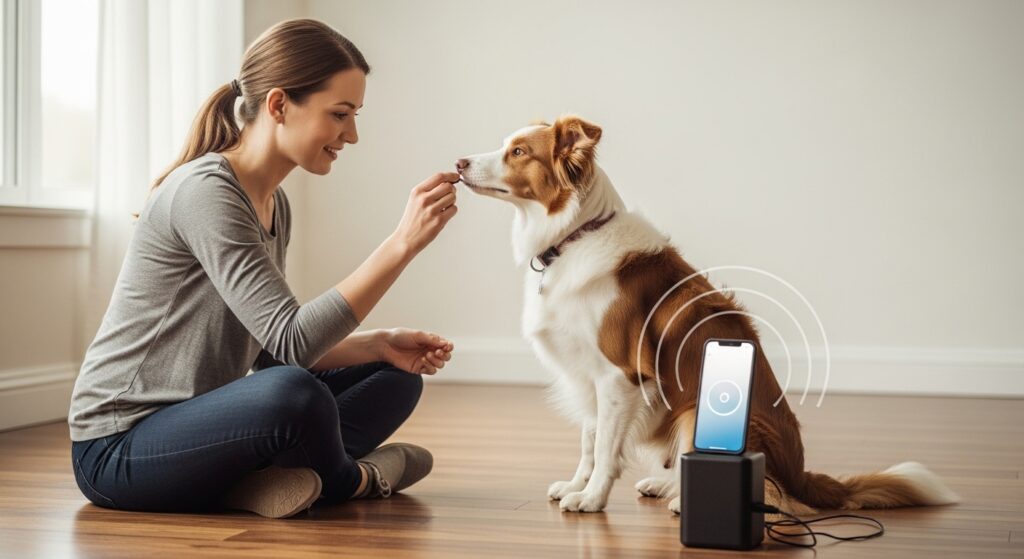
Step 1 — Identify the fear hierarchy: Work with your dog or a certified behaviorist to identify which sounds trigger fear and at what volume threshold anxiety begins.
Step 2 — Source high-quality audio recordings: Use professional sound therapy recordings (not YouTube videos with inconsistent quality). Apps like ‘Sounds Scary’ by Dogs Trust or the iCalmDog system offer clinically designed audio progressions.
Step 3 — Begin at a sub-threshold level: Play the recording at a volume so low that your dog shows no anxiety response — perhaps just a brief ear flick. This is your starting baseline.
Step 4 — Pair the sound with positive associations: While the sound plays at sub-threshold volume, deliver high-value treats, engage in play, or provide praise. The goal is to rewire the emotional association from ‘threat signal’ to ‘treat signal.’
Step 5 — Increment slowly: Over days and weeks (not hours), gradually increase the volume in small steps. Never advance to the next level if your dog is showing anxiety at the current level.
Step 6 — Generalize: Practice with different recordings of the same sound type, in different rooms, and eventually in contexts that mimic real-world conditions.
Patience Key: Effective desensitization typically takes 4–12 weeks of consistent daily practice. Rushing the process almost always causes regression. Slow, steady progress is far more effective than intensive crash-course sessions.
Counter-Conditioning Methods
Counter-conditioning works on a classical conditioning model — the same mechanism by which Pavlov’s dogs learned to associate a bell with food. The objective is to change the dog’s emotional response to the trigger from negative (fear) to positive (anticipation of reward). Effective counter-conditioning techniques include: feeding all meals during low-level sound exposure sessions, engaging in the dog’s favorite game precisely when a triggering sound begins, using clicker training to mark calm behavior during sound events, and practicing ‘noise parties’ where sounds are accompanied by celebrations, treats, and play.
Using Sound Therapy for Dogs
Species-appropriate music and sound therapy have demonstrated clinical efficacy in reducing canine anxiety markers in shelter and home settings. Research by Dr. Deborah Wells at Queen’s University Belfast found that classical music — specifically slower tempos with simple arrangements — produced measurable behavioral and physiological calming effects in dogs compared to heavy metal, pop, or silence. Applications of this finding include playing calming music consistently before and during potential noise events to establish a positive acoustic environment that partially masks triggering sounds.
8. Creating a Safe Space for Your Noise-Anxious Dog
Choosing the Right Safe Zone
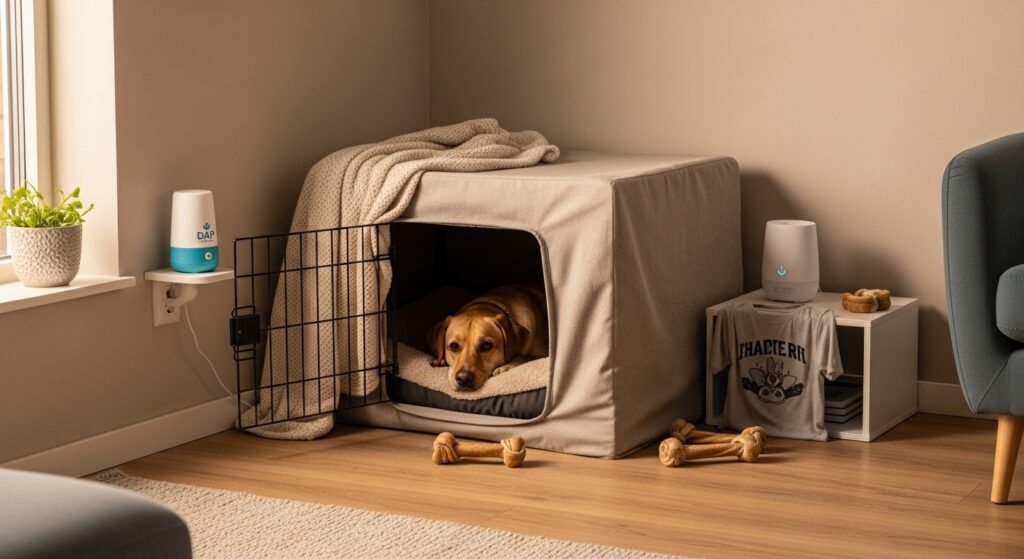
Every noise-phobic dog benefits from having a designated safe space — a specific location they can reliably retreat to during noise events. This space works best when it is chosen partly by the dog (observe where they naturally gravitate during storms), consistently available and never blocked off, located away from windows and exterior walls, equipped with familiar bedding that carries the dog’s and owner’s scent, partially enclosed to provide the den-like security that activates the dog’s innate comfort behaviors, and associated exclusively with positive experiences through regular treat scattering and calm interactions in that space during non-stressful times.
Calming Tools and Accessories
Anxiety wraps (ThunderShirt, Comfort Zone wraps): Apply gentle, constant pressure to the dog’s torso, activating calming proprioceptive pathways similar to swaddling in human infants. Effective for approximately 80% of dogs with noise sensitivity when properly fitted.
White noise machines: Masking unpredictable triggering sounds with consistent background noise reduces the startle effect and provides acoustic insulation.
Dog-appeasing pheromone (DAP) diffusers (Adaptil): Synthetic analog of the calming pheromone produced by nursing mother dogs. Clinical trials show a significant reduction in anxiety behaviors with consistent use.
Anti-static coats: For dogs with thunderstorm phobia specifically, anti-static metallic fabric capes can reduce static electricity buildup, addressing one of thunder’s multi-sensory triggers.
Calming caps and eye covers: For highly visual dogs, reducing visual stimulation (lightning flashes, chaotic movement) during noise events can decrease overall sensory overload.
9. Veterinary and Medical Interventions

Behavioral modification alone is insufficient for many dogs with moderate-to-severe noise phobia. Veterinary intervention is not a last resort — it is often the most compassionate and effective first line of treatment, particularly when anxiety is severe enough to constitute suffering.
Anti-Anxiety Medications
Veterinary pharmacological options fall into two categories: situational medications used on an event-by-event basis, and daily maintenance medications for dogs with pervasive, year-round anxiety. Situational options include trazodone, alprazolam (Xanax), clonidine, and Sileo (dexmedetomidine oromucosal gel — the first FDA-approved medication specifically for canine noise aversion). Daily maintenance medications include fluoxetine (Prozac) and clomipramine, both of which modulate serotonin levels to reduce baseline anxiety reactivity. These medications are most effective when combined with behavior modification protocols, not used as standalone treatments.
Natural Supplements and Pheromone Therapy
For dogs with mild-to-moderate noise sensitivity or owners preferring non-pharmaceutical approaches, several evidence-supported natural interventions exist:
Melatonin: Supports sleep regulation and has mild anxiolytic (anti-anxiety) properties. Safe for short-term use in most dogs at appropriate doses.
L-theanine (Anxitane): An amino acid found in green tea that promotes relaxation without sedation by increasing GABA, serotonin, and dopamine activity.
Zylkene (alpha-casozepine): A casein-derived supplement from cow’s milk that has demonstrated efficacy in reducing noise phobia symptoms in clinical studies.
Adaptil (DAP) collars and diffusers: See Section 8. Available in collar, diffuser, and spray formats for flexible application.
CBD products: Preliminary research is promising, but large-scale clinical trials in dogs remain limited. Consult a veterinarian before use and select products with Certificates of Analysis confirming purity.
10. Common Mistakes Dog Owners Make When Dealing With Noise Fear
Even well-intentioned owners often inadvertently reinforce fear or miss key intervention opportunities. Avoiding these common errors can significantly improve outcomes.
Mistake 1 — Punishment: Punishing a frightened dog for anxiety-driven behaviors (trembling, hiding, barking) is not only ineffective but also actively worsens noise phobia by adding stress and eroding trust. Fear is an involuntary physiological response, not a choice.
Mistake 2 — Forced exposure: Flooding a dog with the feared stimulus at full intensity — placing them outside during fireworks to ‘get used to it’ — causes profound psychological trauma and can permanently worsen the phobia.
Mistake 3 — Over-reassurance: A subtle but important point: repeatedly and effusively reassuring a panicking dog (‘It’s okay, it’s okay, baby!’) can inadvertently communicate that there IS something to worry about. Instead, model calm, matter-of-fact behavior and provide comfort through physical presence and gentle contact without emotionally amplifying the event.
Mistake 4 — Waiting too long to seek help: Noise phobia is progressive. Many owners wait years before seeking veterinary or behavioral support, by which point the phobia is deeply entrenched and treatment is more complex. Early intervention consistently produces better outcomes.
Mistake 5 — Inconsistency: Desensitization only works with consistent, structured practice. Ad hoc exposure without protocol structure does not build resilience — it simply exposes the dog to repeated stress without the scaffolding needed for learning.
Mistake 6 — Ignoring storm prediction tools: Being caught unprepared by a sudden storm means your dog panics before any calming interventions are in place. Weather apps, barometric pressure sensors, and scheduled medication administration (for dogs on situational medications) require proactive planning.
11. Long-Term Management and Prevention
Managing canine noise phobia is often a long-term commitment rather than a one-time fix. Sustainable management combines ongoing behavior modification, environmental modifications, veterinary support, and owner education.
Maintain desensitization practice year-round: Many owners only practice during ‘season’ (thunderstorm season, holiday periods). Noise phobia management should be part of the dog’s regular routine, with brief daily sound exposure sessions maintaining and building on gains.
Track triggers and responses: Keep a simple anxiety diary noting triggers, response severity, interventions used, and outcomes. This data is invaluable for veterinarians and behaviorists adjusting treatment plans.
Annual veterinary behavioral check-ins: Schedule dedicated behavioral health appointments — not just physical wellness visits — to review anxiety management as the dog ages. Noise sensitivity commonly worsens in senior dogs due to cognitive changes.
Consider professional behavioral support: A Certified Applied Animal Behaviorist (CAAB) or Veterinary Behaviorist (DACVB) offers the highest level of expertise for complex cases. Board-certified veterinary behaviorists hold medical degrees and can prescribe medications alongside designing individualized behavior modification programs.
Prevention in puppies: If you have a young puppy, invest in comprehensive puppy socialization that includes deliberate, positive exposure to household appliances, TV sounds, weather sounds (via recordings), and unexpected loud noises at low intensities. The investment of a few weeks of socialization during the critical window pays dividends in behavioral stability for the dog’s entire life.
Advocate for your dog at social events: Not every holiday gathering requires your noise-phobic dog’s attendance. Creating a calm, consistent home environment during high-noise seasons is a profound act of advocacy for your dog’s well-being.