
Summary: Cold weather can make potty training feel like an uphill battle. When a puppy refuses to urinate outside during winter or chilly temperatures, it is usually driven by a combination of sensory discomfort, fear, immature bladder control, and a lack of positive association with outdoor elimination. This comprehensive guide explains every reason behind cold-weather potty refusal, covers the psychology and physiology of puppies in low temperatures, and delivers actionable training strategies, gear recommendations, and troubleshooting tips to help you build a reliable outdoor bathroom routine — no matter the season.
Table of Contents
- Understanding Why Puppies Refuse to Pee Outside in Cold Weather
- How Cold Temperature Affects a Puppy’s Body and Bladder
- Common Signs Your Puppy Is Too Cold to Go Potty Outside
- Best Practices for Cold-Weather Potty Training
- Gear and Clothing That Help Puppies Tolerate Cold
- Indoor Potty Alternatives for Extreme Weather
- Breed-Specific Cold Tolerance During Potty Training
- Troubleshooting: When Your Puppy Holds It All Day in Winter
- Building Long-Term Outdoor Potty Habits Despite Cold Weather
- When to Call the Vet
1. Understanding Why Puppies Refuse to Pee Outside in Cold Weather
The Sensory Overload of Cold Ground and Air
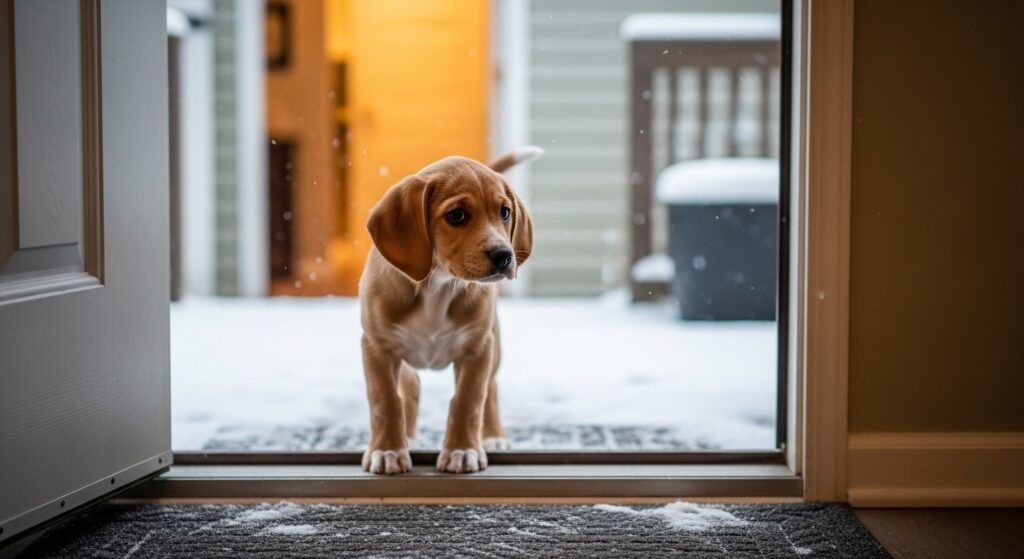
Puppies experience the world almost entirely through their senses. When the temperature drops, every element of the outdoor environment changes — the ground feels different underfoot (cold concrete, wet grass, icy patches, snow), the air smells sharper, and the wind creates an entirely new tactile experience. For a puppy still building its environmental vocabulary, these sudden sensory changes can trigger what behaviorists call neophobia — a fear of unfamiliar stimuli — which causes the puppy to refuse the behavior it has been trained to perform.
The cold surface of grass or pavement directly stimulates the paw’s thermoreceptors (temperature-sensitive nerve endings), sending a strong “retreat” signal to the brain. This neurological response is deeply instinctive and very difficult for a young dog to override without significant positive conditioning.
Negative Association and Classical Conditioning
Classical conditioning plays a massive role in potty training. If a puppy has experienced discomfort, shock, or fear during outdoor elimination in cold weather — even just once — it may begin to pair the act of going outside to pee with that negative feeling. Over time, this creates an avoidance response where the puppy holds its bladder indoors, eliminating the discomfort by simply refusing to go out.
This is the same mechanism behind puppy growling when picked up: a prior negative experience becomes encoded as a behavioral response that seems confusing without context.
The Distraction Factor in Cold Environments
Cold weather also intensifies scents, creates new visual stimuli like snow and frost, and produces sounds (crunching ice, wind, distant heating units) that grab a puppy’s attention away from the task at hand. This attentional distraction means even a puppy that is not particularly cold-sensitive may struggle to focus on the act of elimination when the environment is novel and stimulating.
2. How Cold Temperature Affects a Puppy’s Body and Bladder
Immature Thermoregulation in Young Dogs
Puppies under 12 weeks old have an underdeveloped thermoregulatory system. Unlike adult dogs, they cannot efficiently maintain their core body temperature in cold conditions. When a puppy’s core temperature drops even slightly, the body responds by diverting blood flow to the core organs and away from the extremities — a physiological response called peripheral vasoconstriction. This makes paws, ears, and the nose even more temperature-sensitive than they already are.
The Bladder-Cold Connection: Urinary Urgency vs. Behavioral Refusal
Cold temperatures can actually increase urinary urgency in dogs (and humans). The cold stimulates the kidneys to produce more urine and reduces the stretch capacity of the bladder, meaning a puppy may physically need to urinate more often in cold weather — yet behaviorally refuse to do so outside. This paradox — biological urgency combined with behavioral refusal — is why so many owners report their puppy holding it outside for 20 minutes only to immediately eliminate the moment it steps back indoors.
Hypothermia Risk in Small and Young Puppies
Small breed puppies (Chihuahuas, Toy Poodles, Maltese) and very young puppies of any breed face a genuine hypothermia risk in cold temperatures. Signs of early hypothermia include shivering, lethargy, reluctance to move, and whimpering. When a puppy is experiencing the earliest stages of heat loss, eliminating outdoors simply does not register as a priority — survival instinct takes over entirely.
3. Common Signs Your Puppy Is Too Cold to Go Potty Outside
Physical Indicators of Cold Discomfort
- Shivering or trembling immediately upon exiting the house
- Lifting paws repeatedly or refusing to walk on cold surfaces
- Tucking the tail tightly between the legs
- Hunching the back and lowering the head (protective posture)
- Whining, crying, or barking at the door to come back inside
Behavioral Refusal Patterns
- Sitting or standing at the door without moving toward the grass
- Running back toward the house within seconds of going out
- Squatting briefly but not urinating (incomplete or false attempts)
- Eliminating immediately upon re-entering the warm house
- Losing all previously established potty-training cues in cold weather
These behavioral patterns are related to stress communication in dogs. Much like why dogs bark at nothing outside at night, many of these reactions are driven by sensory overstimulation and anxiety rather than disobedience.
4. Best Practices for Cold-Weather Potty Training
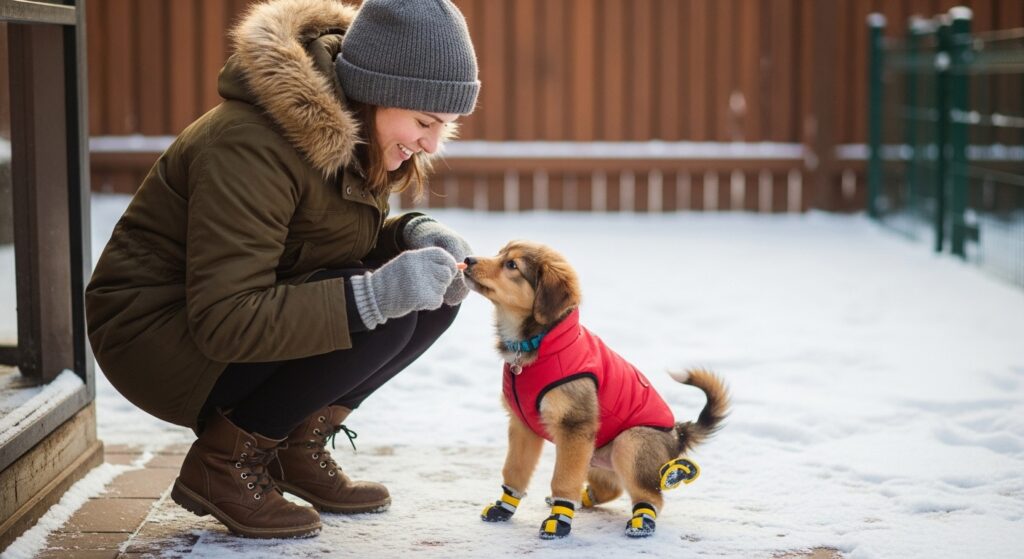
Create a Designated Potty Spot Sheltered from Wind and Precipitation
One of the most effective structural solutions is creating a designated elimination zone that is partially sheltered from wind, precipitation, and extreme cold. Options include:
- A spot under an overhang, porch, or awning
- A section of the yard is cleared of snow and covered with a tarp or temporary canopy
- A gravel or mulch patch (these absorb less cold than concrete or frozen grass)
- An area near a south-facing wall that receives maximum sunlight during winter days
When your puppy consistently associates a specific, comfortable location with toileting, the environmental familiarity reduces neophobia and lowers the threshold for elimination.
Use High-Value Rewards Immediately After Successful Outdoor Elimination
The timing of positive reinforcement is critical in operant conditioning. Reward your puppy within 1–2 seconds of the final squat — not after it comes back inside. This requires you to stand with the puppy during every potty trip and have treats accessible (a treat pouch clipped to your coat works well). High-value rewards like small pieces of chicken, cheese, or commercial training treats are significantly more effective in cold weather than standard kibble because their motivational salience overcomes the competing aversive stimulus of the cold.
Establish a Consistent Potty Schedule
Biological regularity is one of the most underutilized tools in cold-weather potty training. Puppies generally need to eliminate:
- Within 15 minutes of waking up
- Within 20 minutes of eating or drinking
- After vigorous play sessions
- Every 1–2 hours for puppies under 12 weeks; every 2–3 hours for puppies aged 3–6 months
Sticking to these windows reduces the chance that your puppy is both cold AND urgently needing to go at the same time — a combination that almost always results in indoor accidents.
Use a Potty Command and Pre-Loading the Cue
Teaching a verbal potty cue (“go potty,” “hurry up,” “outside”) can dramatically reduce the time your puppy spends outside in the cold before eliminating. Pre-loading this cue involves saying the command the moment your puppy begins to squat (during warm-weather training), then gradually shifting the command earlier in the sequence until saying the phrase alone begins to stimulate the elimination behavior. This technique, grounded in stimulus control training, gives your puppy a clear behavioral anchor that overrides environmental distractions.
Keep Potty Trips Short and Purposeful in Cold Temperatures
Long, leisurely cold-weather potty trips are counterproductive. The longer your puppy stands in the cold without eliminating, the more uncomfortable it becomes — which reinforces avoidance. Instead, go out with clear intent: walk to the potty spot, give the cue, wait 3–5 minutes, and if nothing happens, go back inside and try again in 10–15 minutes. This structured approach prevents the cold exposure from becoming a prolonged aversive event.
5. Gear and Clothing That Help Puppies Tolerate Cold
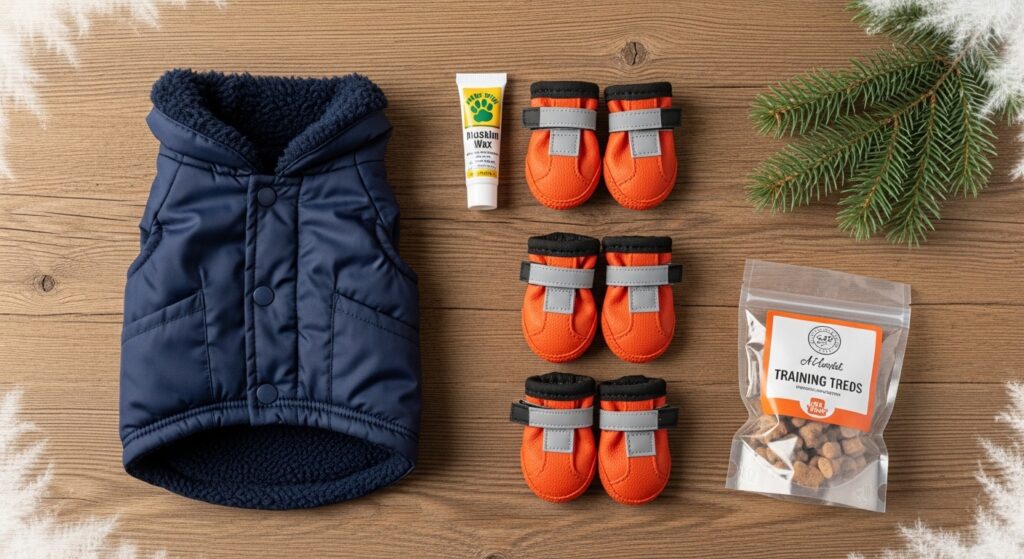
Dog Booties and Paw Protection
Paw discomfort is one of the primary reasons puppies refuse to stand outside in cold weather. Dog booties create a thermal and physical barrier between paw pads and cold, icy, or salt-covered surfaces. Introduce booties gradually using desensitization:
- Let the puppy sniff and investigate the booties indoors
- Touch paws with the booties without putting them on (treat and praise)
- Put on one bootie for a few seconds (treat heavily)
- Gradually increase duration and number of booties over several days
Alternatively, paw balm (musher’s wax) provides a protective coating that reduces cold sensation and protects against chemical ice melt products, which can cause painful burns on paw pads.
Puppy Jackets and Sweaters
Small breeds, short-haired breeds, and very young puppies benefit significantly from insulating outerwear during winter potty trips. A well-fitted dog jacket should:
- Cover from the base of the neck to the base of the tail
- Allow a full range of motion for squatting
- Be waterproof or water-resistant for snowy or wet conditions
- Be easy to put on quickly (velcro closures are ideal for potty-trip speed)
Heating Your Potty Area
For persistent refusal cases, particularly in very cold climates, some owners install outdoor heat lamps, heated mats, or battery-powered warming pads in the designated potty area. While this is an investment, it eliminates the primary sensory barrier in a matter of days.
6. Indoor Potty Alternatives for Extreme Weather
When It’s Acceptable to Use Indoor Solutions Temporarily
Indoor potty solutions should be used as short-term bridges, not permanent replacements, except in cases of extreme weather or genuine medical need. They are appropriate when:
- Temperatures fall below the safe threshold for your puppy’s breed and size
- Precipitation makes brief outdoor trips hazardous
- A puppy is recovering from illness and cannot regulate its temperature
- The puppy is under 8 weeks old and not yet fully vaccinated
Pee Pads: Proper Placement and Transition Strategy
Pee pads, when used correctly, do not undermine outdoor potty training. The key is gradual geographic relocation:
- Start with the pad near the door you use for outdoor trips
- Move the pad incrementally closer to the door each day (a few inches)
- Once at the door, begin transitioning to a pad placed just outside the door on a covered porch
- Eventually, move to the designated outdoor spot
- Phase out the pad by making it smaller (fold it) over time
Grass Pads and Litter Boxes for Small Breeds
Real grass pads (fresh sod tray systems) maintain the scent and texture cue of outdoor elimination, making the transition back to outdoor potty training significantly smoother than synthetic pad use. Several subscription services deliver fresh sod trays designed specifically for indoor use.
7. Breed-Specific Cold Tolerance During Potty Training
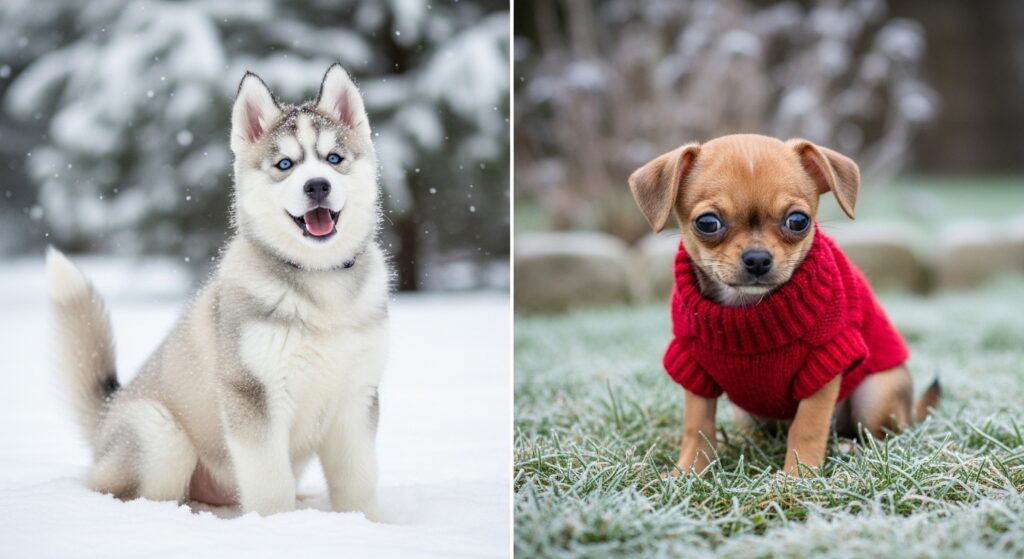
Cold-Tolerant Breeds (Minimal Special Accommodation Needed)
Breeds with double coats and high cold tolerance — including Siberian Huskies, Bernese Mountain Dogs, Alaskan Malamutes, Samoyeds, and Newfoundlands — are rarely deterred by cold weather during potty training. Their dense undercoat provides excellent insulation, and their paw pads are adapted to cold surfaces. These breeds typically require no special gear and may even prefer cold potty environments.
Cold-Sensitive Breeds (Require Proactive Management)
The following breeds require careful management in temperatures below 45°F (7°C):
- Toy and small breeds: Chihuahuas, Yorkshire Terriers, Maltese, Shih Tzus, Toy Poodles
- Short-coated breeds: Greyhounds, Boxers, Dobermans, Vizslas, Whippets
- Hairless breeds: Chinese Crested, Xoloitzcuintli
- Brachycephalic breeds: French Bulldogs, English Bulldogs, Pugs (compromised breathing in cold air adds another layer of distress)
For these breeds, outdoor potty trips in cold weather should be kept to under 5 minutes, and full insulating gear (jacket + booties) is strongly recommended.
8. Troubleshooting: When Your Puppy Holds It All Day in Winter
The “Won’t Go No Matter What” Problem
Some puppies reach a point of total cold-weather potty refusal, holding their bladder for dangerously long periods (4–6+ hours) rather than going outside. This is not a dominance or stubbornness issue — it is a deeply conditioned avoidance response combined with physiological discomfort. The training approach for this scenario requires resetting the entire outdoor potty association.
Reset Protocol:
- Go back to basics as if potty training from scratch
- Use an extremely high-value reward (rotisserie chicken, hot dog pieces, real cheese)
- Take the puppy out immediately after waking, before any indoor opportunity to eliminate
- Stand in the most sheltered, warmest part of the yard
- Give the potty command once, then wait in complete silence for up to 5 minutes
- The moment the puppy begins to squat, calmly say “yes” and prepare the reward
- Deliver the reward before the puppy is done — do not call them to you first
- Repeat this protocol at every single potty opportunity for 2–3 weeks
Managing Accidents Without Setting Back Training
If a puppy eliminates inside due to cold-weather refusal, the response should be neutral and clean — no punishment, no verbal correction, no dramatic reaction. Punishment after the fact (more than 2 seconds after the act) is neurologically disconnected from the behavior in a puppy’s brain and only serves to increase anxiety around elimination in general, which worsens the cold-weather refusal cycle. Use an enzymatic cleaner to fully neutralize the scent and prevent re-marking in the same spot.
9. Building Long-Term Outdoor Potty Habits Despite Cold Weather
Gradual Cold Desensitization Across Seasons
The ideal strategy for preventing cold-weather potty refusal is proactive desensitization, ideally beginning in late autumn before temperatures drop sharply. Take your puppy outside for brief positive experiences in mildly cool weather, gradually extending duration and decreasing temperature thresholds over weeks. This builds a positive emotional response to cool outdoor conditions before the association with extreme cold has a chance to form.
Enriching the Outdoor Environment
Puppies that find the outdoors generally enjoyable are more willing to go outside in uncomfortable conditions. Incorporate:
- Brief outdoor play sessions in all weather (use weather-appropriate gear)
- Feeding some meals outdoors (in mild conditions)
- Hiding treats in the yard for sniff-enrichment sessions
- Training sessions outdoors, so the outdoors becomes the primary site of reward delivery
This builds what behavioral science calls positive contextual association — the outdoors becomes a reliable predictor of good things, outweighing temporary discomfort.
Consistency Is the Non-Negotiable Element
No cold-weather potty training strategy works without consistency from the human side. Avoid the temptation to skip outdoor trips because it is cold outside. Every time a puppy successfully eliminates indoors due to human avoidance of cold trips, the indoor behavior is reinforced. Commit to going outside at every scheduled potty interval, regardless of weather, equipped with appropriate gear for both yourself and your puppy.
According to the American Kennel Club’s guidance on cold weather safety, small dogs and puppies should go out for shorter, more frequent potty trips in winter rather than fewer, longer ones — a strategy that balances elimination urgency with cold exposure duration.
10. When to Call the Vet
Medical Conditions That Mimic Cold-Weather Potty Refusal
If your puppy’s potty refusal is sudden, severe, or accompanied by other symptoms, a medical evaluation is warranted. Conditions that can present as elimination avoidance include:
- Urinary tract infection (UTI): painful urination may cause refusal to urinate in any setting
- Bladder stones or crystals: cause discomfort and frequency changes
- Orthopedic pain: cold weather worsens joint discomfort in puppies with developmental issues (hip dysplasia, OCD), making squatting painful
- Hormonal imbalances: rare in puppies but can affect bladder control
As noted by veterinary behaviorists at theCornell University College of Veterinary Medicine, sudden behavior changes around elimination in dogs that were previously reliable should always receive a veterinary workup before attributing the problem purely to environmental causes.
Signs That Warrant an Urgent Vet Visit
- Straining to urinate without producing any urine
- Blood in urine
- Whimpering or crying, specifically when attempting to urinate
- Going more than 8–10 hours without urinating
- Sudden incontinence or lack of any control after previously reliable training