
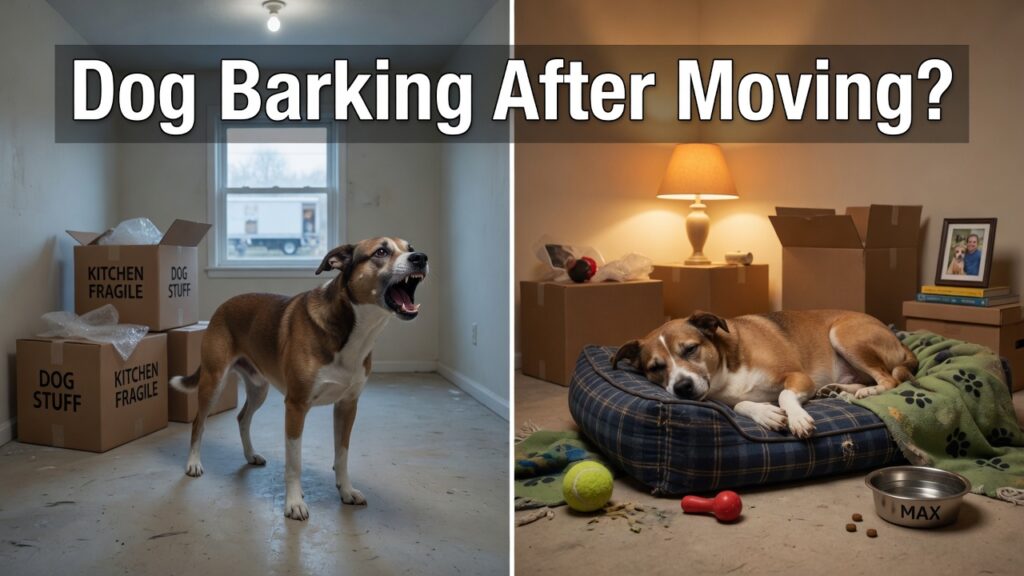

Summary: Moving to a new house is one of the most stressful life events — not just for humans, but for dogs too. When your dog won’t stop barking after a move, it’s almost always a signal of anxiety, territorial confusion, sensory overload, or disrupted routine. This comprehensive guide covers every aspect of why dogs bark excessively after relocation, how to diagnose the root cause, and science-backed training methods, environmental adjustments, and behavioral strategies to help your dog settle into their new home quickly and comfortably.
Table of Contents
- Why Do Dogs Bark After Moving to a New House?
- Types of Barking and What They Mean
- Signs Your Dog Is Stressed After Moving
- How to Stop Dog Barking After Moving: Training Methods
- Creating a Calm Environment in Your New Home
- Routine, Exercise, and Mental Stimulation
- When Barking Is Related to a Specific Trigger
- Natural Remedies and Calming Aids
- When to See a Veterinarian or Professional Trainer
- Preventing Barking Issues Before and During a Move
Why Do Dogs Bark After Moving to a New House?
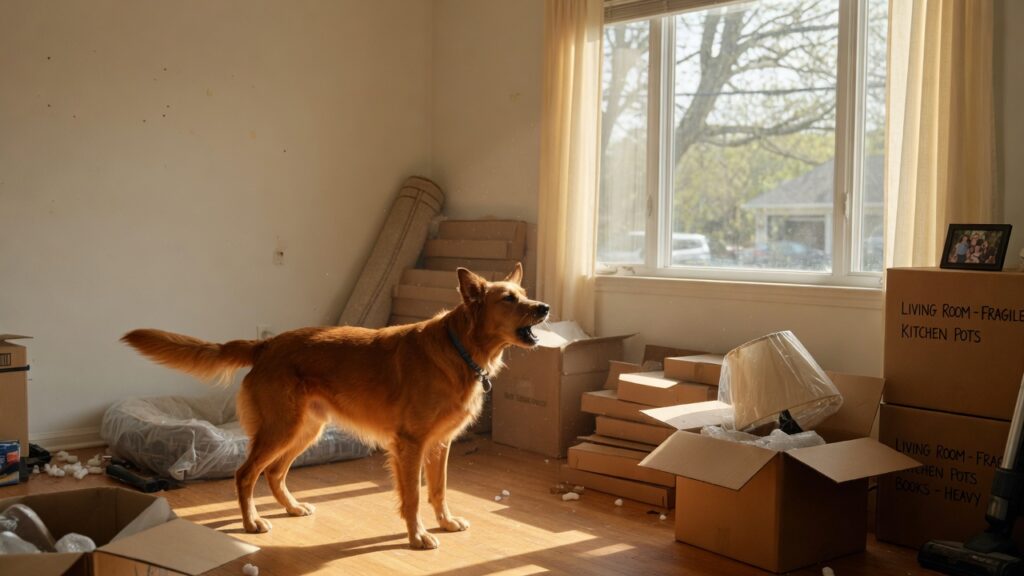
The Psychology of Canine Relocation Stress
Dogs are creatures of habit. Their entire sense of security is rooted in familiarity — familiar smells, familiar sounds, familiar sights, and familiar routines. When you move to a new house, every single one of these anchors is suddenly removed.
From a canine behavioral science perspective, this is called environmental displacement stress. The dog’s olfactory map — the complex mental model dogs build of their territory using scent — is completely wiped out. Your dog must now process thousands of new sensory inputs simultaneously: new carpet smells, unfamiliar neighborhood sounds, different traffic patterns, and the scent signatures of previous occupants and their pets.
The limbic system, which governs emotional responses in dogs (similar to how it functions in humans), goes into a heightened state of arousal. Cortisol levels — the primary stress hormone — rise significantly during and after a move. This neurological stress response is what drives many of the behavioral changes owners notice, including excessive barking, whining, pacing, and loss of appetite.
Common Triggers for Post-Move Barking
Understanding what specifically triggers your dog’s barking after moving is the first step toward solving it. The most common triggers include:
Unfamiliar sounds: New homes come with their own acoustic fingerprint. Different neighbors, different traffic, different HVAC systems, creaking pipes, and echoing hallways can all cause a dog to bark in response to sounds that feel threatening because they are unrecognized.
New sights through windows: A new layout means new windows with new views. Dogs that didn’t previously react to people walking by may now have a clear sightline to a busy street and bark at everything they see.
Scent of previous animals: If the previous tenants had pets, their scent may still be embedded in carpets, walls, and baseboards. Your dog may bark at these ghost scents, unable to locate the “intruder” they’re detecting.
Disrupted social hierarchy cues: In multi-pet households, dogs sometimes re-establish social order in a new space, leading to increased vocalizations between animals.
Separation anxiety escalation: Dogs that were borderline separation-anxious in their old home may tip over into full separation anxiety in a new environment because both the house and the absence of the owner become simultaneous stressors.
Nighttime vulnerabilities: Dogs are more alert at night in an unfamiliar space. Any sound — a tree branch, a neighbor’s door, settling house sounds — can trigger alarm barking.
How Long Does Post-Move Barking Last?
This is one of the most common questions owners ask, and the honest answer is: it depends on the dog. Most dogs begin to settle within two to four weeks of the move if their needs are being consistently met. However, some dogs — particularly those with pre-existing anxiety, rescue dogs with trauma histories, or older dogs — may take two to three months to fully adjust.
Research in canine ethology suggests that dogs need approximately 30 days to begin forming a new olfactory map of a territory. This means the first month is almost always the hardest. Owners who understand this timeline tend to respond with more patience, which itself reduces stress for the dog (since dogs are highly attuned to human emotional states via a process known as emotional contagion).
Types of Barking and What They Mean
Not all barking is the same. Identifying the type of barking your dog is doing will determine the most effective intervention strategy.
Alert Barking vs. Anxiety Barking
Alert barking is short, sharp, and typically stops once the perceived threat passes or the owner acknowledges it. The dog’s body language tends to be upright and forward-leaning, ears pricked, tail up. This is a normal canine communication behavior and is especially common in new environments where everything feels like a potential threat.
Anxiety barking is more persistent, often higher in pitch, and may escalate into whining or howling. The dog’s body language typically shows signs of stress: tucked tail, lowered posture, pinned ears, lip licking, yawning, and pacing. Anxiety barking doesn’t stop when the owner addresses it — in fact, it may increase if the owner responds with frustration or raised voices, which the dog interprets as confirmation that something is indeed wrong.
Territorial Barking in a New Environment
Dogs are hardwired to defend their territory. In a new home, the concept of “territory” is initially ambiguous. Your dog hasn’t yet established clear boundaries in their mental map. This can lead to hyper-vigilant territorial barking — barking at anyone who walks past the new property because the dog hasn’t yet established a sense of ownership or familiarity with the perimeter.
This type of barking is particularly common in breeds with strong guarding instincts: German Shepherds, Rottweilers, Dobermans, Belgian Malinois, and even smaller breeds like Miniature Schnauzers and Chihuahuas. It typically decreases as the dog becomes more comfortable with the new territory’s boundaries.
Attention-Seeking and Frustration Barking
Some dogs bark simply because the routine has changed and they want interaction. If walks are happening at different times, meals are being delayed, or the owner is busy with the unpacking process and spending less quality time with the dog, frustration barking can develop. This barking is often repetitive, rhythmic, and accompanied by the dog staring directly at the owner.
Separation Anxiety Barking After a Move
Separation anxiety is one of the most clinically significant post-move behavioral issues. A dog that previously tolerated being alone may suddenly bark, howl, or cry from the moment you leave until you return. This occurs because the dog has lost both the security of familiar surroundings AND the security of your presence simultaneously.
If you notice your dog shows distress (barking, destructive behavior, elimination indoors) specifically when you leave the new home, read more about understanding why your dog barks after eating and other anxiety-linked behaviors for a broader context on how stress manifests in dogs through vocalization.
Signs Your Dog Is Stressed After Moving
Physical Signs of Stress and Anxiety
Dogs communicate stress through a wide range of physical signals, many of which go unnoticed by owners. Watch for:
- Excessive panting not related to heat or exercise
- Trembling or shaking
- Dilated pupils
- Excessive shedding (stress-induced shedding is a well-documented phenomenon)
- Loss of appetite or sudden disinterest in treats they normally love
- Digestive upset — vomiting, diarrhea, or constipation can all be stress-related
- Excessive licking or chewing of paws or body
Behavioral Changes Beyond Barking
Beyond vocalization, stress after a move can manifest as:
- Regression in-house training — a previously house-trained dog may have accidents in the new home
- Destructive chewing
- Aggression or snapping (out of character)
- Hiding or withdrawal
- Hypervigilance — constantly scanning the environment, unable to relax
- Sleep disruptions — restlessness at night, inability to settle
How to Stop Dog Barking After Moving: Training Methods

Desensitization and Counter-Conditioning
Desensitization involves gradually exposing your dog to the triggers that cause barking at a low enough intensity that they don’t react. Counter-conditioning pairs this exposure with something positive — typically high-value treats — so the dog forms a new positive association with the trigger.
For example, if your dog barks at people walking past the window, start by having your dog in a room where they can barely see the street. Every time a person walks by, feed a high-value treat. Gradually, over days, allow more visual exposure as the dog remains calm. This process rewires the amygdala response — changing the dog’s automatic emotional reaction from threat to anticipation of reward.
The “Quiet” Command Training Method
Teaching a reliable “quiet” cue is one of the most practical tools for managing post-move barking. Counterintuitively, the most effective method first allows the bark:
- Let the dog bark two or three times.
- Calmly say “quiet” in a neutral tone.
- Show a treat close to the dog’s nose — the act of sniffing interrupts the barking.
- The instant the dog is quiet (even for a second), mark with “yes!” or a clicker and reward.
- Gradually extend the duration of quiet required before the reward.
Consistency is critical. Every family member must use the same cue word and the same procedure.
Positive Reinforcement Strategies
Punishment-based approaches (yelling, spray bottles, shock collars) are counterproductive in a post-move context. They add additional stress to an already stressed dog, and the dog is more likely to associate the punishment with the new environment itself rather than the barking behavior. This can create lasting negative associations with the new home.
Positive reinforcement — rewarding silence and calm behavior — builds the exact neurological pathways you want. When your dog is quietly observing the new environment without barking, randomly reward them with treats, praise, or a calm pet. This teaches the dog that calmness in this new environment pays off.
Crate Training in a New Home
If your dog is crate-trained, the crate can be a powerful safety anchor in a new environment. Place the crate in the same relative position it occupied in the old home, if possible. Add a recently worn item of your clothing to provide olfactory comfort. A crate provides the dog with a clearly defined, enclosed, safe space — reducing the hypervigilance that comes from feeling responsible for securing the entire new house.
If your dog is not crate-trained, consider introducing the crate now with a positive association program: feed meals in the crate, toss treats inside, and never use it as punishment.
Creating a Calm Environment in Your New Home
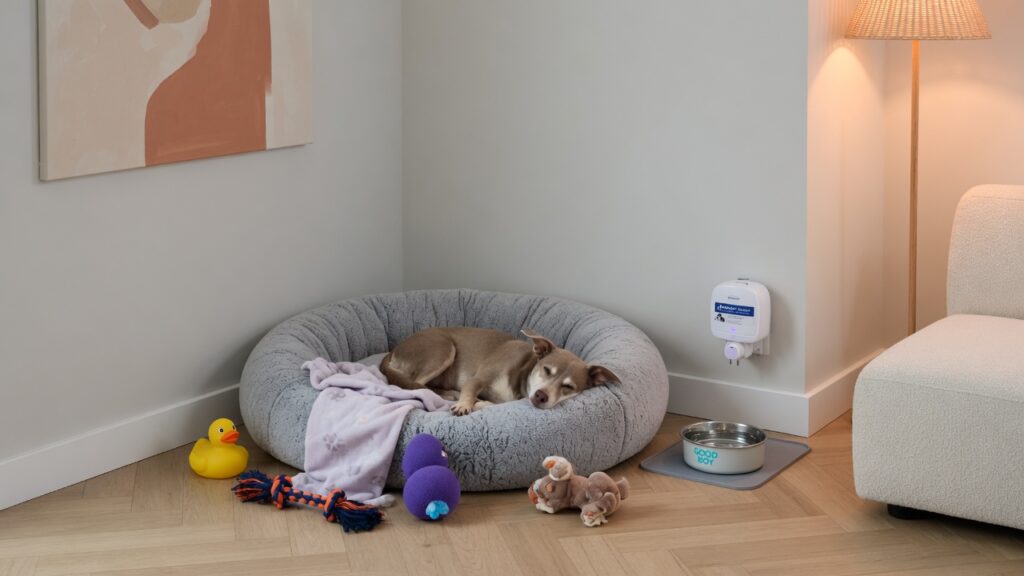
Setting Up a Safe Space for Your Dog
Before anything else in the new home is unpacked, set up your dog’s dedicated space. This should include:
- Their familiar bed or blanket (unwashed, so it carries their scent)
- Their water and food bowls are in the same relative position as before
- Their toys, especially comfort items
- A visual barrier from high-traffic areas if the dog is anxious
This “home base” gives the dog a place to retreat to when the stimulation of the new environment becomes overwhelming.
Using Familiar Scents and Objects
Scent is the most powerful calming tool available to dog owners. Dogs process the world primarily through smell, and familiar smells signal safety. Practical strategies include:
- Using the same laundry detergent on bedding
- Bringing the dog’s old, unwashed beds, blankets, and toys to the new home before moving day
- Using a DAP (Dog Appeasing Pheromone) diffuser, which mimics the natural pheromones a nursing mother produces
- Rubbing a soft cloth on the dog’s face and leaving it around the house to spread their own scent
Managing Noise and Visual Stimuli
In the early days, reduce the dog’s exposure to triggering stimuli. Use frosted window film or baby gates to limit window access if the dog is alert-barking at passersby. Use white noise machines or calming music near the dog’s resting area to muffle unfamiliar outdoor sounds. Keep the TV at a moderate volume — some dogs find it comforting, others find it stimulating.
Routine, Exercise, and Mental Stimulation
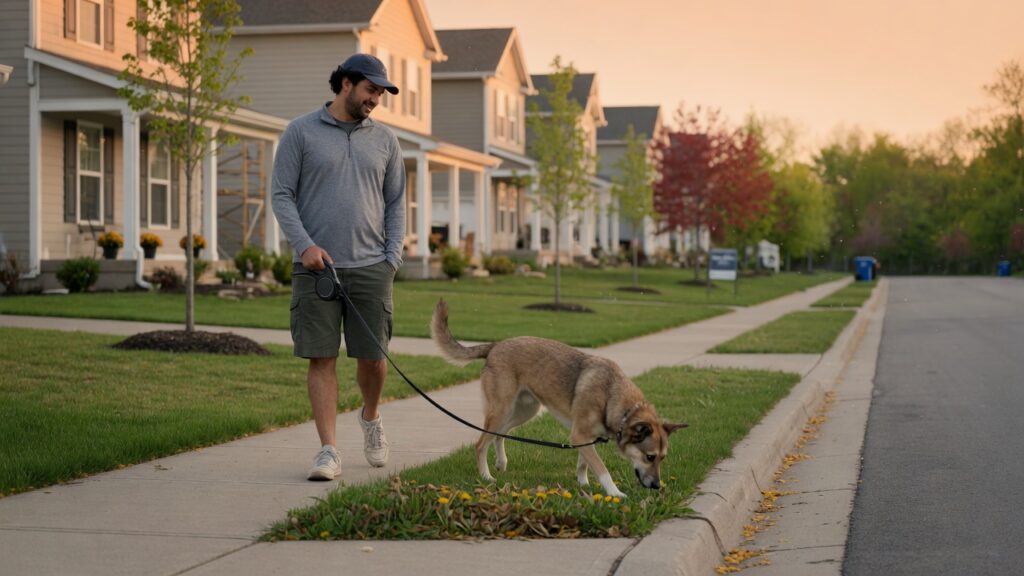
Re-Establishing a Daily Routine
Dogs thrive on predictability. The single most important thing you can do after a move is to re-establish your dog’s routine as quickly as possible. Feed at the same time. Walk at the same time. Sleep at the same time. Even in a completely unfamiliar environment, routine tells the dog that the world is still ordered and predictable.
Research in animal behavior science consistently shows that schedule consistency reduces cortisol levels in domestic dogs. Within as little as three days of a reinstated routine, measurable reductions in stress behaviors can be observed.
The Role of Physical Exercise in Reducing Barking
A tired dog is a quiet dog. Exercise is one of the most effective natural remedies for anxiety-related barking. Physical activity stimulates the production of serotonin and dopamine, neurotransmitters that regulate mood and reduce anxiety. Aim for:
- At least 30–60 minutes of active exercise per day (species and breed-dependent)
- Walks in the new neighborhood to help the dog build a new olfactory map through sniffing (allow ample sniff breaks)
- Off-leash play in a safely secured yard if available
Avoid high-adrenaline play right before periods of alone time, as this can heighten arousal rather than calm it.
Mental Enrichment Activities
Mental stimulation is as important as physical exercise, particularly for intelligent breeds. Provide:
- Puzzle feeders and Kong toys stuffed with high-value food
- Sniff mat feeding (spreads dry food in a snuffle mat, encouraging natural foraging)
- Training sessions — 5–10 minutes of obedience work provides both mental stimulation and reinforces the relationship with the owner
- Nose work games — hiding treats around the home engages the dog’s most powerful sense and builds positive associations with the new space
When Barking Is Related to a Specific Trigger
Barking at Neighbors, Strangers, or Other Dogs
If your dog is specifically barking at people or animals through fences or windows, use management plus desensitization. Management means blocking access to the trigger temporarily (closing blinds, using baby gates). Desensitization means structured, gradual exposure paired with counter-conditioning, as described earlier.
Meet your neighbors with your dog present (if the dog is not reactive) so the dog can learn that these new humans are non-threatening. Introduce yourself to other dog owners in the neighborhood — controlled, positive on-leash greetings with neighborhood dogs can significantly reduce territorial reactivity.
Nighttime Barking After Moving
Nighttime barking is particularly distressing for owners. Common causes include: sounds that the dog isn’t used to, anxiety about sleeping in an unfamiliar space, and lack of the “scent security” the old home provided after years of occupancy.
Solutions include:
- Moving the dog’s sleeping area closer to the owner’s bedroom temporarily
- Using a white noise machine at night
- Providing a calming chew or Kong before bedtime
- Ensuring adequate exercise during the day so the dog is physically tired at night
- Using pheromone diffusers in the sleeping area
Barking When Left Alone in the New House
If your dog is barking specifically when alone in the new home, this is likely separation anxiety compounded by environmental anxiety. Start with very short absences (five minutes) and gradually build up. Use an indoor camera to observe the dog’s behavior while absent. Consider whether the barking starts immediately upon your departure (classic separation anxiety) or has a delayed onset (environmental anxiety at being alone in the new space).
For dogs that have recently had medical procedures and are showing post-surgery barking and anxiety, you can also review why dogs bark excessively after surgery to understand how stress and disorientation compound each other.
Natural Remedies and Calming Aids
Calming Supplements and Pheromone Diffusers
Several evidence-backed options exist for reducing canine anxiety without medication:
- Adaptil (DAP) diffusers: Synthetic dog appeasing pheromone; clinical studies show measurable reductions in anxiety-related behavior
- L-theanine supplements: An amino acid that promotes calm alertness; available in products like Zylkene
- Melatonin: Can help with nighttime anxiety; consult your vet for appropriate dosing
- Calming chews with valerian root or chamomile: These herbal ingredients have mild sedative properties
For a broader overview of canine anxiety management,the American Kennel Club’s guide to dog anxiety offers evidence-based treatment approaches from veterinary behaviorists.
Thundershirts and Anxiety Wraps
Pressure wraps like the Thundershirt work on the principle of deep pressure stimulation — the same mechanism that makes swaddling calming for infants and that underlies weighted blankets for humans. Studies suggest that approximately 80% of dogs show measurable improvement in anxiety symptoms when wearing a correctly fitted anxiety wrap. They are most effective when introduced gradually before they are needed, not in the middle of a barking episode.
Music Therapy and White Noise for Dogs
Research from the Scottish SPCA and the University of Glasgow found that classical music and reggae are the genres most effective at reducing stress behaviors in dogs. More practically, dedicated dog-calming playlists (such as “Through a Dog’s Ear”) are specifically composed at frequencies and tempos calibrated to the canine auditory system.
White noise machines are particularly useful for masking the unpredictable sounds of a new neighborhood during the adjustment period.
When to See a Veterinarian or Professional Trainer
Medical Causes of Excessive Barking
Not all post-move barking is behavioral. Rule out medical causes if:
- The barking is sudden, intense, and doesn’t match the dog’s normal behavioral history
- The dog appears disoriented, confused, or shows signs of pain
- The dog is older (canine cognitive dysfunction syndrome — the equivalent of dementia — can cause nighttime vocalization and disorientation)
- There are other physical symptoms (limping, changes in appetite, digestive issues)
Your veterinarian may prescribe short-term anxiolytics (such as trazodone or alprazolam) to help a severely anxious dog through the initial adjustment period. These are not long-term solutions, but they can break the cycle of acute stress and allow behavioral training to take effect.
Working with a Certified Dog Behaviorist
If barking persists beyond 8–12 weeks or is severe enough to affect your quality of life or your neighbors’ quality of life, consult a Certified Applied Animal Behaviorist (CAAB) or a Board-Certified Veterinary Behaviorist (DACVB). These professionals can conduct a full behavioral assessment and develop an individualized behavior modification plan.
According to the Association of Professional Dog Trainers, choosing a trainer who uses force-free, positive reinforcement methods is critical — particularly for an already-stressed dog. Aversive training tools can permanently damage trust and worsen anxiety.
Preventing Barking Issues Before and During a Move
Pre-Move Preparation Tips
Prevention is far more effective than correction. If you know a move is coming:
- Begin desensitization exercises in the current home to any known triggers
- Maintain the dog’s routine as long as possible during the packing process
- Visit the new home several times with the dog before moving day if possible, letting them explore on leash
- Collect a scent sample from the new home (a cloth rubbed on surfaces) and place it near the dog’s bed a week before the move
- Update microchip and ID tag information before moving day
Moving Day Strategies
Moving day is often the peak of stress for both dogs and owners. Best practices include:
- Keep the dog away from the chaos. Arrange for the dog to stay with a trusted friend, family member, or boarding facility on moving day
- If the dog must be present, confine them to a single, quiet room with their familiar belongings and check in regularly
- Load the dog’s essentials last so their familiar items are the first unpacked at the new location
- Maintain calm energy — your dog reads your stress. Deep breaths and a calm demeanor communicate safety
- Feed the dog at its normal time, even on moving day — routine is grounding