
Summary: Dogs often bark excessively after surgery or vet visits due to a combination of post-anesthetic confusion, pain, anxiety, disorientation, and stress responses — a phenomenon veterinarians commonly call “emergence delirium” or post-operative vocalization. Understanding the neurological, behavioral, and emotional triggers behind this behavior helps pet owners respond appropriately, distinguish normal recovery reactions from warning signs, and apply the right management techniques to comfort their dog and restore calm during the healing process.
Table of Contents
- Why Dogs Bark After Surgery or Vet Visits
- Understanding Post-Anesthetic Dysphoria in Dogs
- Types of Barking After Surgery — What Each Means
- Immediate Post-Surgery Care to Reduce Barking
- Behavioral Techniques to Calm a Barking Dog After Vet Visits
- When Barking After Surgery Is a Red Flag
- Long-Term Solutions for Dogs That Bark After Every Vet Visit
- Special Cases: Barking After Specific Surgeries
- Frequently Asked Questions About Dog Barking After Surgery
- Meta Information, Image Prompts, and References
Why Dogs Bark After Surgery or Vet Visits
The Role of Anesthesia in Post-Surgical Barking
One of the most common — and least understood — reasons dogs bark after surgery is the direct neurological effect of anesthetic agents on the canine brain. General anesthesia works by temporarily suppressing the central nervous system, and as these drugs metabolize and clear from the body, the brain begins a gradual reactivation process. During this reactivation window, the cortical and subcortical regions responsible for emotional regulation, spatial awareness, and sensory integration do not come back online uniformly.
The result is a state of neurological imbalance where a dog’s limbic system — the emotional and instinct-driven brain center — may become hyperactive while the prefrontal processing areas remain sluggish. This creates a condition where dogs feel heightened emotional arousal but cannot contextualize it rationally. Barking becomes an outlet for that neural confusion.
Opioid-based analgesics used during surgery (such as morphine, fentanyl, or butorphanol) are known to produce dysphoric side effects in a subset of dogs. Dysphoria refers to a generalized state of unease, restlessness, and emotional distress — essentially the opposite of euphoria. These dogs may whine, howl, pace, pant, and bark repetitively in the hours following their procedure, not because they are in acute pain, but because their brain chemistry is temporarily altered.
Pain and Discomfort as a Vocalization Trigger
Beyond anesthesia, physical pain is a primary driver of post-surgical vocalization. Dogs communicate pain through vocalizations, including yelping, whining, and sustained barking. Unlike humans, dogs cannot verbally articulate where they hurt or how severely; barking is one of their primary communication tools. Nociceptive signals — the pain signals transmitted from injured or surgically manipulated tissues — travel through the spinal cord to the brain, triggering distress responses.
Post-operative pain presents differently depending on the type of surgery. Soft-tissue procedures (such as spays, tumor removals, or intestinal surgeries) tend to produce visceral or deep aching pain, while orthopedic surgeries create sharp, nociceptive pain associated with bone, joint, or ligament manipulation. Dogs recovering from dental extractions may experience oral hypersensitivity, making swallowing or jaw movement uncomfortable and prompting vocalization.
Anxiety, Stress, and Situational Fear
Even without anesthesia or surgery, a routine vet visit alone can trigger prolonged barking due to the accumulation of environmental stressors. Veterinary clinics are rich in fear-inducing stimuli: unfamiliar smells (antiseptics, other animals, fear pheromones), strange sounds (other animals vocalizing, equipment beeping), new people handling the dog’s body, and the disorientation of being transported from a familiar home environment.
The stress response in dogs involves activation of the hypothalamic-pituitary-adrenal (HPA) axis, leading to elevated cortisol and adrenaline levels. These hormones persist in the bloodstream for hours after the stressful event ends, keeping the dog in a state of sympathetic nervous system arousal (often called “fight or flight” mode). Barking in this context is both a stress displacement behavior and a communication attempt — the dog is expressing residual fear and trying to signal distress to its owner.
Just as dogs may exhibit unusual behaviors after feeding events — as discussed in our guide on Dog Barking After Eating — post-visit barking often reflects an internal state the dog cannot otherwise express.
Understanding Post-Anesthetic Dysphoria in Dogs
What Is Emergence Delirium?
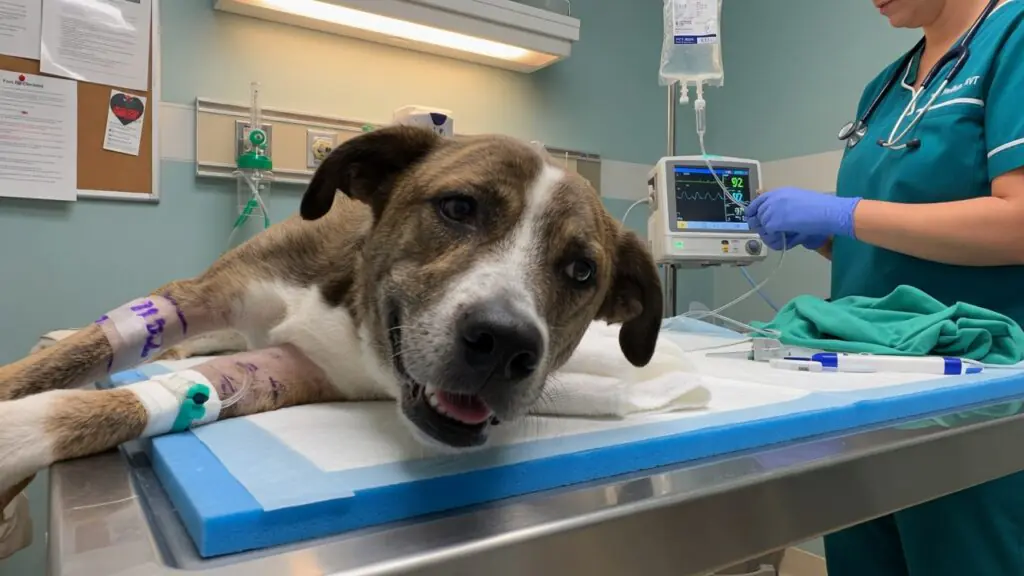
Emergence delirium (ED) — sometimes called post-anesthetic delirium or emergence agitation — is a recognized clinical condition in veterinary medicine where a patient coming out of anesthesia exhibits a state of acute, transient confusion, combativeness, inconsolable crying, or incoherent vocalization. While extensively studied in human pediatric anesthesia, it is equally documented in veterinary patients, particularly dogs.
During emergence delirium, a dog may appear to be awake but is not fully cognitively present. The animal may fail to recognize its owner, snap at familiar people, stumble despite appearing awake, or bark continuously without apparent cause. The behavior is involuntary — the dog is not “acting out” or being disobedient; it is neurologically impaired.
Certain anesthetic drugs are more commonly associated with ED. Ketamine dissociative anesthesia, in particular, is well-documented to cause dysphoric emergence in canines. Inhalation agents like isoflurane and sevoflurane can also cause agitation during recovery, although sevoflurane is associated with smoother wake-ups in many patients.
Common Behavioral Signs After Anesthesia
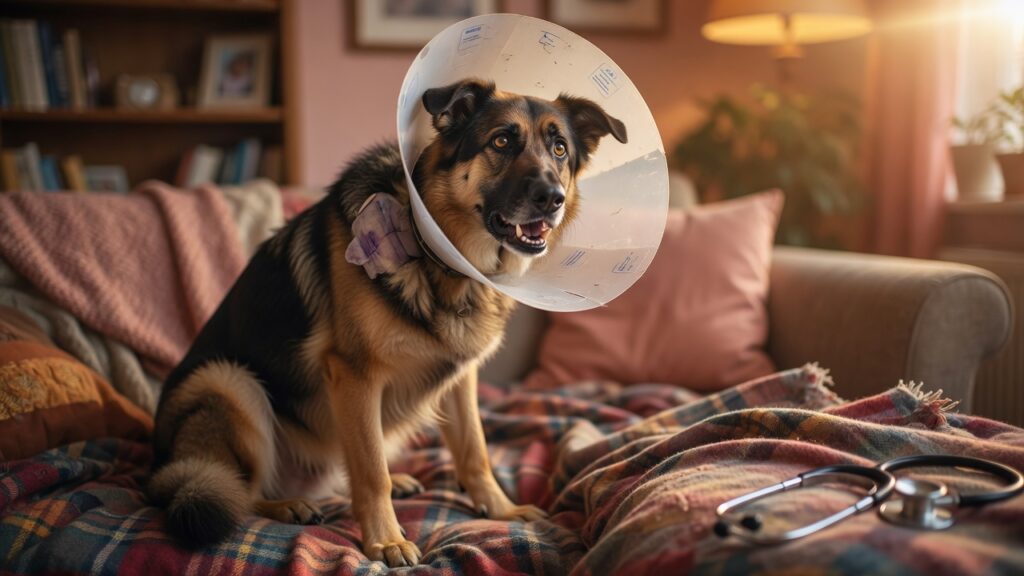
Owners bringing their dog home after surgery should be prepared for a range of behavioral manifestations during the recovery period. These include persistent vocalizations (barking, howling, whining), apparent disorientation or “drunken” gait (ataxia), attempting to stand before coordination has returned, excessive panting unrelated to temperature, and intermittent eye contact — as though the dog is looking through rather than at people.
Additional signs include hypersensitivity to touch (hyperalgesia or allodynia), where normal gentle contact produces exaggerated pain responses, and apparent emotional lability — rapid shifts from seeming calm to suddenly vocalizing with no obvious external trigger. Understanding these signs helps owners avoid misinterpreting normal recovery as a behavioral problem.
How Long Does Post-Anesthetic Barking Last?
For most dogs, the acute phase of post-anesthetic dysphoria resolves within two to six hours after returning home. The timeline depends on multiple factors: the type and dose of anesthetic agents used, the duration of the procedure, the dog’s age (senior dogs metabolize drugs more slowly), breed (brachycephalic breeds like bulldogs and pugs may have more prolonged recovery), liver and kidney function, and individual sensitivity to opioid or dissociative agents.
Dogs should show a clear improvement trajectory within 24 hours. If barking persists beyond 24 hours or intensifies over time rather than diminishing, this warrants a call to the veterinary clinic to assess for inadequately managed pain or post-surgical complications.
Types of Barking After Surgery — What Each Means
Pain Barking vs. Anxiety Barking
Distinguishing between pain-driven and anxiety-driven barking is essential for appropriate intervention. Pain barking tends to be reactive — it often peaks when the dog moves, is touched near the surgical site, or attempts to use an affected limb. The bark may be sharp, sudden, and high-pitched (a yelp transitioning into a bark), and is often accompanied by guarding behavior (refusing to allow access to the painful area), licking or biting at the incision site, reluctance to lie down, or a hunched posture.
Anxiety barking, by contrast, tends to be more sustained, rhythmic, and less connected to physical activity. An anxious dog may bark repeatedly while staring at the door, pacing, or seeking constant proximity to its owner. The vocalization is often accompanied by trembling, dilated pupils, yawning, lip-licking, and a tucked tail — classic canine stress signals documented in behavioral ethology.
Disoriented or Confused Barking
Dogs in a post-anesthetic confused state may bark seemingly at nothing — at walls, into space, or at their reflection. This is neurologically driven confusion rather than a response to external stimuli. The dog’s sensory-processing systems are temporarily misaligned, creating false perceptual inputs. This type of barking typically resolves faster than pain-associated vocalization once the anesthetic has fully cleared.
Attention-Seeking and Stress Vocalization
Some dogs learn, through prior experience, that vocalization at the vet or after coming home from the vet results in owner attention, physical comfort, or treats. This conditioned response is reinforced inadvertently when well-meaning owners immediately run to soothe every bark. While responding to genuine pain or distress is important, consistently rewarding anxiety barking can entrench the behavior across future vet visits.
Immediate Post-Surgery Care to Reduce Barking
Creating a Calm Recovery Environment
The physical environment plays a significant role in modulating post-surgical barking. Dogs should be recovered in a quiet, dimly lit room with minimal foot traffic and reduced noise stimulation. Avoid playing loud music, watching television, or allowing other pets and children to crowd around the recovering animal. Familiar bedding carrying the owner’s scent can provide olfactory comfort and help ground the dog’s sensory processing.
A crate or exercise pen can serve as a safe confinement space, preventing the dog from injuring itself while disoriented — but the space must feel secure and welcoming, not punitive. Covering the crate with a blanket to create a den-like atmosphere can activate natural denning instincts and reduce sensory overwhelm.
Pain Management Strategies Recommended by Vets
Effective pain control is the single most important intervention for post-surgical vocalization driven by discomfort. Veterinarians typically discharge surgical patients with a multimodal pain management protocol combining NSAIDs (non-steroidal anti-inflammatory drugs such as meloxicam or carprofen), opioid analgesics (tramadol or buprenorphine), and sometimes adjunct drugs like gabapentin for nerve pain.
It is critical that owners administer these medications exactly as prescribed and on schedule, rather than waiting for the dog to show signs of distress before dosing. Pre-emptive analgesia — keeping the dog comfortable rather than treating pain reactively — significantly reduces post-operative vocalization. According to guidelines from the American Animal Hospital Association (AAHA), a structured multi-modal approach to pain management leads to faster recovery and less behavioral disturbance in canine patients.
The Role of Physical Comfort and Warmth
Anesthesia disrupts thermoregulation — the body’s ability to maintain a stable internal temperature. Dogs recovering from surgery are often hypothermic (below normal body temperature), which can heighten discomfort and agitation. Providing a warm (not hot) blanket or heating pad set to low, placed under part of the dog’s bed so they can move away if needed, supports thermoregulation and physical comfort.
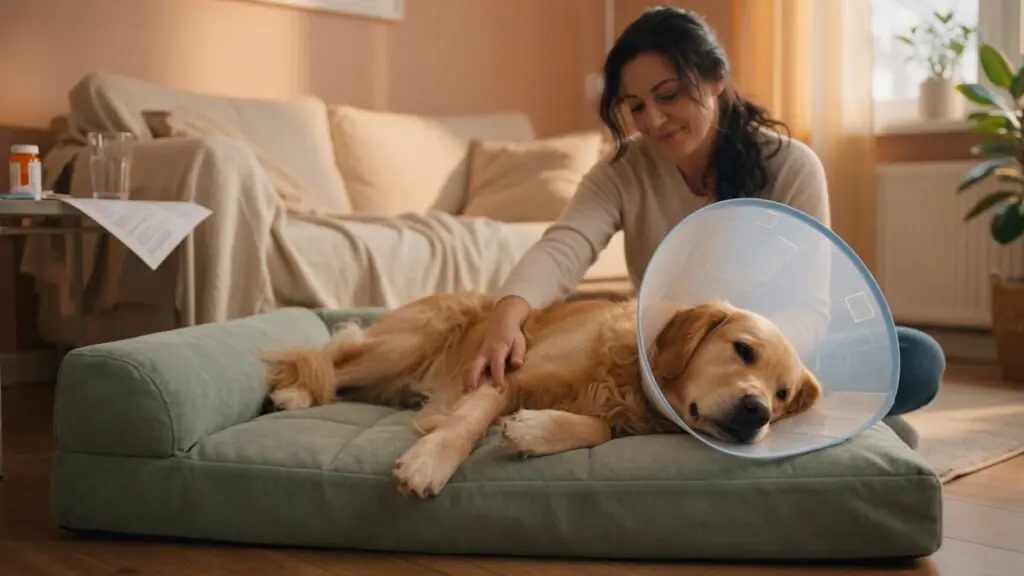
Gentle physical contact — simply sitting beside the dog and offering calm, unhurried presence — activates the parasympathetic nervous system through oxytocin release, helping down-regulate the stress response. Avoid overstimulating the dog with enthusiastic greetings or vigorous petting.
Behavioral Techniques to Calm a Barking Dog After Vet Visits

Reassurance Without Reinforcement
The balance between reassuring a distressed dog and inadvertently reinforcing its barking is nuanced. Acknowledging pain or fear with calm, low-tone verbal reassurance (“You’re okay, good girl/boy”) while maintaining composed body language does not reinforce barking in the way that frantic, high-energy responses do. What reinforces barking is excitement, dramatic soothing, or providing high-value rewards (treats, play) immediately upon vocalization.
Use a calm, predictable approach: settle beside the dog, use slow, long strokes along the body, and speak in a low, steady voice. This activates the dog’s social-bonding systems without creating an operant reward loop for the barking behavior.
Distraction and Enrichment Methods
For dogs that are ambulatory and not in acute pain, low-stimulation enrichment can redirect cognitive focus away from anxiety. Snuffle mats, lick mats loaded with peanut butter or pureed food, or a Kong stuffed with soft food provide olfactory engagement and naturally calming jaw activity — licking and chewing activate the parasympathetic nervous system in dogs.
Avoid fetch, tug, or any activity that risks strain on a surgical site. Always confirm with your veterinarian which activities are appropriate for the specific procedure and recovery stage.
Using Calming Aids and Natural Remedies
Several evidence-informed calming tools are appropriate for post-visit anxiety management. Dog-appeasing pheromone (DAP) products — marketed as Adaptil — release synthetic analogues of the calming pheromone produced by nursing mothers, and have demonstrated efficacy in reducing canine anxiety in clinical settings. They are available as collars, diffusers, and sprays.
Thundershirts (anxiety wraps) apply gentle, constant pressure to the dog’s torso, mimicking the calming effect of swaddling in infants. For some dogs, this significantly reduces generalized anxiety barking. Herbal supplements such as valerian root, L-theanine, or chamomile are sometimes recommended by holistic veterinarians, though evidence quality varies, and any supplement use should be discussed with a veterinarian.
When Barking After Surgery Is a Red Flag
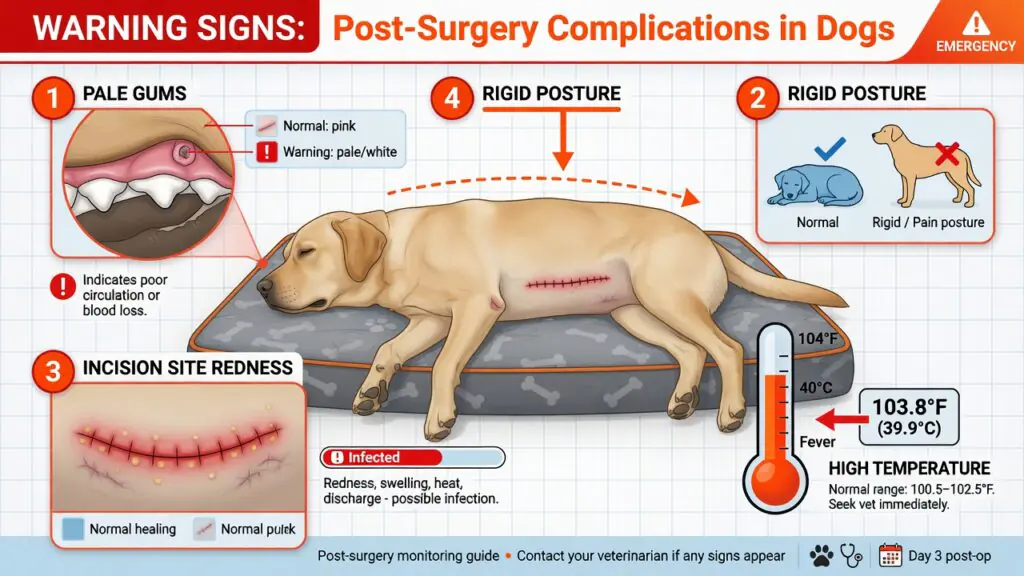
Signs That Warrant an Emergency Vet Call
While barking in the first 6–12 hours after surgery is typically normal, certain patterns and accompanying symptoms indicate a possible emergency. Contact your veterinarian immediately if the dog’s barking is increasing in intensity over time (rather than diminishing), if the dog cannot be roused from apparent sleep but is vocalizing (possible seizure activity), if the dog shows extreme difficulty breathing or excessive drooling (potential airway obstruction or allergic reaction to medications), or if the incision site appears to be bleeding, swollen beyond normal post-operative edema, or has an unusual discharge.
Additional emergency indicators include: pale or white gums (suggesting internal bleeding or poor circulation), rigid abdomen, inability to urinate or defecate within 24–48 hours post-surgery, or temperature below 37°C (99°F) or above 39.5°C (103°F).
Distinguishing Normal vs. Abnormal Recovery Vocalization
Normal recovery barking follows a trajectory of gradual improvement. The dog may be highly vocal in the first two to four hours, quieter in the evening, and largely returned to normal vocal patterns by the following day. Abnormal vocalization maintains or increases in intensity over 12–24 hours, is accompanied by physical deterioration, or has a screaming/distress quality that differs markedly from the dog’s baseline vocalization patterns.
The Merck Veterinary Manual provides detailed guidance on what constitutes expected post-operative recovery behavior in dogs and what constitutes cause for concern — a valuable resource for any dog owner navigating surgical aftercare.
Long-Term Solutions for Dogs That Bark After Every Vet Visit
Desensitization and Counter-Conditioning
For dogs with a pattern of severe anxiety and barking related to veterinary settings, systematic behavior modification is the most evidence-based long-term solution. Desensitization involves gradually exposing the dog to vet-related stimuli at sub-threshold levels — beginning with simply driving near the clinic, then entering the parking lot, then the lobby — until each level no longer triggers anxiety, before progressing to the next.
Counter-conditioning pairs each exposure to vet-related stimuli with highly valued positive reinforcement (special treats, play, praise), retraining the dog’s emotional association from “vet clinic = threat” to “vet clinic = good things happen.” This requires patience, consistency, and ideally the cooperation of veterinary staff who are willing to perform “happy visits” — non-medical visits purely for positive socialization.
Veterinary Behaviorist Consultation
Dogs with severe post-visit vocalization, aggression, or anxiety that persists for multiple days and significantly disrupts household functioning may benefit from referral to a board-certified veterinary behaviorist (DACVB) or a certified applied animal behaviorist (CAAB). These specialists can prescribe psychotropic medications (such as trazodone, alprazolam, or fluoxetine) alongside behavioral modification protocols. Situational anxiolytics — medications given specifically before vet visits — can dramatically reduce the stress response, breaking the negative reinforcement cycle.
Dogs that also exhibit anxious barking in other social or territorial situations — such as Dog Barking at Cats on the Street — may have an underlying generalized anxiety disorder that benefits from comprehensive behavioral and pharmacological management.
Preventive Measures Before Future Vet Visits
Preparation significantly reduces post-visit vocalization. On the day of a scheduled vet visit, minimize exercise (to reduce cortisol baseline), provide the dog’s last meal at least 2–3 hours before the appointment (unless the procedure requires fasting), and avoid rushing or displaying anxious energy yourself — dogs are highly attuned to human emotional states through olfactory cues, body language reading, and vocal tone.
Pre-visit administration of a veterinarian-prescribed anxiolytic (such as trazodone given 2 hours before the visit) is a recognized protocol for noise-sensitive or clinic-phobic dogs. Applying Adaptil spray to the car and carrier 15 minutes before loading the dog can also reduce anticipatory anxiety.
Special Cases: Barking After Specific Surgeries
Spay and Neuter Recovery
Gonadectomy procedures (spay and neuter) are among the most common surgeries performed in dogs. Despite being routine, they involve abdominal or inguinal incisions, tissue cauterization, and ligature placement that can produce significant post-operative discomfort. Female dogs recovering from spays — which involve ovariohysterectomy — often experience more pronounced post-operative vocalization than male dogs undergoing castration due to the more invasive nature of the procedure.
Hormonal fluctuations following gonadectomy may also contribute to temporary behavioral changes, including increased vocalization, restlessness, and appetite disturbances in the first 24–48 hours. These typically normalize within a few days as the endocrine system adapts.
Orthopedic Surgery Recovery
Orthopedic procedures — including TPLO (tibial plateau leveling osteotomy) for cruciate ligament repair, fracture fixation, or femoral head and neck ostectomy (FHO) — involve significant manipulation of bone and periosteum (the bone’s outer membrane), which is heavily innervated and produces intense pain signals. Dogs recovering from orthopedic procedures often have the highest post-operative pain scores and correspondingly higher rates of vocalization.
Strict confinement, controlled leash walks, and rigorous adherence to the prescribed analgesic protocol are essential. Many orthopedic recovery protocols now include gabapentin specifically for its efficacy in managing neuropathic and bone-related pain.
Dental Surgery and Oral Procedures
Dental extractions, jaw surgeries, and palate repairs produce oral hypersensitivity during recovery. Dogs may vocalize when attempting to eat or drink, when the tongue contacts extraction sites, or when yawning. Providing soft, wet food at room temperature reduces contact pain during eating. Cold compresses applied gently to the outside of the jaw can reduce inflammation and associated discomfort.
Dogs recovering from brachycephalic obstructive airway syndrome (BOAS) corrective surgery — nares widening and soft palate resection — may vocalize more than usual due to altered airflow sensation through newly widened nasal passages; this is typically temporary.
Frequently Asked Questions About Dog Barking After Surgery
Q: Is it normal for my dog to bark all night after surgery? Sustained barking through the night following surgery, while distressing for owners, can be normal in the first 12–24 hours if it progressively decreases. However, if the barking is intense and unrelenting, contact your veterinarian to discuss whether the prescribed pain medication dosage is adequate.
Q: My dog doesn’t recognize me after anesthesia — should I be worried? Temporary disorientation and failure to recognize familiar people are documented features of emergence delirium. It typically resolves within 2–6 hours. If it persists beyond 12 hours, consult your vet.
Q: Can I give my dog Benadryl to help them sleep after surgery? Never administer any medication to a post-surgical dog without explicit veterinary approval. Diphenhydramine (Benadryl) can interact with post-operative medications and may be contraindicated depending on the procedure.
Q: Why does my dog bark more the day after surgery than immediately after? This can happen as residual anesthetic sedation wears off and the dog becomes more cognitively aware of pain or discomfort. It can also indicate that a long-acting local anesthetic used during surgery (such as a nerve block) is wearing off. Contact your vet about adjusting pain management.
Q: How do I know if my dog is barking from pain or just attention-seeking? Pain barking tends to be reactive to movement or touch, accompanied by physical signs (guarding, panting, hunched posture). Attention-seeking barking occurs more when you leave the room and stops when you return. Careful observation of the context and accompanying body language helps differentiate the two.