


Summary
Dog barking as a sign of pain or illness is one of the most misunderstood aspects of canine behavior. While barking is a natural form of communication, a sudden change in frequency, tone, or context — especially when accompanied by physical symptoms like limping, lethargy, or appetite loss — can signal that your dog is suffering. From arthritis and dental disease to neurological disorders and cognitive dysfunction syndrome, numerous health conditions express themselves through vocalization. This guide helps dog owners decode their pet’s vocal language, recognize warning signs early, and take the right action to ensure their dog’s health and comfort.
Table of Contents
- Understanding Why Dogs Bark
- How Pain Manifests as Barking in Dogs
- Types of Illnesses That Cause Excessive Barking
- Reading the Vocal Cues — What Different Barks Mean
- Behavioral and Physical Signs That Accompany Pain: Barking
- Age-Related Barking and Pain Sensitivity
- When to See a Veterinarian Immediately
- How to Comfort a Dog in Pain
- Prevention and Long-Term Management
Dog Barking as a Sign of Pain or Illness: What Every Owner Must Know
Dogs cannot speak in words. They communicate through body language, facial expressions, and most importantly — sound. Barking is their primary vocal tool, and while it often signals excitement, territorial response, or boredom, it can also be a critical distress signal. Understanding when your dog’s bark is a cry for help rather than a routine reaction is one of the most important skills an owner can develop.
Pain-induced barking is frequently overlooked because owners assume their dog is simply reacting to the environment. But when barking becomes sudden, unprovoked, unusually intense, or linked with physical episodes, it demands attention. This in-depth guide explores every dimension of dog barking as a sign of pain or illness, covering the science of canine vocalization, specific medical conditions, behavioral cues, and actionable steps for every dog owner.
Understanding Why Dogs Bark
The Natural Communication Role of Barking
Barking is one of the most studied aspects of canine ethology. Dogs are social animals who use vocalizations to convey a wide range of emotional and physiological states. From an evolutionary perspective, barking developed as a communication mechanism between domesticated dogs and humans — a trait that wolves, their ancestors, exhibit far less frequently.
The acoustic properties of a bark — its pitch, rhythm, duration, and harmonic structure — all carry meaning. Researchers in animal behavior and bioacoustics have identified that dogs modulate these properties to convey different messages. A short, sharp bark signals alertness. A prolonged, repetitive sequence may signal frustration or distress. A high-pitched single yelp is almost universally associated with acute pain.
Differentiating Normal Barking from Pain-Related Barking
Normal barking typically has a clear contextual trigger — a visitor at the door, another animal outside, or playtime excitement. Pain-related barking, however, often lacks an obvious environmental cause. Key differentiators include:
- Contextual incongruity: Barking when nothing visible is happening
- Sudden behavioral change: A typically quiet dog who begins barking frequently
- Vocalization during touch: Crying out when a specific body area is touched
- Nocturnal barking: Waking and barking at night without external stimuli
- Barking during movement: Vocalizing when rising from rest, climbing stairs, or stretching
Understanding these patterns is foundational to recognizing illness-related vocalizations. Dog owners who notice abrupt shifts in their pet’s barking patterns should treat this as a potential medical signal rather than a behavioral inconvenience.
How Pain Manifests as Barking in Dogs

Sudden or Unexplained Barking Episodes
One of the most telling signs of internal pain is a dog that barks suddenly, without warning, and without any apparent environmental cause. This type of vocalization often startles both the dog and the owner. It may be triggered by an internal sensation — a muscle spasm, nerve firing, abdominal cramp, or a sudden, sharp pain from an injury the owner cannot see.
Dogs experiencing internal organ discomfort, such as from kidney stones, bladder infections, or intestinal gas, may yelp or bark spontaneously. These vocalizations often come in short bursts and are followed by restlessness, pacing, or assuming unusual postures such as pressing the abdomen to the floor.
Barking During Movement or Physical Activity
If your dog yelps, whimpers, or barks when standing up, lying down, jumping, or walking, this is a strong indicator of musculoskeletal pain. Conditions such as hip dysplasia, intervertebral disc disease (IVDD), spinal stenosis, or ligament injuries commonly produce movement-associated vocalizations.
Pay close attention to specific movement patterns. A dog who barks only when using their hind legs may be experiencing lumbar pain or hip joint degeneration. A dog who cries when tilting their head may have an ear infection, cervical disc problem, or vestibular disorder.
Nighttime Barking Linked to Discomfort
Many dog owners report that their pets begin barking excessively at night without an obvious cause. While this can be associated with anxiety or environmental sounds, it is also a well-documented symptom of several pain conditions and cognitive disorders. Pain often becomes more noticeable at night because the distraction of daily activity is absent, and the dog’s attention becomes focused on the discomfort they feel.
Senior dogs, especially, may vocalize at night due to arthritis pain that worsens when resting, or due to cognitive dysfunction syndrome (similar to dementia in humans), which causes confusion and distress after dark.
Types of Illnesses That Cause Excessive Barking
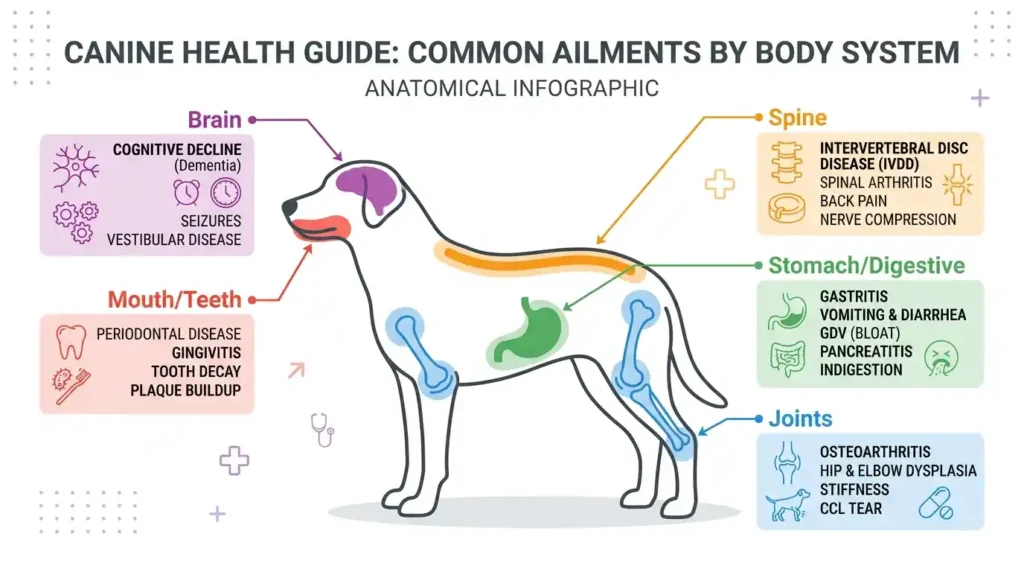
Neurological Conditions
Neurological disorders are among the most serious causes of pain-related barking. Conditions such as syringomyelia (a fluid-filled cavity within the spinal cord), epilepsy, brain tumors, and nerve entrapment syndromes can cause spontaneous, unprovoked vocalizations. Dogs with syringomyelia, particularly common in Cavalier King Charles Spaniels, often scratch at their neck or shoulders and yelp without being touched.
Seizure-related barking may precede or follow an epileptic episode and can be confused with behavioral barking. Any vocalization accompanied by disorientation, muscle twitching, or sudden collapse should be treated as a neurological emergency.
Gastrointestinal Pain and Internal Discomfort
Gastric dilatation-volvulus (GDV), commonly called bloat, is a life-threatening condition in which the stomach twists and fills with gas. Dogs experiencing bloat bark or whimper intensely while also showing signs like a distended abdomen, unproductive retching, and restlessness. This is a veterinary emergency.
Less acute but still painful conditions — including inflammatory bowel disease (IBD), pancreatitis, constipation, and intestinal obstruction — also produce vocalizations. Dogs may bark, whine, or howl, and frequently look toward or lick their abdomen.
Arthritis, Joint Pain, and Musculoskeletal Issues
Osteoarthritis is one of the most prevalent chronic pain conditions in dogs, particularly in middle-aged and senior individuals. According to veterinary research, roughly 80% of dogs over the age of eight show some degree of joint degeneration. This condition causes persistent inflammation and pain in the joints, which can lead to chronic low-grade vocalization, reluctance to move, and heightened sensitivity when touched.
Other musculoskeletal causes include patellar luxation, torn cruciate ligaments, fractures, muscle tears, and spondylosis deformans. Dogs dealing with these conditions often bark or yelp specifically during transitions between postures — getting up, sitting down, or navigating uneven terrain.
Dental Pain and Oral Health Problems
Dental disease is one of the most underdiagnosed sources of pain in dogs. Studies suggest that over 80% of dogs over three years old have some form of periodontal disease. A dog with a broken tooth, severe gum inflammation, tooth root abscess, or oral tumor may bark, paw at their mouth, refuse food, or cry when eating.
Because dogs instinctively hide vulnerability, dental pain may be expressed indirectly through mood changes, aggression when the face is touched, or sudden barking with no context. Regular dental inspections are essential to catch these issues early.
Cognitive Dysfunction Syndrome (CDS) in Senior Dogs
Cognitive Dysfunction Syndrome is a neurodegenerative condition in senior dogs that parallels Alzheimer’s disease in humans. Affected dogs may bark repetitively and seem confused, disoriented, and unaware of their surroundings. Nighttime barking is particularly characteristic of CDS. Dogs may get “lost” in corners, forget familiar people, and bark without recognizing the source of their own distress.
While CDS is not painful in the traditional sense, it causes profound psychological distress that manifests as persistent vocalization. It is closely intertwined with pain conditions that often co-occur in aging dogs.
Reading the Vocal Cues — What Different Barks Mean
High-Pitched Yelping vs. Low Guttural Barking
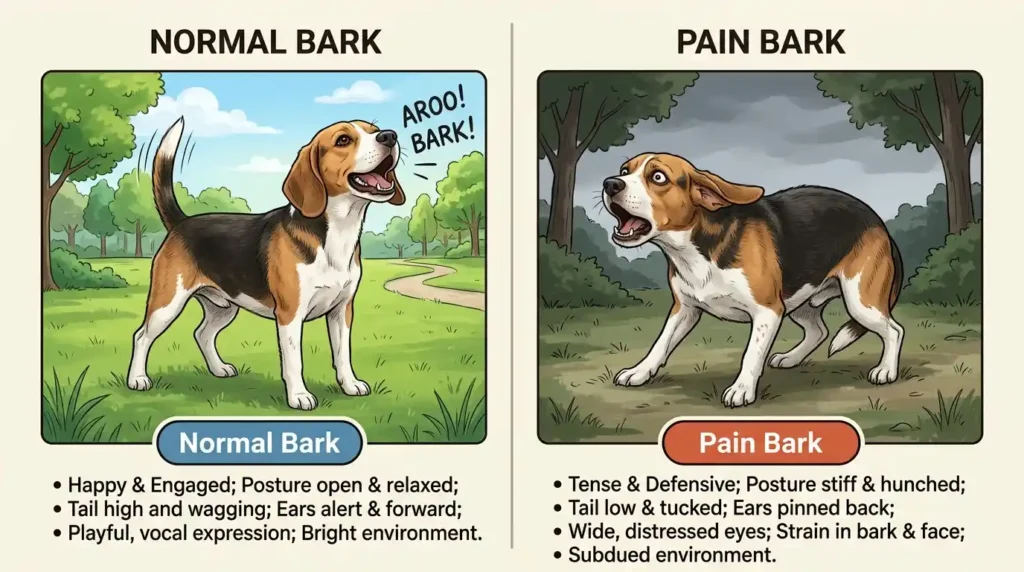
Acoustic analysis of dog vocalizations reveals important diagnostic clues. High-pitched yelps are associated with acute, sharp, sudden pain — they mimic a startle response. This type of sound typically indicates an injury, nerve pain, or sudden internal sensation.
Low, guttural, repetitive barking is more often linked to chronic discomfort, anxiety about pain, or general malaise. A dog who groans and barks in a deep, slow pattern may be communicating sustained discomfort rather than acute distress.
Repetitive Barking with No External Trigger
When a dog barks repeatedly at nothing — no noise, no person, no animal — this is classified behaviorally as stimulus-independent vocalization. In medical contexts, this pattern strongly suggests either neurological dysfunction, internal pain, or cognitive impairment. It is distinguishable from alert barking in that the dog does not orient toward a specific point of interest.
Barking Combined with Whining or Howling
The combination of barking with whining or howling is particularly significant. This composite vocalization pattern typically signals sustained suffering rather than a momentary reaction. It activates the caregiver response in humans for good reason — it is one of the most ancient and compelling distress signals in canine communication.
Behavioral and Physical Signs That Accompany Pain: Barking
Postural Changes and Body Language
A dog in pain often adopts a “pain posture” — hunched back, tucked tail, lowered head, shifting weight away from an affected limb. They may be reluctant to wag their tail or may hold their ears flat. Abdominal pain often produces a “prayer position” — front end lowered to the ground while the hindquarters remain elevated.
These postural cues, when combined with unusual barking, form a strong composite signal that warrants veterinary evaluation.
Changes in Appetite, Sleep, and Grooming
Pain disrupts the basic functions of daily life. A dog who is eating less, sleeping more (or struggling to sleep), or neglecting grooming may be dealing with chronic pain. Conversely, some dogs in pain compulsively lick or chew at the painful site, which may draw attention to the location of injury or discomfort.
Aggression or Withdrawal Alongside Vocalizations
Pain-induced aggression is a well-documented phenomenon in veterinary behavioral medicine. A normally gentle dog who snaps, growls, or bites when touched — especially in a specific area — is almost certainly protecting a painful region. Similarly, a dog who becomes reclusive and avoids interaction may be withdrawing to manage their discomfort.
Understanding Dog Barking Triggers in High-Rise Buildings can help owners differentiate between environment-driven barking and pain-driven vocalization, especially in urban living settings where multiple stimuli are present simultaneously.
Age-Related Barking and Pain Sensitivity
Senior Dogs and Increased Pain Vocalization
As dogs age, their pain threshold changes. The nervous system becomes more sensitized, inflammatory conditions become more prevalent, and recovery from discomfort slows. Senior dogs (generally considered to be 7+ years for large breeds, 9+ for small breeds) are significantly more likely to bark in response to pain due to the accumulation of age-related conditions.
Owners of aging dogs should establish a baseline of “normal” barking behavior early so they can detect deviations. Any increase in vocalization in a senior dog should be evaluated medically.
Young Dogs and Developmental Discomfort
Puppies and adolescent dogs may bark or yelp due to growing pains, teething discomfort, vaccination site soreness, or injuries sustained during boisterous play. While these causes are often temporary, they should not be dismissed. Developmental orthopedic conditions such as panosteitis (a painful inflammation of the long bones) are common in large-breed puppies and produce significant vocalization.
When to See a Veterinarian Immediately

Red Flag Symptoms to Watch For
Seek emergency veterinary care if your dog’s barking is accompanied by:
- Visible injury, bleeding, or limb deformity
- Distended or rigid abdomen
- Labored breathing or blue-tinged gums
- Collapse or inability to stand
- Uncontrolled trembling or seizure activity
- Loss of bladder or bowel control
- Sudden paralysis of the hindquarters
Diagnostic Tests Your Vet May Recommend
A veterinarian investigating pain-related barking will typically conduct a full physical and orthopedic examination, palpating the spine, joints, and abdomen for pain responses. Diagnostics may include complete blood count (CBC), urinalysis, digital radiographs (X-rays), ultrasound imaging, MRI or CT scans for neurological concerns, and dental radiographs.
For a reliable overview of pain assessment in companion animals, the International Veterinary Academy of Pain Management provides evidence-based resources on recognizing and treating pain across species.
How to Comfort a Dog in Pain
Safe Home Measures Before the Vet Visit
While awaiting a veterinary appointment, owners can take several steps to ease their dog’s distress. Provide a quiet, comfortable space away from loud stimuli. Limit physical activity, especially movements that seem to trigger vocalization. Offer fresh water and light food if the dog is willing. Speak in calm, soothing tones to reduce anxiety associated with the pain.
Never administer human pain medications such as ibuprofen, acetaminophen, or aspirin to dogs. These are toxic to canines and can cause life-threatening kidney failure, gastrointestinal hemorrhage, or liver damage.
What NOT to Do When Your Dog Is in Pain
Avoid forcing your dog to move, exercise, or interact. Do not assume the barking is behavioral and attempt to correct it with punishment — this is not only ineffective but can worsen the dog’s distress and damage trust. Do not delay veterinary consultation, hoping the issue resolves on its own, particularly when barking is persistent or escalating.
Prevention and Long-Term Management
Routine Health Checkups and Early Detection
Annual veterinary wellness exams — or semi-annual for senior dogs — are the single most effective tool for catching pain conditions before they escalate to the point of vocalization. Blood panels, weight monitoring, dental inspections, and orthopedic screenings catch issues in their earliest stages when intervention is most effective.
Pain Management Plans and Veterinary Therapies
Modern veterinary medicine offers a range of pain management modalities. Non-steroidal anti-inflammatory drugs (NSAIDs), gabapentin, amantadine, and newer monoclonal antibody therapies (such as those targeting nerve growth factor) are used to manage chronic pain. Physical rehabilitation therapy, acupuncture, hydrotherapy, and laser therapy are gaining recognition as effective adjunctive treatments.
The American Animal Hospital Association’s pain management guidelines offer clinically validated frameworks that veterinarians use to assess and treat canine pain, and are an excellent reference for owners seeking to understand their dog’s treatment plan.
The Role of Exercise and Mental Stimulation
While rest is important during acute pain episodes, appropriate physical activity is essential for long-term pain management — particularly in musculoskeletal and cognitive conditions. Controlled, low-impact movement maintains muscle mass, supports joint health, and reduces the psychological distress that can amplify pain perception. For a detailed look at how movement benefits behavior and reduces unwanted vocalization, explore How Exercise Reduces Problem Barking in Dogs.
Mental stimulation — through puzzle feeders, scent work, and gentle interactive play — also reduces anxiety-driven vocalization and supports neurological health in aging dogs.