


Summary
What do Dachshunds eat? Most Dachshunds thrive on a complete and balanced dog food formulated for their life stage, with high-quality animal protein, moderate fat, useful dietary fiber, and controlled calories. Puppies usually need three or four small meals, while healthy adults typically eat two measured meals per day. Because every extra pound increases the load on a Dachshund’s long spine, accurate portion control is just as important as ingredient quality.
A miniature Dachshund may need roughly 240–390 calories per day, while a standard Dachshund may require approximately 440–760 calories, depending on body weight, activity level, age, metabolism, health status, and spay or neuter status. These are starting ranges—not universal prescriptions. The food’s calorie density and your dog’s body condition determine the actual daily ration.
This guide explains what to feed a Dachshund, how much food to offer puppies and adults, whether grain-free food is necessary, how to read a dog-food label, and which human foods belong on the safe or dangerous list.
Table of Contents
- What Do Dachshunds Eat? The Short Answer
- Why Dachshunds Need Careful Nutrition
- What Makes a Good Dachshund Food?
- What Do Dachshunds Eat at Each Life Stage?
- How Much Food Should a Dachshund Eat?
- How Much to Feed a Miniature Dachshund Puppy
- How Often Should Dachshunds Eat?
- Dry, Wet, Fresh, or Raw Food
- Do Dachshunds Need Grain-Free Food?
- Safe Human Foods for Dachshunds
- Foods Dachshunds Should Never Eat
- Feeding for Common Dachshund Health Concerns
- How to Change and Store Dog Food
- Conclusion
- Frequently Asked Questions
What Do Dachshunds Eat? The Short Answer
Dachshunds eat nutritionally complete commercial dog food or a properly formulated home-cooked diet. The best everyday food provides the correct balance of protein, fat, carbohydrates, vitamins, minerals, and water for the dog’s age and condition.
Suitable options include:
- Small-breed dry dog food
- Complete wet or canned food
- Commercial fresh dog food
- Mixed feeding with calculated portions
- Air-dried, freeze-dried, or dehydrated food that is complete and balanced
- A therapeutic veterinary diet for a diagnosed health condition
- A home-cooked diet formulated by a qualified veterinary nutritionist
Dachshunds are often enthusiastic eaters. Their food motivation may make them act hungry even after receiving enough calories. Begging, staring at the refrigerator, or following someone carrying a snack does not automatically mean the daily ration is too small.
Food-related routines are influenced by learning as well as hunger. Owners working on begging, scavenging, or excitement around meals may find the broader Dog Behavior guidance helpful.
The foundation of the diet should be dog food, not table scraps. Plain meat, rice, vegetables, and other wholesome ingredients can still create nutritional deficiencies when combined without a professionally developed recipe.
Why Dachshunds Need Careful Nutrition
A Dachshund’s unusual anatomy makes weight management particularly important. The breed has an elongated body, short legs, and a genetic form of skeletal development called chondrodystrophy. The same characteristics that create the familiar low silhouette are connected with early changes in the spinal discs.
Long spine and IVDD risk
Dachshunds are predisposed to intervertebral disc disease, commonly abbreviated as IVDD. With disc degeneration, a spinal disc may bulge or rupture and place pressure on the spinal cord. The result can range from pain and reluctance to move to weakness or paralysis.
Food cannot change the dog’s genetics or guarantee prevention of IVDD. Nutrition can, however, help maintain a lean body condition and healthy muscle condition. Strong core muscle and controlled body weight reduce unnecessary mechanical stress on the back.
A Dachshund with sudden pain, trembling, an arched back, weakness, dragging limbs, loss of coordination, or difficulty urinating needs urgent veterinary evaluation. Dietary supplements are not an appropriate response to signs of spinal cord compression.
Small portions have a large effect
An unnoticed extra 30 calories per day can become significant on a small-breed dog. That amount might come from a generous scoop of kibble, a dental chew, bacon from breakfast, or several training rewards.
Overfeeding leads to excess body fat, and weight gain can worsen strain on the spine and joints. It may also increase the difficulty of managing arthritis, joint pain, diabetes, heart disease, or reduced mobility.
Large breeds have their own calorie and growth considerations, as explained in guides to the best dog food for labradors. With a miniature Dachshund, however, the margin between an appropriate portion and chronic overfeeding can be only a few spoonfuls.
Different sizes need different portions
A miniature Dachshund normally weighs much less than a standard Dachshund. Their daily calorie needs should not be treated as interchangeable.
The same principle applies across breeds. A portion suitable for a Chihuahua may not satisfy a standard Dachshund, while the feeding amount discussed in a Dog Food for German Shepherds guide could supply a miniature Dachshund for several days.
What Makes a Good Dachshund Food?
The best food is not determined by one ingredient, an attractive package, or the highest protein content. Look at nutritional adequacy, calorie density, formulation expertise, digestibility, and how the individual dog responds.
Look for a complete and balanced diet
Find the nutritional adequacy statement on the packaging. It should indicate that the product is complete and balanced for the dog’s intended life stage, such as growth or adult maintenance.
A food may be formulated to meet the AAFCO Dog Food Nutrient Profiles or substantiated through an appropriate feeding protocol. Although people commonly say “AAFCO-approved food,” AAFCO does not approve individual brands or recipes. The label indicates how the manufacturer supports the nutritional adequacy claim.
The authoritative AAFCO guide to selecting pet food explains that species, life stage, physical condition, feeding directions, and the nutritional adequacy statement should guide selection. It also notes that package directions are starting guidelines that may need adjustment as an animal’s condition changes.
Food marked “for intermittent or supplemental feeding only” should not form the main diet unless a veterinarian has prescribed it for a specific purpose.
For more help interpreting labels and food formats, explore the Dogs Food resource library.
Prioritize high-quality protein
Protein supplies amino acids for muscle maintenance, tissue repair, skin, coat, immune function, and growth. Maintaining muscle is especially valuable for a Dachshund because the muscles surrounding the trunk help support movement and spinal stability.
Useful protein sources may include:
- Chicken
- Beef
- Lamb
- Duck
- Fish
- Salmon
- Fish meal
- Egg
- Other clearly named animal protein
A named meat protein should be identifiable on the ingredient list. Whole meat can be nutritious, but a properly produced named meat meal is not automatically lower quality. Meat meal contains less water and may provide concentrated protein.
Protein content should be interpreted alongside digestibility, calorie content, amino-acid balance, and the rest of the nutrient profile. A high-protein slogan does not prove that a food is nutritionally superior.
For comparison, a guide to Dog Food for Pitbulls may emphasize supporting a muscular, athletic build. A Dachshund also needs adequate protein, but avoiding excess calories remains critical for its back.
Choose moderate, appropriate fat
Dietary fat provides concentrated energy, supports palatability, and helps the body absorb fat-soluble vitamins. It also supplies essential fatty acids for skin health and coat health.
Because fat contains more calories per gram than protein or carbohydrates, very rich food can make portion control difficult. A moderate fat content is often practical for adult Dachshunds prone to obesity.
Dogs with pancreatitis or another fat-sensitive condition may require a specially formulated low-fat diet. Do not simply choose a product labeled “light” without checking its nutrient profile and discussing the condition with a veterinarian.
Include useful fiber and carbohydrates
Properly cooked carbohydrates can provide digestible energy and dietary fiber. Ingredients such as oatmeal, brown rice, potato, sweet potato, pumpkin, green bean, and chicory root may serve different nutritional purposes.
Fiber can support:
- Normal stool consistency
- Satiety
- Regular bowel movements
- Calorie control
- Beneficial intestinal bacteria
- A healthy gut microbiome
Some foods also contain prebiotic-rich vegetables. Prebiotics nourish selected gut microorganisms, while probiotics contain live microorganisms. Neither is a universal cure for gas, diarrhea, constipation, or a sensitive stomach, but they may support digestive health in an appropriately formulated diet.
Look for beneficial fatty acids
Omega-3 fatty acids may support the skin, coat, joints, and normal inflammatory response. Fish and fish oil can supply EPA and DHA, which are more directly usable by dogs than the ALA found in flaxseed.
Turmeric and ginger sometimes appear as anti-inflammatory ingredients, but their presence should not determine food quality. The amount, bioavailability, safety, and overall formulation matter. No single botanical ingredient prevents disc rupture or replaces medical care.
Balance calcium, phosphorus, vitamins, and minerals
Puppies need an appropriate balance of calcium and phosphorus during controlled growth. Adult and senior dogs also need correctly proportioned vitamins and minerals.
Adding a dietary supplement to a complete food is not automatically beneficial. Excessive calcium, vitamins, or minerals can unbalance the diet. Glucosamine, chondroitin, methylsulfonylmethane (MSM), and fish oil should be used only when the product, dose, and health goal have been discussed with a veterinarian.
Consider the manufacturer
A reputable manufacturer should be able to answer:
- Who formulates the recipes?
- Is a veterinary nutritionist or qualified animal nutritionist involved?
- Does the company conduct feeding trials or nutritional analyses?
- How are ingredients and finished foods tested?
- Where is the food manufactured?
- How does the company manage quality control?
- Is calorie information available per cup, can, or 100 grams?
- How does the company communicate a dog food recall?
Brand owners may include Royal Canin, Merrick, Open Farm, Dr. Tim’s, Wellness, Ollie, and The Farmer’s Dog. Brand recognition alone is not a reason to buy. Each formula must be evaluated for life stage, calorie density, nutritional adequacy, and the dog’s individual needs.
What Do Dachshunds Eat at Each Life Stage?
Life-stage nutrition changes from mother’s milk to puppy food, adult dog food, and potentially a senior or therapeutic formula.
Newborn Dachshunds
During the first weeks, puppies should receive their mother’s milk. Nursing provides energy and nutrients while supporting early development.
If the mother cannot nurse or milk production is insufficient, a veterinarian may recommend canine milk replacer. Cow’s milk is not a suitable substitute and can cause digestive upset.
A newborn that is cold, weak, lethargic, crying continuously, unable to nurse, or failing to gain weight needs prompt veterinary attention. Bottle and tube feeding require correct technique because aspiration can be fatal.
Weaning puppies
Weaning commonly begins at approximately three to four weeks. Complete puppy food can be mixed with warm water or canine milk replacer to form puppy mush.
Over the following weeks, reduce the liquid gradually until the puppies are eating solid food. Avoid sudden food changes during this period because the digestive system is still adapting.
Growing puppies
A growth diet should provide adequate calories, high-quality protein, balanced calcium and phosphorus, essential fatty acids, and other nutrients required for controlled growth.
A Dachshund puppy should become stronger without accumulating excessive fat. Rapid growth and rapid weight gain are not the same thing. Owners should monitor the puppy’s ribs, waist, muscle condition, and weekly weight trend.
Most Dachshunds continue eating puppy food until approximately 10–12 months of age. Your veterinarian may recommend a slightly different puppy-to-adult transition based on expected adult size, growth rate, neuter timing, and body condition.
Breed-specific nutrition varies widely, so the Dog Breeds Feeding collection can help owners compare small- and large-breed growth requirements.
Adult Dachshunds
Adult dog food should maintain a healthy weight without sacrificing protein, vitamins, or minerals. Most adults do well with two measured meals per day.
An adult maintenance diet may be a small-breed formula or a breed-specific food. A picture of a Dachshund on the package is optional; nutritional balance and portion control matter more.
Senior Dachshunds
There is no universal birthday on which every Dachshund needs senior dog food. The decision should reflect age, muscle loss, body weight, dental comfort, activity, digestion, and diagnosed medical conditions.
A senior may benefit from:
- Controlled calories as activity declines
- Digestible protein to help preserve muscle
- More moisture for hydration
- Softer food when dental disease affects chewing
- Adjusted dietary fiber
- A therapeutic diet for heart, urinary, digestive, or metabolic disease
Unexplained weight loss, appetite changes, vomiting, diarrhea, increased thirst, or muscle loss should be investigated instead of attributed automatically to aging.
How Much Food Should a Dachshund Eat?
The correct serving cannot be determined from breed alone. Body weight, calorie density, activity level, age, metabolism, and health status all matter.
Adult calorie and portion guide
The following figures are general starting ranges for healthy adults with moderate activity. They are not veterinary prescriptions.
| Body weight | Approximate daily calories | Example amount at 400 calories per cup |
| 8 pounds | 240–300 kcal | 0.60–0.75 cup |
| 10 pounds | 290–360 kcal | 0.73–0.90 cup |
| 11 pounds | 315–390 kcal | 0.79–0.98 cup |
| 16 pounds | 440–540 kcal | 1.10–1.35 cups |
| 20 pounds | 520–650 kcal | 1.30–1.63 cups |
| 25 pounds | 620–760 kcal | 1.55–1.90 cups |
A sedentary, older, or weight-prone Dachshund may need less. A highly active, intact, pregnant, nursing, or underweight dog may need more.
Cup measurements can be misleading because one kibble may contain 320 calories per cup while another contains 480. Wet, fresh, and air-dried foods also have very different calorie densities.
Calculate the serving from calories
Use this basic equation:
Daily cups = daily calorie target ÷ calories per cup
Suppose a miniature Dachshund needs 320 calories per day and the kibble contains 400 calories per cup:
320 ÷ 400 = 0.8 cup per day
Split the daily ration into two meals:
0.8 ÷ 2 = 0.4 cup per meal
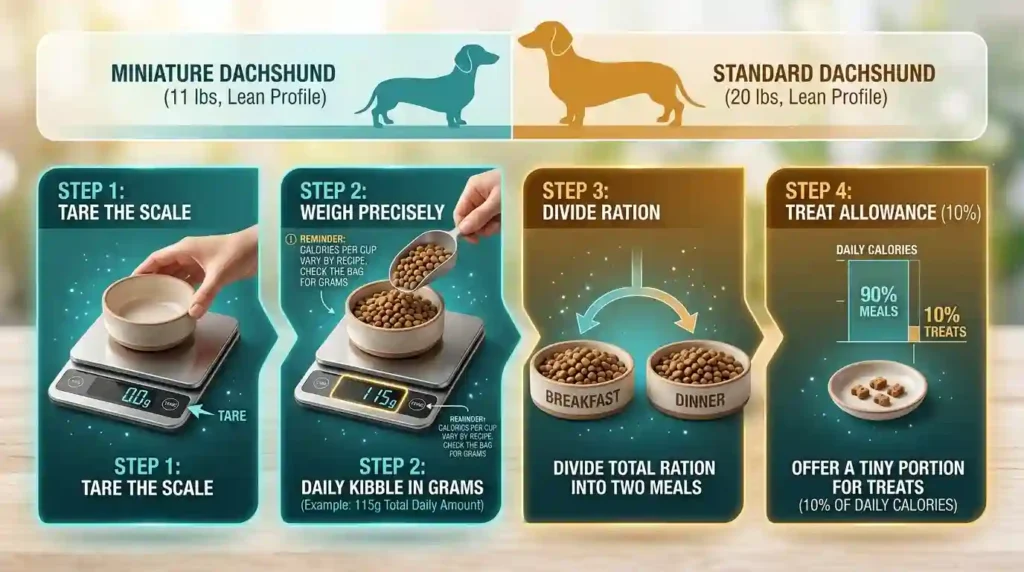
When possible, convert the serving to grams and use a kitchen scale. A gram scale is more precise than filling a measuring cup to an estimated line.
Use the package feeding instructions correctly
The feeding guide on the package is a starting estimate. Check whether the chart lists current weight, ideal weight, or expected adult weight. Also determine whether the recommendation is a daily total or a per-meal amount.
Begin within the appropriate range, then reassess the dog after two to four weeks. A stable weight and lean body condition suggest the feeding amount is close. Continued weight gain means the daily calorie intake is probably too high unless another medical issue is involved.
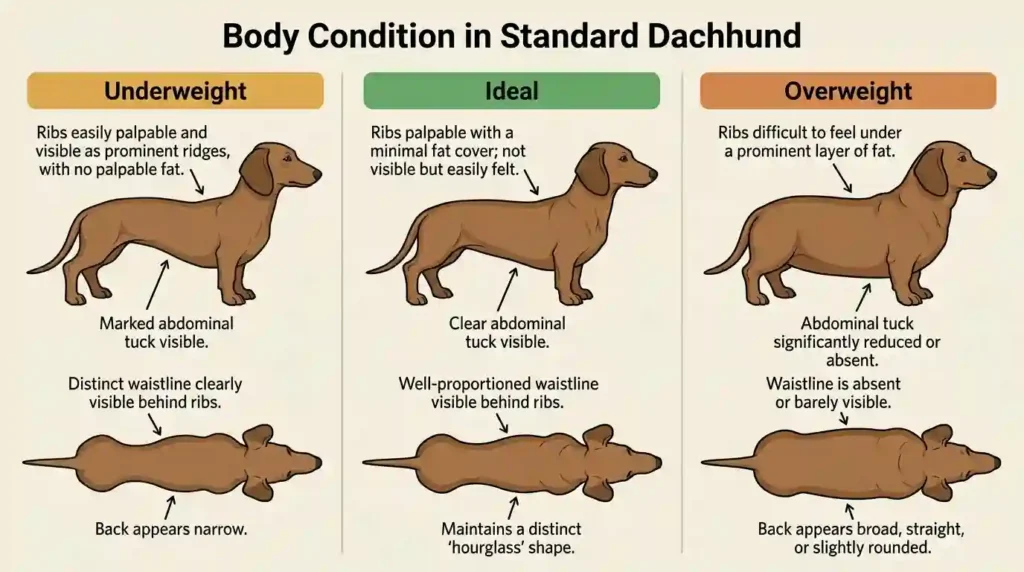
Perform a body-condition check
A healthy Dachshund should generally have:
- Ribs that are easy to feel beneath a light fat covering
- A visible waist when viewed from above
- An abdominal tuck behind the rib cage
- Defined muscle without prominent bones
- Stable weight over time
If the ribs cannot be felt without firm pressure, the dog may be carrying excess body fat. If the ribs, spine, or pelvis are sharply visible, the dog may be underweight.
A formal body condition score from a veterinarian is more meaningful than relying on the number on the scale alone.
Count every treat
Treats, chews, food toppers, gravy, table scraps, and training rewards contribute calories. A practical target is to keep treats at no more than 10% of daily calories.
A 10-pound Dachshund eating 330 calories per day has room for only about 33 treat calories. A small piece of cheese or fatty meat can consume that entire allowance.
Dachshunds and Beagles can both be intensely food-motivated. The appetite-management advice in What Do Beagles Eat reinforces the importance of counting rewards rather than judging hunger by enthusiasm.
How Much to Feed a Miniature Dachshund Puppy
Owners frequently ask how much to feed a mini Dachshund puppy, but age alone does not provide a safe cup amount. Puppy foods differ substantially in calorie density.
Use the package’s growth feeding guide based on the puppy’s age and expected adult weight. Confirm the plan during veterinary visits and adjust it according to weekly growth and body condition.
General puppy meal schedule
| Puppy age | Typical food | Meals per day |
| Birth to 3–4 weeks | Mother’s milk or veterinary-directed milk replacer | On demand |
| 3–6 weeks | Puppy mush plus nursing | 4–6 |
| 6–8 weeks | Softened or dry small-breed puppy food | 4 |
| 8 weeks to 4 months | Complete small-breed puppy food | 3–4 |
| 4–6 months | Complete small-breed puppy food | 3 |
| 6–12 months | Puppy food, transitioning toward adult schedule | 2–3 |
| Around 10–12 months | Gradual transition to adult food | 2 |
Divide the package’s daily ration by the number of meals. Do not feed the listed daily amount at every meal.
For example, if the label recommends 120 grams per day and the puppy eats four meals:
120 grams ÷ 4 = 30 grams per meal
Weigh the puppy about once a week. The puppy should gain steadily while retaining a visible waist and easily felt ribs. After a spay or neuter procedure, calorie needs may decrease, so monitor the weight trend carefully.
Do not intentionally underfeed a growing puppy to keep it unusually small. Underfeeding can impair muscle and bone development. The goal is controlled growth, not restricted development.
Owners accustomed to extremely small toy-breed portions may also benefit from reviewing What Do Chihuahuas Eat for a comparison of high metabolism, frequent puppy meals, and precision feeding.
How Often Should Dachshunds Eat?
Healthy adult Dachshunds generally do well with two meals per day—one in the morning and another in the evening.
Structured meals help owners:
- Measure the daily ration accurately
- Monitor appetite
- Notice illness sooner
- Support predictable bathroom habits
- Reduce begging between meals
- Avoid unnoticed overeating
Free feeding is usually a poor fit for food-motivated Dachshunds. Leaving kibble available all day makes calorie intake difficult to track and may hide reduced appetite.
Puppies need more frequent meals because of their smaller stomachs, growth demands, and developing metabolism. Senior or medically affected dogs may also benefit from smaller, more frequent meals if recommended by a veterinarian.
If a Dachshund eats rapidly and develops gas or digestive upset, a slow-feeder bowl may extend mealtime. Choose a shallow design that accommodates the dog’s compact jaw and supervise its use.
Dry, Wet, Fresh, or Raw Food
Each food format has benefits and drawbacks. Nutritional adequacy and calorie control are more important than whether the meal comes from a bag, can, tray, or freezer.
Dry dog food
Kibble is convenient, relatively affordable, shelf-stable, and easy to measure. Small kibble may be easier for a miniature Dachshund to pick up and chew.
Dry food contains less water than wet or fresh food, so unrestricted access to clean drinking water is essential. Ordinary kibble should not be relied upon to remove plaque or tartar; toothbrushing and veterinary dental care remain important.
Wet dog food
Complete canned food contains more moisture and may support hydration. Its aroma and soft texture can improve palatability for picky dogs or seniors with dental discomfort.
Wet food is not automatically less fattening. Check calories per can or per 100 grams and calculate the daily amount. Refrigerate opened food promptly.
Mixed feeding
Mixed feeding combines dry and wet food. It may improve taste, texture, and moisture intake while retaining the convenience of kibble.
Do not serve the full recommended ration of both foods. Calculate the calories supplied by each component so the combined meal stays within the daily target.
Fresh and gently cooked food
Commercial fresh dog food may use recognizable ingredients and higher moisture levels. Confirm that it is complete and balanced for the correct life stage.
Terms such as “fresh,” “natural,” “human-grade,” and “gently cooked” do not replace the nutritional adequacy statement. Fresh food also requires refrigeration and safe handling.
Air-dried, dehydrated, and freeze-dried food
These formats are often nutrient-dense. A serving may look surprisingly small, so weigh it carefully and follow rehydration instructions when applicable.
Freeze-dried or dehydrated raw products should still be handled as potential sources of harmful microorganisms unless the manufacturer documents validated pathogen-control procedures.
Home-cooked food
Home-cooked food can be appropriate when a veterinary nutritionist formulates the recipe for the individual dog. A mixture of meat, rice, vegetables, and oil is rarely complete for long-term feeding.
Changing ingredients, omitting supplements, or measuring casually can disrupt calcium, phosphorus, amino-acid, vitamin, and mineral balance.
Raw food and BARF diets
A raw or BARF diet may contain raw meat, organs, bones, fruit, and vegetables. Potential concerns include bacterial contamination, nutritional imbalance, choking, broken teeth, intestinal obstruction, and injury from bone fragments.
Raw salmon, raw meat, and bones should not be offered casually. Households containing young children, older adults, pregnant people, or immunocompromised individuals face additional food-safety concerns.
Consult a veterinarian or veterinary nutritionist before considering raw food. Marketing claims about skin, coat, digestion, or “ancestral feeding” do not eliminate these risks.
Do Dachshunds Need Grain-Free Food?
Most Dachshunds do not need grain-free food. Corn, oatmeal, rice, wheat, and other properly processed grains can supply energy, protein, vitamins, minerals, and fiber.
A food allergy is usually associated with a particular protein rather than the general presence of grain. A true allergy may cause itching, recurrent skin or ear problems, vomiting, or diarrhea. Food sensitivity and food intolerance can produce gastrointestinal symptoms without the same immune response.
If a veterinarian suspects an adverse food reaction, the diagnostic approach may involve a controlled elimination diet or hydrolyzed-protein diet. Switching among random grain-free recipes is not a reliable test.
Grain-free food often replaces grain with potato, peas, lentils, or other carbohydrates. It is not necessarily lower in calories or higher in ingredient quality.
Safe Human Foods for Dachshunds
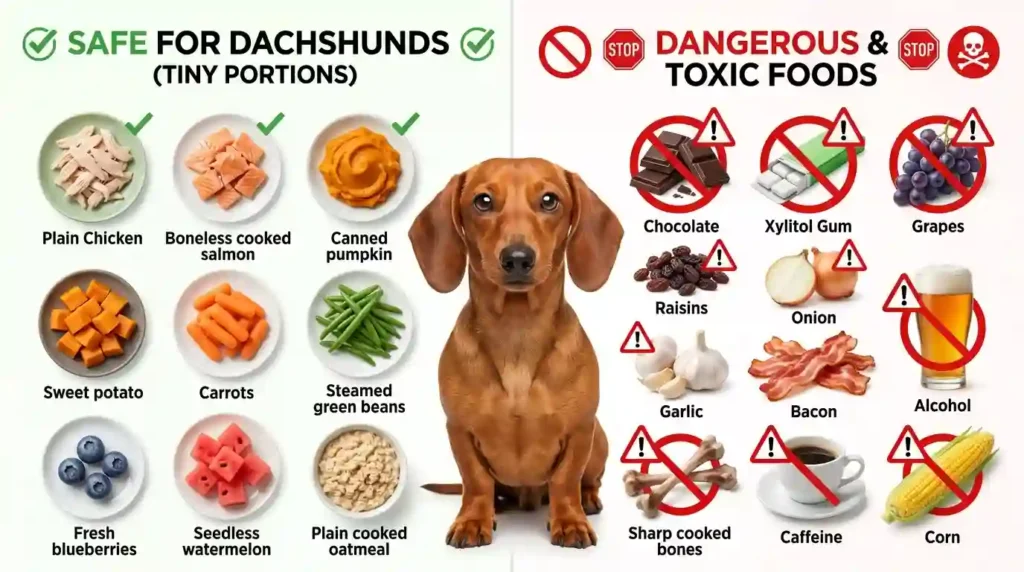
Small amounts of plain human food can be offered as occasional treats if they remain within the treat allowance.
Safer choices may include:
- Plain cooked chicken, beef, lamb, or turkey
- Boneless cooked salmon
- Cooked egg
- Plain pumpkin
- Cooked sweet potato
- Carrot pieces
- Green beans
- Blueberries or blackberries
- Small seedless pieces of watermelon
- Small amounts of pineapple
- Plain oatmeal
- Plain cooked potato
- Plain bread in a very small quantity
- Corn removed from the cob
Cut food into small pieces to reduce choking risk. Remove bones, seeds, pits, hard rinds, and corn cobs. Avoid butter, gravy, oil, salt, garlic, onion, and seasoning.
Introduce one new food at a time. Even safe ingredients can cause gas, diarrhea, constipation, or vomiting when fed in excess.
Foods Dachshunds Should Never Eat
Keep the following foods away from Dachshunds:
- Chocolate
- Xylitol
- Grapes
- Raisins
- Onion
- Garlic
- Alcohol
- Caffeine
- Macadamia nuts
- Raw yeast dough
- Cooked bones
- Corn cobs
- Large fruit pits
- Moldy food
- Excessively fatty meat
- Bacon and other salty food
Xylitol can cause a dangerous drop in blood sugar and may lead to liver injury. Grapes and raisins can cause acute kidney damage or renal failure in susceptible dogs. Onion and garlic can damage red blood cells.
Excess salt may cause sodium ion poisoning, with signs such as vomiting, diarrhea, tremor, lethargy, or seizure. Fatty food can trigger gastrointestinal distress and may contribute to pancreatitis.
Dairy products are not universally toxic, but many dogs tolerate lactose poorly. Sugar and rich desserts add unnecessary calories and may contain chocolate, xylitol, raisins, or other dangerous ingredients.
If your Dachshund consumes a suspected toxin, contact a veterinarian or animal poison-control service immediately. Do not wait for symptoms and do not induce vomiting unless a professional instructs you to do so.
Feeding for Common Dachshund Health Concerns
Obesity
Weight loss should reduce calories while preserving protein and other essential nutrients. Feeding a drastically reduced portion of ordinary food may also reduce vitamins and minerals.
A veterinarian may recommend a restricted-calorie diet with higher fiber or adjusted nutrient density. Use a kitchen scale, eliminate uncounted table scraps, and recheck weight regularly.
IVDD, arthritis, and joint pain
The most useful nutritional goal is maintaining a healthy weight and lean muscle condition. Omega-3 fatty acids from fish oil may support joint health and normal inflammatory processes, but they cannot prevent every back injury.
Glucosamine, chondroitin, or MSM may be recommended in selected cases. Supplement quality and dosage vary, so consult a veterinarian rather than combining several joint products.
Sensitive stomach
Recurring gas, diarrhea, constipation, nausea, or vomiting can have many causes, including parasites, pancreatitis, infection, food sensitivity, rapid eating, an abrupt food transition, or gastrointestinal disease.
A sensitive-stomach label is not a diagnosis. Persistent symptoms, blood in stool, dehydration, abdominal pain, weight loss, or lethargy require veterinary assessment.
Food allergy
A food allergy may cause skin inflammation, itching, ear problems, or digestive signs. The reliable diagnostic method is generally a strict veterinary elimination diet followed by a controlled challenge.
Treats, flavored medication, chews, and food toppers can invalidate the trial. Avoid exposing the dog to numerous unusual proteins before diagnostic testing is complete.
Dental disease
Dachshunds can develop plaque, tartar, gingivitis, and periodontal disease. Signs include bad breath, dropped food, chewing on one side, bleeding gums, or reluctance to eat.
A veterinarian may recommend a dental diet, professional cleaning, and daily toothbrushing with dog toothpaste. Do not use human toothpaste.
Pancreatitis
Dogs with pancreatitis may show vomiting, nausea, abdominal pain, lethargy, or loss of appetite. A veterinarian may prescribe a controlled-fat diet and other treatment.
Do not use bacon, fatty meat, rich gravy, or table scraps to tempt a dog with a history of pancreatitis.
Diabetes, heart disease, and urinary issues
Dogs with diabetes need consistent meals coordinated with medication. Heart disease and urinary problems require diets selected according to the exact diagnosis.
Do not impose severe carbohydrate, sodium, protein, or mineral restrictions without veterinary guidance. The correct therapeutic diet depends on laboratory findings, medication, body condition, and disease stage.
How to Change and Store Dog Food
Make a gradual food transition
Unless a veterinarian directs otherwise, transition over approximately seven days:
| Days | Old food | New food |
| 1–2 | 75% | 25% |
| 3–4 | 50% | 50% |
| 5–6 | 25% | 75% |
| 7 onward | 0% | 100% |
A dog with gastrointestinal sensitivity may need a slower transition. If repeated vomiting, severe diarrhea, pain, or lethargy develops, stop experimenting and contact a veterinarian.
Store dry food safely
Keep kibble in its original bag so the expiration date and lot information remain available. Place the bag inside a clean, sealed container and store it in a cool, dry location.
Wash the container between bags instead of pouring new food over old crumbs. Discard food that smells rancid, appears moldy, contains insects, or has damaged packaging.
Refrigerate wet and fresh food
Cover and refrigerate opened canned or fresh food promptly. Follow the manufacturer’s instructions for how long it remains usable after opening.
Wash bowls after meals and provide clean water every day. Stainless steel and intact glazed ceramic bowls are generally easy to sanitize.
Conclusion
A Dachshund should eat complete and balanced food matched to its life stage, health, and energy requirements. A suitable diet typically provides digestible animal protein, moderate fat, helpful fiber, essential fatty acids, and balanced vitamins and minerals.
The best recipe cannot protect a Dachshund if it is consistently overfed. Weigh the food, count treats, feed structured meals, and use the rib check, visible waist, abdominal tuck, and weight trend to evaluate the plan.
Miniature and standard Dachshunds need different quantities, and puppies require more frequent feeding than adults. Package directions offer a starting point, but calorie density and body condition determine the final portion.
Most importantly, remember that nutrition supports spinal health—it does not erase the genetic risk of IVDD. Maintaining a lean, well-muscled body and responding quickly to signs of back pain provide more value than chasing a miracle ingredient.
Frequently Asked Questions
What do weiner dogs eat?
“Weiner dog” is an informal name for a Dachshund. They should eat complete and balanced dog food formulated for their life stage and calorie needs.
How much should a mini Dachshund eat?
Many healthy adults need approximately 240–390 calories daily, but weight, activity, neuter status, body condition, and food calorie density change the amount.
How much food should a Dachshund eat a day?
A miniature may need about 240–390 calories, while a standard may need roughly 440–760. Ask your veterinarian for an individualized target.
How much to feed a miniature Dachshund puppy?
Follow the puppy food’s growth chart for age and expected adult weight, then divide the daily ration among three or four meals.
How many times should a Dachshund puppy eat?
Most young puppies eat three or four times daily. They can usually transition toward two meals between six and twelve months.
How often should an adult Dachshund eat?
Most healthy adult Dachshunds do well with two measured meals per day rather than free feeding.
What is the best food for a Dachshund?
Choose complete and balanced, life-stage-appropriate food with digestible protein, controlled calories, moderate fat, and reliable manufacturing standards.
Do Dachshunds need grain-free food?
Usually not. Grain-free food is appropriate only when it fits the complete diet and addresses a specific need identified with veterinary guidance.
Can Dachshunds eat chicken?
Yes, plain cooked, boneless chicken can be an occasional treat or an ingredient in complete dog food, provided the dog is not sensitive to it.
Can Dachshunds eat wet food?
Yes. Choose complete wet food, calculate calories accurately, and refrigerate leftovers according to the label.
Is raw food safe for Dachshunds?
Raw food presents bacterial, nutritional, dental, choking, and intestinal risks. Discuss it with a veterinarian or veterinary nutritionist before feeding.
How do I know if my Dachshund is overweight?
You should be able to feel the ribs easily and see a waist from above and an abdominal tuck from the side. Ask a veterinarian to confirm the body condition score.
What foods are poisonous to Dachshunds?
Avoid chocolate, xylitol, grapes, raisins, onion, garlic, alcohol, caffeine, macadamia nuts, and raw yeast dough.
Can Dachshunds eat table scraps?
Occasional plain, safe foods may fit the treat allowance, but seasoned, salty, sugary, or fatty table scraps should be avoided.