
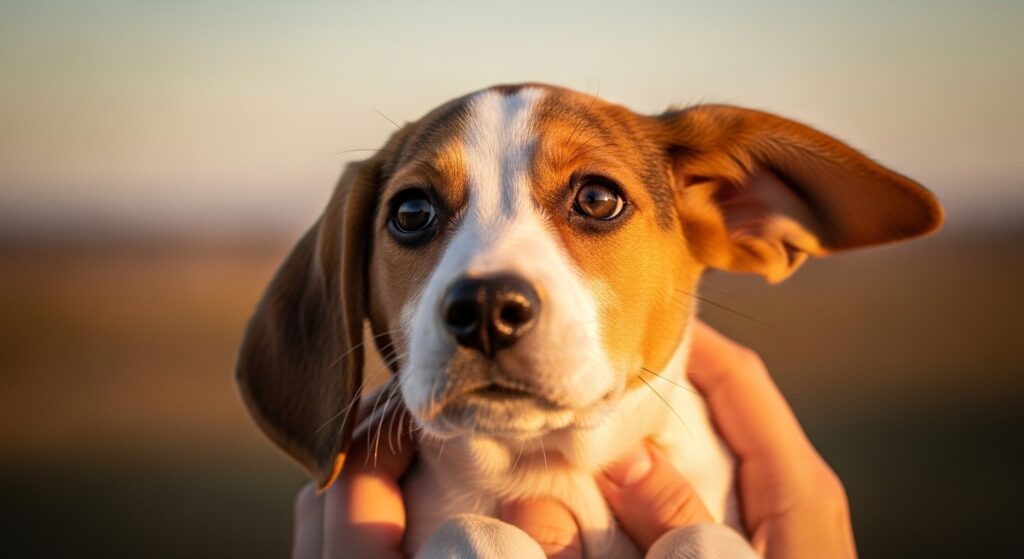

Summary: Puppy growling when picked up is a normal form of canine communication that can signal fear, pain, resource guarding, overstimulation, or a lack of socialization. Understanding why your puppy growls — by reading their body language, identifying triggers, and ruling out physical discomfort — is the essential first step. With the right approach, including positive reinforcement, desensitization, and building trust, most puppies can be taught to tolerate and even enjoy being handled. This guide covers every aspect of the behavior: its root causes, what different types of growling mean, how to respond safely, when to see a vet or behaviorist, and how to prevent the behavior from escalating into biting.
Outline
- Puppy Growling When Picked Up: What It Means, Why It Happens & What To Do
- Understanding Puppy Growling as Communication
- Common Reasons Puppies Growl When Picked Up
- Reading Your Puppy’s Body Language
- How to Respond When Your Puppy Growls
- Training Your Puppy to Accept Being Picked Up
- When Growling Escalates — Recognizing Bite Risk
- When to See a Vet or Professional Dog Trainer
- Breed and Age Considerations
- Preventing Growling Problems from the Start
- Frequently Asked Questions
Understanding Puppy Growling as Communication
Is Puppy Growling Normal?
Yes — and this is the most important thing for every new dog owner to understand. When your puppy growls as you reach down to pick them up, your first instinct might be alarm or frustration. But growling is one of the most honest, transparent things a dog can do. It is a deliberate, controlled vocalization that says, “I am uncomfortable right now.”
Growling is part of a dog’s natural communication repertoire — a spectrum that includes body posture, facial expressions, vocalizations, and scent signaling. When a puppy growls, they are not being “bad.” They are communicating a need. Suppressing that communication — by punishing the growl — doesn’t eliminate the discomfort driving it. It simply removes the warning, which is far more dangerous.
The critical insight here is this: a dog that growls is a dog that is still communicating. That is your opportunity to listen, respond, and make things better.
The Language Behind the Growl — NLP of Canine Behavior
From a natural language processing (NLP) standpoint applied to animal behavior, every vocalization a dog produces carries semantic and contextual meaning. Just as human language depends on tone, syntax, and context, canine vocalizations are decoded by reading:
- Pitch: Lower, sustained growls often indicate a more serious warning. Higher-pitched, shorter growls during play are less threatening.
- Duration: A brief growl may be a gentle redirect. A prolonged growl during handling is a persistent distress signal.
- Accompanying signals (LSI behavioral cues): Stiff body, wide eye (showing whites of eyes), flattened ears, tucked tail, raised hackles — these are the semantic “modifiers” that give the growl its full meaning.
LSI (Latent Semantic Index) keywords associated with this behavior include: puppy aggressive when picked up, dog growling at owner, puppy fear aggression, puppy pain response, resource guarding puppies, puppy handling anxiety, dog communication signals, puppy bite inhibition, puppy desensitization, and canine stress response. Understanding all of these interconnected concepts is essential to addressing the root.
Common Reasons Puppies Growl When Picked Up
Fear and Anxiety
Fear is the single most common reason a puppy growls when lifted. Being picked up removes a puppy’s control over their movement and environment. For a small animal, being suspended off the ground triggers the same primitive nervous system response as being grabbed by a predator. Even well-meaning handling can feel threatening.
Puppies that were not handled frequently and gently during their critical socialization window (approximately 3–14 weeks of age) are especially vulnerable to fear-based reactions. Signs that fear is driving the growl include: cowering before being picked up, attempting to flee, growling accompanied by a tucked tail, and immediate relaxation once placed back on the ground.
Pain or Physical Discomfort
This is the most medically urgent cause of growling during handling. If your puppy recently began growling when picked up and previously showed no objection, pain should be your first suspicion. Common sources of pain in young puppies include:
- Musculoskeletal issues: Hip dysplasia, joint problems, or muscle strains can make the compression of being held acutely painful.
- Internal conditions: Gastrointestinal pain, hernias, or organ discomfort may not be visible externally.
- Skin conditions: Dermatitis, wounds, or infections can make touch painful.
- Teething pain: Though less likely to cause growling specifically during pick-up, generalized discomfort can lower a puppy’s threshold for tolerating handling.
If growling is sudden, intense, or accompanied by yelping, limping, or changes in appetite and energy, schedule a veterinary examination before any behavioral intervention.
Resource Guarding
Resource guarding occurs when a puppy growls to protect something they value: food, a toy, a resting spot, or even a location. If your puppy growls specifically when you pick them up away from something — their food bowl, a chew, or their bed — resource guarding of a specific area or object is likely the trigger.
This is a hardwired survival behavior, not a sign of a “dominant” or “bad” puppy. It can, however, escalate if mismanaged. The good news: resource guarding is highly responsive to structured counter-conditioning protocols.
Overstimulation and Sensory Overload
Puppies have an immature nervous system. After high-energy play, excessive excitement, or prolonged social interaction, a puppy’s arousal level spikes. In this overstimulated state, even gentle handling can feel overwhelming. The growl in this context is often accompanied by:
- Biting at hands during pickup
- Frantic squirming
- Hard, rapid panting
This is sometimes misread as aggression when it is actually a puppy in a state of sensory overload. The solution is usually simple: allow the puppy to calm down before attempting to pick them up.
Lack of Socialization and Handling
Puppies who were not regularly handled during the first weeks of life — ideally by their breeder starting from day one — often develop handling sensitivity. This is especially common in puppies from high-volume breeding operations or puppies separated from their mother too early (before 8 weeks).
Without positive early exposure to being touched, held, and gently restrained, the sensation of being picked up is unfamiliar and threatening. These puppies require patient, systematic desensitization.
Dominance Myths vs. Reality
The outdated “dominance theory” once led trainers to recommend alpha rolls and physical corrections for growling puppies. Modern behavioral science has thoroughly debunked this framework. Wolves in the wild do not operate through rigid dominance hierarchies, and domestic dogs even less so.
Punishing a growling puppy for growling does not teach the puppy that being picked up is safe. It teaches them that growling leads to more unpleasant experiences — and eventually, that they must skip the warning and go directly to biting. Approach this behavior through the lens of communication, not control.
Reading Your Puppy’s Body Language
Stress Signals Before the Growl
Skilled dog owners learn to recognize the early warning signs that precede a growl, often called calming signals (a term coined by Norwegian trainer Turid Rugaas). These include:
- Yawning when not tired
- Lip licking with no food present
- Turning the head away when you approach
- Freezing or “statue-ing” as you reach down
- Low, slow tail wagging combined with a tense body
Catching these signals early allows you to pause, give the puppy space, and prevent the situation from escalating to a growl — or beyond.
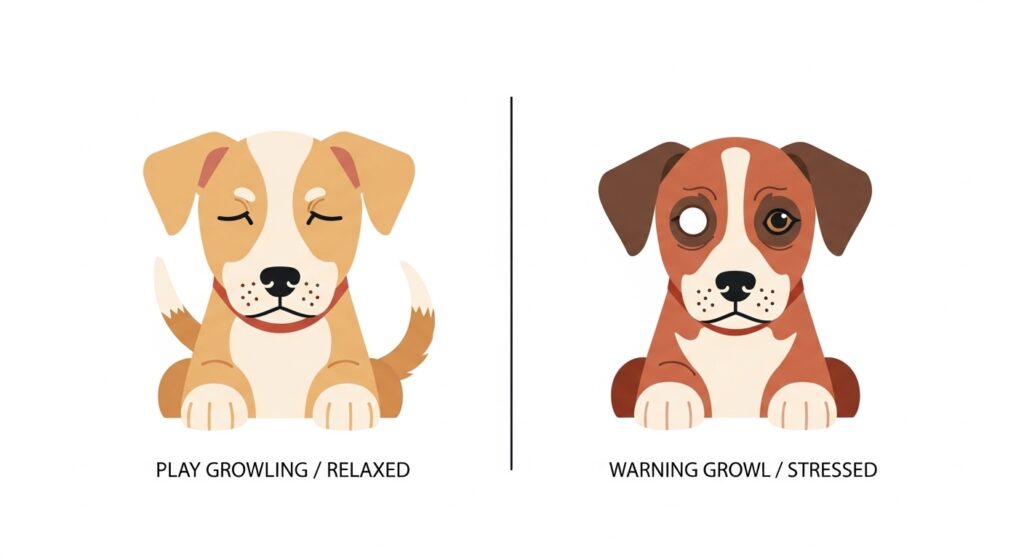
Distinguishing a Warning Growl from Play Growling
Not all growling signals distress. Puppies frequently growl during play — during tug-of-war, chase games, or rough-and-tumble interactions with littermates. Play growling is typically characterized by:
- A loose, wiggly body
- Bouncy, exaggerated movements (play bow)
- High-pitched rather than low-frequency growl
- Growling that starts and stops unpredictably
- A puppy who eagerly re-engages rather than retreating
A warning growl during pickup, by contrast, is usually lower in pitch, accompanied by a stiff body, and reliably occurs in response to the specific trigger of being handled. Understanding the difference helps owners respond proportionately. Play growling doesn’t require intervention; warning growling requires attention.
How to Respond When Your Puppy Growls
What NOT to Do
- Do not punish the growl. Scruffing, alpha rolling, yelling, or using a spray bottle removes the warning without addressing the cause. This is the single most dangerous mistake owners make.
- Do not force the pickup. Continuing to lift a growling puppy reinforces the puppy’s belief that growling didn’t work and that escalation (snapping, biting) may be necessary.
- Do not laugh it off or ignore it completely. While growling is normal communication, it is also a message that something needs to change in how you’re approaching your puppy.
- Do not hit or physically intimidate. This damages trust irrevocably and dramatically increases the risk of defensive aggression.
Safe Handling Techniques
When you do need to pick your puppy up, technique matters enormously. Always:
- Approach calmly and visibly — never sneak up on a puppy from behind.
- Let the puppy sniff your hand first — this transfers scent information and signals non-threat.
- Support the full body — one hand under the chest, one supporting the hindquarters. This prevents the dangling sensation that triggers panic.
- Keep your movements slow and predictable during the lift.
- Hold the puppy close to your body rather than extended outward — proximity feels more secure.
Building a Positive Picking-Up Routine
Pair every pick-up with something the puppy loves. Pick up → brief, calm cuddle → high-value treat → gentle set-down. Done repeatedly and consistently, this classical conditioning loop begins to change the emotional association your puppy has with being lifted. The pick-up becomes a predictor of good things, not a threat.
Training Your Puppy to Accept Being Picked Up
Desensitization and Counter-Conditioning
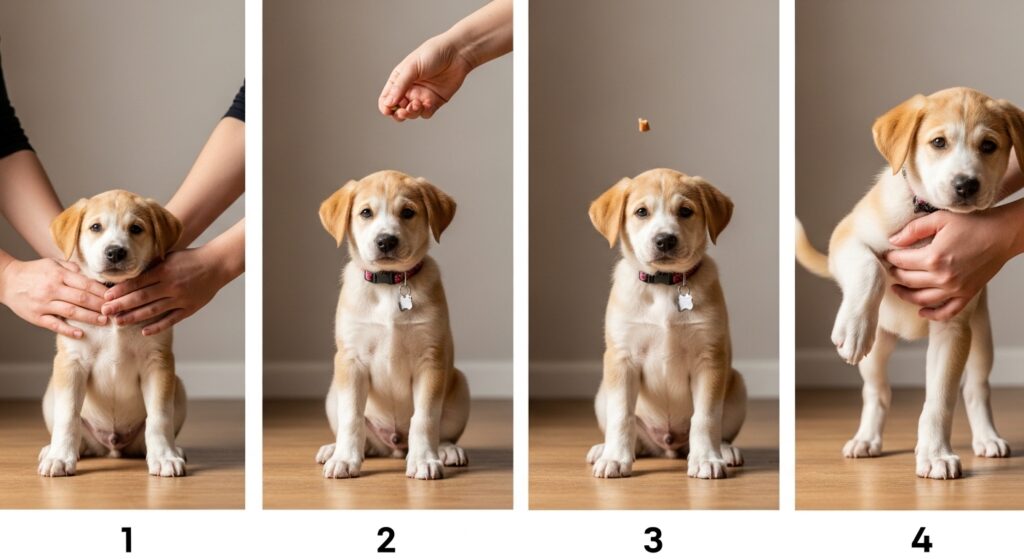
Desensitization means gradually exposing your puppy to the stimulus (being picked up) at an intensity so low it does not trigger the growl, then slowly increasing that intensity over many sessions. Counter-conditioning means pairing the stimulus with something the puppy finds genuinely pleasant — typically a high-value treat.
A practical protocol:
- Step 1 — Touch without lifting: Simply place both hands on your puppy’s sides. No lift. Treat immediately. Repeat 10–15 times per session until the puppy shows no tension.
- Step 2 — Slight elevation: Lift the puppy just an inch off the ground. Treat immediately. Set down. Repeat.
- Step 3 — Full pick-up: Lift to full height. Treat while held. Set down gently. Repeat.
- Step 4 — Duration: Gradually extend the time spent picking up before the treat is delivered.
Progress only when the puppy shows zero stress signals at each step. Never rush this process.
Positive Reinforcement Strategies
Use the highest-value treats your puppy responds to — small pieces of chicken, cheese, or commercial training treats. Timing is everything: the treat must arrive within 1–2 seconds of the pick-up. Use a marker word (“yes!”) or a clicker to bridge the gap between the behavior and the reward.
Keep sessions short — 3 to 5 minutes maximum — to maintain the puppy’s engagement and prevent fatigue. End every session on a success.
Teaching a “Pick Up” Cue
Once your puppy is comfortable being lifted, you can place the behavior on cue. Say “up” in a calm, warm tone just before initiating the pickup. Over hundreds of repetitions, your puppy learns that this word predicts what’s coming, which dramatically reduces the startle response and anxiety. A cued pick-up is always less frightening than a sudden one.
When Growling Escalates — Recognizing Bite Risk
The Bite Ladder: From Growl to Snap
Behavioral scientists describe canine aggression as a ladder of escalation (sometimes called the “Ladder of Aggression,” described by veterinary behaviorist Kendal Shepherd). In order, signals typically escalate from:
Yawning / lip licking → Turning away → Walking away → Stillness/freezing → Growling → Snapping (air bite) → Biting with control → Biting with full pressure
A growling puppy is partway up that ladder. A puppy who has learned that growling doesn’t work — because they’ve been punished for it or ignored — may skip several rungs and go directly to snapping or biting. This is why respecting the growl is not “letting the puppy win” — it is keeping the communication ladder intact.
Warning Signs You Should Not Ignore
Seek professional help immediately if your puppy:
- Snaps during routine handling (not during play)
- Has bitten and broken skin
- Shows unpredictable aggression with no apparent trigger
- Growls with sustained intensity, stiff body, and hard stare simultaneously
- Escalates rapidly from growling to snapping within the same interaction
When to See a Vet or Professional Dog Trainer
Medical Causes of Growling
Before investing months in behavioral training, rule out a medical cause. A full physical examination, including palpation of the spine, limbs, and abdomen, is essential if:
- The growling appeared suddenly (especially in a previously calm puppy)
- The puppy yelps or cries when touched in specific areas
- There are visible changes in posture, gait, or energy level
Conditions such as hip dysplasia, intervertebral disc disease (IVDD), osteochondrosis, and dermatological conditions can all cause pain-triggered growling that mimics behavioral aggression.
Working with a Certified Behaviorist
If your puppy’s growling is persistent, intense, or escalating, working with a Certified Applied Animal Behaviorist (CAAB) or a veterinary behaviorist (DACVB) is strongly recommended. These professionals use evidence-based, force-free methods to address fear, resource guarding, and handling sensitivities.
Avoid trainers who rely on punishment, prong collars, or “dominance” based methods for this type of problem. These approaches reliably make fear-based growling worse.
Just as understanding unusual canine vocalizations takes patience and knowledge, understanding why your dog barks at nothing outside at night is another area where reading your dog’s signals carefully can reveal what’s really going on.
Breed and Age Considerations
Small Breeds vs. Large Breeds
Small breed puppies — Chihuahuas, Dachshunds, Yorkshire Terriers, Maltese — are statistically more likely to growl and snap during handling. This is partly because they are picked up far more frequently than large breeds, which means they are subjected to an experience they have less control over many more times per day. The solution is the same: conditioning and careful technique — but owners of small breeds need to be especially consistent.
Large-breed puppies are picked up less often as they grow, but early handling sensitization is equally important because a fearful adult large-breed dog is a serious safety concern.
Age-Related Behavioral Phases
- 3–8 weeks: Critical socialization window. Gentle handling by the breeder here makes a lifetime of difference.
- 8–12 weeks: The “fear imprint period.” Scary experiences during this window can create lasting associations. Handling should be especially gentle and positive.
- 6–14 months: Adolescence. Hormonal changes can temporarily increase reactivity, including growling. Consistency in training is critical during this phase.
Preventing Growling Problems from the Start
Puppy Socialization Best Practices
The American Veterinary Society of Animal Behavior (AVSAB) recommends that puppies begin socialization classes and gentle environmental exposure as early as 7–8 weeks — even before their vaccination series is complete, in low-risk, clean environments. According to the AVSAB’s position statement, the risks of under-socialization outweigh the risks of early socialization in controlled settings.
Socialization means positive exposure to: people of all ages and appearances, sounds, surfaces, other animals, and — critically — being touched, held, and gently restrained. Every positive experience during the socialization window is an investment in a calm, confident adult dog.
Handling Exercises for Young Puppies
Begin these from day one of bringing your puppy home:
- Touch every body part daily: Ears, paws, tail, mouth, belly. Associate every touch with a treat.
- Practice mock veterinary exams: Look in ears, gently open the mouth, lift each paw. This prepares the puppy for the veterinary context where restraint is necessary.
- Short, successful pick-ups: Multiple times a day, pick the puppy up for 10–20 seconds, treat, set down. Build a track record of pick-up = pleasant outcome.
- Involve multiple people: Puppies should be comfortable being handled by different family members, guests, and eventually strangers — with supervision and positive reinforcement.
For an in-depth look at other common canine communication behaviors and what they signal about your dog’s inner world, the American Kennel Club’s comprehensive resource on dog body language offers excellent supplementary reading.
Frequently Asked Questions
Q: Should I punish my puppy for growling when picked up? No. Punishing the growl removes the warning signal without addressing the underlying discomfort. It significantly increases bite risk over time.
Q: My puppy only growls when I pick them up near their bed. Is that resource guarding? Likely yes. This is location-based resource guarding. Work with a trainer to implement counter-conditioning around that specific spot.
Q: My puppy growls only when tired or after play. Is that different? Yes — this is typically overstimulation, not aggression. Let your puppy rest before attempting to pick them up in these states.
Q: At what age should a puppy stop growling when picked up? With proper conditioning and handling, most puppies become comfortable with pick-ups by 4–6 months. Some fearful puppies take longer. Consistency is the key variable.
Q: My puppy growls at me but not my partner. Why? This often indicates that your approach, scent, or handling style triggers more anxiety for that puppy. Observe differences in how you approach and hold the puppy and adjust accordingly.
Q: Is it ever okay to just let the growling puppy down when they growl? In the short term, yes — but with intention. Setting the puppy down to prevent escalation is sensible. Setting the puppy down as part of a desensitization plan is strategic. Doing it every time without a training protocol risks reinforcing the growl as an effective escape strategy.
This article is intended for informational purposes only and does not substitute for professional veterinary or behavioral advice. If your puppy’s growling is severe, sudden, or accompanied by snapping or biting, consult a veterinarian or certified animal behaviorist.