

Summary: A puppy peeing on the bed is one of the most startling and frustrating experiences for new dog owners, but it is almost always a solvable problem rooted in developmental, behavioral, or medical factors. This comprehensive guide covers every reason your puppy may be urinating on your bed — from immature bladder control and submissive urination to anxiety, marking behavior, and underlying health issues — and provides actionable, vet-informed solutions including crate training strategies, schedule optimization, enzymatic cleaning techniques, and when to seek professional help, so you can restore peace to your home and build a stronger bond with your pup.
Outline
- Understanding Puppy Bladder Development
- Common Reasons a Puppy Pees on the Bed Suddenly
- Why Your Puppy Specifically Targets the Bed
- How to Stop a Puppy from Peeing on the Bed
- Cleaning Up Puppy Urine on the Bed: Doing It Right
- Medical Issues That Cause Sudden Urinary Accidents
- Behavioral Solutions and Training Approaches
- Products That Help Prevent Bed Wetting in Puppies
- Frequently Asked Questions
Understanding Puppy Bladder Development
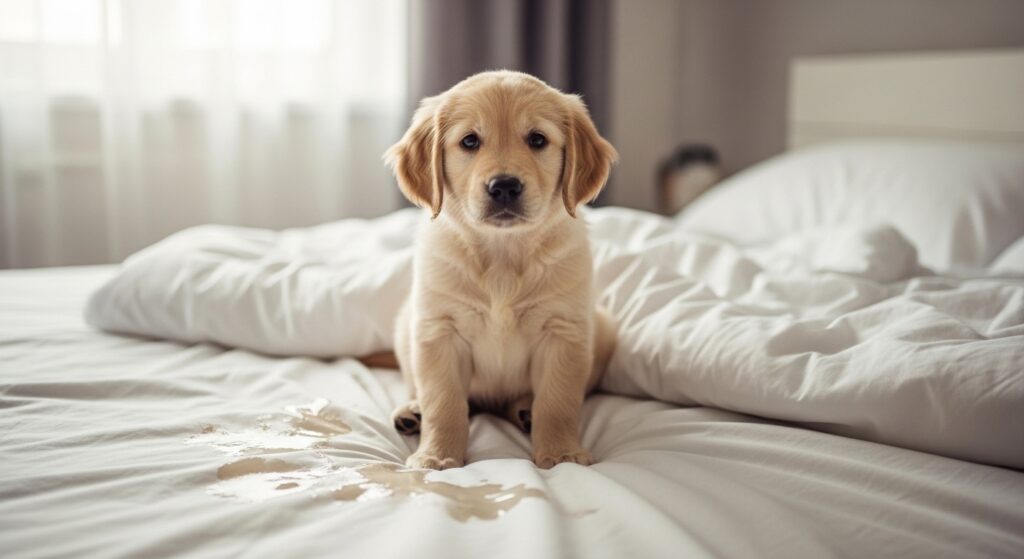
How Bladder Control Develops in Puppies
Before labeling your puppy’s bed-wetting as a behavioral problem, it is essential to understand the basic physiology behind why young dogs struggle to hold their urine. Puppies are born with neurologically immature systems. The neural pathways that connect the bladder to the brain — pathways responsible for the conscious recognition of bladder fullness and the voluntary suppression of urination — are simply not fully developed at birth, or even at 8 weeks, when most puppies go to their new homes.
The detrusor muscle, which controls bladder contraction, and the external urethral sphincter, which holds urine in, both require time and neurological maturation to work in coordination. Until that coordination is established, accidents are not disobedience — they are a biological inevitability. Many owners misread their puppy’s midnight bed accident as spite or laziness when in reality it is a developmental limitation the puppy has no control over.
Age-by-Age Expectations for Bladder Capacity
A useful rule of thumb recognized by veterinary professionals is that puppies can hold their bladder for approximately one hour per month of age, plus one additional hour. This means an 8-week-old puppy can realistically hold its bladder for about two to three hours during the day, and even less at night when relaxation causes sphincter tone to decrease.
- 8–10 weeks: Maximum 2–3 hours during the day; frequent nighttime accidents are normal
- 3–4 months: Can hold for 3–4 hours; accidents should be decreasing with consistent training
- 5–6 months: 4–5 hours is achievable; accidents become infrequent with proper training
- 6+ months: Most puppies approach adult bladder capacity, though full reliability may not be reached until 12–18 months in some breeds
Understanding this timeline helps set realistic expectations and prevents the frustration that leads to punishment-based training, which is counterproductive and damaging to the dog-owner bond.
Common Reasons a Puppy Pees on the Bed Suddenly
Incomplete Housetraining
The most common reason a puppy pees on the bed — or anywhere indoors — is that the housetraining process is incomplete. Housetraining is not a single lesson; it is a long conditioning process that requires repetition, consistency, and patience over weeks to months. Many owners believe their puppy is “housetrained” after a few accident-free days, only to be surprised by a relapse.
The bed is a soft, absorbent surface that mimics the textures puppies instinctively seek out for elimination. If your puppy has not yet learned to reliably signal the need to go out and finds themselves on the bed with a full bladder, the bed becomes the logical choice from the puppy’s perspective.
Submissive or Excitement Urination
Submissive urination is a deeply ingrained canine communication behavior. When a puppy feels overwhelmed, overly excited, or socially subordinate, it may release small amounts of urine involuntarily. This is not a housetraining failure — it is a social signal.
Common triggers include:
- Enthusiastic greetings when you arrive home
- Being approached or loomed over by a larger person
- Loud voices or sudden movements
- Meeting new people or animals in the bed
Excitement urination, a closely related phenomenon, occurs when the puppy becomes so stimulated that bladder control is temporarily overridden. Both forms are most common in puppies under one year of age and often resolve naturally as the dog matures and gains confidence.
Anxiety and Stress-Related Urination
Anxiety is a powerful physiological trigger for urination. The stress response activates the autonomic nervous system, which can stimulate the smooth muscle of the bladder and reduce the effectiveness of voluntary sphincter control. A puppy experiencing separation anxiety, adjustment anxiety in a new home, noise phobia, or general fear may urinate on the bed as a direct physiological consequence of emotional distress.
The bed carries the owner’s scent more strongly than almost any other surface in the home. A puppy struggling with separation anxiety may seek out the bed specifically because of this scent comfort, and the emotional overwhelm of that moment may trigger urination. If your puppy also shows other anxiety signs — destructive chewing, excessive vocalization, pacing, or inability to settle — anxiety-related urination is a strong possibility.
If your puppy shows fear-based behaviors outdoors as well, it may be worth reading about what to do when your Puppy Scared to Go Outside at Night, as outdoor anxiety and indoor urinary accidents often share the same root cause.
Territorial Marking Behavior
While marking behavior is more commonly associated with adult male dogs, it can appear in puppies as young as 4 to 5 months, particularly if sexual maturity is beginning or if there are other animals in the household. Marking involves deliberate, small-volume urination on specific surfaces to deposit scent signals.
The bed — especially if another pet has been on it — may be targeted as a marking site. Unlike accident-related urination, marking is characterized by small amounts of urine, repeated targeting of the same area, and deliberate posturing. Intact males are most prone to this behavior, though intact females and even neutered dogs can mark.
Medical Causes You Should Not Ignore
A sudden change in urination habits — especially if your puppy was previously doing well with housetraining — warrants a veterinary evaluation. Medical conditions that can cause urinary accidents include urinary tract infections, bladder stones, congenital abnormalities, and hormonal issues. These are discussed in detail in the medical section below. Never assume a sudden regression is purely behavioral without ruling out a health cause first.
Why Your Puppy Specifically Targets the Bed
The Scent Attraction Factor
Dogs experience the world primarily through scent, and the human bed is one of the richest scent environments in your home. It carries your body odor, skin cells, natural oils, and even the scent of stress hormones. For a puppy, the bed smells overwhelmingly of its pack leader, creating a powerful psychological draw.
When a puppy needs to urinate and finds itself on this scent-rich surface, it may urinate there because the familiar smell overrides the developing impulse to seek an outdoor elimination spot. Furthermore, once a puppy has urinated on the bed once, the residual urine odor — even if you cannot detect it — acts as a powerful cue to urinate in the same spot again.
Comfort and Security Association
Soft, warm surfaces stimulate urination in young animals. This is actually a biological reflex — the softness and warmth of the surface can trigger relaxation of the urethral sphincter, particularly in very young puppies. The bed, being the softest, warmest surface in the home, is therefore one of the highest-risk urination sites.
Opportunity and Habit Formation
If your puppy has been allowed on the bed before housetraining is complete, an opportunity has already been established. Dogs are creatures of habit, and once a behavior has occurred in a specific location — especially if it has been repeated — a location-specific habit begins to form. The longer the bed-wetting goes on without intervention, the more entrenched this habit becomes, reinforced by both the residual scent and the established neural pathway of “bed = place to pee.”
How to Stop a Puppy from Peeing on the Bed
Establish a Consistent Potty Schedule
The single most effective intervention for puppy bed-wetting — and indoor accidents in general — is a rigorous, consistent potty schedule. Puppies thrive on predictability, and a structured schedule prevents the bladder from ever reaching the point of urgency indoors.
A solid schedule includes taking the puppy outside:
- Immediately upon waking (morning and after naps)
- Within 15–20 minutes after every meal
- After play sessions
- Every 2–3 hours throughout the day
- Right before bed
- Once during the night for very young puppies (under 12 weeks)
Consistency is more important than flexibility. Every successful outdoor elimination is a learning opportunity. Every indoor accident, particularly one that goes uncorrected, reinforces the wrong location association.
Crate Training as a Housetraining Tool
Crate training leverages a dog’s natural instinct to avoid soiling its sleeping area. When used correctly and humanely, a crate teaches a puppy to suppress urination until it is taken outside. The crate must be appropriately sized — large enough for the puppy to stand, turn around, and lie down, but not so large that the puppy can urinate in one corner and sleep in another.
Puppies spending the night in a properly sized crate are far less likely to urinate on your bed because they are not on your bed. This is also a reason why many trainers recommend that puppies earn bedroom access — and certainly bed access — gradually, only after consistent housetraining is well established.
Restrict Bedroom Access During Training
While it may feel harsh to close the bedroom door, preventing bed access during the housetraining period is one of the most straightforward solutions available. What you are doing is managing the environment to prevent the opportunity for failure while training is ongoing. This is a principle known in behavioral science as antecedent management — removing the trigger or opportunity before the problem behavior can occur.
Baby gates, exercise pens, and simply keeping the bedroom door closed are all effective tools. Once your puppy is reliably housetrained — typically by 5 to 6 months of age with consistent effort — you can gradually reintroduce supervised bed access.
Positive Reinforcement Techniques
Punishment for accidents is not only ineffective — it is actively harmful. Puppies do not connect punishment administered after the fact with the act of urination. They connect it with your presence, your unpredictability, or the spot where they are standing when you arrive, which leads to fear-based urination (making the problem worse) and a damaged relationship with you.
Instead, use high-value reward-based training. The moment your puppy finishes urinating outdoors, deliver an enthusiastic verbal marker (“Yes!” or a clicker) followed immediately by a high-value treat. This creates a strong positive association with outdoor elimination that, repeated consistently, builds a reliable habit.
According to the American Kennel Club’s puppy housetraining guidelines, positive reinforcement delivered within seconds of the behavior is the gold standard for housetraining success.
Managing Nighttime Accidents
Nighttime accidents are common because bladder tone relaxes during sleep, and puppies cannot always rouse themselves in time. To manage nighttime accidents:
- Keep the puppy in a crate next to your bed at night rather than on the bed
- Set an alarm for a middle-of-the-night bathroom break during early puppyhood
- Gradually extend the time between nighttime breaks as the puppy matures
- Avoid water for 1–2 hours before bedtime (do not restrict water during the day)
If your puppy is also waking up too early and disrupting your sleep schedule, the strategies outlined in this guide on how to help my puppy sleep longer can work alongside a nighttime potty management routine.
Cleaning Up Puppy Urine on the Bed: Doing It Right
Why Ordinary Cleaners Fail
Standard household cleaners — dish soap, laundry detergent, white vinegar in isolation, and even bleach — do not eliminate the problem of pet urine. While these products may reduce visible staining or mask the odor to the human nose, they do not break down the uric acid crystals that are the primary scent marker in dog urine.
Uric acid is not water-soluble and resists many conventional cleaning agents. It can lie dormant in fabric fibers and reactivate with humidity. This means that even after you have cleaned what appears to be a urine stain, your puppy’s nose — which is estimated to be between 10,000 and 100,000 times more sensitive than the human nose — can still detect the residual scent and will be drawn back to the same location to urinate again.
How to Use Enzymatic Cleaners Effectively
Enzymatic cleaners contain biological enzymes (typically protease, lipase, and uricase) that actively break down the organic compounds in pet urine, including uric acid, at a molecular level. This eliminates the odor rather than masking it, which is critical for breaking the habit cycle.
To use enzymatic cleaners properly:
- Blot — do not rub — as much urine as possible with a clean cloth
- Apply the enzymatic cleaner liberally, ensuring it penetrates to the same depth as the urine did
- Allow it to sit for 10–15 minutes (follow product instructions)
- Blot again with a clean cloth
- Allow to air dry completely — do not use heat, which can set the remaining odor compounds
For mattresses, which absorb urine deeply, you may need to repeat this process or use a specialized mattress urine treatment.
Protecting Your Mattress Long-Term
A waterproof mattress protector is an essential investment during the puppy phase. Modern mattress protectors are breathable, noiseless, and comfortable while providing a complete moisture barrier. Installing one before your puppy ever accesses the bed eliminates the risk of urine penetrating the mattress — a scenario that is both expensive and difficult to fully remediate.
Medical Issues That Cause Sudden Urinary Accidents
Urinary Tract Infections (UTIs) in Puppies
Urinary tract infections are among the most common medical causes of sudden urinary accidents in puppies, particularly females, due to their shorter urethra. A UTI causes inflammation, urgency, and discomfort that makes voluntary bladder control difficult or impossible.
Signs of a UTI in puppies include: frequent, small urinations; crying or whimpering during urination; blood-tinged urine; genital licking; and a sudden regression in housetraining. A UTI is diagnosed with a urinalysis and treated with a course of antibiotics. The Cornell University College of Veterinary Medicine provides detailed information on how urinary tract problems present in companion animals.
Ectopic Ureter and Structural Abnormalities
An ectopic ureter is a congenital abnormality where one or both ureters (the tubes connecting the kidneys to the bladder) bypass the bladder and open at an incorrect location further down the urinary tract. This results in continuous or near-continuous urinary incontinence that the puppy cannot control.
Ectopic ureter is most common in certain breeds, including Labrador Retrievers, Golden Retrievers, Siberian Huskies, and Miniature Poodles. It is diagnosed through imaging (ultrasound or CT scan) and is surgically correctable in most cases.
Hormonal Incontinence
Spayed female dogs can develop hormone-responsive urinary incontinence, though this is more common in adults than in puppies. The reduction in estrogen following spaying can weaken the urethral sphincter over time. If you have recently spayed your female puppy and notice new urinary accidents, this is worth discussing with your veterinarian.
Diabetes and Other Systemic Conditions
Conditions that cause excessive thirst and urination — a symptom cluster known as PU/PD (polyuria/polydipsia) — can make it physically impossible for a puppy to maintain normal urinary control. Diabetes mellitus, kidney disease, Cushing’s syndrome, and liver disease all fall into this category. If your puppy is drinking unusually large amounts of water and urinating excessively across multiple surfaces, a full bloodwork panel and urinalysis are warranted.
Behavioral Solutions and Training Approaches
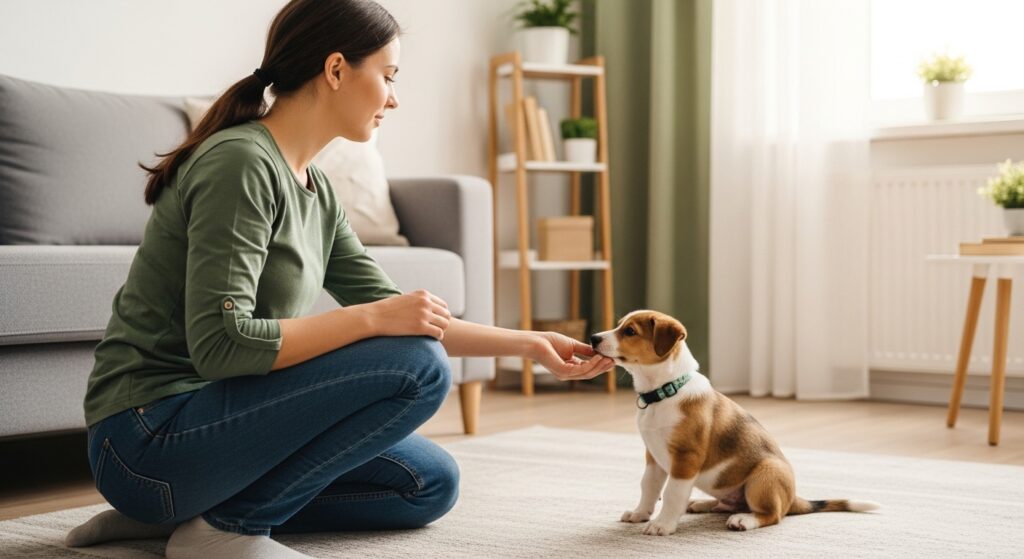
Desensitization for Submissive Urination
If your puppy urinates on the bed during excited or submissive greetings, the solution is to reduce the emotional intensity of those greetings. This is achieved through a process called desensitization and counter-conditioning.
Practical steps include: avoiding eye contact and looming posture when greeting your puppy; keeping arrivals calm and low-key (no enthusiastic greetings for a few weeks); crouching to the puppy’s level rather than bending over them; and gradually building the puppy’s confidence through positive training experiences. As the puppy matures and gains confidence, submissive urination typically resolves on its own.
Addressing Separation Anxiety
If anxiety is driving the urination, addressing the anxiety directly is more effective than any management strategy alone. Separation anxiety treatment involves graduated independence training — teaching the puppy that being alone is safe and temporary — combined with environmental enrichment, puzzle feeders, and in some cases, anti-anxiety supplements or medication prescribed by a veterinarian.
Signs of separation anxiety extend beyond urination and include destructive behavior, vocalization, pacing, and attempts to escape. If these signs are present, a comprehensive separation anxiety protocol is needed.
When to Consult a Professional Dog Trainer
If you have been consistent with your training for 4–6 weeks without improvement, or if the urination seems driven by fear, aggression, or severe anxiety, it is time to consult a certified professional dog trainer (CPDT-KA) or a veterinary behaviorist. These professionals can evaluate the full behavioral context and design an individualized intervention.
Products That Help Prevent Bed Wetting in Puppies
Several products can support your prevention strategy:
- Waterproof mattress protectors: Non-negotiable during the training period. Opt for a washable, fitted cover that extends fully over the mattress.
- Enzymatic urine eliminators: Products like Rocco & Roxie, Nature’s Miracle, and Angry Orange are widely used and effective when applied correctly.
- Belly bands (for male dogs): Washable wraps that prevent urine from reaching surfaces during the training period. Not a solution by themselves, but useful management tools.
- Dog crates: An appropriately sized crate is the most effective nighttime management tool during housetraining.
- Potty training sprays: These products use attractant scents to encourage urination in designated outdoor areas, reinforcing the correct elimination location.
- Puppy pads (with caution): While useful for very young puppies or those with limited outdoor access, pads can extend the housetraining timeline if overused, because they teach the puppy that indoor urination is acceptable.
Frequently Asked Questions
Is it normal for a puppy to pee on the bed? Yes, especially before 5–6 months of age. Incomplete bladder development, incomplete training, excitement, and anxiety are all normal and addressable causes.
Should I punish my puppy for peeing on the bed? No. Punishment after the fact is ineffective and creates fear. Interrupt accidents calmly if you witness them, take the puppy outside immediately, and reward outdoor elimination.
At what age should a puppy stop having accidents? Most puppies achieve reliable housetraining between 4 and 6 months, though some breeds and individuals take up to 12–18 months to be fully reliable.
How do I stop my puppy from peeing on the bed at night? Keep the puppy off the bed until fully housetrained. Use a crate next to your bed, take a middle-of-the-night bathroom break, and restrict water 1–2 hours before sleep.
Can a puppy UTI cause bed-wetting? Yes. A UTI causes urgency and loss of bladder control. If your previously well-trained puppy suddenly regresses, a veterinary visit to rule out a UTI is the first step.
Why does my puppy only pee on my bed and nowhere else? The bed is the most scent-saturated, soft, warm surface in the home — all qualities that attract urination. Once the habit is established and residual odor remains, the puppy returns to the same spot.
For a truly comprehensive approach to your puppy’s nighttime behavior, addressing both potty habits and sleep patterns together leads to the fastest results. With patience, consistency, and the right tools, bed-wetting is a problem every puppy owner can successfully resolve.