


Summary
What do Golden Retrievers eat? Most thrive on a complete and balanced diet made for their life stage and large-breed needs. The food should provide digestible animal protein, appropriate dietary fat, carbohydrates, fiber, vitamins, minerals, and constant access to fresh water. Puppies need controlled calcium, phosphorus, calories, and growth-focused nutrition; adults need measured portions that maintain lean body condition; and seniors may benefit from fewer calories, added joint support, and easier-to-digest food. The right serving is not a universal number of cups—it depends on the food’s calories, your dog’s weight, age, metabolism, activity level, and body condition score.
Golden Retrievers are enthusiastic eaters, which makes portion control especially important. This guide explains what to feed a Golden Retriever, how much to serve, which foods and treats are appropriate, and how to recognize food sensitivities before they become persistent health problems.
Table of Contents
- What Do Golden Retrievers Eat? The Short Answer
- How to Choose Good Golden Retriever Food
- What Do Golden Retrievers Eat at Each Life Stage?
- Golden Retriever Food and Portion Guide
- Do Golden Retrievers Have Sensitive Stomachs?
- Safe Fresh Foods and Ingredients
- Foods and Ingredients to Limit or Avoid
- Dry, Wet, Fresh, Raw, and Home-Cooked Diets
- Helpful Golden Retriever Feeding Products
- How to Change Your Golden Retriever’s Food
- Conclusion
- Frequently Asked Questions
What Do Golden Retrievers Eat? The Short Answer
Golden Retrievers eat high-quality dog food formulated for puppies, adults, seniors, or all life stages. A suitable everyday food should be nutritionally complete—not simply a bowl of meat, rice, or vegetables.
When people ask what food Golden Retrievers eat, they are usually choosing among dry dog food, wet dog food, fresh food, raw food, and home-cooked food. Any of these formats can work if the finished diet is complete, balanced, digestible, safe, and appropriate for the dog’s life stage.
A Golden Retriever’s main food should normally include:
- High-quality protein from ingredients such as chicken, turkey, lamb, beef, fish, salmon, goat, meat meal, or organ meat
- Essential amino acids for tissue maintenance and lean muscle development
- Dietary fat for energy, flavor, nutrient absorption, skin health, and coat quality
- Omega-3 and omega-6 fatty acids from ingredients such as fish oil, algae oil, cod liver oil, and linoleic acid
- Digestible carbohydrates from ingredients such as brown rice, barley, oats, or other whole grains
- Fiber, prebiotics, or probiotics to support digestion and gut health
- Correct proportions of vitamins, minerals, calcium, and phosphorus
- Antioxidants that support normal immune function
- Enough moisture and unrestricted access to clean water
The most important word is “balanced.” Chicken and rice may be useful temporarily when directed by a veterinarian, but they do not provide complete long-term nutrition by themselves. Likewise, adding liver, kidney, vegetables, supplements, or fish oil without calculating the entire recipe can create excesses as easily as deficiencies.
Food also interacts with behavior. A dog that begs, eats rapidly, steals table scraps, or acts hungry after every meal does not automatically need more calories. For help separating genuine hunger from learned food-seeking habits, explore the Dog Behavior guidance on Dog Sense Guide.
How to Choose Food That Is Good for Golden Retrievers
When an owner asks, “What should I feed my Golden Retriever?” the most dependable starting point is the pet food label—not the picture on the front of the bag.
Look for a nutritional adequacy statement
Choose a product labeled as complete and balanced for the correct life stage. The AAFCO guide to reading pet food labels explains that “complete” means the food contains all required nutrients, while “balanced” means those nutrients are supplied in appropriate ratios.
For a puppy, the statement should indicate that the food is suitable for growth, including the growth of large-sized dogs. For a healthy adult, look for adult maintenance. Senior dog food should still provide a complete diet unless your veterinarian has prescribed something different.
AAFCO establishes model standards and nutrient profiles; it does not personally approve every formula. Be cautious when a package uses vague language such as “inspired by nature” but does not clearly identify nutritional adequacy.
Favor digestible protein
Golden Retrievers need high-quality protein, but the protein percentage alone does not tell the entire story. Digestibility, amino-acid balance, total calorie content, and your dog’s tolerance matter.
Named proteins such as chicken, turkey, beef, lamb, salmon, or other fish make the ingredient source easier to understand. Properly produced meat meal can also supply concentrated animal protein. “Meal” does not automatically mean poor quality, just as fresh meat in the first ingredient position does not automatically make a food superior.
Active Goldens may do well with a protein-rich diet that supports muscle repair after exercise. Less-active dogs still need protein, but they may require food with lower caloric density to prevent weight gain. Similar protein and energy considerations apply when selecting Dog Food for Dobermans Eat, although every breed and individual has different calorie needs.
Check fat quality as well as quantity
Dietary fat supplies energy and helps the body absorb fat-soluble nutrients. Omega-6 fatty acids, including linoleic acid, support the skin barrier and coat. Omega-3 fatty acids—including EPA and DHA from fish, fish oil, or algae oil—can support skin, cognitive, and joint health.
Puppies particularly benefit from DHA for normal brain and eye development. Adult and senior Golden Retrievers may benefit from marine omega-3 sources as part of a balanced formula, especially when joint comfort or skin health is a concern.
More fat is not always better. Fat contains more calories per gram than protein or carbohydrates, so rich food can cause accidental overfeeding.
Do not fear every carbohydrate
Dogs can digest properly cooked carbohydrates. Brown rice, barley, oats, and other whole grains can provide energy and fiber. Vegetables such as pumpkin, carrots, green beans, spinach, kale, sweet potato, and butternut squash may also contribute fiber, antioxidants, and micronutrients.
Corn, wheat, soy, dairy, egg, chicken, and beef are sometimes blamed for every digestive or skin complaint. Any food protein can potentially trigger an allergy, but automatically removing multiple ingredients may make the diet unnecessarily restrictive. An elimination diet supervised by a veterinarian is more useful than guessing.
Browse the broader Dog Food section when comparing ingredients, food formats, and feeding strategies.
Consider the individual dog
What does a Golden Retriever eat successfully? The answer depends on more than breed. Consider:
- Puppy, adult, senior, pregnant, or nursing life stage
- Current weight and ideal weight
- Body condition score
- Daily exercise and working activity
- Spay or neuter status
- Metabolism
- Stool quality and digestive tolerance
- Skin or ear problems
- Dental health
- Diagnosed food allergies
- Veterinary health conditions
- Calories supplied by treats and chews
A sporting Golden that swims, retrieves, or hikes regularly may need considerably more food than a sedentary dog of the same weight.
What Do Golden Retrievers Eat at Each Life Stage?
Life-stage feeding matters because a growing puppy, a healthy adult, and an aging dog do not use nutrients or calories in the same way. You can find more breed-centered nutrition resources in Dogs Breeds Feeding.
What to feed a Golden Retriever puppy
The best dog food for Golden Retriever puppies is a complete large-breed puppy food. This distinction matters because large-breed formulas are designed to support steady growth with controlled calories and appropriate calcium-to-phosphorus balance.
Overfeeding a puppy can accelerate growth before the puppy appears obviously fat. Rapid growth increases stress on developing bones and joints and may contribute to orthopedic problems in genetically susceptible dogs, including hip dysplasia and elbow dysplasia.
A good puppy food commonly includes:
- Digestible animal protein
- Controlled calcium and phosphorus
- DHA for brain and eye development
- Omega-3 and omega-6 fatty acids
- Antioxidants
- Fiber and potentially prebiotics or probiotics
- Enough calories for growth without encouraging excess weight
Glucosamine and chondroitin may appear in large-breed puppy formulas, but more is not automatically better. Do not add calcium, joint supplements, cod liver oil, or a general vitamin and mineral supplement unless your veterinarian recommends it. Supplements can disrupt the careful nutrient balance of puppy food.
This controlled-growth principle also matters when comparing feeding approaches for other retrieving breeds, including guidance on the best dog food for labradors.
How much food for a Golden Retriever puppy?
There is no accurate universal answer in cups because puppy foods vary in caloric density. One cup of one food might contain hundreds more calories than one cup of another.
Use this schedule as a practical starting framework:
| Puppy age | Meals per day | Feeding approach |
| 8–12 weeks | 3–4 | Divide the label’s daily amount into small, measured meals |
| 3–6 months | 3 | Recheck weight and body condition every one to two weeks |
| 6–12 months | 2 | Adjust gradually as growth rate and calorie needs change |
| 12–18 months | 2 | Continue large-breed puppy food until your veterinarian recommends transitioning |
| About 14–18 months | 2 | Gradually move to adult food when skeletal growth is nearly complete |
Start with the manufacturer’s feeding guide for your puppy’s current age and expected adult weight. Then adjust according to growth monitoring and body condition.
You should generally be able to feel the ribs under a light layer of tissue without seeing each rib sharply. The puppy should have a visible waist when viewed from above and an abdominal tuck from the side. A round puppy is not necessarily a healthier puppy.
If your puppy has diarrhea, persistent itching, poor weight gain, low energy, a potbelly, or unusually fast growth, contact your veterinarian instead of repeatedly changing foods.
What to feed an adult Golden Retriever
Most healthy adult Goldens do well on a complete adult dog food formulated for medium-to-large or large breeds. The ideal formula supports lean muscle, digestion, skin and coat health, and a stable body weight.
Adult Golden Retrievers are famous for their enthusiasm around food. Many will happily eat beyond their daily calorie needs, so free feeding is rarely ideal. Offer measured meals—usually twice daily—and account for treats, dental chews, food toppers, and training rewards.
A slightly lower-calorie or high-fiber diet may help a dog that gains weight easily. The goal is not simply to make the dog eat less volume; it is to provide satisfying nutrition while controlling total calories. This same distinction between muscle-building nutrition and excess calorie intake is useful when reviewing Dog Food for Pitbulls.
What to feed a senior Golden Retriever
Golden Retrievers are commonly considered seniors at around seven years, although aging varies. Senior dogs may have lower daily calorie needs because of reduced activity or slower metabolism, but they still need enough digestible protein to help preserve muscle.
A suitable senior dog food may include:
- High-quality, digestible protein
- Moderate calories
- Fiber for satiety and bowel health
- Omega-3 fatty acids
- Antioxidants
- Joint-supporting nutrients
- Medium-chain triglycerides for cognitive support
- Added moisture if hydration or chewing is difficult
Wet dog food can help increase water intake and may be easier for dogs with worn teeth or dental disease. A senior dog that becomes thin, stops eating, drinks excessively, or struggles to chew needs a veterinary examination—not simply a tastier topper.
Smaller breeds age differently and have different energy demands, as illustrated in this guide to What Do Dachshunds Eat.
Golden Retriever Food and Portion Guide
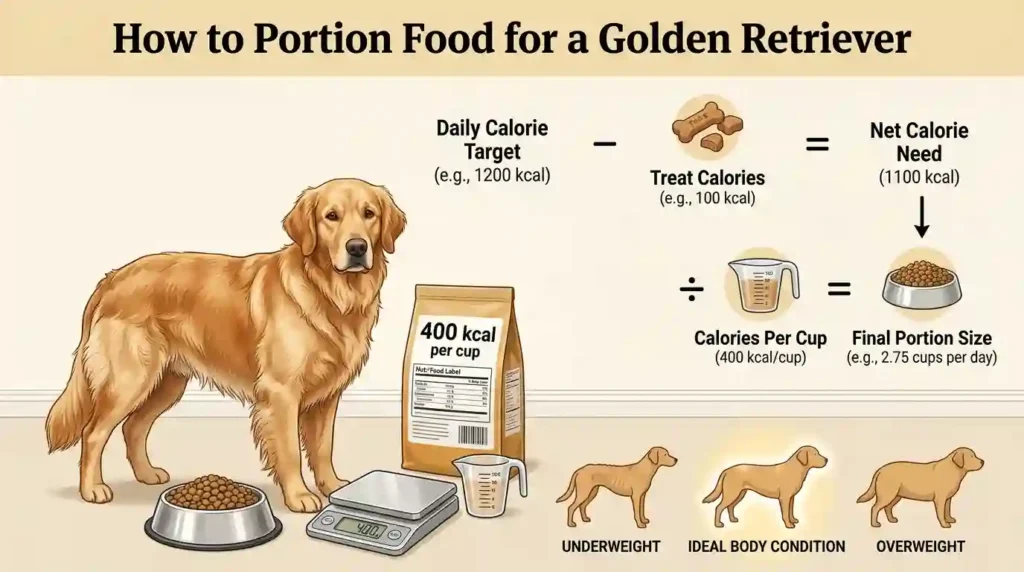
“How much should my Golden Retriever eat?” is better answered in calories than cups. Begin with the feeding recommendation on the product, calculate the calories in treats, and then adjust the total according to the dog’s body condition.
Estimate the starting portion
Follow these steps:
- Find “kcal per cup,” “kcal per can,” or “kcal per kilogram” on the label.
- Identify the recommended daily amount for your dog’s weight and life stage.
- Divide the total into two adult meals or the appropriate number of puppy meals.
- Measure food with a standardized measuring cup or, preferably, a kitchen scale.
- Recheck body weight and body condition every one to two weeks.
- Adjust the daily serving by approximately 5–10% when needed.
- Contact a veterinarian if weight changes rapidly or does not respond as expected.
For example, suppose an adult Golden needs approximately 1,300 calories per day and the selected food provides 400 calories per cup. Before accounting for treats, that equals:
1,300 ÷ 400 = 3.25 cups per day
If treats provide 100 calories, the meals should supply closer to 1,200 calories:
1,200 ÷ 400 = 3 cups per day
This is why copying another owner’s “three cups daily” can fail. Their dog may be smaller, more active, intact, younger, or eating food with a different caloric density.
Practical adult starting ranges
The following are broad starting estimates, not prescriptions:
| Adult profile | Approximate daily food pattern |
| Smaller, sedentary, or weight-prone Golden | Lower end of the label range; choose moderate caloric density |
| Average 55–75 lb adult with daily exercise | Often around 2–3½ cups of standard dry food, depending on calories per cup |
| Highly active sporting or working Golden | May need more calories; increase based on workload and body condition |
| Overweight Golden | Veterinarian-guided calorie target and measured lower-calorie meals |
| Senior Golden | Often fewer calories, unless illness or muscle loss changes the goal |
Never treat the cup range as a guaranteed requirement. Check the food’s calorie statement.
Use body condition, not appetite, as your guide
Many Goldens behave as though they are hungry even after receiving enough food. Appetite alone is therefore a weak portion calculator.
For an ideal body condition:
- Ribs should be easy to feel but not sharply visible
- A waist should be noticeable from above
- The abdomen should tuck upward behind the rib cage
- Movement should remain comfortable and energetic
If the ribs are difficult to feel and the waist has disappeared, reduce calories modestly and reassess. If ribs, spine, or hip bones become prominent, increase food and rule out illness.
Obesity is more than a cosmetic issue. Excess weight can worsen joint stress, osteoarthritis, mobility problems, heat intolerance, and other health risks. Maintaining a lean Golden is one of the most practical ways to protect long-term joint health.
Keep treats within the calorie budget
Treats should generally provide no more than about 10% of daily calories. Low-calorie treats, tiny pieces of lean cooked meat, or part of the dog’s measured dry food can support training without turning rewards into an extra meal.
For food-motivated dogs, break one treat into several rewards. Golden Retrievers usually value the frequency of reinforcement more than the size of each piece.
Do Golden Retrievers Have Sensitive Stomachs?
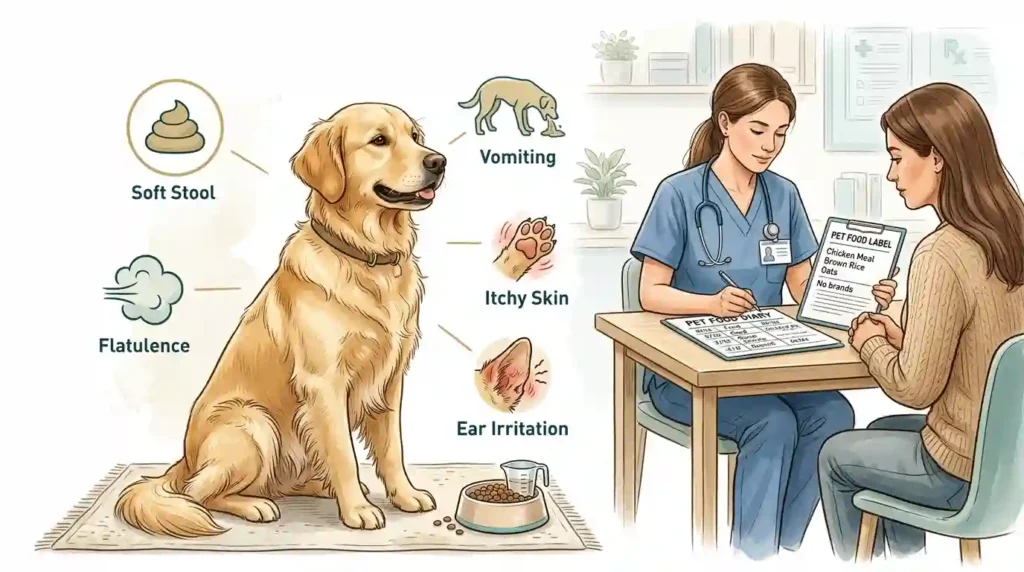
Some Golden Retrievers have sensitive stomachs, but frequent digestive symptoms should not be dismissed as a normal breed trait. Flatulence, diarrhea, vomiting, soft stool, poor appetite, excessive stool volume, or weight loss can have many causes.
Possible triggers include:
- Changing food too quickly
- Overfeeding
- Too many rich treats or table scraps
- High-fat food
- Eating garbage or spoiled food
- Food intolerance
- Food allergy
- Parasites
- Infection
- Pancreatic or intestinal disease
- Stress
- Poor ingredient digestibility
Skin and digestive signs can sometimes occur together. Watch for chronic itching, recurrent ear trouble, inflamed skin, hot spots, paw licking, or digestive upset. A sensitive-stomach formula may help some dogs, but persistent symptoms require veterinary assessment.
Dogs with digestive challenges often benefit from a consistent feeding routine, measured meals, easily digestible protein, moderate fat, and carefully selected fiber or prebiotics. A veterinarian may recommend a limited-ingredient or novel protein diet using a protein such as salmon or goat when a properly controlled food trial is appropriate.
Do not assume grain is the problem. A grain-inclusive diet containing rice, barley, or oats may be well tolerated. True allergies more often involve proteins, although any ingredient can cause a reaction. The digestive and skin considerations covered in Dog Food for German Shepherds offer useful comparisons for another large breed commonly associated with food sensitivities.
When to call the veterinarian
Contact your veterinarian promptly if symptoms include blood in the stool, repeated vomiting, abdominal swelling, severe lethargy, dehydration, pain, collapse, refusal to eat, or suspected toxin ingestion. Puppies and seniors can deteriorate quickly.
A board-certified veterinary nutritionist can formulate an appropriate home-cooked diet or help manage complex food allergies, gastrointestinal disease, kidney disease, pancreatitis, or other conditions requiring precise nutrition.
Safe Fresh Foods Golden Retrievers May Like to Eat
What do Golden Retrievers like to eat? Usually almost anything they can persuade a person to share. Preference does not prove nutritional value, but several plain foods can be offered in small portions.
Possible occasional additions include:
- Unseasoned cooked chicken or turkey
- Lean cooked beef or lamb
- Plain cooked salmon with all bones removed
- Cooked egg, if tolerated
- Pumpkin
- Carrots
- Green beans without added salt
- Small pieces of sweet potato
- Plain brown rice or oats
- Small portions of dog-safe fruit
- Spinach or kale in modest quantities
Fresh additions should remain a small part of a complete diet unless the entire recipe was professionally formulated. Even healthy food can contribute too many calories.
Pumpkin and green beans are often used to add fiber or volume, but they are not substitutes for veterinary care. Sudden diarrhea, chronic constipation, or unexplained hunger deserves investigation.
Owners comparing fruit, vegetables, and protein additions for other medium-sized breeds may also find What Do Beagles Eat useful. Portion size matters even more for small dogs, as explained in What Do Chihuahuas Eat.
Foods and Ingredients to Limit or Avoid
A Golden Retriever should not eat every food humans eat. Avoid sharing unknown leftovers, heavily seasoned meals, greasy food, or food containing ingredients that are toxic to dogs.
Avoid cooked bones and unsafe scraps
Cooked bones can splinter and injure the mouth, throat, stomach, or intestines. They may also cause choking, dental fractures, or obstruction. High-fat table scraps can trigger digestive upset and may contribute to pancreatitis in susceptible dogs.
Keep garbage, food packaging, corn cobs, skewers, and discarded bones out of reach.
Limit unnecessary additives
When comparing commercial dog food, look beyond marketing. Some owners prefer formulas without artificial colors, artificial flavors, added sugar, or excessive added salt. These ingredients do not necessarily make every product dangerous, but they rarely provide a meaningful nutritional advantage to the dog.
Ingredient terms such as meat by-products or meat meal should be evaluated in context. Properly processed organ tissues can provide protein, vitamins, and minerals. The finished food’s nutritional adequacy, quality control, digestibility, and feeding results are more informative than a single emotionally charged ingredient name.
Discard moldy dog food or food with an unusual odor, pest contamination, moisture damage, or a compromised package. Store dry food in its original bag inside an airtight food container so the lot number and expiration information remain available.
Be cautious with grain-free food
A grain-free diet is not automatically healthier and should not be selected simply because Golden Retrievers sometimes develop itchy skin. Replacing grains with peas, lentils, potatoes, or other ingredients does not make a food carbohydrate-free.
Because Golden Retrievers can develop heart disease and taurine-related nutritional problems, discuss grain-free feeding with your veterinarian—especially when there is no diagnosed reason to avoid grains.
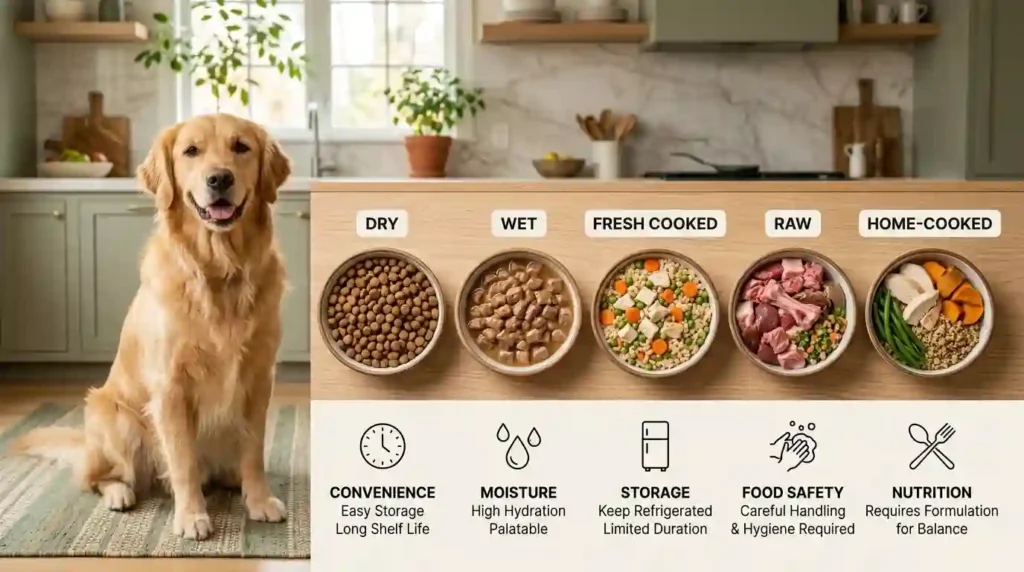
Dry, Wet, Fresh, Raw, or Home-Cooked Food?
What to feed your Golden Retriever depends partly on budget, storage, convenience, appetite, health, and household preferences. No format is universally best.
Dry dog food
Dry food is convenient, easy to measure, economical, and simple to use in puzzle toys or training. It generally has lower moisture than other formats, so water availability is essential.
Kibble does not automatically clean teeth. Some specialized dental diets have evidence-based designs, but ordinary kibble cannot replace tooth brushing or professional dental care.
Wet dog food
Wet food provides more moisture and may be appealing to picky eaters. It can help seniors, dogs with dental discomfort, and dogs that need more water intake.
If combining wet and dry food, calculate the calories from both. Adding a can without reducing kibble can quietly increase daily intake.
Fresh dog food
Fresh food is often gently cooked and may use recognizable or human-grade ingredients. It can be digestible and palatable, but the “fresh” or “human-grade” label does not guarantee that a recipe is nutritionally ideal.
Check the nutritional adequacy statement, calorie content, storage requirements, and life-stage designation.
Raw food
Raw diets may contain meat, organ meat, bones, vegetables, and supplements. They also introduce risks involving pathogens, bone injury, nutrient imbalance, and food handling.
A bowl that looks natural can still be deficient in calcium, phosphorus, essential fatty acids, vitamins, or trace minerals. Raw feeding is not a casual recipe project, particularly for puppies, older dogs, children, pregnant people, or immunocompromised household members.
Home-cooked food
A home-cooked diet gives the owner control over ingredients, which can be useful for selected medical cases. However, meat, vegetables, rice, and a general supplement do not automatically create balanced nutrition.
Recipes should be developed for the individual dog by a board-certified veterinary nutritionist and followed precisely. Substituting ingredients or changing supplement amounts can alter the nutrient profile.
Breed differences also affect feeding decisions. A Golden Retriever’s calorie and joint-management priorities differ from the digestive, weight, and body-shape concerns discussed in What English Bulldogs Eat.
Helpful Golden Retriever Feeding Products on Amazon
The following are commonly purchased, well-reviewed types of products available on Amazon. Ratings, sellers, formulas, packaging, and availability change, so verify the current listing before ordering. A high review score does not replace checking the label or consulting your veterinarian.
Royal Canin Golden Retriever Puppy Dry Dog Food
Royal Canin Golden Retriever Puppy Dry Dog Food is a breed-specific puppy option. Before buying, confirm that the bag is intended for growth and that its feeding guide matches your puppy’s age and expected adult size.
Royal Canin Golden Retriever Adult Dry Dog Food
Royal Canin Golden Retriever Adult Dry Dog Food is formulated for adult Goldens and uses breed-specific kibble. Compare its calorie content with your dog’s weight and activity level rather than relying only on the breed name.
Purina Pro Plan Sensitive Skin and Stomach Large Breed Salmon and Rice
Purina Pro Plan Sensitive Skin and Stomach Large Breed may be worth discussing with a veterinarian when an adult Golden needs a digestible salmon-based, grain-inclusive formula. It is not a substitute for diagnosing persistent itching or digestive illness.
Outward Hound Fun Feeder Slo Bowl
An Outward Hound Fun Feeder Slo Bowl can slow a dog that gulps meals. Choose a large size with sufficient capacity, supervise initial use, and wash it regularly.
Gamma2 Vittles Vault Pet Food Storage Container
A Gamma2 Vittles Vault airtight pet food container can help protect dry food from humidity and pests. Keep kibble in its original bag and place the entire bag inside the clean container whenever possible.
No bowl, container, topper, or supplement compensates for an inappropriate food or excessive serving size.
How to Change Your Golden Retriever’s Food
A sudden food change can cause diarrhea, flatulence, or soft stool even when the new diet is suitable. Use a gradual food transition over approximately seven to ten days:
| Days | Current food | New food |
| 1–2 | 75% | 25% |
| 3–4 | 50% | 50% |
| 5–6 | 25% | 75% |
| 7 onward | 0% | 100% |
Sensitive dogs may need a slower transition. If symptoms are severe, persistent, or accompanied by vomiting, blood, pain, or lethargy, stop experimenting and call your veterinarian.
Keep treats and toppers consistent during the transition. Otherwise, it becomes difficult to identify which change caused the reaction.
For another example of matching protein, calories, and serving size to a large athletic breed, see Dog Food for Dobermans Eat.

Conclusion
What Golden Retrievers eat matters, but how much they eat is just as important. Choose complete and balanced, life-stage-appropriate food with digestible protein, suitable fat, useful fiber, and clearly stated calorie content. Feed measured meals, limit treats, provide fresh water, and monitor body condition instead of relying on appetite alone.
Golden Retriever puppies need controlled growth and large-breed puppy food. Adults need calorie-conscious portions that preserve lean muscle. Seniors may need fewer calories, additional moisture, joint-supporting nutrients, and highly digestible food.
There is no single best bag or exact cup measurement for every Golden. The best feeding plan is the one that keeps your individual dog energetic, muscular, comfortable, and at a healthy weight—with adjustments guided by the food label and your veterinarian.
Frequently Asked Questions
What do Golden Retrievers eat every day?
Most should eat complete and balanced puppy, adult, or senior dog food, divided into measured meals with fresh water always available.
What does a Golden Retriever eat as a puppy?
A puppy should eat large-breed puppy food formulated for controlled growth, with appropriate calcium, phosphorus, protein, fat, and DHA.
How much should my Golden Retriever eat?
Start with the food label, subtract treat calories, and adjust the serving according to weight, activity, caloric density, and body condition.
How often should a Golden Retriever puppy eat?
Feed young puppies three to four meals daily, reducing to two meals at around six months unless your veterinarian advises otherwise.
How often should an adult Golden Retriever eat?
Most healthy adults do well with two measured meals per day rather than one large meal or free feeding.
What food is good for Golden Retrievers with sensitive stomachs?
A veterinarian may suggest a digestible, moderate-fat diet containing a tolerated protein, consistent fiber, and possibly prebiotics or probiotics.
Can Golden Retrievers eat chicken?
Yes, many tolerate chicken well, but it should be plain, cooked, boneless, and offered within a balanced diet.
Can Golden Retrievers eat rice?
Plain cooked rice is generally safe, and rice is commonly used in grain-inclusive dog food. Rice alone is not a complete diet.
Should Golden Retrievers eat grain-free food?
Not routinely. Choose grain-free food only for a specific reason discussed with your veterinarian.
What do Golden Retrievers like to eat?
They often enjoy meat, fish, eggs, pumpkin, carrots, green beans, and fruit, but preference should not determine portion size or nutritional quality.
Can Golden Retrievers eat home-cooked food?
Yes, but a long-term home-cooked diet should be formulated by a board-certified veterinary nutritionist to prevent nutrient deficiencies or excesses.
When should a Golden Retriever switch to adult food?
Many transition at approximately 14–18 months, depending on growth and veterinary advice. Change foods gradually over seven to ten days.
Why is my Golden Retriever always hungry?
Goldens are often highly food-motivated. Check calorie intake and body condition, and consult a veterinarian if hunger changes suddenly or accompanies weight loss.