


Summary
What do English Bulldogs eat? Most thrive on a complete and balanced, AAFCO-compliant diet made with digestible animal protein, controlled fat, useful fiber, and nutrients that support their skin, joints, and digestive health. The food should match the dog’s life stage, calorie needs, body condition, and medical history. Because English Bulldogs are vulnerable to obesity, food sensitivities, gas, and breathing difficulties, measured portions and an appropriate feeding schedule matter just as much as ingredient quality.
This guide explains what to feed an English Bulldog, how much food to offer, how often to schedule meals, and what to do when allergies or digestive problems appear.
Table of Contents
- What do English Bulldogs eat?
- Why Bulldogs need a carefully managed diet
- The best ingredients for an English Bulldog
- Choosing between kibble, wet, fresh, and homemade food
- What English Bulldogs eat at each life stage
- How much to feed an English Bulldog
- Feeding frequency and portion control
- Sensitive stomachs and food allergies
- Safe human foods and dangerous foods
- How to choose a reliable formula
- Frequently asked questions
What Do English Bulldogs Eat? The Short Answer
English Bulldogs should eat nutritionally complete dog food formulated for their age and health status. A suitable recipe normally contains a named meat protein, moderate fat, digestible carbohydrates, dietary fiber, vitamins, minerals, and essential fatty acids.
The first practical step is to find the nutritional adequacy statement on the package. The AAFCO guide to selecting pet food explains that a “complete” food supplies the required nutrients, while a “balanced” food provides those nutrients in appropriate ratios for the intended life stage.
An adult Bulldog generally needs an adult-maintenance recipe. Puppies require food formulated for growth, while older dogs may benefit from senior dog food with controlled calories and appropriate support for mobility. A bag displaying attractive ingredients is not automatically complete and balanced, so the adequacy statement matters more than packaging claims such as “premium,” “natural,” or “human-grade.”
If you are comparing diets across multiple breeds, the broader Dog Food guide can help you understand how calorie density, nutritional adequacy, and ingredient quality affect different dogs.
A practical Bulldog diet profile
For most healthy English Bulldogs, look for:
- High-quality animal protein as a prominent ingredient
- Moderate protein for muscle maintenance
- Controlled fat and calorie density
- Digestible carbohydrates or an appropriate grain-free alternative
- Dietary fiber for satiety and regular stools
- Omega-3 and omega-6 fatty acids for skin and coat health
- Prebiotics or probiotics for digestive support
- Fresh water available throughout the day
- An AAFCO nutritional adequacy statement for the correct life stage
The ideal food is not necessarily the recipe with the highest protein content or longest ingredient list. It is the food that meets nutritional requirements, agrees with your dog’s digestion, supports a healthy weight, and can be fed consistently.
Why English Bulldogs Need a Carefully Managed Diet
The English Bulldog has a stocky build, compact frame, wrinkled face, short snout, and distinctive brachycephalic anatomy. These features influence how the dog picks up food, swallows, breathes, exercises, and regulates body temperature.
Weight directly affects breathing and mobility
English Bulldogs are often described as a low-energy breed. Although they still need regular activity, many cannot safely burn calories through prolonged or vigorous exercise, especially in warm weather. Their flat face and restricted airway can contribute to breathing difficulty, exercise intolerance, and overheating.
Excess body fat increases the physical burden on the airway and joints. Even gradual weight gain may worsen stamina, increase joint strain, and make hot weather more dangerous. Calorie management is therefore a central part of Bulldog health—not merely a cosmetic concern.
A lean Bulldog should have ribs that are easy to feel beneath a thin layer of tissue. Viewed from above, there should be a visible waist behind the rib cage. From the side, the abdomen should rise slightly toward the hind legs. The breed’s naturally broad chest should not be mistaken for obesity, but its stocky appearance should not hide excess fat either.
Their facial structure changes feeding mechanics
A short snout and broad jaw can make some small, round kibble difficult to pick up. A breed-specific diet may use wave-shaped kibble or another kibble shape designed for a flat-faced dog.
Bulldogs may also gulp food and swallow air. Rapid eating can contribute to gas, bloating, regurgitation, or vomiting. A flat feeding bowl, wide feeding bowl, or well-designed slow-feeder bowl may make meals more comfortable. The goal is to slow the dog without creating frustration or forcing its face into a deep container.
Skin and digestion are closely connected
Wrinkled skin can trap warmth and moisture, creating conditions in which bacteria or yeast flourish. Skin fold dermatitis and skin fold pyoderma are not always caused by food, but food sensitivity or an allergic reaction can intensify inflammation.
Possible food-related signs include:
- Itchy skin
- Paw licking or paw chewing
- Recurrent ear infections
- Skin irritation or infection
- Loose stool or diarrhea
- Excessive gas
- Vomiting
- Persistent digestive upset
Environmental allergy, parasites, infection, and other medical problems can produce similar symptoms. Do not assume every itch means a chicken allergy. A veterinarian should help identify the cause before you repeatedly change foods.
What Can English Bulldogs Eat? The Best Ingredients
A well-formulated Bulldog diet combines useful nutrients in appropriate proportions. Individual ingredients matter, but nutritional balance and digestibility matter more than any fashionable “superfood.”
High-quality protein
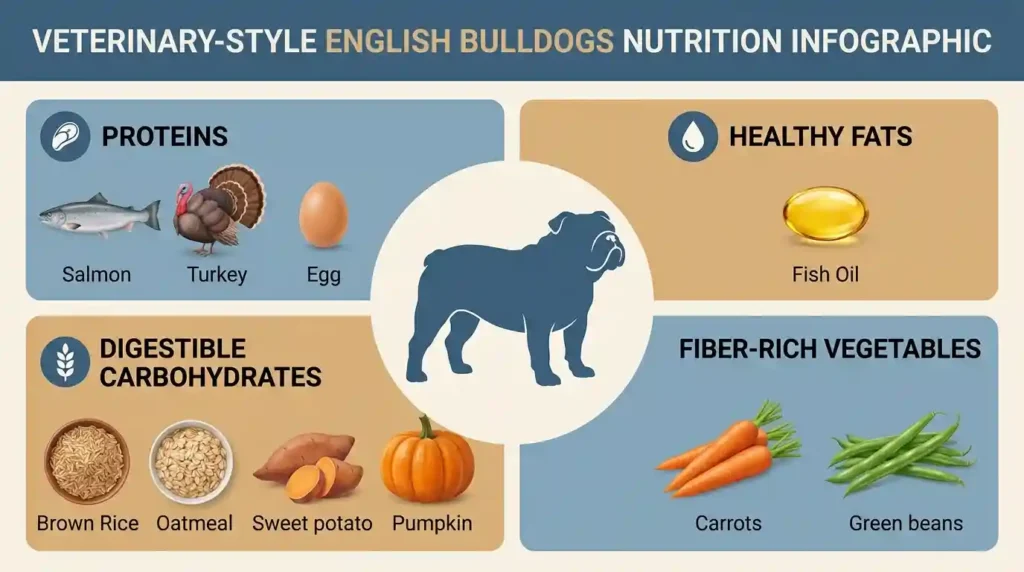
Protein provides essential amino acids used for muscle development, lean muscle mass, tissue repair, enzymes, hormones, skin cells, and hair growth. Suitable animal protein sources may include:
- Chicken
- Turkey
- Beef
- Pork
- Lamb
- Duck
- Kangaroo
- Fish
- Salmon
- Trout
- Whitefish
- Egg
- Liver or another properly included organ meat
A named meat protein is more informative than a vague meat source or generic meat blend. Named meat meal can also be a concentrated and useful source of protein; the word “meal” does not automatically make an ingredient poor quality.
Most Bulldogs need adequate or moderate protein—not an extremely high-protein performance diet. Puppies, pregnant dogs, highly active animals, and dogs recovering from illness may have different needs. Protein content should be interpreted alongside calories, fat, digestibility, and the dog’s health.
When comparing wet and dry recipes, use dry matter analysis rather than comparing the percentages printed on the labels directly. Wet dog food contains much more water, which makes its listed protein percentage appear lower.
Controlled amounts of healthy fat
Fat supplies energy, supports palatability, helps absorb fat-soluble vitamins, and contributes to skin and coat health. However, fat is calorie-dense. A rich recipe can make portion control difficult for a sedentary or neutered Bulldog.
Useful fat sources may include fish oil, salmon oil, chicken fat, olive oil, sunflower oil, or canola oil when included in a nutritionally balanced formula. Omega-3 fatty acids such as EPA and DHA can support skin-barrier function, inflammatory balance, brain development, and joint health. Omega-6 fatty acids also support healthy skin, but the overall fatty-acid balance matters.
L-carnitine appears in some weight-management or breed-specific formulas and is involved in fat metabolism. It should be viewed as one part of a balanced formula, not a substitute for controlling calories.
Digestible carbohydrates and fiber
English Bulldogs can obtain energy from carbohydrates. Grain-inclusive ingredients such as rice, brown rice, oatmeal, oat, quinoa, and whole wheat can be perfectly appropriate when the dog tolerates them.
Sweet potato, potato, and pumpkin are also common carbohydrate or fiber sources. Vegetables such as carrot, green bean, spinach, and broccoli may contribute fiber and micronutrients. Blueberries and similar fruits can supply antioxidants, although their presence near the end of an ingredient list does not transform an otherwise mediocre food.
Dietary fiber may improve satiety and stool quality. Prebiotic fiber nourishes beneficial bacteria in the gut microbiome, while certain probiotics introduce selected microorganisms. These ingredients can support digestive health, but results depend on the strain, dose, viability, and underlying cause of the problem.
Vitamins, minerals, and joint-support nutrients
A complete food supplies appropriately balanced vitamins and minerals. Calcium and phosphorus are especially important during growth. Excessive calcium or an improper calcium-to-phosphorus ratio can be harmful to a developing puppy, which is why random mineral supplementation is risky.
Glucosamine, chondroitin, and fish oil appear in many diets marketed for joint health. They may be relevant for a breed vulnerable to hip dysplasia and arthritis, but the most valuable joint-protection strategy is maintaining a lean body condition.
Supplements should fill a documented need. Adding several products to an already complete diet can unbalance nutrient intake or provide overlapping ingredients. Ask a veterinarian before combining joint products, digestive enzymes, probiotics, vitamins, or oils.
Choosing Kibble, Wet, Fresh, or Homemade Food
There is no single food format that is best for every English Bulldog. The right choice depends on calorie control, digestive tolerance, lifestyle, budget, storage, and the dog’s willingness and ability to eat it.
For more breed-focused comparisons, browse the Dog Breeds Foods resource.
Dry dog food
Dry dog food or kibble is convenient, easy to measure, and generally economical. Its calories per cup should be printed on the package, allowing you to convert a daily calorie target into an accurate feeding amount.
Kibble does not automatically clean teeth, although certain textures may provide limited mechanical action. A Bulldog with an unusual jaw shape may do better with larger curved pieces or wave-shaped kibble than with tiny round pieces.
Wet or canned food
Wet dog food provides more moisture and may be easier for puppies, seniors, or dogs with dental discomfort to eat. Its aroma and texture can improve palatability for a picky eater.
Because canned food contains a high percentage of water, it is usually less calorie-dense by weight. That does not mean an unlimited serving is safe. Count the calories in every can, tray, or pouch.
Mixed feeding
Mixed feeding combines formats—for example, measured kibble with a spoonful of wet food. This can improve taste and hydration, but the topper is not “free.” Subtract its calories from the daily ration rather than adding it on top of a full kibble portion.
Fresh and gently cooked food
Fresh dog food or a fresh-cooked diet may use recognizable meat, vegetables, and carbohydrate sources. Companies such as The Farmer’s Dog, Ollie, PetPlate, JustFoodForDogs, Open Farm, and Spot & Tango offer different fresh or minimally processed formats.
A “fresh” or “human-grade” description does not prove that a recipe is ideal for your Bulldog. Confirm that the specific product is nutritionally complete for the correct life stage and check its calorie density.
Home-cooked food
A home-cooked diet gives you ingredient control, which can be useful during a medically supervised elimination trial. However, mixing meat, rice, and vegetables does not reliably provide all required amino acids, fatty acids, vitamins, and minerals.
If home preparation will be the primary diet, obtain a precise recipe from a board-certified veterinary nutritionist. Follow it exactly, including specified supplements and cooking weights. Casual substitutions can change calcium, phosphorus, fat, and micronutrient levels substantially.
Raw, BARF, and prey-model diets
A raw food diet may be described as a BARF diet or prey-model diet. Advocates often emphasize unprocessed ingredients, but raw animal products can carry pathogenic bacteria and parasites. Bones can also cause broken teeth, choking, obstruction, or internal injury.
Raw feeding does not guarantee better digestion, clearer skin, or a balanced amino acid profile. Households with young children, older adults, pregnant people, or immunocompromised individuals should be particularly cautious about contamination.
Air-dried and freeze-dried food
Air-dried and freeze-dried foods can be highly palatable and convenient. They are often calorie-dense, so the portion may look surprisingly small. Measure carefully instead of judging the serving by volume.
What Do English Bulldogs Eat at Each Life Stage?
Life-stage nutrition helps provide the nutrients and calorie concentration needed during growth, adulthood, and aging.
Newborn and weaning puppies
During the first weeks of life, a puppy normally receives mother’s milk. Colostrum from the early nursing period supplies important immune protection. If nursing is impossible, use a veterinarian-recommended canine milk replacer rather than cow’s milk or homemade substitutes.
Weaning generally begins with soft puppy mush made by combining appropriate puppy food with warm water or milk replacer. The liquid is reduced gradually as the puppy adjusts to solid food.
Bulldog puppies
Rapid growth places stress on developing bones and joints. A puppy should grow steadily without becoming round or heavy. Select puppy food with an AAFCO statement for growth. Many owners use a large-breed puppy formula or an appropriately formulated Bulldog puppy recipe to support controlled growth.
Puppy nutrition should provide:
- Digestible animal protein
- Adequate fat for growth and energy
- DHA for brain and vision development
- Controlled calories
- Proper calcium and phosphorus balance
- A kibble size or texture the puppy can manage
Young puppies need frequent puppy meals because their stomach capacity is limited. As they mature, meal frequency can gradually decrease. The puppy-to-adult transition usually occurs around 12 months, although the veterinarian may recommend a different timeline based on growth and body condition.
Adult Bulldogs
Most adult English Bulldogs do well with two measured meals per day. Adult dog food should support muscle maintenance without delivering unnecessary calories.
An active, intact adult may need more energy than a sedentary, spayed or neutered dog of the same weight. Start with the package feeding guideline, calculate calories, and adjust according to the dog’s weight trend and body condition.
Senior Bulldogs
A senior dog may need fewer calories as activity and metabolism decline. Senior dog food may also contain adjusted fiber, antioxidants, fatty acids, or joint-support nutrients.
Age alone does not determine the correct food. An older Bulldog that is losing weight or muscle needs a veterinary assessment rather than an automatic calorie reduction. Dental disease, arthritis, heart disease, digestive illness, and other conditions may change the most appropriate texture or nutrient profile.
Readers managing different body types may also find the discussions of best dog food for labradors and Dog Food for German Shepherds useful when comparing large, active breeds with the compact Bulldog.
How Much Should an English Bulldog Eat?
There is no universal cup measurement. Two foods can have very different calorie densities, so “two cups” may provide 700 calories of one recipe and more than 1,000 calories of another.
A reasonable starting estimate for many adult Bulldogs is approximately 25–30 calories per pound of ideal body weight per day. Individual requirements can fall above or below that range.
| Ideal adult weight | General starting range |
| 40 pounds | 800–1,000 calories per day |
| 45 pounds | 900–1,100 calories per day |
| 50 pounds | 1,000–1,200 calories per day |
| 55 pounds | 1,100–1,300 calories per day |
These are starting estimates, not prescriptions. Age, activity level, body condition, metabolism, health status, spay and neuter status, climate, and treat intake can change the requirement.
Convert calories into a measured portion
Use this formula:
Daily cups = daily calorie target ÷ calories per cup
If your Bulldog needs 900 calories and the food contains 400 calories per cup:
900 ÷ 400 = 2.25 cups per day
Divided into two meals, that equals approximately 1⅛ cups per meal.
Use a standard measuring cup or, preferably, a kitchen scale. Weighing food in grams is more consistent than estimating a scoop. Recheck the label whenever you change recipes because calories per cup can vary even between products from the same brand.

Count treats and extras
Treats should generally remain below 10% of daily calories. The other 90% should come from complete and balanced food. A slice of cheese, several biscuits, table scraps, and a rich food topper can quietly add hundreds of calories.
For a dog that gains weight easily, reserve part of the measured daily kibble for training. Low-calorie pieces of carrot or green bean may also work if the dog tolerates them.
Bulldogs can be persistent around food. Understanding reward-seeking and begging through Dog Behavior and Psychology can make consistent feeding boundaries easier for everyone in the household.
Feeding Schedule and Mealtime Safety
A predictable routine helps regulate appetite, digestion, and bathroom habits.
Adult feeding schedule
Most healthy adults should receive two meals per day—one in the morning and one in the evening. A structured mealtime is preferable to free feeding because it makes appetite changes visible and prevents unmeasured snacking.
Place the bowl down for a reasonable period, then remove leftovers. Fresh water should remain available.
Puppy feeding schedule
A general schedule is:
- Eight to 12 weeks: three or four small meals
- Three to six months: three meals
- Six to 12 months: two or three meals
- Adult: two meals
Your veterinarian may adjust this schedule for a very small puppy, growth concern, digestive condition, or medication routine.
Slow down rapid eating
If your Bulldog empties the bowl in seconds, try a slow-feeder bowl or puzzle feeder designed for a short muzzle. The device should be wide enough for comfortable access and simple enough to clean thoroughly.
Avoid one huge daily meal. Keep vigorous activity separated from mealtime, and discourage rapid drinking immediately after strenuous play. Although gastric dilatation-volvulus is more strongly associated with certain deep-chested breeds, acute abdominal swelling, repeated unproductive retching, weakness, or severe distress requires emergency veterinary care.
Feeding concerns differ across body shapes. Compare the food-driven tendencies covered in What Do Beagles Eat with the small-bite and high-metabolism considerations in What Do Chihuahuas Eat.
Sensitive Stomachs, Gas, and Food Allergies
Occasional flatulence does not automatically indicate disease, but chronic gas, vomiting, diarrhea, or loose stool deserves attention.
Start with feeding habits
Before blaming an ingredient, check for:
- Rapid eating and swallowed air
- Oversized portions
- Too many treats
- Fatty table scraps
- Abrupt food changes
- Poor food storage
- Inconsistent meal timing
Transition to a new food gradually over seven to 10 days unless a veterinarian advises otherwise. Begin with mostly old food and a small amount of the new recipe, then increase the new proportion every few days.
Food sensitivity versus food allergy
Food intolerance or sensitivity often causes digestive signs, while a true food allergy involves an immune response and may cause skin or gastrointestinal symptoms. In everyday conversation, however, the terms are frequently used interchangeably.
Chicken, beef, dairy, wheat, corn, and soy are often blamed, but any protein can become an allergen. Grain is not automatically the problem. Randomly cycling through lamb, duck, salmon, and other proteins can make a future elimination diet harder to interpret.
How an elimination diet works
A diagnostic elimination diet uses a novel protein the dog has not eaten before or a hydrolyzed-protein veterinary diet. The dog must eat only that diet for the prescribed period—often eight weeks or longer—with no flavored supplements, chews, table scraps, or unapproved treats.
If symptoms improve, the veterinarian may reintroduce previous ingredients to confirm the trigger. This controlled elimination trial is more useful than a retail saliva or hair test. Allergy testing may still be appropriate when environmental allergy is suspected.
A limited-ingredient diet can simplify ingredient exposure, but “limited ingredient” is not the same as hypoallergenic. Cross-contact may occur in facilities that manufacture several proteins.
Persistent itching, skin infection, paw chewing, ear infection, vomiting, or diarrhea should be evaluated professionally. Diet cannot correct bacterial infection, yeast overgrowth, parasites, or every case of skin fold dermatitis.
The muscular body and allergy concerns discussed in Dog Food for Pitbulls offer another useful comparison, although a Bulldog usually requires tighter calorie management.

Do English Bulldogs Need Grain-Free Food?
Most English Bulldogs do not need a grain-free diet. Rice, oats, barley, and other properly prepared grains can provide digestible carbohydrates and useful nutrients.
Consider grain avoidance only when a veterinarian has identified a specific reason. Many apparent “grain allergies” are reactions to an animal protein or an unrelated environmental trigger. Replacing grain with large quantities of potato, peas, or legumes does not automatically improve ingredient quality.
Judge the entire formulation, the manufacturer’s expertise, feeding trials, quality control, and nutritional adequacy—not a single front-of-bag claim.
What Human Foods Can English Bulldogs Eat?
Small portions of suitable whole foods may be offered as treats if they are plain and do not push the dog over its calorie allowance.
Potential options include:
- Plain cooked chicken or turkey
- Plain lean beef or pork
- Fully cooked egg
- Cooked salmon with all bones removed
- Pumpkin
- Carrot
- Green bean
- Blueberry
- Plain cooked rice
- Plain oatmeal
- Cooked sweet potato
Introduce one new food at a time. Even safe foods can trigger digestive upset or add too many calories. Remove skin, excess fat, bones, sauces, salt, butter, and seasoning.
Foods Bulldogs should never eat
Do not offer:
- Chocolate
- Grapes or raisins
- Onion, garlic, or related alliums
- Xylitol-containing products
- Alcohol
- Caffeine
- Cooked bones
- Moldy food
- High-fat scraps
- Heavily salted or seasoned food
Contact a veterinarian or animal poison service promptly if your dog eats a toxic substance. Do not wait for symptoms to appear.
For another breed in which body weight has structural consequences, see What Do Dachshunds Eat. Owners of larger athletic dogs can compare those priorities with Dog Food for Dobermans Eat.
How to Choose a Reliable English Bulldog Food
Brand reputation can be useful, but the specific recipe is what your dog consumes. Royal Canin, Purina Pro Plan, Hill’s Science Diet, Diamond Naturals, Redbarn, Eagle Pack, The Honest Kitchen, Jinx, Blue Buffalo, Wellness CORE, Canidae, Bully Max, and Taste of the Wild all sell different formulas. A manufacturer name alone cannot tell you whether a particular product suits your Bulldog.
Use this checklist:
1. Confirm nutritional adequacy
Find an AAFCO statement for growth, adult maintenance, or all life stages. Treats, toppers, and foods labeled for intermittent or supplemental feeding should not replace the main diet.
2. Check calories
Locate the calorie-content statement. A weight-management formula should offer useful nutrition and satiety at an appropriate calorie level—not simply a smaller bag or serving suggestion.
3. Read the ingredient list in context
Look for identifiable protein sources and digestible ingredients. Avoid treating every by-product meal as harmful or every whole meat as superior. Nutrient quality, formulation, processing, and digestibility are more informative than attractive ingredient imagery.
Artificial color and added sugar provide no meaningful advantage to a Bulldog. Preservatives prevent fat oxidation and spoilage, so the goal is not necessarily a “preservative-free” product. Mixed tocopherols are commonly used as antioxidants. If you prefer to avoid BHA, BHT, or ethoxyquin, verify the current label rather than relying on an old online list.
4. Consider the manufacturer
A reputable manufacturer should be able to explain:
- Who formulates the food
- Whether qualified veterinary nutritionists or animal nutritionists are involved
- How quality control is managed
- Whether finished food undergoes nutrient testing
- Whether feeding trials are conducted
- Where the food is manufactured
- How recalls and customer concerns are handled
5. Evaluate the dog, not the marketing
A suitable food should help your Bulldog maintain:
- Stable, healthy body weight
- Consistent stool quality
- Comfortable digestion
- Healthy skin folds
- A glossy coat
- Normal energy
- Good muscle condition
Change the plan if the dog develops persistent hunger, weight change, recurrent digestive upset, skin disease, or poor palatability. First rule out medical causes with a veterinarian.
Common Feeding Mistakes
Measuring by eye
A heaped scoop can contain substantially more food than a level cup. Use a kitchen scale for consistent portions.
Leaving food out all day
Free feeding prevents accurate calorie tracking and makes it harder to notice a loss of appetite. Use scheduled meals instead.
Overusing toppers
Gravy, canned food, meat, and treats can turn a controlled meal into a high-calorie one. Count every addition.
Changing food too quickly
An abrupt switch may cause gas, vomiting, or diarrhea even when the new formula is appropriate. Use a gradual food transition.
Assuming every symptom is an allergy
Itchy skin may result from environmental allergy, fleas, infection, or moisture trapped in wrinkles. Digestive signs may result from overeating, parasites, medication, or disease.
Relying on supplements to fix the diet
Fish oil, probiotics, digestive enzymes, glucosamine, and chondroitin can be useful in selected cases, but they cannot compensate for poor nutritional balance or chronic overfeeding.
Ignoring weight changes
Weigh your Bulldog regularly and record the trend. A small monthly gain becomes significant over a year. Reduce calories with veterinary guidance before obesity worsens breathing and mobility.
Conclusion
English Bulldogs eat many of the same nutritionally complete foods as other dogs, but their flat face, sensitive digestion, skin-fold problems, limited exercise tolerance, and tendency toward obesity make food selection and portion control especially important.
Choose an AAFCO-compliant food for the correct life stage, prioritize digestible named protein, control fat and calories, and divide the daily ration into structured meals. Use a shallow or slow-feeder bowl if rapid eating is a problem, count treats, maintain fresh water, and assess body condition regularly.
Most importantly, feed the individual dog rather than the breed stereotype or package marketing. The right diet should keep your English Bulldog lean, comfortable, energetic, and free from persistent digestive or skin problems.
Frequently Asked Questions
What do English Bulldogs eat daily?
Most eat complete and balanced puppy, adult, or senior dog food with digestible animal protein, controlled fat, fiber, vitamins, and minerals.
How much food should an English Bulldog eat?
Many adults need roughly 800–1,200 calories daily, but the correct amount depends on ideal weight, activity, age, health, and food calorie density.
How often should I feed an adult English Bulldog?
Feed most adults two measured meals per day. Avoid one oversized meal and unmonitored free feeding.
What should I feed an English Bulldog puppy?
Choose AAFCO-compliant puppy food formulated for growth, with controlled calories and an appropriate calcium-to-phosphorus balance.
Can English Bulldogs eat chicken?
Yes, if they tolerate it. Avoid chicken only when a veterinarian-guided elimination diet identifies it as a trigger.
Is salmon good for English Bulldogs?
Plain, fully cooked, boneless salmon can be a useful protein and omega-3 source. Keep portions small and avoid seasoning.
Can Bulldogs eat rice?
Yes. Plain cooked rice and properly formulated grain-inclusive foods are suitable for many Bulldogs.
Are English Bulldogs allergic to grain?
Some individuals may react to a grain, but grain allergy is not universal. Animal proteins are also possible triggers.
What is the best food for a Bulldog with a sensitive stomach?
A digestible, complete diet with controlled fat and a consistent protein source may help; chronic symptoms require veterinary evaluation.
Should Bulldogs eat from an elevated bowl?
A flat, wide bowl at a comfortable level is often easier for a short muzzle. Ask your veterinarian if your dog has a medical or mobility issue.
Why does my Bulldog have so much gas?
Rapid eating, swallowed air, rich treats, oversized portions, food intolerance, or gastrointestinal disease can contribute to flatulence.
Can English Bulldogs eat raw food?
They can consume raw ingredients, but raw diets carry contamination and nutritional-balance risks. Consult a veterinary nutritionist before using one.
How can I help my English Bulldog lose weight?
Measure every meal, count treat calories, stop free feeding, monitor body condition, and create a veterinary-supervised calorie target.
When should a Bulldog switch to adult food?
Many transition near 12 months, but timing should reflect growth, body condition, and veterinary guidance.
What signs may indicate a food allergy?
Persistent itchy skin, paw chewing, recurrent ear infections, vomiting, or diarrhea can be signs, although other conditions can look similar.